



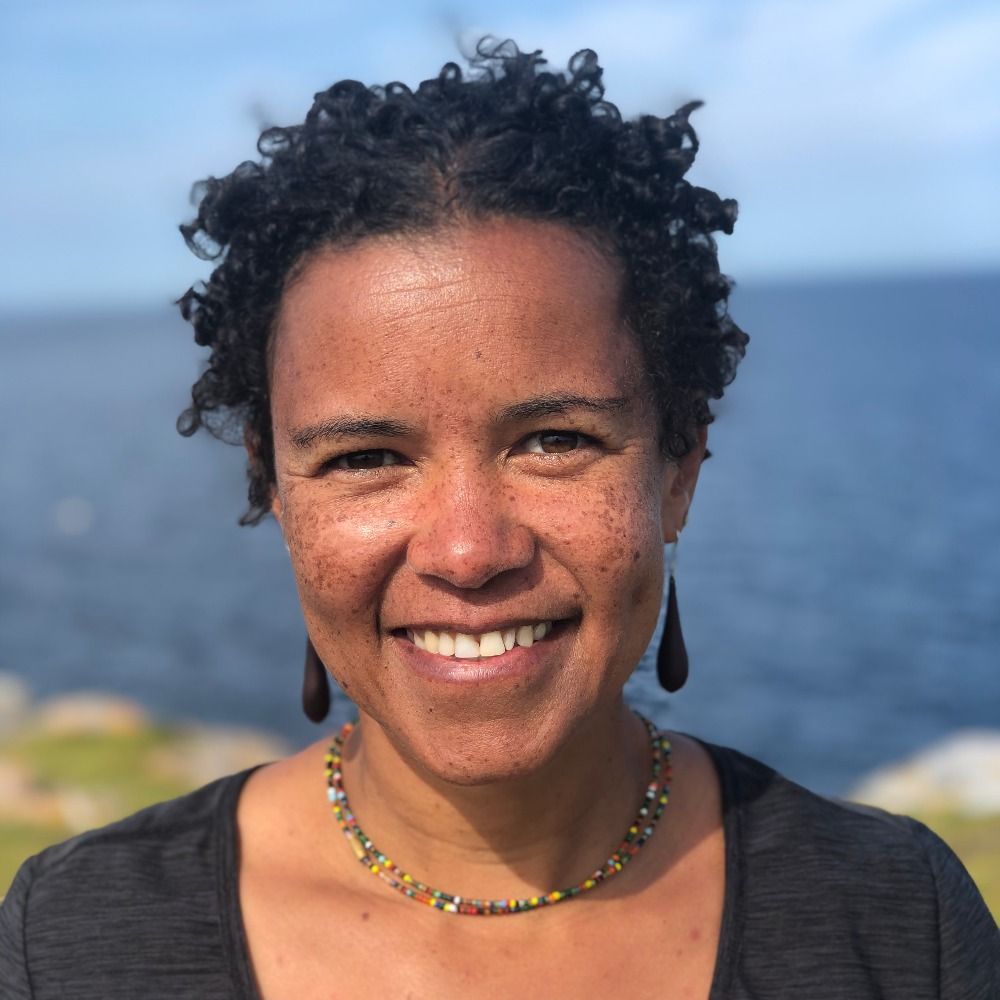
Professor. Environmental social scientist at Lancaster Environment Centre. Trying to return to a fell runner
Christina Chemtai Hicks is a British Kenyan environmental social scientist who is a Professor in the Political Ecology group at Lancaster University. She is interested in the relationships between individuals, societies and nature. She was awarded the 2019 Philip Leverhulme Prize for Geography. .. more
Reposted by Halley E. Froehlich

www.combinedacademic.co.uk/978147801771...
Reposted by Christina C. Hicks, Juan Cole, Karen O’Leary , and 1 more Christina C. Hicks, Juan Cole, Karen O’Leary, Olúfẹ́mi Táíwò

Reposted by Anne Applebaum, Mariana Mazzucato, Stephen M. Walt , and 181 more Anne Applebaum, Mariana Mazzucato, Stephen M. Walt, Michael E. Mann, Joanna Bryson, Anna O. Law, Marc Lynch, Kim L. Scheppele, Elizabeth Saunders, Rebecca Solnit, Archon Fung, Nandita Sharma, Matthew Bunn, Nancy Kanwisher, Yadvinder Malhi, Michael Wagner, John T. Jost, Stephan Lewandowsky, Robbert Sanderman, David M. Schultz, Simon Burgess, Marco Festa‐Bianchet, David M. Farrell, Will Jennings, Ashish Arora, Peter Thorne, Martin J. Attrill, Jesse M. Shapiro, Christina C. Hicks, Richard Betts, Richard J. Butler, Mattias Hallquist, Patrick A. Jansen, Jonathan A. Foley, Michael T. Meyer, Joshua S. Weitz, John R. Hutchinson, Mieke Van Houtte, Steve Peers, John McLaren, Andrew Watt, Andreas Ortmann, Tim Bale, Tom Shakespeare, Valerie P. Hans, Mark D. White, Victor Asal, Steven S. Smith, Jill Marshall, Rosemary A. Joyce, Caroline Krafft, Jürgen Maier, Leigh Sparks, Marina Jirotka, David Rothschild, Martin Gaynor, Elizabeth Stokoe, Melissa Johnson, Vincent Tiberj, Michael J. Allen, Rupert Read, Christian E. Weller, Ian M. Kinchin, Dawn J. Wright, Joseph Schafer, Hester Blum, Markus Jäntti, Anders Nilsson, Alison Phipps, Dominik Wiedenhofer, Ramón López Facal, Gerard H. Kuper, Libby Robin, David S. Cohen, Joni Lovenduski, Alan Stewart, Patrick Walsh, Sanford F. Schram, Kevin Carey, Shelly Lundberg, Inderjeet Parmar, Göran Bolin, Jussi T. Eronen, Marta Mìrazón Lahr, Raffaella Ravinetto, Smith, Peter Schöttler, Andrew Leyshon, Melanie C. Green, Janet Murray, Steven High, Jo Barraket, David R. Miller, Robert Wolfe, Duncan Bell, Jesús Rodríguez Pomeda, Patrick Svensson, Wilson McLeod, Stephen D. Murphy, Gerald Friedman, Stacy D. VanDeveer, Fabio Giglietto, Beatriz Gallardo Paúls, Lyndsey Stonebridge, Juan Moreno‐Cruz, Todd Pugatch, Howard Stevenson, Stephen Ryan, Elizabeth Stevenson, Michael D. McDonald, Anne Norton, Josef Früchtl, Manuel Puppis, Graeme Warren, Talia Schaffer, Graham Dutfield, Marco Haan, Antoine Bernard de Raymond, Fredrik Albritton Jonsson, Paul Fisher, Michelle Williams, Alberto Corsín Jiménez, Christian Fisch, Lisa Diedrich, Nicola Carr, Enrique Fatás, Philipp Sarasin, Jessica Silbey, Feargal Cochrane, Stuart White, Mary Jane Curry, Susan Strasser, Marko Lindroos, Claire L. Adida, Sharon Erickson Nepstad, Caterina Froio, Andrew Guthrie Ferguson, Patrick Meier, Vaughan S. Roberts, Raúl Pacheco-Vega, Ryan K. Brook, Florian Keusch, Andrew Rudalevige, James Connelly, Olivier Jourdan, Hisham Zerriffi, Sean P. Corcoran, Patrick Stokes, Cullen S. Hendrix, Jon Dean, Eric J. Sundquist, Guillaume Allègre, Eric J. Segall, Melanie O’Brien, Jason A. Heppler, Karen O’Leary, Uwe M. Martens, Almut Schulze, Alexander Woywodt, Thomas D. Carroll, David S. Tanenhaus, Kate Jackson, Pam Jarvis, Suzanne Conklin Akbari, Mary McAuliffe, Aviel Roshwald, Pepper D. Culpepper, Émilien Ruiz, Nathan P. Kalmoe, Ryan Calo, Jaap Kooijman, Aidan O’Sullivan, Dan Immergluck, Jeannette Sutton, Fiona Armstrong, Beth Tellman, Lorna Hughes, Fabian Holt, Ernesto Castañeda, David Spurrett, Dunlap, Stuart Shapiro, David Darmofal, Lars Gamfeldt

Stay free
Reposted by Christina C. Hicks, Markus Heße, Akiko Suwa‐Eisenmann


Reposted by Christina C. Hicks

Reposted by Christina C. Hicks

www.cbc.ca/news/canada/...

in One Earth titled " A decade of bright spots in conservation and ecology: Lessons, limits, and future directions"
authors.elsevier.com/a/1mIX89C%7E...

Reposted by Christina C. Hicks, Floriane Clément

nomadit.co.uk/conference/p...

Decolonising the Deep Seabed: Countermapping Territory, Heritage & Knowledge
Offering an alternative t0 mainstream approaches to understanding the political geography of the deep seabed
hr-jobs.lancs.ac.uk/Vacancy.aspx...
Reposted by Anne Applebaum, Benjamin K. Sovacool, Anna O. Law , and 60 more Anne Applebaum, Benjamin K. Sovacool, Anna O. Law, Nandita Sharma, Dorothy Bishop, Glen P. Peters, Will Jennings, Jon Pierre, Peter Thorne, Brendan Nyhan, Christina C. Hicks, Paul R. Bierman, Ana Bastos, Wolfgang Crämer, Neil Pederson, John R. Hutchinson, Samuel L. Perry, Serge Guimond, Elizabeth Robinson, Michael Nelson, Elizabeth Pisani, Vu, Jenni Barclay, Gernot Wagner, Sabine Pahl, Dominik Wiedenhofer, Nick Pearce, Laura Pereira, Carolyne Larrington, Michael Kevane, Göran Bolin, Beth E. Scott, Devon Greyson, Keith Head, Melanie C. Green, Daniel Huppmann, Vincent Noël, Erol Akçay, Anne Norton, Juan Rocha, Mark Robinson, Thomas Hale, Daniel Angus, Christian Fisch, Scott Hamilton, Jos Akkermans, Andrew Novak, Stefan C. Aykut, Michael Westphal, Björn Heile, Halley E. Froehlich, Jack Stilgoe, Federica Genovese, Hisham Zerriffi, Alexandra Cirone, Hong, Colin Talbot, Prakash Kashwan, Jeremy Fisher, Michael Warren, Vincent Raoult, Drew Peltier, Daniel Piechowski
Reposted by Christina C. Hicks


cc @petescarbs.bsky.social @oxmartinschool.bsky.social
Reposted by Christina C. Hicks

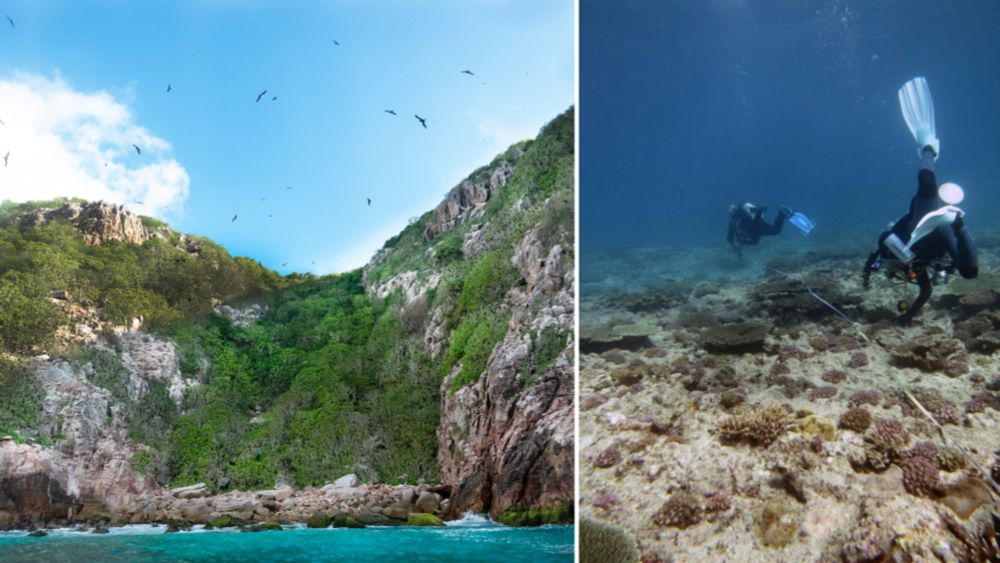
Follow @lec-reefs.bsky.social to stay updated on our researchers’ work
www.lancaster.ac.uk/news/seychel...
Reposted by Christina C. Hicks

Reposted by Christina C. Hicks, Christopher Wright, Martijn Duineveld

bit.ly/40vBaNw
Reposted by Christina C. Hicks
@nickajgraham.bsky.social
Reposted by Christina C. Hicks

canadacouncil.ca/funding/priz...
Reposted by Christina C. Hicks


www.theguardian.com/environment/...
Reposted by Christina C. Hicks

In a powerful op-ed for @ipsnews.net , actor and @oceana.bsky.social board member @teddanson.bsky.social calls on world leaders to confront illegal fishing, and spotlights @globalfishingwatch.org as a solution.
🔗 bit.ly/4dAh75Y
Reposted by Christina C. Hicks
That’s why we’ve joined Bluesky. As more researchers, advocates and institutions move here, we’re showing up to share open data, science and stories that power ocean protection.

www.thecanary.co/discovery/an...