


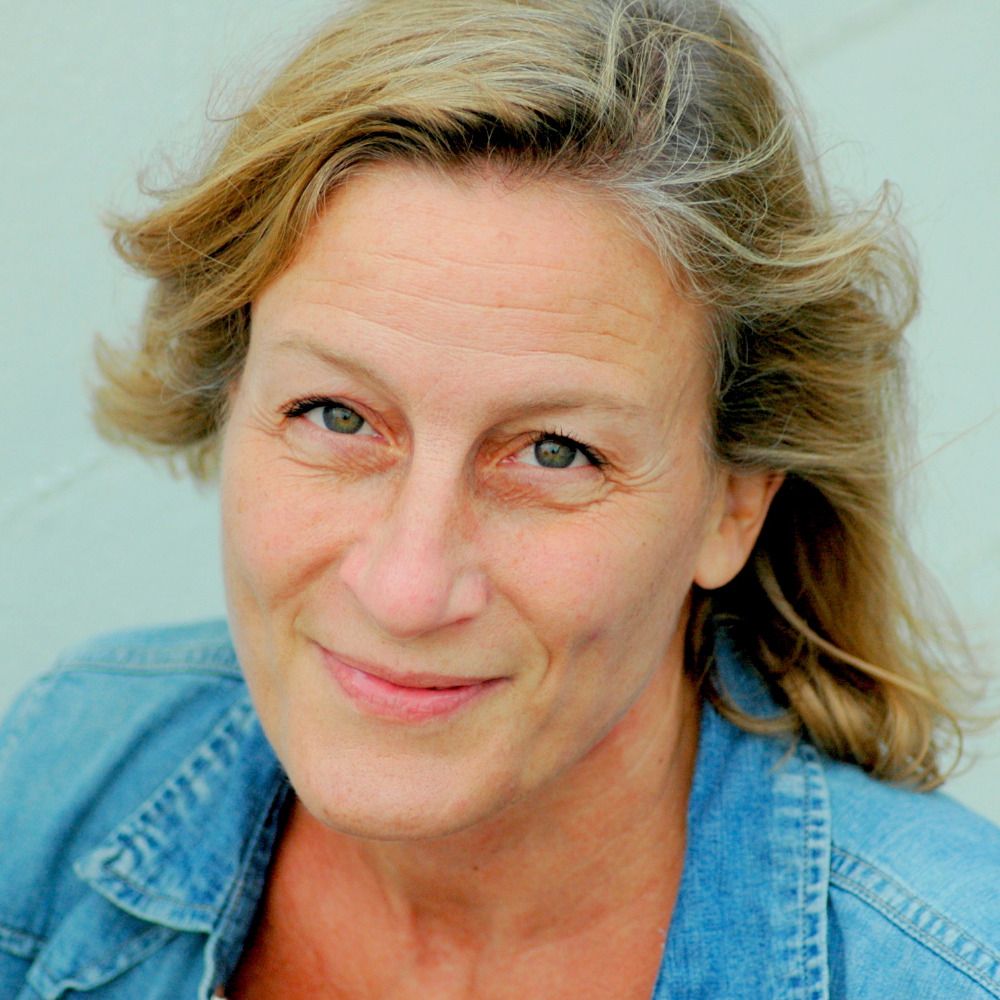
Director Max Planck Institute Marine Microbiology
Head of Symbiosis Department
https://www.mpi-bremen.de/en/Department-of-Symbiosis.html
Prof at Uni Bremen, MARUM
symbiosis, microbiome, marine microbiology
Nicole Dubilier is a marine microbiologist and director of the Symbiosis Department at the Max Planck Institute for Marine Microbiology since 2013 and a Professor of Microbial Symbioses at the University of Bremen. She is a pioneer in ecological and evolutionary symbiotic relationships between sea animals and their microbial partners inhabiting environments that harbour low nutrient concentrations. She was responsible for the discovery of a new form of symbiosis between two kinds of bacteria and the marine oligochaete Olavius algarvensis. .. more
Reposted by Marc Lynch, Brendan Nyhan, Nicole Dubilier , and 13 more Marc Lynch, Brendan Nyhan, Nicole Dubilier, John McLaren, Guy Grossman, Philip Nel, Robert C. Richards, Alan Richardson, David R. Miller, Brian Keegan, Simon Lester, Ezra Golberstein, Nathan P. Kalmoe, Dunlap, Peter Bergman, David Darmofal
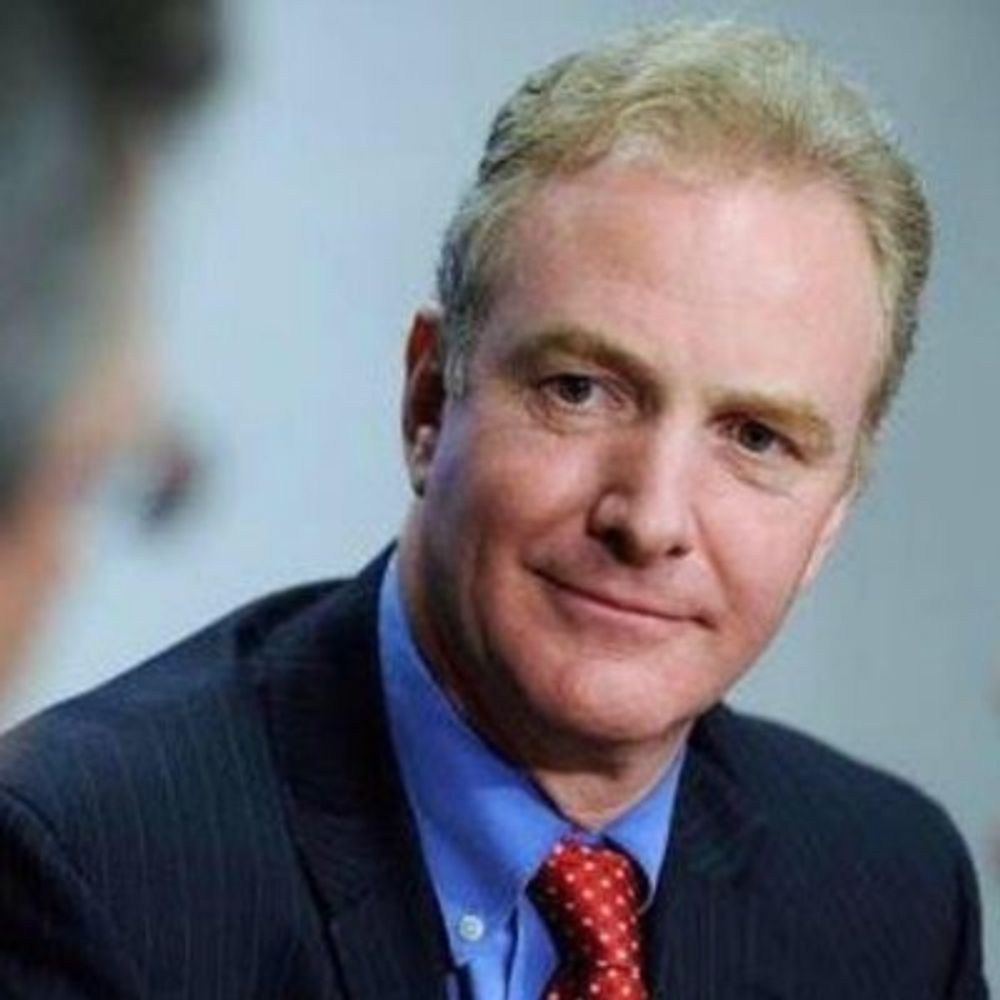

If a politician said this about any other faith, they would rightfully be run out of their party.
But this kind of despicable anti-Muslim rhetoric is so normalized that a sitting Senator uses it without consequence.
A stain on our Congress.
Reposted by Nicole Dubilier


Her research reveals how underground fungal networks support life on Earth.
Explore the hidden world beneath our feet:
tylerprize.org/laureates/toby-kiers
spun.earth/underground-atlas
@spun.earth

(paraphrasing @rosemarcario.bsky.social)
Reposted by Nicole Dubilier
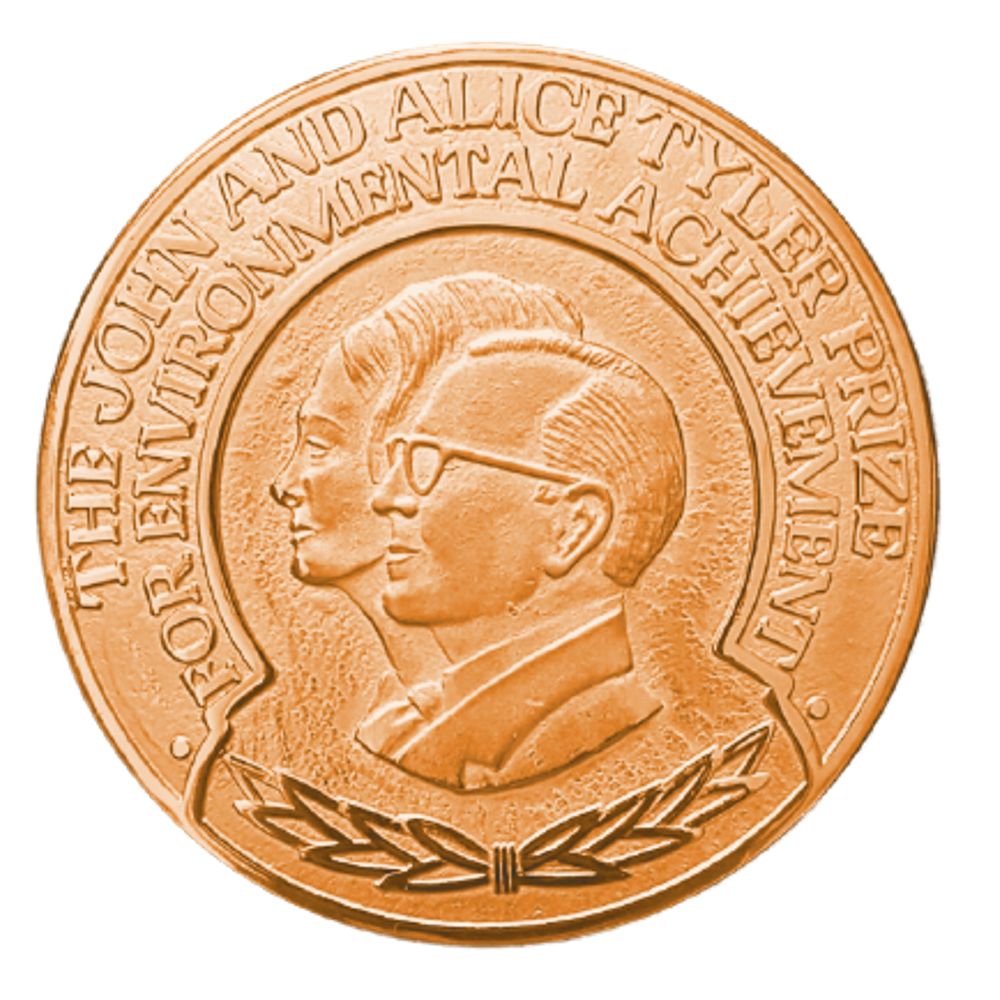
Her research reveals how underground fungal networks support life on Earth.
Explore the hidden world beneath our feet:
tylerprize.org/laureates/toby-kiers
spun.earth/underground-atlas
@spun.earth
Reposted by Nicole Dubilier, Jennifer Pett‐Ridge, Valentin Loux
go.nature.com/44P7nSm
If you missed it, the TL;DR is in my April thread below
Reposted by Nicole Dubilier


👉 smallthingsconsidered.blog/schaechter/2...
#MicroSky
Reposted by Nicole Dubilier
super cute video by charlotte brannon and great 🧵from manu prakash's lab
#MicroSky
Reposted by Nicole Dubilier

Reposted by Nicole Dubilier

Reposted by Nicole Dubilier

www.cell.com/issue/S2211-...
Reposted by Nicole Dubilier

Alongside the new work on gutless worms, our study shows that organosulfur cycling is also essential in lucinid holobionts. Lucinid host provides DMSP to its symbionts, sulphur-oxidising Thiodiazotropha and, a new member, Endozoicomonas.
Reposted by Nicole Dubilier

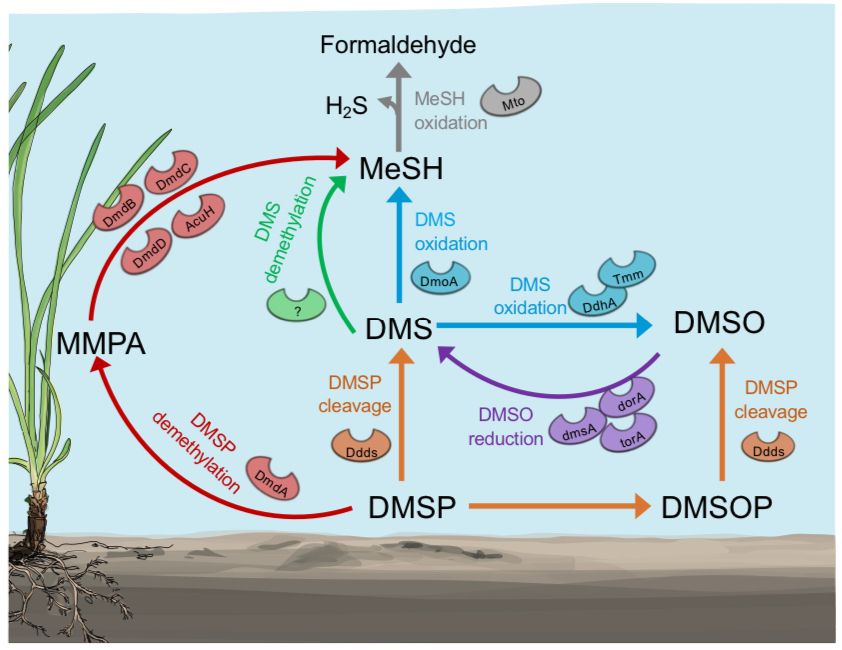
We explore how gutless marine worms and their bacterial symbionts use organosulfur compounds like DMSP and DMS - key molecules in marine sulfur cycling.
Our results show that these compounds support carbon and energy metabolism in the Olavius algarvensis symbiosis.

This was a wonderful collaboration with Sam Vohsen, Eslam Osman, Mandy Joye, Matt Saxton, grubervodicka.bsky.social, @ibaums.bsky.social
Reposted by Nicole Dubilier
Reposted by George A. O’Toole, David Moreira, Nicole Dubilier

It’s been four amazing days of stimulating discussions and sharing our science in a wonderfully relaxed and supportive atmosphere.
There was a truly genuine sense of community among all participants, which I really cherish.
Cheers, to the next one! 🌊


Reposted by Nicole Dubilier
Reposted by Christian R. Voolstra, Nicole Dubilier
It’s been four amazing days of stimulating discussions and sharing our science in a wonderfully relaxed and supportive atmosphere.
There was a truly genuine sense of community among all participants, which I really cherish.
Cheers, to the next one! 🌊

Reposted by Nicole Dubilier



#sciencejobs #jobalert #researchjob #cancer #marinescience #symbiosis #bioinformatics #MaxPlanck
Reposted by Anna O. Law, Nicole Dubilier, Scott L. Greer , and 11 more Anna O. Law, Nicole Dubilier, Scott L. Greer, Michael J. Allen, Joseph Schafer, Kevin Carey, Trevon D. Logan, Karen Benjamin Guzzo, Melanie C. Green, Michael D. McDonald, James Goodwin, Erol Akçay, Nathan P. Kalmoe, Dan Immergluck

Reposted by Nicole Dubilier
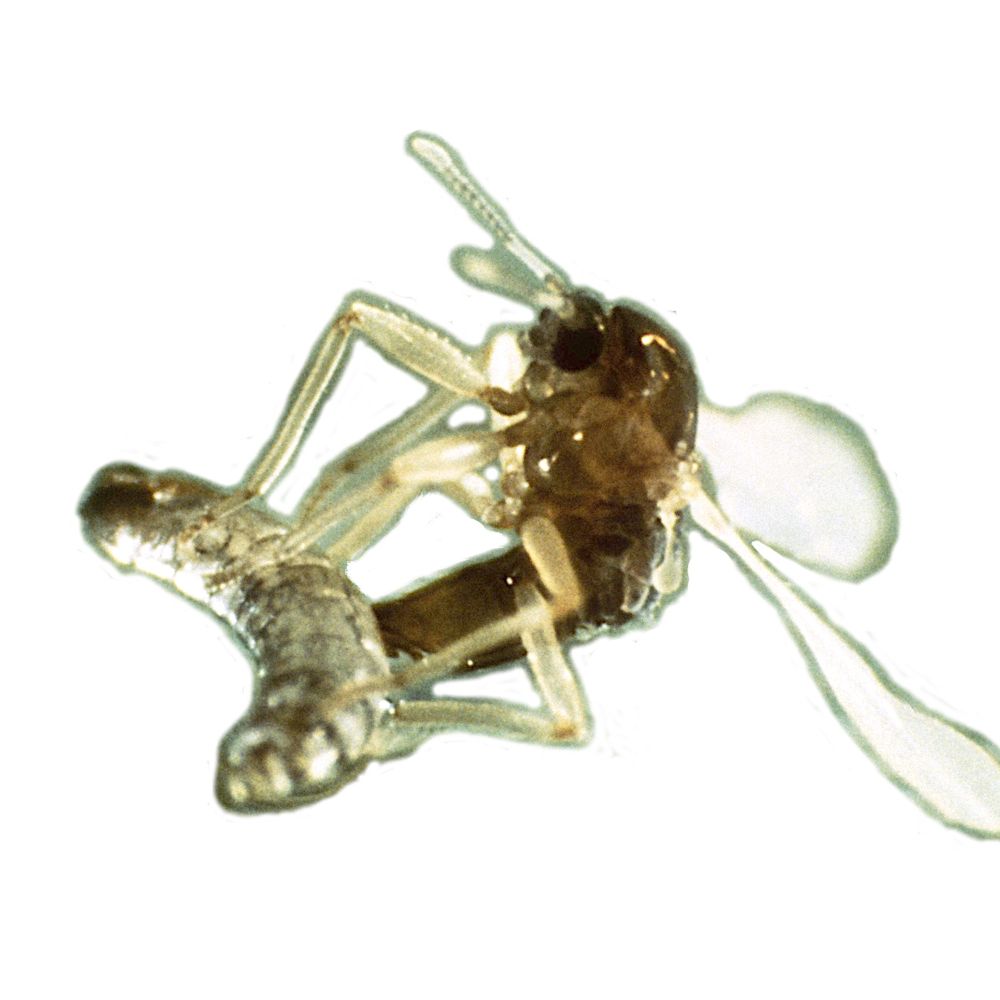

Please spread widely!
#Postdoc in #Evolutionary #Genomics
-> www.mpg.de/25524526/
#Postdoc in #Molecular #Biology & #Cell #Signalling
-> www.mpg.de/25524509/
@mpi-evolbio.bsky.social @maxplanck.de
#ScienceJobs #EvoBio #MolBio #Ecology #Chronobiology #Marine #EntoSky #Biodiversity
Reposted by Meredith Broussard, Lisa W. Fazio, James Q. Wilson , and 39 more Meredith Broussard, Lisa W. Fazio, James Q. Wilson, Suresh Venkatasubramanian, Dorothy Bishop, Anna Nagurney, Brigitte Nerlich, Ben Bond‐Lamberty, Gavin A. Schmidt, Jesse H. Kroll, Julie L. Lockwood, Patrick A. Jansen, Joshua S. Weitz, Nicole Dubilier, Jason Stajich, Simon J. Greenhill, Michael A. Clemens, Hugo Mercier, Megan L. Ranney, Rosemary A. Joyce, Philip N. Cohen, Michael J. Allen, Andrew Curry, Jacob Montgomery, Juan Cole, Kris Inwood, Smith, Robert C. Richards, Rebecca Tushnet, Alan Richardson, Lauren Hersch Nicholas, Victor Galaz, Scott A. Imberman, Sebastian Karcher, Brian Keegan, Ann Bartow, Jack Stilgoe, Ted Temzelides, Christina Pagel, Annalee Newitz, David Darmofal, Jesse R. Lasky
Reposted by Ben H. Ansell, James Q. Wilson, Patrick A. Jansen , and 25 more Ben H. Ansell, James Q. Wilson, Patrick A. Jansen, Nicole Dubilier, Steve Peers, Carl Henrik Knutsen, Michael A. Clemens, Efrén O. Pérez, Juan Cole, John Collins, Jussi T. Eronen, Laurent Pech, David R. Miller, Ben Tonra, Michael D. McDonald, Philipp Sarasin, Henry Jones, Greg Linden, Matthew P. McAllister, Cullen S. Hendrix, Nancy M. Wingfield, Aviel Roshwald, Olúfẹ́mi Táíwò, Nathan P. Kalmoe, Francesco Nicoli, Colin Woodard, Andrew Kydd, David Darmofal

Trump is now calling for the arrest of elected representatives checking his power.
What else is left on the path to full-blown authoritarianism?
Reposted by Nicole Dubilier

𝟏 𝐏𝐨𝐬𝐭𝐝𝐨𝐜 + 𝟐 𝐏𝐡𝐃𝐬 𝐩𝐨𝐬𝐢𝐭𝐢𝐨𝐧𝐬.
Deadlines: Oct 29 & Nov 5. Links below.
Questions: nils.raedecker@hifmb.de
#Photosymbiosis #HIFMB #ERC #AcademicJobs
Reposted by Nicole Dubilier, Wolfgang Huber
I promise we will be grateful rather than annoyed. My email inbox is a disaster and I’m quite junior - and very few of us have secretarial support