




Sean Rudd
@seanrudd.bsky.social
Group leader @ Karolinska Institutet & SciLifeLab in Stockholm, Sweden. Interested in understanding how cancer drugs work.
Lab site - https://www.seanruddlab.com/
Genome stability | dNTP metabolism | Cancer therapy
Lab site - https://www.seanruddlab.com/
Genome stability | dNTP metabolism | Cancer therapy
Pinned
Sean Rudd
@seanrudd.bsky.social
· Oct 22

New review article from the group diving into the interplay between DNA precursor pool metabolism and genome instability. A relationship that's fundamental to cancer biology and underpins a number of therapeutic approaches, including nucleoside analogues 👇
journals.biologists.com/dmm/article/...
journals.biologists.com/dmm/article/...
Reposted by Sean Rudd

We carried out a mechanistic study on how the PCBP1 protein destabilizes i-motifs. Understanding these interactions helps clarify fundamental mechanisms that control genome function.
Grateful for the long-term support we have received! @kawresearch.bsky.social @mbb-umu.bsky.social
rdcu.be/e2pIv
Grateful for the long-term support we have received! @kawresearch.bsky.social @mbb-umu.bsky.social
rdcu.be/e2pIv
February 5, 2026 at 5:10 AM
We carried out a mechanistic study on how the PCBP1 protein destabilizes i-motifs. Understanding these interactions helps clarify fundamental mechanisms that control genome function.
Grateful for the long-term support we have received! @kawresearch.bsky.social @mbb-umu.bsky.social
rdcu.be/e2pIv
Grateful for the long-term support we have received! @kawresearch.bsky.social @mbb-umu.bsky.social
rdcu.be/e2pIv
Reposted by Sean Rudd

Unrepaired DNA-protein crosslinks cause a process that leads to premature aging and embryonic lethality in mice.
The findings in Science reveal a previously unrecognized link between defective DNA repair and immune-driven inflammatory disease. https://scim.ag/4qdZWf9
The findings in Science reveal a previously unrecognized link between defective DNA repair and immune-driven inflammatory disease. https://scim.ag/4qdZWf9

DNA-protein cross-links promote cGAS-STING–driven premature aging and embryonic lethality
DNA-protein cross-links (DPCs) are highly toxic DNA lesions that block replication and transcription, but their impact on organismal physiology is unclear. We identified a role for the metalloprotease...
www.science.org
February 4, 2026 at 8:25 PM
Unrepaired DNA-protein crosslinks cause a process that leads to premature aging and embryonic lethality in mice.
The findings in Science reveal a previously unrecognized link between defective DNA repair and immune-driven inflammatory disease. https://scim.ag/4qdZWf9
The findings in Science reveal a previously unrecognized link between defective DNA repair and immune-driven inflammatory disease. https://scim.ag/4qdZWf9
Reposted by Sean Rudd

"authors also express frustration at the amount of work expected for a single publishable unit, a concern we
share (while humbly noting that it may not be
held by the same authors when they serve as
reviewers of other work)" <-THAT www.nature.com/articles/s41... ht @ritastrack.bsky.social
share (while humbly noting that it may not be
held by the same authors when they serve as
reviewers of other work)" <-THAT www.nature.com/articles/s41... ht @ritastrack.bsky.social
The ever-changing communication of scientific discovery
Nature Biomedical Engineering - We take a look at how scientific articles have evolved over time and envision possible changes to how research findings are communicated in the age of digital media...
www.nature.com
February 3, 2026 at 9:55 PM
"authors also express frustration at the amount of work expected for a single publishable unit, a concern we
share (while humbly noting that it may not be
held by the same authors when they serve as
reviewers of other work)" <-THAT www.nature.com/articles/s41... ht @ritastrack.bsky.social
share (while humbly noting that it may not be
held by the same authors when they serve as
reviewers of other work)" <-THAT www.nature.com/articles/s41... ht @ritastrack.bsky.social
Reposted by Sean Rudd

apropos of absolutely nothing, a lot of scientists could profit from reading this editorial from legendary Conan Kornetsky upon retiring from an editor position.
link.springer.com/article/10.1...
link.springer.com/article/10.1...

Thoughts of an Ex-Editor - Psychopharmacology
Psychopharmacology -
link.springer.com
February 2, 2026 at 7:10 PM
apropos of absolutely nothing, a lot of scientists could profit from reading this editorial from legendary Conan Kornetsky upon retiring from an editor position.
link.springer.com/article/10.1...
link.springer.com/article/10.1...
Reposted by Sean Rudd
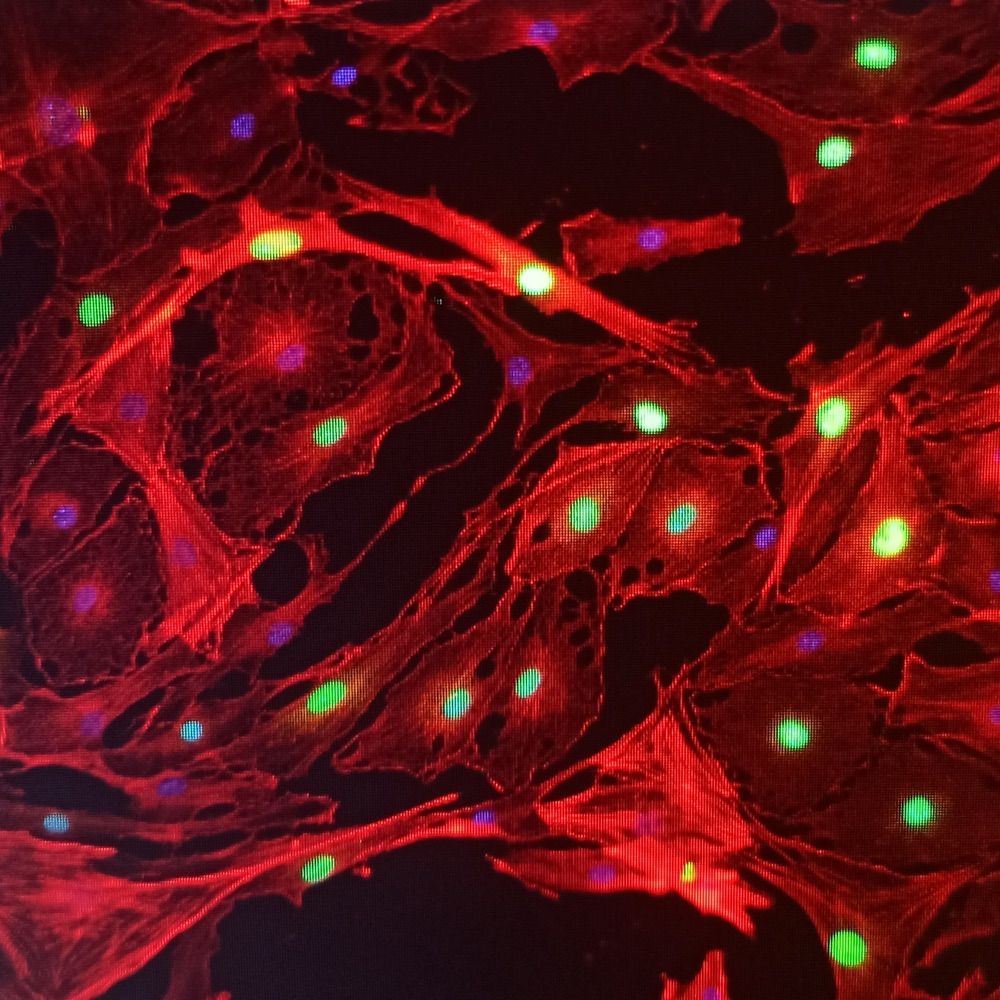
Dear Colleagues,
Delighted to share that our first lab paper is now published in Nature.!!! 😊😊😊
We identify a previously concealed “safety limit” in DNA replication program: cells intrinsically rate-limit PCNA via PAF15, shaping strand-specific and global replication dynamics.
👉 rdcu.be/e1bBt
Delighted to share that our first lab paper is now published in Nature.!!! 😊😊😊
We identify a previously concealed “safety limit” in DNA replication program: cells intrinsically rate-limit PCNA via PAF15, shaping strand-specific and global replication dynamics.
👉 rdcu.be/e1bBt

PAF15–PCNA exhaustion governs the strand-specific control of DNA replication
Nature - PCNA–PAF15 has a key role in determining replisome dynamics during genome replication and protecting against genome instability.
rdcu.be
January 29, 2026 at 6:30 PM
Dear Colleagues,
Delighted to share that our first lab paper is now published in Nature.!!! 😊😊😊
We identify a previously concealed “safety limit” in DNA replication program: cells intrinsically rate-limit PCNA via PAF15, shaping strand-specific and global replication dynamics.
👉 rdcu.be/e1bBt
Delighted to share that our first lab paper is now published in Nature.!!! 😊😊😊
We identify a previously concealed “safety limit” in DNA replication program: cells intrinsically rate-limit PCNA via PAF15, shaping strand-specific and global replication dynamics.
👉 rdcu.be/e1bBt
Reposted by Sean Rudd
Obesity rewires nucleotide metabolism in immune cells, making inflammatory responses via NLRP3 inflammasome much easier to trigger
www.science.org/doi/10.1126/... @science.org @zhenyuzhong.bsky.social @utswim.bsky.social
www.science.org/doi/10.1126/... @science.org @zhenyuzhong.bsky.social @utswim.bsky.social

January 16, 2026 at 3:41 AM
Obesity rewires nucleotide metabolism in immune cells, making inflammatory responses via NLRP3 inflammasome much easier to trigger
www.science.org/doi/10.1126/... @science.org @zhenyuzhong.bsky.social @utswim.bsky.social
www.science.org/doi/10.1126/... @science.org @zhenyuzhong.bsky.social @utswim.bsky.social
Reposted by Sean Rudd

Want to get the data out of a PDF figure? As in, the actual data – not a rough trace-along-the-lines version?
I made an app you might like: adamkucharski.github.io/pdf2plot/
It all started a few years ago... 🧵
I made an app you might like: adamkucharski.github.io/pdf2plot/
It all started a few years ago... 🧵
January 13, 2026 at 9:12 PM
Want to get the data out of a PDF figure? As in, the actual data – not a rough trace-along-the-lines version?
I made an app you might like: adamkucharski.github.io/pdf2plot/
It all started a few years ago... 🧵
I made an app you might like: adamkucharski.github.io/pdf2plot/
It all started a few years ago... 🧵
Reposted by Sean Rudd
Defending PhD student, looking over their thesis: “If I knew then what I know now, I could’ve done all of this in like 9 months.”
A thread about my favorite pioneering cave explorers and why I don’t think AI will ever “solve” biology.
A thread about my favorite pioneering cave explorers and why I don’t think AI will ever “solve” biology.

January 11, 2026 at 9:27 PM
Defending PhD student, looking over their thesis: “If I knew then what I know now, I could’ve done all of this in like 9 months.”
A thread about my favorite pioneering cave explorers and why I don’t think AI will ever “solve” biology.
A thread about my favorite pioneering cave explorers and why I don’t think AI will ever “solve” biology.
Reposted by Sean Rudd

@science.org Deep contrastive learning enables genome-wide virtual screening | Science www.science.org/doi/10.1126/...

Deep contrastive learning enables genome-wide virtual screening
Recent breakthroughs in protein structure prediction have opened new avenues for genome-wide drug discovery, yet existing virtual screening methods remain computationally prohibitive. We present DrugC...
www.science.org
January 9, 2026 at 6:55 PM
@science.org Deep contrastive learning enables genome-wide virtual screening | Science www.science.org/doi/10.1126/...
Reposted by Sean Rudd

I guess I should re-post from the Bird Site "The Rules For Academic Success here":
I always get asked for advice about starting/surviving the tenure track. Here are the rules I've found useful. Thought I'd put it out there for the masses...
This list gets longer all the time
I always get asked for advice about starting/surviving the tenure track. Here are the rules I've found useful. Thought I'd put it out there for the masses...
This list gets longer all the time
August 1, 2023 at 6:30 PM
I guess I should re-post from the Bird Site "The Rules For Academic Success here":
I always get asked for advice about starting/surviving the tenure track. Here are the rules I've found useful. Thought I'd put it out there for the masses...
This list gets longer all the time
I always get asked for advice about starting/surviving the tenure track. Here are the rules I've found useful. Thought I'd put it out there for the masses...
This list gets longer all the time
Reposted by Sean Rudd

This is a great and welcome acknowledgment that we need more publishing venues explicitly dedicated to limiting publication bias
journals.plos.org/plosbiology/...
journals.plos.org/plosbiology/...

Ending publication bias: A values-based approach to surface null and negative results
Sharing knowledge is a fundamental principle within the scientific community, yet null and negative results are still being underreported. This Consensus View discusses the problem of such publication...
journals.plos.org
December 23, 2025 at 4:05 PM
This is a great and welcome acknowledgment that we need more publishing venues explicitly dedicated to limiting publication bias
journals.plos.org/plosbiology/...
journals.plos.org/plosbiology/...
Reposted by Sean Rudd
It feels to me as if this is missing something about getting out of projects that are floundering with *something* to show for the effort and investment of funds.
Blog post: Just quit
Quitting projects in science is hard, but we should be doing a lot more of it.
open.substack.com/pub/arjunraj...
Quitting projects in science is hard, but we should be doing a lot more of it.
open.substack.com/pub/arjunraj...

Just quit
Quitting projects in science is hard, but we should be doing a lot more of it.
open.substack.com
December 30, 2025 at 7:18 PM
It feels to me as if this is missing something about getting out of projects that are floundering with *something* to show for the effort and investment of funds.
Reposted by Sean Rudd

Blog post: Just quit
Quitting projects in science is hard, but we should be doing a lot more of it.
open.substack.com/pub/arjunraj...
Quitting projects in science is hard, but we should be doing a lot more of it.
open.substack.com/pub/arjunraj...
Just quit
Quitting projects in science is hard, but we should be doing a lot more of it.
open.substack.com
December 30, 2025 at 3:02 PM
Blog post: Just quit
Quitting projects in science is hard, but we should be doing a lot more of it.
open.substack.com/pub/arjunraj...
Quitting projects in science is hard, but we should be doing a lot more of it.
open.substack.com/pub/arjunraj...
Reposted by Sean Rudd

A new community-driven lab handbook for reducing conflict and creating more positive and equitable work environments gets strong support from a survey of 200 researchers.
buff.ly/K7CGFLV
buff.ly/K7CGFLV

December 18, 2025 at 9:02 PM
A new community-driven lab handbook for reducing conflict and creating more positive and equitable work environments gets strong support from a survey of 200 researchers.
buff.ly/K7CGFLV
buff.ly/K7CGFLV
Reposted by Sean Rudd

Our call for 27 PULSE #postdocs is OPEN!
PhD within the last 3 years looking to grow your life science career? SciLifeLab PULSE (MSCA Cofund) offers 3-year postdoc fellowships at Swedish universities with academic & industry secondments 🧪 🖥️ 🧬
📅 Apply Dec 15, 2025-Mar 16, 2026
👉 bit.ly/3MD7Pwz
PhD within the last 3 years looking to grow your life science career? SciLifeLab PULSE (MSCA Cofund) offers 3-year postdoc fellowships at Swedish universities with academic & industry secondments 🧪 🖥️ 🧬
📅 Apply Dec 15, 2025-Mar 16, 2026
👉 bit.ly/3MD7Pwz

December 15, 2025 at 10:04 AM
Our call for 27 PULSE #postdocs is OPEN!
PhD within the last 3 years looking to grow your life science career? SciLifeLab PULSE (MSCA Cofund) offers 3-year postdoc fellowships at Swedish universities with academic & industry secondments 🧪 🖥️ 🧬
📅 Apply Dec 15, 2025-Mar 16, 2026
👉 bit.ly/3MD7Pwz
PhD within the last 3 years looking to grow your life science career? SciLifeLab PULSE (MSCA Cofund) offers 3-year postdoc fellowships at Swedish universities with academic & industry secondments 🧪 🖥️ 🧬
📅 Apply Dec 15, 2025-Mar 16, 2026
👉 bit.ly/3MD7Pwz
Reposted by Sean Rudd

Increasing TET expression and 5-hydroxymethylcytosine formation by a carbocyclic 5-aza-2'-deoxy-cytidine antimetabolite https://www.biorxiv.org/content/10.1101/2025.11.26.690736v1
November 30, 2025 at 7:46 PM
Increasing TET expression and 5-hydroxymethylcytosine formation by a carbocyclic 5-aza-2'-deoxy-cytidine antimetabolite https://www.biorxiv.org/content/10.1101/2025.11.26.690736v1
Reposted by Sean Rudd

Treatment with ATC, an investigational azanucleoside, invariably leads to BCP-ALL in immunodeficient mice. Read the full article in Blood Neoplasia: buff.ly/wnGzwQt

November 28, 2025 at 8:11 PM
Treatment with ATC, an investigational azanucleoside, invariably leads to BCP-ALL in immunodeficient mice. Read the full article in Blood Neoplasia: buff.ly/wnGzwQt
Reposted by Sean Rudd

NUDT5 regulates the global efficacy of nucleoside analog drugs by coordinating purine synthesis and PRPP allocation https://www.biorxiv.org/content/10.1101/2025.11.20.689348v1
November 20, 2025 at 6:46 PM
NUDT5 regulates the global efficacy of nucleoside analog drugs by coordinating purine synthesis and PRPP allocation https://www.biorxiv.org/content/10.1101/2025.11.20.689348v1
Reposted by Sean Rudd

Our data complements recent works from the Yang, Kubicek/Huber, DeBerardinis, and Jourdain labs to position NUDT5 as a core regulator of nucleotide metabolism and rheostat of NA drug efficacy.
A huge thanks to the Altun lab, SciLifeLab DDDP, @seanrudd.bsky.social, and others.
3/n
A huge thanks to the Altun lab, SciLifeLab DDDP, @seanrudd.bsky.social, and others.
3/n
November 21, 2025 at 3:43 PM
Our data complements recent works from the Yang, Kubicek/Huber, DeBerardinis, and Jourdain labs to position NUDT5 as a core regulator of nucleotide metabolism and rheostat of NA drug efficacy.
A huge thanks to the Altun lab, SciLifeLab DDDP, @seanrudd.bsky.social, and others.
3/n
A huge thanks to the Altun lab, SciLifeLab DDDP, @seanrudd.bsky.social, and others.
3/n
Reposted by Sean Rudd
We find that NUDT5-depleted cells are stuck in de novo purine biosynthesis (DNPB) with impaired nucleotide salvage. NUDT5 binds PPAT, the rate-limiting enzyme of DNPB, and appears to regulate its activity and PRPP availability to impair salvage-mediated NA drug activation.
2/n
2/n
November 21, 2025 at 3:43 PM
We find that NUDT5-depleted cells are stuck in de novo purine biosynthesis (DNPB) with impaired nucleotide salvage. NUDT5 binds PPAT, the rate-limiting enzyme of DNPB, and appears to regulate its activity and PRPP availability to impair salvage-mediated NA drug activation.
2/n
2/n
Reposted by Sean Rudd
Happy to share a new preprint on NUDT5's role in regulating nucleoside analog (NA) drug efficacy. 🔗 👇
🧵: We show that perturbing NUDT5 abundance by RNAi or a PROTAC (DDD2), but not inhibition with TH5427, desensitizes cells to thiopurines and most NA drugs in a titratable manner.
1/n
🧵: We show that perturbing NUDT5 abundance by RNAi or a PROTAC (DDD2), but not inhibition with TH5427, desensitizes cells to thiopurines and most NA drugs in a titratable manner.
1/n
NUDT5 regulates the global efficacy of nucleoside analog drugs by coordinating purine synthesis and PRPP allocation https://www.biorxiv.org/content/10.1101/2025.11.20.689348v1
November 21, 2025 at 3:43 PM
Happy to share a new preprint on NUDT5's role in regulating nucleoside analog (NA) drug efficacy. 🔗 👇
🧵: We show that perturbing NUDT5 abundance by RNAi or a PROTAC (DDD2), but not inhibition with TH5427, desensitizes cells to thiopurines and most NA drugs in a titratable manner.
1/n
🧵: We show that perturbing NUDT5 abundance by RNAi or a PROTAC (DDD2), but not inhibition with TH5427, desensitizes cells to thiopurines and most NA drugs in a titratable manner.
1/n
Reposted by Sean Rudd
1/New paper from Zheng Wu, Phong Nguyen et al. @cri-utsw.bsky.social shows how cells balance the two pathways that produce purine nucleotides: de novo purine biosynthesis (DNPB) and purine salvage. The surprising mechanism involves NUDT5, a Nudix hydrolase
www.science.org/doi/10.1126/...
www.science.org/doi/10.1126/...

NUDT5 regulates purine metabolism and thiopurine sensitivity by interacting with PPAT
Cells generate purine nucleotides through de novo purine biosynthesis (DNPB) and purine salvage. Purine salvage represses DNPB to prevent excessive purine nucleotide synthesis through mechanisms that ...
www.science.org
November 6, 2025 at 7:01 PM
1/New paper from Zheng Wu, Phong Nguyen et al. @cri-utsw.bsky.social shows how cells balance the two pathways that produce purine nucleotides: de novo purine biosynthesis (DNPB) and purine salvage. The surprising mechanism involves NUDT5, a Nudix hydrolase
www.science.org/doi/10.1126/...
www.science.org/doi/10.1126/...
Reposted by Sean Rudd
New preprint from the lab for any DNA repair or replication stress geeks out there!
www.biorxiv.org/content/10.1...
www.biorxiv.org/content/10.1...

A nuclease-driven mechanism of post-replicative ssDNA gap suppression.
The persistence of post-replicative ssDNA gaps following PRIMPOL-mediated replication repriming is linked to chemosensitivity, and in all models reported to date the nuclease MRE11 has been implicated...
www.biorxiv.org
October 22, 2025 at 6:56 PM
New preprint from the lab for any DNA repair or replication stress geeks out there!
www.biorxiv.org/content/10.1...
www.biorxiv.org/content/10.1...
Reposted by Sean Rudd


Reposted by Sean Rudd

From descriptive to quantitative biocatalysis
“The 1913 study ‘Die Kinetik der Invertinwirkung’, by Michaelis and Menten, marked a pivotal advancement in enzymology by illustrating the application of mechanistic models and quantitative kinetics to biocatalysis.”
doi.org/10.1038/s419...
“The 1913 study ‘Die Kinetik der Invertinwirkung’, by Michaelis and Menten, marked a pivotal advancement in enzymology by illustrating the application of mechanistic models and quantitative kinetics to biocatalysis.”
doi.org/10.1038/s419...

From descriptive to quantitative biocatalysis - Nature Catalysis
The 1913 study ‘Die Kinetik der Invertinwirkung’, by Michaelis and Menten, marked a pivotal advancement in enzymology by illustrating the application of mechanistic models and quantitative kinetics to biocatalysis. The foundational framework described back then continues to have a strong impact on enzymology, with profound influences that range from undergraduate education to structure–function studies and the format and content of contemporary kinetic databases.
doi.org
September 24, 2025 at 4:13 PM
From descriptive to quantitative biocatalysis
“The 1913 study ‘Die Kinetik der Invertinwirkung’, by Michaelis and Menten, marked a pivotal advancement in enzymology by illustrating the application of mechanistic models and quantitative kinetics to biocatalysis.”
doi.org/10.1038/s419...
“The 1913 study ‘Die Kinetik der Invertinwirkung’, by Michaelis and Menten, marked a pivotal advancement in enzymology by illustrating the application of mechanistic models and quantitative kinetics to biocatalysis.”
doi.org/10.1038/s419...