




I'm a sociologist working at the Center for Research in Economics and Statistics (CREST)
I also have a website: patrickpraeg.com
École Nationale de la Statistique et de l'Administration Économique; Centre de Recherche en Économie et Statistique • Health disparities and outcomes, Intergenerational and Educational Inequality Studies, Employment and Welfare Studies
Reposted by Patrick Präg, Prokla Redaktion, Martin Winter


Reposted by Patrick Präg


Reposted by Ben Barr, Caroline Krafft, Patrick Präg


"Stratification of Post-Birth Labour Supply in a High- and Low- Maternal Employment Regime"
www.sciencedirect.com/science/arti...
Short version: Germany has much bigger motherhood penalties than France, but they are not more socially stratified.
That wasn’t what we expected.
🧵⬇️


In which, for the first time ever, I ask "What's the mechanism?" and also suggest that sometimes you may actually *not* be interested in causal inference.
www.the100.ci/2026/02/13/o...
Reposted by Patrick Präg

🔬Paper: www.sciencedirect.com/science/arti...
📰Press release: www.ru.nl/onderzoek/on...

Reposted by Patrick Präg
- Data confidentiality: what kind of data do you give it access to?
- Data security: how do you deal with the risk that the agent does something stupid with your data?
Reposted by Patrick Präg, Krzysztof Krakowski
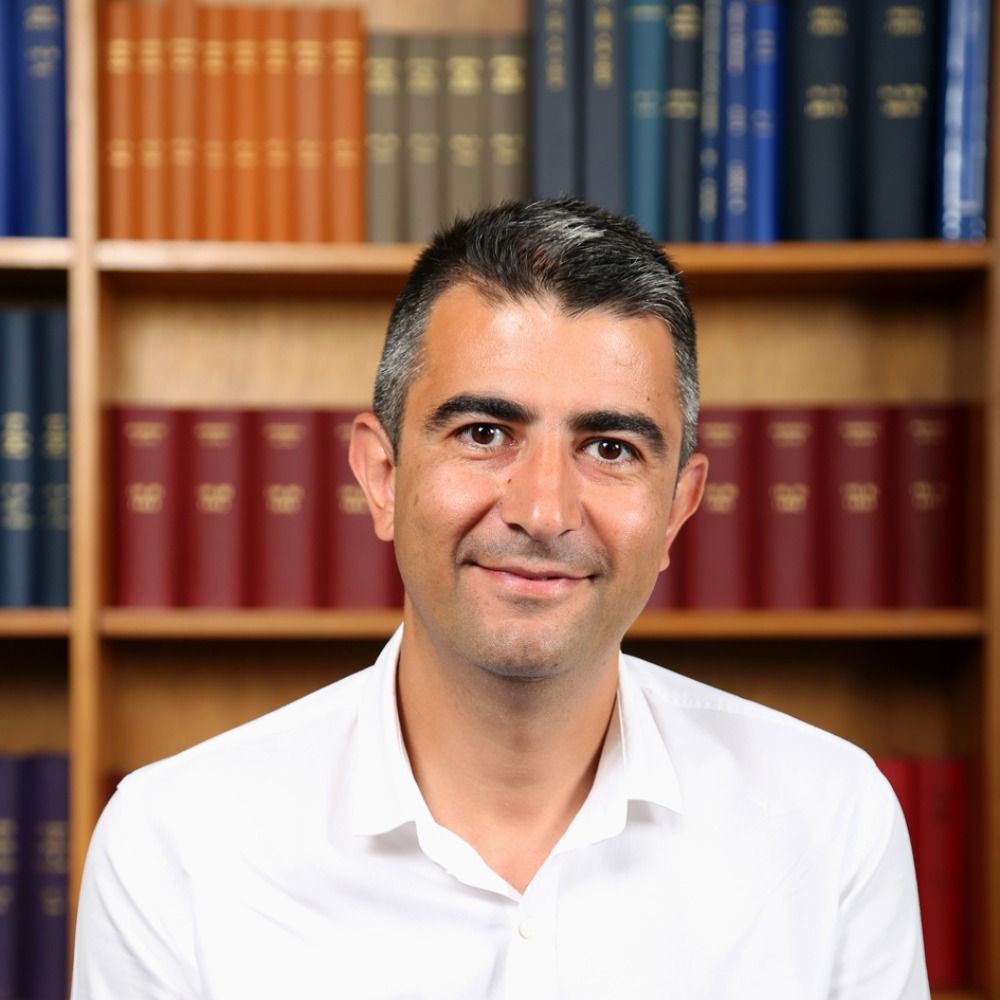
We find that religious markers (esp. beards) can reduce perceived trustworthiness in Turkey.
(That's why you often see me clean shaven ;-)
Reposted by Patrick Präg

Reposted by Patrick Präg


We show that childhood exposure to ethnic outgroups increases the prob. of #interethnic marriage decades later, using historical linked US census data (1880–1910) and next-door neighbor comparisons 🏠🌃
Read more here:
shorturl.at/U0IHR
Reposted by Patrick Präg




Reposted by Brian A. Nosek, Dan Goldhaber, Brendan Nyhan , and 32 more Brian A. Nosek, Dan Goldhaber, Brendan Nyhan, James P. Collins, Ben Bond‐Lamberty, Ruth Dassonneville, Alistair Munro, Jörg Peters, Brian Schaffner, Caroline Krafft, Philip N. Cohen, Alexander Wuttke, John Holbein, Justin H. Kirkland, Chris Hanretty, Scott Clifford, Valerie Mueller, Ingo Rohlfing, Michael Kevane, Flávio Azevedo, Max Nathan, Veli‐Matti Karhulahti, Philip Cowley, Julia Lynch, Juan Moreno‐Cruz, Madeleine Pownall, Patrick Präg, Marcus Credé, Stuart J. Turnbull‐Dugarte, Tom Louwerse, Aleksandra Urman, Samuel Coavoux, Jake Anders, Roman Senninger, Joan Dudney


Reposted by Étienne Ollion, Patrick Präg
Très contente de partager enfin les résultats d'une longue enquête sur cette question dans la dernière Revue française de science politique :
shs.cairn.info/tap-t78ca45t...
🧵
Reposted by Alexi Gugushvili, Patrick Präg

Through their own experiences, their family & friends and the media! 👯♂️
Individuals who experienced upward mobility and those who frequently watch reality TV perceive more equality. 📺
With @a-gugushvili.bsky.social as wonderful lead author!
Reposted by Patrick Präg

#sociology #EconTwitter #socialmobility
osf.io/preprints/so...
Reposted by Patrick Präg


Bringing economic & family sociology into the digital era, we examine how online banking shapes who holds the purse strings among UK couples: doi.org/10.1093/esr/...
@sriucl.bsky.social
Reposted by Patrick Präg


Reposted by Steve Peers, Ben Harris‐Roxas, Patrick Präg


Reposted by Patrick Präg

Reposted by Mark J. Brandt, Patrick Präg



we administered an original survey to a sample of 10-to-12-year olds, their parents, and a national sample to assess the extent to which values can provide a foundation for political ideology.
we find that values structure political preferences among children.
Reposted by Patrick Präg


Reposted by Patrick Präg
en.wiktionary.org/wiki/outrage
Reposted by Patrick Präg

youtu.be/tN1GEiO1vmI

www.swarthmore.edu/u...
please share!
Reposted by Alexi Gugushvili, Andreas Haupt
Reposted by Ingmar Weber, Patrick Präg

In Bowling with ChatGPT ( #TheWebConference2026), we study whether a similar shift is unfolding in interactions with conversational AI.
arxiv link: arxiv.org/abs/2602.01114
Reposted by Scott L. Greer, Calvin K. Lai, Cameron Brick , and 12 more Scott L. Greer, Calvin K. Lai, Cameron Brick, Ian Hussey, Max Nathan, Lauren Hersch Nicholas, Nazita Lajevardi, Margot C. Finn, Sofia Stathi, Patrick Präg, Marko Lindroos, Adele Perry, Simon Wiederhold, Claudia Landwehr, Richard Moorhead



These authors wanted to know whether gender shapes how scholars are treated when presenting research.
So they built a massive dataset of 2,000+ economics seminars, job talks, and conference presentations from 2019–2023...