




John Holbein
@johnholbein1.bsky.social
Associate Professor of Public Policy, Politics, and Education @UVA.
I share social science.
Political science
58%
Sociology
13%
Pinned
John Holbein
@johnholbein1.bsky.social
· Jun 12
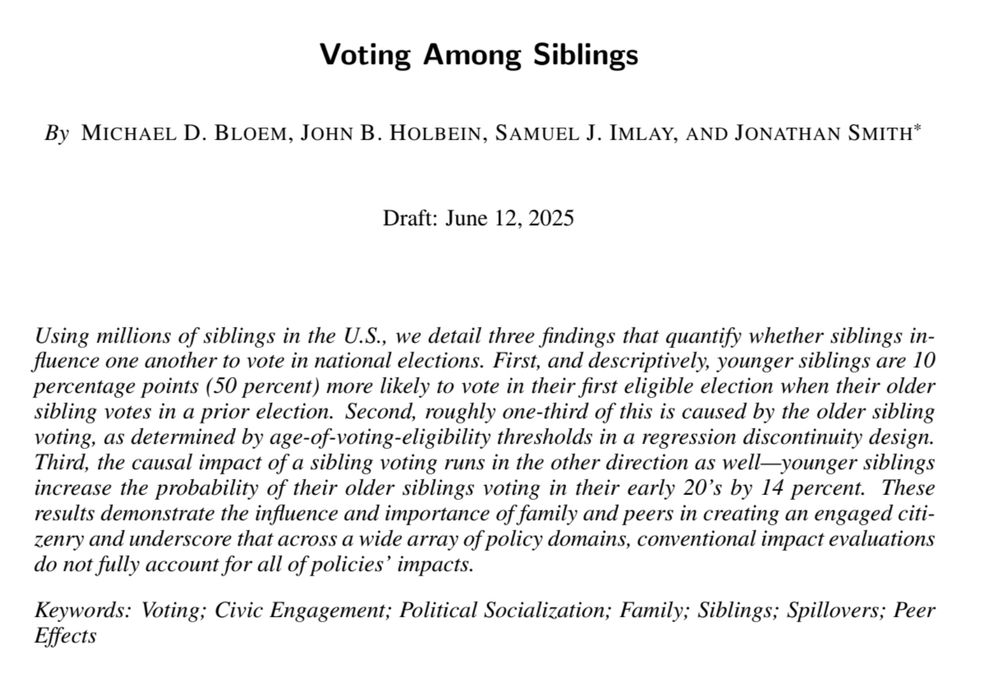
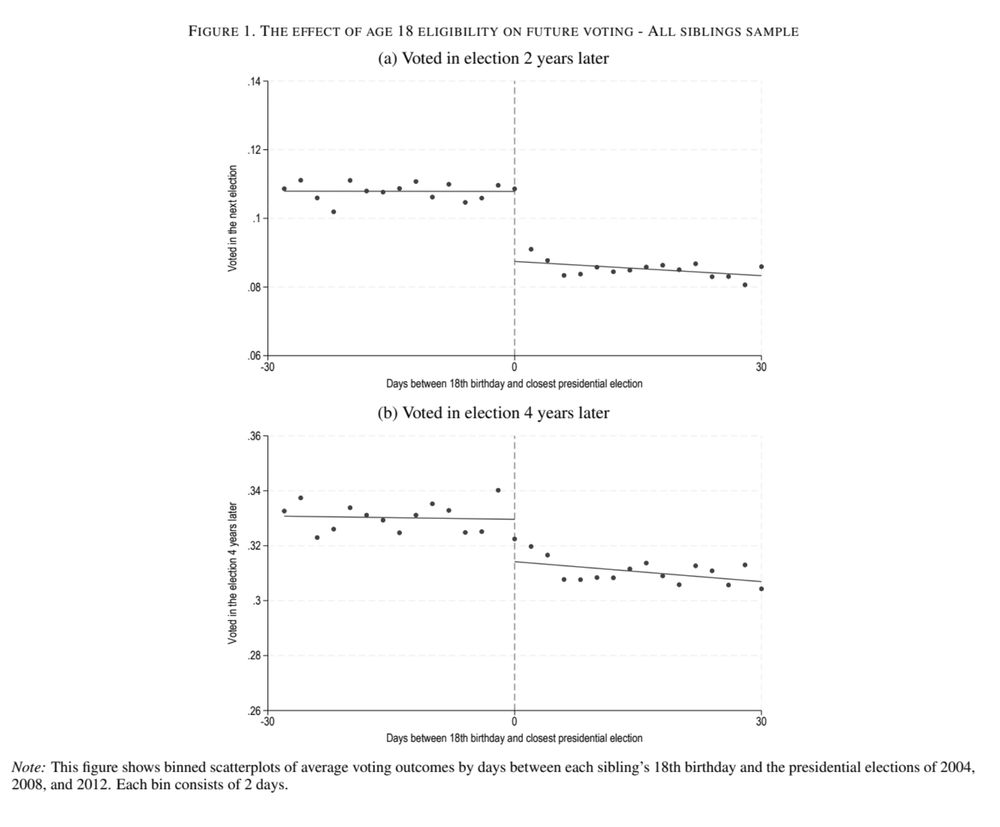
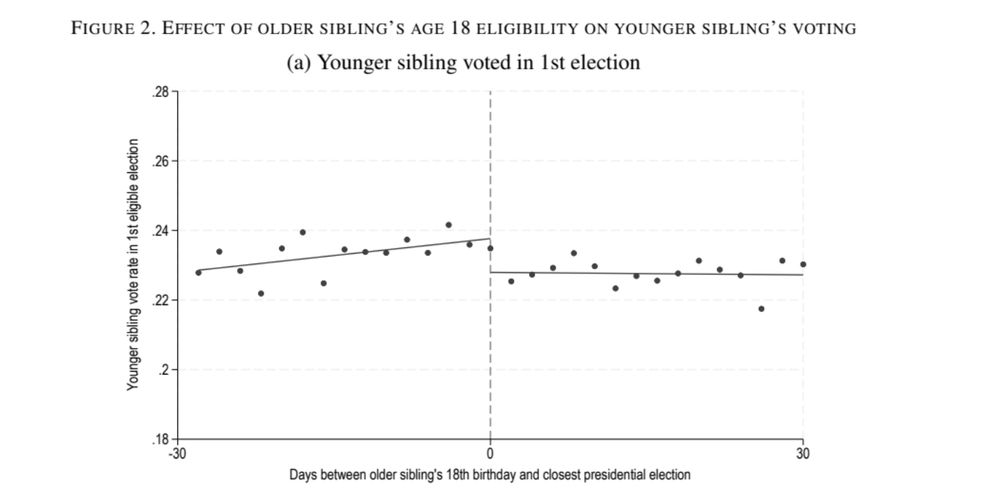
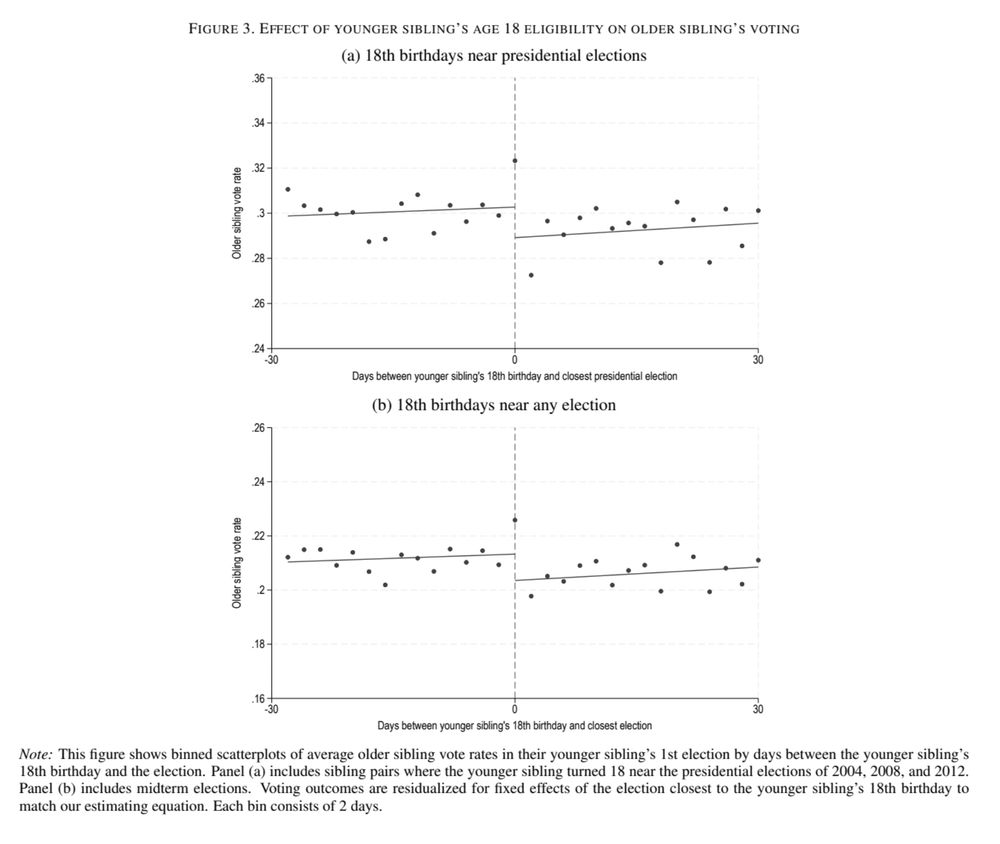
Did you know that your siblings can influence whether you vote?
Well, because of our new working paper you do!
@mike-bloem.bsky.social, @jonisaacsmith.bsky.social, sam imlay
Well, because of our new working paper you do!
@mike-bloem.bsky.social, @jonisaacsmith.bsky.social, sam imlay


In the 1950s, Supreme Court justices, regardless of which party appointed them, were about equally likely to side with the wealthy.
Fast-forward to today: Republican-appointed justices have shifted sharply, voting far more often in favor of the rich.
Fast-forward to today: Republican-appointed justices have shifted sharply, voting far more often in favor of the rich.
it's depressing


"We find that minimum wages substantially reduce intergroup wage inequality at least up to the 20th wage percentile, with no evidence of adverse employment effects."
[sentimental dad post]: I was thinking today about how amazing it is that young kids can love and forgive others almost intuitively.
Reposted by Bruce D. Baker

Billionaires bankrolling data fraud (of Gino) on Twitter.
I linked the paper lower in the thread.
Also, this isn't quite accurate.
p < 0.05 in the pooled treatment.
p = 0.066 that you reference is for the difference between restricted and unrestricted.
p < 0.01 for unrestricted treatment itself.
Also, this isn't quite accurate.
p < 0.05 in the pooled treatment.
p = 0.066 that you reference is for the difference between restricted and unrestricted.
p < 0.01 for unrestricted treatment itself.
I linked the paper lower in the thread.
Also, this isn't quite accurate.
p < 0.05 in the pooled treatment.
p = 0.066 that you reference is for the difference between restricted and unrestricted.
p < 0.01 for unrestricted treatment itself.
Also, this isn't quite accurate.
p < 0.05 in the pooled treatment.
p = 0.066 that you reference is for the difference between restricted and unrestricted.
p < 0.01 for unrestricted treatment itself.
I linked the paper lower in the thread.
Also, this isn't quite accurate.
p < 0.05 in the pooled treatment.
p = 0.066 that you reference is for the difference between restricted and unrestricted.
p < 0.01 for unrestricted treatment itself.
Also, this isn't quite accurate.
p < 0.05 in the pooled treatment.
p = 0.066 that you reference is for the difference between restricted and unrestricted.
p < 0.01 for unrestricted treatment itself.
AI Tutoring Enhances Student Learning Without Crowding Out Reading Effort
We study how AI tutoring affects learning in higher education through a randomized experiment with 334 university students preparing for an incentiviz...
www.iza.org
"AI Tutoring Enhances Student Learning Without Crowding Out Reading Effort"
www.iza.org/publications...
www.iza.org/publications...

"AI tutoring functions less as a substitute ... and more as a scaffold that supports comprehension when students experience difficulty."

The researchers found that unrestricted access to the AI tutor significantly outperforms restricted access noticeably.
This contradicts concerns about students overly relying on AI tutors.
Restricted access did not produce a statistically significant impact over studying without AI.
This contradicts concerns about students overly relying on AI tutors.
Restricted access did not produce a statistically significant impact over studying without AI.