


Kranzusch Lab
@kranzuschlab.bsky.social
Harvard Medical School, Dana Farber Cancer Institute
https://kranzuschlab.med.harvard.edu
https://kranzuschlab.med.harvard.edu
Reposted by Kranzusch Lab
I’m thrilled to share our work on phage triggers of the bacterial immune system in its final form @natmicrobiol.nature.com www.nature.com/articles/s41...

A phage protein screen identifies triggers of the bacterial innate immune system - Nature Microbiology
A library of 400 phage protein-coding genes is used to find a trove of antiphage systems, revealing systems that target tail fibre and major capsid proteins.
www.nature.com
January 18, 2026 at 10:45 PM
I’m thrilled to share our work on phage triggers of the bacterial immune system in its final form @natmicrobiol.nature.com www.nature.com/articles/s41...
Reposted by Kranzusch Lab

Preprint out: We characterise PUA-Cal-HAD, a widespread bacterial antiphage defence family. An infection cue switches a preassembled complex into an immune filament that drains dNTPs via a coupled two-enzyme cascade, and phage DNA mimics can block filament assembly (anti-polymerisation).
A methylome-derived m6-dAMP trigger assembles a PUA-Cal-HAD immune filament that depletes dNTPs to abort phage infection
Bacteria must distinguish phage attack from normal homeostatic processes, yet the danger signals that trigger many defence systems remain unknown. Here, we show that a PUA-Calcineurin-CE-HAD module from Escherichia coli ECOR28 confers broad anti-phage protection by binding Dam-methylated deoxyadenosine monophosphate (m6-dAMP) generated during phage-induced chromosome degradation. Ligand binding converts a preassembled PUA-Calcineurin-CE hexamer loaded with six HAD phosphatases into a polymerising filament. The filament acts as a high-flux dNTP sink through a two-enzyme cascade: HAD first dephosphorylates dATP to dADP, and Calcineurin-CE then converts dADP to dAMP. dNTP collapse halts phage replication and enforces abortive infection. Multiple mobile-element DNA mimic proteins block filament assembly, revealing a direct phage counter-defence. More broadly, our findings extend a conserved, cross-kingdom paradigm of immune filament assembly to nucleotide-depletion antiviral defence and suggest modified-nucleotide sensing by related PUA-Calcineurin-CE modules as a widespread, underappreciated bacterial strategy. ### Competing Interest Statement The authors have declared no competing interest. NIHR Southampton Biomedical Research Centre, https://ror.org/01qqpzg67, Postdoctoral Bridging Fellowship F.L.N. is supported by a Wessex Health Partners (WHP) and National Institute for Health and Care Research Wessex Experimental Medicine Network (NIHR WEMN), Seed fund National Institutes of Health, GM145888, U24 GM129539) Maloris Foundation Memorial Sloan Kettering Cancer Center, P30-CA008748 Simons Foundation, SF349247 New York State Assembly
www.biorxiv.org
January 17, 2026 at 2:52 PM
Preprint out: We characterise PUA-Cal-HAD, a widespread bacterial antiphage defence family. An infection cue switches a preassembled complex into an immune filament that drains dNTPs via a coupled two-enzyme cascade, and phage DNA mimics can block filament assembly (anti-polymerisation).
Reposted by Kranzusch Lab

Out Now! A phage protein screen identifies triggers of the bacterial innate immune system #MicroSky

A phage protein screen identifies triggers of the bacterial innate immune system
Nature Microbiology, Published online: 16 January 2026; doi:10.1038/s41564-025-02239-6A library of 400 phage protein-coding genes is used to find a trove of antiphage systems, revealing systems that target tail fibre and major capsid proteins.
go.nature.com
January 16, 2026 at 4:53 PM
Out Now! A phage protein screen identifies triggers of the bacterial innate immune system #MicroSky
Reposted by Kranzusch Lab

@science.org Deep contrastive learning enables genome-wide virtual screening | Science www.science.org/doi/10.1126/...

Deep contrastive learning enables genome-wide virtual screening
Recent breakthroughs in protein structure prediction have opened new avenues for genome-wide drug discovery, yet existing virtual screening methods remain computationally prohibitive. We present DrugC...
www.science.org
January 9, 2026 at 6:55 PM
@science.org Deep contrastive learning enables genome-wide virtual screening | Science www.science.org/doi/10.1126/...
Reposted by Kranzusch Lab
A systematic analysis of STAND NTPases and their associated sensor domains in bacterial immunity 🤯 Mind-blowing work !

Diverse bacterial pattern recognition receptors sense the conserved phage proteome
Recognition of foreign molecules inside cells is critical for immunity in all domains of life. Proteins of the STAND NTPase superfamily, including eukaryotic nucleotide-binding oligomerization domain ...
www.biorxiv.org
January 5, 2026 at 12:17 PM
A systematic analysis of STAND NTPases and their associated sensor domains in bacterial immunity 🤯 Mind-blowing work !
Reposted by Kranzusch Lab

Congratulations to Doi Basu @dwaipayanbasu.bsky.social for publishing his first first-author paper from the lab!
The cryoEM structure of a tubulin-like protein from bacteriophage Goslar forms "microtubules" with nine protofilaments!
authors.elsevier.com/a/1mM253SNvc...
The cryoEM structure of a tubulin-like protein from bacteriophage Goslar forms "microtubules" with nine protofilaments!
authors.elsevier.com/a/1mM253SNvc...
authors.elsevier.com
December 30, 2025 at 5:35 AM
Congratulations to Doi Basu @dwaipayanbasu.bsky.social for publishing his first first-author paper from the lab!
The cryoEM structure of a tubulin-like protein from bacteriophage Goslar forms "microtubules" with nine protofilaments!
authors.elsevier.com/a/1mM253SNvc...
The cryoEM structure of a tubulin-like protein from bacteriophage Goslar forms "microtubules" with nine protofilaments!
authors.elsevier.com/a/1mM253SNvc...
New structures of the HSV-1 helicase-primase complex from @abrahamlabhms.bsky.social
www.cell.com/cell/fulltex...
www.cell.com/cell/fulltex...

December 29, 2025 at 4:11 PM
New structures of the HSV-1 helicase-primase complex from @abrahamlabhms.bsky.social
www.cell.com/cell/fulltex...
www.cell.com/cell/fulltex...
Reposted by Kranzusch Lab

Large scale prospective evaluation of co-folding across 557 Mac1-ligand complexes and three virtual screens [new]
Mac1 co-folding eval: Pose prediction, conform. change, & hit ID post-training.
Mac1 co-folding eval: Pose prediction, conform. change, & hit ID post-training.


December 29, 2025 at 2:38 AM
Large scale prospective evaluation of co-folding across 557 Mac1-ligand complexes and three virtual screens [new]
Mac1 co-folding eval: Pose prediction, conform. change, & hit ID post-training.
Mac1 co-folding eval: Pose prediction, conform. change, & hit ID post-training.
Reposted by Kranzusch Lab
#microsky #phagesky
The 3rd (? Lost track!) manuscript on a CRISPR/anti-CRISPR -based transposon tool to study gene essentiality in #phages
www.biorxiv.org/content/10.6...
The 3rd (? Lost track!) manuscript on a CRISPR/anti-CRISPR -based transposon tool to study gene essentiality in #phages
www.biorxiv.org/content/10.6...

High-throughput transposon mutagenesis defines the essential genome of diverse phages
Phages are important drivers of bacterial evolution with therapeutic potential as antimicrobials. However, gaps in our understanding of phages and our inability to rapidly engineer them with new genet...
www.biorxiv.org
December 21, 2025 at 5:01 AM
#microsky #phagesky
The 3rd (? Lost track!) manuscript on a CRISPR/anti-CRISPR -based transposon tool to study gene essentiality in #phages
www.biorxiv.org/content/10.6...
The 3rd (? Lost track!) manuscript on a CRISPR/anti-CRISPR -based transposon tool to study gene essentiality in #phages
www.biorxiv.org/content/10.6...
Reposted by Kranzusch Lab

Vaults. They are cell biology's greatest puzzle! This preprint from Martin Beck's lab shows them docked on ER membranes with a ribosome inside. What on earth is going on there??
#CellBiology #WTFology
www.biorxiv.org/content/10.6...
#CellBiology #WTFology
www.biorxiv.org/content/10.6...

The vault associates with membranes in situ
The eukaryotic vault particle is a giant ribonucleoprotein complex that assembles into an iconic barrel-like cage. Its cellular function has remained elusive despite extensive characterization. Using ...
www.biorxiv.org
December 16, 2025 at 6:35 AM
Vaults. They are cell biology's greatest puzzle! This preprint from Martin Beck's lab shows them docked on ER membranes with a ribosome inside. What on earth is going on there??
#CellBiology #WTFology
www.biorxiv.org/content/10.6...
#CellBiology #WTFology
www.biorxiv.org/content/10.6...
Reposted by Kranzusch Lab

Bacterial genomes encode a rich repertoire of antiphage systems, but we still know surprisingly little about when these systems are actually expressed.
In this preprint, Lucas Paoli et al, ask what shapes antiphage systems expression in native contexts.
www.biorxiv.org/content/10.6...
In this preprint, Lucas Paoli et al, ask what shapes antiphage systems expression in native contexts.
www.biorxiv.org/content/10.6...

Environment and physiology shape antiphage system expression
Bacteria and archaea encode on average ten antiphage systems. Quorum sensing, cellular, or transcription factors can regulate specific systems (CRISPR-Cas, CBASS). Yet, a systematic assessment of anti...
www.biorxiv.org
December 15, 2025 at 9:49 PM
Bacterial genomes encode a rich repertoire of antiphage systems, but we still know surprisingly little about when these systems are actually expressed.
In this preprint, Lucas Paoli et al, ask what shapes antiphage systems expression in native contexts.
www.biorxiv.org/content/10.6...
In this preprint, Lucas Paoli et al, ask what shapes antiphage systems expression in native contexts.
www.biorxiv.org/content/10.6...
Reposted by Kranzusch Lab

The EMBO Gold Medal 2025 was awarded to Tanmay Bharat and David Bikard: https://www.embo.org/press-releases/embo-gold-medal-2025-awarded-to-tanmay-bharat-and-david-bikard/ 🧪
At #CellBio2025, the EMBO Gold Medal was handed over to David Bikard in recognition of his pioneering work on #GeneEditing.
At #CellBio2025, the EMBO Gold Medal was handed over to David Bikard in recognition of his pioneering work on #GeneEditing.


December 10, 2025 at 1:40 PM
The EMBO Gold Medal 2025 was awarded to Tanmay Bharat and David Bikard: https://www.embo.org/press-releases/embo-gold-medal-2025-awarded-to-tanmay-bharat-and-david-bikard/ 🧪
At #CellBio2025, the EMBO Gold Medal was handed over to David Bikard in recognition of his pioneering work on #GeneEditing.
At #CellBio2025, the EMBO Gold Medal was handed over to David Bikard in recognition of his pioneering work on #GeneEditing.
Exciting pre-print on new variants of anti-phage defense systems including CBASS, Pycsar, and Gabija!
www.biorxiv.org/content/10.6...
www.biorxiv.org/content/10.6...

Leveraging defense system modularity to discover anti-phage systems
Bacterial exposure to constant phage attack drives rapid diversification of anti-phage defense systems, often through the exchange of modular defensive domains. Here, we leverage this modularity signa...
www.biorxiv.org
December 9, 2025 at 7:25 PM
Exciting pre-print on new variants of anti-phage defense systems including CBASS, Pycsar, and Gabija!
www.biorxiv.org/content/10.6...
www.biorxiv.org/content/10.6...
Reposted by Kranzusch Lab

🎥 New series: Paper in a Minute!
CMFI researchers explain key findings from recent publications in under 60s.
Ep. 1: Ana Rita Brochado @brochadolab.bsky.social on antifolate-triggered CBASS activation in V. cholerae.
Watch: youtu.be/q3EErS28oMs?...
#ERC #AMR @natmicrobiol.nature.com
#scicomm
CMFI researchers explain key findings from recent publications in under 60s.
Ep. 1: Ana Rita Brochado @brochadolab.bsky.social on antifolate-triggered CBASS activation in V. cholerae.
Watch: youtu.be/q3EErS28oMs?...
#ERC #AMR @natmicrobiol.nature.com
#scicomm

Paper in a Minute — Ana Brochado, Vibrio cholerae CBASS phage defence system. Nature Microbiology
YouTube video by CMFI - Cluster of Excellence
youtu.be
December 9, 2025 at 11:17 AM
🎥 New series: Paper in a Minute!
CMFI researchers explain key findings from recent publications in under 60s.
Ep. 1: Ana Rita Brochado @brochadolab.bsky.social on antifolate-triggered CBASS activation in V. cholerae.
Watch: youtu.be/q3EErS28oMs?...
#ERC #AMR @natmicrobiol.nature.com
#scicomm
CMFI researchers explain key findings from recent publications in under 60s.
Ep. 1: Ana Rita Brochado @brochadolab.bsky.social on antifolate-triggered CBASS activation in V. cholerae.
Watch: youtu.be/q3EErS28oMs?...
#ERC #AMR @natmicrobiol.nature.com
#scicomm
Reposted by Kranzusch Lab
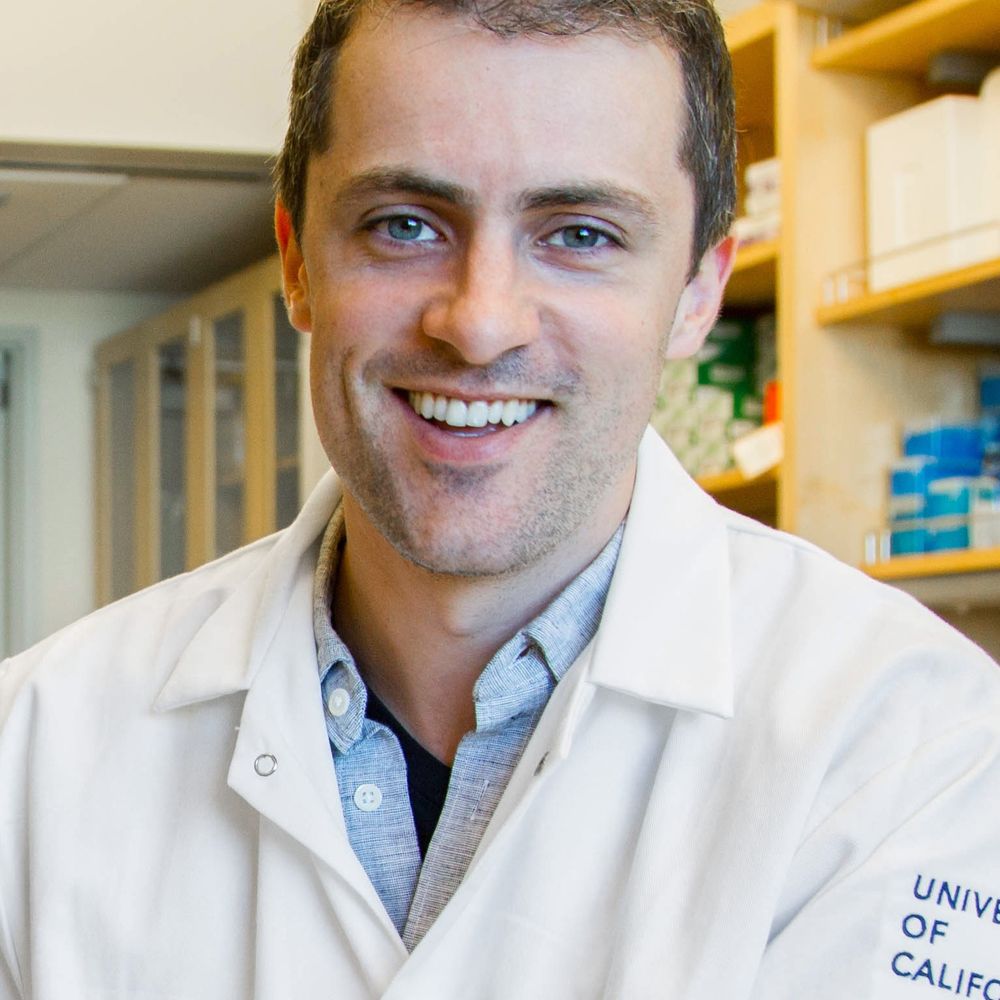
Phages are full of genes of unknown function that are likely adaptive in specific conditions.
New preprint: Phage TnSeq identifies essential genes rapidly and knocks all non-essentials. We would like to send a pool of phiKZ mutants to anyone wanting it! Reach out
tinyurl.com/bdcfrejh
New preprint: Phage TnSeq identifies essential genes rapidly and knocks all non-essentials. We would like to send a pool of phiKZ mutants to anyone wanting it! Reach out
tinyurl.com/bdcfrejh

December 8, 2025 at 3:04 PM
Phages are full of genes of unknown function that are likely adaptive in specific conditions.
New preprint: Phage TnSeq identifies essential genes rapidly and knocks all non-essentials. We would like to send a pool of phiKZ mutants to anyone wanting it! Reach out
tinyurl.com/bdcfrejh
New preprint: Phage TnSeq identifies essential genes rapidly and knocks all non-essentials. We would like to send a pool of phiKZ mutants to anyone wanting it! Reach out
tinyurl.com/bdcfrejh
Reposted by Kranzusch Lab

Our preprint is now published in PNAS! This came together thanks to a great collaboration with Antoine Hocher and a strong team effort from the Le Lab. Thank you to the reviewers and to everyone who helped improve it. I hope ParB aficionados will enjoy it.
www.pnas.org/doi/10.1073/...
www.pnas.org/doi/10.1073/...

Versatile NTP recognition and domain fusions expand the functional repertoire of the ParB-CTPase fold beyond chromosome segregation | PNAS
Nucleotide triphosphate (NTP)-dependent molecular switches regulate essential cellular
processes by cycling between active and inactive states thro...
www.pnas.org
December 4, 2025 at 8:10 PM
Our preprint is now published in PNAS! This came together thanks to a great collaboration with Antoine Hocher and a strong team effort from the Le Lab. Thank you to the reviewers and to everyone who helped improve it. I hope ParB aficionados will enjoy it.
www.pnas.org/doi/10.1073/...
www.pnas.org/doi/10.1073/...
Reposted by Kranzusch Lab

I’m happy to share our new preprint! We uncovered the full diversity of bacterial TIR-based antiviral immune signaling, massively expanded the known diversity of Thoeris systems, and revealed conservation of TIR-derived immune signals across the tree of life.
www.biorxiv.org/content/10.6...
www.biorxiv.org/content/10.6...

Systematic discovery of TIR-based immune signaling systems in bacteria
Toll/interleukin-1 receptor (TIR) domains are important for immune signaling across humans, plants and bacteria. These domains were recently found to produce immune signaling molecules in plant immuni...
www.biorxiv.org
December 4, 2025 at 9:25 AM
I’m happy to share our new preprint! We uncovered the full diversity of bacterial TIR-based antiviral immune signaling, massively expanded the known diversity of Thoeris systems, and revealed conservation of TIR-derived immune signals across the tree of life.
www.biorxiv.org/content/10.6...
www.biorxiv.org/content/10.6...
Reposted by Kranzusch Lab
Check this out for the 2026 SISB (phage defense) meeting in NYC. Mark your calendar! (and note the Zoom option, if needed)
sisb2026.rockefeller.edu
sisb2026.rockefeller.edu
SISB2026
sisb2026.rockefeller.edu
December 1, 2025 at 11:44 PM
Check this out for the 2026 SISB (phage defense) meeting in NYC. Mark your calendar! (and note the Zoom option, if needed)
sisb2026.rockefeller.edu
sisb2026.rockefeller.edu
Reposted by Kranzusch Lab

Very happy to share our collaborative project on FAM118 proteins - noncanonical sirtuins that form filaments and process NAD in human and other vertebrate cells.

Filament formation and NAD processing by noncanonical human FAM118 sirtuins
Nature Structural & Molecular Biology - Baretić and Missoury et al. identify vertebrate proteins FAM118B and FAM118A as sirtuins similar to bacterial antiphage enzymes and show that...
rdcu.be
November 17, 2025 at 11:37 AM
Very happy to share our collaborative project on FAM118 proteins - noncanonical sirtuins that form filaments and process NAD in human and other vertebrate cells.
Reposted by Kranzusch Lab
Congratulations to Sorek lab alumnus Nitzan Tal, who won the prestigious 2025 Science & SciLifeLab prize for the best PhD thesis in Systems Biology! 💫
Read her Prize Assay, published in the journal Science today
www.science.org/doi/10.1126/...
@nitzantal.bsky.social
Read her Prize Assay, published in the journal Science today
www.science.org/doi/10.1126/...
@nitzantal.bsky.social

November 14, 2025 at 6:33 PM
Congratulations to Sorek lab alumnus Nitzan Tal, who won the prestigious 2025 Science & SciLifeLab prize for the best PhD thesis in Systems Biology! 💫
Read her Prize Assay, published in the journal Science today
www.science.org/doi/10.1126/...
@nitzantal.bsky.social
Read her Prize Assay, published in the journal Science today
www.science.org/doi/10.1126/...
@nitzantal.bsky.social
Reposted by Kranzusch Lab

Cap1 forms a cyclic tetra-adenylate-induced membrane pore during the type III-A CRISPR-Cas immune response https://www.biorxiv.org/content/10.1101/2025.11.13.688252v1
November 14, 2025 at 2:18 AM
Cap1 forms a cyclic tetra-adenylate-induced membrane pore during the type III-A CRISPR-Cas immune response https://www.biorxiv.org/content/10.1101/2025.11.13.688252v1
Reposted by Kranzusch Lab

Our nuclease-protease story is out! We explored a fascinating case of coevolution and modularity in prokaryotic immune systems: www.science.org/doi/10.1126/...
Thanks to wonderful coauthors/collaborators/friends, the whole @doudna-lab.bsky.social and everyone at @innovativegenomics.bsky.social
Thanks to wonderful coauthors/collaborators/friends, the whole @doudna-lab.bsky.social and everyone at @innovativegenomics.bsky.social

Recurrent acquisition of nuclease-protease pairs in antiviral immunity
Antiviral immune systems diversify by integrating new genes into existing pathways, creating new mechanisms of viral resistance. We identified genes encoding a predicted nuclease paired with a trypsin...
www.science.org
November 13, 2025 at 10:15 PM
Our nuclease-protease story is out! We explored a fascinating case of coevolution and modularity in prokaryotic immune systems: www.science.org/doi/10.1126/...
Thanks to wonderful coauthors/collaborators/friends, the whole @doudna-lab.bsky.social and everyone at @innovativegenomics.bsky.social
Thanks to wonderful coauthors/collaborators/friends, the whole @doudna-lab.bsky.social and everyone at @innovativegenomics.bsky.social
Gluing a bulky host protein onto an immune surveillance complex is a wild mechanism of viral immune evasion!
@natmicrobiol.nature.com
#phagesky #phage #microsky
www.nature.com/articles/s41...
@natmicrobiol.nature.com
#phagesky #phage #microsky
www.nature.com/articles/s41...

November 12, 2025 at 5:47 PM
Gluing a bulky host protein onto an immune surveillance complex is a wild mechanism of viral immune evasion!
@natmicrobiol.nature.com
#phagesky #phage #microsky
www.nature.com/articles/s41...
@natmicrobiol.nature.com
#phagesky #phage #microsky
www.nature.com/articles/s41...
Reposted by Kranzusch Lab
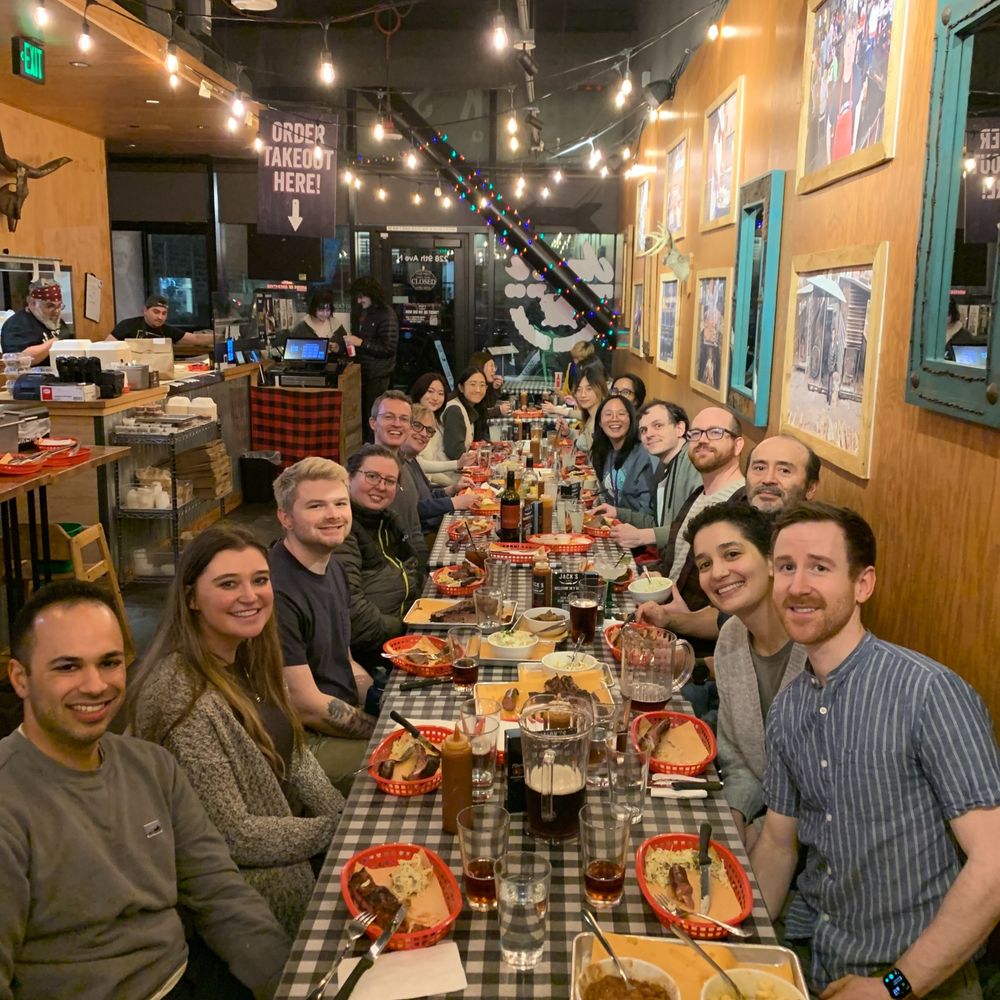
Delighted to share the peer-reviewed version of our article describing a prefusion-stabilized MARV GP vaccine immunogen and a best-in-class MARV neutralizing and protective antibody!
Led by @aminaddetia.bsky.social with @virbiotechnology.bsky.social
@hhmi.org
www.nature.com/articles/s41...
Led by @aminaddetia.bsky.social with @virbiotechnology.bsky.social
@hhmi.org
www.nature.com/articles/s41...
Potent neutralization of Marburg virus by a vaccine-elicited antibody - Nature
Nature - Potent neutralization of Marburg virus by a vaccine-elicited antibody
www.nature.com
November 12, 2025 at 4:20 PM
Delighted to share the peer-reviewed version of our article describing a prefusion-stabilized MARV GP vaccine immunogen and a best-in-class MARV neutralizing and protective antibody!
Led by @aminaddetia.bsky.social with @virbiotechnology.bsky.social
@hhmi.org
www.nature.com/articles/s41...
Led by @aminaddetia.bsky.social with @virbiotechnology.bsky.social
@hhmi.org
www.nature.com/articles/s41...
Reposted by Kranzusch Lab
🚨New preprint out!
We present a foundational genomic resource of human gut microbiome viruses. It delivers high-quality, deeply curated data spanning taxonomy, predicted hosts, structures, and functions, providing a reference for gut virome research. (1/8)
www.biorxiv.org/content/10.1...
We present a foundational genomic resource of human gut microbiome viruses. It delivers high-quality, deeply curated data spanning taxonomy, predicted hosts, structures, and functions, providing a reference for gut virome research. (1/8)
www.biorxiv.org/content/10.1...

November 6, 2025 at 5:26 PM
🚨New preprint out!
We present a foundational genomic resource of human gut microbiome viruses. It delivers high-quality, deeply curated data spanning taxonomy, predicted hosts, structures, and functions, providing a reference for gut virome research. (1/8)
www.biorxiv.org/content/10.1...
We present a foundational genomic resource of human gut microbiome viruses. It delivers high-quality, deeply curated data spanning taxonomy, predicted hosts, structures, and functions, providing a reference for gut virome research. (1/8)
www.biorxiv.org/content/10.1...