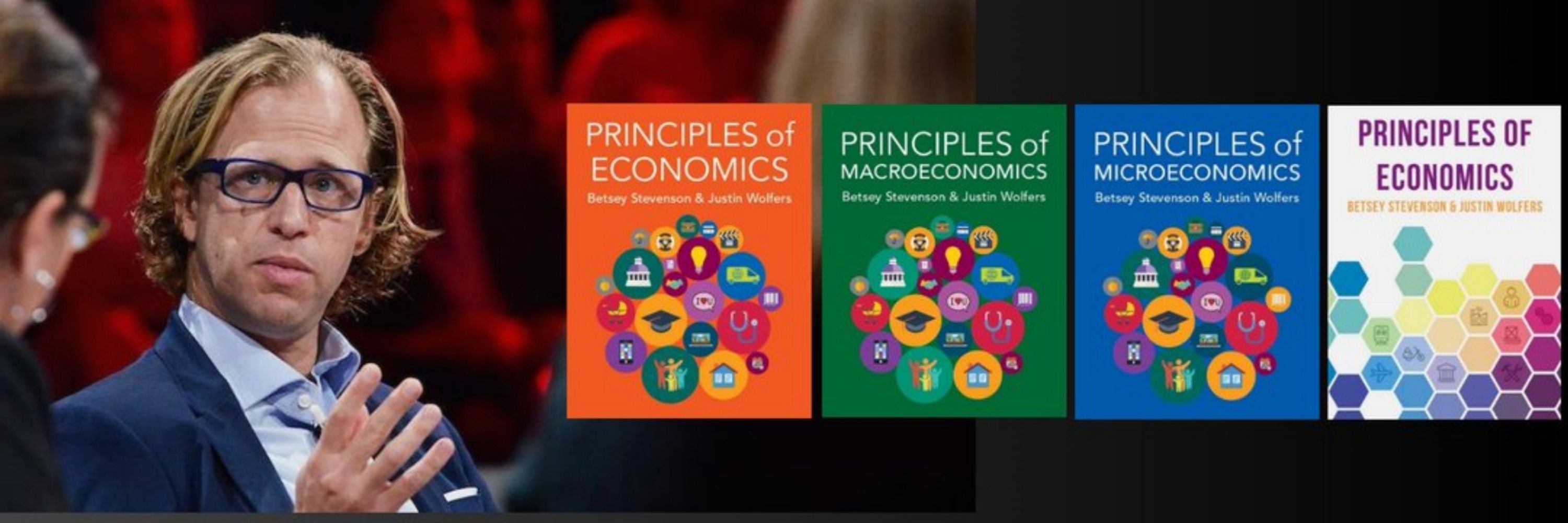

Justin Wolfers
banner
justinwolfers.bsky.social
Justin Wolfers
@justinwolfers.bsky.social

Econ professor at Michigan ● Senior fellow, Brookings ● Intro econ textbook author ● Think Like An Economist podcast ● An economist willing to admit that the glass really is half full.

Justin James Michael Wolfers is an Australian economist and public policy scholar. He is professor of economics and public policy at the Gerald R. Ford School of Public Policy at the University of Michigan, and a Senior Fellow at the Peterson Institute for International Economics. .. more

Economics 62%
Psychology 14%

Just read today's news and am starting to second guess this choice. Please fix everything before I land in the U.S.

Taronga

first

New Years resolutions:
1. Swear less.
2. Try not to dismantle the institutions that are the foundation of prosperity.

A lot of people are saying Trump's trade war is ineffective, but in reality it keeps delivering for Aussie beef farmers.
CHINA TO IMPOSE 55% TARIFFS ON IMPORTED BEEF FROM THE US

Reposted by Justin Wolfers

CHINA TO IMPOSE 55% TARIFFS ON IMPORTED BEEF FROM THE US

People ask, “If the economy is growing, why doesn’t it feel like it?” Because our individual economic realities are driven less by the national average and more by the policy choices—tariffs, taxes, and cuts—that decide who actually gets the gains from growth.

Reposted by Rafael Rojas, Steffen Mau, Joshua D. Angrist , and 235 more

Reposted by Mark Galeotti, Branko Milanovic, Mariana Mazzucato , and 248 more

“The president finds the one sparkle in there and that’s all he wants to talk about.”
—on cherry-picking one quarterly measure of GDP while ignoring jobs, wages & affordability. youtu.be/U_GVwBvHG54
Who Gains From Trump’s Economy? Justin Wolfers on Tariffs, Taxes, and Prices
What matters more: one shiny GDP number, or the gut‑punch of your weekly grocery bill? This segment features economist Justin Wolfers dissecting the gap between President Trump’s triumphant economic…
youtu.be

“the early readings of GDP have been very noisy. There's an alternative measure of GDP called GDI. It's measured using different data. It's a lot weaker at 2.4%. GDP data are often revised.” First drafts of data rarely tell the whole story.

Imagine running a capital-intensive firm when the White House can suddenly threaten to shut your industry down. Wind farms today, something else tomorrow. That risk changes what gets built, where, and whether it gets built at all.

Context you rarely hear: global stocks are up about 30% over the past year. U.S. stocks? Around 18%. That means American investors underperformed the world by about 12 percentage points, even while headlines called it a “fantastic year.”

When a tariff is announced, firms often front-load imports—stock up before the price hike—then cut back later. That makes net exports jump around. Those wiggles are about timing, not necessarily about whether the policy “worked” in some deeper sense.

Current data leave room for both stories: the optimist’s “doing okay” economy and the pessimist’s “are we in a recession?” worry. The latest GDP numbers don’t really move us out of that gray zone—they just remind us uncertainty is still there.

A smarter model for paying for college: income-based repayment. You start paying your student loans only once you earn enough to comfortably get by. That turns higher ed debt into something more like a tax surcharge on success, not a choke collar on people who are struggling.