


Vincent Voelz
@voelzlab.bsky.social
Professor of Chemistry at Temple University. Molecular simulation, stat mech, ML/DL, protein dynamics, biophysics, Bayesian inference, computational design, drug discovery.
https://orcid.org/0000-0002-1054-2124
https://sites.temple.edu/voelzlab
https://orcid.org/0000-0002-1054-2124
https://sites.temple.edu/voelzlab
Reposted by Vincent Voelz

Our recent preprint shows that metastable, short-lived PPIs captured by MD and IGME define key design targets for PROTACs, enabling rational discovery of sub-nanomolar RIPK1 degraders.
Great collab w/ Weiping Tang! Congrats to Yue & co-authors!
chemrxiv.org/doi/full/10....
-
Great collab w/ Weiping Tang! Congrats to Yue & co-authors!
chemrxiv.org/doi/full/10....
-

February 1, 2026 at 5:32 PM
Our recent preprint shows that metastable, short-lived PPIs captured by MD and IGME define key design targets for PROTACs, enabling rational discovery of sub-nanomolar RIPK1 degraders.
Great collab w/ Weiping Tang! Congrats to Yue & co-authors!
chemrxiv.org/doi/full/10....
-
Great collab w/ Weiping Tang! Congrats to Yue & co-authors!
chemrxiv.org/doi/full/10....
-
Reposted by Vincent Voelz

"In contrast to previous attempts at iterative optimization, we employ a validation set to determine convergence. Using a validation set circumvents problems with parameter convergence and flags when overfitting occurs"
pubs.acs.org/doi/full/10....
pubs.acs.org/doi/full/10....

Robust and Automated Force Field Parameterization Using Validation Sets and Active Learning
Molecular mechanics force fields enable atomistic simulations of complex systems that are too large for a quantum mechanical treatment. Simulation accuracy depends on the parameters employed in the fo...
pubs.acs.org
February 1, 2026 at 7:53 AM
"In contrast to previous attempts at iterative optimization, we employ a validation set to determine convergence. Using a validation set circumvents problems with parameter convergence and flags when overfitting occurs"
pubs.acs.org/doi/full/10....
pubs.acs.org/doi/full/10....
Reposted by Vincent Voelz

New Preprint!! We show that binding entropy can be quantitatively predicted from crystallographic ensemble models, accounting for both protein conformational entropy and solvent entropy! www.biorxiv.org/content/10.6...

January 21, 2026 at 8:49 PM
New Preprint!! We show that binding entropy can be quantitatively predicted from crystallographic ensemble models, accounting for both protein conformational entropy and solvent entropy! www.biorxiv.org/content/10.6...
Reposted by Vincent Voelz

Third preprint of the year is from @julianstreit.bsky.social who, with our collaborators at Peptone, show that multithermal On-the-fly Probability Enhanced Sampling (OPES) enables efficient generation of atomistic ensembles for disordered peptides and proteins 🍝
www.biorxiv.org/content/10.6...
www.biorxiv.org/content/10.6...

January 21, 2026 at 4:57 PM
Third preprint of the year is from @julianstreit.bsky.social who, with our collaborators at Peptone, show that multithermal On-the-fly Probability Enhanced Sampling (OPES) enables efficient generation of atomistic ensembles for disordered peptides and proteins 🍝
www.biorxiv.org/content/10.6...
www.biorxiv.org/content/10.6...
Reposted by Vincent Voelz
The work by @danialv.bsky.social is now out in @pnas.org with a few changes after peer-review. Have a look if you are interested in lipid transport by bridge lipid transfer proteins (BLTPs)...
www.pnas.org/doi/10.1073/...
www.pnas.org/doi/10.1073/...
January 22, 2026 at 2:18 PM
The work by @danialv.bsky.social is now out in @pnas.org with a few changes after peer-review. Have a look if you are interested in lipid transport by bridge lipid transfer proteins (BLTPs)...
www.pnas.org/doi/10.1073/...
www.pnas.org/doi/10.1073/...
Reposted by Vincent Voelz

When I wrote my latest for @natchem.nature.com on the appropriation of the quantum mechanical lexicon by scam artists, could I have imagined that the surgeon general of Florida would be peddling the woo? Alas, probably. rdcu.be/eXQL (1/3)

Quantum quacks
Nature Chemistry - It is 100 years since the initial development of quantum mechanics, and not only did it bring with it a greater understanding of the world around us, it also introduced a new...
rdcu.be
January 6, 2026 at 7:34 PM
When I wrote my latest for @natchem.nature.com on the appropriation of the quantum mechanical lexicon by scam artists, could I have imagined that the surgeon general of Florida would be peddling the woo? Alas, probably. rdcu.be/eXQL (1/3)
Reposted by Vincent Voelz
New Preprint dropped. LAMMPS + ANI, a super fast implementation of MLIPs. Highly parallel (> 1000 GPUS) and much faster than anything else out there ! Work done by the amazing @ignaciopickering.bsky.social, @nickterrel.bsky.social , and Jinze (Richard) Xue. chemrxiv.org/engage/chemr...

LAMMPS-ANI: Large Scale Molecular Dynamics Simulations
with ANI Neural Network Potential
Machine Learning Interatomic Potentials (MLIPs), trained with Quantum Mechanics data, can model
potential energy surfaces for molecular systems with very high accuracy and extreme speedups compared
to...
chemrxiv.org
January 5, 2026 at 9:11 PM
New Preprint dropped. LAMMPS + ANI, a super fast implementation of MLIPs. Highly parallel (> 1000 GPUS) and much faster than anything else out there ! Work done by the amazing @ignaciopickering.bsky.social, @nickterrel.bsky.social , and Jinze (Richard) Xue. chemrxiv.org/engage/chemr...
Reposted by Vincent Voelz

#MachineLearning researchers: Join us at @msftresearch.bsky.social #ArtificialIntelligence for Science to push the frontier of AI for molecular Biology or AI for Chemistry. Work with @marwinsegler.bsky.social or my team in Berlin, Cambridge or Amsterdam.
apply.careers.microsoft.com/careers/job/...
apply.careers.microsoft.com/careers/job/...

Senior Machine Learning Researcher - MSR AI for Science | Microsoft Careers
Invent novel deep learning techniques for models of (bio)molecular structure, dynamics, reactivity and function. Design, implement, and iterate on model architectures and training algorithms (e.g., di...
apply.careers.microsoft.com
January 5, 2026 at 9:24 PM
#MachineLearning researchers: Join us at @msftresearch.bsky.social #ArtificialIntelligence for Science to push the frontier of AI for molecular Biology or AI for Chemistry. Work with @marwinsegler.bsky.social or my team in Berlin, Cambridge or Amsterdam.
apply.careers.microsoft.com/careers/job/...
apply.careers.microsoft.com/careers/job/...
Reposted by Vincent Voelz

How do cells know which way to move in a chemical gradient? 🧭 New work by graduate student Andrew Goetz proposes that receptors can compute direction. This new mechanism for directional sensing was published in PNAS late last year: www.pnas.org/doi/10.1073/...
PNAS
Proceedings of the National Academy of Sciences (PNAS), a peer reviewed journal of the National Academy of Sciences (NAS) - an authoritative source of high-impact, original research that broadly spans...
www.pnas.org
January 6, 2026 at 2:35 PM
How do cells know which way to move in a chemical gradient? 🧭 New work by graduate student Andrew Goetz proposes that receptors can compute direction. This new mechanism for directional sensing was published in PNAS late last year: www.pnas.org/doi/10.1073/...
Reposted by Vincent Voelz

Exciting news! We have a new website: omsf.io/alchemistry
Your one-stop shop for everything related to our conference community. 🎉
BTW, registration is now open, so head over to secure your spot! We'll be sharing updates and details about the event.
Bookmark it as there's plenty more to come!
Your one-stop shop for everything related to our conference community. 🎉
BTW, registration is now open, so head over to secure your spot! We'll be sharing updates and details about the event.
Bookmark it as there's plenty more to come!
Alchemistry Workshop in Free Energy Methods for Drug Design - Alchemistry
Annual conference on Free Energy Methods in Drug Discovery
omsf.io
January 5, 2026 at 8:33 PM
Exciting news! We have a new website: omsf.io/alchemistry
Your one-stop shop for everything related to our conference community. 🎉
BTW, registration is now open, so head over to secure your spot! We'll be sharing updates and details about the event.
Bookmark it as there's plenty more to come!
Your one-stop shop for everything related to our conference community. 🎉
BTW, registration is now open, so head over to secure your spot! We'll be sharing updates and details about the event.
Bookmark it as there's plenty more to come!
Reposted by Vincent Voelz

First article of 2026! Happy to have our first real foray into carbohydrates out in J Phys Chem B. Excellent work by PhD candidate Esmat Mohammadi.
pubs.acs.org/doi/full/10....
pubs.acs.org/doi/full/10....

Insights into the Electronic and Structural Properties of Cellulose and Amylose: A Comparative Force Field Study
Amylose and cellulose are important biopolymers with diverse applications in biotechnology and materials science. Understanding their structural, dynamic, and solvation properties at the molecular level is critical for harnessing their potential. This study investigates the electronic and structural properties of single-chain cellulose and single- and double-chain amylose in aqueous solution using molecular dynamics simulations with both nonpolarizable (CHARMM) and polarizable (Drude) force fields. CHARMM simulations show stable hydrogen bonding between amylose and water, higher glucose ring dipole moments, increased rigidity, adoption of chair conformations, and less variation in dihedral angles. In contrast, Drude simulations captured dynamic electronic polarization, enhanced conformational flexibility, and resulted in heterogeneous inter- and intramolecular hydrogen bonds. For cellulose, structural and solvation behaviors were largely similar between CHARMM and Drude. These findings highlight molecular interactions and solvation dynamics of amylose and cellulose, with potential relevance in materials science and biotechnology.
pubs.acs.org
January 6, 2026 at 8:14 PM
First article of 2026! Happy to have our first real foray into carbohydrates out in J Phys Chem B. Excellent work by PhD candidate Esmat Mohammadi.
pubs.acs.org/doi/full/10....
pubs.acs.org/doi/full/10....
Reposted by Vincent Voelz

OpenFE is ready for production! chemrxiv.org/engage/chemr...
In collaboration with our industry partners, we ran benchmarking simulations of our hybrid-topology RBFE protocol on a large collection of both public and private protein-ligand binding datasets.
#compchem
In collaboration with our industry partners, we ran benchmarking simulations of our hybrid-topology RBFE protocol on a large collection of both public and private protein-ligand binding datasets.
#compchem

Large-scale collaborative assessment of binding free energy calculations for drug discovery using OpenFE
Accurately measuring compound binding affinities is key to driving the pharmaceutical development process. Rigorous physics-based in silico approaches, particularly alchemical free energy methods, hav...
chemrxiv.org
December 18, 2025 at 7:12 PM
OpenFE is ready for production! chemrxiv.org/engage/chemr...
In collaboration with our industry partners, we ran benchmarking simulations of our hybrid-topology RBFE protocol on a large collection of both public and private protein-ligand binding datasets.
#compchem
In collaboration with our industry partners, we ran benchmarking simulations of our hybrid-topology RBFE protocol on a large collection of both public and private protein-ligand binding datasets.
#compchem
Reposted by Vincent Voelz

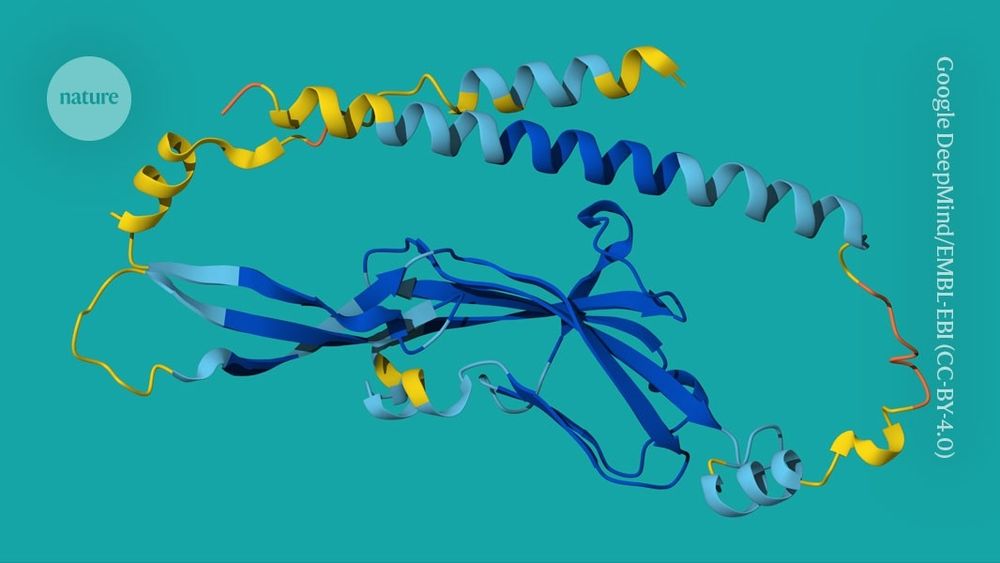
Excited to be a part of this review paper by Chapin Cavender et al. Now out in LiveCoMS! doi.org/10.33011/liv...
Structure-Based Experimental Datasets for Benchmarking Protein Simulation Force Fields [Article v1.0]
| Living Journal of Computational Molecular Science
doi.org
October 28, 2025 at 5:59 PM
Excited to be a part of this review paper by Chapin Cavender et al. Now out in LiveCoMS! doi.org/10.33011/liv...
Reposted by Vincent Voelz

New Title Alert: HADDOCK3- is the next generation integrative modeling software in the long-lasting HADDOCK project.
Learn more here: buff.ly/gInH6VV
#SBGrid #SBGridSoftware #StructuralBiology
Learn more here: buff.ly/gInH6VV
#SBGrid #SBGridSoftware #StructuralBiology

A brief introduction to HADDOCK3 — haddock3 3.0.0 documentation
HADDOCK3 is the next generation integrative modelling software in the long-lasting HADDOCK project. It represents a complete rethinking and rewriting of the HADDOCK2.X series, implementing a new way…
buff.ly
October 24, 2025 at 4:08 PM
New Title Alert: HADDOCK3- is the next generation integrative modeling software in the long-lasting HADDOCK project.
Learn more here: buff.ly/gInH6VV
#SBGrid #SBGridSoftware #StructuralBiology
Learn more here: buff.ly/gInH6VV
#SBGrid #SBGridSoftware #StructuralBiology

Reposted by Vincent Voelz

📢 New preprint:
Experiment-guided AlphaFold3 resolves accurate protein ensembles.
doi.org/10.1101/2025...
AlphaFold3 is incredible, but has crucial limitations: it typically collapses to a single conformation, ignoring the inherent dynamics of proteins. And it can be wrong. Here's a solution. 🧵👇
Experiment-guided AlphaFold3 resolves accurate protein ensembles.
doi.org/10.1101/2025...
AlphaFold3 is incredible, but has crucial limitations: it typically collapses to a single conformation, ignoring the inherent dynamics of proteins. And it can be wrong. Here's a solution. 🧵👇

October 18, 2025 at 6:59 PM
📢 New preprint:
Experiment-guided AlphaFold3 resolves accurate protein ensembles.
doi.org/10.1101/2025...
AlphaFold3 is incredible, but has crucial limitations: it typically collapses to a single conformation, ignoring the inherent dynamics of proteins. And it can be wrong. Here's a solution. 🧵👇
Experiment-guided AlphaFold3 resolves accurate protein ensembles.
doi.org/10.1101/2025...
AlphaFold3 is incredible, but has crucial limitations: it typically collapses to a single conformation, ignoring the inherent dynamics of proteins. And it can be wrong. Here's a solution. 🧵👇
Reposted by Vincent Voelz

Could not be more thrilled to have Pat Walters (@wpwalters.bsky.social) at the scientific helm of OpenADMET!m (@openadmet.bsky.social)! 🎉
Check out this new interview with Pat in Nature Reviews Drug Discovery:
www.nature.com/articles/d41...
Check out this new interview with Pat in Nature Reviews Drug Discovery:
www.nature.com/articles/d41...

Embracing the avoid-ome
Patrick Walters, the chief scientist of OpenADMET, discusses an ambitious open-science project aimed at figuring out how to avoid pharmacokinetic and toxicity traps in small-molecule drug discovery.
www.nature.com
October 15, 2025 at 3:23 PM
Could not be more thrilled to have Pat Walters (@wpwalters.bsky.social) at the scientific helm of OpenADMET!m (@openadmet.bsky.social)! 🎉
Check out this new interview with Pat in Nature Reviews Drug Discovery:
www.nature.com/articles/d41...
Check out this new interview with Pat in Nature Reviews Drug Discovery:
www.nature.com/articles/d41...
Reposted by Vincent Voelz
BIG ANNOUNCEMENT📣: I haven’t been this excited to be part of something new in 15 years… Thrilled to reveal the passion project I’ve been working on for the past year and a half!🙀🥳 (thread 👇)

October 15, 2025 at 12:22 PM
BIG ANNOUNCEMENT📣: I haven’t been this excited to be part of something new in 15 years… Thrilled to reveal the passion project I’ve been working on for the past year and a half!🙀🥳 (thread 👇)
Reposted by Vincent Voelz

Our latest work seeks to answer a longstanding question: why is discovering new protein binders seemingly unpredictable – and can we better quantify and understand the de novo binder discover process? 1/12
www.biorxiv.org/content/10.1...
www.biorxiv.org/content/10.1...

Mapping the diverse topologies of protein-protein interaction fitness landscapes
De novo binder discovery is unpredictable and inefficient due to a lack of quantitative understanding of protein-protein interaction (PPI) sequence-function landscapes. Here, we use our PANCS-Binder t...
www.biorxiv.org
October 15, 2025 at 5:19 PM
Our latest work seeks to answer a longstanding question: why is discovering new protein binders seemingly unpredictable – and can we better quantify and understand the de novo binder discover process? 1/12
www.biorxiv.org/content/10.1...
www.biorxiv.org/content/10.1...
Reposted by Vincent Voelz

Out in its final form
pubs.acs.org/doi/10.1021/...
pubs.acs.org/doi/10.1021/...

Resolving Molecular Interactions in Protein Folding Trajectories with NCIPLOT
Noncovalent interactions (NCIs) are fundamental to the structure, stability, and function of proteins. These interactions form complex networks that control how different protein regions relate to eac...
pubs.acs.org
September 17, 2025 at 9:02 AM
Out in its final form
pubs.acs.org/doi/10.1021/...
pubs.acs.org/doi/10.1021/...
Reposted by Vincent Voelz

pip install ipsae
from www.linkedin.com/in/ullah-sam...
www.youtube.com/watch?v=A5ph...
PyPI pypi.org/project/ipsae/
His github fork github.com/ullahsamee/I...
My github github.com/DunbrackLab/...
Paper www.biorxiv.org/content/10.1...
For designed protein binders www.biorxiv.org/content/10.1...
from www.linkedin.com/in/ullah-sam...
www.youtube.com/watch?v=A5ph...
PyPI pypi.org/project/ipsae/
His github fork github.com/ullahsamee/I...
My github github.com/DunbrackLab/...
Paper www.biorxiv.org/content/10.1...
For designed protein binders www.biorxiv.org/content/10.1...

Screen binders using ipSAE
YouTube video by ProteinDesignStudio
www.youtube.com
September 16, 2025 at 7:21 PM
pip install ipsae
from www.linkedin.com/in/ullah-sam...
www.youtube.com/watch?v=A5ph...
PyPI pypi.org/project/ipsae/
His github fork github.com/ullahsamee/I...
My github github.com/DunbrackLab/...
Paper www.biorxiv.org/content/10.1...
For designed protein binders www.biorxiv.org/content/10.1...
from www.linkedin.com/in/ullah-sam...
www.youtube.com/watch?v=A5ph...
PyPI pypi.org/project/ipsae/
His github fork github.com/ullahsamee/I...
My github github.com/DunbrackLab/...
Paper www.biorxiv.org/content/10.1...
For designed protein binders www.biorxiv.org/content/10.1...
Reposted by Vincent Voelz

Brought to you by Austin Cheng (@auhcheng.bsky.social) — meet the newest member of our team: Quetzal!
Named after Quetzalcoatl, the Aztec god of creation, Quetzal is a simple yet scalable model for building 3D molecules atom by atom.
📜 arxiv.org/abs/2505.13791
[1/4]
Named after Quetzalcoatl, the Aztec god of creation, Quetzal is a simple yet scalable model for building 3D molecules atom by atom.
📜 arxiv.org/abs/2505.13791
[1/4]
May 23, 2025 at 4:13 PM
Brought to you by Austin Cheng (@auhcheng.bsky.social) — meet the newest member of our team: Quetzal!
Named after Quetzalcoatl, the Aztec god of creation, Quetzal is a simple yet scalable model for building 3D molecules atom by atom.
📜 arxiv.org/abs/2505.13791
[1/4]
Named after Quetzalcoatl, the Aztec god of creation, Quetzal is a simple yet scalable model for building 3D molecules atom by atom.
📜 arxiv.org/abs/2505.13791
[1/4]
Reposted by Vincent Voelz

Exciting to see our protein binder design pipeline BindCraft published in its final form in @Nature ! This has been an amazing collaborative effort with Lennart, Christian, @sokrypton.org, Bruno and many other amazing lab members and collaborators.
www.nature.com/articles/s41...
www.nature.com/articles/s41...
August 27, 2025 at 4:14 PM
Exciting to see our protein binder design pipeline BindCraft published in its final form in @Nature ! This has been an amazing collaborative effort with Lennart, Christian, @sokrypton.org, Bruno and many other amazing lab members and collaborators.
www.nature.com/articles/s41...
www.nature.com/articles/s41...
Reposted by Vincent Voelz

New preprint: www.biorxiv.org/content/10.1...
We used molecular dynamics simulations and solid-state NMR (@fmp-berlin.de) to look at calcium binding to the pore domain of the calcium-gated K+ channel MthK. @wojciechkopec.bsky.social @compbiophys.bsky.social
We used molecular dynamics simulations and solid-state NMR (@fmp-berlin.de) to look at calcium binding to the pore domain of the calcium-gated K+ channel MthK. @wojciechkopec.bsky.social @compbiophys.bsky.social
August 19, 2025 at 7:42 AM
New preprint: www.biorxiv.org/content/10.1...
We used molecular dynamics simulations and solid-state NMR (@fmp-berlin.de) to look at calcium binding to the pore domain of the calcium-gated K+ channel MthK. @wojciechkopec.bsky.social @compbiophys.bsky.social
We used molecular dynamics simulations and solid-state NMR (@fmp-berlin.de) to look at calcium binding to the pore domain of the calcium-gated K+ channel MthK. @wojciechkopec.bsky.social @compbiophys.bsky.social