




@fillouxlab.bsky.social
Pinned

Happy to be on bsky and to introduce my @SCELSE group in Singapore @NTU and working on #T6SS #Biofilm #c-di-GMP #Pseudomonas #antibiotics From left to right Sujatha, Casandra, Yu Fen, Kay, Qiu Ting and Peggy. They are brilliant so stay tune and follow.
Reposted

This leads to the activation of HtrA-family dual function chaperone/proteases that can act to restore the cell to homeostasis! To our knowledge, this is the first proposal of a sensing model for a bacterial secretion or envelope stress response system! (6/7)

December 16, 2025 at 2:56 AM
This leads to the activation of HtrA-family dual function chaperone/proteases that can act to restore the cell to homeostasis! To our knowledge, this is the first proposal of a sensing model for a bacterial secretion or envelope stress response system! (6/7)
Kevin moving to Oxford deserved a small celebration with NTU friends.

December 19, 2025 at 5:14 AM
Kevin moving to Oxford deserved a small celebration with NTU friends.
Reposted

Final presentation by Vanessa Lim on her Final Year Project research in the lab @scelse.bsky.social, NTU. She did a fantastic job contributing to our ongoing work on #food #spoilage #biofilms and we are sorry to see her go. Wishing her all the best with the next steps in her bright future! ✨

December 19, 2025 at 12:22 AM
Final presentation by Vanessa Lim on her Final Year Project research in the lab @scelse.bsky.social, NTU. She did a fantastic job contributing to our ongoing work on #food #spoilage #biofilms and we are sorry to see her go. Wishing her all the best with the next steps in her bright future! ✨
Good to have a small internal competition within the Filloux's lab to end this year. No winner only happy moments.

December 18, 2025 at 1:01 AM
Good to have a small internal competition within the Filloux's lab to end this year. No winner only happy moments.
Reposted
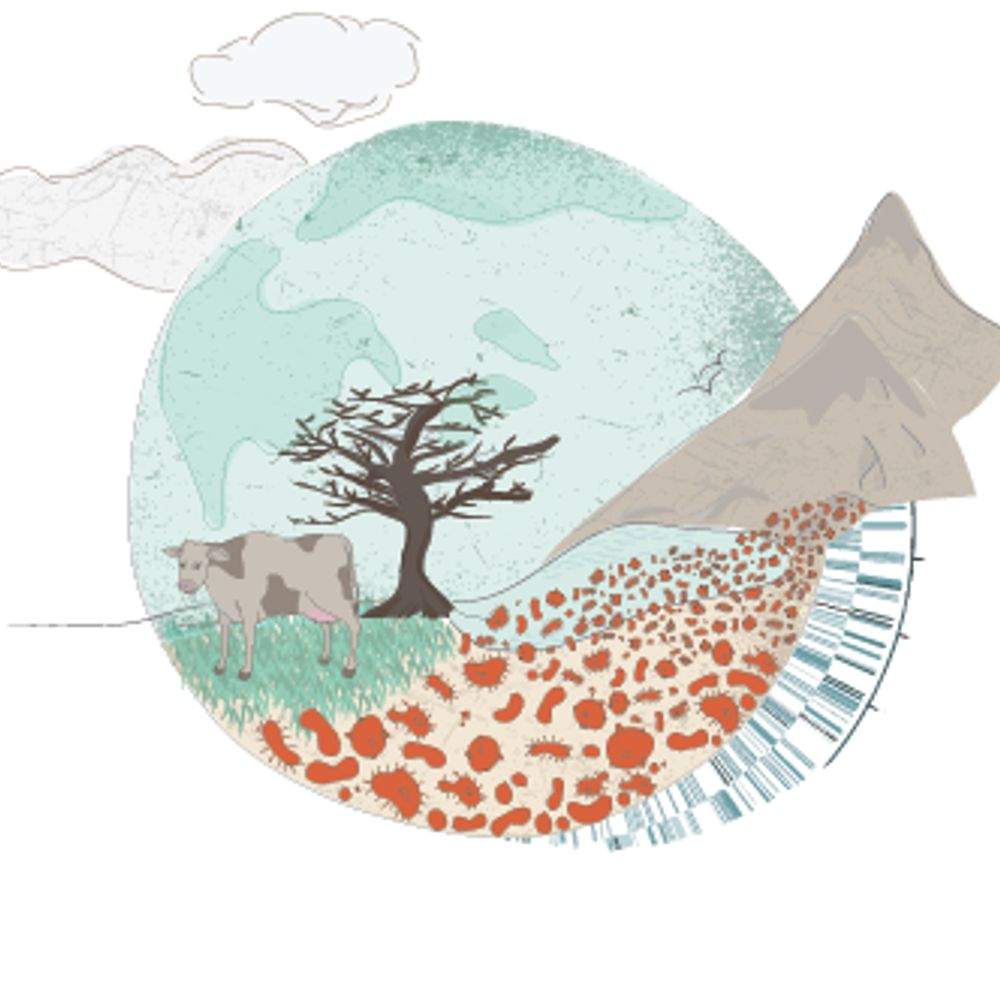
Really happy to see Nature Reviews Genetics dedicate a whole focus issue to the eco-evolutionary genomics of microorganisms. Great to see this field getting the spotlight!
www.nature.com/collections/...
www.nature.com/collections/...

Eco-evolutionary genomics of microorganisms
Genomic approaches have transformed how we study microorganisms, which shape nearly every aspect of life on Earth.
www.nature.com
December 17, 2025 at 9:33 AM
Really happy to see Nature Reviews Genetics dedicate a whole focus issue to the eco-evolutionary genomics of microorganisms. Great to see this field getting the spotlight!
www.nature.com/collections/...
www.nature.com/collections/...
Reposted

“A process which led from the amoeba to man appeared to the philosophers to be obviously a progress - though whether the amoeba would agree with this opinion is not known"
- Bertrand Russell, 1976.
Time-lapse video of Vampyrella lateritia eating Spirogyra algae from Science Source/Oliver Skibbe. 🦠
- Bertrand Russell, 1976.
Time-lapse video of Vampyrella lateritia eating Spirogyra algae from Science Source/Oliver Skibbe. 🦠
December 17, 2025 at 4:53 PM
“A process which led from the amoeba to man appeared to the philosophers to be obviously a progress - though whether the amoeba would agree with this opinion is not known"
- Bertrand Russell, 1976.
Time-lapse video of Vampyrella lateritia eating Spirogyra algae from Science Source/Oliver Skibbe. 🦠
- Bertrand Russell, 1976.
Time-lapse video of Vampyrella lateritia eating Spirogyra algae from Science Source/Oliver Skibbe. 🦠
Reposted

Pseudomonas can make or break a happy phyllosphere microbiota
Preview of work showing Pseudomonas strains can protect wheat against F. graminearum by counteracting alkalinization of the host environment by the fungus
www.cell.com/cell-host-mi...
Preview of work showing Pseudomonas strains can protect wheat against F. graminearum by counteracting alkalinization of the host environment by the fungus
www.cell.com/cell-host-mi...

Pseudomonas can make or break a happy phyllosphere microbiota
In this issue of Cell Host & Microbe, Xu and colleagues investigate host pH modulation
as a microbiome-mediated defense mechanism. Pseudomonas strains can protect wheat
against the pathogenic fungus F...
www.cell.com
December 17, 2025 at 7:54 PM
Pseudomonas can make or break a happy phyllosphere microbiota
Preview of work showing Pseudomonas strains can protect wheat against F. graminearum by counteracting alkalinization of the host environment by the fungus
www.cell.com/cell-host-mi...
Preview of work showing Pseudomonas strains can protect wheat against F. graminearum by counteracting alkalinization of the host environment by the fungus
www.cell.com/cell-host-mi...
Reposted

How does Salmonella survive in the gut? This #ClinMicroRev article shines light on the environmental and physiological factors that influence survival of resistant Salmonella under infection-related conditions in the gut. Read now: asm.social/2JM

December 16, 2025 at 4:36 PM
How does Salmonella survive in the gut? This #ClinMicroRev article shines light on the environmental and physiological factors that influence survival of resistant Salmonella under infection-related conditions in the gut. Read now: asm.social/2JM
Reposted

Nature Reviews Genetics Focus issue: Eco-evolutionary genomics of microorganisms www.nature.com/collections/... 🧬🖥️🧪🦠 🧵 1/

December 16, 2025 at 5:00 PM
Nature Reviews Genetics Focus issue: Eco-evolutionary genomics of microorganisms www.nature.com/collections/... 🧬🖥️🧪🦠 🧵 1/
Reposted
Pseudomonas aeruginosa isolates sourced from infection are often not blue/green pigment producers. Textbooks might tell you something different.

December 16, 2025 at 6:51 PM
Pseudomonas aeruginosa isolates sourced from infection are often not blue/green pigment producers. Textbooks might tell you something different.
Reposted
Delighted to see the main work from my PhD finally published in @mbio.bsky.social! It all started with the observation that deleting the cutRS two-component system in S. venezuelae caused this amazing explorer phenotype in the presence of glucose. But what was going on?! (1/n)

December 16, 2025 at 2:40 AM
Delighted to see the main work from my PhD finally published in @mbio.bsky.social! It all started with the observation that deleting the cutRS two-component system in S. venezuelae caused this amazing explorer phenotype in the presence of glucose. But what was going on?! (1/n)
Reposted
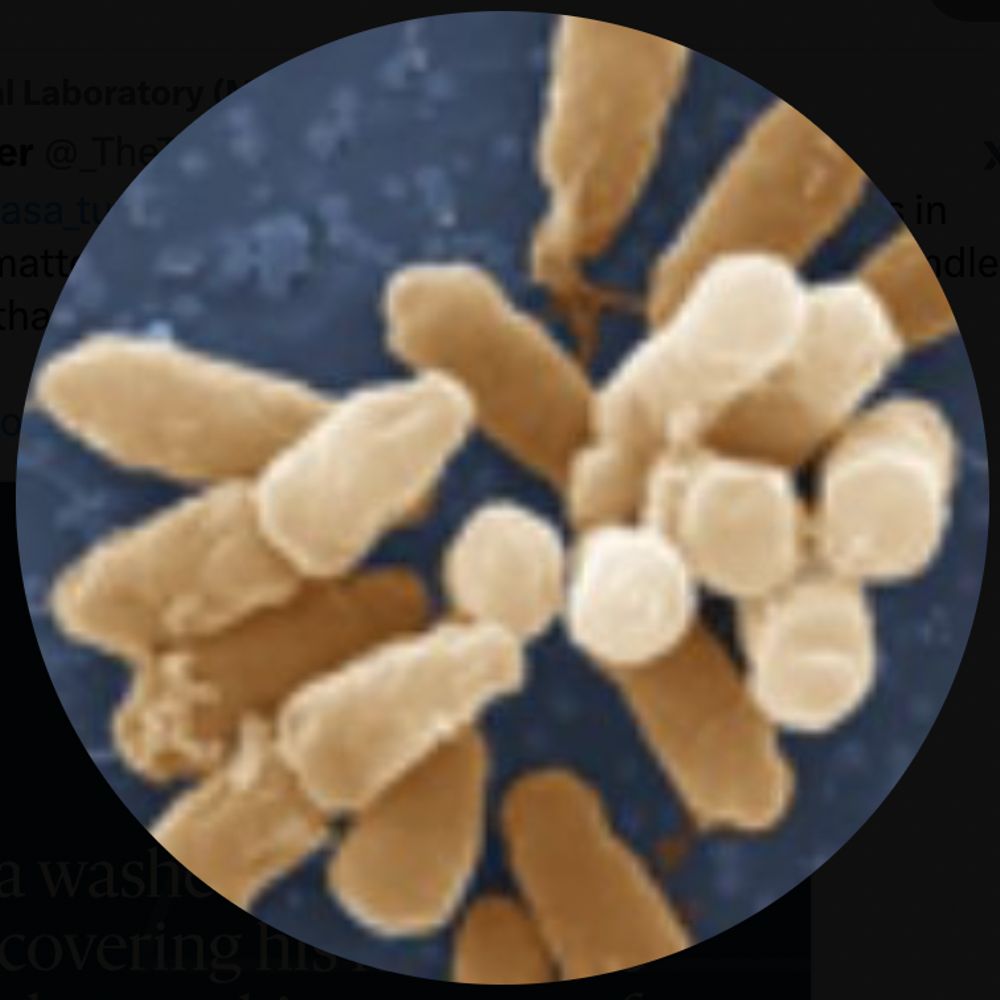
New in JB: Yarrington & Limoli review recent exciting advances in understanding mechanisms of directional movement for type IV-mediated twitching motility in P. aeruginosa.
journals.asm.org/doi/10.1128/...
@asm.org #JBacteriology
journals.asm.org/doi/10.1128/...
@asm.org #JBacteriology

December 16, 2025 at 3:26 PM
New in JB: Yarrington & Limoli review recent exciting advances in understanding mechanisms of directional movement for type IV-mediated twitching motility in P. aeruginosa.
journals.asm.org/doi/10.1128/...
@asm.org #JBacteriology
journals.asm.org/doi/10.1128/...
@asm.org #JBacteriology
Reposted
Excited to share our lab’s latest paper in Microbiome! 🧬 We’ve developed "ProFiT-SPEci-FISH", a new pipeline to solve a classic problem: linking plasmids to their specific bacterial hosts in complex samples like the human gut. (1/7)
link.springer.com/article/10.1...
link.springer.com/article/10.1...

ProFiT-SPEci-FISH: a novel approach for linking plasmids to hosts in complex microbial communities at the single-cell level - Microbiome
Background Plasmids are influential drivers of bacterial evolution, facilitating horizontal gene transfer and shaping microbial communities. Current knowledge on plasmid persistence and mobilization i...
link.springer.com
December 15, 2025 at 1:36 PM
Excited to share our lab’s latest paper in Microbiome! 🧬 We’ve developed "ProFiT-SPEci-FISH", a new pipeline to solve a classic problem: linking plasmids to their specific bacterial hosts in complex samples like the human gut. (1/7)
link.springer.com/article/10.1...
link.springer.com/article/10.1...
Reposted
The 2025 Agar Art Contest winners have been selected! This year’s theme, “Microbes Make the World Go Round,” inspired 557 global entries—from food fermentation to antibiotic production. See the masterpieces and finalists! asm.org/press-releas... #agarart


December 15, 2025 at 4:59 PM
The 2025 Agar Art Contest winners have been selected! This year’s theme, “Microbes Make the World Go Round,” inspired 557 global entries—from food fermentation to antibiotic production. See the masterpieces and finalists! asm.org/press-releas... #agarart
Reposted

A new study from the Rudner lab defines a comprehensive set of genes required for spore formation in Bacillus anthracis. Similarities and striking differences between the Bacillus subtilis model and this important human pathogen are described. pubmed.ncbi.nlm.nih.gov/41385520/

December 15, 2025 at 2:05 PM
A new study from the Rudner lab defines a comprehensive set of genes required for spore formation in Bacillus anthracis. Similarities and striking differences between the Bacillus subtilis model and this important human pathogen are described. pubmed.ncbi.nlm.nih.gov/41385520/
Reposted

RNA–RNA interactome approaches provide in vivo evidence for a critical role of the Hfq rim face in sRNA–mRNA pairing url: academic.oup.com/nar/article/...

RNA–RNA interactome approaches provide in vivo evidence for a critical role of the Hfq rim face in sRNA–mRNA pairing
Abstract. Most bacterial small regulatory RNAs (sRNAs) modulate gene expression by forming complementary base pairs with target messenger RNAs (mRNAs), dep
academic.oup.com
December 14, 2025 at 4:06 AM
RNA–RNA interactome approaches provide in vivo evidence for a critical role of the Hfq rim face in sRNA–mRNA pairing url: academic.oup.com/nar/article/...
Reposted

Just got word that we are a go for the Bacterial Cell Biology and Development GRS and GRC at Southern New Hampshire University!
GRS will be on June 5-6, 2027
GRC will be from June 6-11, 2027
Block off your calendars Prokaryotic Cell Biologists!
More details to come! Please repost!
GRS will be on June 5-6, 2027
GRC will be from June 6-11, 2027
Block off your calendars Prokaryotic Cell Biologists!
More details to come! Please repost!
December 12, 2025 at 2:58 PM
Just got word that we are a go for the Bacterial Cell Biology and Development GRS and GRC at Southern New Hampshire University!
GRS will be on June 5-6, 2027
GRC will be from June 6-11, 2027
Block off your calendars Prokaryotic Cell Biologists!
More details to come! Please repost!
GRS will be on June 5-6, 2027
GRC will be from June 6-11, 2027
Block off your calendars Prokaryotic Cell Biologists!
More details to come! Please repost!
Reposted
New in JB: Price & Skaar explore the role of metals in biofilm biology with an eye on how to use this information therapeutically. I love the title: "Forging biofilms: metal-induced microbial responses in biofilm formation"
journals.asm.org/doi/10.1128/...
@asm.org #JBacteriology
journals.asm.org/doi/10.1128/...
@asm.org #JBacteriology

December 11, 2025 at 1:16 PM
New in JB: Price & Skaar explore the role of metals in biofilm biology with an eye on how to use this information therapeutically. I love the title: "Forging biofilms: metal-induced microbial responses in biofilm formation"
journals.asm.org/doi/10.1128/...
@asm.org #JBacteriology
journals.asm.org/doi/10.1128/...
@asm.org #JBacteriology
Reposted

SCELSE is in the news! Check out the story - Haleon taps into tripartite partnership to drive microbiome R&D in Singapore- by Koe T. in NutraIngredients: www.nutraingredients.com/Article/2025...
December 11, 2025 at 5:57 AM
SCELSE is in the news! Check out the story - Haleon taps into tripartite partnership to drive microbiome R&D in Singapore- by Koe T. in NutraIngredients: www.nutraingredients.com/Article/2025...
It is again this time of the year. Merry Xmas to all 🎄🧑🎄

December 11, 2025 at 12:37 AM
It is again this time of the year. Merry Xmas to all 🎄🧑🎄
Reposted
Diet modulates Vibrio cholerae colonization
Dietary proteins differentially restrict colonization of Vibrio cholerae. Specific diets downregulate V. cholerae T6SS expression, leading to the loss of pathogen competitiveness against commensal bacteria
www.cell.com/cell-host-mi...
Dietary proteins differentially restrict colonization of Vibrio cholerae. Specific diets downregulate V. cholerae T6SS expression, leading to the loss of pathogen competitiveness against commensal bacteria
www.cell.com/cell-host-mi...

Diet modulates Vibrio cholerae colonization and competitive outcomes with the gut microbiota
Liu et al. show that dietary protein sources differentially restrict colonization
of the pathogen Vibrio cholerae. Specific diets downregulate V. cholerae type VI secretion
system (T6SS) expression, l...
www.cell.com
December 10, 2025 at 6:41 PM
Diet modulates Vibrio cholerae colonization
Dietary proteins differentially restrict colonization of Vibrio cholerae. Specific diets downregulate V. cholerae T6SS expression, leading to the loss of pathogen competitiveness against commensal bacteria
www.cell.com/cell-host-mi...
Dietary proteins differentially restrict colonization of Vibrio cholerae. Specific diets downregulate V. cholerae T6SS expression, leading to the loss of pathogen competitiveness against commensal bacteria
www.cell.com/cell-host-mi...
Reposted

It’s officially happening folks! The Microbial Population Biology Gordon Research Conference is back in Andover, New Hampshire starting June 27th of 2027!
See you there!!
@wcratcliff.bsky.social @ksbakes.bsky.social @surtlab.bsky.social
#microsky #mevosky
See you there!!
@wcratcliff.bsky.social @ksbakes.bsky.social @surtlab.bsky.social
#microsky #mevosky

December 10, 2025 at 2:35 PM
It’s officially happening folks! The Microbial Population Biology Gordon Research Conference is back in Andover, New Hampshire starting June 27th of 2027!
See you there!!
@wcratcliff.bsky.social @ksbakes.bsky.social @surtlab.bsky.social
#microsky #mevosky
See you there!!
@wcratcliff.bsky.social @ksbakes.bsky.social @surtlab.bsky.social
#microsky #mevosky
Reposted
Our new Microbial Primer describes the mechanistic action and therapeutic potential of R-pyocins produced by P. aeruginosa. www.microbiologyresearch.org/content/jour...

Microbial Primer: The R-pyocins of Pseudomonas aeruginosa
R-pyocins are phage tail-like protein complexes produced by Pseudomonas aeruginosa that deliver a single, lethal hit by depolarizing the target cell membrane. Unlike phages, R-pyocins lack capsids and...
www.microbiologyresearch.org
December 10, 2025 at 9:05 PM
Our new Microbial Primer describes the mechanistic action and therapeutic potential of R-pyocins produced by P. aeruginosa. www.microbiologyresearch.org/content/jour...
Reposted

ERC-CoG for microbiologist Barbara Sixt. Umeå microbial research scores again. Congrats, Barbara!
www.umu.se/en/news/eu-f...
www.umu.se/en/news/eu-f...

EU funding secures continued research on chlamydia
ERC provides secured funding for five years to Barbara Sixt's research on chlamydia.
www.umu.se
December 10, 2025 at 10:32 PM
ERC-CoG for microbiologist Barbara Sixt. Umeå microbial research scores again. Congrats, Barbara!
www.umu.se/en/news/eu-f...
www.umu.se/en/news/eu-f...
Reposted

Out today in Science Magazine — First author Veronika Kivenson and PIs Jill Banfield (The Banfield Lab) and Alanna Schepartz team up to reveal a new genetic code in #archaea, with implications for #methane and #climate, and #bioengineering! Learn more: https://ow.ly/Kuem50Xurh0

December 8, 2025 at 3:50 PM
Out today in Science Magazine — First author Veronika Kivenson and PIs Jill Banfield (The Banfield Lab) and Alanna Schepartz team up to reveal a new genetic code in #archaea, with implications for #methane and #climate, and #bioengineering! Learn more: https://ow.ly/Kuem50Xurh0