



Morgan Feeney
@morganella.bsky.social
Microbiologist and teaching fellow. Fond of the cool things bacteria do. Likes baking, shape-note singing, crafts, earrings, shiny things. Was @mostlymicrobia on Twitter. She/her.
Reposted by Morgan Feeney

Why should microbiologists be interested in historical infection remedies, and how can we best investigate them for antimicrobial discovery? Thoroughly enjoyed co-writing this Microbiology Primer with @tosinorababa.bsky.social www.microbiologyresearch.org/content/jour... #MicroSky #Ancientbiotics

Microbial Primer: Ancientbiotics – making modern antimicrobials from historical infection remedies
The modern antibiotic era began in the early twentieth century, but humans have long used materials from the natural world to attempt to treat the symptoms of infection. In this primer, we will discus...
www.microbiologyresearch.org
January 29, 2026 at 10:44 AM
Why should microbiologists be interested in historical infection remedies, and how can we best investigate them for antimicrobial discovery? Thoroughly enjoyed co-writing this Microbiology Primer with @tosinorababa.bsky.social www.microbiologyresearch.org/content/jour... #MicroSky #Ancientbiotics
Streptomyces friends! What do we think about the relative width of aerial vs vegetative mycelia? Same, or is one thicker than the other?
January 28, 2026 at 8:43 AM
Streptomyces friends! What do we think about the relative width of aerial vs vegetative mycelia? Same, or is one thicker than the other?
Reposted by Morgan Feeney

Good to see this out - new CRISPRi work from the
@ryanfseipke.bsky.social lab/ #microsky #streptomyces
A platform for CRISPRi-seq in Streptomyces albidoflavus
journals.asm.org/doi/pdf/10.1...
@ryanfseipke.bsky.social lab/ #microsky #streptomyces
A platform for CRISPRi-seq in Streptomyces albidoflavus
journals.asm.org/doi/pdf/10.1...
journals.asm.org
January 16, 2026 at 8:13 AM
Good to see this out - new CRISPRi work from the
@ryanfseipke.bsky.social lab/ #microsky #streptomyces
A platform for CRISPRi-seq in Streptomyces albidoflavus
journals.asm.org/doi/pdf/10.1...
@ryanfseipke.bsky.social lab/ #microsky #streptomyces
A platform for CRISPRi-seq in Streptomyces albidoflavus
journals.asm.org/doi/pdf/10.1...
Reposted by Morgan Feeney
A little Christmas gift for the molecular biology nerds! I love the simplicity of this idea: very useful (and small) plasmid selection system that alleviates the need for antibiotics in molbio and bioprocesses. Elegant work by my former PhD student, lab, and colleagues: doi.org/10.1021/acss...

tRNA-Mediated Plasmid Stabilization for Antibiotic-Free Applications in Escherichia coli
Plasmids are essential tools in molecular biology and biotechnology. In research laboratories, it is common to use antibiotic selection markers to ensure that plasmids are stably maintained in a cellu...
doi.org
December 24, 2025 at 7:39 AM
A little Christmas gift for the molecular biology nerds! I love the simplicity of this idea: very useful (and small) plasmid selection system that alleviates the need for antibiotics in molbio and bioprocesses. Elegant work by my former PhD student, lab, and colleagues: doi.org/10.1021/acss...
Reposted by Morgan Feeney
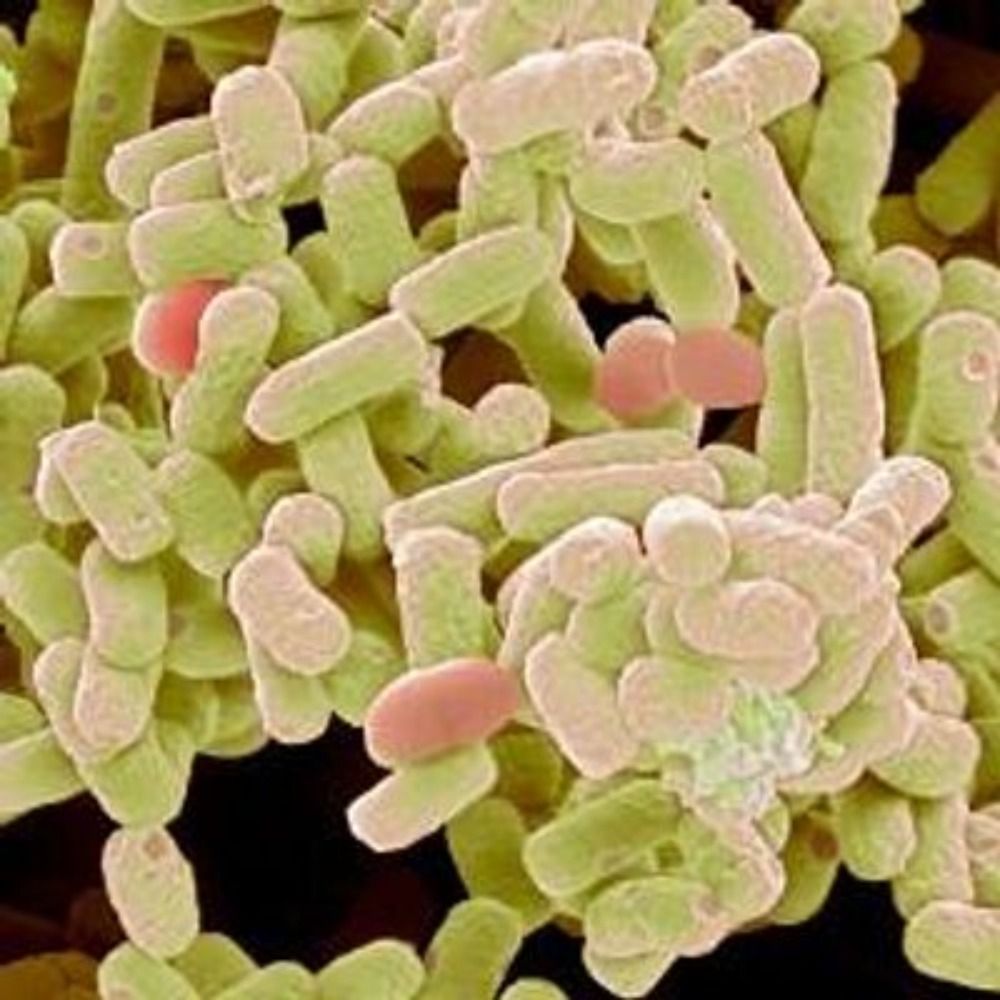
You spend your life learning the natural history of the prokaryotes with all this complex taxonomy and then right when you are so proud of your well earned wisdom all the names change just in time for your brain to be too old to handle it

December 13, 2025 at 11:11 AM
You spend your life learning the natural history of the prokaryotes with all this complex taxonomy and then right when you are so proud of your well earned wisdom all the names change just in time for your brain to be too old to handle it
Reposted by Morgan Feeney
So happy to see Mark recognised for his incredible work. Over a ~40 year career he and his group discovered ECF sigma factors, characterised many key developmental regulators of the Streptomyces lifecycle, and identified new mechanisms of bacterial gene regulation, antibiotic action and resistance.

NEWS - Professor Mark Buttner receives Marjory Stephenson Prize 2026
Professor Buttner, one of our Emeritus Fellows, has received the @microbiologysociety.org Marjory Stephenson Prize for 2026. Congratulations Mark! 👏
Read about his exceptional research and career: www.jic.ac.uk/news/profess...
Professor Buttner, one of our Emeritus Fellows, has received the @microbiologysociety.org Marjory Stephenson Prize for 2026. Congratulations Mark! 👏
Read about his exceptional research and career: www.jic.ac.uk/news/profess...

December 11, 2025 at 8:23 PM
So happy to see Mark recognised for his incredible work. Over a ~40 year career he and his group discovered ECF sigma factors, characterised many key developmental regulators of the Streptomyces lifecycle, and identified new mechanisms of bacterial gene regulation, antibiotic action and resistance.
Can you help my final year project student with her research please?
If you are a student, please try her virtual escape room! tinyurl.com/mr88k53k
If you are not a student, please share/repost to help us reach more students!
If you are a student, please try her virtual escape room! tinyurl.com/mr88k53k
If you are not a student, please share/repost to help us reach more students!

December 11, 2025 at 10:13 AM
Can you help my final year project student with her research please?
If you are a student, please try her virtual escape room! tinyurl.com/mr88k53k
If you are not a student, please share/repost to help us reach more students!
If you are a student, please try her virtual escape room! tinyurl.com/mr88k53k
If you are not a student, please share/repost to help us reach more students!
Reposted by Morgan Feeney

Lac operon: Two gems from the early days (1|2)
by Christoph — When I recently wrote about noise in the basement of the lac operon, I stumbled across two papers in said basement, both of which I – and not only I – consider gems of early molecular biology: 'Isolation of the lac repressor'…
by Christoph — When I recently wrote about noise in the basement of the lac operon, I stumbled across two papers in said basement, both of which I – and not only I – consider gems of early molecular biology: 'Isolation of the lac repressor'…

Lac operon: Two gems from the early days (1|2)
by Christoph — When I recently wrote about noise in the basement of the lac operon, I stumbled across two papers in said basement, both of which I – and not only I – consider gems of early molecular biology: 'Isolation of the lac repressor' (Gilbert & Müller-Hill, 1966), and 'The nucleotide sequence of the lac operator' (Gilbert & Maxam, 1973). Here in part 1, I will dust off the lac repressor story a bit to make this gem sparkle again...
smallthingsconsidered.blog
December 8, 2025 at 9:00 AM
Lac operon: Two gems from the early days (1|2)
by Christoph — When I recently wrote about noise in the basement of the lac operon, I stumbled across two papers in said basement, both of which I – and not only I – consider gems of early molecular biology: 'Isolation of the lac repressor'…
by Christoph — When I recently wrote about noise in the basement of the lac operon, I stumbled across two papers in said basement, both of which I – and not only I – consider gems of early molecular biology: 'Isolation of the lac repressor'…
Reposted by Morgan Feeney
#microsky #phagesky
(Fancy!) transposon-insertion sequencing identifies essential genes in #phage. By @aharms485.bsky.social & Co.
www.biorxiv.org/content/10.1...
(Fancy!) transposon-insertion sequencing identifies essential genes in #phage. By @aharms485.bsky.social & Co.
www.biorxiv.org/content/10.1...

Systematic mapping of bacteriophage gene essentiality with HIDEN‑SEQ
The constant arms race of bacteriophages and their bacterial hosts has inspired major breakthroughs in biotechnology and shaped phages as fierce predators with great clinical potential to fight multid...
www.biorxiv.org
November 21, 2025 at 7:24 AM
#microsky #phagesky
(Fancy!) transposon-insertion sequencing identifies essential genes in #phage. By @aharms485.bsky.social & Co.
www.biorxiv.org/content/10.1...
(Fancy!) transposon-insertion sequencing identifies essential genes in #phage. By @aharms485.bsky.social & Co.
www.biorxiv.org/content/10.1...
Reposted by Morgan Feeney
Come and work with me and @ariannebabina.bsky.social on #Streptomyces evolution and antibiotic production
Origins of a tangled bank: Adaptation and evolution in antibiotic-producing Streptomyces
www.gla.ac.uk/postgraduate...
please repost
Origins of a tangled bank: Adaptation and evolution in antibiotic-producing Streptomyces
www.gla.ac.uk/postgraduate...
please repost
University of Glasgow - Postgraduate study - Centres for Doctoral Training - NorthWest Biosciences - Our Projects - Underpinning Bioscience - Paul A Hoskisson
www.gla.ac.uk
September 30, 2025 at 11:02 AM
Come and work with me and @ariannebabina.bsky.social on #Streptomyces evolution and antibiotic production
Origins of a tangled bank: Adaptation and evolution in antibiotic-producing Streptomyces
www.gla.ac.uk/postgraduate...
please repost
Origins of a tangled bank: Adaptation and evolution in antibiotic-producing Streptomyces
www.gla.ac.uk/postgraduate...
please repost
What a lovely way to brighten up the day!!!

September 2, 2025 at 12:59 PM
What a lovely way to brighten up the day!!!

Super super super recommend Grace Petrie's Fringe show - two nights left!!! Absolutely brilliant!! www.edfringe.com/tickets/what...

Wheelchair Access, Wheelchair Accessible Toilets
www.edfringe.com
August 12, 2025 at 4:53 PM
Super super super recommend Grace Petrie's Fringe show - two nights left!!! Absolutely brilliant!! www.edfringe.com/tickets/what...
Reposted by Morgan Feeney

Reposted by Morgan Feeney
Our new preprint is out! EEC1 is a massive 4.2 Mb secondary chromosome from Embleya australiensis. Conserved across Embleya, these are the first replicons of their kind in Actinobacteria and the largest secondary replicons in bacteria identified to-date!
1/6 🦠🧪🧬🔬
www.biorxiv.org/content/10.1...
1/6 🦠🧪🧬🔬
www.biorxiv.org/content/10.1...
Evidence supporting the first secondary chromosome in actinobacteria as a hallmark of the Embleya genus
Embleya is a genus within the family Streptomycetaceae, a group of actinobacteria with outstanding capacity for production of specialised metabolites and a strikingly complex life cycle. In this work, we sequenced the complete genome of the new species Embleya australiensis MST-11070 and validated the assembly using optical mapping. The genome of E. australiensis MST-11070 consists of a 7.1 Mb linear chromosome and three additional replicons, including a 4.2 Mb linear replicon, EEC1, significantly larger than all previously described secondary replicons from bacteria. EEC1 is typified by its similar composition to the chromosome in terms of GC-content, codon usage and gene functions. It also carries terminal inverted repeats identical to the chromosome. EEC1 is enriched in biosynthetic gene clusters (BGCs), including the only copy of the BGCs for the spore pigment and the surfactant peptide SapB, metabolites essential for the organism's lifecycle. EEC1 contains an origin of replication with at least some chromosomal properties, and its replication is likely to depend on functions provided by chromosomally located genes. Further comparison of Embleya spp. genomes suggests that EEC1-like replicons are conserved across the genus, in contrast to other known large linear extrachromosomal replicons (megaplasmids) in the order. EEC1 is thus a hallmark of the Embleya genus and is central to its evolution within the Streptomycetaceae family. We propose EEC1 as a secondary chromosome, distinct from previously described secondary chromosomes that utilise plasmid-like replication mechanisms (chromids) and the largest secondary replicon reported in bacteria, to date. ### Competing Interest Statement Ernest Lacey is a Founder, Board Member, and the Managing Director of Microbial Screening Technology Pty. Ltd. The authors declare no competing financial interests. Biotechnology and Biological Sciences Research Council, https://ror.org/00cwqg982, BB/P021506/1, BBS/E/J/000PR9790, BB/X01097X/1, BB/M011216/1 Novo Nordisk Foundation, https://ror.org/04txyc737, NNF22OC0078997
www.biorxiv.org
July 9, 2025 at 11:56 AM
Our new preprint is out! EEC1 is a massive 4.2 Mb secondary chromosome from Embleya australiensis. Conserved across Embleya, these are the first replicons of their kind in Actinobacteria and the largest secondary replicons in bacteria identified to-date!
1/6 🦠🧪🧬🔬
www.biorxiv.org/content/10.1...
1/6 🦠🧪🧬🔬
www.biorxiv.org/content/10.1...
Reposted by Morgan Feeney
“Changing how many chromosomes your host has?? Phages shouldn’t have that power” — my labmate

One of my favourite serendipitous results from the lab came about because we were long-read sequencing bacterial:
Vibrio cholerae, which is "supposed to" have TWO circular chromosomes (3 + 1 million base pairs) often has just ONE fused chromosome (4 Mbp).
www.nature.com/articles/s41...
(1/n)
Vibrio cholerae, which is "supposed to" have TWO circular chromosomes (3 + 1 million base pairs) often has just ONE fused chromosome (4 Mbp).
www.nature.com/articles/s41...
(1/n)
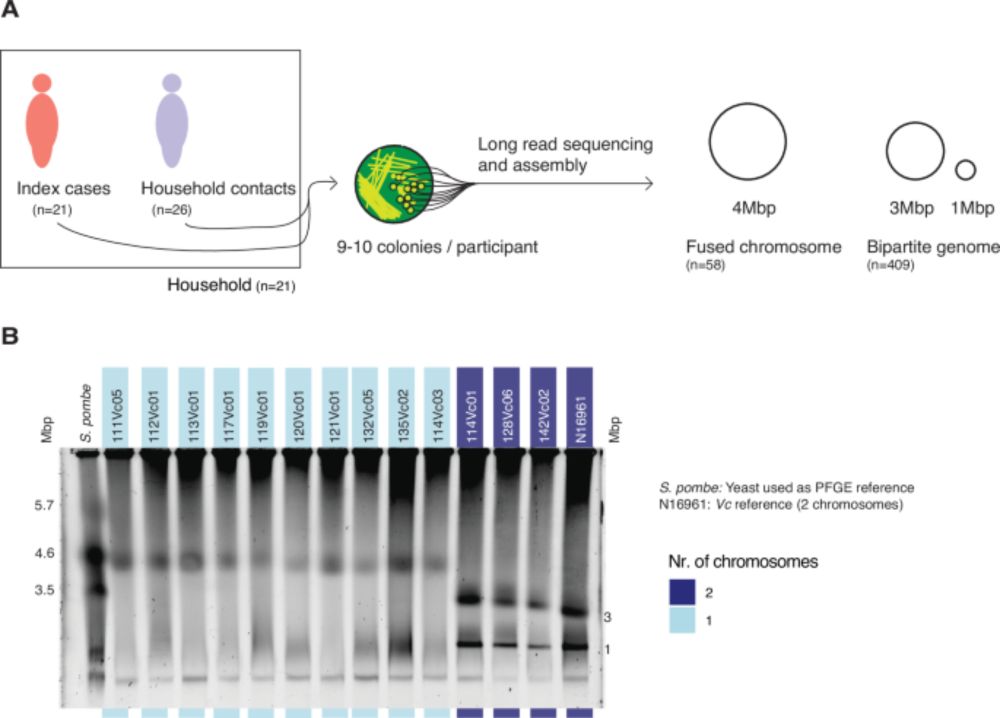
Prevalent chromosome fusion in Vibrio cholerae O1 - Nature Communications
The pathogenic bacterium Vibrio cholerae typically has two circular chromosomes. Here, Cuénod et al. analyse 467 clinical isolates and identify several independent chromosome fusion events that are li...
www.nature.com
July 1, 2025 at 6:01 PM
“Changing how many chromosomes your host has?? Phages shouldn’t have that power” — my labmate
Reposted by Morgan Feeney

Great news - this work is now published!! Big congrats to @yeowjiang.bsky.social - amazing that he mastered cryo-EM and now solved his 2nd set of strs! And kudos to Chee Geng (& Nadege) for non-trivial homogeneous purification of TolQRA!
pubs.acs.org/doi/10.1021/...
#MicroSky #SGBUG 1/4
pubs.acs.org/doi/10.1021/...
#MicroSky #SGBUG 1/4
July 2, 2025 at 5:58 AM
Great news - this work is now published!! Big congrats to @yeowjiang.bsky.social - amazing that he mastered cryo-EM and now solved his 2nd set of strs! And kudos to Chee Geng (& Nadege) for non-trivial homogeneous purification of TolQRA!
pubs.acs.org/doi/10.1021/...
#MicroSky #SGBUG 1/4
pubs.acs.org/doi/10.1021/...
#MicroSky #SGBUG 1/4
Reposted by Morgan Feeney
I'm excited to share the final version of some fun work from our lab. A few interesting phenotypes - depleting host glutathione causes intracellular Rickettsia to form long chains and get restricted by antibacterial autophagy. Congrats to the team!
urldefense.com/v3/__https:/...
urldefense.com/v3/__https:/...

Host glutathione is required for Rickettsia parkeri cell division and intracellular survival
Nature Communications - Rickettsia species are bacterial pathogens that obligately reside in the host cell cytosol. Here, Sun et al. report that Rickettsia use host glutathione as a nutrient source...
urldefense.com
July 1, 2025 at 5:03 PM
I'm excited to share the final version of some fun work from our lab. A few interesting phenotypes - depleting host glutathione causes intracellular Rickettsia to form long chains and get restricted by antibacterial autophagy. Congrats to the team!
urldefense.com/v3/__https:/...
urldefense.com/v3/__https:/...
Reposted by Morgan Feeney

Thank you to everyone who has used pyani over the years (I know it's thousands of people!) but we have now archived the repository.
But we have replaced it with a completely rewritten and extended implementation: pyani-plus!
github.com/pyani-plus/p...
1/
But we have replaced it with a completely rewritten and extended implementation: pyani-plus!
github.com/pyani-plus/p...
1/

han solo from star wars is pointing at the camera in a room .
ALT: han solo from star wars is pointing at the camera in a room .
media.tenor.com
July 1, 2025 at 2:04 PM
Thank you to everyone who has used pyani over the years (I know it's thousands of people!) but we have now archived the repository.
But we have replaced it with a completely rewritten and extended implementation: pyani-plus!
github.com/pyani-plus/p...
1/
But we have replaced it with a completely rewritten and extended implementation: pyani-plus!
github.com/pyani-plus/p...
1/
Reposted by Morgan Feeney

Just learned that Frank Stahl (of the Meselson and Stahl DNA replication experiment ("the most beautiful experiment in biology") died at the beginning of April, to no fanfare. Here's a lovely video of them reminiscing: www.youtube.com/watch?v=7-tn...
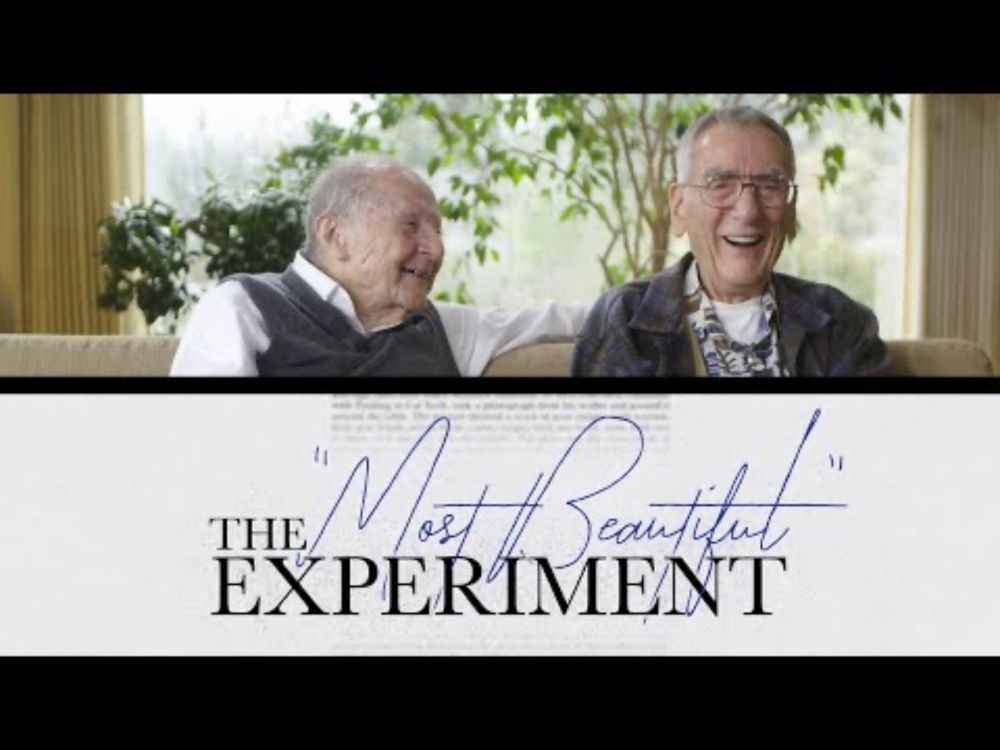
The Most Beautiful Experiment: Meselson and Stahl
YouTube video by Science Communication Lab
www.youtube.com
June 26, 2025 at 10:01 AM
Just learned that Frank Stahl (of the Meselson and Stahl DNA replication experiment ("the most beautiful experiment in biology") died at the beginning of April, to no fanfare. Here's a lovely video of them reminiscing: www.youtube.com/watch?v=7-tn...
Reposted by Morgan Feeney
Thanks so much for everyone who came out in person or online to hear me talk about our LLM course today at UNSW.
thebullshitmachines.com
thebullshitmachines.com
June 25, 2025 at 6:54 AM
Thanks so much for everyone who came out in person or online to hear me talk about our LLM course today at UNSW.
thebullshitmachines.com
thebullshitmachines.com
Reposted by Morgan Feeney
Extended Shine-Dalgarno motifs govern translation initiation in Staphylococcus aureus. On non-canonical start codons, leader peptide, codon rarity, ribosome pausing 🦠 #microsky #rnasky #ribosome www.biorxiv.org/content/10.1...

Extended Shine-Dalgarno motifs govern translation initiation in Staphylococcus aureus
Regulation of translation initiation is central to bacterial adaptation, but species-specific mechanisms remain poorly understood. We present high-resolution mapping of translation start sites in S. a...
www.biorxiv.org
June 25, 2025 at 7:19 AM
Extended Shine-Dalgarno motifs govern translation initiation in Staphylococcus aureus. On non-canonical start codons, leader peptide, codon rarity, ribosome pausing 🦠 #microsky #rnasky #ribosome www.biorxiv.org/content/10.1...
Reposted by Morgan Feeney

Cyclic-di-AMP modulates cellular turgor in response to defects in bacterial cell wall synthesis - www.nature.com/articles/s41...

Cyclic-di-AMP modulates cellular turgor in response to defects in bacterial cell wall synthesis - Nature Microbiology
Brogan et al. uncover a signalling pathway in which levels of the nucleotide second messenger c-di-AMP increase in response to defects in cell wall synthesis. This regulatory pathway decreases turgor ...
www.nature.com
June 24, 2025 at 7:45 AM
Cyclic-di-AMP modulates cellular turgor in response to defects in bacterial cell wall synthesis - www.nature.com/articles/s41...
Reposted by Morgan Feeney
A bacterial regulatory uORF senses multiple classes of ribosome-targeting antibiotics
elifesciences.org/articles/101...
elifesciences.org/articles/101...

A bacterial regulatory uORF senses multiple classes of ribosome-targeting antibiotics
An upstream open-reading frame in Escherichia coli regulates expression of the downstream genes in response to diverse translation stresses.
elifesciences.org
June 3, 2025 at 7:05 AM
A bacterial regulatory uORF senses multiple classes of ribosome-targeting antibiotics
elifesciences.org/articles/101...
elifesciences.org/articles/101...
Reposted by Morgan Feeney
How does your favorite species elongate? 🧵 "Phenotypic plasticity in bacterial elongation among closely related species". Happy to see this paper in print @natcomms.nature.com. Nice work by @mariedelaby.bsky.social, Liu Yang et al. See original 🧵, different colours, same data and conclusions.
June 2, 2025 at 3:54 PM
How does your favorite species elongate? 🧵 "Phenotypic plasticity in bacterial elongation among closely related species". Happy to see this paper in print @natcomms.nature.com. Nice work by @mariedelaby.bsky.social, Liu Yang et al. See original 🧵, different colours, same data and conclusions.