


Laura Suttenfield
@lcatherines.bsky.social
postdoc with @baym.lol at Harvard Medical School | UIUC, UMass Amherst alum
Reposted by Laura Suttenfield

Big week: welcomed a new baby boy Harris Lopatkin, AND our PlasAnn paper is finally out: academic.oup.com/nar/article/... (obviously the first more important than the second 🥰). Currently on leave but if anyone has the need to annotate large plasmids, go check it out!

PlasAnn: a curated plasmid-specific database and annotation pipeline for standardized gene and function analysis
Abstract. Conjugative plasmids are key drivers of bacterial adaptation, enabling the horizontal transfer of accessory genes within and across diverse micro
academic.oup.com
January 27, 2026 at 4:59 PM
Big week: welcomed a new baby boy Harris Lopatkin, AND our PlasAnn paper is finally out: academic.oup.com/nar/article/... (obviously the first more important than the second 🥰). Currently on leave but if anyone has the need to annotate large plasmids, go check it out!
Reposted by Laura Suttenfield
Interested in eco-evolutionary feedbacks? Microbial experimental evolution? Pleiotropy? Filamentous phages??
Check out our latest preprint, now up on BioRxiv!
biorxiv.org/content/10.6...
For a quick summary, peep the thread below...🧵 (1/10)
Check out our latest preprint, now up on BioRxiv!
biorxiv.org/content/10.6...
For a quick summary, peep the thread below...🧵 (1/10)
biorxiv.org
January 23, 2026 at 6:04 PM
Interested in eco-evolutionary feedbacks? Microbial experimental evolution? Pleiotropy? Filamentous phages??
Check out our latest preprint, now up on BioRxiv!
biorxiv.org/content/10.6...
For a quick summary, peep the thread below...🧵 (1/10)
Check out our latest preprint, now up on BioRxiv!
biorxiv.org/content/10.6...
For a quick summary, peep the thread below...🧵 (1/10)
Reposted by Laura Suttenfield
Congrats to @noahhoupt.bsky.social for this massive effort (1000 generation!) evolution experiment demonstrating the importance of organism-derived environmental modifications in shaping adaptive evolution. A great example of how bacterial evolution only makes sense in the light of phage :)
Interested in eco-evolutionary feedbacks? Microbial experimental evolution? Pleiotropy? Filamentous phages??
Check out our latest preprint, now up on BioRxiv!
biorxiv.org/content/10.6...
For a quick summary, peep the thread below...🧵 (1/10)
Check out our latest preprint, now up on BioRxiv!
biorxiv.org/content/10.6...
For a quick summary, peep the thread below...🧵 (1/10)
biorxiv.org
January 23, 2026 at 7:27 PM
Congrats to @noahhoupt.bsky.social for this massive effort (1000 generation!) evolution experiment demonstrating the importance of organism-derived environmental modifications in shaping adaptive evolution. A great example of how bacterial evolution only makes sense in the light of phage :)
Reposted by Laura Suttenfield

It’s officially happening folks! The Microbial Population Biology Gordon Research Conference is back in Andover, New Hampshire starting June 27th of 2027!
See you there!!
@wcratcliff.bsky.social @ksbakes.bsky.social @surtlab.bsky.social
#microsky #mevosky
See you there!!
@wcratcliff.bsky.social @ksbakes.bsky.social @surtlab.bsky.social
#microsky #mevosky

December 10, 2025 at 2:35 PM
It’s officially happening folks! The Microbial Population Biology Gordon Research Conference is back in Andover, New Hampshire starting June 27th of 2027!
See you there!!
@wcratcliff.bsky.social @ksbakes.bsky.social @surtlab.bsky.social
#microsky #mevosky
See you there!!
@wcratcliff.bsky.social @ksbakes.bsky.social @surtlab.bsky.social
#microsky #mevosky
Reposted by Laura Suttenfield
Summer REU in biofilms! Pls share.
www.binghamton.edu/centers/biof...
www.binghamton.edu/centers/biof...

Research Experience for Undergraduates (REU) | Biofilm Research Center | Binghamton
University
www.binghamton.edu
January 16, 2026 at 12:34 AM
Summer REU in biofilms! Pls share.
www.binghamton.edu/centers/biof...
www.binghamton.edu/centers/biof...
Reposted by Laura Suttenfield

New preprint from my lab (with Arya Kaul, @fernpizza.bsky.social, and @brinda.eu), in which we explore new genes hitchhiking on the beneficial deletion that fused them together, and find them in the LTEE, M. Tb/bovis, and across the bacterial tree of life

Novel genes arise from genomic deletions across the bacterial tree of life https://www.biorxiv.org/content/10.64898/2026.01.05.697752v1
January 6, 2026 at 4:12 PM
New preprint from my lab (with Arya Kaul, @fernpizza.bsky.social, and @brinda.eu), in which we explore new genes hitchhiking on the beneficial deletion that fused them together, and find them in the LTEE, M. Tb/bovis, and across the bacterial tree of life
Reposted by Laura Suttenfield

💻 github.com/baymlab/deletion-born-fusion-manuscript
🔧 github.com/aryakaul/prefixsuffix-kmer
Many thanks to co-authors @fernpizza.bsky.social , @brinda.eu & @baym.lol + GenScale/Baym lab! Funded by NIH, Packard, Pew, Sloan & a Chateaubriand Fellowship!
🔧 github.com/aryakaul/prefixsuffix-kmer
Many thanks to co-authors @fernpizza.bsky.social , @brinda.eu & @baym.lol + GenScale/Baym lab! Funded by NIH, Packard, Pew, Sloan & a Chateaubriand Fellowship!

GitHub - baymlab/deletion-born-fusion-manuscript
Contribute to baymlab/deletion-born-fusion-manuscript development by creating an account on GitHub.
github.com
January 6, 2026 at 4:09 PM
💻 github.com/baymlab/deletion-born-fusion-manuscript
🔧 github.com/aryakaul/prefixsuffix-kmer
Many thanks to co-authors @fernpizza.bsky.social , @brinda.eu & @baym.lol + GenScale/Baym lab! Funded by NIH, Packard, Pew, Sloan & a Chateaubriand Fellowship!
🔧 github.com/aryakaul/prefixsuffix-kmer
Many thanks to co-authors @fernpizza.bsky.social , @brinda.eu & @baym.lol + GenScale/Baym lab! Funded by NIH, Packard, Pew, Sloan & a Chateaubriand Fellowship!
Reposted by Laura Suttenfield
Arya (my best friend) does not have social media, he asked me to tweet this for him. But if you want to chat about science (or offer him a job) you can contact him at arya.casa/contact. He’ll (probably) be defending soon!
arya's net casa - contact
arya.casa
January 6, 2026 at 4:09 PM
Arya (my best friend) does not have social media, he asked me to tweet this for him. But if you want to chat about science (or offer him a job) you can contact him at arya.casa/contact. He’ll (probably) be defending soon!
Reposted by Laura Suttenfield
🎉 New year, NEW PREPRINT!
Bacteria exhibit astonishing genetic diversity, but where do new genes come from?
My best friend Arya Kaul (/labmate in the @baym lab) investigates how advantageous deletions can spawn new genes - "deletion-born fusions." 🧵:
Bacteria exhibit astonishing genetic diversity, but where do new genes come from?
My best friend Arya Kaul (/labmate in the @baym lab) investigates how advantageous deletions can spawn new genes - "deletion-born fusions." 🧵:
Novel genes arise from genomic deletions across the bacterial tree of life https://www.biorxiv.org/content/10.64898/2026.01.05.697752v1
January 6, 2026 at 4:09 PM
🎉 New year, NEW PREPRINT!
Bacteria exhibit astonishing genetic diversity, but where do new genes come from?
My best friend Arya Kaul (/labmate in the @baym lab) investigates how advantageous deletions can spawn new genes - "deletion-born fusions." 🧵:
Bacteria exhibit astonishing genetic diversity, but where do new genes come from?
My best friend Arya Kaul (/labmate in the @baym lab) investigates how advantageous deletions can spawn new genes - "deletion-born fusions." 🧵:
Reposted by Laura Suttenfield

Provirus induction diversifies adaptive variation in Pseudomonas aeruginosa lysogen populations https://www.biorxiv.org/content/10.64898/2026.01.04.697566v1
January 5, 2026 at 2:16 AM
Provirus induction diversifies adaptive variation in Pseudomonas aeruginosa lysogen populations https://www.biorxiv.org/content/10.64898/2026.01.04.697566v1
Happy new year! The second big project of my PhD in Rachel Whitaker's lab is now up! 🎉 We look at how provirus infection affects the evolution of the bacterial chromosome with different types of viral induction – with CRISPRs or antibiotics. Take a peek 🦠 www.biorxiv.org/content/10.6...

Provirus induction diversifies adaptive variation in Pseudomonas aeruginosa lysogen populations
Pseudomonas aeruginosa is a Gram-negative opportunistic pathogen that forms chronic infections in people with cystic fibrosis. Often P. aeruginosa strains are lysogens, infected with proviruses, that ...
www.biorxiv.org
January 5, 2026 at 1:49 AM
Happy new year! The second big project of my PhD in Rachel Whitaker's lab is now up! 🎉 We look at how provirus infection affects the evolution of the bacterial chromosome with different types of viral induction – with CRISPRs or antibiotics. Take a peek 🦠 www.biorxiv.org/content/10.6...
Reposted by Laura Suttenfield

Happy to see @joelrc.bsky.social's paper identifying cellular heterogeneity in basal OASL expression as a major determinant of interferon induction during influenza virus infection out in its final form:
www.pnas.org/doi/10.1073/...
Happy new year, hope everyone's 2026 is better than 2025!
www.pnas.org/doi/10.1073/...
Happy new year, hope everyone's 2026 is better than 2025!
PNAS
Proceedings of the National Academy of Sciences (PNAS), a peer reviewed journal of the National Academy of Sciences (NAS) - an authoritative source of high-impact, original research that broadly spans...
www.pnas.org
January 1, 2026 at 12:42 AM
Happy to see @joelrc.bsky.social's paper identifying cellular heterogeneity in basal OASL expression as a major determinant of interferon induction during influenza virus infection out in its final form:
www.pnas.org/doi/10.1073/...
Happy new year, hope everyone's 2026 is better than 2025!
www.pnas.org/doi/10.1073/...
Happy new year, hope everyone's 2026 is better than 2025!
Reposted by Laura Suttenfield
Analyses of Genome-Wide Recombination in Sulfolobus islandicus https://www.biorxiv.org/content/10.64898/2025.12.16.694729v1
December 17, 2025 at 3:18 AM
Analyses of Genome-Wide Recombination in Sulfolobus islandicus https://www.biorxiv.org/content/10.64898/2025.12.16.694729v1
Reposted by Laura Suttenfield
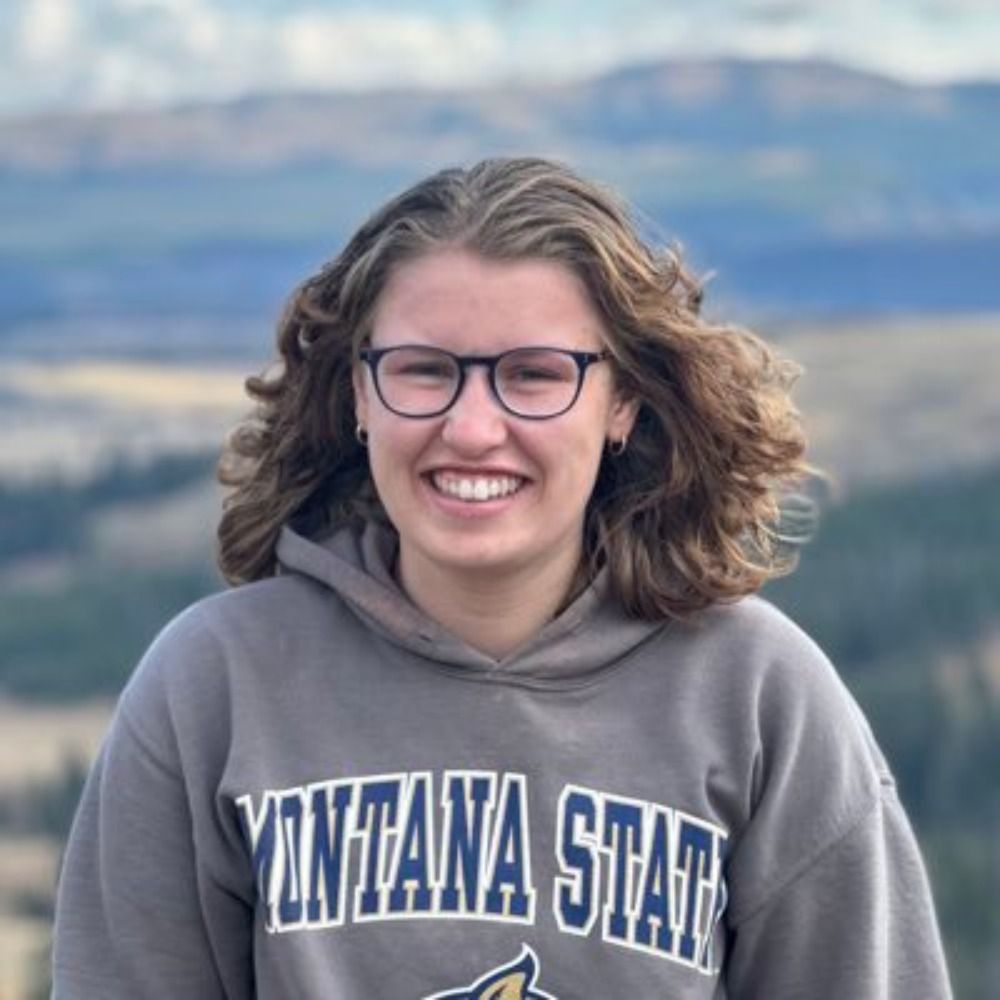
Wow that sounds like a cool paper! Everyone should read it! (it's mine it's my paper 😁)
thrilled to announce that it's on BioRxiv now!! Anyone who is interested in the uncultivated majority, cool microbes, and eco-evolutionary dynamics should give it a read!!
thrilled to announce that it's on BioRxiv now!! Anyone who is interested in the uncultivated majority, cool microbes, and eco-evolutionary dynamics should give it a read!!
A continuum of ecology and evolution contributes to mutualism breakdown between legumes and rhizobia https://www.biorxiv.org/content/10.64898/2025.12.02.691918v1
December 4, 2025 at 3:42 PM
Wow that sounds like a cool paper! Everyone should read it! (it's mine it's my paper 😁)
thrilled to announce that it's on BioRxiv now!! Anyone who is interested in the uncultivated majority, cool microbes, and eco-evolutionary dynamics should give it a read!!
thrilled to announce that it's on BioRxiv now!! Anyone who is interested in the uncultivated majority, cool microbes, and eco-evolutionary dynamics should give it a read!!
Is there anyone out there in the wide wide Pseudomonas world who uses pseudomonas.com and.... likes it? or at least has a normal experience with it? It routinely takes a long time to load and there's often Cloudflare errors.
pseudomonas.com
December 19, 2025 at 11:58 PM
Is there anyone out there in the wide wide Pseudomonas world who uses pseudomonas.com and.... likes it? or at least has a normal experience with it? It routinely takes a long time to load and there's often Cloudflare errors.
Reposted by Laura Suttenfield
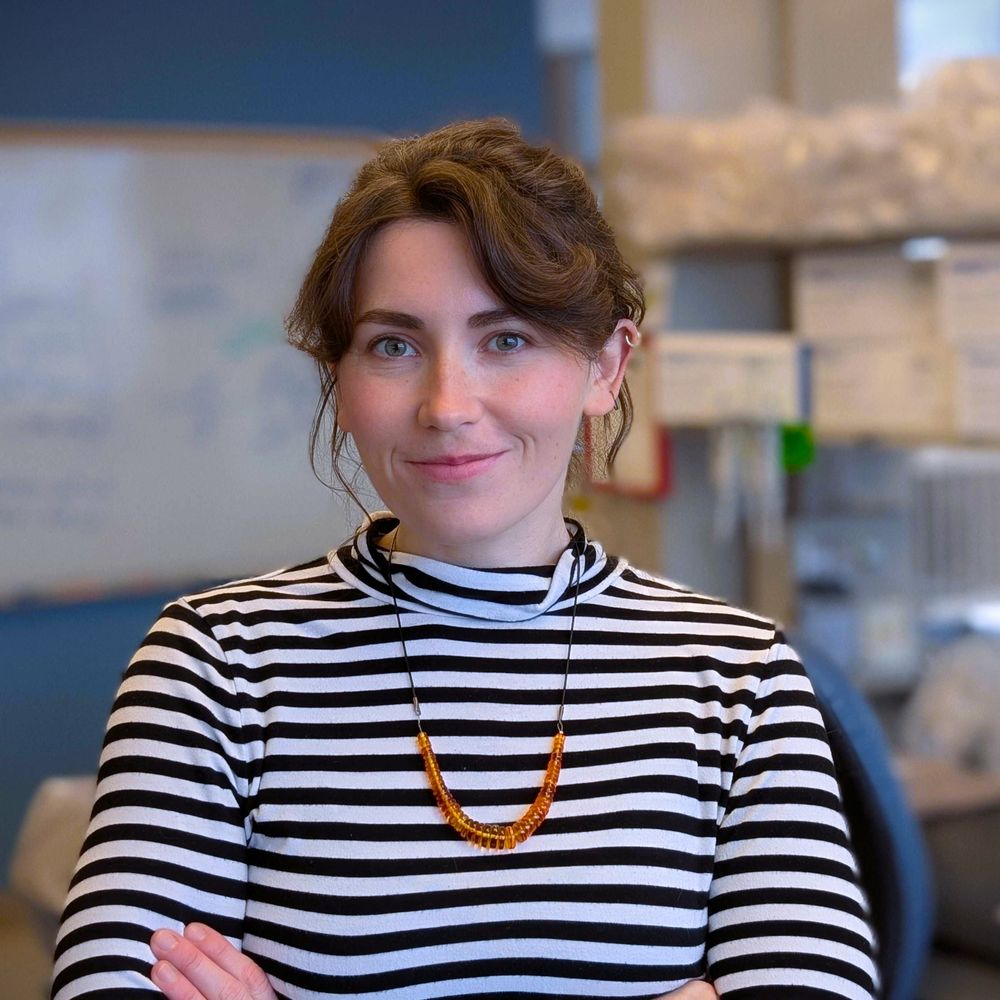
Beautiful work from Jay Winans in the Nadell Lab @dartmouthartsci.bsky.social showing IncF plasmid pED208 spreading like wildfire through E. coli biofilms www.cell.com/current-biol...

Bacterial conjugation can restructure biofilms and increase their resilience while constraining host cell dispersal
Winans et al. show how plasmid transfer can reorganize bacterial communities into
dense aggregates, conferring antibiotic and phage tolerance to otherwise sensitive
host cells. Conjugation-dependent a...
www.cell.com
December 16, 2025 at 11:02 PM
Beautiful work from Jay Winans in the Nadell Lab @dartmouthartsci.bsky.social showing IncF plasmid pED208 spreading like wildfire through E. coli biofilms www.cell.com/current-biol...
Reposted by Laura Suttenfield
Check out @lizthayer.bsky.social's new preprint exploring factors that influence cell-to-cell heterogeneity in interferon (IFN) induction potential!

Single-cell heterogeneity in interferon induction potential is heritable and governed by variation in cell state https://www.biorxiv.org/content/10.64898/2025.12.09.693293v1
December 12, 2025 at 10:12 PM
Check out @lizthayer.bsky.social's new preprint exploring factors that influence cell-to-cell heterogeneity in interferon (IFN) induction potential!
Reposted by Laura Suttenfield
If you're interested in using pangenome graphs for comparative genomics, check out my webinar, part of EMBL-EBI's "Concepts, methods, and resources in pangenomics" series, available on-demand: www.ebi.ac.uk/training/eve...
Pangenome graphs as a new paradigm in comparative genomics -
Pangenome graphs as a new paradigm in comparative genomics -
www.ebi.ac.uk
November 6, 2025 at 11:40 AM
If you're interested in using pangenome graphs for comparative genomics, check out my webinar, part of EMBL-EBI's "Concepts, methods, and resources in pangenomics" series, available on-demand: www.ebi.ac.uk/training/eve...
Reposted by Laura Suttenfield
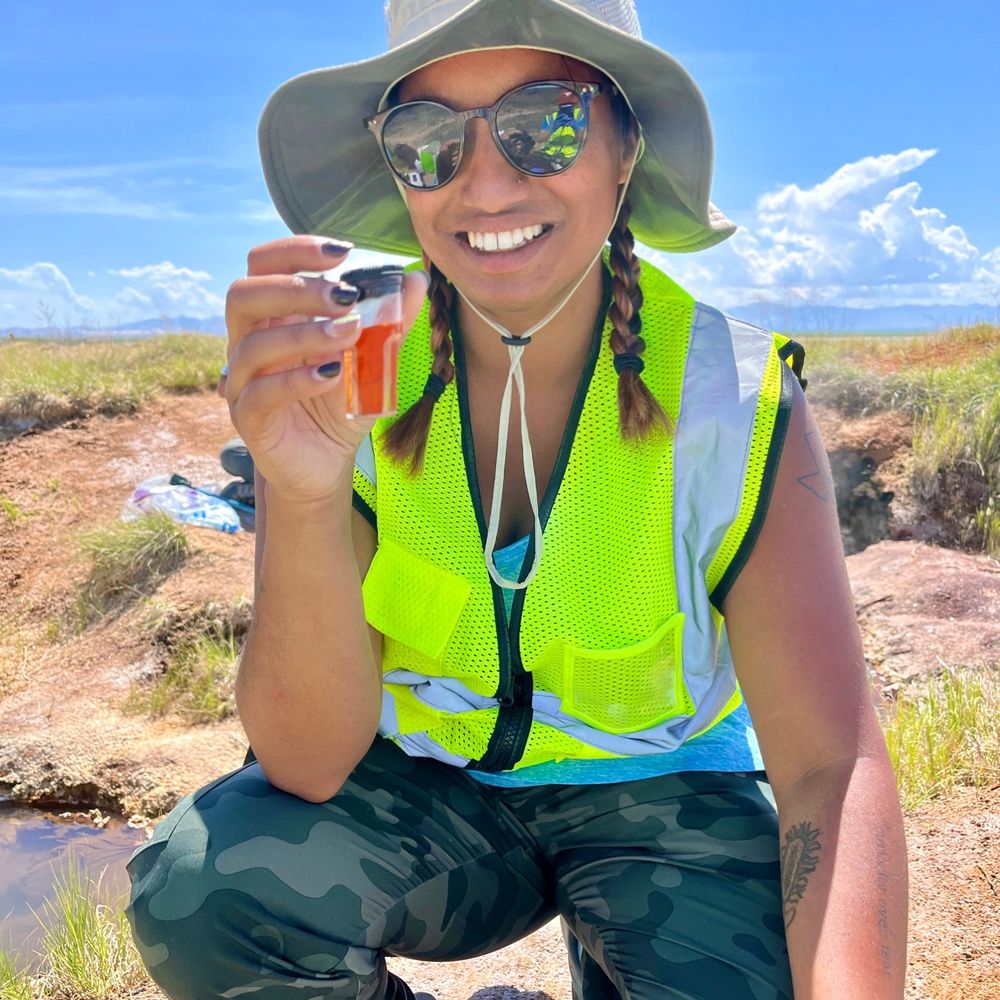
Phage and phage defense friends! What conferences are you attending this upcoming year?
November 6, 2025 at 5:05 AM
Phage and phage defense friends! What conferences are you attending this upcoming year?
Reposted by Laura Suttenfield

So happy to share this! Bacteriocins were first discovered over 100 years ago, but what do they actually do? We look at >1000 bacteriocin plasmids and find links to virulence and antimicrobial resistance, and frequent bacteriocin sharing in Enterobacteriaceae.
www.nature.com/articles/s41...
www.nature.com/articles/s41...

Bacterial warfare is associated with virulence and antimicrobial resistance - Nature Communications
Bacteria employ a range of competition systems that deliver toxins to inhibit competing strains. This study shows that these systems are particularly important for the ecology of virulent and antibiot...
www.nature.com
November 5, 2025 at 7:32 AM
So happy to share this! Bacteriocins were first discovered over 100 years ago, but what do they actually do? We look at >1000 bacteriocin plasmids and find links to virulence and antimicrobial resistance, and frequent bacteriocin sharing in Enterobacteriaceae.
www.nature.com/articles/s41...
www.nature.com/articles/s41...
Reposted by Laura Suttenfield
My labmate @kevinricks.bsky.social and I decided to complete a side project during the last year of our doctorate programs, and I'm happy to say that it's finally been published in New Phytologist !! doi.org/10.1111/nph....

Signatures of local nitrogen adaptation in the Brachypodium distachyon root microbiome
Plants associate with diverse microbiomes that impact their fitness, yet the contribution of the microbiome to plant adaptation is uncertain. As plant recruitment of its microbiome can be both highl...
doi.org
October 30, 2025 at 2:13 PM
My labmate @kevinricks.bsky.social and I decided to complete a side project during the last year of our doctorate programs, and I'm happy to say that it's finally been published in New Phytologist !! doi.org/10.1111/nph....
Reposted by Laura Suttenfield
Carbapenem-resistance oprD mutations reshape Pseudomonas aeruginosa host-pathogen interactions during infection https://www.biorxiv.org/content/10.1101/2025.10.24.684370v1
October 25, 2025 at 2:17 AM
Carbapenem-resistance oprD mutations reshape Pseudomonas aeruginosa host-pathogen interactions during infection https://www.biorxiv.org/content/10.1101/2025.10.24.684370v1
Reposted by Laura Suttenfield

#microsky #mevosky The UNC Chapel Hill Biology Department is hiring 2 Teaching Assistant/Associate Professors with expertise from any area of biology. Individuals with expertise in microbiology are particularly encouraged to apply. Read more and apply at unc.peopleadmin.com/postings/307...
Two (2) Open Rank Teaching Faculty
The Department of Biology at the University of North Carolina at Chapel Hill seeks applicants for two (2) Teaching Faculty positions to be effective July 1, 2026. These positions will be fixed-term 9-...
unc.peopleadmin.com
October 14, 2025 at 1:44 PM
#microsky #mevosky The UNC Chapel Hill Biology Department is hiring 2 Teaching Assistant/Associate Professors with expertise from any area of biology. Individuals with expertise in microbiology are particularly encouraged to apply. Read more and apply at unc.peopleadmin.com/postings/307...
Reposted by Laura Suttenfield
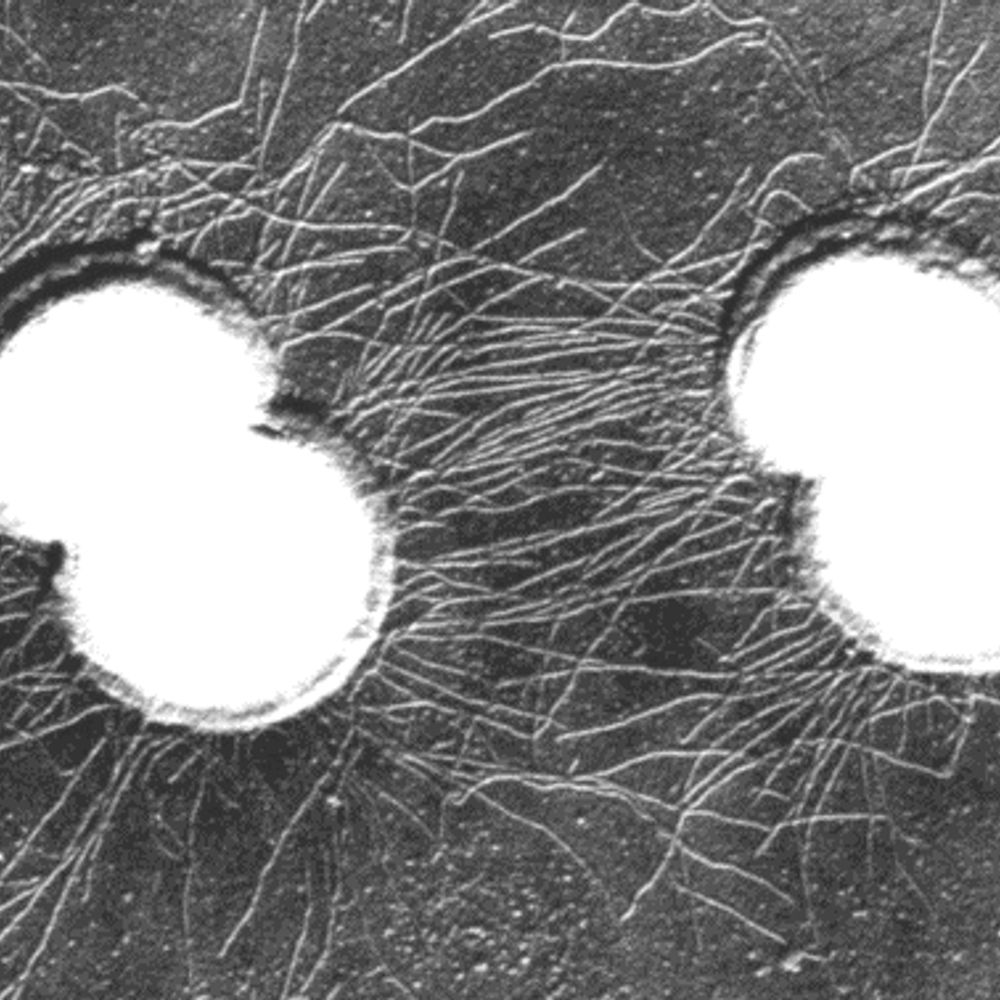
Microbiology Postdoctoral Position (Please re-post)
A funded postdoctoral position in Chicago will open in 2026 to study aspects of Neisseria gonorrhoeae pathogenesis, antigenic variation, genetics, or physiology.
If interested, please get in touch with Hank Seifert
h-seifert@northwestern.edu
A funded postdoctoral position in Chicago will open in 2026 to study aspects of Neisseria gonorrhoeae pathogenesis, antigenic variation, genetics, or physiology.
If interested, please get in touch with Hank Seifert
h-seifert@northwestern.edu
October 21, 2025 at 4:19 PM
Microbiology Postdoctoral Position (Please re-post)
A funded postdoctoral position in Chicago will open in 2026 to study aspects of Neisseria gonorrhoeae pathogenesis, antigenic variation, genetics, or physiology.
If interested, please get in touch with Hank Seifert
h-seifert@northwestern.edu
A funded postdoctoral position in Chicago will open in 2026 to study aspects of Neisseria gonorrhoeae pathogenesis, antigenic variation, genetics, or physiology.
If interested, please get in touch with Hank Seifert
h-seifert@northwestern.edu