




Wiep Klaas Smits (ExpBac/CMAT)
@smitslab.bsky.social
Assoc. prof. at LUMC/@unileiden. Cdiff, DNA replication, AMR, microbiome, anaerobes. Clostpath Steering committee. Education officer ESGCD. Previously: @unigroningen and @mitofficial. https://sites.google.com/view/expbac-lumc/homepage
New preprint: Identification of novel cellular intermediates unveils unique enzymes for flagellar glycan biosynthesis in Clostridioides difficile www.biorxiv.org/content/10.6...
www.biorxiv.org
February 13, 2026 at 2:15 PM
New preprint: Identification of novel cellular intermediates unveils unique enzymes for flagellar glycan biosynthesis in Clostridioides difficile www.biorxiv.org/content/10.6...
The CspC:CspA heterodimer transduces germinant and co-germinant signals during Clostridioides difficile spore germination dx.plos.org/10.1371/jour...

The CspC:CspA heterodimer transduces germinant and co-germinant signals during Clostridioides difficile spore germination
Unlike other bacteria, C. difficile must detect both a germinant signal and a co-germinant signal to trigger spore germination, but how these cues are sensed is unknown. This study finds that the CspC...
dx.plos.org
February 13, 2026 at 2:05 PM
The CspC:CspA heterodimer transduces germinant and co-germinant signals during Clostridioides difficile spore germination dx.plos.org/10.1371/jour...
Reposted by Wiep Klaas Smits (ExpBac/CMAT)
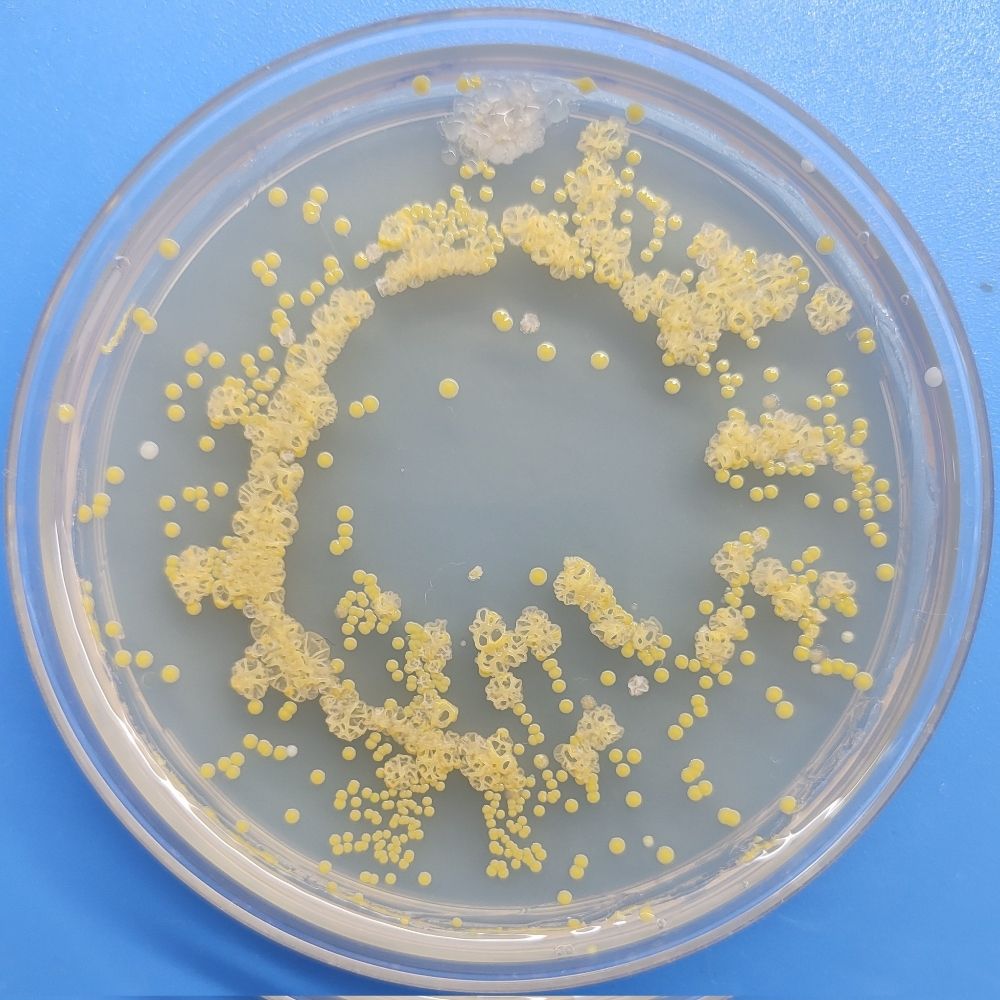

ICYMI Out Now! Addendum: ESKAPE pathogens rapidly develop resistance against antibiotics in development in vitro #MicroSky

Addendum: ESKAPE pathogens rapidly develop resistance against antibiotics in development in vitro
Nature Microbiology, Published online: 06 February 2026; doi:10.1038/s41564-026-02267-wAddendum: ESKAPE pathogens rapidly develop resistance against antibiotics in development in vitro
go.nature.com
February 10, 2026 at 2:31 PM
Reposted by Wiep Klaas Smits (ExpBac/CMAT)

Excited that our article is out in
@cmijournal.bsky.social
this month: A roadmap to clinical translation of #microbiome research 🦠🧫
Check it out now: 10.1016/j.cmi.2026.01.021
@cmijournal.bsky.social
this month: A roadmap to clinical translation of #microbiome research 🦠🧫
Check it out now: 10.1016/j.cmi.2026.01.021

February 2026 Issue is now online: www.clinicalmicrobiologyandinfection.org/issue/S1198-... #IDSky #MicroSky

February 9, 2026 at 10:38 AM
Excited that our article is out in
@cmijournal.bsky.social
this month: A roadmap to clinical translation of #microbiome research 🦠🧫
Check it out now: 10.1016/j.cmi.2026.01.021
@cmijournal.bsky.social
this month: A roadmap to clinical translation of #microbiome research 🦠🧫
Check it out now: 10.1016/j.cmi.2026.01.021
Reposted by Wiep Klaas Smits (ExpBac/CMAT)

Preprint on the permeability of Gram+ bacterial cell wall from a few months ago. Intriguing findings, elegant methodology. Cell wall is largely impermeable to molecule sizes of mNeonGreen (27kDa) and above. How do larger secreted proteins get through? www.biorxiv.org/content/10.1... #microsky
www.biorxiv.org
February 9, 2026 at 11:30 AM
Preprint on the permeability of Gram+ bacterial cell wall from a few months ago. Intriguing findings, elegant methodology. Cell wall is largely impermeable to molecule sizes of mNeonGreen (27kDa) and above. How do larger secreted proteins get through? www.biorxiv.org/content/10.1... #microsky
Reposted by Wiep Klaas Smits (ExpBac/CMAT)

How do bacterial pangenomes evolve, what controls their dynamics, why do they exist?
Fitting a mechanistic model to 450 species from allthebacteria.org suggesting fast vs slow gene exchange (i.e. amount of MGEs) is a major differentiating factor, correlated with phylogeny rather than lifestyle
Fitting a mechanistic model to 450 species from allthebacteria.org suggesting fast vs slow gene exchange (i.e. amount of MGEs) is a major differentiating factor, correlated with phylogeny rather than lifestyle

February 9, 2026 at 10:55 AM
How do bacterial pangenomes evolve, what controls their dynamics, why do they exist?
Fitting a mechanistic model to 450 species from allthebacteria.org suggesting fast vs slow gene exchange (i.e. amount of MGEs) is a major differentiating factor, correlated with phylogeny rather than lifestyle
Fitting a mechanistic model to 450 species from allthebacteria.org suggesting fast vs slow gene exchange (i.e. amount of MGEs) is a major differentiating factor, correlated with phylogeny rather than lifestyle
The emergence and biological characteristics of linezolid-resistant Clostridioides difficile isolates in the Asia-Pacific Region www.tandfonline.com/doi/full/10....

The emergence and biological characteristics of linezolid-resistant Clostridioides difficile isolates in the Asia-Pacific Region
Linezolid-resistant Clostridioides difficile, conferred by the acquisition of cfr-like genes, has been reported in Europe and America. However, the emergence of linezolid resistance in C. difficile...
www.tandfonline.com
February 9, 2026 at 9:46 AM
The emergence and biological characteristics of linezolid-resistant Clostridioides difficile isolates in the Asia-Pacific Region www.tandfonline.com/doi/full/10....
Phase 1 and preclinical studies reveal safety, pharmacokinetics, and efficacy of intranasal delivery of the influenza antibody CR9114 | Science Translational Medicine www.science.org/doi/10.1126/...

Phase 1 and preclinical studies reveal safety, pharmacokinetics, and efficacy of intranasal delivery of the influenza antibody CR9114
Intranasal CR9114 is safe in humans, and twice-daily dosing confers protection against influenza virus challenge in macaques.
www.science.org
February 6, 2026 at 2:46 PM
Phase 1 and preclinical studies reveal safety, pharmacokinetics, and efficacy of intranasal delivery of the influenza antibody CR9114 | Science Translational Medicine www.science.org/doi/10.1126/...
Commensal human gut microbes produce species specific neuroactive compounds - www.sciencedirect.com/science/arti...

Commensal human gut microbes produce species specific neuroactive compounds
The gut microbiota communicates with multiple organs through neuroactive molecules, but the specific compounds produced remain unclear. We investigate…
www.sciencedirect.com
February 6, 2026 at 12:59 PM
Commensal human gut microbes produce species specific neuroactive compounds - www.sciencedirect.com/science/arti...
Reposted by Wiep Klaas Smits (ExpBac/CMAT)

New Preprint 📢 from our team 🔎 Critical assessment of #intratumor and #low #biomass #microbiome using #longread sequencing
Some studies suggest bacteria 🦠 live inside tumors and influence cancer treatment. But there’s also been a major #debate: in these very low-microbe tissue samples, how much 1/
Some studies suggest bacteria 🦠 live inside tumors and influence cancer treatment. But there’s also been a major #debate: in these very low-microbe tissue samples, how much 1/

February 5, 2026 at 1:15 PM
New Preprint 📢 from our team 🔎 Critical assessment of #intratumor and #low #biomass #microbiome using #longread sequencing
Some studies suggest bacteria 🦠 live inside tumors and influence cancer treatment. But there’s also been a major #debate: in these very low-microbe tissue samples, how much 1/
Some studies suggest bacteria 🦠 live inside tumors and influence cancer treatment. But there’s also been a major #debate: in these very low-microbe tissue samples, how much 1/
Reposted by Wiep Klaas Smits (ExpBac/CMAT)
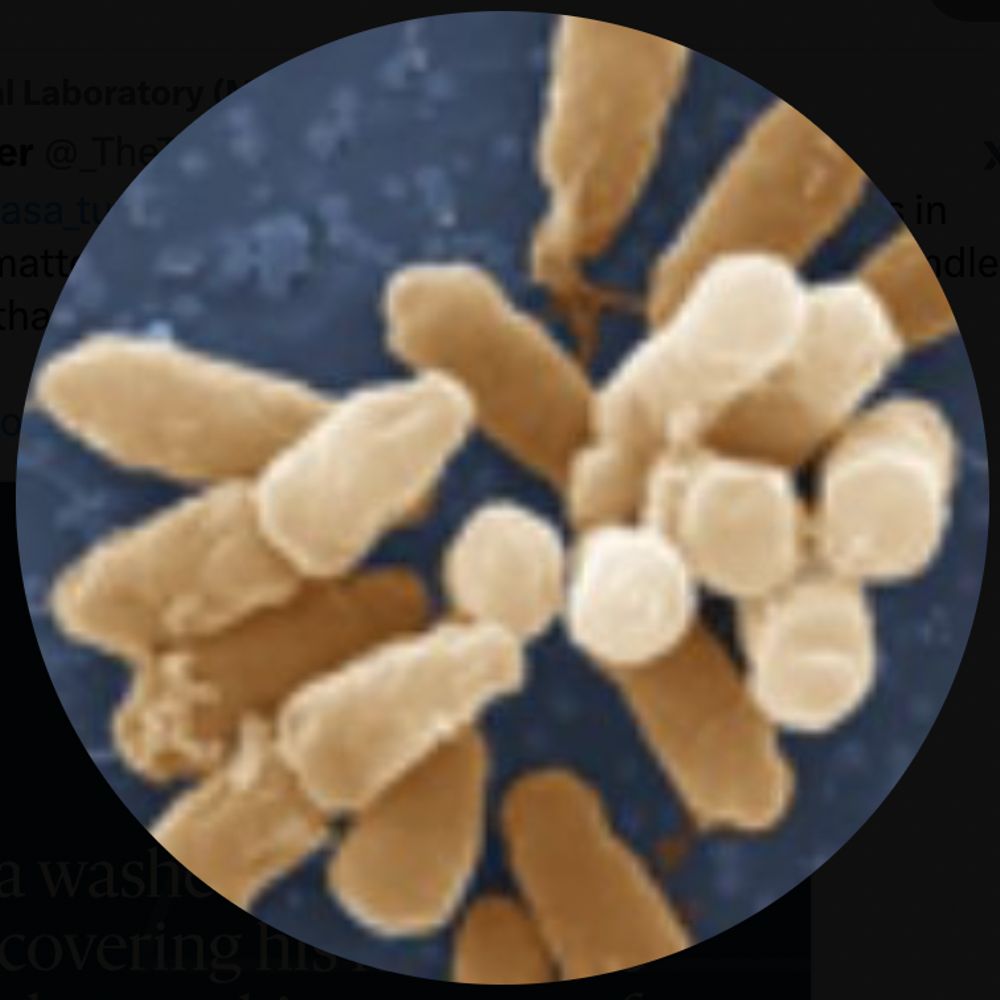
rince & JB Editor's Choice: Lin, Prince & Feaga identified sporulation genes via analyzing almost 1500 genomes. They show that that an unusual membrane-localized variant of Spo0B is found throughout Paenibacillaceae.
journals.asm.org/doi/10.1128/...
@asm.org #JBacteriology
journals.asm.org/doi/10.1128/...
@asm.org #JBacteriology

February 4, 2026 at 6:00 PM
rince & JB Editor's Choice: Lin, Prince & Feaga identified sporulation genes via analyzing almost 1500 genomes. They show that that an unusual membrane-localized variant of Spo0B is found throughout Paenibacillaceae.
journals.asm.org/doi/10.1128/...
@asm.org #JBacteriology
journals.asm.org/doi/10.1128/...
@asm.org #JBacteriology
Reposted by Wiep Klaas Smits (ExpBac/CMAT)

BackToBack #PhageSky in @nature.com
A pore-forming antiphage defence is activated by oligomeric phage proteins
-from Maxwell & Norris
www.nature.com/articles/s41...
Bacterial immune activation via supramolecular assembly with phage triggers
-from Laub & Ghanbarpour
www.nature.com/articles/s41...
A pore-forming antiphage defence is activated by oligomeric phage proteins
-from Maxwell & Norris
www.nature.com/articles/s41...
Bacterial immune activation via supramolecular assembly with phage triggers
-from Laub & Ghanbarpour
www.nature.com/articles/s41...
February 4, 2026 at 10:42 PM
BackToBack #PhageSky in @nature.com
A pore-forming antiphage defence is activated by oligomeric phage proteins
-from Maxwell & Norris
www.nature.com/articles/s41...
Bacterial immune activation via supramolecular assembly with phage triggers
-from Laub & Ghanbarpour
www.nature.com/articles/s41...
A pore-forming antiphage defence is activated by oligomeric phage proteins
-from Maxwell & Norris
www.nature.com/articles/s41...
Bacterial immune activation via supramolecular assembly with phage triggers
-from Laub & Ghanbarpour
www.nature.com/articles/s41...
Parallel tracking by sequencing reveals the impact of restriction modification systems on transfer of an integrative and conjugative element www.biorxiv.org/content/10.6...
www.biorxiv.org
February 3, 2026 at 8:52 AM
Parallel tracking by sequencing reveals the impact of restriction modification systems on transfer of an integrative and conjugative element www.biorxiv.org/content/10.6...
Reposted by Wiep Klaas Smits (ExpBac/CMAT)

🦠🧬🖥️ Bakta v1.12.0 is out
with tons of tiny improvements and bug fixes, too many to list all:
- partial genes on linear seqs
- improved errror handlings & runtimes
- support Python 3.12 & 3.13
- ...
A huge shout out and thank you to all bug reporters and contributors!
github.com/oschwengers/...
with tons of tiny improvements and bug fixes, too many to list all:
- partial genes on linear seqs
- improved errror handlings & runtimes
- support Python 3.12 & 3.13
- ...
A huge shout out and thank you to all bug reporters and contributors!
github.com/oschwengers/...

Release v1.12 - Just do it, but don't crash · oschwengers/bakta
This is the twelfth minor release (v1.12) providing more than 10 minor improvements and many bug fixes improving runtime stability, IO compatibility, and last but not least user experience.
Compati...
github.com
February 2, 2026 at 8:05 AM
🦠🧬🖥️ Bakta v1.12.0 is out
with tons of tiny improvements and bug fixes, too many to list all:
- partial genes on linear seqs
- improved errror handlings & runtimes
- support Python 3.12 & 3.13
- ...
A huge shout out and thank you to all bug reporters and contributors!
github.com/oschwengers/...
with tons of tiny improvements and bug fixes, too many to list all:
- partial genes on linear seqs
- improved errror handlings & runtimes
- support Python 3.12 & 3.13
- ...
A huge shout out and thank you to all bug reporters and contributors!
github.com/oschwengers/...
Reposted by Wiep Klaas Smits (ExpBac/CMAT)

Ziplign published in JOSS. Tool to easily interactively compare two bacteria genomes. Inspired by ACT, but easier to install and use. Drag and drop files, or download using accessions. It runs blast for you. No terminal needed. github.com/martinghunt/...
February 2, 2026 at 8:55 AM
Ziplign published in JOSS. Tool to easily interactively compare two bacteria genomes. Inspired by ACT, but easier to install and use. Drag and drop files, or download using accessions. It runs blast for you. No terminal needed. github.com/martinghunt/...
Plasmids, a molecular cornerstone of antimicrobial resistance in the One Health era - www.nature.com/articles/s41...

Plasmids, a molecular cornerstone of antimicrobial resistance in the One Health era - Nature Reviews Microbiology
In this Review, Castañeda-Barba, Top and Stalder use the One Health framework to synthesize the recent literature on the ecological and evolutionary factors that determine the successful local and glo...
www.nature.com
February 1, 2026 at 5:14 PM
Plasmids, a molecular cornerstone of antimicrobial resistance in the One Health era - www.nature.com/articles/s41...
Dynamic DnaA–DnaB interactions at oriC coordinate the loading and coupled translocation of two DnaB helicases for bidirectional replication url: academic.oup.com/nar/article/...

Dynamic DnaA–DnaB interactions at oriC coordinate the loading and coupled translocation of two DnaB helicases for bidirectional replication
Abstract. Bidirectional replication is a conserved principle requiring coordinated translocation of the two replicative helicases loaded at the origin. In
academic.oup.com
January 31, 2026 at 5:57 PM
Dynamic DnaA–DnaB interactions at oriC coordinate the loading and coupled translocation of two DnaB helicases for bidirectional replication url: academic.oup.com/nar/article/...
Reposted by Wiep Klaas Smits (ExpBac/CMAT)

Wow. Journals like this should be immediately removed from the Clarivate database.

Wiley: "We’re supporting responsible research assessment practices" onlinelibrary.wiley.com/journal/1520...
Also Wiley: "Prove that your article is a good fit for this journal 😉😉😉😉😉 by citing at least two of our articles in your manuscript before we will even consider reviewing it" 🤡
Also Wiley: "Prove that your article is a good fit for this journal 😉😉😉😉😉 by citing at least two of our articles in your manuscript before we will even consider reviewing it" 🤡

January 30, 2026 at 4:09 PM
Wow. Journals like this should be immediately removed from the Clarivate database.
Sustained in situ protein production and release in the mammalian gut by an engineered bacteriophage www.nature.com/articles/s41...

Sustained in situ protein production and release in the mammalian gut by an engineered bacteriophage - Nature Biotechnology
Biologics are delivered to the gut using phage that infects resident commensal bacteria.
www.nature.com
January 30, 2026 at 3:22 PM
Sustained in situ protein production and release in the mammalian gut by an engineered bacteriophage www.nature.com/articles/s41...
Reposted by Wiep Klaas Smits (ExpBac/CMAT)

FoldMason is out now in @science.org. It generates accurate multiple structure alignments for thousands of protein structures in seconds. Great work by Cameron L. M. Gilchrist and @milot.bsky.social.
📄 www.science.org/doi/10.1126/...
🌐 search.foldseek.com/foldmason
💾 github.com/steineggerla...
📄 www.science.org/doi/10.1126/...
🌐 search.foldseek.com/foldmason
💾 github.com/steineggerla...

Multiple protein structure alignment at scale with FoldMason
Protein structure is conserved beyond sequence, making multiple structural alignment (MSTA) essential for analyzing distantly related proteins. Computational prediction methods have vastly extended ou...
www.science.org
January 30, 2026 at 6:11 AM
FoldMason is out now in @science.org. It generates accurate multiple structure alignments for thousands of protein structures in seconds. Great work by Cameron L. M. Gilchrist and @milot.bsky.social.
📄 www.science.org/doi/10.1126/...
🌐 search.foldseek.com/foldmason
💾 github.com/steineggerla...
📄 www.science.org/doi/10.1126/...
🌐 search.foldseek.com/foldmason
💾 github.com/steineggerla...
Reposted by Wiep Klaas Smits (ExpBac/CMAT)

Fast-growing trees are set to dominate the #forests of the #future — but at a cost🌳
Our Nature Plants (@natplants.nature.com) study shows a global shift toward "sprinter" tree species, while slow-growing, functionally critical #trees face elevated #extinction risk. www.nature.com/articles/s41...
Our Nature Plants (@natplants.nature.com) study shows a global shift toward "sprinter" tree species, while slow-growing, functionally critical #trees face elevated #extinction risk. www.nature.com/articles/s41...

Global functional shifts in trees driven by alien naturalization and native extinction - Nature Plants
This study finds that native tree extinctions and alien naturalizations are pushing forests towards fast-growing, resource-demanding species. This global shift could affect carbon storage and ecosyste...
www.nature.com
January 29, 2026 at 6:11 AM
Fast-growing trees are set to dominate the #forests of the #future — but at a cost🌳
Our Nature Plants (@natplants.nature.com) study shows a global shift toward "sprinter" tree species, while slow-growing, functionally critical #trees face elevated #extinction risk. www.nature.com/articles/s41...
Our Nature Plants (@natplants.nature.com) study shows a global shift toward "sprinter" tree species, while slow-growing, functionally critical #trees face elevated #extinction risk. www.nature.com/articles/s41...
Large-scale capsid-mediated mobilisation of bacterial genomic DNA in the gut microbiome - www.nature.com/articles/s41...
Large-scale capsid-mediated mobilisation of bacterial genomic DNA in the gut microbiome - Nature Communications
Here, the authors show that packaging of bacterial DNA by phage-like particles is widespread in the gut microbiome, with activity of gene transfer agents being prominent in Oscillospiraceae and Rumino...
www.nature.com
January 28, 2026 at 10:53 AM
Large-scale capsid-mediated mobilisation of bacterial genomic DNA in the gut microbiome - www.nature.com/articles/s41...
Insights on Recurrent and Sequential Clostridioides difficile Infections From Genomic Surveillance in Minnesota, USA, 2019–2021 url: academic.oup.com/jid/article-...

Insights on Recurrent and Sequential Clostridioides difficile Infections From Genomic Surveillance in Minnesota, USA, 2019–2021
We used whole-genome sequencing to study Clostridioides difficile isolates from patients with recurrent or sequential infections in Minnesota, USA. We summ
academic.oup.com
January 23, 2026 at 3:12 PM
Insights on Recurrent and Sequential Clostridioides difficile Infections From Genomic Surveillance in Minnesota, USA, 2019–2021 url: academic.oup.com/jid/article-...
Integration-coupled activation of promoterless combinatorial pathway libraries in Clostridium avoids burden during DNA assembly www.biorxiv.org/content/10.6...
Integration-coupled activation of promoterless combinatorial pathway libraries in Clostridium avoids burden during DNA assembly
Combinatorial DNA design and assembly is an efficient and pragmatic way to obtain high-performing metabolic pathway designs quickly. However, implementation may require organism-specific technical barriers to be overcome. Firstly, suitable expression control parts such as promoters and ribosome-binding sites (RBSs) which provide a suitable range of expression levels need to be identified or developed. Secondly, these need to be assembled into pathway-encoding combinatorial libraries of sufficient size, quality and diversity. For organisms with transformation frequencies too low to allow direct transformation of library assembly reactions, such as many Clostridium spp., assembly and amplification is typically carried out using Escherichia coli. However, if constructs are deleterious (or 'burdensome') to E. coli, which is often the case when using Clostridium genetic parts, poor libraries may be obtained. Here we develop a new approach called integration‑coupled activation of promoterless sequences (ICAPS) to overcome this barrier and therefore enable combinatorial assembly in Clostridium. Libraries were designed and assembled as promoterless synthetic operons, preventing expression during DNA assembly, and expression was only activated later, when constructs were integrated into the host genome downstream of a promoter. Variation of expression levels was achieved using a range of context-resistant RBS sequences. This approach was used to produce a Clostridium acetobutylicum library with combinatorial expression variants of an introduced hexanol pathway. This proof of concept provides a generally-applicable approach to implement combinatorial metabolic pathway-encoding libraries in Clostridium spp., circumventing the excessive strength of Clostridium expression control parts in E. coli, and is applicable to other organisms. ### Competing Interest Statement The authors have declared no competing interest. BBSRC, BB/M002454/1, BB/V001396/1
www.biorxiv.org
January 22, 2026 at 9:11 AM
Integration-coupled activation of promoterless combinatorial pathway libraries in Clostridium avoids burden during DNA assembly www.biorxiv.org/content/10.6...
Awesome #aurora from our home balcony. Brightest I have seen in The Netherlands to date! (only one picture, straight from camera, no edits)

January 20, 2026 at 12:01 PM
Awesome #aurora from our home balcony. Brightest I have seen in The Netherlands to date! (only one picture, straight from camera, no edits)