




Julien Richard Albert
@jrichardalbert.bsky.social
Post-doc in Paris studying transposon restriction systems in ciliates and epigenetic reprogramming in mammals
Reposted by Julien Richard Albert

🚨Preprint alert🚨 How does chromatin “architecture” form at CTCF sites? Our new preprint with @voslab.org and @andersshansen.bsky.social shows CTCF dimerization promotes nucleosome oligomerization on chromatin. tinyurl.com/CTCF-nucleos...

February 9, 2026 at 3:04 PM
🚨Preprint alert🚨 How does chromatin “architecture” form at CTCF sites? Our new preprint with @voslab.org and @andersshansen.bsky.social shows CTCF dimerization promotes nucleosome oligomerization on chromatin. tinyurl.com/CTCF-nucleos...
Reposted by Julien Richard Albert

New paper from my lab out in NAR. We found that young L1 elements are controlled by SETDB1 and H3K9me3 in human neural progenitor cells via a mechanism independent of HUSH and TRIM28/KZNFs.
academic.oup.com/nar/article/...
academic.oup.com/nar/article/...

Loss of SETDB1-mediated H3K9me3 in human neural progenitor cells leads to transcriptional activation of L1 retrotransposons
Abstract. Heterochromatin is characterized by an inaccessibility to the transcriptional machinery and is associated with the histone mark H3K9me3. However,
academic.oup.com
February 5, 2026 at 3:17 PM
New paper from my lab out in NAR. We found that young L1 elements are controlled by SETDB1 and H3K9me3 in human neural progenitor cells via a mechanism independent of HUSH and TRIM28/KZNFs.
academic.oup.com/nar/article/...
academic.oup.com/nar/article/...
coffee karyotype


February 4, 2026 at 1:04 PM
coffee karyotype
Reposted by Julien Richard Albert
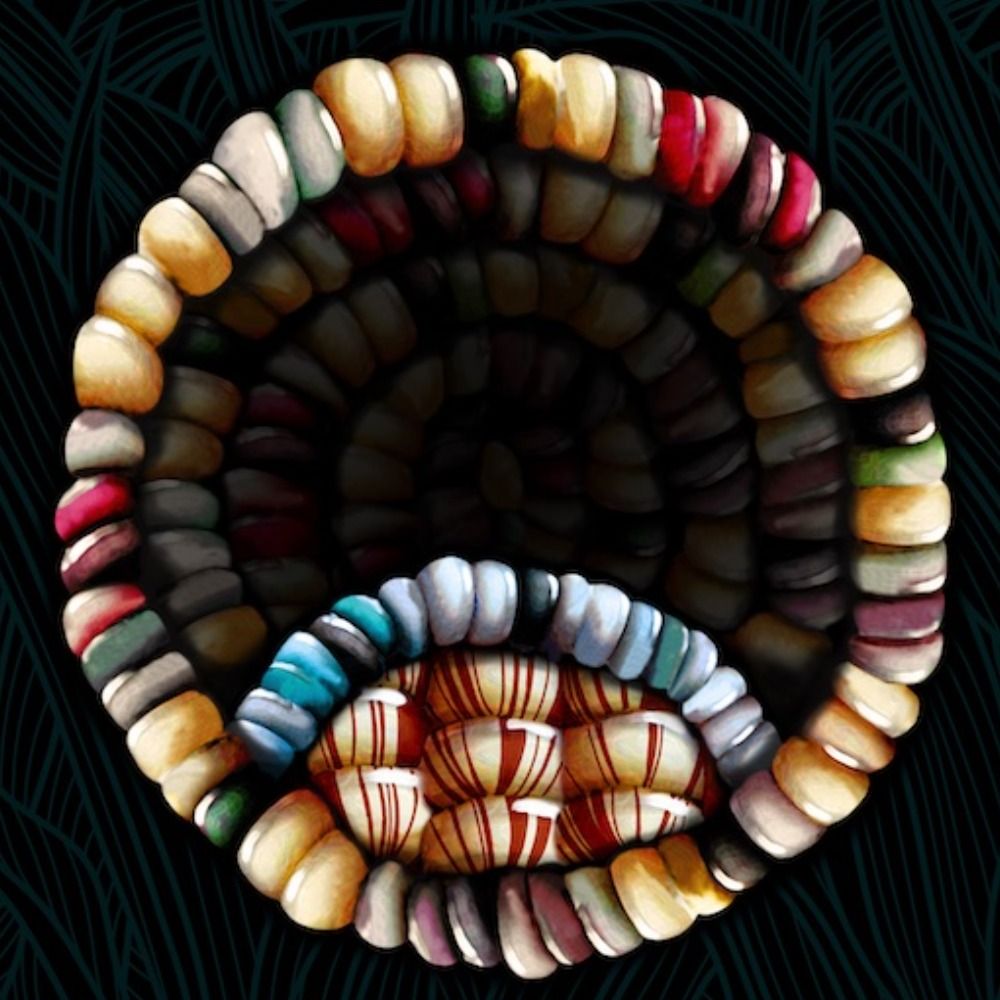
New preprint from the lab! We dig into the regulatory roles of TEs in the mouse placenta, with some surprising findings. Led by the awesome @smamante.bsky.social. Particular kudos to him for navigating the many twists and turns of the project.
www.biorxiv.org
February 2, 2026 at 10:25 AM
New preprint from the lab! We dig into the regulatory roles of TEs in the mouse placenta, with some surprising findings. Led by the awesome @smamante.bsky.social. Particular kudos to him for navigating the many twists and turns of the project.
Reposted by Julien Richard Albert
🔔 New paper alert 🔔 www.nature.com/articles/s41...
Some regions in the genome replicate early and some late, but the why and how remain poorly understood. DNA replication and 3D genome organization appear linked, raising the question if one may regulate the other? (1/n)
Some regions in the genome replicate early and some late, but the why and how remain poorly understood. DNA replication and 3D genome organization appear linked, raising the question if one may regulate the other? (1/n)
DNA methylation and lncRNA control asynchronous DNA replication at specific imprinted gene domains - Nature Communications
It is not fully understood why genomic loci show asynchronous DNA replication. Here, the authors show that two imprinted gene domains replicate asynchronously between the parental chromosomes due to d...
www.nature.com
January 21, 2026 at 8:53 PM
🔔 New paper alert 🔔 www.nature.com/articles/s41...
Some regions in the genome replicate early and some late, but the why and how remain poorly understood. DNA replication and 3D genome organization appear linked, raising the question if one may regulate the other? (1/n)
Some regions in the genome replicate early and some late, but the why and how remain poorly understood. DNA replication and 3D genome organization appear linked, raising the question if one may regulate the other? (1/n)
Reposted by Julien Richard Albert

Stress controls epigenetic inheritance!
A histone ubiquitylation-based regulatory hub links stress/environmental signaling to heterochromatin self-propagation and epigenetic inheritance-reshaping how we think about development, drug resistance, and cancer
👉 nature.com/articles/s41586-025-09899-8
A histone ubiquitylation-based regulatory hub links stress/environmental signaling to heterochromatin self-propagation and epigenetic inheritance-reshaping how we think about development, drug resistance, and cancer
👉 nature.com/articles/s41586-025-09899-8

January 7, 2026 at 4:46 PM
Stress controls epigenetic inheritance!
A histone ubiquitylation-based regulatory hub links stress/environmental signaling to heterochromatin self-propagation and epigenetic inheritance-reshaping how we think about development, drug resistance, and cancer
👉 nature.com/articles/s41586-025-09899-8
A histone ubiquitylation-based regulatory hub links stress/environmental signaling to heterochromatin self-propagation and epigenetic inheritance-reshaping how we think about development, drug resistance, and cancer
👉 nature.com/articles/s41586-025-09899-8
For anybody with an e-reader, I highly recommend these free, standardised e-books
standardebooks.org/blog/public-...
standardebooks.org/blog/public-...

Public Domain Day 2026 in Literature - Blog
Read about the new ebooks Standard Ebooks is releasing for Public Domain Day 2026!
standardebooks.org
January 6, 2026 at 3:26 PM
For anybody with an e-reader, I highly recommend these free, standardised e-books
standardebooks.org/blog/public-...
standardebooks.org/blog/public-...
Reposted by Julien Richard Albert

Happy to begin the year with the publication of a Journal Club article - Programmed ‘DNA splicing’ removes transposons from genes.
rdcu.be/eXBym
rdcu.be/eXBym

Programmed ‘DNA splicing’ removes transposons from genes
Nature Reviews Molecular Cell Biology - A study that showed that programmed DNA elimination in somatic genomes of ciliates involves excision of intrusive, transposon-derived sequences from genes.
rdcu.be
January 5, 2026 at 2:07 PM
Happy to begin the year with the publication of a Journal Club article - Programmed ‘DNA splicing’ removes transposons from genes.
rdcu.be/eXBym
rdcu.be/eXBym
Reposted by Julien Richard Albert

Hot from the press: Using single-cell chromatin accessibility and gene expression across ~300,000 cells, we show that prostate cancer dissemination involves phenotypic plasticity over clonal selection, with malignant cells converging toward an inflammatory-like state during lymph node spread.

Prostate cancer cells converge to an inflammatory-like state upon metastatic dissemination - Nature Communications
Understanding tumor heterogeneity and its impact on prostate cancer progression remains elusive. Here, single nucleus snATAC and snRNA sequencing of a multi-loci sampled cohort of advanced prostate ca...
www.nature.com
December 23, 2025 at 9:15 PM
Hot from the press: Using single-cell chromatin accessibility and gene expression across ~300,000 cells, we show that prostate cancer dissemination involves phenotypic plasticity over clonal selection, with malignant cells converging toward an inflammatory-like state during lymph node spread.
Reposted by Julien Richard Albert

@pravrutharaman.bsky.social got super intrigued about EZHIP/CATACOMB, previously identified as a histone H3K27M mimic of PRC2. You can read about her efforts here: www.biorxiv.org/content/10.6... We hope these analyses will help spur more analyses in this very cool gene! 1/

Dynamic evolution of EZHIP, an inhibitor of the Polycomb Repressive Complex 2 in mammals
The Polycomb Repressive Complex 2 (PRC2) is an ancient, conserved chromatin-interacting complex that controls gene expression, facilitating differentiation and cellular identity during development. It...
www.biorxiv.org
December 13, 2025 at 10:08 PM
@pravrutharaman.bsky.social got super intrigued about EZHIP/CATACOMB, previously identified as a histone H3K27M mimic of PRC2. You can read about her efforts here: www.biorxiv.org/content/10.6... We hope these analyses will help spur more analyses in this very cool gene! 1/
Reposted by Julien Richard Albert

It's always exciting when the latest edition of JASPAR comes out. Great leadership by @amathelier.bsky.social and pleased to welcome @anshulkundaje.bsky.social to the journey. #Jaspar2026
academic.oup.com/nar/advance-...
academic.oup.com/nar/advance-...
December 3, 2025 at 4:52 AM
It's always exciting when the latest edition of JASPAR comes out. Great leadership by @amathelier.bsky.social and pleased to welcome @anshulkundaje.bsky.social to the journey. #Jaspar2026
academic.oup.com/nar/advance-...
academic.oup.com/nar/advance-...
Reposted by Julien Richard Albert
1/ I’m very excited to share my postdoc work with @kseskv.bsky.social, in collaboration with @oligriffith.bsky.social. We explore embryonic DNA methylation reprogramming in the fat-tailed dunnart, an Australian marsupial 🦘🌏 www.biorxiv.org/content/10.1...
www.biorxiv.org
November 12, 2025 at 2:57 AM
1/ I’m very excited to share my postdoc work with @kseskv.bsky.social, in collaboration with @oligriffith.bsky.social. We explore embryonic DNA methylation reprogramming in the fat-tailed dunnart, an Australian marsupial 🦘🌏 www.biorxiv.org/content/10.1...
Reposted by Julien Richard Albert

Canada has lost its measles elimination status after more than 25 years, despite evidence of efficacy and safety for the vaccines. 👇
scienceupfirst.com/public-healt...
#ScienceUpFirst
🧵1/2
scienceupfirst.com/public-healt...
#ScienceUpFirst
🧵1/2

November 13, 2025 at 10:03 PM
Canada has lost its measles elimination status after more than 25 years, despite evidence of efficacy and safety for the vaccines. 👇
scienceupfirst.com/public-healt...
#ScienceUpFirst
🧵1/2
scienceupfirst.com/public-healt...
#ScienceUpFirst
🧵1/2
Reposted by Julien Richard Albert

Polycomb Repressive Complexes 1 and 2 are recruited independently to pericentromeric heterochromatin in response to hypomethylation in mouse embryonic stem cells https://www.biorxiv.org/content/10.1101/2025.11.14.688451v1
November 15, 2025 at 2:18 AM
Polycomb Repressive Complexes 1 and 2 are recruited independently to pericentromeric heterochromatin in response to hypomethylation in mouse embryonic stem cells https://www.biorxiv.org/content/10.1101/2025.11.14.688451v1
Reposted by Julien Richard Albert

New paper from the lab: we’re using long-read sequencing to disentangle isoform complexity at allele-specific loci 🧬💡
Here, we combine the PacBio Iso-Seq workflow with the established WhatsHap phasing approach to assign long reads to the correct allele in polymorphic F1 mouse hybrids.
Here, we combine the PacBio Iso-Seq workflow with the established WhatsHap phasing approach to assign long reads to the correct allele in polymorphic F1 mouse hybrids.
November 11, 2025 at 7:00 PM
New paper from the lab: we’re using long-read sequencing to disentangle isoform complexity at allele-specific loci 🧬💡
Here, we combine the PacBio Iso-Seq workflow with the established WhatsHap phasing approach to assign long reads to the correct allele in polymorphic F1 mouse hybrids.
Here, we combine the PacBio Iso-Seq workflow with the established WhatsHap phasing approach to assign long reads to the correct allele in polymorphic F1 mouse hybrids.
There’s a car under here…
Take me back to Paris 😭
Take me back to Paris 😭

November 11, 2025 at 1:44 PM
There’s a car under here…
Take me back to Paris 😭
Take me back to Paris 😭
Reposted by Julien Richard Albert
Excited to share our new preprint on BioRxiv!
A collaborative effort spanning many years and several labs to uncover what the germline chromosomes of Paramecium really look like. 🔗 www.biorxiv.org/content/10.1...
1/5
A collaborative effort spanning many years and several labs to uncover what the germline chromosomes of Paramecium really look like. 🔗 www.biorxiv.org/content/10.1...
1/5

The tiny germline chromosomes of Paramecium aurelia have an exceptionally high recombination rate and are capped by a new class of Helitrons
Background. Paramecia belong to the ciliate phylum of unicellular eukaryotes characterized by nuclear dimorphism. A diploid germline micronucleus (MIC) transmits genetic information across sexual gene...
www.biorxiv.org
November 10, 2025 at 9:21 AM
Excited to share our new preprint on BioRxiv!
A collaborative effort spanning many years and several labs to uncover what the germline chromosomes of Paramecium really look like. 🔗 www.biorxiv.org/content/10.1...
1/5
A collaborative effort spanning many years and several labs to uncover what the germline chromosomes of Paramecium really look like. 🔗 www.biorxiv.org/content/10.1...
1/5
Reposted by Julien Richard Albert

Why fundamental research is fundamental to progress, seeding major breakthroughs
Editorial @nature.com this week
And 7 basic science discoveries that changed the world
nature.com/articles/d41...
nature.com/articles/d41...
Editorial @nature.com this week
And 7 basic science discoveries that changed the world
nature.com/articles/d41...
nature.com/articles/d41...


October 29, 2025 at 12:58 PM
Why fundamental research is fundamental to progress, seeding major breakthroughs
Editorial @nature.com this week
And 7 basic science discoveries that changed the world
nature.com/articles/d41...
nature.com/articles/d41...
Editorial @nature.com this week
And 7 basic science discoveries that changed the world
nature.com/articles/d41...
nature.com/articles/d41...
Reposted by Julien Richard Albert
Our latest paper on a histone methyltransferase-independent function of PRC2 controlling small RNA dynamics during programmed DNA elimination in Paramecium is now published in #NAR.
#RNAbiology #TEsky #smallRNAs #PRC2 #DNAelimination
1/5
academic.oup.com/nar/article-...
#RNAbiology #TEsky #smallRNAs #PRC2 #DNAelimination
1/5
academic.oup.com/nar/article-...

A histone methyltransferase-independent function of PRC2 controls small RNA dynamics during programmed DNA elimination in Paramecium
Abstract. To limit transposable element (TE) mobilization, most eukaryotes have evolved small RNAs to silence TE activity via homology-dependent mechanisms
academic.oup.com
October 17, 2025 at 11:58 AM
Our latest paper on a histone methyltransferase-independent function of PRC2 controlling small RNA dynamics during programmed DNA elimination in Paramecium is now published in #NAR.
#RNAbiology #TEsky #smallRNAs #PRC2 #DNAelimination
1/5
academic.oup.com/nar/article-...
#RNAbiology #TEsky #smallRNAs #PRC2 #DNAelimination
1/5
academic.oup.com/nar/article-...
Reposted by Julien Richard Albert

We're now recruiting early career group leaders at the Crick to lead ambitious research programmes and explore bold scientific questions.
Hear our Director, Edith Heard, explain why the Crick is a unique place for curiosity-driven research.
Apply now ➡️ www.crick.ac.uk/careers-stud...
Hear our Director, Edith Heard, explain why the Crick is a unique place for curiosity-driven research.
Apply now ➡️ www.crick.ac.uk/careers-stud...
October 9, 2025 at 2:06 PM
We're now recruiting early career group leaders at the Crick to lead ambitious research programmes and explore bold scientific questions.
Hear our Director, Edith Heard, explain why the Crick is a unique place for curiosity-driven research.
Apply now ➡️ www.crick.ac.uk/careers-stud...
Hear our Director, Edith Heard, explain why the Crick is a unique place for curiosity-driven research.
Apply now ➡️ www.crick.ac.uk/careers-stud...
Reposted by Julien Richard Albert

🚨 New paper alert on telomeres! 🚨
Something different from the group! Thanks to Yuxin, a talented student in the lab, we used long-reads in 75 human trios to study telomeres and their inheritance.
Something different from the group! Thanks to Yuxin, a talented student in the lab, we used long-reads in 75 human trios to study telomeres and their inheritance.

October 9, 2025 at 5:33 AM
🚨 New paper alert on telomeres! 🚨
Something different from the group! Thanks to Yuxin, a talented student in the lab, we used long-reads in 75 human trios to study telomeres and their inheritance.
Something different from the group! Thanks to Yuxin, a talented student in the lab, we used long-reads in 75 human trios to study telomeres and their inheritance.
Reposted by Julien Richard Albert
⚠️ Paper alert: Using a novel CRISPR screening approach, we mapped the entire regulatory network controlling Xist—key for X-chromosome inactivation.
👉 We discover how sex and development signals are decoded at a single gene locus.
www.nature.com/articles/s41...
👇 Bluetorial
👉 We discover how sex and development signals are decoded at a single gene locus.
www.nature.com/articles/s41...
👇 Bluetorial

Reporter CRISPR screens decipher cis-regulatory and trans-regulatory principles at the Xist locus - Nature Structural & Molecular Biology
Here Schwämmle et al. develop CRISPR reporter screens to map transcription-factor-regulatory element interactions at the Xist locus, revealing a two-step mechanism integrating developmental and X-dosage signals to initiate X-chromosome inactivation.
www.nature.com
October 6, 2025 at 1:02 PM
⚠️ Paper alert: Using a novel CRISPR screening approach, we mapped the entire regulatory network controlling Xist—key for X-chromosome inactivation.
👉 We discover how sex and development signals are decoded at a single gene locus.
www.nature.com/articles/s41...
👇 Bluetorial
👉 We discover how sex and development signals are decoded at a single gene locus.
www.nature.com/articles/s41...
👇 Bluetorial
Programmed DNA elimination in ciliates is rich in mechanistic insights and woefully understudied. Here, my colleagues pursue the link between condensin and the endonuclease responsible for eliminating 33% of Paramecium's genome
www.biorxiv.org/content/10.1...

A developmental condensin I complex assists the Paramecium PiggyMac domesticated transposase during programmed DNA elimination
Prokaryotes and eukaryotes use diverse strategies to cope with invading mobile genetic elements, including programmed DNA elimination (PDE). In the ciliate Paramecium , elimination of transposable ele...
www.biorxiv.org
October 4, 2025 at 4:22 PM
Programmed DNA elimination in ciliates is rich in mechanistic insights and woefully understudied. Here, my colleagues pursue the link between condensin and the endonuclease responsible for eliminating 33% of Paramecium's genome
www.biorxiv.org/content/10.1...
I didn't think I could admire Azim Surani more than I already did
journals.biologists.com/dev/article/...
journals.biologists.com/dev/article/...

An interview with Azim Surani
Professor Azim Surani is the Director of Epigenomics and Germline Imprinting at the Gurdon Institute in Cambridge, UK. He is this year's recipient of both the prestigious Kyoto Prize and the Paul Ehrl...
journals.biologists.com
October 3, 2025 at 11:35 AM
I didn't think I could admire Azim Surani more than I already did
journals.biologists.com/dev/article/...
journals.biologists.com/dev/article/...
Reposted by Julien Richard Albert
See this? This = implanting mouse embryo. Usually this happens inside its mother and is invisible to us, but we can actually watch implantation ex vivo with the hope of understanding why implantation goes awry in embryos of older women. A 🧵...
October 1, 2025 at 6:21 PM
See this? This = implanting mouse embryo. Usually this happens inside its mother and is invisible to us, but we can actually watch implantation ex vivo with the hope of understanding why implantation goes awry in embryos of older women. A 🧵...