



The Francis Crick Institute
@crick.ac.uk
We're the Crick, a biomedical research lab in London working to figure out how life works.
Home to more than 2,000 scientists and a free public exhibition space.
https://www.crick.ac.uk/
Home to more than 2,000 scientists and a free public exhibition space.
https://www.crick.ac.uk/
Congratulations to @pontus-skoglund.bsky.social, who was selected as a Blavatnik Award Finalist for his advancements in the field of ancient DNA.
Read more about the award and Pontus’ work. 👇
www.crick.ac.uk/news/2026-02...
Read more about the award and Pontus’ work. 👇
www.crick.ac.uk/news/2026-02...

Pontus Skoglund recognised as 2026 Blavatnik Finalist
Crick group leader Pontus Skoglund has been recognised in the 2026 Blavatnik Awards for Young Scientists in the United Kingdom.
www.crick.ac.uk
February 10, 2026 at 2:49 PM
Congratulations to @pontus-skoglund.bsky.social, who was selected as a Blavatnik Award Finalist for his advancements in the field of ancient DNA.
Read more about the award and Pontus’ work. 👇
www.crick.ac.uk/news/2026-02...
Read more about the award and Pontus’ work. 👇
www.crick.ac.uk/news/2026-02...
New research from the Crick and @umontreal.ca has found the missing link between two chemical pathways that control blood vessel branching, potentially opening the door for new treatments for a currently incurable genetic bleeding disorder.
www.crick.ac.uk/news/2026-02...
www.crick.ac.uk/news/2026-02...

‘Missing link’ protein key to restoring disorganised blood vessels
Understanding how the body maintains the balance between blood vessel formation and stabilisation could help treat blood vessel disorders, cancer and prevalent eye diseases.
www.crick.ac.uk
February 5, 2026 at 4:29 PM
New research from the Crick and @umontreal.ca has found the missing link between two chemical pathways that control blood vessel branching, potentially opening the door for new treatments for a currently incurable genetic bleeding disorder.
www.crick.ac.uk/news/2026-02...
www.crick.ac.uk/news/2026-02...
Today, we’re launching a new company, ALTx Therapeutics. Founded by Simon Boulton, the company will develop the first precision therapies targeting ALT cancers, in partnership with Slingshot Therapeutics Limited and @crhorizons.bsky.social.
Find out more ➡️ www.crick.ac.uk/news/2026-02...
Find out more ➡️ www.crick.ac.uk/news/2026-02...

February 5, 2026 at 12:45 PM
Today, we’re launching a new company, ALTx Therapeutics. Founded by Simon Boulton, the company will develop the first precision therapies targeting ALT cancers, in partnership with Slingshot Therapeutics Limited and @crhorizons.bsky.social.
Find out more ➡️ www.crick.ac.uk/news/2026-02...
Find out more ➡️ www.crick.ac.uk/news/2026-02...
How does immunotherapy help us treat cancer?
On World Cancer Day, join Crick group leader and clinical oncologist @Samra Turajlic as she discusses the successes and challenges of immunotherapy, as well as her team’s work to try and improve patient outcomes.
www.youtube.com/watch?v=r0ci...
On World Cancer Day, join Crick group leader and clinical oncologist @Samra Turajlic as she discusses the successes and challenges of immunotherapy, as well as her team’s work to try and improve patient outcomes.
www.youtube.com/watch?v=r0ci...

How Does Immunotherapy Help Us Treat Cancer? – with Samra Turajlić
YouTube video by The Francis Crick Institute
www.youtube.com
February 4, 2026 at 2:57 PM
How does immunotherapy help us treat cancer?
On World Cancer Day, join Crick group leader and clinical oncologist @Samra Turajlic as she discusses the successes and challenges of immunotherapy, as well as her team’s work to try and improve patient outcomes.
www.youtube.com/watch?v=r0ci...
On World Cancer Day, join Crick group leader and clinical oncologist @Samra Turajlic as she discusses the successes and challenges of immunotherapy, as well as her team’s work to try and improve patient outcomes.
www.youtube.com/watch?v=r0ci...
A research team from the Crick led by @eachan.scbir.org has joined a three-year, international collaboration to tackle antibiotic resistant bacteria.
The partnership is championed by the Gates Foundation, @wellcometrust.bsky.social and @novo-nordisk.bsky.social.
www.crick.ac.uk/news/2026-02...
The partnership is championed by the Gates Foundation, @wellcometrust.bsky.social and @novo-nordisk.bsky.social.
www.crick.ac.uk/news/2026-02...

Finding next-generation antibiotics for the most resistant infections
By screening bacterial genomes at scale, scientists are redefining the search for treatments against deadly infections like neonatal sepsis.
www.crick.ac.uk
February 4, 2026 at 2:02 PM
A research team from the Crick led by @eachan.scbir.org has joined a three-year, international collaboration to tackle antibiotic resistant bacteria.
The partnership is championed by the Gates Foundation, @wellcometrust.bsky.social and @novo-nordisk.bsky.social.
www.crick.ac.uk/news/2026-02...
The partnership is championed by the Gates Foundation, @wellcometrust.bsky.social and @novo-nordisk.bsky.social.
www.crick.ac.uk/news/2026-02...
Antimicrobial resistance contributes to an estimated 4.71m deaths per year.
This week, Crick group leader Ester Morreale hosted researchers from across Europe as part of a new initiative, END2AMR, which aims to tackle difficult-to-treat bacterial infections.
www.crick.ac.uk/news/2026-01...
This week, Crick group leader Ester Morreale hosted researchers from across Europe as part of a new initiative, END2AMR, which aims to tackle difficult-to-treat bacterial infections.
www.crick.ac.uk/news/2026-01...

Fighting antimicrobial resistance: a global effort for a global challenge
Potentially one of the most alarming health challenges in the 21st century, bacteria and viruses are evolving faster than the drugs designed to kill them. A new EU-led research effort is bringing scie...
www.crick.ac.uk
January 28, 2026 at 10:36 AM
Antimicrobial resistance contributes to an estimated 4.71m deaths per year.
This week, Crick group leader Ester Morreale hosted researchers from across Europe as part of a new initiative, END2AMR, which aims to tackle difficult-to-treat bacterial infections.
www.crick.ac.uk/news/2026-01...
This week, Crick group leader Ester Morreale hosted researchers from across Europe as part of a new initiative, END2AMR, which aims to tackle difficult-to-treat bacterial infections.
www.crick.ac.uk/news/2026-01...
Book your free tickets now for our next #MedicineAtTheCrick event on Thursday 12 March, hosted by @andreas-t-schaefer.bsky.social, where researchers and clinicians will explore ‘neurotechnologies’ that help us better understand and decode the brain.
www.eventbrite.co.uk/e/medicine-a...
www.eventbrite.co.uk/e/medicine-a...

Medicine at the Crick| Interfacing the human brain: neurons to networks
Hybrid event taking place virtually and in person, organised by The Francis Crick Institute, London
www.eventbrite.co.uk
January 26, 2026 at 11:33 AM
Book your free tickets now for our next #MedicineAtTheCrick event on Thursday 12 March, hosted by @andreas-t-schaefer.bsky.social, where researchers and clinicians will explore ‘neurotechnologies’ that help us better understand and decode the brain.
www.eventbrite.co.uk/e/medicine-a...
www.eventbrite.co.uk/e/medicine-a...
Congratulations to @rashmi-priya.bsky.social for being awarded the Women in Cell Biology Early Career Medal from the @bscb-official.bsky.social.
Read more about the award and Rashmi’s contributions to developmental cell biology research. ⬇️
www.crick.ac.uk/research/lab...
Read more about the award and Rashmi’s contributions to developmental cell biology research. ⬇️
www.crick.ac.uk/research/lab...

Rashmi Priya awarded Women in Cell Biology Medal
Crick Group Leader Rashmi Priya has been awarded the Women in Cell Biology Early Career medal from the British Society for Cell Biology, in recognition of her contributions to developmental cell biolo...
www.crick.ac.uk
January 22, 2026 at 1:55 PM
Congratulations to @rashmi-priya.bsky.social for being awarded the Women in Cell Biology Early Career Medal from the @bscb-official.bsky.social.
Read more about the award and Rashmi’s contributions to developmental cell biology research. ⬇️
www.crick.ac.uk/research/lab...
Read more about the award and Rashmi’s contributions to developmental cell biology research. ⬇️
www.crick.ac.uk/research/lab...
Researchers at the Crick, @cam.ac.uk and Sanquin Research Amsterdam have made a key discovery about how the immune system can switch from ‘on’ to ‘off’ so quickly.
The findings could offer potential new avenues for treating cancer or autoimmune conditions.
www.crick.ac.uk/news/2026-01...
The findings could offer potential new avenues for treating cancer or autoimmune conditions.
www.crick.ac.uk/news/2026-01...

A balancing act: preventing an overactive immune system
How do immune cells strike a balance, unleashing rapid attacks against pathogens or cancer, while avoiding damage to healthy cells? Research into an immune kill switch holds potential for controlling ...
www.crick.ac.uk
January 22, 2026 at 11:15 AM
Researchers at the Crick, @cam.ac.uk and Sanquin Research Amsterdam have made a key discovery about how the immune system can switch from ‘on’ to ‘off’ so quickly.
The findings could offer potential new avenues for treating cancer or autoimmune conditions.
www.crick.ac.uk/news/2026-01...
The findings could offer potential new avenues for treating cancer or autoimmune conditions.
www.crick.ac.uk/news/2026-01...
Researchers at the Crick, @imperialcollegeldn.bsky.social and @tudresden.bsky.social have worked out a method to track and analyse complex molecules that sense external messages crucial for cell growth and behaviour.
www.crick.ac.uk/news/2026-01...
www.crick.ac.uk/news/2026-01...

Sweet signals: tracking crucial cell messengers for the first time
Complex sugar-protein molecules that sense external messages to help a cell grow or respond to its environment can now be tracked and analysed, using a Nobel Prize-winning chemistry technique.
www.crick.ac.uk
January 20, 2026 at 10:46 AM
Researchers at the Crick, @imperialcollegeldn.bsky.social and @tudresden.bsky.social have worked out a method to track and analyse complex molecules that sense external messages crucial for cell growth and behaviour.
www.crick.ac.uk/news/2026-01...
www.crick.ac.uk/news/2026-01...
Applications to our 2026 Summer Student Training Programme are now open.
We’re looking for undergrad students to join us for nine weeks this summer.
See the projects on offer and check the participation eligibility requirements on our website. ⬇️
www.crick.ac.uk/careers-and-...
We’re looking for undergrad students to join us for nine weeks this summer.
See the projects on offer and check the participation eligibility requirements on our website. ⬇️
www.crick.ac.uk/careers-and-...

Summer students
Our nine-week summer training programme provides undergraduates with hands-on experience of working in a research lab.
www.crick.ac.uk
January 8, 2026 at 9:39 AM
Applications to our 2026 Summer Student Training Programme are now open.
We’re looking for undergrad students to join us for nine weeks this summer.
See the projects on offer and check the participation eligibility requirements on our website. ⬇️
www.crick.ac.uk/careers-and-...
We’re looking for undergrad students to join us for nine weeks this summer.
See the projects on offer and check the participation eligibility requirements on our website. ⬇️
www.crick.ac.uk/careers-and-...
Tickets are still available for our 2026 Rare Diseases Conference, taking place on Monday 23 February.
📝 Abstract submission deadline: 12th Jan.
🎟️ Registration deadline: 16th Feb.
Learn more and book tickets 👇
www.eventbrite.co.uk/e/5th-crick-...
📝 Abstract submission deadline: 12th Jan.
🎟️ Registration deadline: 16th Feb.
Learn more and book tickets 👇
www.eventbrite.co.uk/e/5th-crick-...

5th Crick Rare Diseases Conference 2026
To mark World Rare Diseases Day 2026 we are pleased to host the fifth Crick Rare Diseases Conference on 23rd February 2026.
www.eventbrite.co.uk
January 6, 2026 at 11:53 AM
Tickets are still available for our 2026 Rare Diseases Conference, taking place on Monday 23 February.
📝 Abstract submission deadline: 12th Jan.
🎟️ Registration deadline: 16th Feb.
Learn more and book tickets 👇
www.eventbrite.co.uk/e/5th-crick-...
📝 Abstract submission deadline: 12th Jan.
🎟️ Registration deadline: 16th Feb.
Learn more and book tickets 👇
www.eventbrite.co.uk/e/5th-crick-...
Researchers at the Crick have uncovered how certain proteins that become exposed on dying tumour cells can be detected by the immune system, alerting it to the cancer’s presence and prompting an immune response.
www.crick.ac.uk/news/2025-12...
www.crick.ac.uk/news/2025-12...

Lifting cancer’s invisibility cloak
Dying tumour cells alert the immune system to fight cancer.
www.crick.ac.uk
January 2, 2026 at 4:09 PM
Researchers at the Crick have uncovered how certain proteins that become exposed on dying tumour cells can be detected by the immune system, alerting it to the cancer’s presence and prompting an immune response.
www.crick.ac.uk/news/2025-12...
www.crick.ac.uk/news/2025-12...
Lab-grown lung models have traditionally been grown from a mixture of cells, making it hard to tell how a disease or treatment will affect an individual person.
These new models by @maxgg.bsky.social’s team and AlveoliX are grown from a single person’s stem cells ⤵️ www.crick.ac.uk/news/2026-01...
These new models by @maxgg.bsky.social’s team and AlveoliX are grown from a single person’s stem cells ⤵️ www.crick.ac.uk/news/2026-01...

Built to breathe: mini ‘lungs’ recreate individual response to infection
Lung-on-chip device exposes earliest stages of tuberculosis infection, and opens doors to investigate diversity in disease progression and personalised treatment.
www.crick.ac.uk
January 1, 2026 at 7:58 PM
Lab-grown lung models have traditionally been grown from a mixture of cells, making it hard to tell how a disease or treatment will affect an individual person.
These new models by @maxgg.bsky.social’s team and AlveoliX are grown from a single person’s stem cells ⤵️ www.crick.ac.uk/news/2026-01...
These new models by @maxgg.bsky.social’s team and AlveoliX are grown from a single person’s stem cells ⤵️ www.crick.ac.uk/news/2026-01...
Samra Turajlić and @dremmacbw.bsky.social spoke to BBC Radio 5 Live about some of this year’s medical research advances, including their work on immunotherapy and Long COVID.
Listen from 53:10 and 2:46:00 ⤵️ www.bbc.co.uk/sounds/play/...
Listen from 53:10 and 2:46:00 ⤵️ www.bbc.co.uk/sounds/play/...

Sunday Breakfast - 28/12/2025 - BBC Sounds
Eleanor Oldroyd and Jeanette Kwakye presenting.
www.bbc.co.uk
December 29, 2025 at 2:10 PM
Samra Turajlić and @dremmacbw.bsky.social spoke to BBC Radio 5 Live about some of this year’s medical research advances, including their work on immunotherapy and Long COVID.
Listen from 53:10 and 2:46:00 ⤵️ www.bbc.co.uk/sounds/play/...
Listen from 53:10 and 2:46:00 ⤵️ www.bbc.co.uk/sounds/play/...
“We need to take on the defence of science for the world.”
In a wide-ranging and frank conversation, Paul Nurse reflects on his years leading the Francis Crick Institute with our new director, Edith Heard.
www.crick.ac.uk/news/2025-12...
In a wide-ranging and frank conversation, Paul Nurse reflects on his years leading the Francis Crick Institute with our new director, Edith Heard.
www.crick.ac.uk/news/2025-12...

Paul Nurse in conversation with Edith Heard
Standing up for science, the art of leadership and cups of tea with the Prime Minister - Paul Nurse reflects on his years as CEO of the Francis Crick Institute with new director Edith Heard.
www.crick.ac.uk
December 17, 2025 at 10:13 AM
“We need to take on the defence of science for the world.”
In a wide-ranging and frank conversation, Paul Nurse reflects on his years leading the Francis Crick Institute with our new director, Edith Heard.
www.crick.ac.uk/news/2025-12...
In a wide-ranging and frank conversation, Paul Nurse reflects on his years leading the Francis Crick Institute with our new director, Edith Heard.
www.crick.ac.uk/news/2025-12...
Lab-grown embryo models let researchers study foundational processes of development. A new embryo model has helped researchers at the Crick to study the neural tube and somites in detail and confirm two-way communication between them.
Read the full story ➡️ www.crick.ac.uk/news/2025-12...
Read the full story ➡️ www.crick.ac.uk/news/2025-12...

Uncovering early embryonic communications using new stem cell model
New stem cell-based embryo model reveals previously unknown communication between early tissues that become the spine and muscles in the central part of the body.
www.crick.ac.uk
December 16, 2025 at 11:27 AM
Lab-grown embryo models let researchers study foundational processes of development. A new embryo model has helped researchers at the Crick to study the neural tube and somites in detail and confirm two-way communication between them.
Read the full story ➡️ www.crick.ac.uk/news/2025-12...
Read the full story ➡️ www.crick.ac.uk/news/2025-12...
What is psychosis and how can we treat it?
Crick group leader @kathaschmack.bsky.social explains how her lab is working to uncover new ways to treat psychosis by finding its biological roots.
youtu.be/EUb3_5ecatU
Crick group leader @kathaschmack.bsky.social explains how her lab is working to uncover new ways to treat psychosis by finding its biological roots.
youtu.be/EUb3_5ecatU

A Crash Course in Psychosis – with Katharina Schmack
YouTube video by The Francis Crick Institute
youtu.be
December 10, 2025 at 2:14 PM
What is psychosis and how can we treat it?
Crick group leader @kathaschmack.bsky.social explains how her lab is working to uncover new ways to treat psychosis by finding its biological roots.
youtu.be/EUb3_5ecatU
Crick group leader @kathaschmack.bsky.social explains how her lab is working to uncover new ways to treat psychosis by finding its biological roots.
youtu.be/EUb3_5ecatU
@petrznam.bsky.social is working to understand how the three-dimensional world is encoded in the brain, in a new project supported by a Consolidator Grant from the @erc.europa.eu
www.crick.ac.uk/news/2025-12...
www.crick.ac.uk/news/2025-12...

Exploring how the 3D world is encoded in the brain
In a new five-year project supported by the European Research Council, researchers are working to understand the brain’s built-in capacity to perceive the world in 3D.
www.crick.ac.uk
December 10, 2025 at 11:28 AM
@petrznam.bsky.social is working to understand how the three-dimensional world is encoded in the brain, in a new project supported by a Consolidator Grant from the @erc.europa.eu
www.crick.ac.uk/news/2025-12...
www.crick.ac.uk/news/2025-12...
What does jewellery made by bacteria look like?
Every year, students from the MA Biodesign course at Central Saint Martins, @researchual.bsky.social collaborate with the Making Lab and other teams from the Crick to explore the intersection between art and science.
www.youtube.com/watch?v=fFPB...
Every year, students from the MA Biodesign course at Central Saint Martins, @researchual.bsky.social collaborate with the Making Lab and other teams from the Crick to explore the intersection between art and science.
www.youtube.com/watch?v=fFPB...

When Art Meets Science
YouTube video by The Francis Crick Institute
www.youtube.com
December 5, 2025 at 2:53 PM
What does jewellery made by bacteria look like?
Every year, students from the MA Biodesign course at Central Saint Martins, @researchual.bsky.social collaborate with the Making Lab and other teams from the Crick to explore the intersection between art and science.
www.youtube.com/watch?v=fFPB...
Every year, students from the MA Biodesign course at Central Saint Martins, @researchual.bsky.social collaborate with the Making Lab and other teams from the Crick to explore the intersection between art and science.
www.youtube.com/watch?v=fFPB...
This image was made in Blender to show how the protein spectrin fits into the pocket of an enzyme complex known as PP1/Phactr1 while undergoing dephosphorylation.
Dephosphorylation, and the reverse process phosphorylation, are key mechanisms in cell signalling pathways.
Dephosphorylation, and the reverse process phosphorylation, are key mechanisms in cell signalling pathways.

December 5, 2025 at 11:25 AM
This image was made in Blender to show how the protein spectrin fits into the pocket of an enzyme complex known as PP1/Phactr1 while undergoing dephosphorylation.
Dephosphorylation, and the reverse process phosphorylation, are key mechanisms in cell signalling pathways.
Dephosphorylation, and the reverse process phosphorylation, are key mechanisms in cell signalling pathways.
Reposted by The Francis Crick Institute
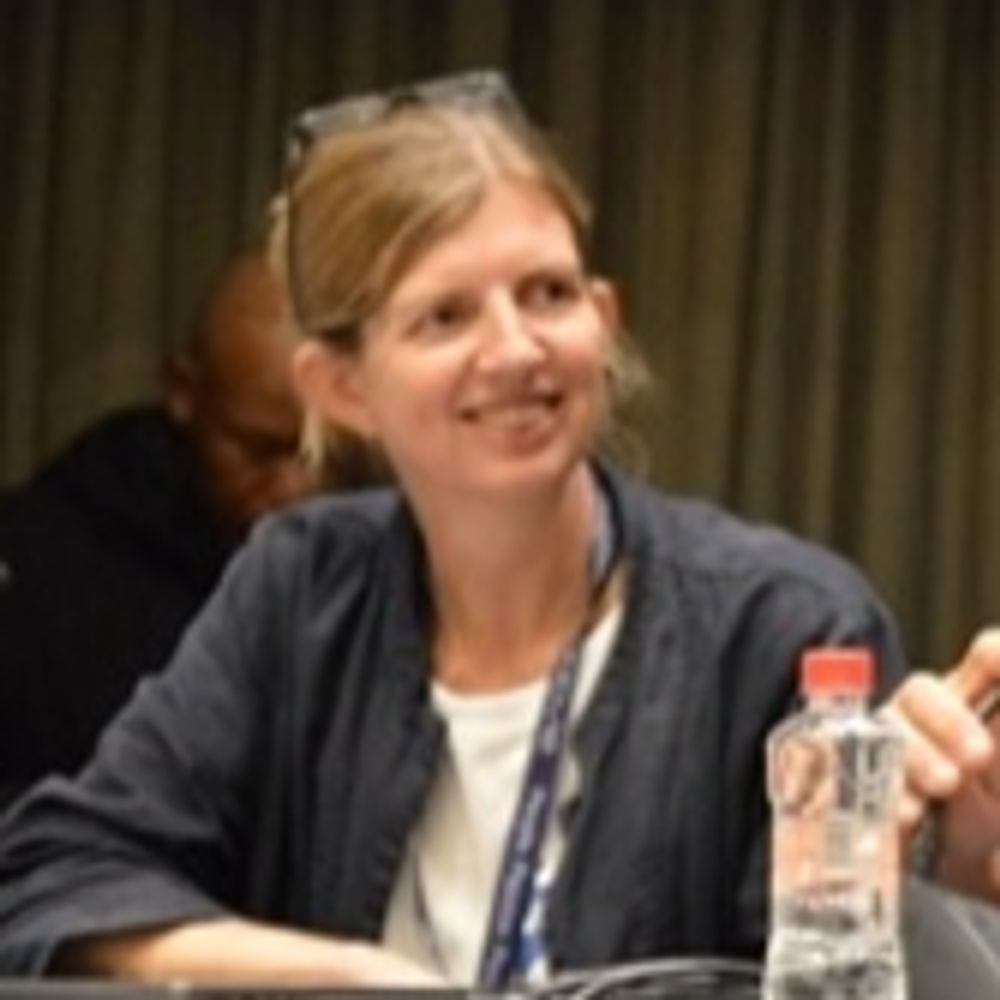
Congratulations to the Bishop group @crick.ac.uk for an inspiring #WorldAIDSDay event this week. Personal stories, #stigma, #treatment, #PrEP, #healthcare, wellbeing, #ageing, #research & partnerships… a mosaic of reflections. We have achieved a lot, but more still to be done.
#HIV #MedSky #IDSky 🧪
#HIV #MedSky #IDSky 🧪


December 3, 2025 at 8:23 AM
Congratulations to the Bishop group @crick.ac.uk for an inspiring #WorldAIDSDay event this week. Personal stories, #stigma, #treatment, #PrEP, #healthcare, wellbeing, #ageing, #research & partnerships… a mosaic of reflections. We have achieved a lot, but more still to be done.
#HIV #MedSky #IDSky 🧪
#HIV #MedSky #IDSky 🧪
Could we build a human from scratch?
Join our expert panellists as they answer audience questions about lab grown organs, brain implants and synthetic DNA.
Listen now on your favourite podcast platform: lnk.to/AQOSBioengin...
Join our expert panellists as they answer audience questions about lab grown organs, brain implants and synthetic DNA.
Listen now on your favourite podcast platform: lnk.to/AQOSBioengin...

December 3, 2025 at 2:31 PM
Could we build a human from scratch?
Join our expert panellists as they answer audience questions about lab grown organs, brain implants and synthetic DNA.
Listen now on your favourite podcast platform: lnk.to/AQOSBioengin...
Join our expert panellists as they answer audience questions about lab grown organs, brain implants and synthetic DNA.
Listen now on your favourite podcast platform: lnk.to/AQOSBioengin...
Last night we held our annual Crick Awards ceremony, presented by our Director Edith Heard, COO Claire Hook and guest host @bobbyseagull.bsky.social to celebrate the amazing people behind everything we do here.
Follow the posts below to see this year's winners.
Follow the posts below to see this year's winners.

November 28, 2025 at 11:29 AM
Last night we held our annual Crick Awards ceremony, presented by our Director Edith Heard, COO Claire Hook and guest host @bobbyseagull.bsky.social to celebrate the amazing people behind everything we do here.
Follow the posts below to see this year's winners.
Follow the posts below to see this year's winners.
Researchers at the Crick have developed a technique using light-sensitive metal complexes that could reverse antibiotic resistance in some situations.
www.crick.ac.uk/news/2025-11...
www.crick.ac.uk/news/2025-11...

How phototherapy could reverse antibiotic resistance
Researchers are using phototherapy to combat antibiotic-resistant bacteria, a step forward in the new era of ‘antibiotic rescue’.
www.crick.ac.uk
November 28, 2025 at 10:09 AM
Researchers at the Crick have developed a technique using light-sensitive metal complexes that could reverse antibiotic resistance in some situations.
www.crick.ac.uk/news/2025-11...
www.crick.ac.uk/news/2025-11...