



@amineuro.bsky.social
Reposted
Structure and organization of AMPA receptor-TARP complexes in the mammalian cerebellum | Science www.science.org/doi/10.1126/...

Structure and organization of AMPA receptor-TARP complexes in the mammalian cerebellum
AMPA receptors (AMPARs) are multimodal transducers of glutamatergic signals throughout the brain. Their diversity is exemplified in the cerebellum; at afferent synapses, AMPARs mediate high-frequency ...
www.science.org
December 12, 2025 at 5:35 AM
Structure and organization of AMPA receptor-TARP complexes in the mammalian cerebellum | Science www.science.org/doi/10.1126/...
Reposted

🧠🪰 The adult Drosophila brain connectome now gives us a complete wiring diagram of ~140k neurons. But a wiring diagram alone isn’t understanding.
How is this massive network organized?
Our paper tackles that question by mapping community structure across the entire fly brain. 1/
How is this massive network organized?
Our paper tackles that question by mapping community structure across the entire fly brain. 1/
New lab paper - will say more about this in a little while
December 15, 2025 at 3:11 PM
🧠🪰 The adult Drosophila brain connectome now gives us a complete wiring diagram of ~140k neurons. But a wiring diagram alone isn’t understanding.
How is this massive network organized?
Our paper tackles that question by mapping community structure across the entire fly brain. 1/
How is this massive network organized?
Our paper tackles that question by mapping community structure across the entire fly brain. 1/
Reposted

Here is why friends don't let friends calculate FSC on denoised half-maps. I took EMD-17961, denoised the maps using Warp's Noise2Map, and calculated the FSC between various things. With noise gone from the half-maps, their consistency is no longer related to SSNR. Denoised map vs. model still works

December 15, 2025 at 1:53 AM
Here is why friends don't let friends calculate FSC on denoised half-maps. I took EMD-17961, denoised the maps using Warp's Noise2Map, and calculated the FSC between various things. With noise gone from the half-maps, their consistency is no longer related to SSNR. Denoised map vs. model still works
Reposted
🔬 Just out in @NatureComms!
Using cryo-CLEM and cryo-ET, we reveal the unique ultrastructure of dopaminergic varicosities in the striatum.
Amazing collaboration with @davip-bdx.bsky.social and Etienne Herzog @iins-bordeaux.bsky.social
Congratulations to Paul and Robin for this fantastic work! 🎉
Using cryo-CLEM and cryo-ET, we reveal the unique ultrastructure of dopaminergic varicosities in the striatum.
Amazing collaboration with @davip-bdx.bsky.social and Etienne Herzog @iins-bordeaux.bsky.social
Congratulations to Paul and Robin for this fantastic work! 🎉
Cryo-correlative light and electron tomography of dopaminergic axonal varicosities reveals non-synaptic modulation of cortico-striatal synapses - Nature Communications
The basic features of dopamine release sites are still largely unknown. Here, the authors determine the ultrastructure of fluorescent dopaminergic and glutamatergic synaptosomes in mouse striatum usin...
www.nature.com
December 13, 2025 at 8:11 PM
🔬 Just out in @NatureComms!
Using cryo-CLEM and cryo-ET, we reveal the unique ultrastructure of dopaminergic varicosities in the striatum.
Amazing collaboration with @davip-bdx.bsky.social and Etienne Herzog @iins-bordeaux.bsky.social
Congratulations to Paul and Robin for this fantastic work! 🎉
Using cryo-CLEM and cryo-ET, we reveal the unique ultrastructure of dopaminergic varicosities in the striatum.
Amazing collaboration with @davip-bdx.bsky.social and Etienne Herzog @iins-bordeaux.bsky.social
Congratulations to Paul and Robin for this fantastic work! 🎉
Reposted
Connectomics is method of the year 2025:
www.nature.com/articles/s41...
www.nature.com/articles/s41...

Method of the Year 2025: electron microscopy-based connectomics - Nature Methods
A large network of interconnected neurons serves as the basis of brain function and of behavior. Methodological advances have enabled the reconstruction of large-scale and even whole-brain connectomes...
www.nature.com
December 8, 2025 at 4:42 PM
Connectomics is method of the year 2025:
www.nature.com/articles/s41...
www.nature.com/articles/s41...
Reposted
We tend to think of neurons as either excitatory or inhibitory, but some neurons chemically inhibit their downstream targets while electrically exciting their neighbors. What is gained by having an inhibitory neuron excite its neighbor?
www.biorxiv.org/content/10.6...
www.biorxiv.org/content/10.6...

December 8, 2025 at 6:49 PM
We tend to think of neurons as either excitatory or inhibitory, but some neurons chemically inhibit their downstream targets while electrically exciting their neighbors. What is gained by having an inhibitory neuron excite its neighbor?
www.biorxiv.org/content/10.6...
www.biorxiv.org/content/10.6...
Reposted

An optimized X-ray nanotomography method offers an attractive alternative to volume EM for connectomics. @crick.ac.uk @psich.bsky.social psich.bsky.social @adrianawanner.bsky.social @andreas-t-schaefer.bsky.social @ucl.ac.uk @uclnpp.bsky.social
www.nature.com/articles/s41...
www.nature.com/articles/s41...

Nondestructive X-ray tomography of brain tissue ultrastructure - Nature Methods
Optimizations of X-ray nanotomography including the choice of resin allows high-resolution imaging of mouse brain tissue, approaching the resolution of volume electron microscopy. Since it does not re...
www.nature.com
December 4, 2025 at 8:32 PM
An optimized X-ray nanotomography method offers an attractive alternative to volume EM for connectomics. @crick.ac.uk @psich.bsky.social psich.bsky.social @adrianawanner.bsky.social @andreas-t-schaefer.bsky.social @ucl.ac.uk @uclnpp.bsky.social
www.nature.com/articles/s41...
www.nature.com/articles/s41...
Reposted
Happy to share the first paper from my journey at @psich.bsky.social towards X-ray connectomics, now out in @natmethods.nature.com: www.nature.com/articles/s41...
November 27, 2025 at 10:21 AM
Happy to share the first paper from my journey at @psich.bsky.social towards X-ray connectomics, now out in @natmethods.nature.com: www.nature.com/articles/s41...
Reposted

Help choose JCB’s cover of the year! Explore 12 breathtaking images submitted by our talented authors and vote for your favorite. Voting closes on Wed. December 31. Don’t miss your chance to have your say in celebrating the beauty of science 👉 www.surveymonkey.com/r/JCB2025Cov...
#CellBio2025
#CellBio2025

December 3, 2025 at 4:30 PM
Help choose JCB’s cover of the year! Explore 12 breathtaking images submitted by our talented authors and vote for your favorite. Voting closes on Wed. December 31. Don’t miss your chance to have your say in celebrating the beauty of science 👉 www.surveymonkey.com/r/JCB2025Cov...
#CellBio2025
#CellBio2025
Reposted
#paper!
X-rays can resolve #ultrastructure in tissues non-destructively.
www.nature.com/articles/s41...
Shoutout to key collaborators at @crick.ac.uk and @psich.bsky.social Ana Diaz, @adrianawanner.bsky.social and @andreas-t-schaefer.bsky.social, and to the whole team that made this possible.
X-rays can resolve #ultrastructure in tissues non-destructively.
www.nature.com/articles/s41...
Shoutout to key collaborators at @crick.ac.uk and @psich.bsky.social Ana Diaz, @adrianawanner.bsky.social and @andreas-t-schaefer.bsky.social, and to the whole team that made this possible.
Nondestructive X-ray tomography of brain tissue ultrastructure - Nature Methods
Optimizations of X-ray nanotomography including the choice of resin allows high-resolution imaging of mouse brain tissue, approaching the resolution of volume electron microscopy. Since it does not re...
www.nature.com
November 27, 2025 at 11:51 AM
#paper!
X-rays can resolve #ultrastructure in tissues non-destructively.
www.nature.com/articles/s41...
Shoutout to key collaborators at @crick.ac.uk and @psich.bsky.social Ana Diaz, @adrianawanner.bsky.social and @andreas-t-schaefer.bsky.social, and to the whole team that made this possible.
X-rays can resolve #ultrastructure in tissues non-destructively.
www.nature.com/articles/s41...
Shoutout to key collaborators at @crick.ac.uk and @psich.bsky.social Ana Diaz, @adrianawanner.bsky.social and @andreas-t-schaefer.bsky.social, and to the whole team that made this possible.
Reposted

Very excited to continue our amazing collaboration with @apacureanu.bsky.social at @esrf.fr - thank you @wellcometrust.bsky.social and all the collaborators at @crick.ac.uk and @esrf.fr

Congratulations to @andreas-t-schaefer.bsky.social on receiving a £3.8 million @wellcometrust.bsky.social Discovery Award, working with @esrf.fr, to chart the brain circuity behind the sense of smell in mice.
www.crick.ac.uk/news/2025-10...
www.crick.ac.uk/news/2025-10...

New £3.8m project to map the mouse olfactory system
Andreas Schaefer, Principal Group Leader of the Sensory Circuits and Neurotechnology Laboratory at the Crick, has received a Wellcome Discovery Award to chart the brain circuitry behind the sense of s...
www.crick.ac.uk
November 2, 2025 at 9:21 PM
Very excited to continue our amazing collaboration with @apacureanu.bsky.social at @esrf.fr - thank you @wellcometrust.bsky.social and all the collaborators at @crick.ac.uk and @esrf.fr
Reposted
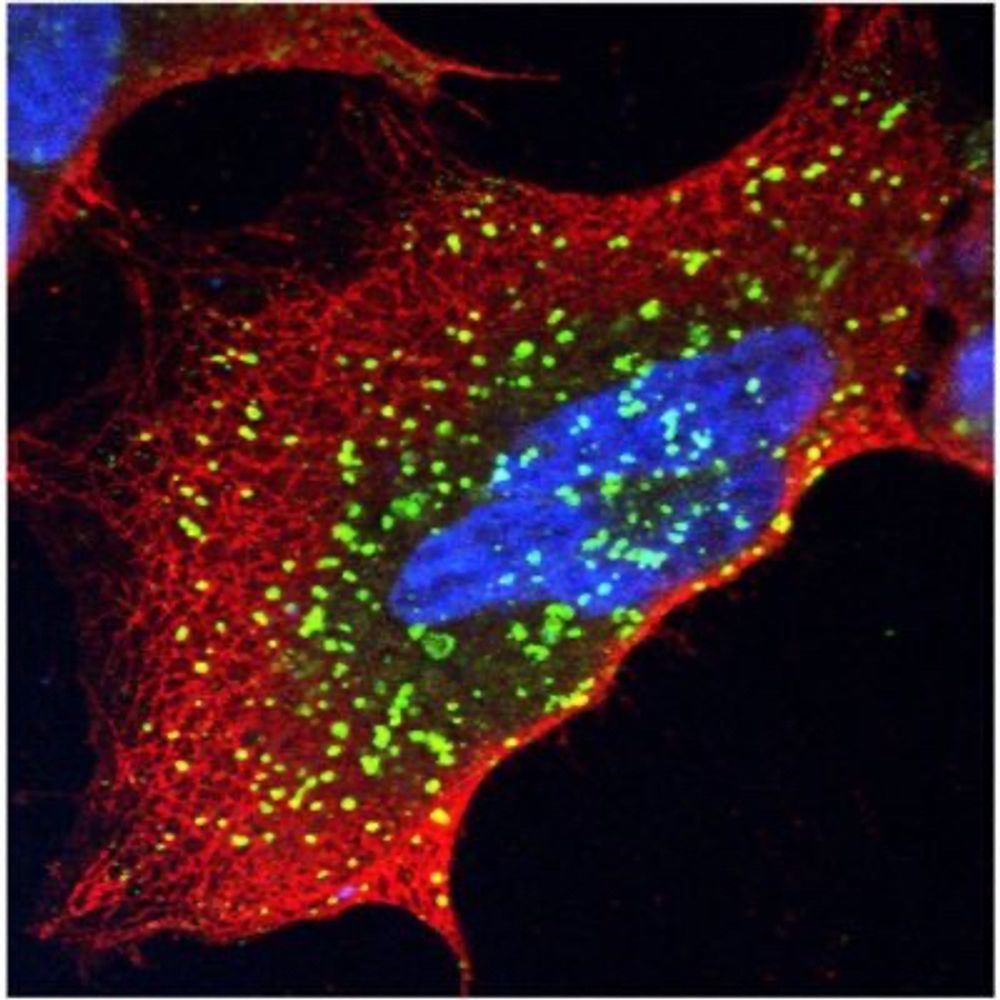
“Kiss-shrink-run” unifies mechanisms for synaptic vesicle exocytosis and hyperfast recycling | Science www.science.org/doi/10.1126/...

“Kiss-shrink-run” unifies mechanisms for synaptic vesicle exocytosis and hyperfast recycling
Synaptic vesicle (SV) exocytosis underpins neuronal communication, yet its nanoscale dynamics remain poorly understood owing to limitations in visualizing rapid events in situ. Here, we used optogenet...
www.science.org
October 16, 2025 at 7:03 PM
“Kiss-shrink-run” unifies mechanisms for synaptic vesicle exocytosis and hyperfast recycling | Science www.science.org/doi/10.1126/...
Reposted

Last Friday (17th), we had an amazing first Young Swiss Tomo meeting in Bern, organized with Elda Bauda, Zanetta Kechagia, and @leonieanton.bsky.social!
Over 70 people from 🇨🇭 gathered to talk about cryo-electron tomography 🔬.
Huge thanks to the DCI for making the event possible! See you next year! 👋
Over 70 people from 🇨🇭 gathered to talk about cryo-electron tomography 🔬.
Huge thanks to the DCI for making the event possible! See you next year! 👋


October 19, 2025 at 9:16 AM
Last Friday (17th), we had an amazing first Young Swiss Tomo meeting in Bern, organized with Elda Bauda, Zanetta Kechagia, and @leonieanton.bsky.social!
Over 70 people from 🇨🇭 gathered to talk about cryo-electron tomography 🔬.
Huge thanks to the DCI for making the event possible! See you next year! 👋
Over 70 people from 🇨🇭 gathered to talk about cryo-electron tomography 🔬.
Huge thanks to the DCI for making the event possible! See you next year! 👋
Reposted

Excited to share our preprint on cytoskeletal organization in astrocytes!
biorxiv.org/content/10.110…
Postdoc @mewynne759 looked at microtubules, IFs/GFAP & actin along long elaborate processes.
Wonderful to collaborate w postdoc @dharshinigopal & @NogalesLab on cryo-ET 🤓
1/x
biorxiv.org/content/10.110…
Postdoc @mewynne759 looked at microtubules, IFs/GFAP & actin along long elaborate processes.
Wonderful to collaborate w postdoc @dharshinigopal & @NogalesLab on cryo-ET 🤓
1/x
https://biorxiv.org/content/10.110…
October 13, 2025 at 8:44 PM
Excited to share our preprint on cytoskeletal organization in astrocytes!
biorxiv.org/content/10.110…
Postdoc @mewynne759 looked at microtubules, IFs/GFAP & actin along long elaborate processes.
Wonderful to collaborate w postdoc @dharshinigopal & @NogalesLab on cryo-ET 🤓
1/x
biorxiv.org/content/10.110…
Postdoc @mewynne759 looked at microtubules, IFs/GFAP & actin along long elaborate processes.
Wonderful to collaborate w postdoc @dharshinigopal & @NogalesLab on cryo-ET 🤓
1/x
Reposted
The connectome of the entire male Drosophila central nervous system is out!! Acquired using FIB-SEM @ 8x8x8nm, we aligned 7.5 mio 2D images aligned into one seamless 3D volume, which was used to segment & proofread neurons and synapses. @hhmijanelia.bsky.social
www.biorxiv.org/content/10.1...
www.biorxiv.org/content/10.1...
October 11, 2025 at 1:30 PM
The connectome of the entire male Drosophila central nervous system is out!! Acquired using FIB-SEM @ 8x8x8nm, we aligned 7.5 mio 2D images aligned into one seamless 3D volume, which was used to segment & proofread neurons and synapses. @hhmijanelia.bsky.social
www.biorxiv.org/content/10.1...
www.biorxiv.org/content/10.1...
Reposted

Paper alert🚨
Label your protein of interest and localize it in cryoET 👁️❄️
Genetically encoded FerriTag as a specific label for cryo-electron tomography: Structure www.cell.com/structure/fu...
Label your protein of interest and localize it in cryoET 👁️❄️
Genetically encoded FerriTag as a specific label for cryo-electron tomography: Structure www.cell.com/structure/fu...

Genetically encoded FerriTag as a specific label for cryo-electron tomography
Wang et al. present an optimized labeling strategy for cryo-electron tomography based
on genetically encoded FerriTag. This system uses rapamycin to recruit iron-loaded
ferritin to target proteins, en...
www.cell.com
September 11, 2025 at 9:36 AM
Paper alert🚨
Label your protein of interest and localize it in cryoET 👁️❄️
Genetically encoded FerriTag as a specific label for cryo-electron tomography: Structure www.cell.com/structure/fu...
Label your protein of interest and localize it in cryoET 👁️❄️
Genetically encoded FerriTag as a specific label for cryo-electron tomography: Structure www.cell.com/structure/fu...
Reposted

Excited to share our latest collaborative work from Erin Schuman's lab @mpibrain.bsky.social : An integrated transcriptomic and proteomic map of the mouse hippocampus at synaptic resolution, now published in @natcomms.nature.com. Here’s a thread summary 🧵
doi.org/10.1038/s414...
doi.org/10.1038/s414...

August 29, 2025 at 11:23 AM
Excited to share our latest collaborative work from Erin Schuman's lab @mpibrain.bsky.social : An integrated transcriptomic and proteomic map of the mouse hippocampus at synaptic resolution, now published in @natcomms.nature.com. Here’s a thread summary 🧵
doi.org/10.1038/s414...
doi.org/10.1038/s414...
Reposted

My PhD paper is in press @cellpress.bsky.social and now online: www.sciencedirect.com/science/arti...!
Contents: weird #NPCs in yeast and flies, #CLEM, in situ #cryoET and more!
Made possible by the amazing @becklab.bsky.social team at @mpibp.bsky.social and collaborators! #TeamTomo
Contents: weird #NPCs in yeast and flies, #CLEM, in situ #cryoET and more!
Made possible by the amazing @becklab.bsky.social team at @mpibp.bsky.social and collaborators! #TeamTomo

The small GTPase Ran defines nuclear pore complex asymmetry
Nuclear pore complexes (NPCs) bridge across the nuclear envelope and mediate nucleocytoplasmic exchange. They consist of hundreds of nucleoporin build…
www.sciencedirect.com
August 18, 2025 at 4:26 PM
My PhD paper is in press @cellpress.bsky.social and now online: www.sciencedirect.com/science/arti...!
Contents: weird #NPCs in yeast and flies, #CLEM, in situ #cryoET and more!
Made possible by the amazing @becklab.bsky.social team at @mpibp.bsky.social and collaborators! #TeamTomo
Contents: weird #NPCs in yeast and flies, #CLEM, in situ #cryoET and more!
Made possible by the amazing @becklab.bsky.social team at @mpibp.bsky.social and collaborators! #TeamTomo
Reposted

1
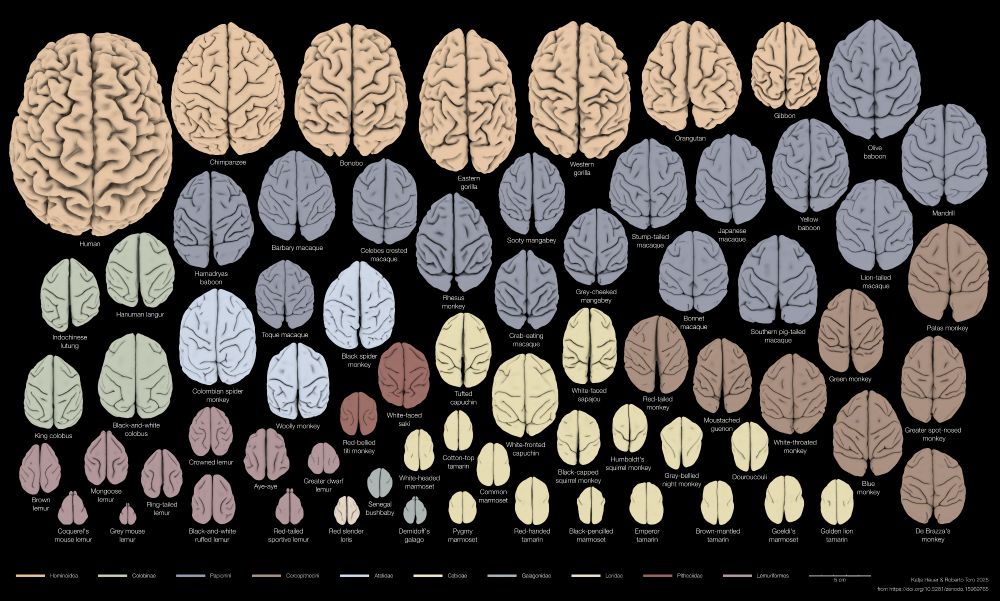
To predict the behaviour of a primate, would you rather base your guess on a closely related species or one with a similar brain shape? We looked at brains & behaviours of 70 species, you’ll be surprised!
🧵Thread on our new preprint with @r3rt0.bsky.social , doi.org/10.1101/2025...
To predict the behaviour of a primate, would you rather base your guess on a closely related species or one with a similar brain shape? We looked at brains & behaviours of 70 species, you’ll be surprised!
🧵Thread on our new preprint with @r3rt0.bsky.social , doi.org/10.1101/2025...
July 27, 2025 at 5:26 PM
1
To predict the behaviour of a primate, would you rather base your guess on a closely related species or one with a similar brain shape? We looked at brains & behaviours of 70 species, you’ll be surprised!
🧵Thread on our new preprint with @r3rt0.bsky.social , doi.org/10.1101/2025...
To predict the behaviour of a primate, would you rather base your guess on a closely related species or one with a similar brain shape? We looked at brains & behaviours of 70 species, you’ll be surprised!
🧵Thread on our new preprint with @r3rt0.bsky.social , doi.org/10.1101/2025...
Reposted

When neurons change, but behavior doesn’t: Excitability changes driving representational drift
New preprint of work with Christian Machens: www.biorxiv.org/content/10.1...
New preprint of work with Christian Machens: www.biorxiv.org/content/10.1...

Representational drift without synaptic plasticity
Neural computations support stable behavior despite relying on many dynamically changing biological processes. One such process is representational drift (RD), in which neurons' responses change over ...
www.biorxiv.org
July 29, 2025 at 2:02 PM
When neurons change, but behavior doesn’t: Excitability changes driving representational drift
New preprint of work with Christian Machens: www.biorxiv.org/content/10.1...
New preprint of work with Christian Machens: www.biorxiv.org/content/10.1...
Reposted

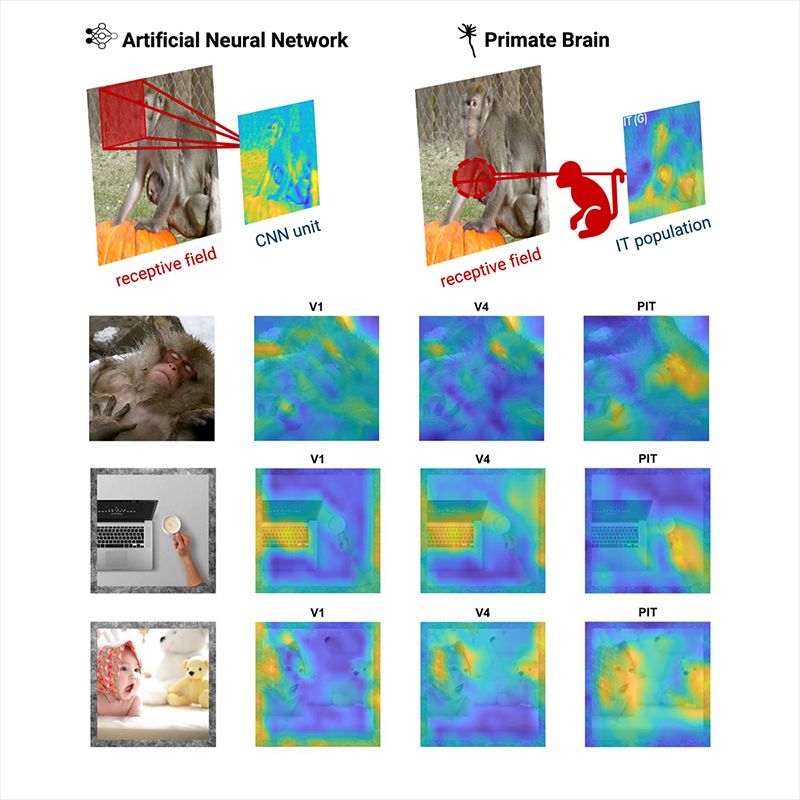
In a new study, @victoriazhanqi.bsky.social and the Ponce Lab reveal that neurons across the primate visual cortex are tuned not just to objects, but to animal features—highlighting a surprising bias in how the brain encodes natural scenes. brain.harvard.edu/hbi_news/whe...
July 17, 2025 at 6:39 PM
In a new study, @victoriazhanqi.bsky.social and the Ponce Lab reveal that neurons across the primate visual cortex are tuned not just to objects, but to animal features—highlighting a surprising bias in how the brain encodes natural scenes. brain.harvard.edu/hbi_news/whe...
Reposted
Finally, the paper by @qcxy8886.bsky.social on #cryoEM of tau mutants V337M and R406W is out in NSMB (which is not the fastest journal). Tau filaments with these mutations have the same structures as in AD, which may be useful for the development of faster models.
www.nature.com/articles/s41...
www.nature.com/articles/s41...
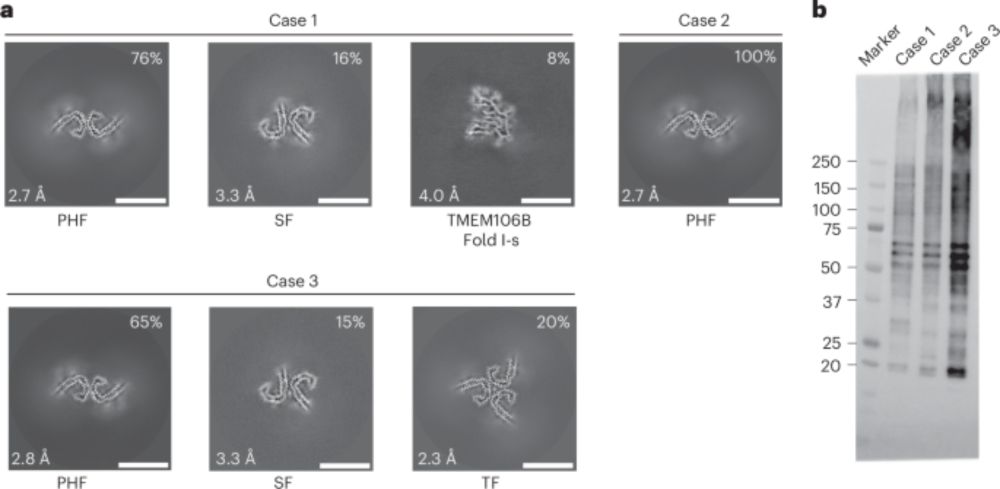
Tau filaments with the Alzheimer fold in human MAPT mutants V337M and R406W - Nature Structural & Molecular Biology
Qi et al. used cryo-electron microscopy to determine the structures of tau filaments from the brains of individuals with MAPT mutants V337M and R406W, known to give rise to frontotemporal dementias. T...
www.nature.com
July 16, 2025 at 6:33 AM
Finally, the paper by @qcxy8886.bsky.social on #cryoEM of tau mutants V337M and R406W is out in NSMB (which is not the fastest journal). Tau filaments with these mutations have the same structures as in AD, which may be useful for the development of faster models.
www.nature.com/articles/s41...
www.nature.com/articles/s41...
Reposted
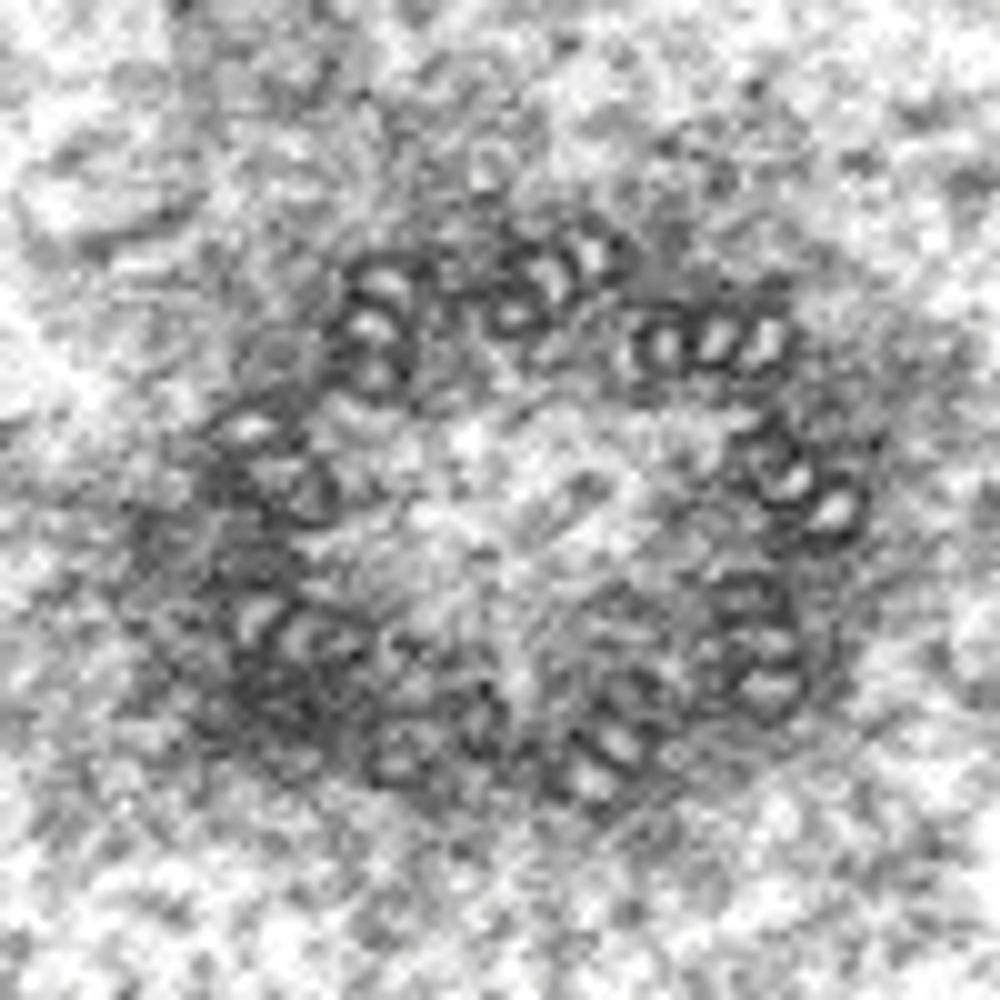
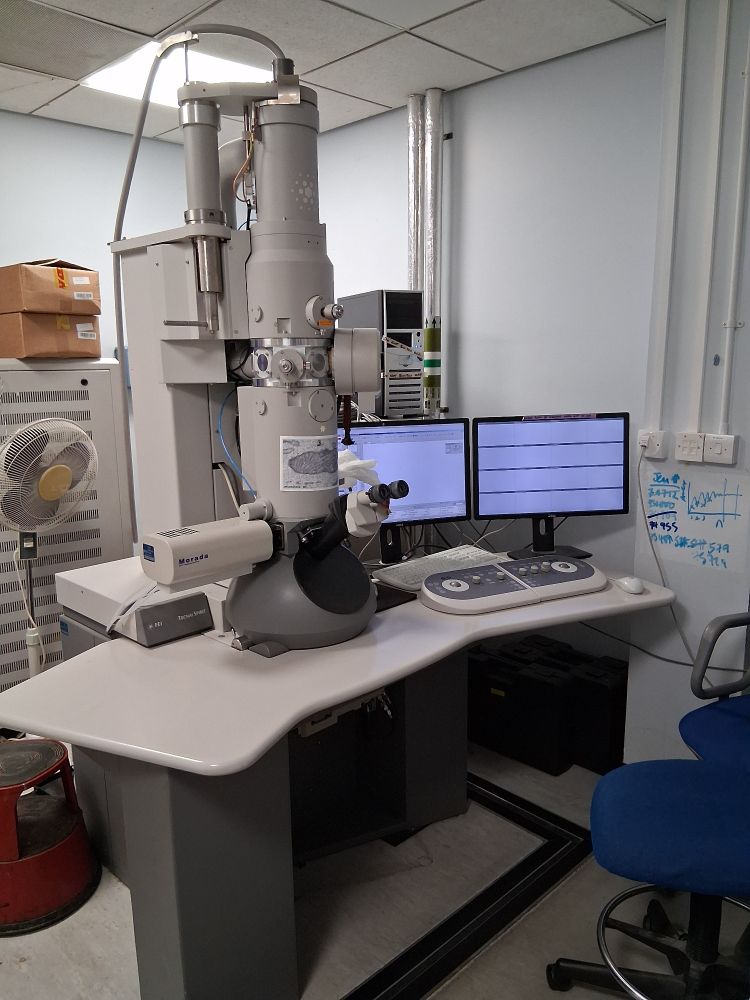
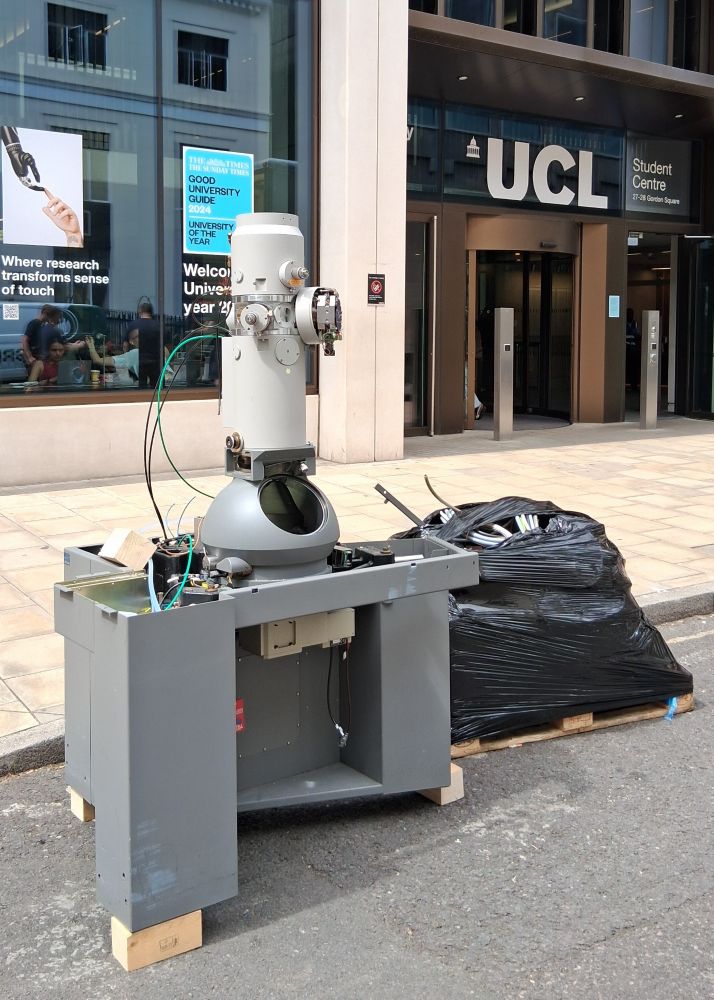
Today was a memorable day.. saying goodbye to our trusty Tecnai 12 Spirit! >180,000 images from just Ian and myself...not counting the numerous MSc's PhD's and publications!
End of an era!
Thank you @thermofishersci.bsky.social
End of an era!
Thank you @thermofishersci.bsky.social
July 9, 2025 at 6:46 PM
Today was a memorable day.. saying goodbye to our trusty Tecnai 12 Spirit! >180,000 images from just Ian and myself...not counting the numerous MSc's PhD's and publications!
End of an era!
Thank you @thermofishersci.bsky.social
End of an era!
Thank you @thermofishersci.bsky.social
Reposted
In collaboration with the Posthaus Lab, we identify ANTXR2—also the anthrax toxin receptor—as the receptor for Clostridium perfringens NetF pore forming toxin. Cryo-EM shows extensive contact between the pore and the receptor
🧬🧊🔬 #Microbiology #CryoEM #PoreFormingToxins
doi.org/10.1101/2025...
🧬🧊🔬 #Microbiology #CryoEM #PoreFormingToxins
doi.org/10.1101/2025...

July 4, 2025 at 7:50 AM
In collaboration with the Posthaus Lab, we identify ANTXR2—also the anthrax toxin receptor—as the receptor for Clostridium perfringens NetF pore forming toxin. Cryo-EM shows extensive contact between the pore and the receptor
🧬🧊🔬 #Microbiology #CryoEM #PoreFormingToxins
doi.org/10.1101/2025...
🧬🧊🔬 #Microbiology #CryoEM #PoreFormingToxins
doi.org/10.1101/2025...
Reposted
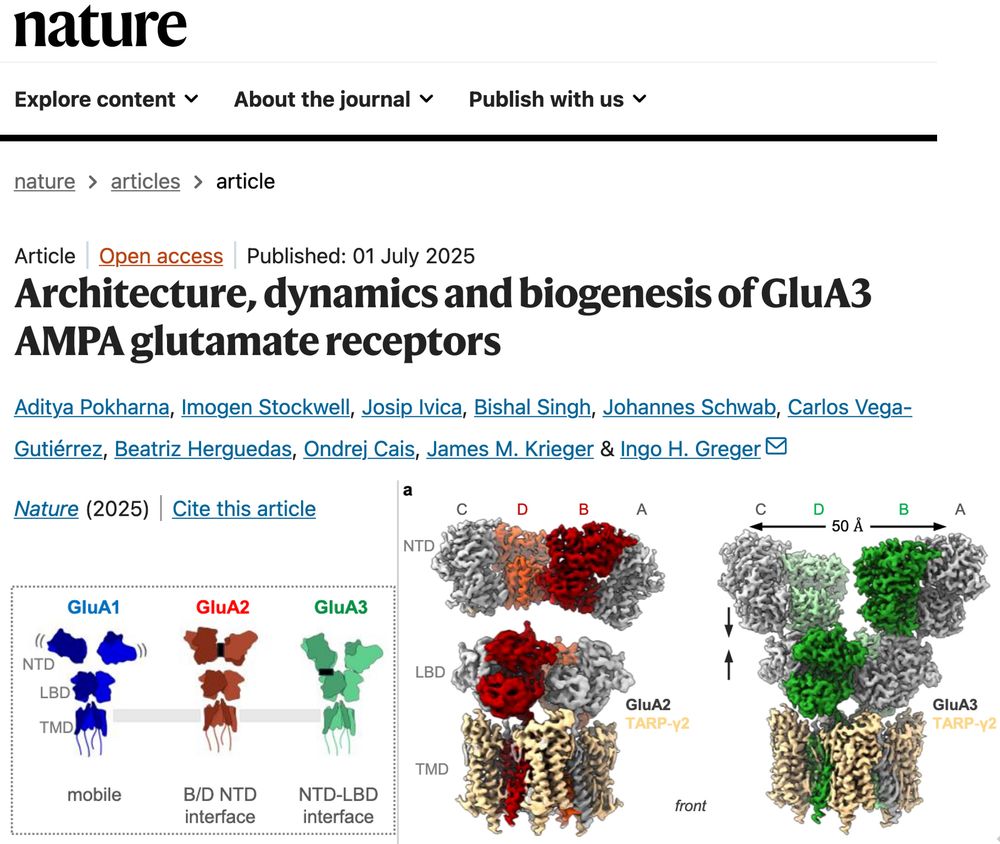
Happy about our new paper in Nature rdcu.be/eukUB
The GluA3 structure provides a framework for understanding this disease-prone glutamate receptor - novel interfaces will provide targets for modulator development
The GluA3 structure provides a framework for understanding this disease-prone glutamate receptor - novel interfaces will provide targets for modulator development
July 2, 2025 at 7:24 AM
Happy about our new paper in Nature rdcu.be/eukUB
The GluA3 structure provides a framework for understanding this disease-prone glutamate receptor - novel interfaces will provide targets for modulator development
The GluA3 structure provides a framework for understanding this disease-prone glutamate receptor - novel interfaces will provide targets for modulator development