




Sreeparna Pradhan
@sreeparnap.bsky.social
K. Lisa Yang Brain-Body Center Postdoctoral Fellow at Steve Flavell's Lab @Picower Inst, MIT | PhD from Michael Hendricks' Lab @IPN, McGill Univ | Animal behavior | Neuroscience | Open science
Pinned
Thrilled to share this in its final, published form! Huge thanks to the reviewers for their insightful feedback—it truly opened up exciting new directions!
www.nature.com/articles/s41...
www.nature.com/articles/s41...
Reposted by Sreeparna Pradhan
Our first 2026 paper is out @currentbiology.bsky.social!
👏 to @nathancsharris.bsky.social (now Asst Prof, GA State) and PD Priya Dutta.
Here we show how transcriptional and trafficking pathways coordinate thermoreceptor levels to precisely modulate response plasticity
www.cell.com/current-biol...
👏 to @nathancsharris.bsky.social (now Asst Prof, GA State) and PD Priya Dutta.
Here we show how transcriptional and trafficking pathways coordinate thermoreceptor levels to precisely modulate response plasticity
www.cell.com/current-biol...

Experience-dependent reconfiguration of thermoreceptors regulates neuronal response plasticity
Harris, Dutta, et al. find that experience-dependent plasticity in the activation
threshold of the AFD thermosensory neurons is mediated by modulating warm and cold
thermoreceptor levels at the sensor...
www.cell.com
January 28, 2026 at 5:37 PM
Our first 2026 paper is out @currentbiology.bsky.social!
👏 to @nathancsharris.bsky.social (now Asst Prof, GA State) and PD Priya Dutta.
Here we show how transcriptional and trafficking pathways coordinate thermoreceptor levels to precisely modulate response plasticity
www.cell.com/current-biol...
👏 to @nathancsharris.bsky.social (now Asst Prof, GA State) and PD Priya Dutta.
Here we show how transcriptional and trafficking pathways coordinate thermoreceptor levels to precisely modulate response plasticity
www.cell.com/current-biol...
Reposted by Sreeparna Pradhan

How does a predator sense its prey?
🪱The nematode Pristionchus pacificus preys on other nematodes, but how it detects them in its environment? That is what we have been exploring :
www.pnas.org/doi/10.1073/...
🪱The nematode Pristionchus pacificus preys on other nematodes, but how it detects them in its environment? That is what we have been exploring :
www.pnas.org/doi/10.1073/...
PNAS
Proceedings of the National Academy of Sciences (PNAS), a peer reviewed journal of the National Academy of Sciences (NAS) - an authoritative source of high-impact, original research that broadly spans...
www.pnas.org
January 28, 2026 at 6:35 PM
How does a predator sense its prey?
🪱The nematode Pristionchus pacificus preys on other nematodes, but how it detects them in its environment? That is what we have been exploring :
www.pnas.org/doi/10.1073/...
🪱The nematode Pristionchus pacificus preys on other nematodes, but how it detects them in its environment? That is what we have been exploring :
www.pnas.org/doi/10.1073/...
Reposted by Sreeparna Pradhan

Friends! I am so happy to share our new preprint!
Hydrogen peroxide has been the most common reactive chemical threat to life forms since the Great Oxygenation Event 2.5 billion years ago.
How do animals like C. elegans sense it fast and escape?
www.biorxiv.org/content/10.6...
Thread 1/
Hydrogen peroxide has been the most common reactive chemical threat to life forms since the Great Oxygenation Event 2.5 billion years ago.
How do animals like C. elegans sense it fast and escape?
www.biorxiv.org/content/10.6...
Thread 1/
January 28, 2026 at 3:13 PM
Friends! I am so happy to share our new preprint!
Hydrogen peroxide has been the most common reactive chemical threat to life forms since the Great Oxygenation Event 2.5 billion years ago.
How do animals like C. elegans sense it fast and escape?
www.biorxiv.org/content/10.6...
Thread 1/
Hydrogen peroxide has been the most common reactive chemical threat to life forms since the Great Oxygenation Event 2.5 billion years ago.
How do animals like C. elegans sense it fast and escape?
www.biorxiv.org/content/10.6...
Thread 1/
Reposted by Sreeparna Pradhan

Why do some worms graze on bacteria while others hunt and kill?
Our study, published today in Nature, reveals how predatory aggression evolved in nematodes.
Led by @gunizgozeeren.bsky.social and @leoboeger.bsky.social across the @jameslightfoot.bsky.social and @monikakscholz.bsky.social labs.
Our study, published today in Nature, reveals how predatory aggression evolved in nematodes.
Led by @gunizgozeeren.bsky.social and @leoboeger.bsky.social across the @jameslightfoot.bsky.social and @monikakscholz.bsky.social labs.

Predatory aggression evolved through adaptations to noradrenergic circuits - Nature
Noradrenergic circuits support and balance aggressive behavioural states in predatory nematodes, distinguish predatory from non-predatory nematode species and are associated with the evolution of comp...
www.nature.com
January 21, 2026 at 4:31 PM
Why do some worms graze on bacteria while others hunt and kill?
Our study, published today in Nature, reveals how predatory aggression evolved in nematodes.
Led by @gunizgozeeren.bsky.social and @leoboeger.bsky.social across the @jameslightfoot.bsky.social and @monikakscholz.bsky.social labs.
Our study, published today in Nature, reveals how predatory aggression evolved in nematodes.
Led by @gunizgozeeren.bsky.social and @leoboeger.bsky.social across the @jameslightfoot.bsky.social and @monikakscholz.bsky.social labs.
Reposted by Sreeparna Pradhan

Circadian timing shapes infection outcomes.
In our new paper, we show that baseline inflammatory state—measurable before infection—strongly predicts which individuals will survive a bacterial challenge.
www.science.org/doi/10.1126/...
In our new paper, we show that baseline inflammatory state—measurable before infection—strongly predicts which individuals will survive a bacterial challenge.
www.science.org/doi/10.1126/...

Circadian-shaped immune variability predicts infection outcome
Basal immune state under circadian control predicts infection outcome, and clock gene perturbation shifts survival patterns.
www.science.org
January 2, 2026 at 2:14 PM
Circadian timing shapes infection outcomes.
In our new paper, we show that baseline inflammatory state—measurable before infection—strongly predicts which individuals will survive a bacterial challenge.
www.science.org/doi/10.1126/...
In our new paper, we show that baseline inflammatory state—measurable before infection—strongly predicts which individuals will survive a bacterial challenge.
www.science.org/doi/10.1126/...
Reposted by Sreeparna Pradhan

Interested in the latest advances in neuroscience (neural dynamics and internal models) and how they can be leveraged to build smarter, adaptive AI?
➡️ My first real solo piece 🖤🫶 @natneuro.nature.com
rdcu.be/eWVmA
➡️ My first real solo piece 🖤🫶 @natneuro.nature.com
rdcu.be/eWVmA

Leveraging insights from neuroscience to build adaptive artificial intelligence
Nature Neuroscience - Adaptive intelligence envisions AI that, like animals, learns online, generalizes and adapts quickly. This Perspective reviews biological foundations, progress in AI and...
rdcu.be
December 31, 2025 at 8:00 AM
Interested in the latest advances in neuroscience (neural dynamics and internal models) and how they can be leveraged to build smarter, adaptive AI?
➡️ My first real solo piece 🖤🫶 @natneuro.nature.com
rdcu.be/eWVmA
➡️ My first real solo piece 🖤🫶 @natneuro.nature.com
rdcu.be/eWVmA
Moments that brought joy in this otherwise rollercoaster of a year. All spotted in the greater Boston area.


December 31, 2025 at 2:45 PM
Moments that brought joy in this otherwise rollercoaster of a year. All spotted in the greater Boston area.
Reposted by Sreeparna Pradhan
How do animals channel sensory information into motor pathways to generate flexible behavioral output? Excited to share a new preprint addressing this question by leveraging the new #maleCNS connectome, behavioral experiments, and in-vivo recordings: doi.org/10.64898/202.... A long🧵...

December 19, 2025 at 7:02 AM
How do animals channel sensory information into motor pathways to generate flexible behavioral output? Excited to share a new preprint addressing this question by leveraging the new #maleCNS connectome, behavioral experiments, and in-vivo recordings: doi.org/10.64898/202.... A long🧵...
Reposted by Sreeparna Pradhan

Thrilled to share our new paper!
With @tomtom-auer.bsky.social team, we asked how #evolution reshapes what animals #eat to match their ecological niches. Using pan-neuronal Ca2+ imaging, we show that the changes are in how the brain processes #taste.
Link @nature.com: www.nature.com/articles/s41...
With @tomtom-auer.bsky.social team, we asked how #evolution reshapes what animals #eat to match their ecological niches. Using pan-neuronal Ca2+ imaging, we show that the changes are in how the brain processes #taste.
Link @nature.com: www.nature.com/articles/s41...

Evolution of taste processing shifts dietary preference - Nature
Calcium imaging of taste neurons and the ventral brain provides insight into evolutionary divergence of food choice in Drosophila species, supporting a role of sensorimotor processing in addition to p...
www.nature.com
November 26, 2025 at 4:33 PM
Thrilled to share our new paper!
With @tomtom-auer.bsky.social team, we asked how #evolution reshapes what animals #eat to match their ecological niches. Using pan-neuronal Ca2+ imaging, we show that the changes are in how the brain processes #taste.
Link @nature.com: www.nature.com/articles/s41...
With @tomtom-auer.bsky.social team, we asked how #evolution reshapes what animals #eat to match their ecological niches. Using pan-neuronal Ca2+ imaging, we show that the changes are in how the brain processes #taste.
Link @nature.com: www.nature.com/articles/s41...
Reposted by Sreeparna Pradhan

Ive seen this work from Prof Liqun Luo’s presented a few times now and its stunning and heroic.

Nature research paper: Rewiring an olfactory circuit by altering cell-surface combinatorial code
go.nature.com/3MbCoZT
go.nature.com/3MbCoZT

Rewiring an olfactory circuit by altering cell-surface combinatorial code - Nature
In Drosophila, changing the expression of a small set of cell-surface proteins in just one type of olfactory neuron rewires its connections almost entirely to a new postsynaptic partner neuron type, altering the fly’s odour response and courtship behaviour.
go.nature.com
November 21, 2025 at 11:20 AM
Ive seen this work from Prof Liqun Luo’s presented a few times now and its stunning and heroic.
Reposted by Sreeparna Pradhan

What a gem from @dudinlab.bsky.social @gautamdey.bsky.social @centriolelab.bsky.social in Cell! Expansion microscopy atlas of >200 eukaryotes comparing cytoskeletal architectures revealing structures not seen before. Stunning visualisation! Exactly the kind of transformative cell biology we need.
October 31, 2025 at 5:45 PM
What a gem from @dudinlab.bsky.social @gautamdey.bsky.social @centriolelab.bsky.social in Cell! Expansion microscopy atlas of >200 eukaryotes comparing cytoskeletal architectures revealing structures not seen before. Stunning visualisation! Exactly the kind of transformative cell biology we need.
Reposted by Sreeparna Pradhan

Excited to share our new #biorxivpreprint:
“Sexual dimorphism in the complete connectome of the Drosophila male central nervous system” www.biorxiv.org/content/10.1...
We describe the #connectomics reconstruction and analysis of an entire adult #maleCNS #drosophila central nervous system. 1/10
“Sexual dimorphism in the complete connectome of the Drosophila male central nervous system” www.biorxiv.org/content/10.1...
We describe the #connectomics reconstruction and analysis of an entire adult #maleCNS #drosophila central nervous system. 1/10
October 15, 2025 at 4:17 PM
Excited to share our new #biorxivpreprint:
“Sexual dimorphism in the complete connectome of the Drosophila male central nervous system” www.biorxiv.org/content/10.1...
We describe the #connectomics reconstruction and analysis of an entire adult #maleCNS #drosophila central nervous system. 1/10
“Sexual dimorphism in the complete connectome of the Drosophila male central nervous system” www.biorxiv.org/content/10.1...
We describe the #connectomics reconstruction and analysis of an entire adult #maleCNS #drosophila central nervous system. 1/10
Reposted by Sreeparna Pradhan

Our group at the Allen Institute is recruiting a technician and postdoc to work on light microscopy-based connectomics. Please DM me or share with anyone you think may be interested in this NIH BRAIN CONNECTS funded project.
October 8, 2025 at 12:28 AM
Our group at the Allen Institute is recruiting a technician and postdoc to work on light microscopy-based connectomics. Please DM me or share with anyone you think may be interested in this NIH BRAIN CONNECTS funded project.
Reposted by Sreeparna Pradhan
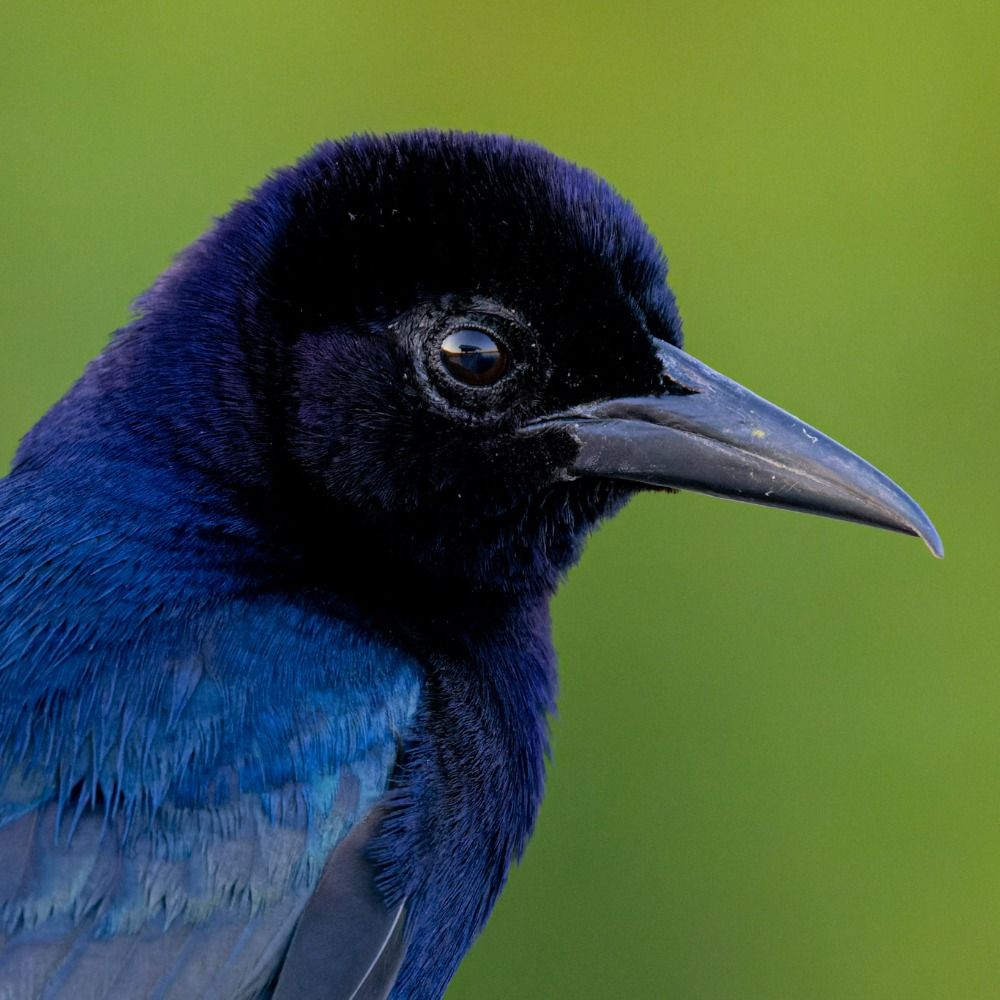
Roseate spoonbills will splash their wings through the water as part of their beauty routine. Here's one doing so mid-splash, facing straight ahead towards the camera. I really love this shot. #birds

October 4, 2025 at 6:14 PM
Roseate spoonbills will splash their wings through the water as part of their beauty routine. Here's one doing so mid-splash, facing straight ahead towards the camera. I really love this shot. #birds
Reposted by Sreeparna Pradhan
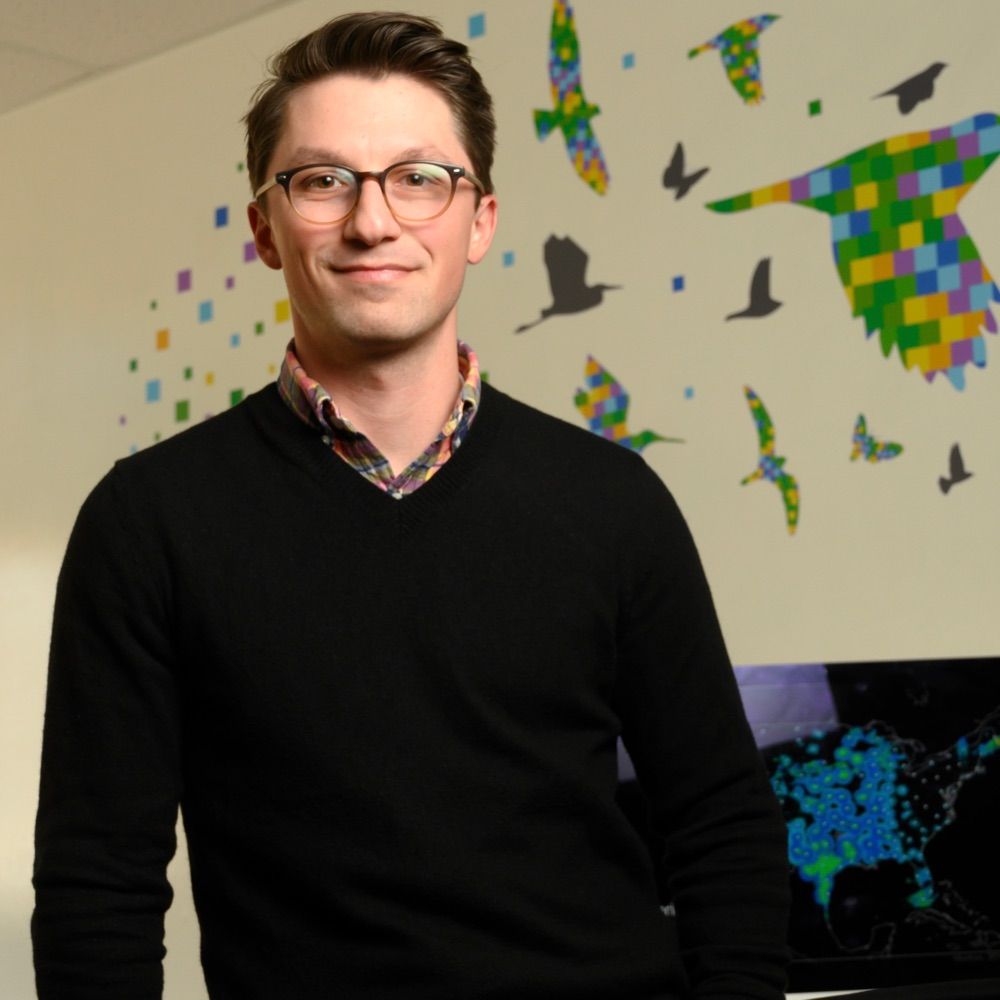
Truly impressive number of birds migrating tonight. More than 800 MILLION birds up in the air right now❗ #BirdMigration
September 25, 2025 at 2:59 AM
Truly impressive number of birds migrating tonight. More than 800 MILLION birds up in the air right now❗ #BirdMigration
Reposted by Sreeparna Pradhan
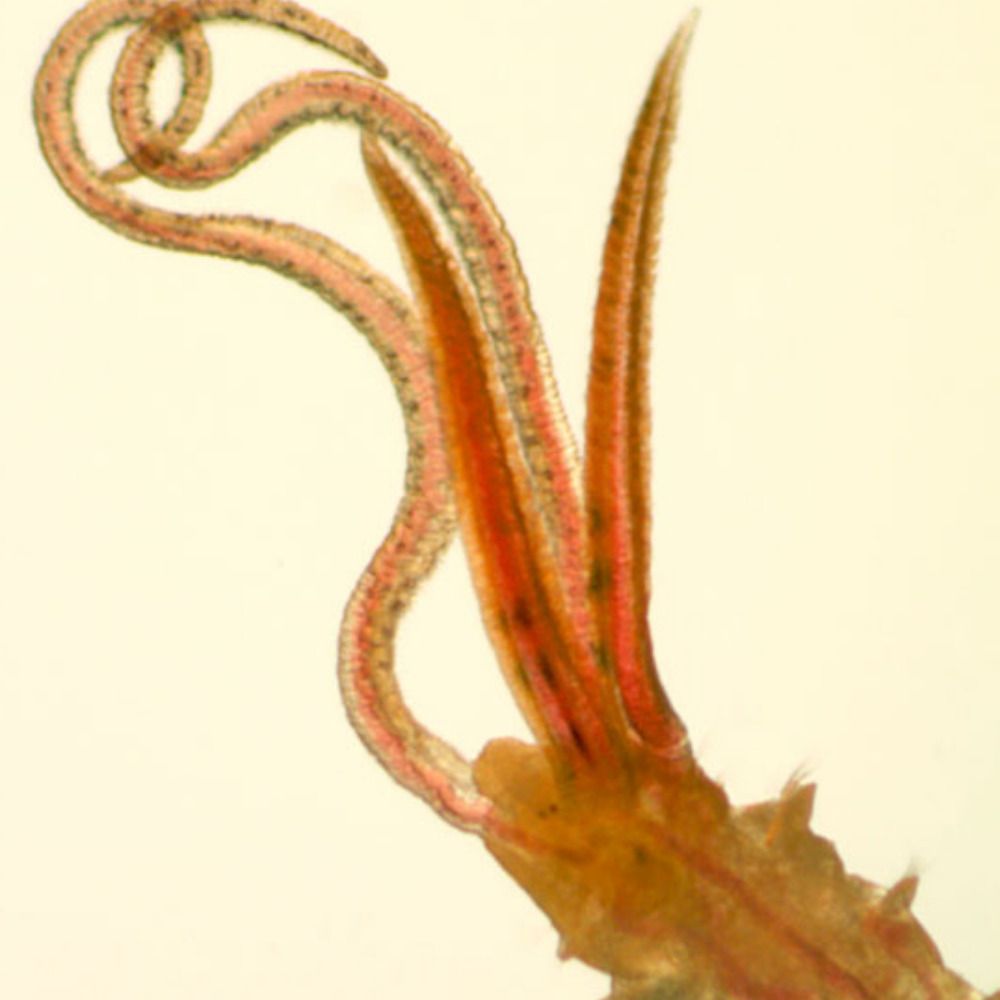
C. elegans is a real animal and we set out to understand how it comes to have its distinctive biogeography. Its ancestral center of diversity is in the higher elevation forests of Hawaii. Its closest relatives are spread across east Asia. Did they travel from Asia? [Preprint 🧵]
September 24, 2025 at 8:33 PM
C. elegans is a real animal and we set out to understand how it comes to have its distinctive biogeography. Its ancestral center of diversity is in the higher elevation forests of Hawaii. Its closest relatives are spread across east Asia. Did they travel from Asia? [Preprint 🧵]
Reposted by Sreeparna Pradhan

Very excited to share this finding from my postdoctoral work that is now published in #ScienceAdvances. We show how the gut’s epithelium modifies enteric behaviors during nutritional adversity via distinct peptidergic signaling axes.
www.science.org/doi/10.1126/...
Thread ⬇️
(1/n)
www.science.org/doi/10.1126/...
Thread ⬇️
(1/n)

Gut epithelium modifies enteric behaviors during nutritional adversity via distinct peptidergic signaling axes
Gut epithelium modulates output from distinct enteric circuits by altering secretion of insulin and noninsulin peptides.
www.science.org
September 24, 2025 at 8:17 PM
Very excited to share this finding from my postdoctoral work that is now published in #ScienceAdvances. We show how the gut’s epithelium modifies enteric behaviors during nutritional adversity via distinct peptidergic signaling axes.
www.science.org/doi/10.1126/...
Thread ⬇️
(1/n)
www.science.org/doi/10.1126/...
Thread ⬇️
(1/n)
Such a "cheesy" story!

Such a delight to share our work on the evolution of a cheese rind fungus in @currentbiology.bsky.social.
This is the fantastic PhD work of @nicolasleonlouw.bsky.social and resulted from amazing collaborations, a wedding proposal(!), an undergrad course, & more!
🧵
www.cell.com/current-biol...
This is the fantastic PhD work of @nicolasleonlouw.bsky.social and resulted from amazing collaborations, a wedding proposal(!), an undergrad course, & more!
🧵
www.cell.com/current-biol...

Long-term monitoring of a North American cheese cave reveals mechanisms and consequences of fungal adaptation
Using a unique longitudinal sampling approach, Louw et al. demonstrate how a cheese-associated
Penicillium population has adapted in an artisan cheese production facility in Vermont,
USA. Adaptation i...
www.cell.com
September 16, 2025 at 6:21 PM
Such a "cheesy" story!
Reposted by Sreeparna Pradhan

Please help me to celebrate Mei Zhen, an innovator and tremendous collaborator, named to the Royal Society of Canada Academy of Science on September 4, 2025

September 6, 2025 at 5:56 PM
Please help me to celebrate Mei Zhen, an innovator and tremendous collaborator, named to the Royal Society of Canada Academy of Science on September 4, 2025
Reposted by Sreeparna Pradhan
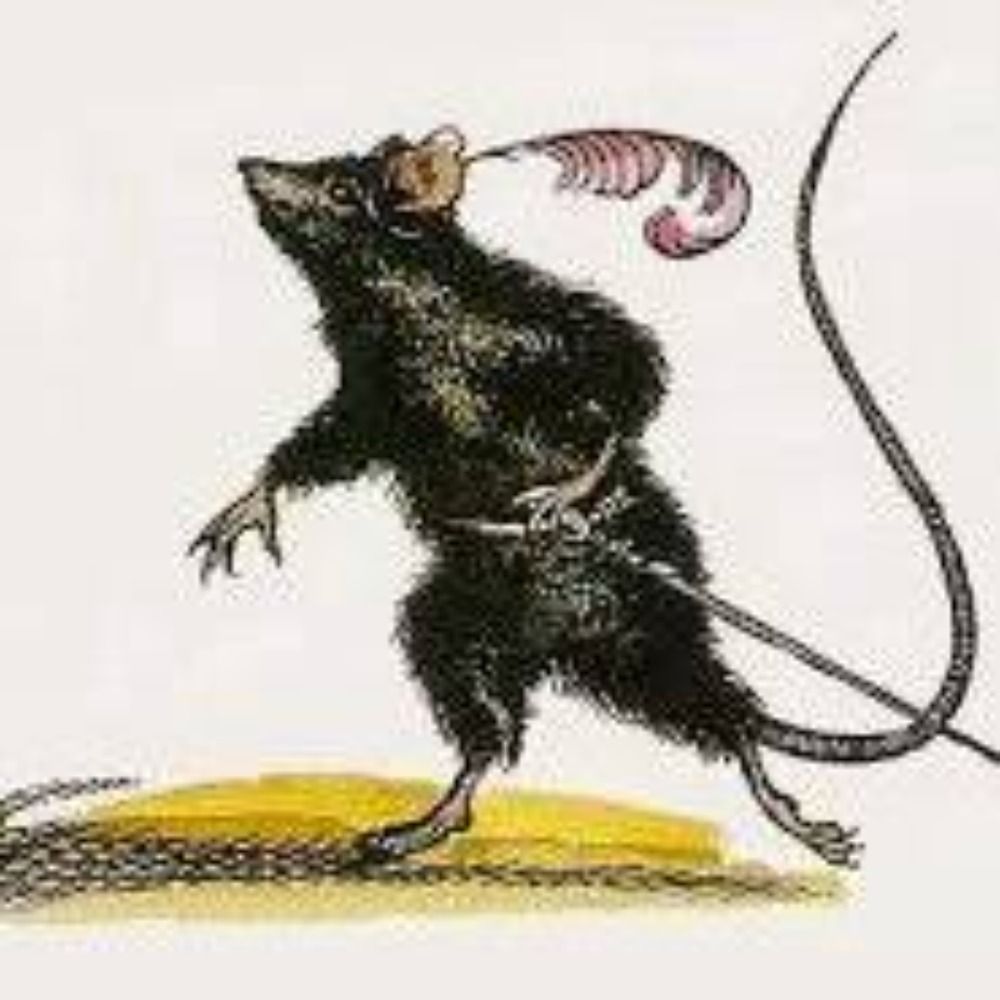
Can't wait to read this preprint from Misha Ahrens and team. Calcium imaging in larval zebrafish, in every cell in the body! Amazing.
www.biorxiv.org/content/10.1...
www.biorxiv.org/content/10.1...

August 22, 2025 at 10:21 PM
Can't wait to read this preprint from Misha Ahrens and team. Calcium imaging in larval zebrafish, in every cell in the body! Amazing.
www.biorxiv.org/content/10.1...
www.biorxiv.org/content/10.1...
Reposted by Sreeparna Pradhan
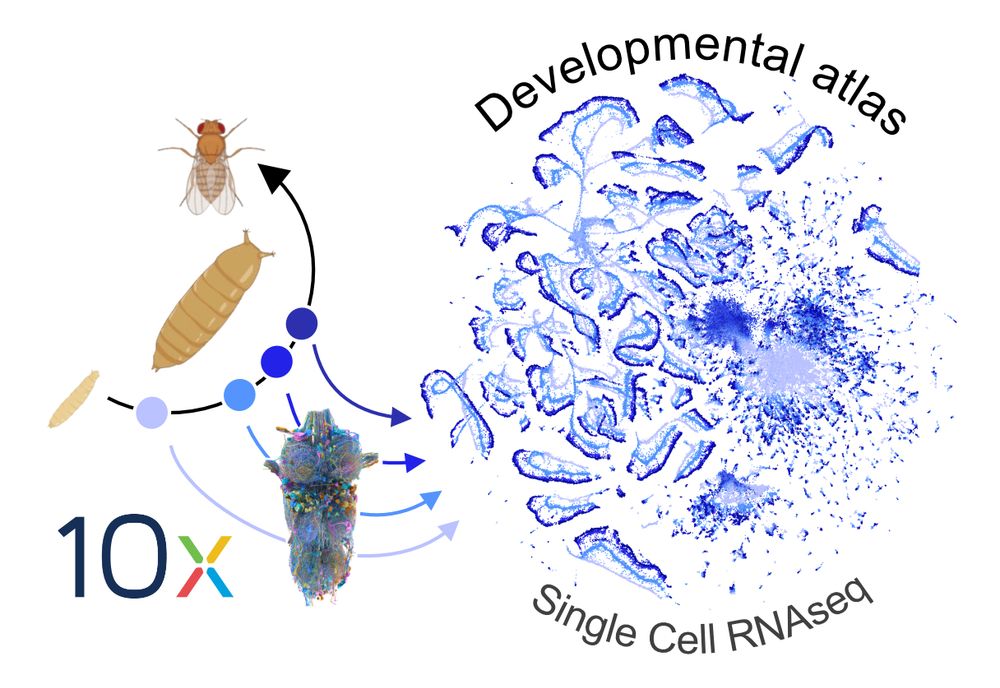
Neuronal diversity is written in transcriptional codes 🧬. But what is the logic of these codes that define cell types and wiring patterns?
To find out we built a #scRNAseq developmental atlas of the Drosophila nerve cord and linked it to the #connectome 🪰🧠
#preprint thread ⬇️1/8
To find out we built a #scRNAseq developmental atlas of the Drosophila nerve cord and linked it to the #connectome 🪰🧠
#preprint thread ⬇️1/8
August 21, 2025 at 4:04 PM
Neuronal diversity is written in transcriptional codes 🧬. But what is the logic of these codes that define cell types and wiring patterns?
To find out we built a #scRNAseq developmental atlas of the Drosophila nerve cord and linked it to the #connectome 🪰🧠
#preprint thread ⬇️1/8
To find out we built a #scRNAseq developmental atlas of the Drosophila nerve cord and linked it to the #connectome 🪰🧠
#preprint thread ⬇️1/8
Reposted by Sreeparna Pradhan

Exciting new Ruta lab preprint by @annaryba.bsky.social et al. on the neural underpinnings of intraspecific behavioral variation: Strain variation identifies a neural substrate for behavioral evolution Drosophila
www.biorxiv.org/content/10.1...
www.biorxiv.org/content/10.1...

Strain variation identifies a neural substrate for behavioral evolution in Drosophila
Sexual selection acts on heritable differences within species, driving the parallel diversification of signal production in one sex and behavioral responses in the other. This coevolution implies that...
www.biorxiv.org
August 21, 2025 at 9:43 AM
Exciting new Ruta lab preprint by @annaryba.bsky.social et al. on the neural underpinnings of intraspecific behavioral variation: Strain variation identifies a neural substrate for behavioral evolution Drosophila
www.biorxiv.org/content/10.1...
www.biorxiv.org/content/10.1...
Reposted by Sreeparna Pradhan
New preprint: Scientists, how many times has this happened to you? You collect all kinds of data from a camera or microscope. But then you are faced with an analysis pipeline that threatens to take 100x longer than collecting the data did!

August 20, 2025 at 4:58 PM
New preprint: Scientists, how many times has this happened to you? You collect all kinds of data from a camera or microscope. But then you are faced with an analysis pipeline that threatens to take 100x longer than collecting the data did!
Reposted by Sreeparna Pradhan
The pipeline is hardware-agnostic, scales to system capabilities, and will improve along with the underlying foundation models. Very little fine tuning is required to tailor it to a large range of use cases.
www.biorxiv.org/content/10.1...
www.biorxiv.org/content/10.1...

Large vision model framework for automated C. elegans analysis: From static morphometry to dynamic neural activity
Quantitative phenotyping of Caenorhabditis elegans is essential across numerous fields, yet data extraction remains a significant analytical bottleneck. Traditional segmentation methods, typically rel...
www.biorxiv.org
August 20, 2025 at 4:58 PM
The pipeline is hardware-agnostic, scales to system capabilities, and will improve along with the underlying foundation models. Very little fine tuning is required to tailor it to a large range of use cases.
www.biorxiv.org/content/10.1...
www.biorxiv.org/content/10.1...
Reposted by Sreeparna Pradhan
The funds are approved! We're hiring a postdoc to build a CRISPRa toolkit to identify new aging mechanisms in C. elegans.
Email or DM me to find out more. Please share & repost!
Email or DM me to find out more. Please share & repost!

a man in a suit has a name tag on his jacket that says dennis
Alt: a man in a suit has a name tag on his jacket that says dennis
media.tenor.com
August 13, 2025 at 6:36 PM
The funds are approved! We're hiring a postdoc to build a CRISPRa toolkit to identify new aging mechanisms in C. elegans.
Email or DM me to find out more. Please share & repost!
Email or DM me to find out more. Please share & repost!