



James Lightfoot
@jameslightfoot.bsky.social
Max Planck Group leader exploring the evolution of behaviour using comparative nematode species at the MPI for Neurobiology of Behavior in Bonn (jlightfootlab.org).
Reposted by James Lightfoot
The first paper from the lab is now out in Science Advances: Multimodal social context modulates larval behavior in Drosophila
www.science.org/doi/10.1126/...
We find that fly larvae keep their distance to conspecifics in the absence of food, enjoy reading! @cbehav.bsky.social @uni-konstanz.de
www.science.org/doi/10.1126/...
We find that fly larvae keep their distance to conspecifics in the absence of food, enjoy reading! @cbehav.bsky.social @uni-konstanz.de

February 2, 2026 at 8:31 PM
The first paper from the lab is now out in Science Advances: Multimodal social context modulates larval behavior in Drosophila
www.science.org/doi/10.1126/...
We find that fly larvae keep their distance to conspecifics in the absence of food, enjoy reading! @cbehav.bsky.social @uni-konstanz.de
www.science.org/doi/10.1126/...
We find that fly larvae keep their distance to conspecifics in the absence of food, enjoy reading! @cbehav.bsky.social @uni-konstanz.de
How does evolution turn a harmless bacterial feeder into an active predator?
Our new study led by @marianneroca.bsky.social and published in @pnas.org explores how sensory systems were rewired to enable prey detection and predatory behaviour in nematodes.
www.pnas.org/doi/10.1073/...
🧵below!
Our new study led by @marianneroca.bsky.social and published in @pnas.org explores how sensory systems were rewired to enable prey detection and predatory behaviour in nematodes.
www.pnas.org/doi/10.1073/...
🧵below!

Evolution of sensory systems underlies the emergence of predatory feeding behaviors in nematodes | PNAS
Understanding how animal behavior evolves remains a major challenge, with few studies
linking genetic changes to differences in neural function and...
www.pnas.org
January 29, 2026 at 12:30 PM
How does evolution turn a harmless bacterial feeder into an active predator?
Our new study led by @marianneroca.bsky.social and published in @pnas.org explores how sensory systems were rewired to enable prey detection and predatory behaviour in nematodes.
www.pnas.org/doi/10.1073/...
🧵below!
Our new study led by @marianneroca.bsky.social and published in @pnas.org explores how sensory systems were rewired to enable prey detection and predatory behaviour in nematodes.
www.pnas.org/doi/10.1073/...
🧵below!
Reposted by James Lightfoot

How do new behaviors evolve?
A new Nature study shows how predatory aggression can emerge through changes in neuromodulatory circuits – without adding new neurons.
We’ve created a short animated explainer video to walk through the key ideas.
youtu.be/wNhjKDCPs_8?...
A new Nature study shows how predatory aggression can emerge through changes in neuromodulatory circuits – without adding new neurons.
We’ve created a short animated explainer video to walk through the key ideas.
youtu.be/wNhjKDCPs_8?...

How new behaviors evolve: from peaceful worm to predator
YouTube video by MPINB
youtu.be
January 21, 2026 at 4:35 PM
How do new behaviors evolve?
A new Nature study shows how predatory aggression can emerge through changes in neuromodulatory circuits – without adding new neurons.
We’ve created a short animated explainer video to walk through the key ideas.
youtu.be/wNhjKDCPs_8?...
A new Nature study shows how predatory aggression can emerge through changes in neuromodulatory circuits – without adding new neurons.
We’ve created a short animated explainer video to walk through the key ideas.
youtu.be/wNhjKDCPs_8?...
Why do some worms graze on bacteria while others hunt and kill?
Our study, published today in Nature, reveals how predatory aggression evolved in nematodes.
Led by @gunizgozeeren.bsky.social and @leoboeger.bsky.social across the @jameslightfoot.bsky.social and @monikakscholz.bsky.social labs.
Our study, published today in Nature, reveals how predatory aggression evolved in nematodes.
Led by @gunizgozeeren.bsky.social and @leoboeger.bsky.social across the @jameslightfoot.bsky.social and @monikakscholz.bsky.social labs.

Predatory aggression evolved through adaptations to noradrenergic circuits - Nature
Noradrenergic circuits support and balance aggressive behavioural states in predatory nematodes, distinguish predatory from non-predatory nematode species and are associated with the evolution of comp...
www.nature.com
January 21, 2026 at 4:31 PM
Why do some worms graze on bacteria while others hunt and kill?
Our study, published today in Nature, reveals how predatory aggression evolved in nematodes.
Led by @gunizgozeeren.bsky.social and @leoboeger.bsky.social across the @jameslightfoot.bsky.social and @monikakscholz.bsky.social labs.
Our study, published today in Nature, reveals how predatory aggression evolved in nematodes.
Led by @gunizgozeeren.bsky.social and @leoboeger.bsky.social across the @jameslightfoot.bsky.social and @monikakscholz.bsky.social labs.
Reposted by James Lightfoot

Curious about how the cannibalistic nematode Pristionchus pacificus hunts its prey? Check out our preprint on BioRxiv, where we explore the roles of mechanosensation and chemosensation, using behaviour tracking among other methods!
www.biorxiv.org/content/10.1...
www.biorxiv.org/content/10.1...
www.biorxiv.org
March 26, 2025 at 10:01 AM
Curious about how the cannibalistic nematode Pristionchus pacificus hunts its prey? Check out our preprint on BioRxiv, where we explore the roles of mechanosensation and chemosensation, using behaviour tracking among other methods!
www.biorxiv.org/content/10.1...
www.biorxiv.org/content/10.1...
Reposted by James Lightfoot
Two weeks to go until @jameslightfoot.bsky.social lab and I will host some excellent colleagues from around the world at the NWG meeting in Göttingen for Symposium 24@neurowissg.bsky.social!
Be ready for a diverse line up with 🐸 🕷️ 🪱 🪰 under the common umbrella of 'evolution of behavior'!
Be ready for a diverse line up with 🐸 🕷️ 🪱 🪰 under the common umbrella of 'evolution of behavior'!
March 12, 2025 at 10:34 AM
Two weeks to go until @jameslightfoot.bsky.social lab and I will host some excellent colleagues from around the world at the NWG meeting in Göttingen for Symposium 24@neurowissg.bsky.social!
Be ready for a diverse line up with 🐸 🕷️ 🪱 🪰 under the common umbrella of 'evolution of behavior'!
Be ready for a diverse line up with 🐸 🕷️ 🪱 🪰 under the common umbrella of 'evolution of behavior'!
Reposted by James Lightfoot
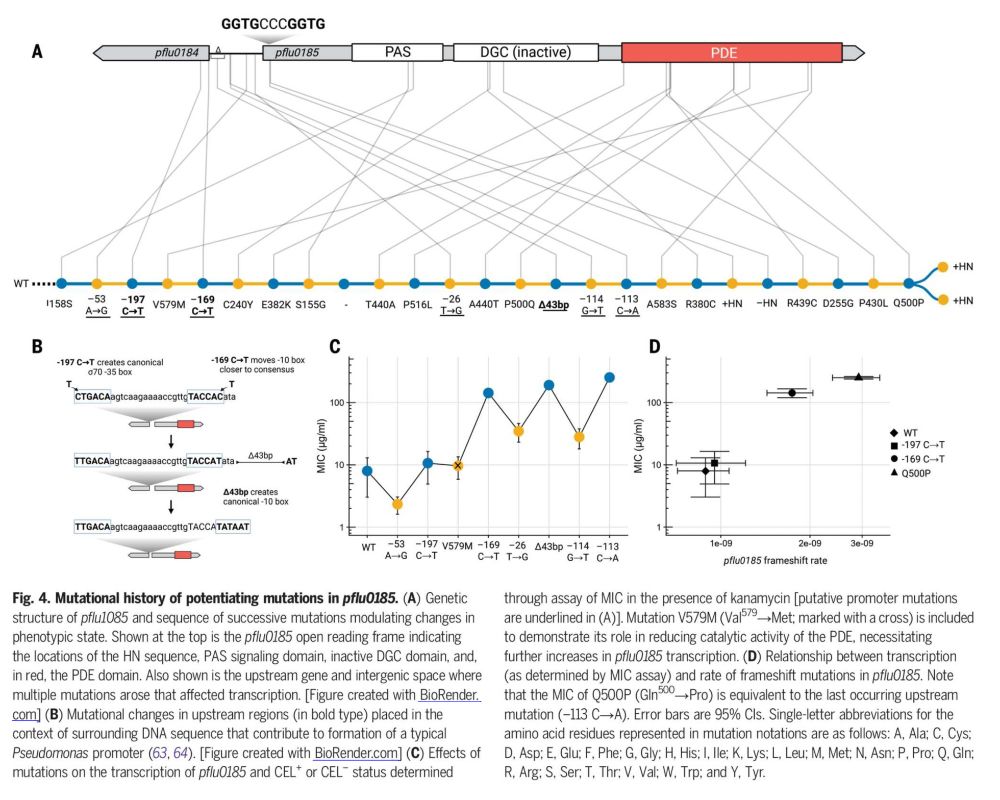
Fantastic work from the lab of @maxplanck.de colleague Paul Rainey, demonstrating how a locus can evolve to become hypermutable. Mutation rates depend on evolutionary relevance of this evolved locus!
www.science.org/doi/10.1126/...
www.science.org/doi/10.1126/...
February 23, 2025 at 11:35 AM
Fantastic work from the lab of @maxplanck.de colleague Paul Rainey, demonstrating how a locus can evolve to become hypermutable. Mutation rates depend on evolutionary relevance of this evolved locus!
www.science.org/doi/10.1126/...
www.science.org/doi/10.1126/...
Have you ever wondered what is on the surface of a #nematode like #Celegans?
…it turns out they are surprisingly greasy little critters and covered in many different lipids.
To read more about this, check out the excellent paper from the Chauhan lab which we were very happy to be a small part of.
…it turns out they are surprisingly greasy little critters and covered in many different lipids.
To read more about this, check out the excellent paper from the Chauhan lab which we were very happy to be a small part of.

New publication in JACS! 🔬🐍
"Surface Lipids in Nematodes are Influenced by Development and Species-specific Adaptations"
📖 doi.org/10.1021/jacs...
Supported by @uniofnottingham.bsky.social, EPSRC and @ukri.org, @maxplanck.de and @dfg.de
"Surface Lipids in Nematodes are Influenced by Development and Species-specific Adaptations"
📖 doi.org/10.1021/jacs...
Supported by @uniofnottingham.bsky.social, EPSRC and @ukri.org, @maxplanck.de and @dfg.de

February 18, 2025 at 12:32 PM
Reposted by James Lightfoot

How hard do bacteria-eating nematodes bite in order to break the bacterial cell wall? Check out our new paper, led by Jason Casar & collab with Jen Dionne, using pressure sensing beads that change color upon compression (bluetorial coming soon) rdcu.be/d5n7v
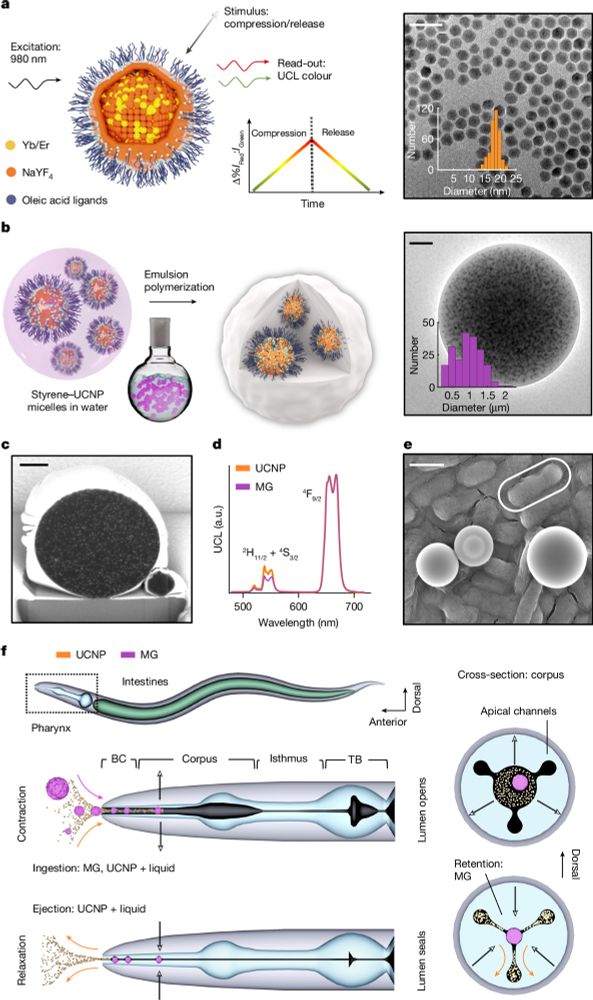
Upconverting microgauges reveal intraluminal force dynamics in vivo
Nature - Nanoparticle-based ‘microgauges’ are developed for in vivo force sensing and deployed in C. elegans to investigate how mechanical force correlates with electrical signalling in...
rdcu.be
January 1, 2025 at 5:45 PM
How hard do bacteria-eating nematodes bite in order to break the bacterial cell wall? Check out our new paper, led by Jason Casar & collab with Jen Dionne, using pressure sensing beads that change color upon compression (bluetorial coming soon) rdcu.be/d5n7v
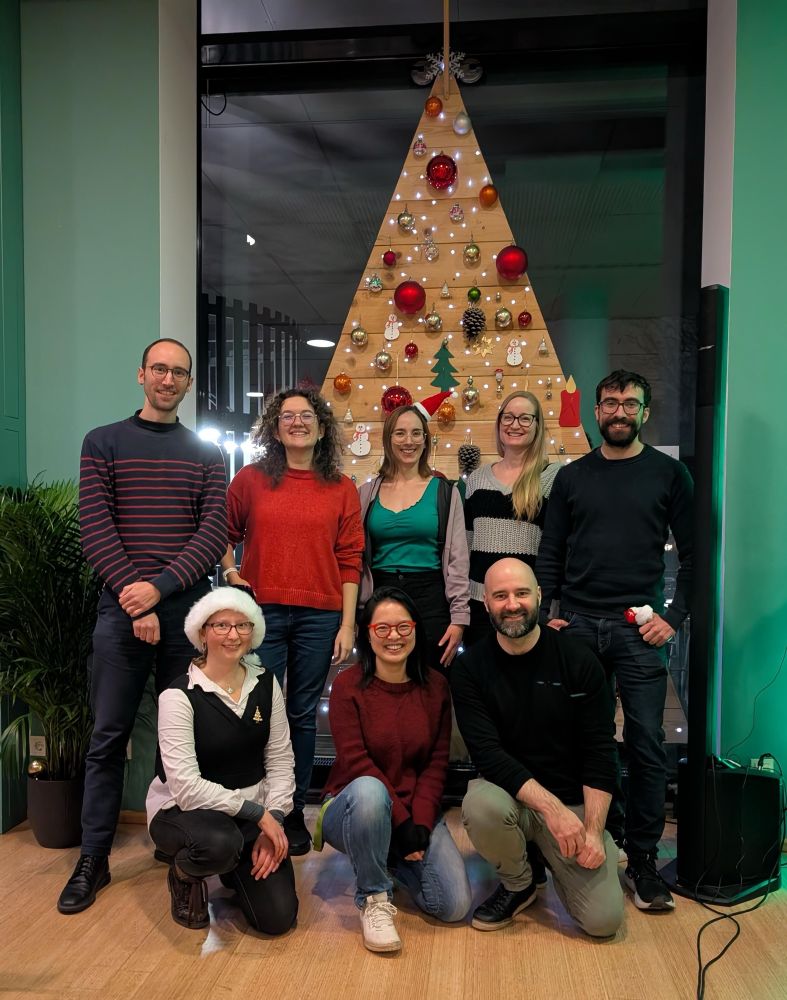
Institute Christmas party shenanigans 🪱🥳
December 12, 2024 at 9:52 PM
Institute Christmas party shenanigans 🪱🥳
Reposted by James Lightfoot

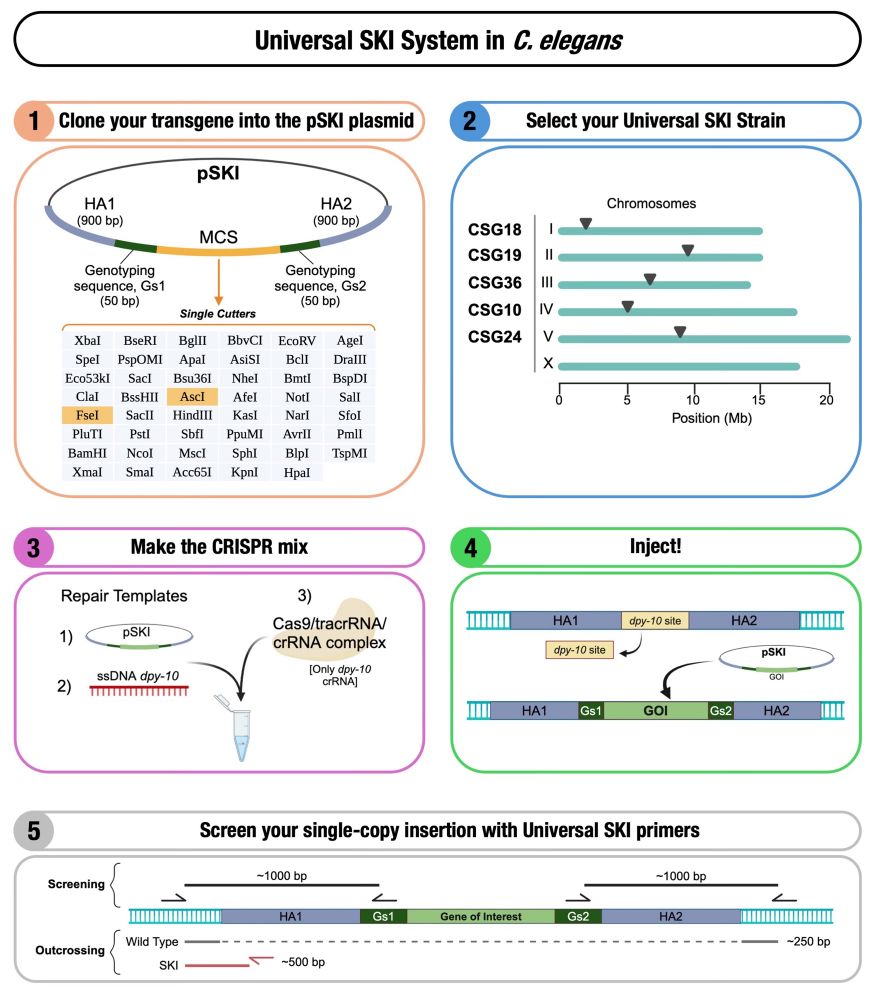
Are you planning to perform single-copy insertions in C. elegans???
Check out our first lab paper!! 🥳
Our *Universal SKI System* uses just one plasmid that can be inserted into any chromosome! Easy peasy!
#Celegans #CRISPR #worms #research #science #techniques
www.biorxiv.org/content/10.1...
Check out our first lab paper!! 🥳
Our *Universal SKI System* uses just one plasmid that can be inserted into any chromosome! Easy peasy!
#Celegans #CRISPR #worms #research #science #techniques
www.biorxiv.org/content/10.1...
December 11, 2024 at 2:03 AM
Are you planning to perform single-copy insertions in C. elegans???
Check out our first lab paper!! 🥳
Our *Universal SKI System* uses just one plasmid that can be inserted into any chromosome! Easy peasy!
#Celegans #CRISPR #worms #research #science #techniques
www.biorxiv.org/content/10.1...
Check out our first lab paper!! 🥳
Our *Universal SKI System* uses just one plasmid that can be inserted into any chromosome! Easy peasy!
#Celegans #CRISPR #worms #research #science #techniques
www.biorxiv.org/content/10.1...
Reposted by James Lightfoot

CGC1, a new reference genome for Caenorhabditis elegans https://www.biorxiv.org/content/10.1101/2024.12.04.626850v1
CGC1, a new reference genome for Caenorhabditis elegans https://www.biorxiv.org/content/10.1101/2024.12.04.626850v1
The original 100.3 Mb reference genome for Caenorhabditis elegans, generated from the wild-type labo
www.biorxiv.org
December 5, 2024 at 1:35 PM
CGC1, a new reference genome for Caenorhabditis elegans https://www.biorxiv.org/content/10.1101/2024.12.04.626850v1
Reposted by James Lightfoot

Molecular patterns of evolutionary changes throughout the whole nervous system of multiple nematode species https://www.biorxiv.org/content/10.1101/2024.11.23.624988v1

Molecular patterns of evolutionary changes throughout the whole nervous system of multiple nematode species https://www.biorxiv.org/content/10.1101/2024.11.23.624988v1
One avenue to better understand brain evolution is to map molecular patterns of evolutionary changes
www.biorxiv.org
November 26, 2024 at 1:32 AM
Molecular patterns of evolutionary changes throughout the whole nervous system of multiple nematode species https://www.biorxiv.org/content/10.1101/2024.11.23.624988v1
Reposted by James Lightfoot
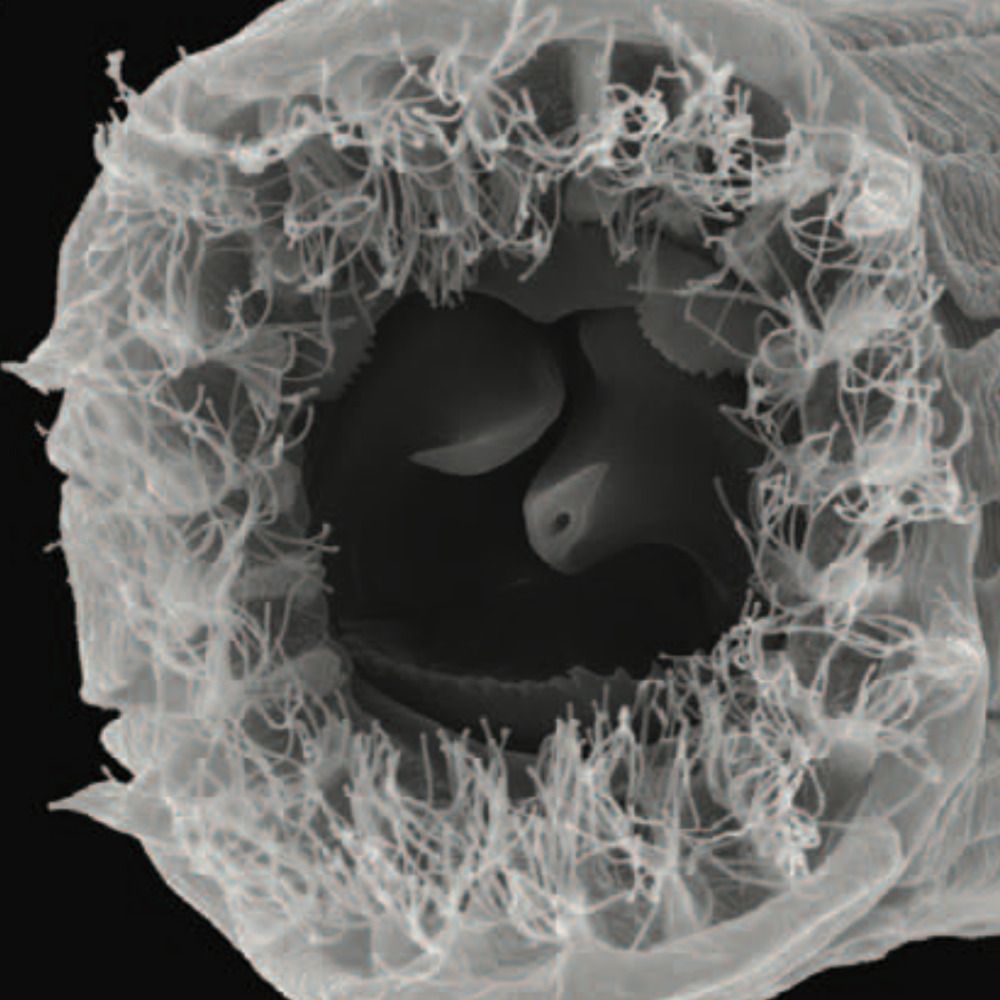
Evolutionary plasticity in nematode Hox gene complements and genomic loci arrangement
www.nature.com/articles/s41...
www.nature.com/articles/s41...
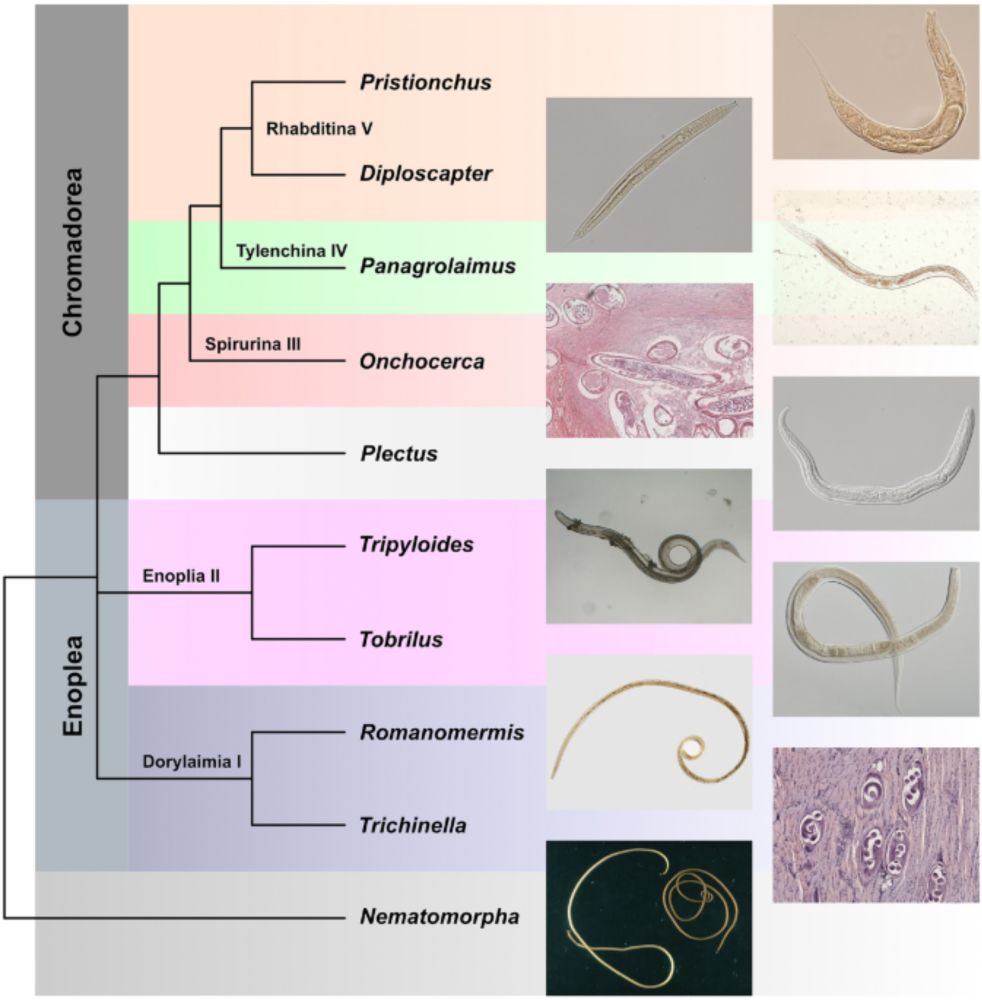
Evolutionary plasticity in nematode Hox gene complements and genomic loci arrangement - Scientific Reports
Scientific Reports - Evolutionary plasticity in nematode Hox gene complements and genomic loci arrangement
www.nature.com
November 29, 2024 at 3:28 PM
Evolutionary plasticity in nematode Hox gene complements and genomic loci arrangement
www.nature.com/articles/s41...
www.nature.com/articles/s41...
Another fantastic Pristionchus paper, this time from the Yoshida and Sommer labs highlighting the rapid sex chromosome evolution in these nematodes. This includes the evolution of five distinct karyotypes across the Pristionchus genus.
www.nature.com/articles/s41...
www.nature.com/articles/s41...
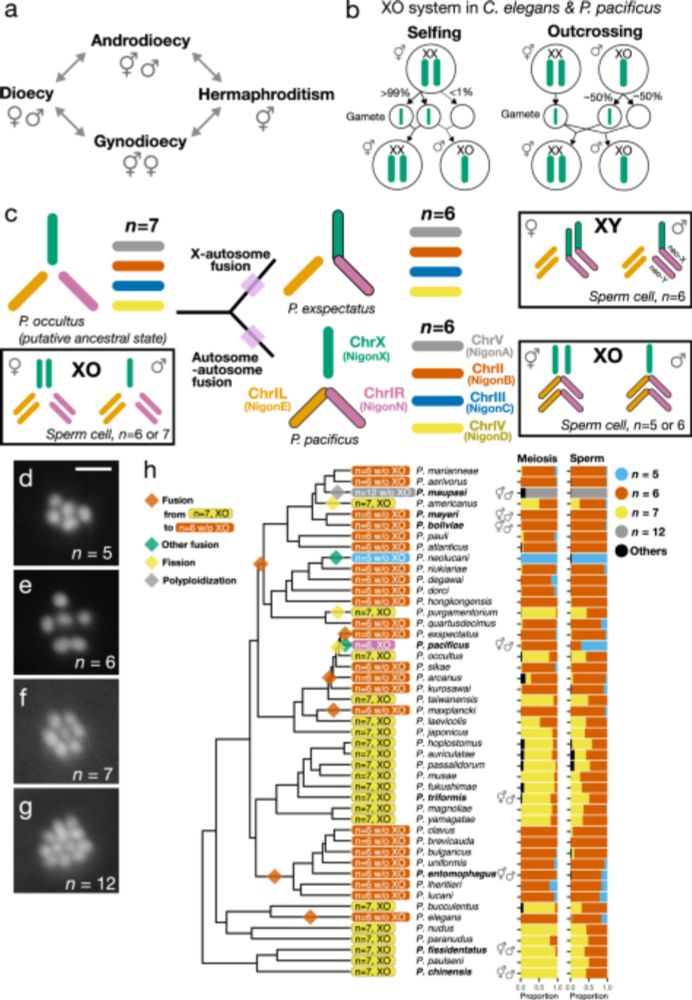
Rapid chromosome evolution and acquisition of thermosensitive stochastic sex determination in nematode androdioecious hermaphrodites - Nature Communications
Sexual systems evolve frequently in nematodes. Through large-scale genomic analyses, Yoshida et al. find rapid chromosome evolution, sex chromosome turnover and acquisition of stochastic sex determina...
www.nature.com
November 27, 2024 at 8:12 PM
Another fantastic Pristionchus paper, this time from the Yoshida and Sommer labs highlighting the rapid sex chromosome evolution in these nematodes. This includes the evolution of five distinct karyotypes across the Pristionchus genus.
www.nature.com/articles/s41...
www.nature.com/articles/s41...
Reposted by James Lightfoot
🧪 Lab's latest!! Work by PD (and now PI) Alison Philbrook.
C. elegans sensory neurons have gorgeous #cilia. We’ve always thought that a) no cilia = no sensory responses, & b) no IFT = no cilia. Punchline is we thought wrong. Read paper for more!
#neuroscience
journals.plos.org/plosbiology/...
C. elegans sensory neurons have gorgeous #cilia. We’ve always thought that a) no cilia = no sensory responses, & b) no IFT = no cilia. Punchline is we thought wrong. Read paper for more!
#neuroscience
journals.plos.org/plosbiology/...
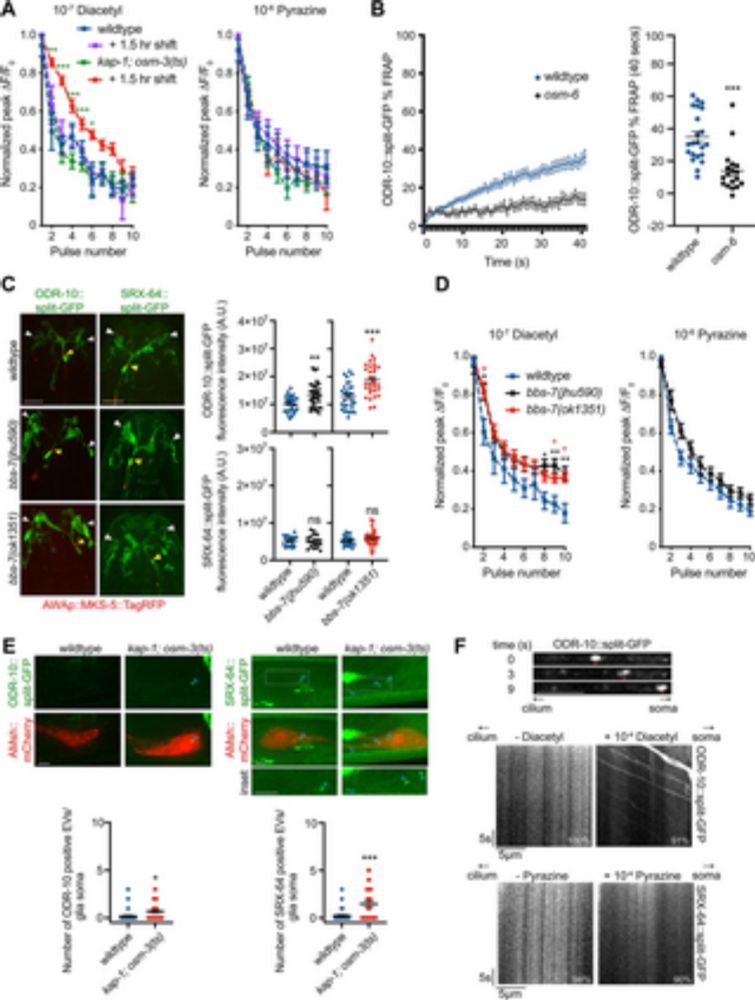
Cilia structure and intraflagellar transport differentially regulate sensory response dynamics within and between C. elegans chemosensory neurons
The relative contributions of intraflagellar transport (IFT) and cilia structure to sensory neuron responses remains unclear. This study reveals unexpected complexity in the contribution of IFT and ci...
journals.plos.org
November 26, 2024 at 11:38 PM
🧪 Lab's latest!! Work by PD (and now PI) Alison Philbrook.
C. elegans sensory neurons have gorgeous #cilia. We’ve always thought that a) no cilia = no sensory responses, & b) no IFT = no cilia. Punchline is we thought wrong. Read paper for more!
#neuroscience
journals.plos.org/plosbiology/...
C. elegans sensory neurons have gorgeous #cilia. We’ve always thought that a) no cilia = no sensory responses, & b) no IFT = no cilia. Punchline is we thought wrong. Read paper for more!
#neuroscience
journals.plos.org/plosbiology/...
While Pristionchus pacificus is our main species of interest, there are many amazing Pristionchus out there. Thanks to work from Matthias Herrmann, two more species have been discovered in South Korea bringing the number of Pristionchus to 50 including 8 hermaphrodites! sciendo.com/article/10.2...
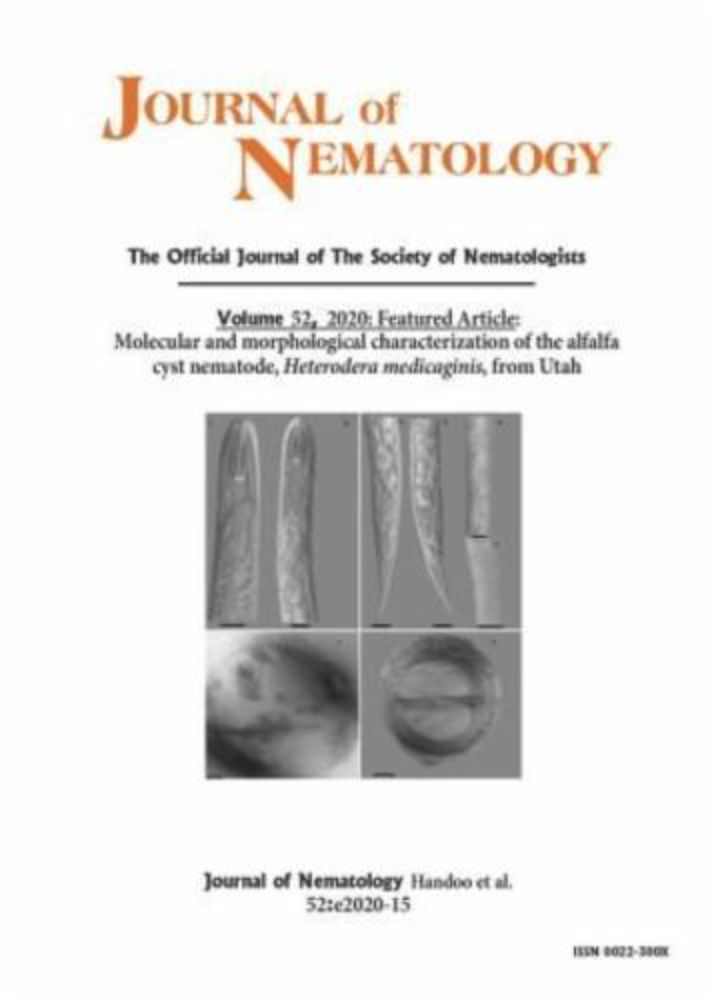
Description of two new Pristionchus species from South Korea
Based on molecular markers, mating experiments, morphological observations and ecological data, two Pristionchus species...
sciendo.com
November 25, 2024 at 11:52 AM
While Pristionchus pacificus is our main species of interest, there are many amazing Pristionchus out there. Thanks to work from Matthias Herrmann, two more species have been discovered in South Korea bringing the number of Pristionchus to 50 including 8 hermaphrodites! sciendo.com/article/10.2...
Thank you very much for the invite and to everyone who came to listen to my talk @biozentrum.bsky.social! I thoroughly enjoyed hearing about the amazing science taking place and the opportunity to meet so many enthusiastic scientists. Special thanks for the invite from Susan Mango! 🪱
November 24, 2024 at 3:08 PM
Thank you very much for the invite and to everyone who came to listen to my talk @biozentrum.bsky.social! I thoroughly enjoyed hearing about the amazing science taking place and the opportunity to meet so many enthusiastic scientists. Special thanks for the invite from Susan Mango! 🪱
Reposted by James Lightfoot

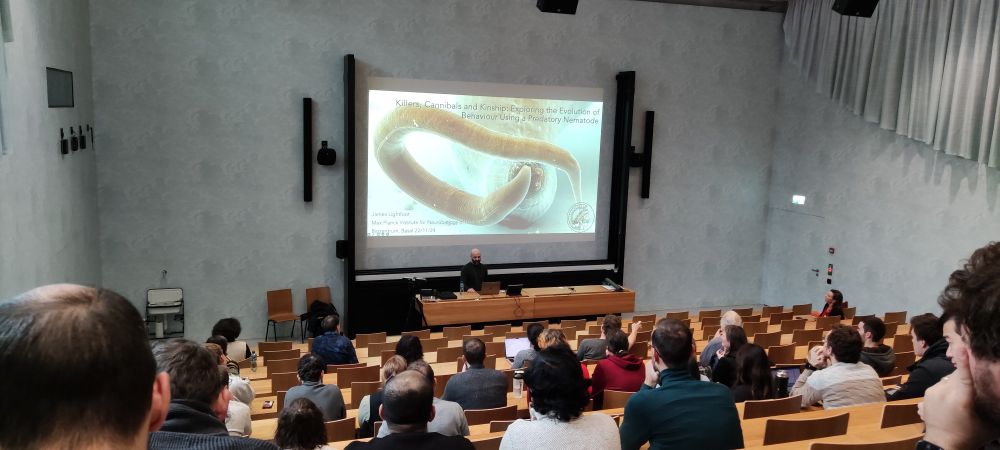
Vvvvvvvvvvery excited to have James Lightfoot @jameslightfoot.bsky.social today at the @biozentrum.bsky.social. Predation, worms, evolution, explosions, the whole shebang
November 22, 2024 at 10:22 AM
Vvvvvvvvvvery excited to have James Lightfoot @jameslightfoot.bsky.social today at the @biozentrum.bsky.social. Predation, worms, evolution, explosions, the whole shebang
Great Pristionchus pacificus paper by the Okumura lab. They investigate its light avoidance behaviour and show some key differences compared to how this functions and has evolved compared to C. elegans!
journals.plos.org/plosgenetics...
journals.plos.org/plosgenetics...
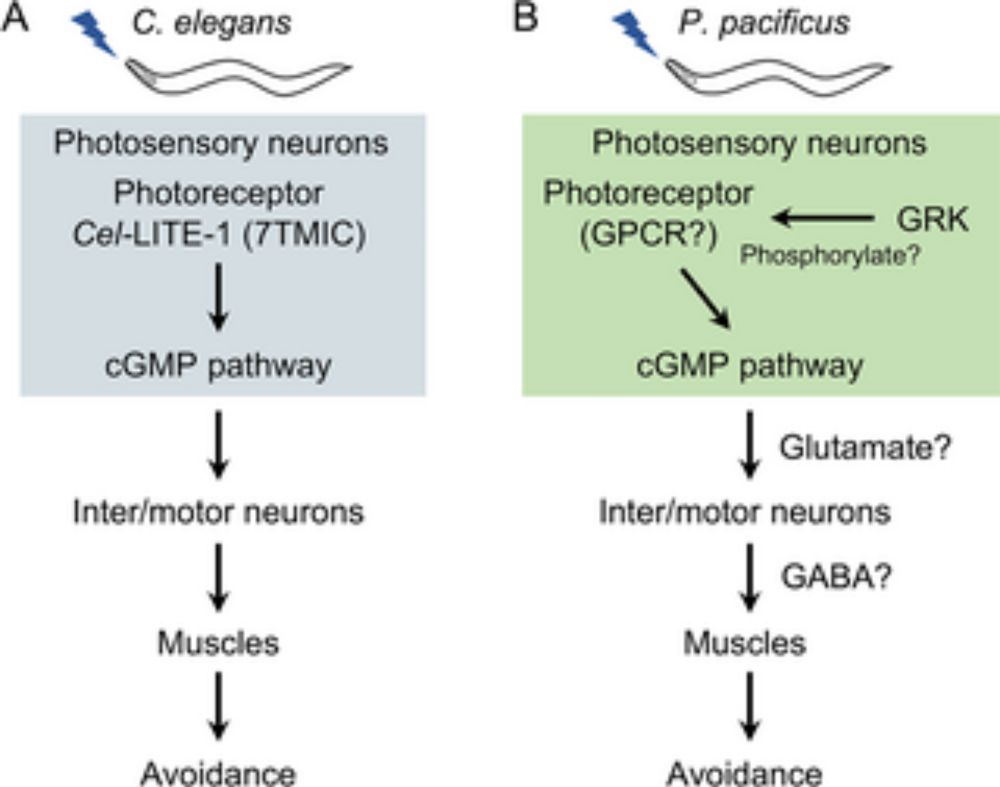
cGMP-dependent pathway and a GPCR kinase are required for photoresponse in the nematode Pristionchus pacificus
Author summary Nematodes are a highly diverse group of animals found in a wide variety of habitats and sensory systems. In particular, light-induced behavior has been found to differ among species. Th...
journals.plos.org
November 18, 2024 at 12:41 PM
Great Pristionchus pacificus paper by the Okumura lab. They investigate its light avoidance behaviour and show some key differences compared to how this functions and has evolved compared to C. elegans!
journals.plos.org/plosgenetics...
journals.plos.org/plosgenetics...