


Pauli Group (posts by Andi Pauli)
@pauligroup.bsky.social
Exploring the mysteries of how life starts - from fertilization to dormancy; combining in vivo & in vitro (fish, mouse, cell culture, biochem); privileged to work with an amazing team @IMP!
https://paulilab.org/
https://www.imp.ac.at/groups/andrea-pauli/
https://paulilab.org/
https://www.imp.ac.at/groups/andrea-pauli/
Pinned

The life of each of us began when a sperm and an egg came together. But what happens at a molecular level?
Our latest work in Cell led by @vdeneke.bsky.social & Andreas Blaha reveals a conserved fertilization complex that bridges sperm and egg in vertebrates! (1/11)
www.cell.com/cell/fulltex...
Our latest work in Cell led by @vdeneke.bsky.social & Andreas Blaha reveals a conserved fertilization complex that bridges sperm and egg in vertebrates! (1/11)
www.cell.com/cell/fulltex...
Reposted by Pauli Group (posts by Andi Pauli)
New lab paper!! We develop a technology for real-time, single-molecule visualization of proteasomal substrate degradation in cells. We find that the site of substrate engagement by the proteasome determines decay kinetics, efficiency and co-factor requirement.
www.biorxiv.org/content/10.6...
www.biorxiv.org/content/10.6...
In vivo kinetics of protein degradation by individual proteasomes
Protein degradation by the proteasome is central to cellular homeostasis and has been studied extensively using biochemical and structural studies. Despite an in-depth understanding of core proteolytic activity, it has remained largely unresolved how individual proteasomes process substrates inside living cells where many substrate types and co-factors exist. Here, we establish a live-cell single-molecule imaging approach that enables direct visualization and quantification of protein degradation by individual proteasomes. Using this approach, we find that substrate identity, folding and protein-protein interaction have a surprisingly modest impact on processing efficiency, whereas the mode of substrate engagement greatly impacts substrate processing; degradation initiated from protein termini typically proceeds rapidly and with high processivity, whereas internal engagement constitutes a distinct processing mode that exhibits poor processivity and a specific requirement for the AAA+ family ATPase p97/VCP. Furthermore, degradation initiated from opposite termini proceeds with asymmetric rates in a sequence-dependent manner, demonstrating that directionality is an important feature of proteasomal processing in vivo. Notably, poly-glutamine substrates associated with neurodegenerative disease are efficiently degraded from one terminus but resist degradation when engaged from the opposite terminus, highlighting the importance of substrate engagement mode. Together, our results show that different modes of substrate engagement lead to different proteasomal processing outcomes in vivo and revise the prevailing view of the proteasome as a uniform degradation machine. ### Competing Interest Statement The authors have declared no competing interest.
www.biorxiv.org
January 20, 2026 at 8:32 AM
New lab paper!! We develop a technology for real-time, single-molecule visualization of proteasomal substrate degradation in cells. We find that the site of substrate engagement by the proteasome determines decay kinetics, efficiency and co-factor requirement.
www.biorxiv.org/content/10.6...
www.biorxiv.org/content/10.6...
Reposted by Pauli Group (posts by Andi Pauli)

🧪Scientists from our Haselbach lab captured how proteins begin to fold as they’re being made.
Using cryo-EM, they visualised chaperones guiding nascent proteins on the ribosome: https://www.nature.com/articles/s41467-025-67685-6
Using cryo-EM, they visualised chaperones guiding nascent proteins on the ribosome: https://www.nature.com/articles/s41467-025-67685-6

January 19, 2026 at 9:40 AM
🧪Scientists from our Haselbach lab captured how proteins begin to fold as they’re being made.
Using cryo-EM, they visualised chaperones guiding nascent proteins on the ribosome: https://www.nature.com/articles/s41467-025-67685-6
Using cryo-EM, they visualised chaperones guiding nascent proteins on the ribosome: https://www.nature.com/articles/s41467-025-67685-6
Reposted by Pauli Group (posts by Andi Pauli)
If you are interested in #ubiquitin related topics (Who isn’t???) & looking for a friendly and collegial meeting where you can talk to anyone & everyone, this is your meeting!
Join us for the #Ubiquitin & Friends Symposium 2026, April 29-30, in Vienna!
Fantastic guest speakers👇 & many slots for talks from abstracts, flash-talks & posters. Lots of opportunities to network. Register now to save your spot!
➡️ www.protein-degradation.org/symposium/
#ubfriends2026
Fantastic guest speakers👇 & many slots for talks from abstracts, flash-talks & posters. Lots of opportunities to network. Register now to save your spot!
➡️ www.protein-degradation.org/symposium/
#ubfriends2026

January 10, 2026 at 11:54 AM
If you are interested in #ubiquitin related topics (Who isn’t???) & looking for a friendly and collegial meeting where you can talk to anyone & everyone, this is your meeting!
Reposted by Pauli Group (posts by Andi Pauli)
What a way to start the new year with one more submission to BioRxiv. This one is on how GTSF-1 enable RdRP activity in nematodes (for Piwi aficionados: correct, it does not affect Piwi😊)
www.biorxiv.org/content/10.6...
www.biorxiv.org/content/10.6...

An Evolutionarily Conserved N-terminal Domain of RRF-3 Governs GTSF-1 Binding in Nematodes
GTSF1 is an essential activating cofactor for PIWI proteins in many metazoans. In the nematode Caenorhabditis elegans, however, GTSF-1 does not bind PIWI, but associates with the RNA-dependent RNA pol...
www.biorxiv.org
January 4, 2026 at 2:47 PM
What a way to start the new year with one more submission to BioRxiv. This one is on how GTSF-1 enable RdRP activity in nematodes (for Piwi aficionados: correct, it does not affect Piwi😊)
www.biorxiv.org/content/10.6...
www.biorxiv.org/content/10.6...
Are you planning your summer ahead and are interested in immersing yourself in some intense weeks of research, science and fun?
Then this might be for you: Check out the amazing summer course offerings @mblscience.bsky.social, including the #Zebrafish course!
www.mbl.edu/education/ad...
Then this might be for you: Check out the amazing summer course offerings @mblscience.bsky.social, including the #Zebrafish course!
www.mbl.edu/education/ad...

Course Offerings | Marine Biological Laboratory
www.mbl.edu
January 3, 2026 at 9:02 AM
Are you planning your summer ahead and are interested in immersing yourself in some intense weeks of research, science and fun?
Then this might be for you: Check out the amazing summer course offerings @mblscience.bsky.social, including the #Zebrafish course!
www.mbl.edu/education/ad...
Then this might be for you: Check out the amazing summer course offerings @mblscience.bsky.social, including the #Zebrafish course!
www.mbl.edu/education/ad...
Reposted by Pauli Group (posts by Andi Pauli)

Activator-promoter compatibility in mammals - Hcfc1 is a key and intrinsically CGI-promoter-specific co-activator that cannot activate non-CGI promoters. Lead by @nemcko.bsky.social & Kevin Sabath in collab. with @plaschkalab.bsky.social @impvienna.bsky.social www.biorxiv.org/content/10.6... (1/2)

Activator-promoter compatibility in mammals: a CpG-Island-specific co-activator directly bridges transcription factors to TFIID
Transcription from CpG island (CGI) promoters controls the expression of two-thirds of mammalian genes, yet despite their prevalence, it remains unknown whether CGI-specific co-activators with intrins...
www.biorxiv.org
December 30, 2025 at 8:02 AM
Activator-promoter compatibility in mammals - Hcfc1 is a key and intrinsically CGI-promoter-specific co-activator that cannot activate non-CGI promoters. Lead by @nemcko.bsky.social & Kevin Sabath in collab. with @plaschkalab.bsky.social @impvienna.bsky.social www.biorxiv.org/content/10.6... (1/2)
Reposted by Pauli Group (posts by Andi Pauli)
Applications for the 2026 Vienna BioCenter Summer School Program are now open!
Please share this opportunity with talented undergrads or Masters students interested in broadening their research experience in molecular biology in the heart of Europe 🧬
Please share this opportunity with talented undergrads or Masters students interested in broadening their research experience in molecular biology in the heart of Europe 🧬

The Vienna BioCenter Summer School 2026 call is now open for talented undergrads, it's a great opportunity for students who are interested in graduate study in the life sciences. Please RT
https://training.vbc.ac.at/summer-school/
https://training.vbc.ac.at/summer-school/

November 17, 2025 at 4:48 PM
Applications for the 2026 Vienna BioCenter Summer School Program are now open!
Please share this opportunity with talented undergrads or Masters students interested in broadening their research experience in molecular biology in the heart of Europe 🧬
Please share this opportunity with talented undergrads or Masters students interested in broadening their research experience in molecular biology in the heart of Europe 🧬
Reposted by Pauli Group (posts by Andi Pauli)
Very happy to share my postdoc work (on preprint), where we try to understand a long-standing transcription-silencing paradox, and uncovered a hidden RNA decay arm of nuclear piRNA pathway, see detailed threads quoted from @juliusbrennecke.bsky.social
Intrigued by a long-standing conundrum in small RNA biology—how nuclear Argonaute proteins silence transposons when they *need* target transcription for their own recruitment—we studied the piRNA pathway.
And found a hidden RNA-decay axis from Piwi to the RNA exosome.
And found a hidden RNA-decay axis from Piwi to the RNA exosome.

RNA decay via the nuclear exosome is essential for piwi-mediated transposon silencing https://www.biorxiv.org/content/10.64898/2025.12.16.694471v1
December 22, 2025 at 7:38 PM
Very happy to share my postdoc work (on preprint), where we try to understand a long-standing transcription-silencing paradox, and uncovered a hidden RNA decay arm of nuclear piRNA pathway, see detailed threads quoted from @juliusbrennecke.bsky.social
Reposted by Pauli Group (posts by Andi Pauli)
We probably shouldn’t have favourites amongst projects in the lab, but this one was mine. I’m so pleased we can finally share it:
Our work is now out in Nature Communications:
🔗 nature.com/articles/s41467-025-67692-7
Our work is now out in Nature Communications:
🔗 nature.com/articles/s41467-025-67692-7
nature.com
December 22, 2025 at 2:38 PM
We probably shouldn’t have favourites amongst projects in the lab, but this one was mine. I’m so pleased we can finally share it:
Our work is now out in Nature Communications:
🔗 nature.com/articles/s41467-025-67692-7
Our work is now out in Nature Communications:
🔗 nature.com/articles/s41467-025-67692-7
I feel like a parent seeing your first kid leave home ;-).
While the entire Pauli lab family will greatly miss @lorenzoorts.bsky.social as Laura has become a real role model, it makes me incredibly happy & proud to have her establish the Lorenzo-Orts lab at the @imbmainz.bsky.social! All the best!
While the entire Pauli lab family will greatly miss @lorenzoorts.bsky.social as Laura has become a real role model, it makes me incredibly happy & proud to have her establish the Lorenzo-Orts lab at the @imbmainz.bsky.social! All the best!

December 14, 2025 at 8:26 PM
I feel like a parent seeing your first kid leave home ;-).
While the entire Pauli lab family will greatly miss @lorenzoorts.bsky.social as Laura has become a real role model, it makes me incredibly happy & proud to have her establish the Lorenzo-Orts lab at the @imbmainz.bsky.social! All the best!
While the entire Pauli lab family will greatly miss @lorenzoorts.bsky.social as Laura has become a real role model, it makes me incredibly happy & proud to have her establish the Lorenzo-Orts lab at the @imbmainz.bsky.social! All the best!
Reposted by Pauli Group (posts by Andi Pauli)

So excited to finally be able to share my first paper and the culmination of my PhD work with @felipekteixeira.bsky.social 🪰🔬
www.pnas.org/doi/10.1073/...
www.pnas.org/doi/10.1073/...

December 4, 2025 at 9:41 PM
So excited to finally be able to share my first paper and the culmination of my PhD work with @felipekteixeira.bsky.social 🪰🔬
www.pnas.org/doi/10.1073/...
www.pnas.org/doi/10.1073/...
Reposted by Pauli Group (posts by Andi Pauli)
Nature featured work from our Pauli lab, where AlphaFold-Multimer helped reveal how Tmem81 and two sperm proteins create the pocket for the egg protein Bouncer to bind.
Andrea Pauli: “AlphaFold speeds up discovery, we use it for every project.”
🔗 www.nature.com/articles/d41...
Andrea Pauli: “AlphaFold speeds up discovery, we use it for every project.”
🔗 www.nature.com/articles/d41...

AlphaFold is five years old — these charts show how it revolutionized science
Since it was unveiled in 2020, Google DeepMind's game-changing AI tool has helped researchers all over the world to predict the 3D structures of hundreds of millions of proteins.
www.nature.com
November 27, 2025 at 1:04 PM
Nature featured work from our Pauli lab, where AlphaFold-Multimer helped reveal how Tmem81 and two sperm proteins create the pocket for the egg protein Bouncer to bind.
Andrea Pauli: “AlphaFold speeds up discovery, we use it for every project.”
🔗 www.nature.com/articles/d41...
Andrea Pauli: “AlphaFold speeds up discovery, we use it for every project.”
🔗 www.nature.com/articles/d41...
Reposted by Pauli Group (posts by Andi Pauli)
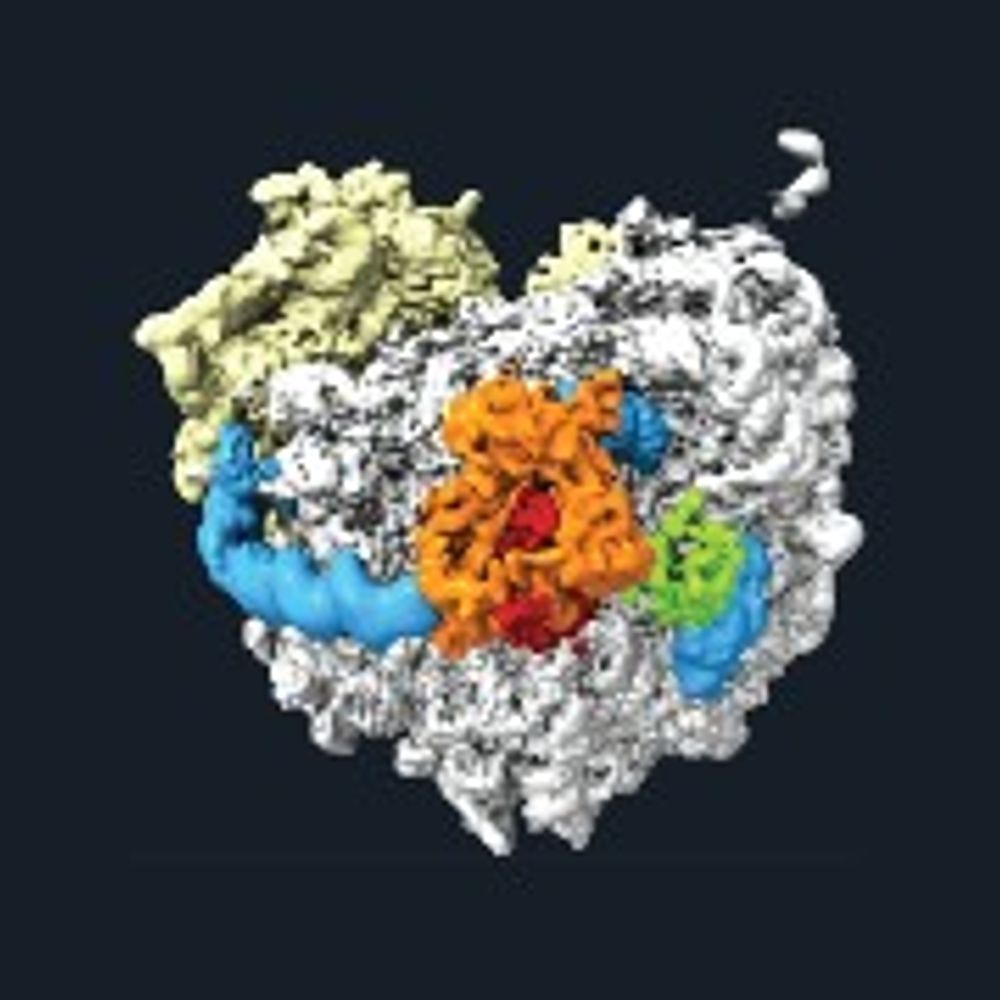
How does the kinase ZAK sense ribosome collisions? Find out in our latest collaboration with the @greenlab.bsky.social @doubleshuang.bsky.social @Vienna Huso: 1/4
rdcu.be/eRmJl
#ribosome #cryoEM #LMU #JHMI
rdcu.be/eRmJl
#ribosome #cryoEM #LMU #JHMI
November 23, 2025 at 3:47 PM
How does the kinase ZAK sense ribosome collisions? Find out in our latest collaboration with the @greenlab.bsky.social @doubleshuang.bsky.social @Vienna Huso: 1/4
rdcu.be/eRmJl
#ribosome #cryoEM #LMU #JHMI
rdcu.be/eRmJl
#ribosome #cryoEM #LMU #JHMI
Reposted by Pauli Group (posts by Andi Pauli)

SAVE THE DATE! Stoked to organize the 2026 Santa Cruz Developmental Biology Meeting with @rashmi-priya.bsky.social, @lowelab.bsky.social, and Shelbi Russell. Come learn about Biomedicine, Biomechanics, and the Biosphere, August 24-28, 2026. Registration dates, etc., coming soon! Please RT

November 19, 2025 at 8:23 PM
SAVE THE DATE! Stoked to organize the 2026 Santa Cruz Developmental Biology Meeting with @rashmi-priya.bsky.social, @lowelab.bsky.social, and Shelbi Russell. Come learn about Biomedicine, Biomechanics, and the Biosphere, August 24-28, 2026. Registration dates, etc., coming soon! Please RT
Reposted by Pauli Group (posts by Andi Pauli)

How does messenger RNA (mRNA) get out of the nucleus to become a protein? Eukaryotic mRNA is packaged, exported, and then translated in the cytoplasm. But how do these steps work? And what are open questions? Check out our new review for our take: www.annualreviews.org/content/jour... (1/3)

November 21, 2025 at 5:37 PM
How does messenger RNA (mRNA) get out of the nucleus to become a protein? Eukaryotic mRNA is packaged, exported, and then translated in the cytoplasm. But how do these steps work? And what are open questions? Check out our new review for our take: www.annualreviews.org/content/jour... (1/3)
... and we would love to see you ALL - working with ANY fish model - join us in Vienna for www.ezm2026.org, the biggest fish meeting in 2026! We plan to have a special session 'beyond zebrafish' and would love to include talks representing other fish systems across all sessions. Pls spread the word!
November 21, 2025 at 7:23 PM
... and we would love to see you ALL - working with ANY fish model - join us in Vienna for www.ezm2026.org, the biggest fish meeting in 2026! We plan to have a special session 'beyond zebrafish' and would love to include talks representing other fish systems across all sessions. Pls spread the word!
Reposted by Pauli Group (posts by Andi Pauli)

MISO: microfluidic protein isolation enables single-particle cryo-EM structure determination from a single cell colony.
Or from a single dish of HEK cell culture in the case of two membrane proteins.
Out in Nature Methods now! lnkd.in/gpyBSceg
Wonderful collaboration with the Efremov lab.
Or from a single dish of HEK cell culture in the case of two membrane proteins.
Out in Nature Methods now! lnkd.in/gpyBSceg
Wonderful collaboration with the Efremov lab.

November 14, 2025 at 6:38 PM
MISO: microfluidic protein isolation enables single-particle cryo-EM structure determination from a single cell colony.
Or from a single dish of HEK cell culture in the case of two membrane proteins.
Out in Nature Methods now! lnkd.in/gpyBSceg
Wonderful collaboration with the Efremov lab.
Or from a single dish of HEK cell culture in the case of two membrane proteins.
Out in Nature Methods now! lnkd.in/gpyBSceg
Wonderful collaboration with the Efremov lab.
Reposted by Pauli Group (posts by Andi Pauli)
Thrilled to share that the final piece of my PhD work is now on bioRxiv! biorxiv.org/content/10.1... With support from @nvidia and the @NSF, we used AlphaFold to screen 1.6M+ protein pairs, revealing thousands of potential novel PPIs. All data can be viewed at predictomes.org/hp

Proteome-wide in silico screening for human protein-protein interactions
Protein-protein interactions (PPIs) drive virtually all biological processes, yet most PPIs have not been identified and even more remain structurally unresolved. We developed a two-step computational...
biorxiv.org
November 12, 2025 at 9:26 PM
Thrilled to share that the final piece of my PhD work is now on bioRxiv! biorxiv.org/content/10.1... With support from @nvidia and the @NSF, we used AlphaFold to screen 1.6M+ protein pairs, revealing thousands of potential novel PPIs. All data can be viewed at predictomes.org/hp
Reposted by Pauli Group (posts by Andi Pauli)
Join us at the Vienna BioCenter and @impvienna.bsky.social! Full disclaimer: I’m obviously biased but: mind-blowing facilities (!!!) and a great collaborative research culture make this an ideal place for anyone; especially suited to build up a lab. Plus Vienna is an amazing city to live in 😊
November 10, 2025 at 9:30 PM
Join us at the Vienna BioCenter and @impvienna.bsky.social! Full disclaimer: I’m obviously biased but: mind-blowing facilities (!!!) and a great collaborative research culture make this an ideal place for anyone; especially suited to build up a lab. Plus Vienna is an amazing city to live in 😊
Reposted by Pauli Group (posts by Andi Pauli)

HT-PELSA, a new proteomics tool by EMBL researchers, processes samples 100x faster and works directly with complex crude cell, tissue, and bacterial lysates – developments which could accelerate drug discovery and basic biological research 💊
🔗 www.embl.org/news/science...
🔗 www.embl.org/news/science...

November 5, 2025 at 10:09 AM
HT-PELSA, a new proteomics tool by EMBL researchers, processes samples 100x faster and works directly with complex crude cell, tissue, and bacterial lysates – developments which could accelerate drug discovery and basic biological research 💊
🔗 www.embl.org/news/science...
🔗 www.embl.org/news/science...
Reposted by Pauli Group (posts by Andi Pauli)
New paper alert! Scientists in Clemens Plaschka’s lab at the IMP and @juliusbrennecke.bsky.social's lab at
@imbavienna.bsky.social solved a decade-old puzzle, uncovering how the information molecule mRNA travels from the cell’s nucleus to its periphery. More: bit.ly/4nHcvys
@imbavienna.bsky.social solved a decade-old puzzle, uncovering how the information molecule mRNA travels from the cell’s nucleus to its periphery. More: bit.ly/4nHcvys

November 6, 2025 at 4:04 PM
New paper alert! Scientists in Clemens Plaschka’s lab at the IMP and @juliusbrennecke.bsky.social's lab at
@imbavienna.bsky.social solved a decade-old puzzle, uncovering how the information molecule mRNA travels from the cell’s nucleus to its periphery. More: bit.ly/4nHcvys
@imbavienna.bsky.social solved a decade-old puzzle, uncovering how the information molecule mRNA travels from the cell’s nucleus to its periphery. More: bit.ly/4nHcvys
Reposted by Pauli Group (posts by Andi Pauli)

From an accidental discovery of hidden biology to a new framework to understanding and diagnosing rare disease. Thrilled to share the most recent work from our lab and the amazing Jimmy Ly.
wi.mit.edu/news/alterna...
wi.mit.edu/news/alterna...

Alternate proteins from the same gene contribute differently to health and rare disease | Whitehead Institute
Iain Cheeseman and colleagues reveal the underappreciated role of single genes producing multiple proteins in atypical presentations of rare disease, and present case studies of affected patients thro...
wi.mit.edu
November 7, 2025 at 4:14 PM
From an accidental discovery of hidden biology to a new framework to understanding and diagnosing rare disease. Thrilled to share the most recent work from our lab and the amazing Jimmy Ly.
wi.mit.edu/news/alterna...
wi.mit.edu/news/alterna...
Reposted by Pauli Group (posts by Andi Pauli)
This Halloween, we have a spooky evolutionary story for you.
The brainchild of @delaconcepcionjc.bsky.social, Nick Irwin and our fantastic collaborators is now out in @natplants.nature.com www.nature.com/articles/s41...
Here’s why I love this work — and why I think you’ll enjoy it too. 👇
The brainchild of @delaconcepcionjc.bsky.social, Nick Irwin and our fantastic collaborators is now out in @natplants.nature.com www.nature.com/articles/s41...
Here’s why I love this work — and why I think you’ll enjoy it too. 👇

October 31, 2025 at 10:19 AM
This Halloween, we have a spooky evolutionary story for you.
The brainchild of @delaconcepcionjc.bsky.social, Nick Irwin and our fantastic collaborators is now out in @natplants.nature.com www.nature.com/articles/s41...
Here’s why I love this work — and why I think you’ll enjoy it too. 👇
The brainchild of @delaconcepcionjc.bsky.social, Nick Irwin and our fantastic collaborators is now out in @natplants.nature.com www.nature.com/articles/s41...
Here’s why I love this work — and why I think you’ll enjoy it too. 👇
Reposted by Pauli Group (posts by Andi Pauli)
Very happy to share our latest work extending iterative immunofluorescence to in toto imaging of early zebrafish embryos (3D-4i), integrated with a 3D-dedicated image analysis pipeline! 🐟🔬📊
Huge kudos to Max Hess for this PhD milestone! 💪
@lucaspelkmans.bsky.social shorturl.at/cO0u7
Let's zoom in!
Huge kudos to Max Hess for this PhD milestone! 💪
@lucaspelkmans.bsky.social shorturl.at/cO0u7
Let's zoom in!
October 29, 2025 at 2:20 PM
Very happy to share our latest work extending iterative immunofluorescence to in toto imaging of early zebrafish embryos (3D-4i), integrated with a 3D-dedicated image analysis pipeline! 🐟🔬📊
Huge kudos to Max Hess for this PhD milestone! 💪
@lucaspelkmans.bsky.social shorturl.at/cO0u7
Let's zoom in!
Huge kudos to Max Hess for this PhD milestone! 💪
@lucaspelkmans.bsky.social shorturl.at/cO0u7
Let's zoom in!
Why curiosity-driven research is so fundamental & important, and requires sufficient funding. It's a corner stone of scientific discovery, which has always been and will always be inherently unpredictable!!
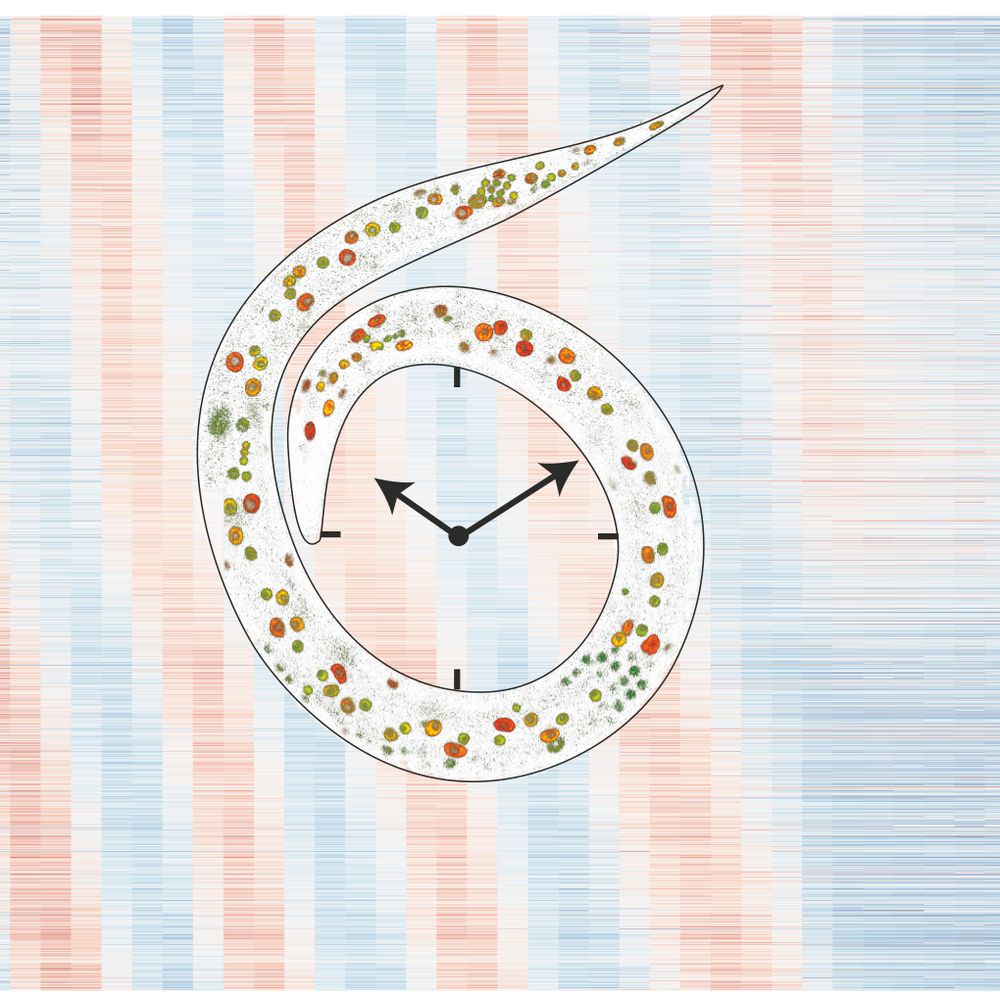
Nektarios Tavernarakis on why curiosity-driven research, not focusing on application, is fundamental to problem solving and requires government support in @emboreports.org doi.org/10.1038/s443...

For the love of frontier research, or why Elon’s rockets keep blowing up | EMBO reports
EMBO Press is an editorially independent publishing platform for the development of EMBO scientific publications.
doi.org
October 29, 2025 at 2:39 PM
Why curiosity-driven research is so fundamental & important, and requires sufficient funding. It's a corner stone of scientific discovery, which has always been and will always be inherently unpredictable!!