


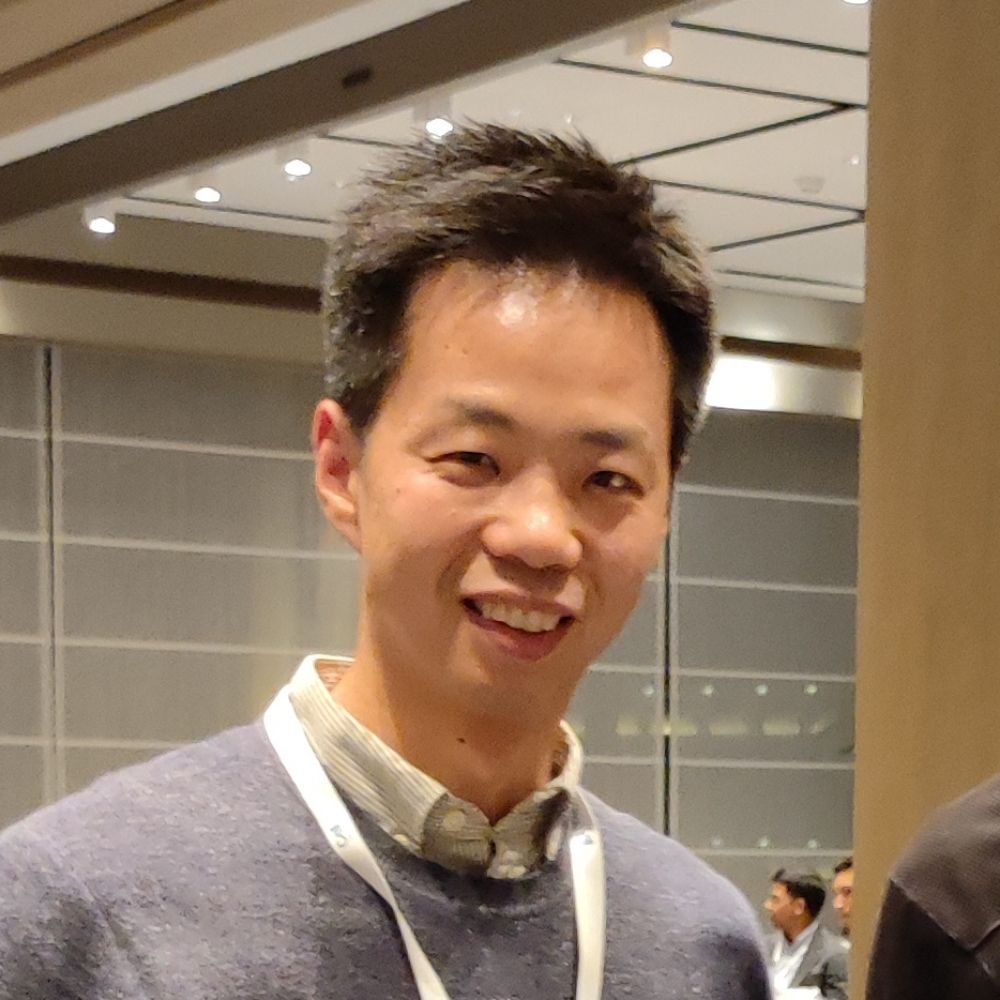
Changwei YU
@changweiyu.bsky.social
Postdoc in the Brennecke lab @IMBA, Vienna | Alumni: PhD @igbmc @unistra | enthusiast of transcription, chromatin, germline/early development, and transposon biology
Pinned
Changwei YU
@changweiyu.bsky.social
· Dec 22
Intrigued by a long-standing conundrum in small RNA biology—how nuclear Argonaute proteins silence transposons when they *need* target transcription for their own recruitment—we studied the piRNA pathway.
And found a hidden RNA-decay axis from Piwi to the RNA exosome.
And found a hidden RNA-decay axis from Piwi to the RNA exosome.

RNA decay via the nuclear exosome is essential for piwi-mediated transposon silencing https://www.biorxiv.org/content/10.64898/2025.12.16.694471v1
Very happy to share my postdoc work (on preprint), where we try to understand a long-standing transcription-silencing paradox, and uncovered a hidden RNA decay arm of nuclear piRNA pathway, see detailed threads quoted from @juliusbrennecke.bsky.social
Reposted by Changwei YU
The giant viruses surprised us at almost every turn of this project, but ultimately led us down a very rewarding path. Happy to share this work is now available online 🧪

Now online! Giant DNA viruses encode a hallmark translation initiation complex of eukaryotic life

Giant DNA viruses encode a hallmark translation initiation complex of eukaryotic life
Giant DNA viruses encode a cap-binding complex homologous to eIF4F, the defining translation-initiation complex of eukaryotes. The viral cap-binding complex is required for viral protein synthesis and enables an unusual degree of replication plasticity under altered host conditions.
dlvr.it
February 17, 2026 at 5:07 PM
The giant viruses surprised us at almost every turn of this project, but ultimately led us down a very rewarding path. Happy to share this work is now available online 🧪
Reposted by Changwei YU

Our paper is now out in Nature:
“Ancient co-option of LTR retrotransposons as yeast centromeres”
www.nature.com/articles/s41...
A short thread on how retrotransposons helped give rise to yeast point centromeres.
1/14
“Ancient co-option of LTR retrotransposons as yeast centromeres”
www.nature.com/articles/s41...
A short thread on how retrotransposons helped give rise to yeast point centromeres.
1/14

Ancient co-option of LTR retrotransposons as yeast centromeres - Nature
Evolutionarily related ‘proto-point’ centromeres providing resolution to the evolutionary origins of point centromeres are identified in yeast, and comparison shows they evolved in an ancestor with re...
www.nature.com
February 18, 2026 at 4:03 PM
Our paper is now out in Nature:
“Ancient co-option of LTR retrotransposons as yeast centromeres”
www.nature.com/articles/s41...
A short thread on how retrotransposons helped give rise to yeast point centromeres.
1/14
“Ancient co-option of LTR retrotransposons as yeast centromeres”
www.nature.com/articles/s41...
A short thread on how retrotransposons helped give rise to yeast point centromeres.
1/14
Reposted by Changwei YU
How does the piRNA pathway solve the self vs. non-self problem? 🧬
Since piRNAs come from single-stranded RNA, how does the cell choose the right ones? For years, "piRNA clusters" were seen as THE privileged source. But are they really special and earmarked for biogenesis? (1/19)
Since piRNAs come from single-stranded RNA, how does the cell choose the right ones? For years, "piRNA clusters" were seen as THE privileged source. But are they really special and earmarked for biogenesis? (1/19)

A Naïve RNA Sampling Core Enables Adaptive piRNA Specificity Against Transposable Elements https://www.biorxiv.org/content/10.64898/2026.02.07.704324v1
February 13, 2026 at 3:11 PM
How does the piRNA pathway solve the self vs. non-self problem? 🧬
Since piRNAs come from single-stranded RNA, how does the cell choose the right ones? For years, "piRNA clusters" were seen as THE privileged source. But are they really special and earmarked for biogenesis? (1/19)
Since piRNAs come from single-stranded RNA, how does the cell choose the right ones? For years, "piRNA clusters" were seen as THE privileged source. But are they really special and earmarked for biogenesis? (1/19)
Reposted by Changwei YU
How could a simple self-replicating system emerge at the origins of life? RNA polymerase ribozymes can replicate RNA, but existing ones are so large that their self-replication seems impossible. Could they be smaller?
Excited to share our latest work in @science.org on a new small polymerase.
1/n
Excited to share our latest work in @science.org on a new small polymerase.
1/n

A small polymerase ribozyme that can synthesize itself and its complementary strand
The emergence of a chemical system capable of self-replication and evolution is a critical event in the origin of life. RNA polymerase ribozymes can replicate RNA, but their large size and structural ...
www.science.org
February 13, 2026 at 11:42 AM
How could a simple self-replicating system emerge at the origins of life? RNA polymerase ribozymes can replicate RNA, but existing ones are so large that their self-replication seems impossible. Could they be smaller?
Excited to share our latest work in @science.org on a new small polymerase.
1/n
Excited to share our latest work in @science.org on a new small polymerase.
1/n
Reposted by Changwei YU

New paper from my lab out in NAR. We found that young L1 elements are controlled by SETDB1 and H3K9me3 in human neural progenitor cells via a mechanism independent of HUSH and TRIM28/KZNFs.
academic.oup.com/nar/article/...
academic.oup.com/nar/article/...

Loss of SETDB1-mediated H3K9me3 in human neural progenitor cells leads to transcriptional activation of L1 retrotransposons
Abstract. Heterochromatin is characterized by an inaccessibility to the transcriptional machinery and is associated with the histone mark H3K9me3. However,
academic.oup.com
February 5, 2026 at 3:17 PM
New paper from my lab out in NAR. We found that young L1 elements are controlled by SETDB1 and H3K9me3 in human neural progenitor cells via a mechanism independent of HUSH and TRIM28/KZNFs.
academic.oup.com/nar/article/...
academic.oup.com/nar/article/...
Reposted by Changwei YU
Does the noncoding genome actually carry more genetic information than coding seqs? Motivated by this question we mutated every bp in the 10kb MYC locus. Results are even more exciting: Decoding the MYC locus reveals a druggable ultraconserved RNA element www.biorxiv.org/content/10.6...
www.biorxiv.org
January 31, 2026 at 1:13 AM
Does the noncoding genome actually carry more genetic information than coding seqs? Motivated by this question we mutated every bp in the 10kb MYC locus. Results are even more exciting: Decoding the MYC locus reveals a druggable ultraconserved RNA element www.biorxiv.org/content/10.6...
Reposted by Changwei YU
It is finally out! If you are interested in TE-derived CREs, and newly described, but evolutionary old KZFP-TE mechanistic modalities, read it at www.cell.com/cell-reports....
Thankful to everyone who took part in this work, namely @orpsf.bsky.social and other @trono-lab.bsky.social members. 🫀🧬✨
Thankful to everyone who took part in this work, namely @orpsf.bsky.social and other @trono-lab.bsky.social members. 🫀🧬✨

Tissue-specific restriction of transposon-derived regulatory elements safeguards cell-type identity
Milovanović et al. uncover a mechanism by which KZFPs restrict the activity of transposon-derived
cis-regulatory elements to safeguard cardiomyocyte functionality. This work extends
the classical TE-K...
www.cell.com
January 29, 2026 at 2:20 PM
It is finally out! If you are interested in TE-derived CREs, and newly described, but evolutionary old KZFP-TE mechanistic modalities, read it at www.cell.com/cell-reports....
Thankful to everyone who took part in this work, namely @orpsf.bsky.social and other @trono-lab.bsky.social members. 🫀🧬✨
Thankful to everyone who took part in this work, namely @orpsf.bsky.social and other @trono-lab.bsky.social members. 🫀🧬✨
Reposted by Changwei YU
Now out in Nature! We visualize infection of the RNA virus RSV in real-time with single-vRNP resolution to understand how RSV establishes viral factories, biomolecular condensates that act as sites of viral replication. A huge collaborative effort led by Dhanushika Ratnayake!
rdcu.be/e1bBW
rdcu.be/e1bBW

Pre-assembly of biomolecular condensate seeds drives RSV replication
Nature - Viral ribonucleoprotein–viral protein networks form pre-replication centres that nucleate viral factories and drive respiratory syncytial virus replication.
rdcu.be
January 28, 2026 at 8:38 PM
Now out in Nature! We visualize infection of the RNA virus RSV in real-time with single-vRNP resolution to understand how RSV establishes viral factories, biomolecular condensates that act as sites of viral replication. A huge collaborative effort led by Dhanushika Ratnayake!
rdcu.be/e1bBW
rdcu.be/e1bBW
Reposted by Changwei YU

We’re excited to share our latest preprint on the mechanism of excised linear intron stabilization in yeast! This work was led by PhD student @glennli.bsky.social and was a wonderful collaboration with @maxewilkinson.bsky.social. Link: www.biorxiv.org/content/10.6... (1/4)
January 23, 2026 at 4:14 PM
We’re excited to share our latest preprint on the mechanism of excised linear intron stabilization in yeast! This work was led by PhD student @glennli.bsky.social and was a wonderful collaboration with @maxewilkinson.bsky.social. Link: www.biorxiv.org/content/10.6... (1/4)
Reposted by Changwei YU
Check out our preprint where we describe, characterize and trace the origin of a novel human-specific isoform of TAF8, a scaffold subunit in TFIID. We were surprised to discover that TAF8 recently underwent genetic changes generating a truncated isoform with altered properties in humans!
A recently evolved TAF8 isoform arising from an Alu insertion increases TFIID assembly complexity in the human lineage https://www.biorxiv.org/content/10.64898/2026.01.19.699933v1
January 20, 2026 at 11:59 AM
Check out our preprint where we describe, characterize and trace the origin of a novel human-specific isoform of TAF8, a scaffold subunit in TFIID. We were surprised to discover that TAF8 recently underwent genetic changes generating a truncated isoform with altered properties in humans!
Reposted by Changwei YU
🧬🔬@science.org A genetically encoded device for #transcriptome storage in mammalian cells | Science www.science.org/doi/10.1126/... @broadinstitute.org

A genetically encoded device for transcriptome storage in mammalian cells
Understanding how cells make decisions over time requires the ability to link past molecular states to future phenotypic outcomes. We present TimeVault, a genetically encoded system that records and s...
www.science.org
January 15, 2026 at 8:31 PM
🧬🔬@science.org A genetically encoded device for #transcriptome storage in mammalian cells | Science www.science.org/doi/10.1126/... @broadinstitute.org
Reposted by Changwei YU
TF-MINDI is out! A new method to learn cis-regulatory codes through rich embeddings of TF binding sites. TF-MINDI decomposes motif neighbourhoods, and works downstream of any sequence-to-function deep learning model. We deeply study the enhancer code in human neural development, check out the thread

January 15, 2026 at 12:32 PM
TF-MINDI is out! A new method to learn cis-regulatory codes through rich embeddings of TF binding sites. TF-MINDI decomposes motif neighbourhoods, and works downstream of any sequence-to-function deep learning model. We deeply study the enhancer code in human neural development, check out the thread
Reposted by Changwei YU
The (Yoav) Voichek lab has opened its gates at the Weizmann Institute, and is actively recruiting students and researchers at all levels - come explore gene regulation and computational genomics in a fun, friendly sprouting lab 🤗🥼⚗️🧪
www.weizmann.ac.il/plants/voichek
www.weizmann.ac.il/plants/voichek

January 11, 2026 at 8:41 PM
The (Yoav) Voichek lab has opened its gates at the Weizmann Institute, and is actively recruiting students and researchers at all levels - come explore gene regulation and computational genomics in a fun, friendly sprouting lab 🤗🥼⚗️🧪
www.weizmann.ac.il/plants/voichek
www.weizmann.ac.il/plants/voichek
Reposted by Changwei YU
Our work on TFIID is finally out as preprint!

The @zeitlingerlab.bsky.social is pleased to announce @sergio-gma91.bsky.social’s preprint “High-resolution binding data of TFIID and cofactors show promoter-specific differences in vivo” (www.biorxiv.org/content/10.6...).
TLDR; TFIID behaves differently depending on promoter type. More below:
TLDR; TFIID behaves differently depending on promoter type. More below:

High-resolution binding data of TFIID and cofactors show promoter-specific differences in vivo
TFIID is instrumental in recognizing promoter sequences and initiating transcription, yet a cohesive understanding of how this complex interacts with and functions at different promoter types in vivo ...
www.biorxiv.org
January 9, 2026 at 11:52 PM
Our work on TFIID is finally out as preprint!
Reposted by Changwei YU

Congratulations to Dr Feng! Songjie is the genome whisperer who is simply amazing when it comes to editing the genome! And one of the nicest person to have around!

🎓 Congrats to Songjie Feng (Bücker lab), who successfully defended his thesis titled “Enhancer cooperativity can compensate for loss of activity over large genomic distances" - well done! 🤩🙌
@univie.ac.at
@meduniwien.ac.at
@univie.ac.at
@meduniwien.ac.at

January 9, 2026 at 12:47 PM
Congratulations to Dr Feng! Songjie is the genome whisperer who is simply amazing when it comes to editing the genome! And one of the nicest person to have around!
Reposted by Changwei YU

Now final version out: Our manuscript connecting histone modifications with metabolism: How H4K16 acylations regulate inter +intranucleosomal interactions and confer resilience to metabolic challenges in vivo. Thanks to the team+ @sandrani.bsky.social
Enjoy 👇👇 www.cell.com/molecular-ce...
Enjoy 👇👇 www.cell.com/molecular-ce...

H4K16 acylations destabilize chromatin architecture and facilitate transcriptional response during metabolic perturbations
Nitsch et al. show that short-chain acylations of histone H4K16, acetylation (C2),
propionylation (C3), and butyrylation (C4) modulate chromatin structure in vitro.
These effects can translate in vivo...
www.cell.com
January 9, 2026 at 12:22 PM
Now final version out: Our manuscript connecting histone modifications with metabolism: How H4K16 acylations regulate inter +intranucleosomal interactions and confer resilience to metabolic challenges in vivo. Thanks to the team+ @sandrani.bsky.social
Enjoy 👇👇 www.cell.com/molecular-ce...
Enjoy 👇👇 www.cell.com/molecular-ce...
Reposted by Changwei YU

New Year, New Paper!🎊
Pervasive cis-regulatory co-option of a transposable element family reinforces cell identity across the mouse immune system
www.biorxiv.org/content/10.6...
Centerpiece of Jason Chobirko's PhD, talented PhD student co-mentored by Andrew Grimson & me. Really excited about it!🧵
Pervasive cis-regulatory co-option of a transposable element family reinforces cell identity across the mouse immune system
www.biorxiv.org/content/10.6...
Centerpiece of Jason Chobirko's PhD, talented PhD student co-mentored by Andrew Grimson & me. Really excited about it!🧵

Pervasive cis-regulatory co-option of a transposable element family reinforces cell identity across the mouse immune system
Transposable elements (TEs) make up about half of the human and mouse genomes and play important regulatory roles in immune responses. However, the cis -regulatory contribution of TEs to immune cell d...
www.biorxiv.org
January 7, 2026 at 7:45 PM
New Year, New Paper!🎊
Pervasive cis-regulatory co-option of a transposable element family reinforces cell identity across the mouse immune system
www.biorxiv.org/content/10.6...
Centerpiece of Jason Chobirko's PhD, talented PhD student co-mentored by Andrew Grimson & me. Really excited about it!🧵
Pervasive cis-regulatory co-option of a transposable element family reinforces cell identity across the mouse immune system
www.biorxiv.org/content/10.6...
Centerpiece of Jason Chobirko's PhD, talented PhD student co-mentored by Andrew Grimson & me. Really excited about it!🧵
Reposted by Changwei YU

Stress controls epigenetic inheritance!
A histone ubiquitylation-based regulatory hub links stress/environmental signaling to heterochromatin self-propagation and epigenetic inheritance-reshaping how we think about development, drug resistance, and cancer
👉 nature.com/articles/s41586-025-09899-8
A histone ubiquitylation-based regulatory hub links stress/environmental signaling to heterochromatin self-propagation and epigenetic inheritance-reshaping how we think about development, drug resistance, and cancer
👉 nature.com/articles/s41586-025-09899-8

January 7, 2026 at 4:46 PM
Stress controls epigenetic inheritance!
A histone ubiquitylation-based regulatory hub links stress/environmental signaling to heterochromatin self-propagation and epigenetic inheritance-reshaping how we think about development, drug resistance, and cancer
👉 nature.com/articles/s41586-025-09899-8
A histone ubiquitylation-based regulatory hub links stress/environmental signaling to heterochromatin self-propagation and epigenetic inheritance-reshaping how we think about development, drug resistance, and cancer
👉 nature.com/articles/s41586-025-09899-8
Reposted by Changwei YU
When RNA Degradation 🤝 meets 🤝 Protein Degradation! tinyurl.com/E3TDMD In a collaboration of @bartellab.bsky.social and Schulman lab, we show that, in target-directed microRNA degradation (TDMD), 2-RNA-factors recruit an E3 ligase and induce the degradation of not only a protein but also RNA (1/5).
January 6, 2026 at 8:05 AM
When RNA Degradation 🤝 meets 🤝 Protein Degradation! tinyurl.com/E3TDMD In a collaboration of @bartellab.bsky.social and Schulman lab, we show that, in target-directed microRNA degradation (TDMD), 2-RNA-factors recruit an E3 ligase and induce the degradation of not only a protein but also RNA (1/5).
Reposted by Changwei YU
Read our new preprint where we uncover a hierarchy in human PIC assembly and establish a quantitative framework that connects factor exchange kinetics to the regulation of Pol II activity in living human cells. doi: doi.org/10.64898/202...
By A. Oravecz and our collaborators @molinalab.bsky.social
By A. Oravecz and our collaborators @molinalab.bsky.social

RNA polymerase II initiation factors show different dynamic behaviour upon induced transcription in live cells
Transcription by RNA polymerase II (Pol II) requires the ordered action of general transcription factors (GTFs) forming the pre-initiation complex (PIC). How these events unfold kinetically remains un...
doi.org
December 24, 2025 at 1:35 PM
Read our new preprint where we uncover a hierarchy in human PIC assembly and establish a quantitative framework that connects factor exchange kinetics to the regulation of Pol II activity in living human cells. doi: doi.org/10.64898/202...
By A. Oravecz and our collaborators @molinalab.bsky.social
By A. Oravecz and our collaborators @molinalab.bsky.social
Reposted by Changwei YU

Our preprint "Predictive design of tissue-specific mammalian enhancers that function in vivo in the mouse embryo" is on bioRxiv: www.biorxiv.org/content/10.6... . Amazing collaboration by @shenzhichen1999.bsky.social, Vincent Loubiere (@impvienna.bsky.social,@viennabiocenter.bsky.social),... (1/2)

Predictive design of tissue-specific mammalian enhancers that function in vivo in the mouse embryo
Enhancers control tissue-specific gene expression across metazoans. Although deep learning has enabled enhancer prediction and design in mammalian cell lines and invertebrate systems, it remains uncle...
www.biorxiv.org
December 24, 2025 at 3:06 PM
Our preprint "Predictive design of tissue-specific mammalian enhancers that function in vivo in the mouse embryo" is on bioRxiv: www.biorxiv.org/content/10.6... . Amazing collaboration by @shenzhichen1999.bsky.social, Vincent Loubiere (@impvienna.bsky.social,@viennabiocenter.bsky.social),... (1/2)
Reposted by Changwei YU
Excited to share new manuscript on histone acylations, exploring how H4K16 acylations regulate inter and intranucleosomal interactions and how they confer resilience to metabolic challenges in vivo. Thanks to all authors +1 author @sandrani.bsky.social Enjoy 👇👇
www.sciencedirect.com/science/arti...
www.sciencedirect.com/science/arti...
H4K16 acylations destabilize chromatin architecture and facilitate transcriptional response during metabolic perturbations
Histone modifications play crucial roles in genome function. However, how chromatin integrates physiological and metabolic responses at the molecular …
www.sciencedirect.com
December 19, 2025 at 5:17 PM
Excited to share new manuscript on histone acylations, exploring how H4K16 acylations regulate inter and intranucleosomal interactions and how they confer resilience to metabolic challenges in vivo. Thanks to all authors +1 author @sandrani.bsky.social Enjoy 👇👇
www.sciencedirect.com/science/arti...
www.sciencedirect.com/science/arti...
Reposted by Changwei YU
Happy to share two BioRxiv manuscripts from our lab. One on genetic Argonaute interaction and unexpected non-correlation between small RNAs and their targets:
doi.org/10.64898/202...
The second on IDR processing and IDR-mediated Argonaute loading control:
doi.org/10.64898/202...
Merry Xmas😊
doi.org/10.64898/202...
The second on IDR processing and IDR-mediated Argonaute loading control:
doi.org/10.64898/202...
Merry Xmas😊
December 22, 2025 at 2:06 PM
Happy to share two BioRxiv manuscripts from our lab. One on genetic Argonaute interaction and unexpected non-correlation between small RNAs and their targets:
doi.org/10.64898/202...
The second on IDR processing and IDR-mediated Argonaute loading control:
doi.org/10.64898/202...
Merry Xmas😊
doi.org/10.64898/202...
The second on IDR processing and IDR-mediated Argonaute loading control:
doi.org/10.64898/202...
Merry Xmas😊
Reposted by Changwei YU

The Department of Genetics at the University of Cambridge is seeking a talented Postdoctoral Research Associate to work in the group of Dr Felipe Karam Teixeira (www.gen.cam.ac.uk/research-gro...)
➡️For Further details see the link www.cam.ac.uk/jobs/postdoc...
➡️For Further details see the link www.cam.ac.uk/jobs/postdoc...
Postdoctoral Research Associate (Fixed Term)
Applications are invited for a Postdoctoral Research Associate position to work in the group of Dr Felipe Karam Teixeira (https://www.gen.cam.ac.uk/research-groups/research-groups/karam-teixeira) in
www.cam.ac.uk
December 10, 2025 at 11:22 AM
The Department of Genetics at the University of Cambridge is seeking a talented Postdoctoral Research Associate to work in the group of Dr Felipe Karam Teixeira (www.gen.cam.ac.uk/research-gro...)
➡️For Further details see the link www.cam.ac.uk/jobs/postdoc...
➡️For Further details see the link www.cam.ac.uk/jobs/postdoc...
Reposted by Changwei YU
Intrigued by a long-standing conundrum in small RNA biology—how nuclear Argonaute proteins silence transposons when they *need* target transcription for their own recruitment—we studied the piRNA pathway.
And found a hidden RNA-decay axis from Piwi to the RNA exosome.
And found a hidden RNA-decay axis from Piwi to the RNA exosome.
RNA decay via the nuclear exosome is essential for piwi-mediated transposon silencing https://www.biorxiv.org/content/10.64898/2025.12.16.694471v1
December 22, 2025 at 6:14 PM
Intrigued by a long-standing conundrum in small RNA biology—how nuclear Argonaute proteins silence transposons when they *need* target transcription for their own recruitment—we studied the piRNA pathway.
And found a hidden RNA-decay axis from Piwi to the RNA exosome.
And found a hidden RNA-decay axis from Piwi to the RNA exosome.