



Marvin Tanenbaum
@marvintanenbaum.bsky.social
Visualizing RNA regulation in living cells, one molecule at a time.
Human and viral RNAs.
Hubrecht Institute, Oncode Institute and dept. of Bionanoscience, TU Delft
Human and viral RNAs.
Hubrecht Institute, Oncode Institute and dept. of Bionanoscience, TU Delft
Now out in Nature! We visualize infection of the RNA virus RSV in real-time with single-vRNP resolution to understand how RSV establishes viral factories, biomolecular condensates that act as sites of viral replication. A huge collaborative effort led by Dhanushika Ratnayake!
rdcu.be/e1bBW
rdcu.be/e1bBW

Pre-assembly of biomolecular condensate seeds drives RSV replication
Nature - Viral ribonucleoprotein–viral protein networks form pre-replication centres that nucleate viral factories and drive respiratory syncytial virus replication.
rdcu.be
January 28, 2026 at 8:38 PM
Now out in Nature! We visualize infection of the RNA virus RSV in real-time with single-vRNP resolution to understand how RSV establishes viral factories, biomolecular condensates that act as sites of viral replication. A huge collaborative effort led by Dhanushika Ratnayake!
rdcu.be/e1bBW
rdcu.be/e1bBW
Reposted by Marvin Tanenbaum

Excited to share our new paper! We developed a method to visualize proteasomal degradation at the single–molecule level in live cells, enabling us to dissect distinct modes of substrate engagement, probe co-factor dependence, and study proteasome–ribosome collisions.
www.biorxiv.org/content/10.6...
www.biorxiv.org/content/10.6...

January 20, 2026 at 12:27 PM
Excited to share our new paper! We developed a method to visualize proteasomal degradation at the single–molecule level in live cells, enabling us to dissect distinct modes of substrate engagement, probe co-factor dependence, and study proteasome–ribosome collisions.
www.biorxiv.org/content/10.6...
www.biorxiv.org/content/10.6...
New lab paper!! We develop a technology for real-time, single-molecule visualization of proteasomal substrate degradation in cells. We find that the site of substrate engagement by the proteasome determines decay kinetics, efficiency and co-factor requirement.
www.biorxiv.org/content/10.6...
www.biorxiv.org/content/10.6...
In vivo kinetics of protein degradation by individual proteasomes
Protein degradation by the proteasome is central to cellular homeostasis and has been studied extensively using biochemical and structural studies. Despite an in-depth understanding of core proteolytic activity, it has remained largely unresolved how individual proteasomes process substrates inside living cells where many substrate types and co-factors exist. Here, we establish a live-cell single-molecule imaging approach that enables direct visualization and quantification of protein degradation by individual proteasomes. Using this approach, we find that substrate identity, folding and protein-protein interaction have a surprisingly modest impact on processing efficiency, whereas the mode of substrate engagement greatly impacts substrate processing; degradation initiated from protein termini typically proceeds rapidly and with high processivity, whereas internal engagement constitutes a distinct processing mode that exhibits poor processivity and a specific requirement for the AAA+ family ATPase p97/VCP. Furthermore, degradation initiated from opposite termini proceeds with asymmetric rates in a sequence-dependent manner, demonstrating that directionality is an important feature of proteasomal processing in vivo. Notably, poly-glutamine substrates associated with neurodegenerative disease are efficiently degraded from one terminus but resist degradation when engaged from the opposite terminus, highlighting the importance of substrate engagement mode. Together, our results show that different modes of substrate engagement lead to different proteasomal processing outcomes in vivo and revise the prevailing view of the proteasome as a uniform degradation machine. ### Competing Interest Statement The authors have declared no competing interest.
www.biorxiv.org
January 20, 2026 at 8:32 AM
New lab paper!! We develop a technology for real-time, single-molecule visualization of proteasomal substrate degradation in cells. We find that the site of substrate engagement by the proteasome determines decay kinetics, efficiency and co-factor requirement.
www.biorxiv.org/content/10.6...
www.biorxiv.org/content/10.6...
Reposted by Marvin Tanenbaum

Curious about where, how and when #extracellularvesicles fuse with target cells?
A new methodology developed in our group, spearheaded by Jasper van den Ende, provides insight in this process.
EV-FUSIM: an EV-Fusion Spatiotemporal Imaging Method.
www.biorxiv.org/content/10.1...
A new methodology developed in our group, spearheaded by Jasper van den Ende, provides insight in this process.
EV-FUSIM: an EV-Fusion Spatiotemporal Imaging Method.
www.biorxiv.org/content/10.1...

August 2, 2025 at 8:21 PM
Curious about where, how and when #extracellularvesicles fuse with target cells?
A new methodology developed in our group, spearheaded by Jasper van den Ende, provides insight in this process.
EV-FUSIM: an EV-Fusion Spatiotemporal Imaging Method.
www.biorxiv.org/content/10.1...
A new methodology developed in our group, spearheaded by Jasper van den Ende, provides insight in this process.
EV-FUSIM: an EV-Fusion Spatiotemporal Imaging Method.
www.biorxiv.org/content/10.1...
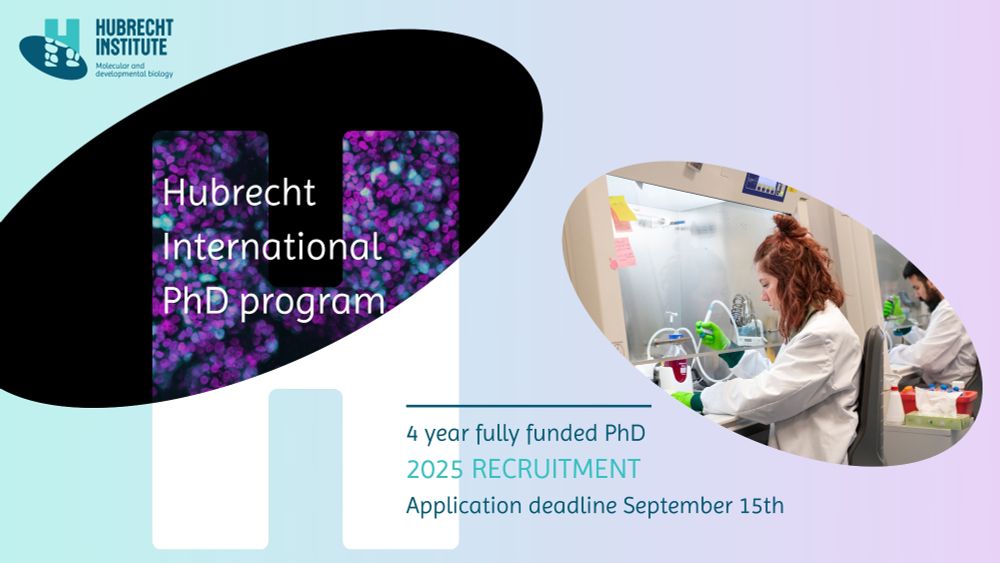
The Hubrecht Institute has an open call for it's PhD program. It's a great place to work and do research, so apply!
🧬 Looking for a PhD position in molecular or developmental biology? 🔬
✉️ The Hubrecht Institute now has its very own PhD program! Applications are open and will be accepted until September 15th. Read more here 👉 www.hubrecht.eu/hipp/
✉️ The Hubrecht Institute now has its very own PhD program! Applications are open and will be accepted until September 15th. Read more here 👉 www.hubrecht.eu/hipp/
July 15, 2025 at 8:41 AM
The Hubrecht Institute has an open call for it's PhD program. It's a great place to work and do research, so apply!
Really nice paper on a new sensor for double-stranded RNA:
Prkra dimer senses double-stranded RNAs to dictate global translation efficiency: Molecular Cell www.cell.com/molecular-ce...
Prkra dimer senses double-stranded RNAs to dictate global translation efficiency: Molecular Cell www.cell.com/molecular-ce...

Prkra dimer senses double-stranded RNAs to dictate global translation efficiency
Prkra serves as a primary dsRNA sensor in pluripotent cells, restricting RNA virus
replication. By dimerizing through dsRBD3, it sequesters eIF2 complexes from the translation
machinery and compensate...
www.cell.com
July 4, 2025 at 2:30 PM
Really nice paper on a new sensor for double-stranded RNA:
Prkra dimer senses double-stranded RNAs to dictate global translation efficiency: Molecular Cell www.cell.com/molecular-ce...
Prkra dimer senses double-stranded RNAs to dictate global translation efficiency: Molecular Cell www.cell.com/molecular-ce...
Can anyone recommend good mRNA therapeutics conferences that are coming up? Ideally conferences that are attended by both industrial and academic researchers?
June 26, 2025 at 8:32 AM
Can anyone recommend good mRNA therapeutics conferences that are coming up? Ideally conferences that are attended by both industrial and academic researchers?
Reposted by Marvin Tanenbaum

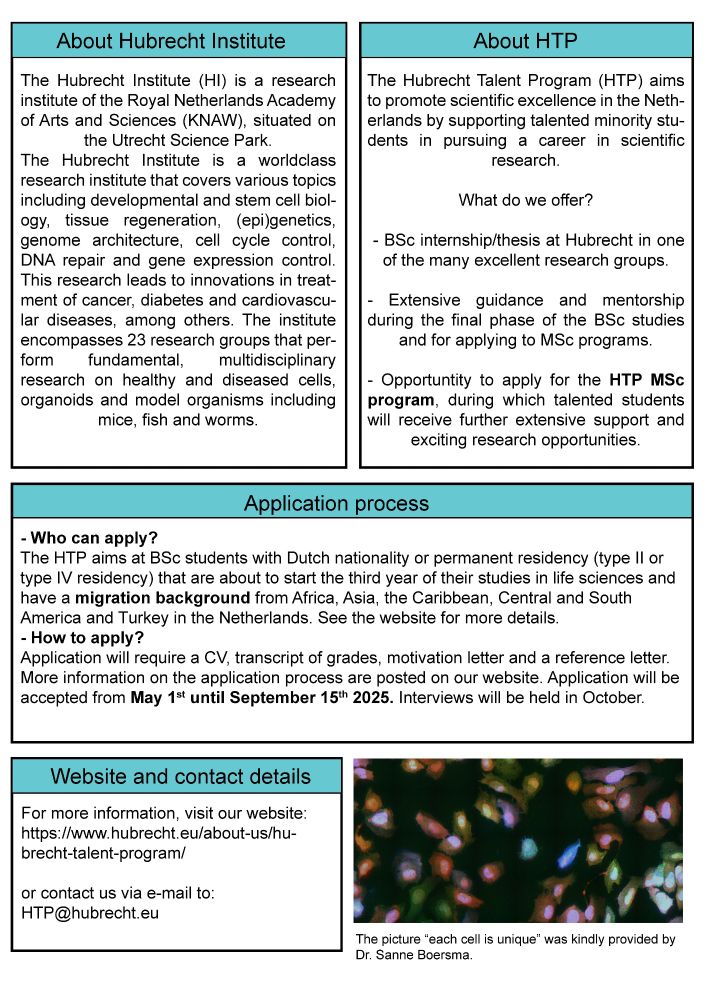
It's possible to apply for the Hubrecht Talent Program again!
The HTP aims to promote scientific excellence in the Netherlands by supporting talented minority students in pursuing a career in scientific research.
Read more in the flyer and on www.hubrecht.eu/about-us/hub...
The HTP aims to promote scientific excellence in the Netherlands by supporting talented minority students in pursuing a career in scientific research.
Read more in the flyer and on www.hubrecht.eu/about-us/hub...
April 28, 2025 at 9:28 AM
It's possible to apply for the Hubrecht Talent Program again!
The HTP aims to promote scientific excellence in the Netherlands by supporting talented minority students in pursuing a career in scientific research.
Read more in the flyer and on www.hubrecht.eu/about-us/hub...
The HTP aims to promote scientific excellence in the Netherlands by supporting talented minority students in pursuing a career in scientific research.
Read more in the flyer and on www.hubrecht.eu/about-us/hub...
Very honored to receive the Ammodo Science Award for fundamental research! Great recognition for the amazing work done by all our group members, both past and present, over the past 10 years! Also a huge congrats to my co-awardee Leila Akkari!
www.ammodo-science.org/researches/m...
www.ammodo-science.org/researches/m...

Marvin Tanenbaum
Marvin Tanenbaum is developing revolutionary imaging techniques that allow him to film molecular processes in living cells at the level of individual biomolecules.This provides fundamentally new insig...
www.ammodo-science.org
April 15, 2025 at 8:59 AM
Very honored to receive the Ammodo Science Award for fundamental research! Great recognition for the amazing work done by all our group members, both past and present, over the past 10 years! Also a huge congrats to my co-awardee Leila Akkari!
www.ammodo-science.org/researches/m...
www.ammodo-science.org/researches/m...
Very excited to share a new paper from the lab! We visualize RSV infection with single-vRNP resolution and show how the virus coordinates transcription and replication with the formation of viral factories, biomolecular condensates that act as sites of viral genome control.
doi.org/10.1101/2025...
doi.org/10.1101/2025...

Pre-assembly of biomolecular condensate seeds drives RSV replication
During infection many RNA viruses, including respiratory syncytial virus (RSV), form specialized biomolecular condensates, inclusion bodies (IBs), where viral transcription and replication occur[1][1]...
doi.org
March 28, 2025 at 4:15 PM
Very excited to share a new paper from the lab! We visualize RSV infection with single-vRNP resolution and show how the virus coordinates transcription and replication with the formation of viral factories, biomolecular condensates that act as sites of viral genome control.
doi.org/10.1101/2025...
doi.org/10.1101/2025...
Reposted by Marvin Tanenbaum
Save the date for the next edition of this wonderful meeting. We look forward to seeing you in Portugal!!

February 28, 2025 at 3:53 PM
Save the date for the next edition of this wonderful meeting. We look forward to seeing you in Portugal!!
Check out the latest paper from our collaboration with the Kuppeveld lab where we use a combination of virology and single-molecule imaging assays to reveal the role of the enterovirus 2A protein:
www.biorxiv.org/content/10.1...
www.biorxiv.org/content/10.1...

The critical role of enterovirus 2A protease in viral translation, replication, and antagonism of host antiviral responses
Enteroviruses dramatically remodel the cellular infrastructure for efficient replication and curtailing host antiviral responses. Proteases 2Apro and 3Cpro have been implicated in these processes base...
www.biorxiv.org
February 28, 2025 at 3:25 PM
Check out the latest paper from our collaboration with the Kuppeveld lab where we use a combination of virology and single-molecule imaging assays to reveal the role of the enterovirus 2A protein:
www.biorxiv.org/content/10.1...
www.biorxiv.org/content/10.1...
Super happy to receive a VICI grant from NWO! 5 more years of studying mRNA translation using single-molecule imaging
February 28, 2025 at 2:36 PM
Super happy to receive a VICI grant from NWO! 5 more years of studying mRNA translation using single-molecule imaging
Wow, very nice!

Making intrabodies from antibodies just got easier! Learn how we made 𝟭𝟵 intrabodies to bind and light up peptides and histone modifications in live cells. And thanks to Academia, all sequences are freely available. (video credit: Yuko Sato @YukoSatoT2) (1/15)
www.biorxiv.org/content/10.1...
www.biorxiv.org/content/10.1...
February 12, 2025 at 7:52 AM
Wow, very nice!
Our paper on Stopless-ORF Circular RNAs (socRNAs) is now out in Cell. By high-res tracking and comparing translation by either single or multiple ribosomes, we find that ribosomes cooperate to overcome pausing to ensure fast and efficient translation
www.cell.com/cell/fulltex...
www.cell.com/cell/fulltex...
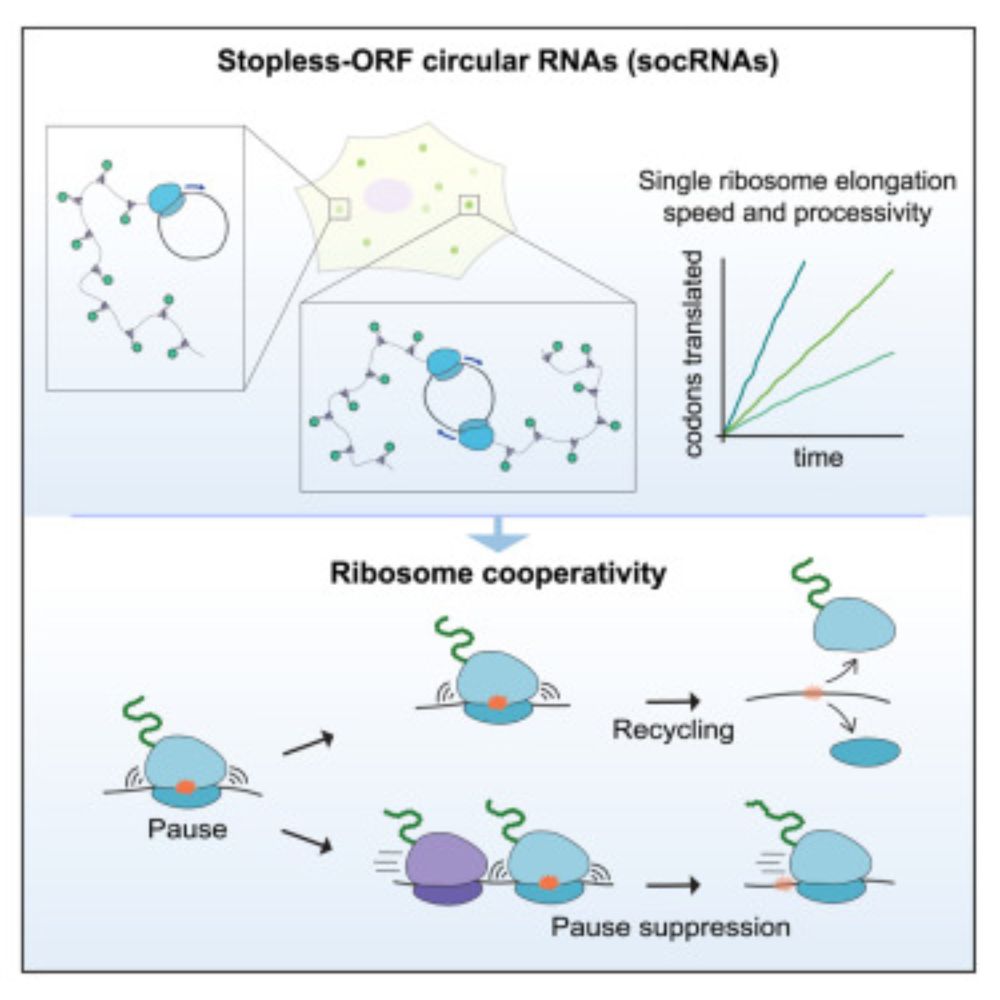
Long-term imaging of individual ribosomes reveals ribosome cooperativity in mRNA translation
Ribosomes cooperate through transient collisions to ensure efficient translation.
www.cell.com
February 3, 2025 at 7:38 AM
Our paper on Stopless-ORF Circular RNAs (socRNAs) is now out in Cell. By high-res tracking and comparing translation by either single or multiple ribosomes, we find that ribosomes cooperate to overcome pausing to ensure fast and efficient translation
www.cell.com/cell/fulltex...
www.cell.com/cell/fulltex...
Wow, mindblowing!

Not only does Bennu contain all 5 of the nucleobases that form DNA and RNA on Earth and 14 of the 20 amino acids found in known proteins, the asteroid’s amino acids hold a surprise
https://go.nature.com/4hDtGhL
https://go.nature.com/4hDtGhL
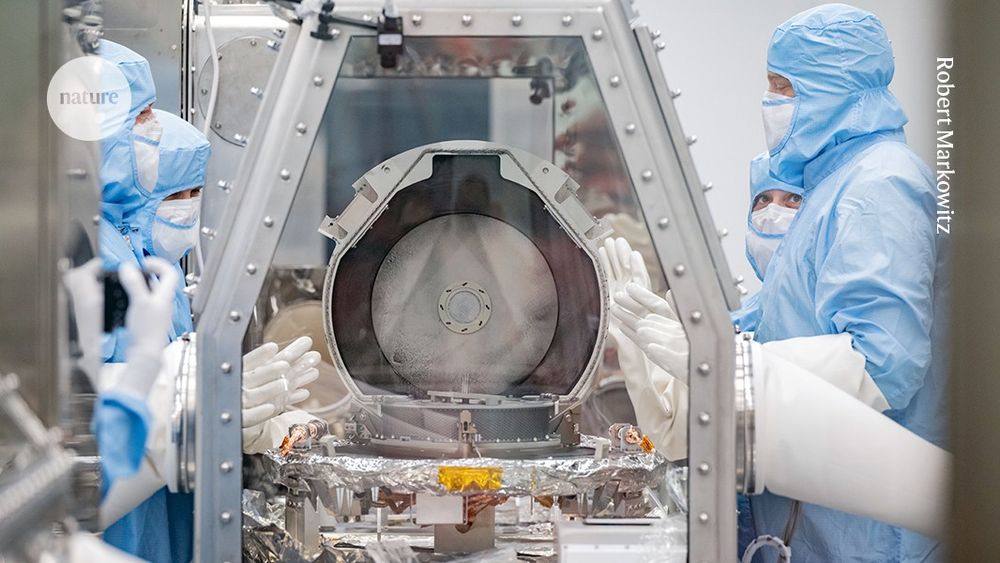
Asteroid fragments upend theory of how life on Earth bloomed
Samples from Bennu contain the chemical building blocks of life - but with a twist.
go.nature.com
January 30, 2025 at 8:04 AM
Wow, mindblowing!
Reposted by Marvin Tanenbaum
Very happy to share our preprint on visualizing the life cycle of Influenza viruses using single-molecule imaging! 🥳 We developed two techniques to visualize infections of unmodified influenza viruses in live cells from endosomal release to budding of new viruses. For more details&videos see below ⬇️
January 21, 2025 at 10:16 AM
Very happy to share our preprint on visualizing the life cycle of Influenza viruses using single-molecule imaging! 🥳 We developed two techniques to visualize infections of unmodified influenza viruses in live cells from endosomal release to budding of new viruses. For more details&videos see below ⬇️
Our new paper is out: "Mapping the complete influenza A virus infection cycle through single vRNP imaging". Combining newly-developed single-molecule imaging approaches with in situ viral transcriptomics, we identify numerous non-canonical infection pathways.
www.biorxiv.org/content/10.1...
www.biorxiv.org/content/10.1...
Mapping the complete influenza A virus infection cycle through single vRNP imaging
Cell-to-cell heterogeneity is a common feature of viral infection that can generate enormous complexity, complicating understanding of infection progression and interpretation of differences between v...
www.biorxiv.org
January 21, 2025 at 9:56 AM
Our new paper is out: "Mapping the complete influenza A virus infection cycle through single vRNP imaging". Combining newly-developed single-molecule imaging approaches with in situ viral transcriptomics, we identify numerous non-canonical infection pathways.
www.biorxiv.org/content/10.1...
www.biorxiv.org/content/10.1...
This is really interesting. Have other people observed NGD outside of yeast? We haven't seen much evidence of mRNA decay caused by ribosome stalling or collisions in human cells

Has no-go decay (NGD), like NMD, become co-opted by organisms to regulate endogenous mRNAs? A study in @plosbiology.bsky.social shows that during zebrafish development, mRNAs encoding C2H2-ZF domains cause ribosome stalling and trigger NGD. plos.io/4g4RESq

December 12, 2024 at 8:25 AM
This is really interesting. Have other people observed NGD outside of yeast? We haven't seen much evidence of mRNA decay caused by ribosome stalling or collisions in human cells