



Pallavi Deolal
@pallavideolal.bsky.social
PostDoc | Single Molecule Localization Microscopy | Budding Yeast | Membranes
Interested in:
Life.
Science.
And, A Career in Life Sciences.
Interested in:
Life.
Science.
And, A Career in Life Sciences.
Reposted by Pallavi Deolal
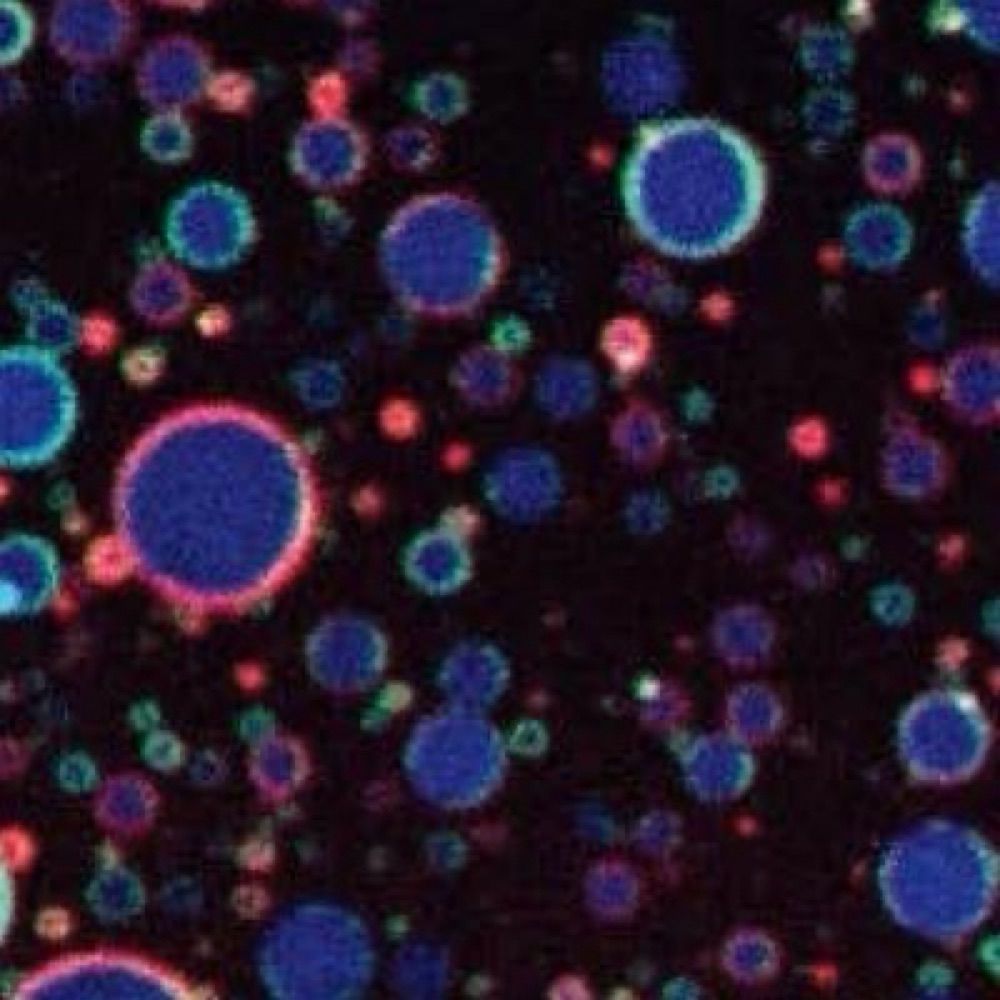
Thrilled to share our latest work showing that the bridge lipid transport protein ATG2A transfers diacylglycerol (DAG), and some TAG/PA, from the ER to LDs, thereby recruiting DGAT2 to drive local TAG synthesis, promoting LD expansion while protecting ER membranes.
www.nature.com/articles/s41...
www.nature.com/articles/s41...

ATG2A-mediated DAG transfer recruits DGAT2 for lipid droplet growth - Nature Structural & Molecular Biology
Elhan et al. show that ATG2A acts with DGAT2, the enzyme producing triacylglycerol (TAG), in lipid droplet growth. By delivering diacylglycerol to lipid droplets, ATG2A not only fuels TAG production b...
www.nature.com
November 17, 2025 at 10:57 PM
Thrilled to share our latest work showing that the bridge lipid transport protein ATG2A transfers diacylglycerol (DAG), and some TAG/PA, from the ER to LDs, thereby recruiting DGAT2 to drive local TAG synthesis, promoting LD expansion while protecting ER membranes.
www.nature.com/articles/s41...
www.nature.com/articles/s41...
Reposted by Pallavi Deolal

Nature research paper: From genotype to phenotype with 1,086 near telomere-to-telomere yeast genomes
go.nature.com/4nVsl9z
go.nature.com/4nVsl9z

From genotype to phenotype with 1,086 near telomere-to-telomere yeast genomes - Nature
A newly compiled atlas of species-wide structural variants and gene-based and graph pangenomes derived from highly complete assemblies of genomes from 1,086 natural isolates enable integrative genome-scale studies of Saccharomyces cerevisiae.
go.nature.com
October 20, 2025 at 6:19 PM
Nature research paper: From genotype to phenotype with 1,086 near telomere-to-telomere yeast genomes
go.nature.com/4nVsl9z
go.nature.com/4nVsl9z
Reposted by Pallavi Deolal
Organoids are more realistic than 2D cell cultures, and can be more representative than animal models
go.nature.com/4gGnVAF
go.nature.com/4gGnVAF

The mini placentas and ovaries revealing the basics of women’s health
Nature - Lab-made organoids that mimic reproductive tissues could point to treatments for common conditions such as pre-eclampsia and endometriosis.
go.nature.com
September 28, 2025 at 3:34 PM
Organoids are more realistic than 2D cell cultures, and can be more representative than animal models
go.nature.com/4gGnVAF
go.nature.com/4gGnVAF
Reposted by Pallavi Deolal
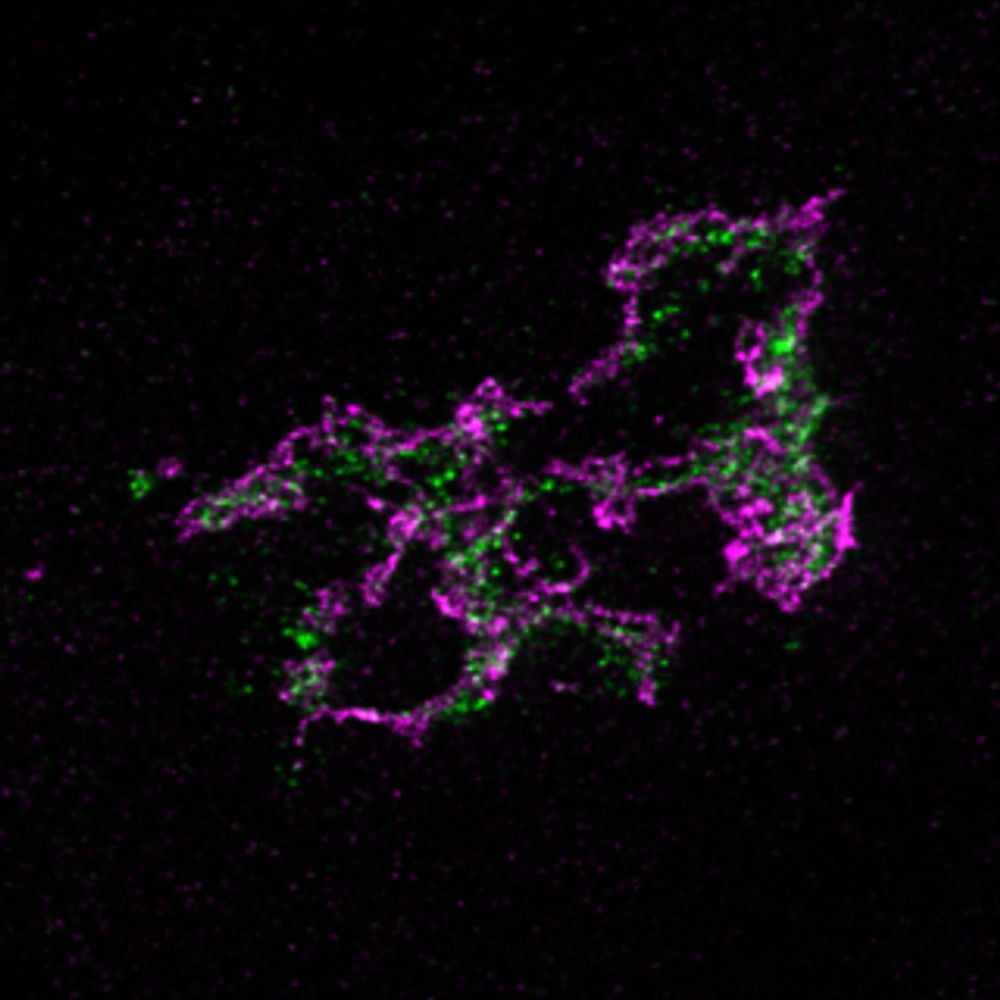
🧵 I've been meaning to write a #Skytorial on our recently posted prepring in which we show evidence that the Golgi 🥞 is a mechanoresponsive organelle. Extracellular mechanical forces also tune Golgi export capacity! 👉 www.biorxiv.org/content/10.1...

Mechanical forces stimulate Golgi export
Human cells face a wide range of external mechanical stimuli that vary with cell type, state, and pathological conditions. The rapidly growing field of mechanobiology investigates how cells sense and ...
www.biorxiv.org
September 22, 2025 at 5:04 PM
🧵 I've been meaning to write a #Skytorial on our recently posted prepring in which we show evidence that the Golgi 🥞 is a mechanoresponsive organelle. Extracellular mechanical forces also tune Golgi export capacity! 👉 www.biorxiv.org/content/10.1...
Reposted by Pallavi Deolal
Din Baruch, Maya Schuldiner, Ofir Klein and colleagues create and validate a proteome-wide yeast library for protein detection and analysis.
journals.biologists.com/jcs/article/...
#OpenAccess #ReadandPublish
journals.biologists.com/jcs/article/...
#OpenAccess #ReadandPublish

September 22, 2025 at 1:05 PM
Din Baruch, Maya Schuldiner, Ofir Klein and colleagues create and validate a proteome-wide yeast library for protein detection and analysis.
journals.biologists.com/jcs/article/...
#OpenAccess #ReadandPublish
journals.biologists.com/jcs/article/...
#OpenAccess #ReadandPublish
Reposted by Pallavi Deolal

Very excited to share new work out today in @natchembio.nature.com on a new approach - FACES - for selectively imaging of phospholipids and other biomolecules at spatial resolutions down to individual membrane leaflets (1/n) www.nature.com/articles/s41...

Leaflet-specific phospholipid imaging using genetically encoded proximity sensors - Nature Chemical Biology
An approach combining bioorthogonal chemistry with genetically encoded fluorogen-activating proteins enables subcellular imaging of phospholipids and glycans, as well as the visualization of lipid tra...
www.nature.com
September 15, 2025 at 6:03 PM
Very excited to share new work out today in @natchembio.nature.com on a new approach - FACES - for selectively imaging of phospholipids and other biomolecules at spatial resolutions down to individual membrane leaflets (1/n) www.nature.com/articles/s41...
Reposted by Pallavi Deolal
Sounds like an interesting comparison of resolution assessment methods for super-resolution… Would anyone with access send me the pdf (christophe dot leterrier dot gmail dot com)? Thanks!
link.springer.com/article/10.1...
link.springer.com/article/10.1...

Resolution assessment of super-resolution microscopy imaging: structural and technical dependencies for cell biology - Cytotechnology
Super-resolution fluorescence microscopy (SRM) has enabled visualization of nanoscale cellular structures, but systematic evaluation of resolution assessment methods across diverse biological structur...
link.springer.com
August 31, 2025 at 9:04 AM
Sounds like an interesting comparison of resolution assessment methods for super-resolution… Would anyone with access send me the pdf (christophe dot leterrier dot gmail dot com)? Thanks!
link.springer.com/article/10.1...
link.springer.com/article/10.1...
Reposted by Pallavi Deolal

💫NEW: Das, @fabianspill.bsky.social & co combine intracellular cartography and biophysical modelling to reveal how edge curvature governs endoplasmic reticulum (ER) morphology, showing that curvature-dependent ER reorganization directs distinct modes of epithelial cell migration.
bit.ly/3HFAQ8S
bit.ly/3HFAQ8S

Edge curvature drives endoplasmic reticulum reorganization and dictates epithelial migration mode - Nature Cell Biology
Rawal et al. combine intracellular cartography and biophysical modelling to reveal how edge curvature governs endoplasmic reticulum (ER) morphology, showing that curvature-dependent ER reorganization ...
bit.ly
August 25, 2025 at 2:40 PM
💫NEW: Das, @fabianspill.bsky.social & co combine intracellular cartography and biophysical modelling to reveal how edge curvature governs endoplasmic reticulum (ER) morphology, showing that curvature-dependent ER reorganization directs distinct modes of epithelial cell migration.
bit.ly/3HFAQ8S
bit.ly/3HFAQ8S
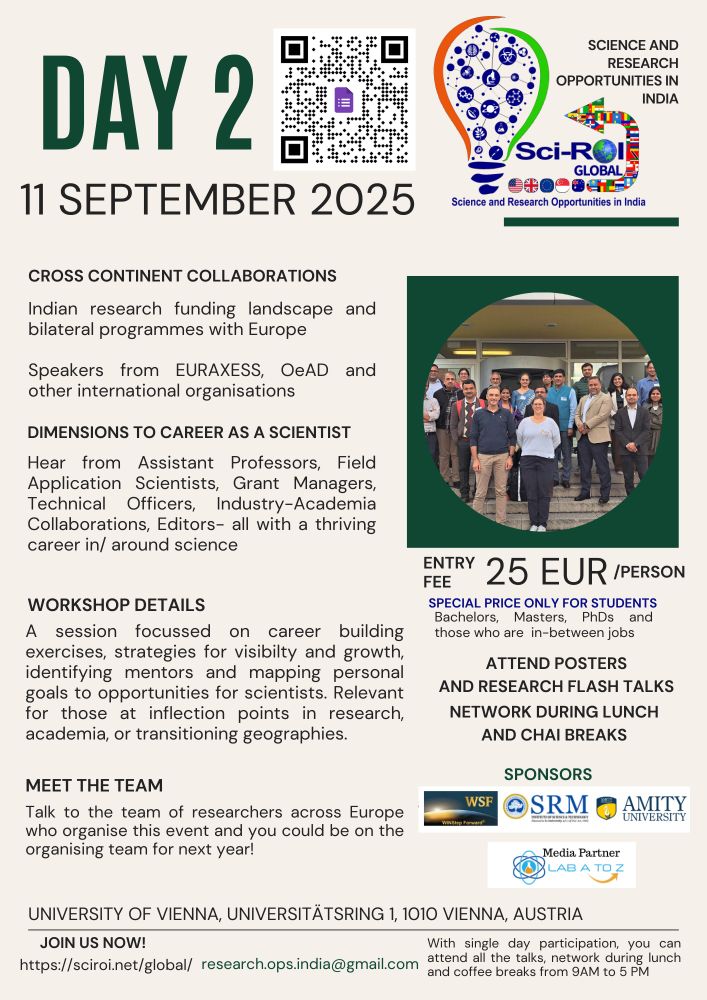
Only one week left to sign up for this meeting by @sci-roi.bsky.social ! I am pleased to invite you to join for 2 days of engaging science, understanding perspectives on science jobs, non-academic careers and policies around bilateral collaboration between European and Indian funding bodies.



August 24, 2025 at 10:32 PM
Only one week left to sign up for this meeting by @sci-roi.bsky.social ! I am pleased to invite you to join for 2 days of engaging science, understanding perspectives on science jobs, non-academic careers and policies around bilateral collaboration between European and Indian funding bodies.
Reposted by Pallavi Deolal
Nature research paper: Quantitative imaging of lipid transport in mammalian cells
go.nature.com/4mmSygd
go.nature.com/4mmSygd

Quantitative imaging of lipid transport in mammalian cells - Nature
Directional, non-vesicular lipid transport is responsible for fast, species-selective lipid sorting into organelle membranes.
go.nature.com
August 21, 2025 at 12:58 PM
Nature research paper: Quantitative imaging of lipid transport in mammalian cells
go.nature.com/4mmSygd
go.nature.com/4mmSygd
Reposted by Pallavi Deolal

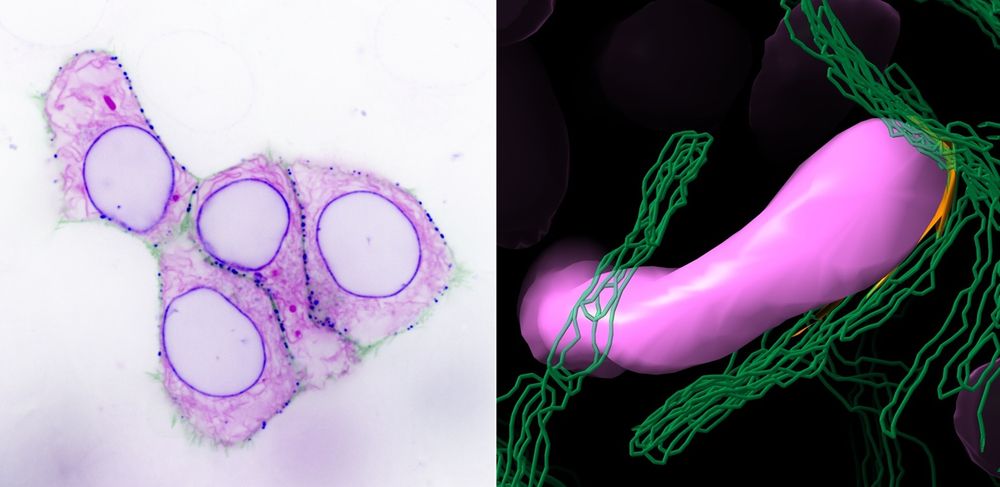
#ER - #membrane contact sites are often distorted by existing labeling methods. @steveroyle.bsky.social &co present an inducible labeling system (LaBeRling) using #LaminB receptor to fluorescently tag ER-membrane contact sites in live cells, preserving morphology @plosbiology.org 🧪 plos.io/4lv6gxu
July 11, 2025 at 1:27 PM
#ER - #membrane contact sites are often distorted by existing labeling methods. @steveroyle.bsky.social &co present an inducible labeling system (LaBeRling) using #LaminB receptor to fluorescently tag ER-membrane contact sites in live cells, preserving morphology @plosbiology.org 🧪 plos.io/4lv6gxu
Reposted by Pallavi Deolal
"It's official 🎉: Our remote magnetic control of #endosomes, driving invasive protrusions in living cells, has landed in #ScienceAdvances! #Magnetogenetics meets #Rabs! The journey was wild, but it works! 🔥 www.science.org/doi/full/10....
@imgprague.bsky.social #3Dmatrix #CellBiology
@science.org
@imgprague.bsky.social #3Dmatrix #CellBiology
@science.org

Live-cell magnetic manipulation of recycling endosomes reveals their direct effect on actin protrusions to promote invasive migration
Repositioning of Rab25 vesicles containing formin and integrin cargos to the cell periphery promotes protrusion formation.
www.science.org
July 7, 2025 at 12:58 PM
"It's official 🎉: Our remote magnetic control of #endosomes, driving invasive protrusions in living cells, has landed in #ScienceAdvances! #Magnetogenetics meets #Rabs! The journey was wild, but it works! 🔥 www.science.org/doi/full/10....
@imgprague.bsky.social #3Dmatrix #CellBiology
@science.org
@imgprague.bsky.social #3Dmatrix #CellBiology
@science.org
Reposted by Pallavi Deolal

Finally out in Nature Chem Bio:
SNAP-tag2 for faster and brighter protein labeling
www.nature.com/articles/s41...
Thank you Steffi and Veselin.
SNAP-tag2 for faster and brighter protein labeling
www.nature.com/articles/s41...
Thank you Steffi and Veselin.
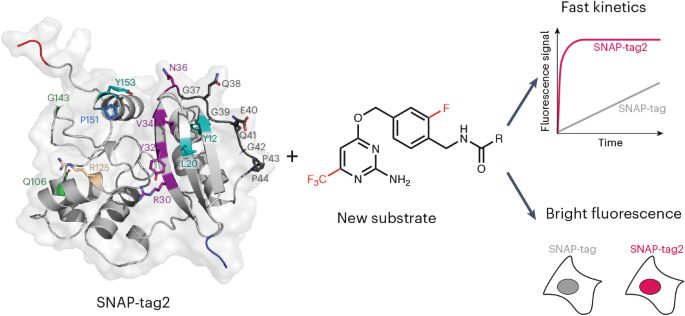
SNAP-tag2 for faster and brighter protein labeling - Nature Chemical Biology
SNAP-tag is a widespread tool for labeling protein for bioimaging. Now, Kühn et al. report SNAP-tag2 with increased labeling kinetics and brightness, which translates into a better performance in live...
www.nature.com
July 3, 2025 at 7:45 PM
Finally out in Nature Chem Bio:
SNAP-tag2 for faster and brighter protein labeling
www.nature.com/articles/s41...
Thank you Steffi and Veselin.
SNAP-tag2 for faster and brighter protein labeling
www.nature.com/articles/s41...
Thank you Steffi and Veselin.
Reposted by Pallavi Deolal
Tipping points: on the edge?
‘We are perilously close to the point of no return’: climate scientist on Amazon rainforest’s future’m
www.theguardian.com/environment/...
‘We are perilously close to the point of no return’: climate scientist on Amazon rainforest’s future’m
www.theguardian.com/environment/...

‘We are perilously close to the point of no return’: climate scientist on Amazon rainforest’s future
Carlos Nobre, who has fought for decades to save the rainforest, says up to 70% of it could be lost if a tipping point is reached
www.theguardian.com
June 28, 2025 at 5:54 AM
Tipping points: on the edge?
‘We are perilously close to the point of no return’: climate scientist on Amazon rainforest’s future’m
www.theguardian.com/environment/...
‘We are perilously close to the point of no return’: climate scientist on Amazon rainforest’s future’m
www.theguardian.com/environment/...
Reposted by Pallavi Deolal

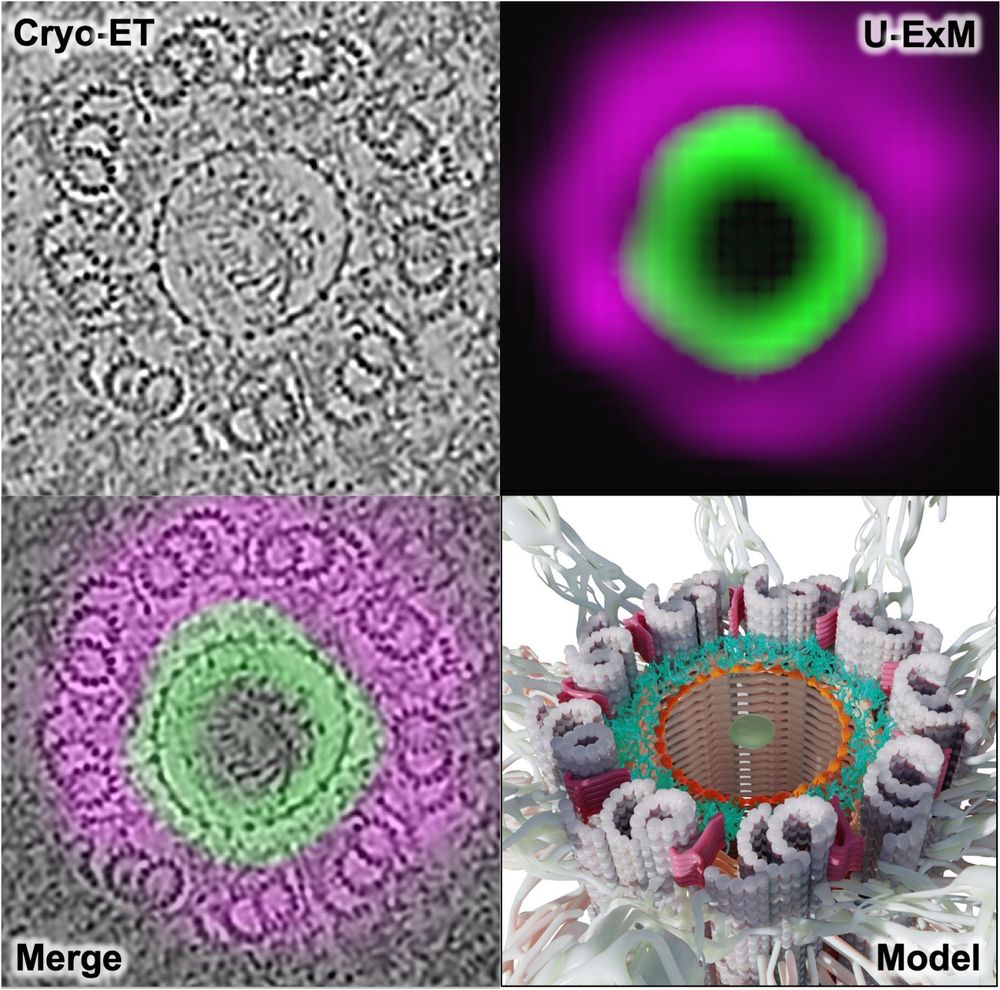
🚨 New preprint!
Using U-ExM + in situ cryo-ET, we show how C2CD3 builds an in-to-out radial architecture connecting the distal centriole lumen to its appendages. Great collab with @cellarchlab.com @chgenoud.bsky.social @stearnslab.bsky.social 🙌. #TeamTomo #UExM
www.biorxiv.org/content/10.1...
Using U-ExM + in situ cryo-ET, we show how C2CD3 builds an in-to-out radial architecture connecting the distal centriole lumen to its appendages. Great collab with @cellarchlab.com @chgenoud.bsky.social @stearnslab.bsky.social 🙌. #TeamTomo #UExM
www.biorxiv.org/content/10.1...
June 19, 2025 at 8:58 AM
🚨 New preprint!
Using U-ExM + in situ cryo-ET, we show how C2CD3 builds an in-to-out radial architecture connecting the distal centriole lumen to its appendages. Great collab with @cellarchlab.com @chgenoud.bsky.social @stearnslab.bsky.social 🙌. #TeamTomo #UExM
www.biorxiv.org/content/10.1...
Using U-ExM + in situ cryo-ET, we show how C2CD3 builds an in-to-out radial architecture connecting the distal centriole lumen to its appendages. Great collab with @cellarchlab.com @chgenoud.bsky.social @stearnslab.bsky.social 🙌. #TeamTomo #UExM
www.biorxiv.org/content/10.1...
Reposted by Pallavi Deolal
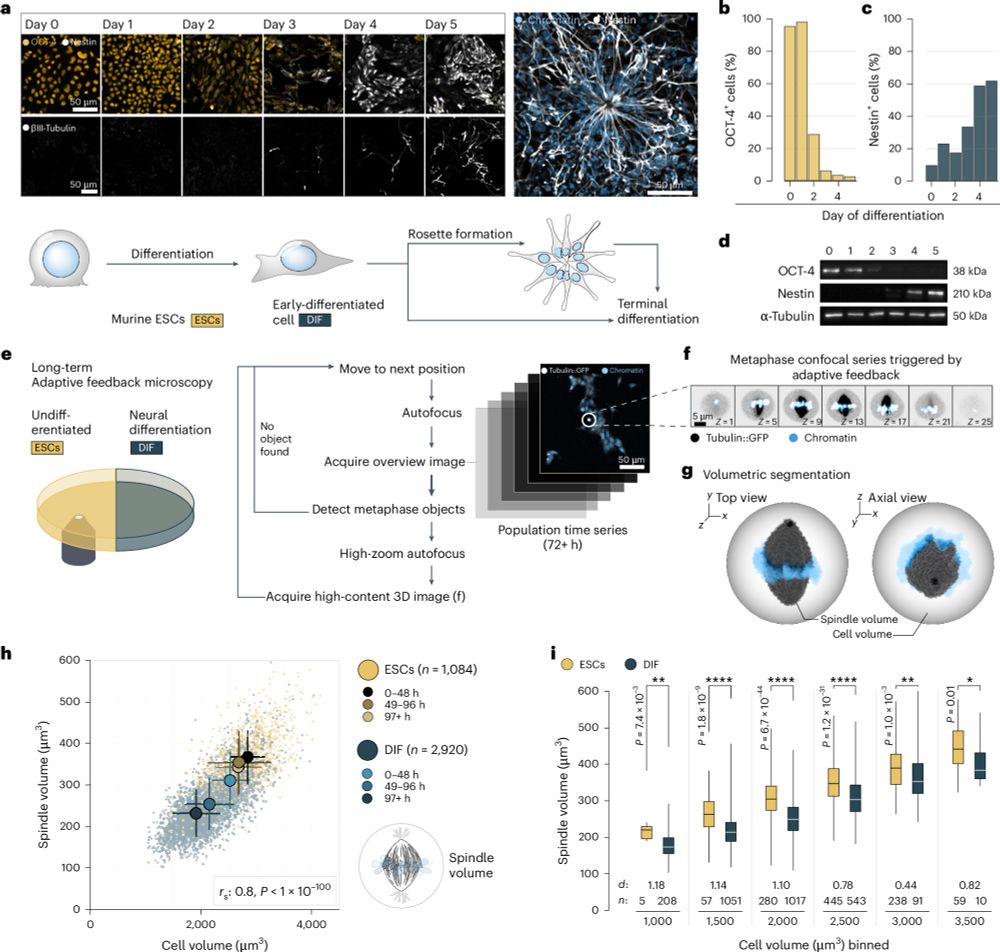
✨Thanks to amazing students @tobiaskletter.bsky.social, postdocs @biswashere.bsky.social & collaborators @vasilyzaburdaev.bsky.social & ALMF @embl.org ✨
👉Cytoplasmic material properties control spindle architecture and scaling 👉 out today @natcellbio.nature.com rdcu.be/eqPr8
👉Cytoplasmic material properties control spindle architecture and scaling 👉 out today @natcellbio.nature.com rdcu.be/eqPr8
Cell state-specific cytoplasmic density controls spindle architecture and scaling
Nature Cell Biology - Kletter et al. show that cell state-specific cytoplasmic density controls spindle architecture and scaling in neural differentiation, suggesting that the physical properties...
rdcu.be
June 13, 2025 at 10:58 AM
✨Thanks to amazing students @tobiaskletter.bsky.social, postdocs @biswashere.bsky.social & collaborators @vasilyzaburdaev.bsky.social & ALMF @embl.org ✨
👉Cytoplasmic material properties control spindle architecture and scaling 👉 out today @natcellbio.nature.com rdcu.be/eqPr8
👉Cytoplasmic material properties control spindle architecture and scaling 👉 out today @natcellbio.nature.com rdcu.be/eqPr8
Reposted by Pallavi Deolal
Academia relies on unpaid labour — but researchers should think carefully about what kind of work they’re willing to give to for-profit organizations for free, says Dritjon Gruda.
https://go.nature.com/3ZFMXZ5
https://go.nature.com/3ZFMXZ5

Your time is valuable. Don’t give it away just for ‘exposure’
Academia relies on unpaid labour — but researchers should think carefully about what kind of work they’re willing to give to for-profit organizations for free, says Dritjon Gruda.
go.nature.com
June 3, 2025 at 9:10 AM
Academia relies on unpaid labour — but researchers should think carefully about what kind of work they’re willing to give to for-profit organizations for free, says Dritjon Gruda.
https://go.nature.com/3ZFMXZ5
https://go.nature.com/3ZFMXZ5
Reposted by Pallavi Deolal

Our latest preprint list is now up on FocalPlane. Our list this week is focusses on research using 🔬microscopy tools to answer questions in biology.
As always, please let us know if there are other preprints that you’d like to see included.
focalplane.biologists.com/2025/05/16/m...
As always, please let us know if there are other preprints that you’d like to see included.
focalplane.biologists.com/2025/05/16/m...

Microscopy preprints - applications in biology - FocalPlane
Microscopy preprints - applications in biology - News
focalplane.biologists.com
May 16, 2025 at 3:36 PM
Our latest preprint list is now up on FocalPlane. Our list this week is focusses on research using 🔬microscopy tools to answer questions in biology.
As always, please let us know if there are other preprints that you’d like to see included.
focalplane.biologists.com/2025/05/16/m...
As always, please let us know if there are other preprints that you’d like to see included.
focalplane.biologists.com/2025/05/16/m...
Reposted by Pallavi Deolal

(almost) every talk from OME 2025 is now on YouTube! If you care about microscopy data and about open-source, you should definitely check them out. www.youtube.com/playlist?lis...
OME 2025 - YouTube
OME 2025 from April 28 - May 1 at Marine Biological Laboratory in Woods Hole, MA
www.youtube.com
May 16, 2025 at 3:46 PM
(almost) every talk from OME 2025 is now on YouTube! If you care about microscopy data and about open-source, you should definitely check them out. www.youtube.com/playlist?lis...
Reposted by Pallavi Deolal
I think a lot about what Carl Sagan said in one of his final interviews.

May 4, 2025 at 6:21 AM
I think a lot about what Carl Sagan said in one of his final interviews.
Reposted by Pallavi Deolal

Big News alert: We’re excited to welcome Manipal Academy of Higher Education and Chanakya University to Sci-ROI’s 8th Virtual Recruitment Drive! They join BITS Pilani–Goa Campus, Amity University, SRM Institute of Science and Technology, and others in offering excellent faculty opportunities.

April 29, 2025 at 4:40 PM
Big News alert: We’re excited to welcome Manipal Academy of Higher Education and Chanakya University to Sci-ROI’s 8th Virtual Recruitment Drive! They join BITS Pilani–Goa Campus, Amity University, SRM Institute of Science and Technology, and others in offering excellent faculty opportunities.
Reposted by Pallavi Deolal
🧪An incorrect number of chromosomes in cells is a major cause of developmental failure and pregnancy loss. Anil Martis et al. suggest apoptosis and cellular hypertrophy as possible mechanisms of abortive embryonic development by investigating an aneuploid epiblast model. doi.org/10.1242/bio....

April 29, 2025 at 8:50 AM
🧪An incorrect number of chromosomes in cells is a major cause of developmental failure and pregnancy loss. Anil Martis et al. suggest apoptosis and cellular hypertrophy as possible mechanisms of abortive embryonic development by investigating an aneuploid epiblast model. doi.org/10.1242/bio....
Reposted by Pallavi Deolal
Happy to share our new publication in ACS Chemical Biology @pubs.acs.org reporting a new chemical biology tool – dual SLIPT! Congratulations to first author Kristina Bayer @XXX, all co-authors and collaborator Shige Yoshimura @XXX. Open Access:
pubs.acs.org/doi/10.1021/... (1/5)
pubs.acs.org/doi/10.1021/... (1/5)

Dual SLIPT–A Lipid Mimic to Enable Spatiotemporally Defined, Sequential Protein Dimerization
Spatiotemporal control of proteins is crucial for cellular phenomena such as signal integration, propagation, as well as managing crosstalk. In membrane-associated signaling, this regulation is often enabled by lipids, wherein highly dynamic, sequential recruitment of interacting proteins is key to successful signaling. Here, we present dual SLIPT (self-localizing ligand-induced protein translocation), a lipid-analog tool, capable of emulating this lipid-mediated sequential recruitment of any two proteins of interest. Dual SLIPT self-localizes to the inner leaflet of the plasma membrane (PM). There, dual SLIPT presents trimethoprim (TMP) and HaloTag ligand (HTL) to cytosolic proteins of interest (POIs), whereupon POIs fused to the protein tags iK6eDHFR, or to HOB are recruited. A systematic extension of the linkers connecting the two mutually orthogonal headgroups was implemented to overcome the steric clash between the recruited POIs. Using Förster resonance energy transfer (FRET), we verify that the resulting probe is capable of simultaneous binding of both proteins of interest, as well as their dimerization. Dual SLIPT was found to be particularly suitable for use in physiologically relevant concentrations, such as recruitment via tightly regulated, transient lipid species. We further expanded dual SLIPT to the photocontrollable dual SLIPTNVOC, by introducing a photocaging group onto the TMP moiety. Dual SLIPTNVOC enables sequential and spatiotemporally defined dimerization upon blue light irradiation. Thus, dual SLIPTNVOC serves as a close mimic of physiology, enabling interrogation of dynamic cytosol-to-plasma membrane recruitment events and their impact on signaling.
pubs.acs.org
April 25, 2025 at 1:00 PM
Happy to share our new publication in ACS Chemical Biology @pubs.acs.org reporting a new chemical biology tool – dual SLIPT! Congratulations to first author Kristina Bayer @XXX, all co-authors and collaborator Shige Yoshimura @XXX. Open Access:
pubs.acs.org/doi/10.1021/... (1/5)
pubs.acs.org/doi/10.1021/... (1/5)
Reposted by Pallavi Deolal
Don’t shame people for not immediately reading all the books they buy. Some books aren’t made to be ready right away, okay? Some books need time to mature. Some books need to cure for a while. Some books are prosciutto, and don’t you forget it.
April 16, 2025 at 2:30 PM
Don’t shame people for not immediately reading all the books they buy. Some books aren’t made to be ready right away, okay? Some books need time to mature. Some books need to cure for a while. Some books are prosciutto, and don’t you forget it.
I am excited to host the meeting in Vienna 🇦🇹 (Event Venue: University of Vienna) this September.
Looking forward to meeting the Indian STEM community!
Looking forward to meeting the Indian STEM community!
In 2024, Sci-ROI hosted its Annual Meeting in Memphis and Frankfurt, bringing together professionals and institutions to discuss opportunities in the Indian research landscape. Repost and follow us on @sci-roi.bsky.social more upcoming events sciroi.net


April 15, 2025 at 6:38 AM
I am excited to host the meeting in Vienna 🇦🇹 (Event Venue: University of Vienna) this September.
Looking forward to meeting the Indian STEM community!
Looking forward to meeting the Indian STEM community!