



Geoff Findlay
@geofffindlay.bsky.social
Drosophila evolutionary and reproductive geneticist at Holy Cross. Seattle sports fan. MD spouse, preschool dad, SCOTUS junkie.
Reposted by Geoff Findlay
Join us to teach in our cell and gene therapies program at Northeastern northeastern.wd1.myworkdayjobs.com/careers/job/...
Assistant Teaching Professor, Cell and Gene Therapies
About the Opportunity About the Opportunity: We invite applications from qualified candidates for a full-time, on-site, non-tenure-track (NTT) Assistant Teaching Professor position in the Department o...
northeastern.wd1.myworkdayjobs.com
February 13, 2026 at 9:41 PM
Join us to teach in our cell and gene therapies program at Northeastern northeastern.wd1.myworkdayjobs.com/careers/job/...
Reposted by Geoff Findlay

How did life arise from simple chemical building blocks?
New #LMBResearch led by @edogia.bsky.social in @philholliger.bsky.social group has identified a small self-replicating ribozyme that could be the answer.
Read more: mrclmb.ac.uk/news-events/...
New #LMBResearch led by @edogia.bsky.social in @philholliger.bsky.social group has identified a small self-replicating ribozyme that could be the answer.
Read more: mrclmb.ac.uk/news-events/...
February 13, 2026 at 10:20 AM
How did life arise from simple chemical building blocks?
New #LMBResearch led by @edogia.bsky.social in @philholliger.bsky.social group has identified a small self-replicating ribozyme that could be the answer.
Read more: mrclmb.ac.uk/news-events/...
New #LMBResearch led by @edogia.bsky.social in @philholliger.bsky.social group has identified a small self-replicating ribozyme that could be the answer.
Read more: mrclmb.ac.uk/news-events/...
Reposted by Geoff Findlay

Five years after the rollout of Covid-19 vaccines started, it seems the mystery of why the Astra-Zeneca and J&J vaccines led to a rare but deadly side effect of unusual blood clots and bleeding has finally been solved.
It's a fascinating case of molecular mimicry that may help make vaccine safer.🧪
It's a fascinating case of molecular mimicry that may help make vaccine safer.🧪

Rare, dangerous side effects of some COVID-19 vaccines explained
“Groundbreaking” study uncovers why adenovirus-based shots caused life-threatening blood clots and bleeding in some people
www.science.org
February 11, 2026 at 10:10 PM
Five years after the rollout of Covid-19 vaccines started, it seems the mystery of why the Astra-Zeneca and J&J vaccines led to a rare but deadly side effect of unusual blood clots and bleeding has finally been solved.
It's a fascinating case of molecular mimicry that may help make vaccine safer.🧪
It's a fascinating case of molecular mimicry that may help make vaccine safer.🧪
Reposted by Geoff Findlay
Another announcement! 📣 Our work on hybrid incompatibility in cohesin protection in 🐭oocytes is published!! Congrats Warif El Yakoubi and Eddie Pan!!🎉 We found hybrids with cohesion errors in two distinct genus.
www.science.org/doi/10.1126/...
www.science.org/doi/10.1126/...

Hybrid female sterility due to cohesin protection errors in mouse oocytes
Misregulation of chromosome cohesion during female meiosis serves as a reproductive isolating barrier in mice.
www.science.org
February 7, 2026 at 12:51 AM
Another announcement! 📣 Our work on hybrid incompatibility in cohesin protection in 🐭oocytes is published!! Congrats Warif El Yakoubi and Eddie Pan!!🎉 We found hybrids with cohesion errors in two distinct genus.
www.science.org/doi/10.1126/...
www.science.org/doi/10.1126/...
Reposted by Geoff Findlay

William Foege, the physician who saved many millions from smallpox—
William Foege, who sadly died this week, is one of the reasons why this map ends in the 1970s.
William Foege, who sadly died this week, is one of the reasons why this map ends in the 1970s.

January 31, 2026 at 10:39 AM
William Foege, the physician who saved many millions from smallpox—
William Foege, who sadly died this week, is one of the reasons why this map ends in the 1970s.
William Foege, who sadly died this week, is one of the reasons why this map ends in the 1970s.
Reposted by Geoff Findlay

De novo genes arise from previously non-coding sequences. This evolutionary path — when randomly expressed sequences become folded and active proteins — challenges our understanding of genetic innovation. New Review by @bornberglab.bsky.social and @lacholt.bsky.social out now!
New online! Emergence and evolution of protein-coding de novo genes

Emergence and evolution of protein-coding de novo genes
Nature Reviews Genetics, Published online: 28 January 2026; doi:10.1038/s41576-025-00929-9De novo gene evolution entails the birth of new genes from previously non-coding DNA. In this Review, Bornberg-Bauer and Eicholt overview how protein-coding de novo genes are identified, the mechanistic and evolutionary processes underlying their emergence and evolution, and the patterns in their encoded protein structures.
dlvr.it
January 29, 2026 at 10:54 AM
De novo genes arise from previously non-coding sequences. This evolutionary path — when randomly expressed sequences become folded and active proteins — challenges our understanding of genetic innovation. New Review by @bornberglab.bsky.social and @lacholt.bsky.social out now!
Reposted by Geoff Findlay
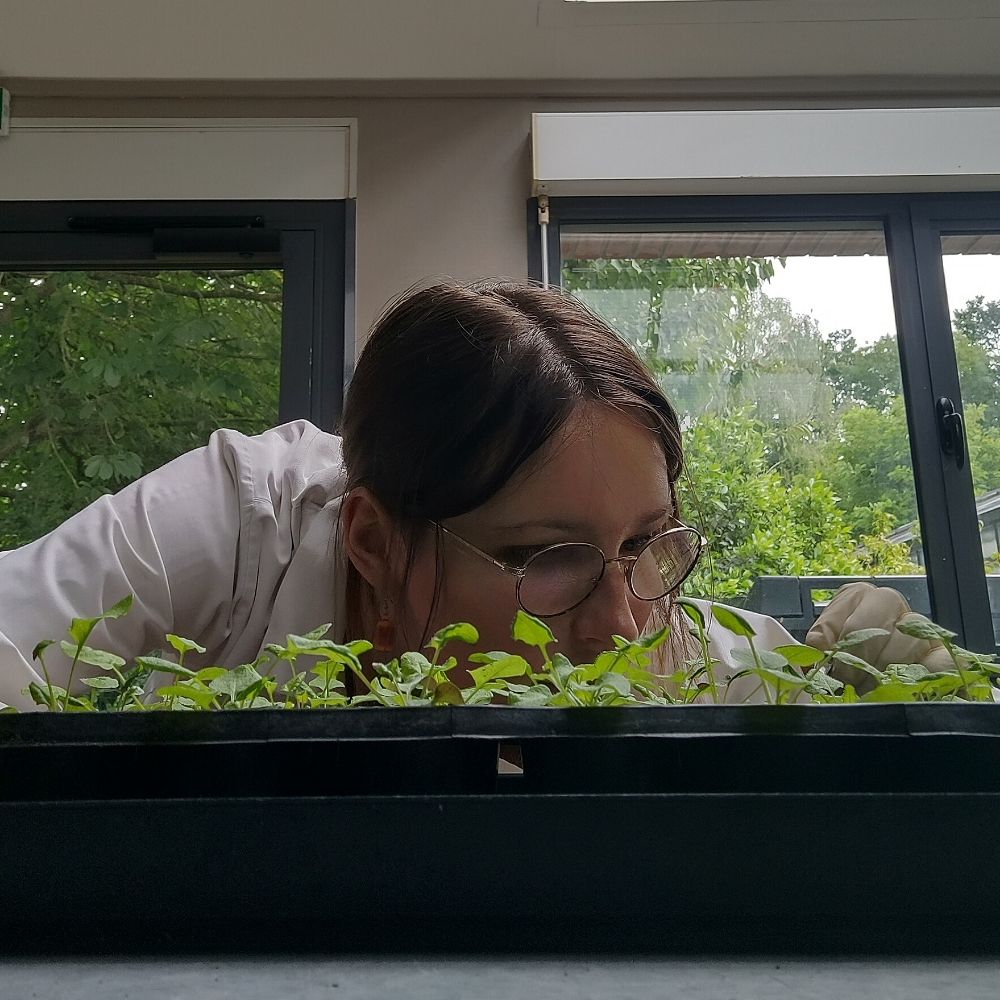
🧬 What does the starting material from which genes could emerge #denovo look like?
🌱 We used #RiboSeq to investigate the landscape of translated de novo ORFs in 3 #Arabidopsis species, and how they might be linked to gene birth!
📝 Check out our preprint here:
doi.org/10.1101/2025...
🌱 We used #RiboSeq to investigate the landscape of translated de novo ORFs in 3 #Arabidopsis species, and how they might be linked to gene birth!
📝 Check out our preprint here:
doi.org/10.1101/2025...
Pervasive translation of short open reading frames and de novo gene emergence in Arabidopsis
Ancestrally non-genic sequences are now widely recognized as potential reservoirs for the de novo emergence of new genes. Across clades, some de novo genes were proven to have substantial phenotypic effects, and to contribute to the emergence of novel biological functions. Yet, still very little is known about the starting material from which de novo genes emerge, especially in plants. To fill this gap, we generated Ribosome Profiling data from the closely related species Arabidopsis halleri, A. lyrata and A. thaliana and characterized genome-wide patterns of translation across them. Synteny analysis revealed 211 Open Reading Frames (ORFs) that have emerged de novo within the Arabidopsis genus and already exhibit signs of active translation. Most of these de novo translated ORFs were species- and even accession-specific, indicating their transient nature, with patterns of polymorphism consistent with neutral evolution in natural populations. They were also significantly shorter and less expressed than conserved Coding DNA Sequences (CDS), and their GC content increased with phylogenetic conservation. While most of them were located in intergenic regions and are thus newly discovered, 34 were previously annotated as CDS in at least one genome, and are promising putative genes. Our results demonstrate the abundance of translation events outside of conserved CDS, and their role as starting material for the emergence of novel genes in plants. ### Competing Interest Statement The authors have declared no competing interest. Université de Lille, https://ror.org/0546v5182
doi.org
January 20, 2026 at 10:58 AM
🧬 What does the starting material from which genes could emerge #denovo look like?
🌱 We used #RiboSeq to investigate the landscape of translated de novo ORFs in 3 #Arabidopsis species, and how they might be linked to gene birth!
📝 Check out our preprint here:
doi.org/10.1101/2025...
🌱 We used #RiboSeq to investigate the landscape of translated de novo ORFs in 3 #Arabidopsis species, and how they might be linked to gene birth!
📝 Check out our preprint here:
doi.org/10.1101/2025...
Reposted by Geoff Findlay

🚨 Requesting help:
I am looking for an agent who can facilitate more speaking gigs, podcast appearances, and interviews with journalists
I want to more widely share my story and expertise as a trans geneticist who understands the reality and complexity of "biological sex" 🏳️⚧️🧬
Please signal boost?
I am looking for an agent who can facilitate more speaking gigs, podcast appearances, and interviews with journalists
I want to more widely share my story and expertise as a trans geneticist who understands the reality and complexity of "biological sex" 🏳️⚧️🧬
Please signal boost?
January 28, 2026 at 9:03 PM
🚨 Requesting help:
I am looking for an agent who can facilitate more speaking gigs, podcast appearances, and interviews with journalists
I want to more widely share my story and expertise as a trans geneticist who understands the reality and complexity of "biological sex" 🏳️⚧️🧬
Please signal boost?
I am looking for an agent who can facilitate more speaking gigs, podcast appearances, and interviews with journalists
I want to more widely share my story and expertise as a trans geneticist who understands the reality and complexity of "biological sex" 🏳️⚧️🧬
Please signal boost?
Reposted by Geoff Findlay

An important study maps how nerves control the Drosophila male reproductive tract, revealing two types of glutamatergic neurons that also release serotonin or octopamine.
🔗 buff.ly/3PV2YQW
🔗 buff.ly/3PV2YQW
January 27, 2026 at 11:03 AM
An important study maps how nerves control the Drosophila male reproductive tract, revealing two types of glutamatergic neurons that also release serotonin or octopamine.
🔗 buff.ly/3PV2YQW
🔗 buff.ly/3PV2YQW
Reposted by Geoff Findlay

Jane Richardson was born #OTD in 1941
+ Developed the Richardson (ribbon) diagram to represent proteins' 3D structure (becoming a standard representation for protein structures)
+ MacArthur Fellow, 1985
+ Elected, Nat'l Academy of Sciences, 1991
+ President, Biophysical Society, 2012
#WomenInSTEM
+ Developed the Richardson (ribbon) diagram to represent proteins' 3D structure (becoming a standard representation for protein structures)
+ MacArthur Fellow, 1985
+ Elected, Nat'l Academy of Sciences, 1991
+ President, Biophysical Society, 2012
#WomenInSTEM


January 26, 2026 at 12:06 AM
Jane Richardson was born #OTD in 1941
+ Developed the Richardson (ribbon) diagram to represent proteins' 3D structure (becoming a standard representation for protein structures)
+ MacArthur Fellow, 1985
+ Elected, Nat'l Academy of Sciences, 1991
+ President, Biophysical Society, 2012
#WomenInSTEM
+ Developed the Richardson (ribbon) diagram to represent proteins' 3D structure (becoming a standard representation for protein structures)
+ MacArthur Fellow, 1985
+ Elected, Nat'l Academy of Sciences, 1991
+ President, Biophysical Society, 2012
#WomenInSTEM
Reposted by Geoff Findlay

Are you an early-stage graduate student (2nd or 3rd year) or early-stage postdoc based in the US or Canada, working primarily in Drosophila? Would you like to help improve the experience of all trainees working in Drosophila research? If so, read on.
(Please repost to reach a broad audience.)
(Please repost to reach a broad audience.)
November 12, 2025 at 4:49 AM
Are you an early-stage graduate student (2nd or 3rd year) or early-stage postdoc based in the US or Canada, working primarily in Drosophila? Would you like to help improve the experience of all trainees working in Drosophila research? If so, read on.
(Please repost to reach a broad audience.)
(Please repost to reach a broad audience.)
Congrats to all @genomicsed.bsky.social students and faculty who participated!!

The January cover of Molecular Biology and Evolution features the work of Stanek et al., who investigated chromosome-specific size expansion by focusing on the Drosophila "dot chromosome”.
🔗 doi.org/10.1093/molbev/msaf304
#evobio #molbio #drosophila
🔗 doi.org/10.1093/molbev/msaf304
#evobio #molbio #drosophila

January 5, 2026 at 11:12 AM
Congrats to all @genomicsed.bsky.social students and faculty who participated!!
Reposted by Geoff Findlay

RESEARCH PAPER: Multiple human enhancer RNAs contain long translated open reading frames
By Vlasov et al. and James Manley
➡️ https://genesdev.cshlp.org/content/39/23-24/1468.full
#protein #translation #enhancerRNA #openreadingframe #chromatin #DNAdamage #RNAprocessing #nucleus
By Vlasov et al. and James Manley
➡️ https://genesdev.cshlp.org/content/39/23-24/1468.full
#protein #translation #enhancerRNA #openreadingframe #chromatin #DNAdamage #RNAprocessing #nucleus

December 9, 2025 at 4:01 PM
RESEARCH PAPER: Multiple human enhancer RNAs contain long translated open reading frames
By Vlasov et al. and James Manley
➡️ https://genesdev.cshlp.org/content/39/23-24/1468.full
#protein #translation #enhancerRNA #openreadingframe #chromatin #DNAdamage #RNAprocessing #nucleus
By Vlasov et al. and James Manley
➡️ https://genesdev.cshlp.org/content/39/23-24/1468.full
#protein #translation #enhancerRNA #openreadingframe #chromatin #DNAdamage #RNAprocessing #nucleus
Reposted by Geoff Findlay

Recurrent expansion and rapid evolution of the Drosophilid RNAi pathway in testis https://www.biorxiv.org/content/10.1101/2025.11.28.691189v1
November 30, 2025 at 4:31 AM
Recurrent expansion and rapid evolution of the Drosophilid RNAi pathway in testis https://www.biorxiv.org/content/10.1101/2025.11.28.691189v1
Reposted by Geoff Findlay

How to keep in step when your (protein) partner speeds up…
Here we investigated the adaptive remodeling of a protein-protein interaction surface essential for telomere protection.
Congrats to whole team!
www.science.org/doi/10.1126/...
Here we investigated the adaptive remodeling of a protein-protein interaction surface essential for telomere protection.
Congrats to whole team!
www.science.org/doi/10.1126/...

Rapid compensatory evolution within a multiprotein complex preserves telomere integrity
Intragenomic conflict with selfish genetic elements spurs adaptive changes in subunits of essential multiprotein complexes. Whether and how these adaptive changes disrupt interactions within such comp...
www.science.org
November 28, 2025 at 5:22 PM
How to keep in step when your (protein) partner speeds up…
Here we investigated the adaptive remodeling of a protein-protein interaction surface essential for telomere protection.
Congrats to whole team!
www.science.org/doi/10.1126/...
Here we investigated the adaptive remodeling of a protein-protein interaction surface essential for telomere protection.
Congrats to whole team!
www.science.org/doi/10.1126/...
Reposted by Geoff Findlay

Please help us spread the word!
NextGen Immunologists Day: A New Opportunity for Undergrads at IMMUNOLOGY2026
Register for a FREE day-long program of poster showcases, guided poster walks, networking, graduate school panels, and demonstrations.
immunology2026.aai.org/nextgen-immu...
NextGen Immunologists Day: A New Opportunity for Undergrads at IMMUNOLOGY2026
Register for a FREE day-long program of poster showcases, guided poster walks, networking, graduate school panels, and demonstrations.
immunology2026.aai.org/nextgen-immu...

NextGen Immunologists Day - IMMUNOLOGY2026™
NextGen Immunologists Day welcomes undergraduate students into the immunology community through a full day of hands-on learning, scientific exploration, and meaningful connection.
immunology2026.aai.org
November 20, 2025 at 8:31 PM
Please help us spread the word!
NextGen Immunologists Day: A New Opportunity for Undergrads at IMMUNOLOGY2026
Register for a FREE day-long program of poster showcases, guided poster walks, networking, graduate school panels, and demonstrations.
immunology2026.aai.org/nextgen-immu...
NextGen Immunologists Day: A New Opportunity for Undergrads at IMMUNOLOGY2026
Register for a FREE day-long program of poster showcases, guided poster walks, networking, graduate school panels, and demonstrations.
immunology2026.aai.org/nextgen-immu...
Reposted by Geoff Findlay

Check out our latest issue where we interview Cassandra Extavour, who studies the evolution of the genetic mechanisms employed during early animal embryogenesis to specify cell fate, development, and differentiation at Harvard University. www.cell.com/current-biol...

Q & A
Interview with Cassandra Extavour, who studies the evolution of the genetic mechanisms
employed during early animal embryogenesis to specify cell fate, development, and
differentiation at Harvard Univ...
www.cell.com
November 20, 2025 at 10:34 AM
Check out our latest issue where we interview Cassandra Extavour, who studies the evolution of the genetic mechanisms employed during early animal embryogenesis to specify cell fate, development, and differentiation at Harvard University. www.cell.com/current-biol...
Reposted by Geoff Findlay

I am looking to hire a postdoc interested in combining genetics and evolution to understand why telomeres vary so much in plants. My group has been developing Mimulus a genetic model for studying plant telomeres and we have really cool research brewing. Please check ad for detail. Deadline is 12/31.


November 16, 2025 at 8:29 PM
I am looking to hire a postdoc interested in combining genetics and evolution to understand why telomeres vary so much in plants. My group has been developing Mimulus a genetic model for studying plant telomeres and we have really cool research brewing. Please check ad for detail. Deadline is 12/31.
Reposted by Geoff Findlay
We have a funded NERC PhD studentship!
Selfish X chromosomes are these bizarre things where males carrying the selfish X suffer from imploding testes. Lots to do in this space, especially in evolutionary, stress, and infection biology.
Please share!
#PhDchat #AcademicSky @uniexecec.bsky.social
Selfish X chromosomes are these bizarre things where males carrying the selfish X suffer from imploding testes. Lots to do in this space, especially in evolutionary, stress, and infection biology.
Please share!
#PhDchat #AcademicSky @uniexecec.bsky.social

November 15, 2025 at 3:02 PM
We have a funded NERC PhD studentship!
Selfish X chromosomes are these bizarre things where males carrying the selfish X suffer from imploding testes. Lots to do in this space, especially in evolutionary, stress, and infection biology.
Please share!
#PhDchat #AcademicSky @uniexecec.bsky.social
Selfish X chromosomes are these bizarre things where males carrying the selfish X suffer from imploding testes. Lots to do in this space, especially in evolutionary, stress, and infection biology.
Please share!
#PhDchat #AcademicSky @uniexecec.bsky.social
Reposted by Geoff Findlay

Galvin, J., Yedigarian, S., Rahman, M., Borziak, K., DeNieu, M., Larson, E. L., Manier, M. K. (2025). Sperm length and seminal fluid proteins promote male reproductive success in D. melanogaster. J Evol Biol academic.oup.com/jeb/article-...

Sperm length and seminal fluid proteins promote male reproductive success in Drosophila melanogaster
Abstract. Spermatozoal morphology varies widely within and among species, often corresponding to the shape of the female sperm storage organs in ways that
academic.oup.com
November 13, 2025 at 12:55 AM
Galvin, J., Yedigarian, S., Rahman, M., Borziak, K., DeNieu, M., Larson, E. L., Manier, M. K. (2025). Sperm length and seminal fluid proteins promote male reproductive success in D. melanogaster. J Evol Biol academic.oup.com/jeb/article-...
Reposted by Geoff Findlay

My lab at Indiana University is searching for a *postdoc* and *technician* to contribute to our work studying the evolution of social behavior using fruit flies as a model system. Details below, feel free to email me with any questions! More info on our research: saltzlab.com
November 5, 2025 at 4:56 PM
My lab at Indiana University is searching for a *postdoc* and *technician* to contribute to our work studying the evolution of social behavior using fruit flies as a model system. Details below, feel free to email me with any questions! More info on our research: saltzlab.com
Reposted by Geoff Findlay
Some charts for those who don't know the extent of the US public (and private) investment in research (particularly in biomedical research) compared to other countries and institutions. The destruction of the US' scientific institutions has global implications.


November 2, 2025 at 10:52 AM
Some charts for those who don't know the extent of the US public (and private) investment in research (particularly in biomedical research) compared to other countries and institutions. The destruction of the US' scientific institutions has global implications.
Reposted by Geoff Findlay
Correlated Gene Copy Number Changes in a Seminal Fluid Protein Network in Drosophila https://www.biorxiv.org/content/10.1101/2025.10.27.684572v1
October 28, 2025 at 6:32 PM
Correlated Gene Copy Number Changes in a Seminal Fluid Protein Network in Drosophila https://www.biorxiv.org/content/10.1101/2025.10.27.684572v1
Reposted by Geoff Findlay

The Hopkins Lab (hopkins-lab.com) at the University of Florida is looking to recruit a postdoc to work on the genetics of organ function and evolution across Drosophila and beyond. Please visit tinyurl.com/vcsjpmzz or email me for more info. And please RT or send to anyone who might be interested!

October 15, 2025 at 8:42 PM
The Hopkins Lab (hopkins-lab.com) at the University of Florida is looking to recruit a postdoc to work on the genetics of organ function and evolution across Drosophila and beyond. Please visit tinyurl.com/vcsjpmzz or email me for more info. And please RT or send to anyone who might be interested!