




Altegoerlab
@faltegoer.bsky.social
Group leader at Heinrich-Heine University | Exploring different aspects of fungal interactions | Passionate about Structural Biology | altegoerlab.de
Pinned
Altegoerlab
@faltegoer.bsky.social
· Oct 1

🧵How does a pathogen know it has entered its host?
New preprint!🎉It’s a pleasure to share my first first-author preprint from my PhD journey!
We uncover a novel co-evolved peptide–GPCR system in the fungus Ustilago maydis that senses host entry and triggers infection (doi.org/10.1101/2025...)
(1/5)
New preprint!🎉It’s a pleasure to share my first first-author preprint from my PhD journey!
We uncover a novel co-evolved peptide–GPCR system in the fungus Ustilago maydis that senses host entry and triggers infection (doi.org/10.1101/2025...)
(1/5)

A co-evolved peptide-GPCR system senses host entry to drive fungal infection https://www.biorxiv.org/content/10.1101/2025.09.26.678928v1
Excited to share our latest work, spearheaded by @gabmrojas.bsky.social!
GPCRs are central sensors in eukaryotes, but little is known about them in fungi. In Ustilago maydis, we now uncovered a host-dependent GPCR mechanism that promotes fungal infection.
Gabriel nicely explains the full story👇
GPCRs are central sensors in eukaryotes, but little is known about them in fungi. In Ustilago maydis, we now uncovered a host-dependent GPCR mechanism that promotes fungal infection.
Gabriel nicely explains the full story👇
Reposted by Altegoerlab
We Are very happy that our Paper was published. Thank to everyone involved
pubs.acs.org/doi/10.1021/...
@mibinet.bsky.social @mfeldbruegge.bsky.social @frunzkelab.bsky.social
pubs.acs.org/doi/10.1021/...
@mibinet.bsky.social @mfeldbruegge.bsky.social @frunzkelab.bsky.social
A Novel Biosensor for Ferrous Iron Developed via CoBiSe: A Computational Method for Rapid Biosensor Design
Genetically encoded biosensors enable the monitoring of metabolite dynamics in living organisms. We present CoBiSe, a computational biosensor design approach using Constraint Network Analysis to ident...
pubs.acs.org
January 12, 2026 at 9:48 AM
We Are very happy that our Paper was published. Thank to everyone involved
pubs.acs.org/doi/10.1021/...
@mibinet.bsky.social @mfeldbruegge.bsky.social @frunzkelab.bsky.social
pubs.acs.org/doi/10.1021/...
@mibinet.bsky.social @mfeldbruegge.bsky.social @frunzkelab.bsky.social
Reposted by Altegoerlab
Happy to announce that our review article on vesicle-coupled mRNA trafficking is now availalbe
@mibinet.bsky.social
#EMBOrnaLocalization
link.springer.com/article/10.1...
@mibinet.bsky.social
#EMBOrnaLocalization
link.springer.com/article/10.1...
February 2, 2026 at 3:56 PM
Happy to announce that our review article on vesicle-coupled mRNA trafficking is now availalbe
@mibinet.bsky.social
#EMBOrnaLocalization
link.springer.com/article/10.1...
@mibinet.bsky.social
#EMBOrnaLocalization
link.springer.com/article/10.1...
Reposted by Altegoerlab

⚡️Fully funded #PhD position in my lab at Stockholm University / SciLifeLab! If you’re interested in #lichens, #symbiosis, fungal biology, or meta-omics, please apply. Deadline Feb 1. Read more here: su.varbi.com/en/what:job/...

January 12, 2026 at 2:15 PM
⚡️Fully funded #PhD position in my lab at Stockholm University / SciLifeLab! If you’re interested in #lichens, #symbiosis, fungal biology, or meta-omics, please apply. Deadline Feb 1. Read more here: su.varbi.com/en/what:job/...
Reposted by Altegoerlab
One week left to apply for the PhD position in my group in Stockholm!
⚡️Fully funded #PhD position in my lab at Stockholm University / SciLifeLab! If you’re interested in #lichens, #symbiosis, fungal biology, or meta-omics, please apply. Deadline Feb 1. Read more here: su.varbi.com/en/what:job/...
January 26, 2026 at 10:59 AM
One week left to apply for the PhD position in my group in Stockholm!
Reposted by Altegoerlab


Reposted by Altegoerlab
New lab preprint - Delora Baptista tested AlphaFold 2 and 3 for the prediction of structures of host-pathogen interactions and then applied these to study convergence of binding and molecular mimicry in host-pathogen vs. host-host interactions.
www.biorxiv.org/content/10.1...
www.biorxiv.org/content/10.1...

AlphaFold models of host-pathogen interactions elucidate the prevalence and structural modes of molecular mimicry
Pathogens exploit host cellular machinery through protein-protein interactions (PPIs), often using molecular mimicry to hijack host cellular processes. While there have been thousands of host-pathogen...
www.biorxiv.org
June 9, 2025 at 6:58 AM
New lab preprint - Delora Baptista tested AlphaFold 2 and 3 for the prediction of structures of host-pathogen interactions and then applied these to study convergence of binding and molecular mimicry in host-pathogen vs. host-host interactions.
www.biorxiv.org/content/10.1...
www.biorxiv.org/content/10.1...
Reposted by Altegoerlab

Ancestral sequence reconstruction reveals CTP-dependent loading of the bacterial centromere-binding protein ParB as an ancient evolutionary feature
Now published:
tinyurl.com/4ddhwbb3
Thanks to the Hochberg and Bange labs for the great collaboration!
Now published:
tinyurl.com/4ddhwbb3
Thanks to the Hochberg and Bange labs for the great collaboration!

January 9, 2026 at 7:44 PM
Ancestral sequence reconstruction reveals CTP-dependent loading of the bacterial centromere-binding protein ParB as an ancient evolutionary feature
Now published:
tinyurl.com/4ddhwbb3
Thanks to the Hochberg and Bange labs for the great collaboration!
Now published:
tinyurl.com/4ddhwbb3
Thanks to the Hochberg and Bange labs for the great collaboration!
Reposted by Altegoerlab
Thrilled to share our latest work @luptoncj.bsky.social @drellisdon.bsky.social @drmlhalls.bsky.social.
Structure of the lysosomal KICSTOR-GATOR1-SAMTOR nutrient-sensing supercomplex.
🧪🔬#cryoEM
Now online @cellpress.bsky.social.
doi.org/10.1016/j.ce...
Structure of the lysosomal KICSTOR-GATOR1-SAMTOR nutrient-sensing supercomplex.
🧪🔬#cryoEM
Now online @cellpress.bsky.social.
doi.org/10.1016/j.ce...

January 8, 2026 at 7:39 PM
Thrilled to share our latest work @luptoncj.bsky.social @drellisdon.bsky.social @drmlhalls.bsky.social.
Structure of the lysosomal KICSTOR-GATOR1-SAMTOR nutrient-sensing supercomplex.
🧪🔬#cryoEM
Now online @cellpress.bsky.social.
doi.org/10.1016/j.ce...
Structure of the lysosomal KICSTOR-GATOR1-SAMTOR nutrient-sensing supercomplex.
🧪🔬#cryoEM
Now online @cellpress.bsky.social.
doi.org/10.1016/j.ce...
Reposted by Altegoerlab
Dear Plant ECRs, don't miss this wonderful opportunity!
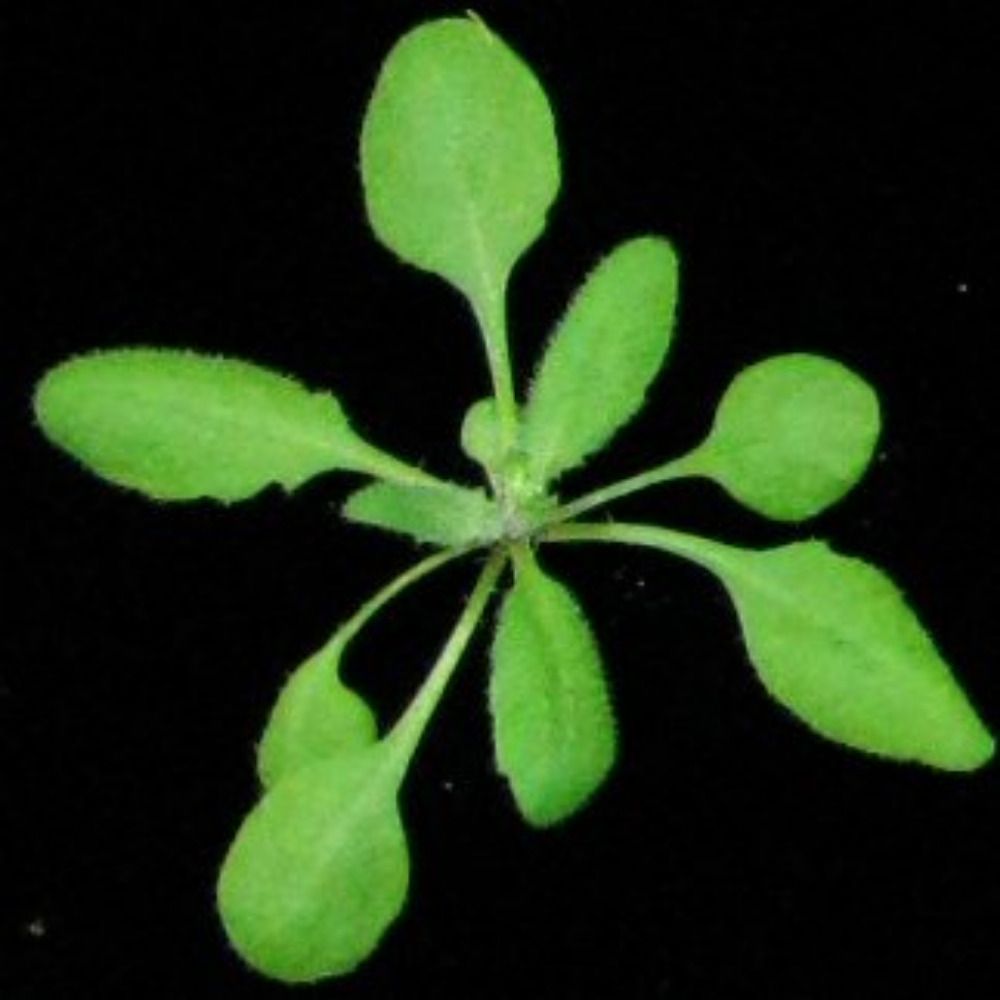
Are you an experienced PhD student or postdoc in plant science looking to connect, present your work, and discuss career paths?
Join us at the 3rd Early Career Plant Researchers Network Meeting, Halle (Saale), 20–21 April 2026
Deadline: 23 January 2026
plant-ecr-networking.eu
Join us at the 3rd Early Career Plant Researchers Network Meeting, Halle (Saale), 20–21 April 2026
Deadline: 23 January 2026
plant-ecr-networking.eu

December 19, 2025 at 3:04 PM
Dear Plant ECRs, don't miss this wonderful opportunity!
Reposted by Altegoerlab

Reposted by Altegoerlab
📢Postdoc position available!🧪🧫🧬
Our group is seeking a motivated researcher to investigate the molecular mechanisms driving host–endosymbiont interactions.
Full details & application: karriere.hhu.de//index.php?a....
Please help us get the word out!
Our group is seeking a motivated researcher to investigate the molecular mechanisms driving host–endosymbiont interactions.
Full details & application: karriere.hhu.de//index.php?a....
Please help us get the word out!

Postdoc (m/f/d) in Endosymbiosis Research
karriere.hhu.de
November 25, 2025 at 11:21 AM
📢Postdoc position available!🧪🧫🧬
Our group is seeking a motivated researcher to investigate the molecular mechanisms driving host–endosymbiont interactions.
Full details & application: karriere.hhu.de//index.php?a....
Please help us get the word out!
Our group is seeking a motivated researcher to investigate the molecular mechanisms driving host–endosymbiont interactions.
Full details & application: karriere.hhu.de//index.php?a....
Please help us get the word out!
Reposted by Altegoerlab

So structural biology is not dead after all 😋 Not a big surprise The title of this article is exactly in line with what I think.
Same applies to LLMs for scientific writing.
Same applies to LLMs for scientific writing.

AlphaFold predictions are valuable hypotheses and accelerate but do not replace experimental structure determination - Nature Methods
An analysis of AlphaFold protein structure predictions shows that while in many cases the predictions are highly accurate, there are also many instances where the predicted structures or parts of pred...
www.nature.com
December 14, 2025 at 4:18 PM
So structural biology is not dead after all 😋 Not a big surprise The title of this article is exactly in line with what I think.
Same applies to LLMs for scientific writing.
Same applies to LLMs for scientific writing.
Reposted by Altegoerlab
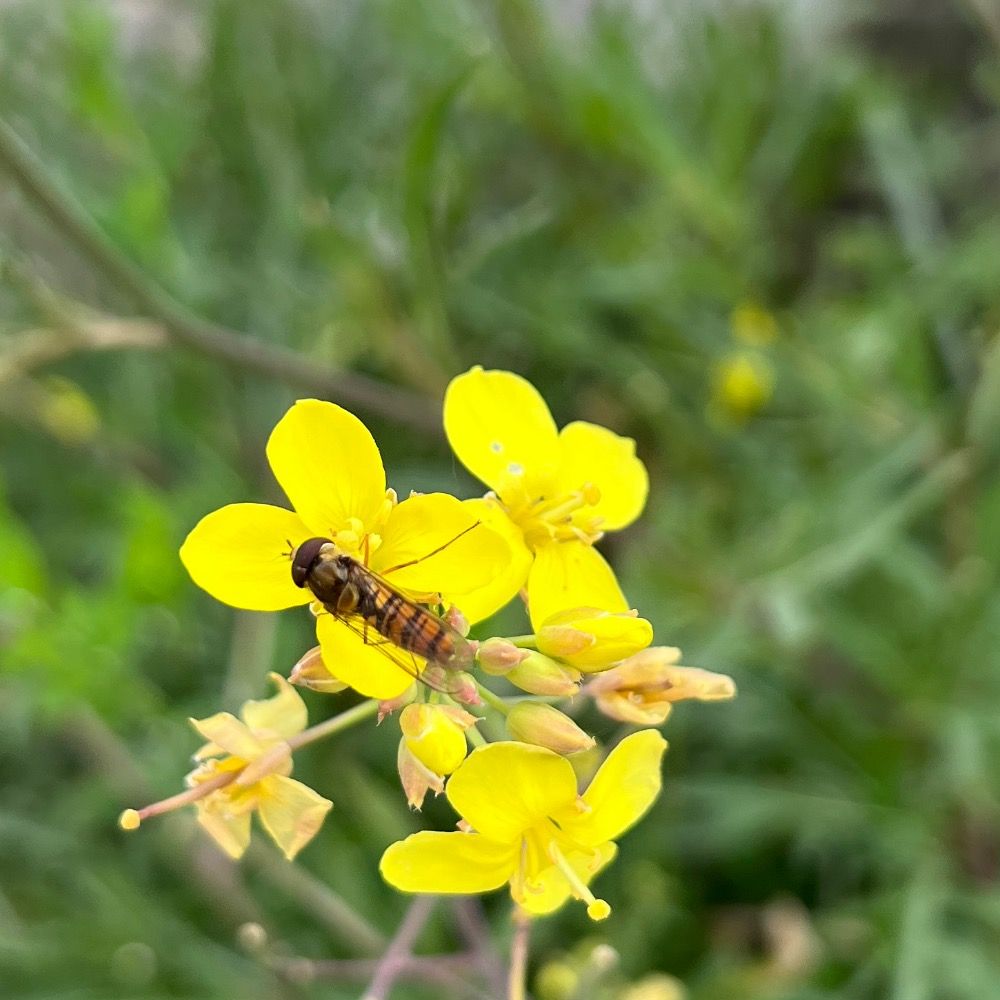
📣Interested in doing your PhD in Plant Sciences 🌱, Microbial Sciences 🦠 or Computational Biology 👩💻? @ceplas.bsky.social offers 10 fully funded PhD 🎓fellowships. Pls repost and forward to interested candidates holding BSc degree.

‼️Please RT: The CEPLAS Graduate School call for 2026 is now open! Detailed info on our website: bit.ly/4q19JWk
@hhu.de @unicologne.bsky.social @mpipz.bsky.social @fz-juelich.de @leibnizipk.bsky.social @plantsciencedbg.bsky.social
@hhu.de @unicologne.bsky.social @mpipz.bsky.social @fz-juelich.de @leibnizipk.bsky.social @plantsciencedbg.bsky.social

December 11, 2025 at 8:34 AM
📣Interested in doing your PhD in Plant Sciences 🌱, Microbial Sciences 🦠 or Computational Biology 👩💻? @ceplas.bsky.social offers 10 fully funded PhD 🎓fellowships. Pls repost and forward to interested candidates holding BSc degree.
Reposted by Altegoerlab
👉Excited to share our latest work @natmicrobiol.nature.com, revealing a decrease in cytoplasmic crowding during filamentous growth in the human fungal pathogen Candida albicans. Furthermore we found that inhibition of ribosome biogenesis can trigger filamentous growth in this pathogen
rdcu.be/eT1Su
rdcu.be/eT1Su

Decreased cytoplasmic crowding via inhibition of ribosome biogenesis can trigger Candida albicans filamentous growth
Nature Microbiology - During filamentous growth in the human fungal pathogen Candida albicans, a reduction in ribosome concentration leads to a decrease in macromolecular crowding. Inhibition of...
rdcu.be
December 10, 2025 at 12:23 PM
👉Excited to share our latest work @natmicrobiol.nature.com, revealing a decrease in cytoplasmic crowding during filamentous growth in the human fungal pathogen Candida albicans. Furthermore we found that inhibition of ribosome biogenesis can trigger filamentous growth in this pathogen
rdcu.be/eT1Su
rdcu.be/eT1Su
Reposted by Altegoerlab

New call for PhD students to join CEPLAS

December 9, 2025 at 1:25 PM
New call for PhD students to join CEPLAS
Reposted by Altegoerlab
The first paper of my PhD is now available as a preprint! 🎉
Transposable elements (TEs) don't just jump within fungal genomes, they also move extensively between species. In this study, we screened over 1,300 fungal genomes and found a conservative estimate of 5,500+ horizontal transfer events.
Transposable elements (TEs) don't just jump within fungal genomes, they also move extensively between species. In this study, we screened over 1,300 fungal genomes and found a conservative estimate of 5,500+ horizontal transfer events.
www.biorxiv.org
June 20, 2025 at 7:39 PM
The first paper of my PhD is now available as a preprint! 🎉
Transposable elements (TEs) don't just jump within fungal genomes, they also move extensively between species. In this study, we screened over 1,300 fungal genomes and found a conservative estimate of 5,500+ horizontal transfer events.
Transposable elements (TEs) don't just jump within fungal genomes, they also move extensively between species. In this study, we screened over 1,300 fungal genomes and found a conservative estimate of 5,500+ horizontal transfer events.
Reposted by Altegoerlab

#Lichens form their complex thalli through a partnership involving at least a fungus and an alga. But can these living structures be rebuilt in vitro? For more than a century, people have tried. With @spribille.bsky.social we revisited 150 years of #lichen #resynthesis to ask: has anyone succeeded?

November 7, 2025 at 2:07 AM
#Lichens form their complex thalli through a partnership involving at least a fungus and an alga. But can these living structures be rebuilt in vitro? For more than a century, people have tried. With @spribille.bsky.social we revisited 150 years of #lichen #resynthesis to ask: has anyone succeeded?
Reposted by Altegoerlab
Genomic and phenotypic insights into the expanding phylogenetic landscape of the Cryptococcus genus journals.plos.org/plosgenetics...
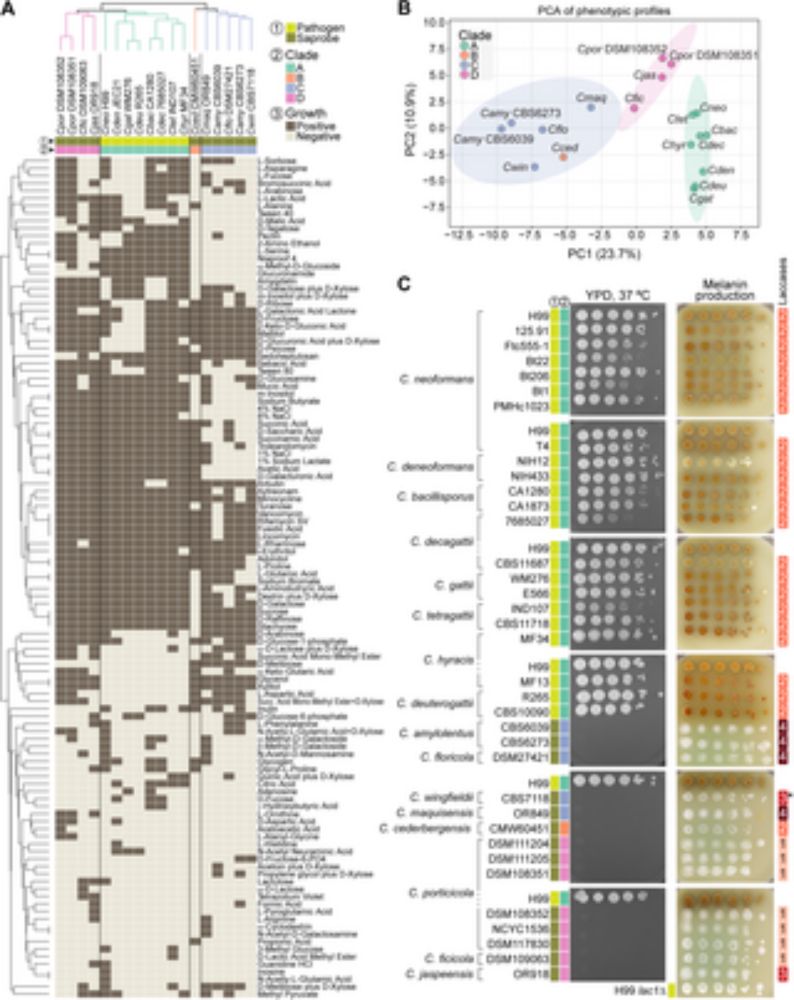
Genomic and phenotypic insights into the expanding phylogenetic landscape of the Cryptococcus genus
Author summary Cryptococcus is a genus of fungi that includes both pathogenic species capable of causing life-threatening infections in humans and many environmental species that inhabit soil, fruit, ...
journals.plos.org
November 11, 2025 at 10:35 AM
Genomic and phenotypic insights into the expanding phylogenetic landscape of the Cryptococcus genus journals.plos.org/plosgenetics...
Reposted by Altegoerlab

New publication by Juan Carlos De la Concepcion, Nick Irwin, & @plantophagy.bsky.social at the GMI from @oeaw.bsky.social revealed that Exo70 undergoes changes in electrostatic charge, causing it to break from its original complex & take on new functions.
Read more: www.oeaw.ac.at/gmi/detail/n...
Read more: www.oeaw.ac.at/gmi/detail/n...

October 31, 2025 at 10:23 AM
New publication by Juan Carlos De la Concepcion, Nick Irwin, & @plantophagy.bsky.social at the GMI from @oeaw.bsky.social revealed that Exo70 undergoes changes in electrostatic charge, causing it to break from its original complex & take on new functions.
Read more: www.oeaw.ac.at/gmi/detail/n...
Read more: www.oeaw.ac.at/gmi/detail/n...
Reposted by Altegoerlab
📣 Now announcing the journal publication 📄 of our work in @newphyt.bsky.social on how Verticillium undermines the plant's 🌱 "cry for help": terrific work by @antonkraege.bsky.social & @wolki95.bsky.social doi.org/10.1111/nph....

Undermining the cry for help: the phytopathogenic fungus Verticillium dahliae secretes an antimicrobial effector protein to undermine host recruitment of antagonistic Pseudomonas bacteria
During pathogen attack, plants recruit beneficial microbes in a ‘cry for help’ to mitigate disease development. Simultaneously, pathogens secrete effectors to promote host colonisation through vario...
doi.org
October 30, 2025 at 8:47 AM
📣 Now announcing the journal publication 📄 of our work in @newphyt.bsky.social on how Verticillium undermines the plant's 🌱 "cry for help": terrific work by @antonkraege.bsky.social & @wolki95.bsky.social doi.org/10.1111/nph....
Reposted by Altegoerlab
📣 I’m excited to share two open positions in my lab @leibniz-hki.de. For this interdisciplinary project with @luziagyr.bsky.social, I’m seeking (1) an enthusiastic PhD student interested in fungal natural product research and genetic engineering, as well as (2) a technical assistant 👇🏻
October 21, 2025 at 2:48 PM
📣 I’m excited to share two open positions in my lab @leibniz-hki.de. For this interdisciplinary project with @luziagyr.bsky.social, I’m seeking (1) an enthusiastic PhD student interested in fungal natural product research and genetic engineering, as well as (2) a technical assistant 👇🏻
Reposted by Altegoerlab
Now out in Science! Cyclin-dependent kinases (CDKs) are key regulators of the cell cycle. In @vcushing.bsky.social's magnum opus, we use #cryoEM to figure out how the CDK-activating kinase recognises CDKs to fully activate them - a key step in cell cycle control.
www.science.org/doi/10.1126/...
www.science.org/doi/10.1126/...

Structural basis of T-loop–independent recognition and activation of CDKs by the CDK-activating kinase
Cyclin-dependent kinases (CDKs) are prototypical regulators of the cell cycle. The CDK-activating kinase (CAK) acts as a master regulator of CDK activity by catalyzing the activating phosphorylation o...
www.science.org
October 16, 2025 at 7:17 PM
Now out in Science! Cyclin-dependent kinases (CDKs) are key regulators of the cell cycle. In @vcushing.bsky.social's magnum opus, we use #cryoEM to figure out how the CDK-activating kinase recognises CDKs to fully activate them - a key step in cell cycle control.
www.science.org/doi/10.1126/...
www.science.org/doi/10.1126/...
Reposted by Altegoerlab
📣 New @biorxiv-microbiol.bsky.social preprint, another joint-venture of @wolki95.bsky.social & @antonkraege.bsky.social, co-directed by @nicksnelders.bsky.social. Here’s a 🧵

Differential contributions of an antimicrobial effector from Verticillium dahliae to virulence and tomato microbiota assembly across natural soils https://www.biorxiv.org/content/10.1101/2025.09.30.679524v1
October 14, 2025 at 8:05 PM
📣 New @biorxiv-microbiol.bsky.social preprint, another joint-venture of @wolki95.bsky.social & @antonkraege.bsky.social, co-directed by @nicksnelders.bsky.social. Here’s a 🧵
Reposted by Altegoerlab
🚀 New preprint!
We used a human cell-free translation screen (~28 000 compounds) to discover NT-2, a #Fusarium -derived #mycotoxin that blocks human ribosomes.
#Cryo-EM at 1.72 Å reveals a link between chemical inhibition and ribosome dormancy.
www.biorxiv.org/content/10.1...
We used a human cell-free translation screen (~28 000 compounds) to discover NT-2, a #Fusarium -derived #mycotoxin that blocks human ribosomes.
#Cryo-EM at 1.72 Å reveals a link between chemical inhibition and ribosome dormancy.
www.biorxiv.org/content/10.1...

A human cell-free translation screen identifies the NT-2 mycotoxin as a ribosomal peptidyl transferase inhibitor
Translation inhibitors are invaluable for probing ribosome function and therapeutic applications, but systematic discovery in human systems is limited by the lack of scalable, screening-compatible cel...
www.biorxiv.org
October 13, 2025 at 10:35 AM
🚀 New preprint!
We used a human cell-free translation screen (~28 000 compounds) to discover NT-2, a #Fusarium -derived #mycotoxin that blocks human ribosomes.
#Cryo-EM at 1.72 Å reveals a link between chemical inhibition and ribosome dormancy.
www.biorxiv.org/content/10.1...
We used a human cell-free translation screen (~28 000 compounds) to discover NT-2, a #Fusarium -derived #mycotoxin that blocks human ribosomes.
#Cryo-EM at 1.72 Å reveals a link between chemical inhibition and ribosome dormancy.
www.biorxiv.org/content/10.1...
Reposted by Altegoerlab

I’m excited to share our new preprint from @talbotlabtsl.bsky.social lab!
🌱 Our latest study reveals how Magnaporthe oryzae synchronizes organelle trafficking and autophagy to infect plants. (1/13)
📄 Read more: doi.org/10.1101/2025...
🌱 Our latest study reveals how Magnaporthe oryzae synchronizes organelle trafficking and autophagy to infect plants. (1/13)
📄 Read more: doi.org/10.1101/2025...

Synchronous spatio-temporal control of autophagy and organelle trafficking is necessary for appressorium-mediated plant infection by Magnaporthe oryzae
The blast fungus Magnaporthe oryzae infects plants using a specialised infection structure called an appressorium that generates physical force to break the rice leaf cuticle. Appressorium development...
doi.org
October 11, 2025 at 10:25 PM
I’m excited to share our new preprint from @talbotlabtsl.bsky.social lab!
🌱 Our latest study reveals how Magnaporthe oryzae synchronizes organelle trafficking and autophagy to infect plants. (1/13)
📄 Read more: doi.org/10.1101/2025...
🌱 Our latest study reveals how Magnaporthe oryzae synchronizes organelle trafficking and autophagy to infect plants. (1/13)
📄 Read more: doi.org/10.1101/2025...