



Benedikt Ehinger
@benediktehinger.bsky.social
Comp-#CogSci TT-Prof - follow.me @ @benediktehinger@scholar.social
🧠, #vision, #eyetracking, #cognition, VR/mobile #EEG, methods, design (www.thesis-art.de), teaching & supervising
our lab mainly develops in #julialang
🧠, #vision, #eyetracking, #cognition, VR/mobile #EEG, methods, design (www.thesis-art.de), teaching & supervising
our lab mainly develops in #julialang
Pinned


S-CCS Lab PhD Position
3+2 year 100% TVL-13 position in '26 - open topic on the intersection of combined EEG-EyeTracking, Statistical Methods, Cognitive Modelling, VR/Mobile EEG, Vision ...
Apply via Max-Planck IMPRS-IS program until 2025-11-16 imprs.is.mpg.de
Read: www.s-ccs.de/philosophy
3+2 year 100% TVL-13 position in '26 - open topic on the intersection of combined EEG-EyeTracking, Statistical Methods, Cognitive Modelling, VR/Mobile EEG, Vision ...
Apply via Max-Planck IMPRS-IS program until 2025-11-16 imprs.is.mpg.de
Read: www.s-ccs.de/philosophy
Reposted by Benedikt Ehinger
Wow, Pluto is incredible. Because of my python muscle-memory I've just been running julia in jupyter whenever I needed a notebook but I finally took the plunge and it's crazy how many features this thing has. #julialang
February 13, 2026 at 9:21 PM
Wow, Pluto is incredible. Because of my python muscle-memory I've just been running julia in jupyter whenever I needed a notebook but I finally took the plunge and it's crazy how many features this thing has. #julialang
Reposted by Benedikt Ehinger

“New horizons for Julia”:
My article about #Julialang and new directions for the language. I talk about new tooling for installation, compilation to small binaries, and more. Julia is simply the best and most fun language for #science and #engineering.
t.co/azLBxkd49C
My article about #Julialang and new directions for the language. I talk about new tooling for installation, compilation to small binaries, and more. Julia is simply the best and most fun language for #science and #engineering.
t.co/azLBxkd49C
https://lwn.net/Articles/1006117/
t.co
February 13, 2026 at 1:01 AM
“New horizons for Julia”:
My article about #Julialang and new directions for the language. I talk about new tooling for installation, compilation to small binaries, and more. Julia is simply the best and most fun language for #science and #engineering.
t.co/azLBxkd49C
My article about #Julialang and new directions for the language. I talk about new tooling for installation, compilation to small binaries, and more. Julia is simply the best and most fun language for #science and #engineering.
t.co/azLBxkd49C
Reposted by Benedikt Ehinger

Thrilled that my paper is out in the @nature.com. We explored how the brain builds complex tasks by compositionally combining simpler sub-task representations. The brain flexibly performs multiple tasks by dynamically reusing neural subspaces for sensory inputs and motor actions
rdcu.be/eRVUk
rdcu.be/eRVUk

Building compositional tasks with shared neural subspaces
Nature - The brain can flexibly perform multiple tasks by compositionally combining task-relevant neural representations.
rdcu.be
February 11, 2026 at 10:40 PM
Thrilled that my paper is out in the @nature.com. We explored how the brain builds complex tasks by compositionally combining simpler sub-task representations. The brain flexibly performs multiple tasks by dynamically reusing neural subspaces for sensory inputs and motor actions
rdcu.be/eRVUk
rdcu.be/eRVUk
Reposted by Benedikt Ehinger

FOR THE RECORD: one year on, I lay out clearly how Elon Musk FRS has breached the @royalsociety.org’s code of conduct, why the Society’s failure to defend its values has been so damaging, & what they need do to recover their standing in the scientific community. occamstypewriter.org/scurry/2026/...

February 11, 2026 at 6:39 PM
FOR THE RECORD: one year on, I lay out clearly how Elon Musk FRS has breached the @royalsociety.org’s code of conduct, why the Society’s failure to defend its values has been so damaging, & what they need do to recover their standing in the scientific community. occamstypewriter.org/scurry/2026/...
Reposted by Benedikt Ehinger

We compared the TRACKPixx3 eye-tracker against the EyeLink 1000 Plus. Across 8 tasks, accuracy was similar. One key difference: TPx3 aggressively smooths sample data, which may affect sub-fixation phenomena and fixation onsets. Check the paper for the full results.
osf.io/preprints/ps...
osf.io/preprints/ps...

February 10, 2026 at 1:43 PM
We compared the TRACKPixx3 eye-tracker against the EyeLink 1000 Plus. Across 8 tasks, accuracy was similar. One key difference: TPx3 aggressively smooths sample data, which may affect sub-fixation phenomena and fixation onsets. Check the paper for the full results.
osf.io/preprints/ps...
osf.io/preprints/ps...
Reposted by Benedikt Ehinger

📢 Workshop announcement.
We are super excited to announce the workshop Perceptual Inferences, from philosophy to neuroscience, organized by Alexander Schütz and Daniel Kaiser.
📍 Rauischholzhausen Castle, near Marburg, Germany
🗓️ June 8 to 10, 2026.
1/4
We are super excited to announce the workshop Perceptual Inferences, from philosophy to neuroscience, organized by Alexander Schütz and Daniel Kaiser.
📍 Rauischholzhausen Castle, near Marburg, Germany
🗓️ June 8 to 10, 2026.
1/4

February 10, 2026 at 9:00 AM
📢 Workshop announcement.
We are super excited to announce the workshop Perceptual Inferences, from philosophy to neuroscience, organized by Alexander Schütz and Daniel Kaiser.
📍 Rauischholzhausen Castle, near Marburg, Germany
🗓️ June 8 to 10, 2026.
1/4
We are super excited to announce the workshop Perceptual Inferences, from philosophy to neuroscience, organized by Alexander Schütz and Daniel Kaiser.
📍 Rauischholzhausen Castle, near Marburg, Germany
🗓️ June 8 to 10, 2026.
1/4
Reposted by Benedikt Ehinger

the cutoff scores for #MSCA postdoc fellowships are very high this year. has the score distribution shifted compared to previous years? I made a plot with scores from past years.
if scores are at ceiling level, the process becomes essentially a lottery, because minor issues can lead to deductions.
if scores are at ceiling level, the process becomes essentially a lottery, because minor issues can lead to deductions.

February 10, 2026 at 9:54 AM
the cutoff scores for #MSCA postdoc fellowships are very high this year. has the score distribution shifted compared to previous years? I made a plot with scores from past years.
if scores are at ceiling level, the process becomes essentially a lottery, because minor issues can lead to deductions.
if scores are at ceiling level, the process becomes essentially a lottery, because minor issues can lead to deductions.
Reposted by Benedikt Ehinger
Final paper of my PhD 🤗
www.nature.com/articles/s44...
There is growing interest in how cognitive control may improve value-based decision making.
However, we find that a recent paper overestimated the role of control in their task, leading to erroneous interpretations of dACC recordings.
www.nature.com/articles/s44...
There is growing interest in how cognitive control may improve value-based decision making.
However, we find that a recent paper overestimated the role of control in their task, leading to erroneous interpretations of dACC recordings.

Misspecified models create the appearance of adaptive control during value-based choice - Communications Psychology
In a new computational analysis of previous work, this study shows that a control-free mechanism better accounts for value-based decisions than an account that assumes top-down control invigorating th...
www.nature.com
February 3, 2026 at 10:59 PM
Final paper of my PhD 🤗
www.nature.com/articles/s44...
There is growing interest in how cognitive control may improve value-based decision making.
However, we find that a recent paper overestimated the role of control in their task, leading to erroneous interpretations of dACC recordings.
www.nature.com/articles/s44...
There is growing interest in how cognitive control may improve value-based decision making.
However, we find that a recent paper overestimated the role of control in their task, leading to erroneous interpretations of dACC recordings.
Reposted by Benedikt Ehinger
A grad student I know recently had his work covered in a high profile outlet...but his name wasn't mentioned at all despite his advisor explicitly saying he did all of the work.
Since I've straddled the line between academic and journalist, I see both sides. Here are a couple ways to avoid this:
Since I've straddled the line between academic and journalist, I see both sides. Here are a couple ways to avoid this:
February 3, 2026 at 2:52 PM
A grad student I know recently had his work covered in a high profile outlet...but his name wasn't mentioned at all despite his advisor explicitly saying he did all of the work.
Since I've straddled the line between academic and journalist, I see both sides. Here are a couple ways to avoid this:
Since I've straddled the line between academic and journalist, I see both sides. Here are a couple ways to avoid this:
Reposted by Benedikt Ehinger

📢 It’s finally out!
New paper alert: doi.org/10.1109/SMC5...
🧠 Summary:
We study calibration-free BCI using ERP data and show that rCCA, originally from c-VEP, performs very well when transferred to ERP, being on par with the SOTA UMM. Both reach very high accuracy without any supervised training.
New paper alert: doi.org/10.1109/SMC5...
🧠 Summary:
We study calibration-free BCI using ERP data and show that rCCA, originally from c-VEP, performs very well when transferred to ERP, being on par with the SOTA UMM. Both reach very high accuracy without any supervised training.

Exploring new territory II: Calibration-free decoding for ERP BCI
A brain-computer interface (BCI) typically requires a calibration phase to train its decoding model using supervised data, which can be time-consuming and impractical in real-world scenarios. This stu...
ieeexplore.ieee.org
January 31, 2026 at 5:19 PM
📢 It’s finally out!
New paper alert: doi.org/10.1109/SMC5...
🧠 Summary:
We study calibration-free BCI using ERP data and show that rCCA, originally from c-VEP, performs very well when transferred to ERP, being on par with the SOTA UMM. Both reach very high accuracy without any supervised training.
New paper alert: doi.org/10.1109/SMC5...
🧠 Summary:
We study calibration-free BCI using ERP data and show that rCCA, originally from c-VEP, performs very well when transferred to ERP, being on par with the SOTA UMM. Both reach very high accuracy without any supervised training.
Reposted by Benedikt Ehinger
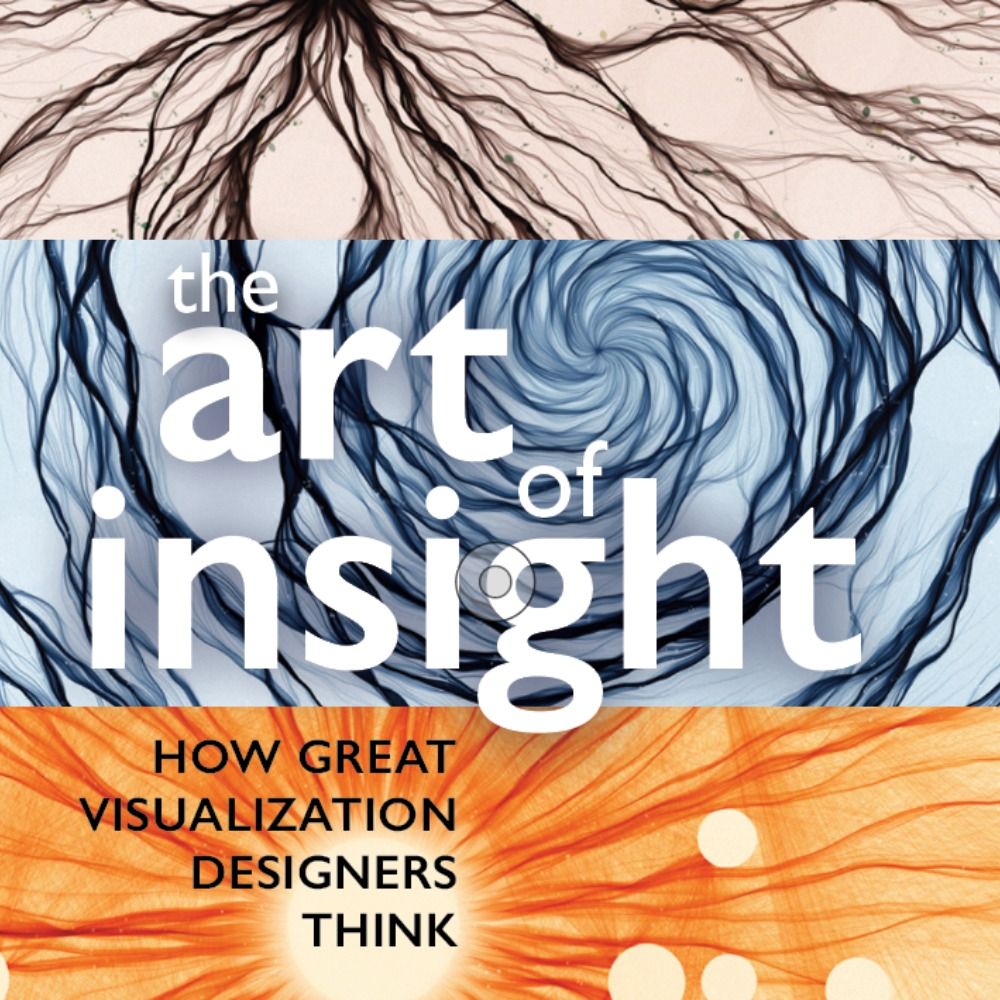
The Open Visualization Academy (OVA) IS LIVE!
openvisualizationacademy.org
Thread follows #dataViz #infographics #dataJournalism #dataVisualization
openvisualizationacademy.org
Thread follows #dataViz #infographics #dataJournalism #dataVisualization

January 30, 2026 at 3:09 PM
The Open Visualization Academy (OVA) IS LIVE!
openvisualizationacademy.org
Thread follows #dataViz #infographics #dataJournalism #dataVisualization
openvisualizationacademy.org
Thread follows #dataViz #infographics #dataJournalism #dataVisualization
Reposted by Benedikt Ehinger
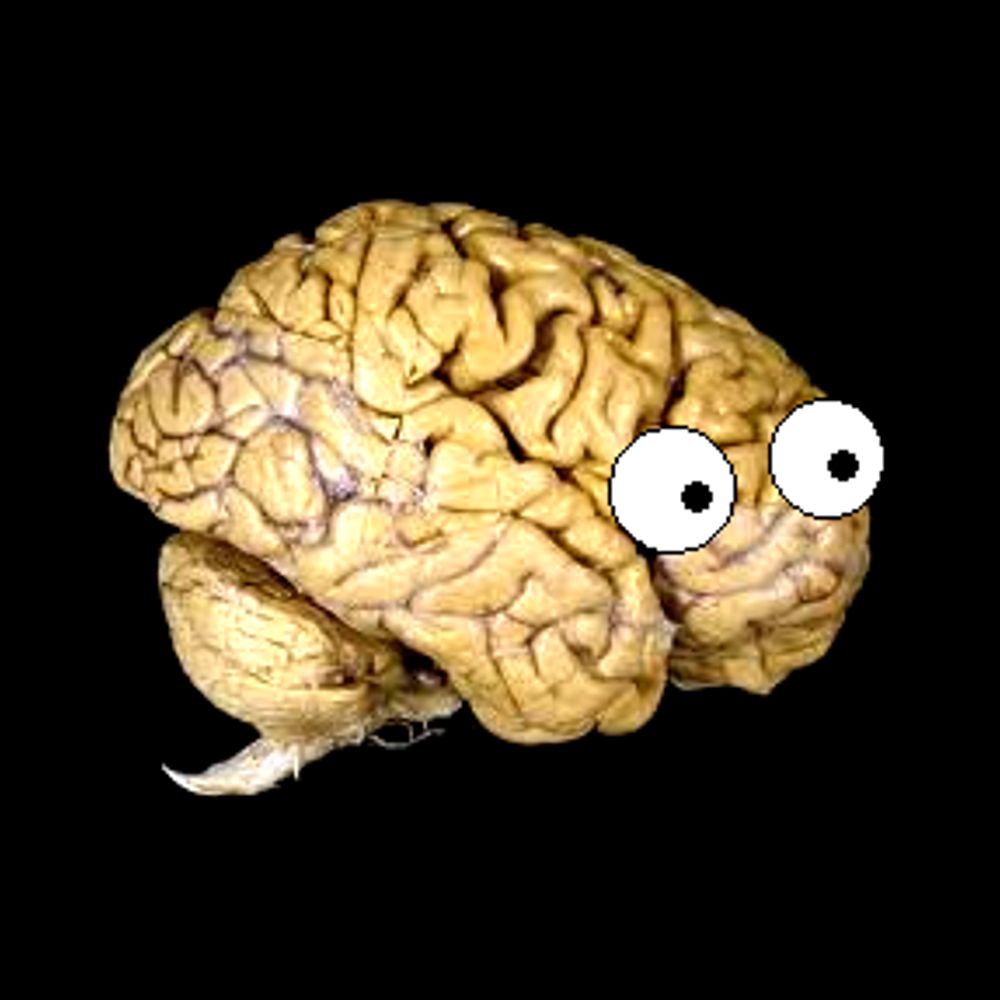
Preventing data leakage in neural decoding - "for autocorrelated neural time series, standard k-fold cross-validation can dramatically overstate performance." www.biorxiv.org/content/10.6...

January 30, 2026 at 8:29 AM
Preventing data leakage in neural decoding - "for autocorrelated neural time series, standard k-fold cross-validation can dramatically overstate performance." www.biorxiv.org/content/10.6...
Reposted by Benedikt Ehinger

Did you have a qualitative paper rejected from #chi2026? As you're revising for your next submission, check out this crowdsourced document containing common critiques of qualitative research and ideas for responding -- and add any new critiques you've encountered:
docs.google.com/document/d/1...
docs.google.com/document/d/1...
Reviewer Critiques (Qualitative Methods) and How to Respond to Them
Reviewer Critiques (Qualitative Methods) and How to Respond to Them Author: Jessica Vitak (+ anyone who adds to the document) About This Document (and a disclaimer) Reviewing is a highly subjective pr...
docs.google.com
January 20, 2026 at 7:30 PM
Did you have a qualitative paper rejected from #chi2026? As you're revising for your next submission, check out this crowdsourced document containing common critiques of qualitative research and ideas for responding -- and add any new critiques you've encountered:
docs.google.com/document/d/1...
docs.google.com/document/d/1...
This Blogpost covers some of the reasons my lab switched to #julialang
Many are left out, e.g. we simply call any python library/function we don't have in Julia, from Julia! (e.g..mne, scopy etc.). Native GPU made easy. Extending other libraries without editing them etc
slicker.me/julia/julia_...
Many are left out, e.g. we simply call any python library/function we don't have in Julia, from Julia! (e.g..mne, scopy etc.). Native GPU made easy. Extending other libraries without editing them etc
slicker.me/julia/julia_...

Where Julia Outshines Python
slicker.me
January 29, 2026 at 7:44 AM
This Blogpost covers some of the reasons my lab switched to #julialang
Many are left out, e.g. we simply call any python library/function we don't have in Julia, from Julia! (e.g..mne, scopy etc.). Native GPU made easy. Extending other libraries without editing them etc
slicker.me/julia/julia_...
Many are left out, e.g. we simply call any python library/function we don't have in Julia, from Julia! (e.g..mne, scopy etc.). Native GPU made easy. Extending other libraries without editing them etc
slicker.me/julia/julia_...
Reposted by Benedikt Ehinger

Have you ever wanted to study individual differences in attention only to be frustrated by prohibitive low reliability?
If so, what a coincidence!
Let me introduce you to the first study from the newly formed Sheffield PandA lab:
Using RSVPs to measure the speed of attention: rdcu.be/e0t0A
1/
If so, what a coincidence!
Let me introduce you to the first study from the newly formed Sheffield PandA lab:
Using RSVPs to measure the speed of attention: rdcu.be/e0t0A
1/

January 26, 2026 at 12:08 PM
Have you ever wanted to study individual differences in attention only to be frustrated by prohibitive low reliability?
If so, what a coincidence!
Let me introduce you to the first study from the newly formed Sheffield PandA lab:
Using RSVPs to measure the speed of attention: rdcu.be/e0t0A
1/
If so, what a coincidence!
Let me introduce you to the first study from the newly formed Sheffield PandA lab:
Using RSVPs to measure the speed of attention: rdcu.be/e0t0A
1/
Reposted by Benedikt Ehinger

How do #CogSci jobs in industry and academia compare? Andrew has helpful insight 👇
Should you go to academia or industry for research in AI or cognitive science? It's the most common question I get asked by PhD students, and I've written up some of my thoughts on the answer, as an epilogue to my research-focused series on these fields: infinitefaculty.substack.com/p/on-researc...

On research careers in academia and industry
The epilogue to a series on Cognitive Science and AI
infinitefaculty.substack.com
January 23, 2026 at 5:25 PM
How do #CogSci jobs in industry and academia compare? Andrew has helpful insight 👇
Reposted by Benedikt Ehinger

Interpreting EEG requires understanding how the skull smears electrical fields as they propagate from the cortex. I made a browser-based simulator for my EEG class to visualize how dipole depth/orientation change the topomap.
dbrang.github.io/EEG-Dipole-D...
Github page: github.com/dbrang/EEG-D...
dbrang.github.io/EEG-Dipole-D...
Github page: github.com/dbrang/EEG-D...
January 20, 2026 at 5:00 PM
Interpreting EEG requires understanding how the skull smears electrical fields as they propagate from the cortex. I made a browser-based simulator for my EEG class to visualize how dipole depth/orientation change the topomap.
dbrang.github.io/EEG-Dipole-D...
Github page: github.com/dbrang/EEG-D...
dbrang.github.io/EEG-Dipole-D...
Github page: github.com/dbrang/EEG-D...
Reposted by Benedikt Ehinger
the best Julia copycat feature since jax
My coding life got so much better when I started using uv, in large part because it meant I stopped using conda
January 21, 2026 at 4:11 AM
the best Julia copycat feature since jax
Reposted by Benedikt Ehinger
I have a PhD opening for my #VIDI BrainShorts project 📽️🧠🤖! Are you or do you know an ambitious, recent (or almost) MSc graduate with a background in NeuroAI and interest in large-scale data collection and video perception? Check out our vacancy! (deadline Feb 15).
werkenbij.uva.nl/en/vacancies...
werkenbij.uva.nl/en/vacancies...
Vacancy — PhD Position in NeuroAI for Video Perception in the Human Brain
<p><span>Are you interested in using AI to unravel the mysteries of the brain? Do you want to perform cutting-edge NeuroAI research and leverage deep learning to understand human vision? Then check out the vacancy below and apply for a PhD position in this exciting research direction.</span></p>
werkenbij.uva.nl
January 16, 2026 at 12:31 PM
I have a PhD opening for my #VIDI BrainShorts project 📽️🧠🤖! Are you or do you know an ambitious, recent (or almost) MSc graduate with a background in NeuroAI and interest in large-scale data collection and video perception? Check out our vacancy! (deadline Feb 15).
werkenbij.uva.nl/en/vacancies...
werkenbij.uva.nl/en/vacancies...
Reposted by Benedikt Ehinger
If you are working with #JuliaLang in health, medicine, or biomedical research, consider submitting an abstract to the 🩺 Health Mini-Symposium at JuliaCon 2026 (10–15 August 2026, Mainz, Germany). @thecedarprince.bsky.social

January 16, 2026 at 6:13 PM
If you are working with #JuliaLang in health, medicine, or biomedical research, consider submitting an abstract to the 🩺 Health Mini-Symposium at JuliaCon 2026 (10–15 August 2026, Mainz, Germany). @thecedarprince.bsky.social
Reposted by Benedikt Ehinger

Y'all? Never again is now.

January 16, 2026 at 8:25 PM
Y'all? Never again is now.
Natalie is sheer amazing. Any faculty/company would be very lucky to have her!
main goal for this year: find a new job! 🙂
looking for a role with fun & complex technical challenges & within a great community. my main expertise is in signal processing/EEG/MEG, but topic-wise I am quite flexible.
science/industry both great! starting mid-year. nschawor.github.io/cv
looking for a role with fun & complex technical challenges & within a great community. my main expertise is in signal processing/EEG/MEG, but topic-wise I am quite flexible.
science/industry both great! starting mid-year. nschawor.github.io/cv
January 16, 2026 at 5:57 PM
Natalie is sheer amazing. Any faculty/company would be very lucky to have her!
Reposted by Benedikt Ehinger
I didn't even realize how long I had been waiting for a tool like this!

Want to get the data out of a PDF figure? As in, the actual data – not a rough trace-along-the-lines version?
I made an app you might like: adamkucharski.github.io/pdf2plot/
It all started a few years ago... 🧵
I made an app you might like: adamkucharski.github.io/pdf2plot/
It all started a few years ago... 🧵
January 15, 2026 at 7:36 AM
I didn't even realize how long I had been waiting for a tool like this!
Reposted by Benedikt Ehinger
still one of the best explanations of principal component analysis (pca), explained at different levels from layman to the more math inclined stats.stackexchange.com/a/140579/132...

Making sense of principal component analysis, eigenvectors & eigenvalues
In today's pattern recognition class my professor talked about PCA, eigenvectors and eigenvalues.
I understood the mathematics of it. If I'm asked to find eigenvalues etc. I'll do it correctly li...
stats.stackexchange.com
January 13, 2026 at 3:51 PM
still one of the best explanations of principal component analysis (pca), explained at different levels from layman to the more math inclined stats.stackexchange.com/a/140579/132...
Reposted by Benedikt Ehinger

Great article, this is what matters most on Earth right now. Forget the chaotic fascist. Repeat: forget the orange noise!


January 11, 2026 at 9:01 PM
Great article, this is what matters most on Earth right now. Forget the chaotic fascist. Repeat: forget the orange noise!