



Jay Hennig
@jhennig.bsky.social
Computational neuroscientist interested in how we learn, and dad to twin boys
Asst prof at Baylor College of Medicine
https://www.henniglab.org/
Asst prof at Baylor College of Medicine
https://www.henniglab.org/
Pinned
Postdoctoral Associate - Specialist- Computational Cognition
Postdoctoral Associate - Specialist- Computational Cognition
jobs.bcm.edu
Help! We want to understand multi-task neural representations, but all we have is 24/7 spiking data from human patients in hippocampus and cortex, along with video, audio, speech, heart rate, and so much more!
If you can help, please apply to join the lab as a postdoc ☺️
jobs.bcm.edu/job/Postdoct...
If you can help, please apply to join the lab as a postdoc ☺️
jobs.bcm.edu/job/Postdoct...
Reposted by Jay Hennig

How do diverse context structures reshape representations in LLMs?
In our new work, we explore this via representational straightening. We found LLMs are like a Swiss Army knife: they select different computational mechanisms reflected in different representational structures. 1/
In our new work, we explore this via representational straightening. We found LLMs are like a Swiss Army knife: they select different computational mechanisms reflected in different representational structures. 1/

February 4, 2026 at 2:54 AM
How do diverse context structures reshape representations in LLMs?
In our new work, we explore this via representational straightening. We found LLMs are like a Swiss Army knife: they select different computational mechanisms reflected in different representational structures. 1/
In our new work, we explore this via representational straightening. We found LLMs are like a Swiss Army knife: they select different computational mechanisms reflected in different representational structures. 1/
Reposted by Jay Hennig

Taking the #GRCBasalGanglia Oath ✋🏼
I acknowledge that the go/no-go model of the BG was useful but it is outdated and incorrect, or at least incomplete. I pledge not to use the go/no-go model as a strawman to motivate my work.
I acknowledge that the go/no-go model of the BG was useful but it is outdated and incorrect, or at least incomplete. I pledge not to use the go/no-go model as a strawman to motivate my work.

February 2, 2026 at 7:57 PM
Taking the #GRCBasalGanglia Oath ✋🏼
I acknowledge that the go/no-go model of the BG was useful but it is outdated and incorrect, or at least incomplete. I pledge not to use the go/no-go model as a strawman to motivate my work.
I acknowledge that the go/no-go model of the BG was useful but it is outdated and incorrect, or at least incomplete. I pledge not to use the go/no-go model as a strawman to motivate my work.
Reposted by Jay Hennig

1/7 Can infants recognise the world around them? 👶🧠 As part of the FOUNDCOG project, we scanned 134 awake infants using fMRI. Published today in Nature Neuroscience, our research reveals 2-month-old infants already possess complex visual representations in VVC that align with DNNs.
February 2, 2026 at 4:00 PM
1/7 Can infants recognise the world around them? 👶🧠 As part of the FOUNDCOG project, we scanned 134 awake infants using fMRI. Published today in Nature Neuroscience, our research reveals 2-month-old infants already possess complex visual representations in VVC that align with DNNs.
Reposted by Jay Hennig
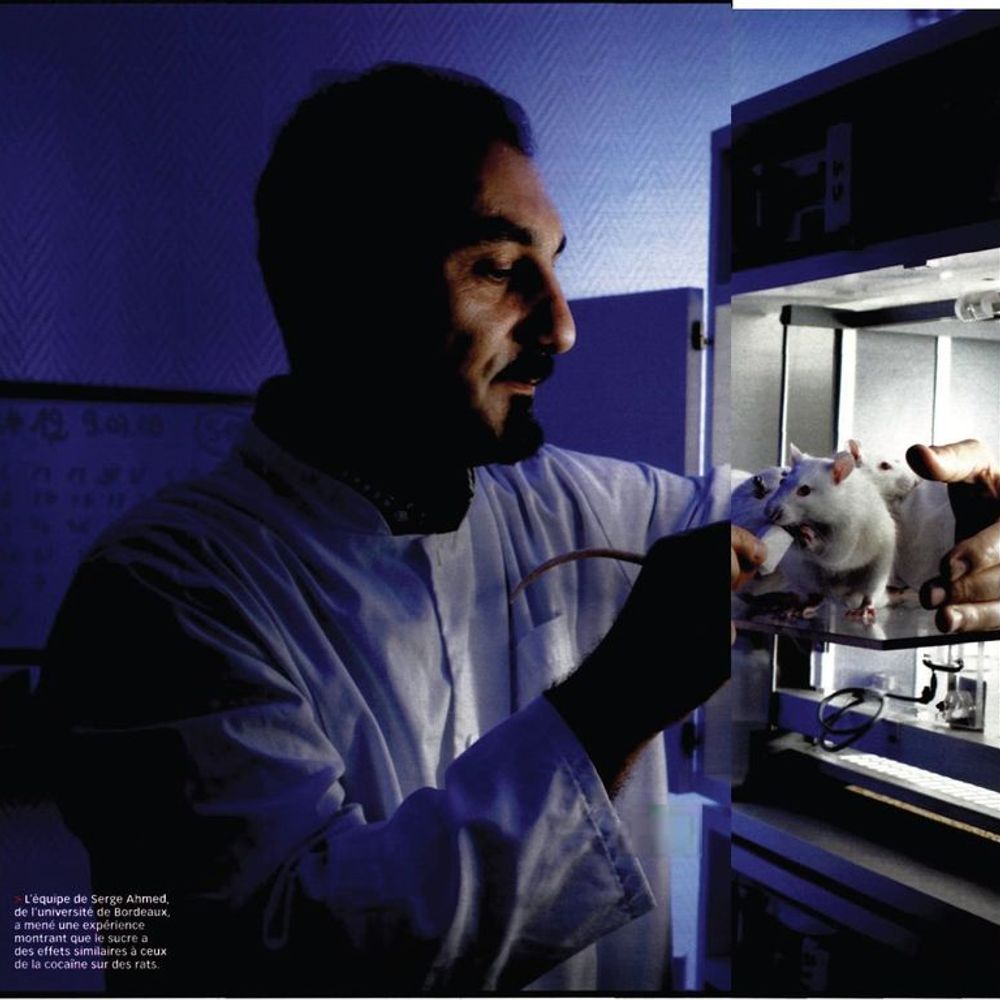
Reward as drive reduction, the return!
This opinion piece on the explanatory and unifying power of the homeostatic reinforcement learning framework is amazingly accessible, despite its technical nature, and extremely insightful 👏
www.sciencedirect.com/science/arti...
1/2
This opinion piece on the explanatory and unifying power of the homeostatic reinforcement learning framework is amazingly accessible, despite its technical nature, and extremely insightful 👏
www.sciencedirect.com/science/arti...
1/2

January 27, 2026 at 9:22 AM
Reward as drive reduction, the return!
This opinion piece on the explanatory and unifying power of the homeostatic reinforcement learning framework is amazingly accessible, despite its technical nature, and extremely insightful 👏
www.sciencedirect.com/science/arti...
1/2
This opinion piece on the explanatory and unifying power of the homeostatic reinforcement learning framework is amazingly accessible, despite its technical nature, and extremely insightful 👏
www.sciencedirect.com/science/arti...
1/2
Reposted by Jay Hennig

At @elife.bsky.social you can now include explainer videos with every figure. Like going to a seminar while you engage with the paper. First example here elifesciences.org/articles/106...
Click the arrows next to each figure to get a video of @mathiassablemeyer.bsky.social explaining it for you!
Click the arrows next to each figure to get a video of @mathiassablemeyer.bsky.social explaining it for you!

January 22, 2026 at 6:16 PM
At @elife.bsky.social you can now include explainer videos with every figure. Like going to a seminar while you engage with the paper. First example here elifesciences.org/articles/106...
Click the arrows next to each figure to get a video of @mathiassablemeyer.bsky.social explaining it for you!
Click the arrows next to each figure to get a video of @mathiassablemeyer.bsky.social explaining it for you!
Reposted by Jay Hennig

Oh hi did you know eNeuro @sfnjournals.bsky.social does double-blind peer review and from what I've seen as an editor the past couple years it works really well.

Cost of being female lead/corresponding author in biomedical sciences: "[T]he median amount of time spent under review is 7.4%–14.6% longer for female-authored articles than for male-authored articles" even in disciplines where women well-represented. #AcademicSky
journals.plos.org/plosbiology/...
journals.plos.org/plosbiology/...

Biomedical and life science articles by female researchers spend longer under review
Women are underrepresented in academia, especially in STEMM fields, at top institutions, and in senior positions. This study analyzes millions of biomedical and life science articles, revealing that f...
journals.plos.org
January 21, 2026 at 3:30 PM
Oh hi did you know eNeuro @sfnjournals.bsky.social does double-blind peer review and from what I've seen as an editor the past couple years it works really well.
Reposted by Jay Hennig

Ripple oscillations are central for memory and sleep.
But ripple detection in humans remains challenging. Here we introduce a simulation approach in @natcomms.nature.com as common ripple detectors mainly pick up 1/f noise and not genuine oscillations
👇
www.nature.com/articles/s41...
#neuroskyence
But ripple detection in humans remains challenging. Here we introduce a simulation approach in @natcomms.nature.com as common ripple detectors mainly pick up 1/f noise and not genuine oscillations
👇
www.nature.com/articles/s41...
#neuroskyence

Aperiodic 1/f noise drives ripple activity in humans - Nature Communications
How aperiodic 1/f noise drives ripple activity in human brain and impacts on ripple detections is not fully understood. Here authors show that ripple detections should be driven by the 1/f noise, whic...
www.nature.com
January 21, 2026 at 6:57 PM
Ripple oscillations are central for memory and sleep.
But ripple detection in humans remains challenging. Here we introduce a simulation approach in @natcomms.nature.com as common ripple detectors mainly pick up 1/f noise and not genuine oscillations
👇
www.nature.com/articles/s41...
#neuroskyence
But ripple detection in humans remains challenging. Here we introduce a simulation approach in @natcomms.nature.com as common ripple detectors mainly pick up 1/f noise and not genuine oscillations
👇
www.nature.com/articles/s41...
#neuroskyence
Reposted by Jay Hennig
Since the Namboodiri lab isn’t on Bluesky (I think?), I’d like to amplify this cool paper which I and others in the Janak lab made a small contribution to.

Memory erasure by dopamine-gated retrospective learning https://www.biorxiv.org/content/10.64898/2026.01.17.700100v1
January 22, 2026 at 2:36 AM
Since the Namboodiri lab isn’t on Bluesky (I think?), I’d like to amplify this cool paper which I and others in the Janak lab made a small contribution to.
My coding life got so much better when I started using uv, in large part because it meant I stopped using conda
January 21, 2026 at 3:14 AM
My coding life got so much better when I started using uv, in large part because it meant I stopped using conda
Reposted by Jay Hennig

This is great - it's about time someone updated the discourse on LLM energy usage to reflect that coding agents use massively more prompts than occasional questions to ChatGPT
Simon estimates that a day of coding agent usage comes out close to the energy needed to run a dishwasher
Simon estimates that a day of coding agent usage comes out close to the energy needed to run a dishwasher

Whenever I read discourse on AI energy/water use that focuses on the "median query," I can't help but feel misled. Coding agents like Claude Code send hundreds of longer-than-median queries every session, and I run dozens of sessions a day.
On my blog: www.simonpcouch.com/blog/2026-01...
On my blog: www.simonpcouch.com/blog/2026-01...

January 20, 2026 at 11:10 PM
This is great - it's about time someone updated the discourse on LLM energy usage to reflect that coding agents use massively more prompts than occasional questions to ChatGPT
Simon estimates that a day of coding agent usage comes out close to the energy needed to run a dishwasher
Simon estimates that a day of coding agent usage comes out close to the energy needed to run a dishwasher
Reposted by Jay Hennig

Can reward improve memory for what came before it? 🌟
In a registered report with @duncanlabuoft.bsky.social & @megschlichting.bsky.social, we reconcile mixed findings from past studies: reward retroactively boosts associative—but not item—memory, and only in reward-sensitive individuals!
In a registered report with @duncanlabuoft.bsky.social & @megschlichting.bsky.social, we reconcile mixed findings from past studies: reward retroactively boosts associative—but not item—memory, and only in reward-sensitive individuals!
OSF
osf.io
January 12, 2026 at 5:41 PM
Can reward improve memory for what came before it? 🌟
In a registered report with @duncanlabuoft.bsky.social & @megschlichting.bsky.social, we reconcile mixed findings from past studies: reward retroactively boosts associative—but not item—memory, and only in reward-sensitive individuals!
In a registered report with @duncanlabuoft.bsky.social & @megschlichting.bsky.social, we reconcile mixed findings from past studies: reward retroactively boosts associative—but not item—memory, and only in reward-sensitive individuals!
Reposted by Jay Hennig

I love this so much. After pushback on his recent "Medicine is the only field that reaches 6 sigma" with "my field, psychophysics is so awesome" he posted this. Hurray all Psychophysicists. LETS CELEBRATE PSYCHOPHYSICS. An island of large effects is us!
Psychophysics is a human-facing science with interventions arguably more robust than medicine.

1000 Hurts
Psychophysics is a human-facing science with interventions arguably more robust than medicine.
www.argmin.net
January 15, 2026 at 4:14 PM
I love this so much. After pushback on his recent "Medicine is the only field that reaches 6 sigma" with "my field, psychophysics is so awesome" he posted this. Hurray all Psychophysicists. LETS CELEBRATE PSYCHOPHYSICS. An island of large effects is us!
Reposted by Jay Hennig

I’m very happy to share the latest from my lab published in @Nature
Hippocampal neurons that initially encode reward shift their tuning over the course of days to precede or predict reward.
Full text here:
rdcu.be/eY5nh
Hippocampal neurons that initially encode reward shift their tuning over the course of days to precede or predict reward.
Full text here:
rdcu.be/eY5nh
January 14, 2026 at 9:32 PM
I’m very happy to share the latest from my lab published in @Nature
Hippocampal neurons that initially encode reward shift their tuning over the course of days to precede or predict reward.
Full text here:
rdcu.be/eY5nh
Hippocampal neurons that initially encode reward shift their tuning over the course of days to precede or predict reward.
Full text here:
rdcu.be/eY5nh
Help! We want to understand multi-task neural representations, but all we have is 24/7 spiking data from human patients in hippocampus and cortex, along with video, audio, speech, heart rate, and so much more!
If you can help, please apply to join the lab as a postdoc ☺️
jobs.bcm.edu/job/Postdoct...
If you can help, please apply to join the lab as a postdoc ☺️
jobs.bcm.edu/job/Postdoct...
Postdoctoral Associate - Specialist- Computational Cognition
Postdoctoral Associate - Specialist- Computational Cognition
jobs.bcm.edu
January 13, 2026 at 9:45 PM
Help! We want to understand multi-task neural representations, but all we have is 24/7 spiking data from human patients in hippocampus and cortex, along with video, audio, speech, heart rate, and so much more!
If you can help, please apply to join the lab as a postdoc ☺️
jobs.bcm.edu/job/Postdoct...
If you can help, please apply to join the lab as a postdoc ☺️
jobs.bcm.edu/job/Postdoct...
Reposted by Jay Hennig

When and why do modular representations emerge in neural networks?
@stefanofusi.bsky.social and I posted a preprint answering this question last year, and now it has been extensively revised, refocused, and generalized. Read more here: doi.org/10.1101/2024... (1/7)
@stefanofusi.bsky.social and I posted a preprint answering this question last year, and now it has been extensively revised, refocused, and generalized. Read more here: doi.org/10.1101/2024... (1/7)

January 9, 2026 at 7:06 PM
When and why do modular representations emerge in neural networks?
@stefanofusi.bsky.social and I posted a preprint answering this question last year, and now it has been extensively revised, refocused, and generalized. Read more here: doi.org/10.1101/2024... (1/7)
@stefanofusi.bsky.social and I posted a preprint answering this question last year, and now it has been extensively revised, refocused, and generalized. Read more here: doi.org/10.1101/2024... (1/7)
Reposted by Jay Hennig

This is the way. Starting very early, eg with parameter/model recovery, can even inform task design. Wish I was more consistent with this.
If you need something to point to, great tutorial paper by Anne Collins & Bob Wilson:
elifesciences.org/articles/49547
If you need something to point to, great tutorial paper by Anne Collins & Bob Wilson:
elifesciences.org/articles/49547

Ten simple rules for the computational modeling of behavioral data
Computational modeling of cognitive and neuroscience data is an insightful and powerful tool, but has many potential pitfalls that can be avoided by following simple guidelines.
elifesciences.org
January 12, 2026 at 1:10 PM
This is the way. Starting very early, eg with parameter/model recovery, can even inform task design. Wish I was more consistent with this.
If you need something to point to, great tutorial paper by Anne Collins & Bob Wilson:
elifesciences.org/articles/49547
If you need something to point to, great tutorial paper by Anne Collins & Bob Wilson:
elifesciences.org/articles/49547
Reposted by Jay Hennig

once again being driven insane by ML conference submissions


January 9, 2026 at 2:07 PM
once again being driven insane by ML conference submissions
Reposted by Jay Hennig

With some trepidation, I'm putting this out into the world:
gershmanlab.com/textbook.html
It's a textbook called Computational Foundations of Cognitive Neuroscience, which I wrote for my class.
My hope is that this will be a living document, continuously improved as I get feedback.
gershmanlab.com/textbook.html
It's a textbook called Computational Foundations of Cognitive Neuroscience, which I wrote for my class.
My hope is that this will be a living document, continuously improved as I get feedback.
January 9, 2026 at 1:27 AM
With some trepidation, I'm putting this out into the world:
gershmanlab.com/textbook.html
It's a textbook called Computational Foundations of Cognitive Neuroscience, which I wrote for my class.
My hope is that this will be a living document, continuously improved as I get feedback.
gershmanlab.com/textbook.html
It's a textbook called Computational Foundations of Cognitive Neuroscience, which I wrote for my class.
My hope is that this will be a living document, continuously improved as I get feedback.
Reposted by Jay Hennig
Just published my review of neuroscience in 2025, on The Spike.
The 10th of these, would you believe?
This year we have foundation models, breakthroughs in using light to understand the brain, a gene therapy, and more
Enjoy!
medium.com/the-spike/20...
The 10th of these, would you believe?
This year we have foundation models, breakthroughs in using light to understand the brain, a gene therapy, and more
Enjoy!
medium.com/the-spike/20...

2025: A Review of the Year in Neuroscience
Enlightening the brain
medium.com
December 30, 2025 at 3:52 PM
Just published my review of neuroscience in 2025, on The Spike.
The 10th of these, would you believe?
This year we have foundation models, breakthroughs in using light to understand the brain, a gene therapy, and more
Enjoy!
medium.com/the-spike/20...
The 10th of these, would you believe?
This year we have foundation models, breakthroughs in using light to understand the brain, a gene therapy, and more
Enjoy!
medium.com/the-spike/20...
Reposted by Jay Hennig
🧠 New year, new preprint!
Why does motor learning involve multiple brain regions? We propose that the cortico-cerebellar system learns a "map" of actions where similar movements are nearby, while basal ganglia do RL in this simplified space.
www.biorxiv.org/content/10.6...
Why does motor learning involve multiple brain regions? We propose that the cortico-cerebellar system learns a "map" of actions where similar movements are nearby, while basal ganglia do RL in this simplified space.
www.biorxiv.org/content/10.6...

January 5, 2026 at 12:54 PM
🧠 New year, new preprint!
Why does motor learning involve multiple brain regions? We propose that the cortico-cerebellar system learns a "map" of actions where similar movements are nearby, while basal ganglia do RL in this simplified space.
www.biorxiv.org/content/10.6...
Why does motor learning involve multiple brain regions? We propose that the cortico-cerebellar system learns a "map" of actions where similar movements are nearby, while basal ganglia do RL in this simplified space.
www.biorxiv.org/content/10.6...
Reposted by Jay Hennig
New paper from the lab: "Asynchronous firing and off states in working memory maintenance"
www.sciencedirect.com/science/arti...
www.sciencedirect.com/science/arti...

Asynchronous firing and off states in working memory maintenance
Persistent spiking activity and activity-silent mechanisms have been proposed as neural correlates of working memory. To determine their relative cont…
www.sciencedirect.com
December 29, 2025 at 2:41 PM
New paper from the lab: "Asynchronous firing and off states in working memory maintenance"
www.sciencedirect.com/science/arti...
www.sciencedirect.com/science/arti...
Reposted by Jay Hennig

lab preprint! Interopceptive predictions are central to many brain-body interactions theories, but it's unclear if/how they affect bodily physiology. We (fearless Einav Litvak et al) show that insular cortex predictions are essential for glucose homeostasis-THREAD.. www.biorxiv.org/content/10.6...

Insular cortex predictions regulate glucose homeostasis
Brain-body interactions are essential for physical and emotional homeostasis. The brain uses information from the external world to predict upcoming bodily changes. This process involves interoceptive...
www.biorxiv.org
December 12, 2025 at 1:15 PM
lab preprint! Interopceptive predictions are central to many brain-body interactions theories, but it's unclear if/how they affect bodily physiology. We (fearless Einav Litvak et al) show that insular cortex predictions are essential for glucose homeostasis-THREAD.. www.biorxiv.org/content/10.6...
Reposted by Jay Hennig
New Perspective from myself, Sarah Heilbronner and @myoo.bsky.social . “Rethinking the centrality of brain areas in understanding functional organization” in Nature Neuroscience. 🧵
rdcu.be/eVZ1A
rdcu.be/eVZ1A

Rethinking the centrality of brain areas in understanding functional organization
Nature Neuroscience - Parcellation of the cortex into functionally modular brain areas is foundational to neuroscience. Here, Hayden, Heilbronner and Yoo question the central status of brain areas...
rdcu.be
December 23, 2025 at 1:02 PM
New Perspective from myself, Sarah Heilbronner and @myoo.bsky.social . “Rethinking the centrality of brain areas in understanding functional organization” in Nature Neuroscience. 🧵
rdcu.be/eVZ1A
rdcu.be/eVZ1A
Reposted by Jay Hennig

📆 updated for 2026!
list of summer schools & short courses in the realm of (computational) neuroscience or data analysis of EEG / MEG / LFP: 🔗 docs.google.com/spreadsheets...
list of summer schools & short courses in the realm of (computational) neuroscience or data analysis of EEG / MEG / LFP: 🔗 docs.google.com/spreadsheets...

various computational neuroscience / MEEG / LFP short courses and summer schools
docs.google.com
December 19, 2025 at 4:37 PM
📆 updated for 2026!
list of summer schools & short courses in the realm of (computational) neuroscience or data analysis of EEG / MEG / LFP: 🔗 docs.google.com/spreadsheets...
list of summer schools & short courses in the realm of (computational) neuroscience or data analysis of EEG / MEG / LFP: 🔗 docs.google.com/spreadsheets...
Reposted by Jay Hennig
Our paper on data constrained RNN that generalize to optogenetic perturbations now citable on eLife:
doi.org/10.7554/eLif...
doi.org/10.7554/eLif...
December 18, 2025 at 11:07 PM
Our paper on data constrained RNN that generalize to optogenetic perturbations now citable on eLife:
doi.org/10.7554/eLif...
doi.org/10.7554/eLif...