




Harrison Ritz
@hritz.bsky.social
cybernetic cognitive control 🤖
computational cognitive neuroscience 🧠
postdoc princeton neuro 🍕
he/him 🇨🇦 harrisonritz.github.io
computational cognitive neuroscience 🧠
postdoc princeton neuro 🍕
he/him 🇨🇦 harrisonritz.github.io
Pinned
Harrison Ritz
@hritz.bsky.social
· Jul 27
We put out this preprint a couple months ago, but I really wanted to replicate our findings before we went to publication.
At first, what we found was very confusing!
But when we dug in, it revealed a fascinating neural strategy for how we switch between tasks
doi.org/10.1101/2024.09.29.615736
🧵
At first, what we found was very confusing!
But when we dug in, it revealed a fascinating neural strategy for how we switch between tasks
doi.org/10.1101/2024.09.29.615736
🧵
Reposted by Harrison Ritz

Enjoyed a lot doing this work with @fredcrevecoeur.bsky.social throughout! Glad it's finally out 🎉🎉🎉
Here is the accompanying code for implementing:
github.com/neurohari/si...
Here is the accompanying code for implementing:
github.com/neurohari/si...
February 13, 2026 at 4:40 PM
Enjoyed a lot doing this work with @fredcrevecoeur.bsky.social throughout! Glad it's finally out 🎉🎉🎉
Here is the accompanying code for implementing:
github.com/neurohari/si...
Here is the accompanying code for implementing:
github.com/neurohari/si...
Reposted by Harrison Ritz

Excited to announce that my last project from grad school is finally out in JoCN! Accepted last fall, but if you’re a fan of formatted PDFs now is your time to strike.
Neural Reinstatement of Encoding Context Mediates the Switch between Fear and Extinction Recall
direct.mit.edu/jocn/article...
Neural Reinstatement of Encoding Context Mediates the Switch between Fear and Extinction Recall
direct.mit.edu/jocn/article...

Neural Reinstatement of Encoding Context Mediates the Switch between Fear and Extinction Recall
Abstract. Fear conditioning and extinction generate conflicting memory representations for a conditioned stimulus (CS). Retrieval of either memory is largely determined by the context where the CS is ...
direct.mit.edu
February 9, 2026 at 3:50 PM
Excited to announce that my last project from grad school is finally out in JoCN! Accepted last fall, but if you’re a fan of formatted PDFs now is your time to strike.
Neural Reinstatement of Encoding Context Mediates the Switch between Fear and Extinction Recall
direct.mit.edu/jocn/article...
Neural Reinstatement of Encoding Context Mediates the Switch between Fear and Extinction Recall
direct.mit.edu/jocn/article...
Reposted by Harrison Ritz

As promised: a detailed figure-by-figure thread on our @pnas.org paper:
doi.org/10.1073/pnas...
We use signal correlations and noise correlations in chronic imaging data to show that representational drift is shaped by a balance between Hebbian and stochastic changes.
Let’s dive in 👇
🧠🧪 1/9
doi.org/10.1073/pnas...
We use signal correlations and noise correlations in chronic imaging data to show that representational drift is shaped by a balance between Hebbian and stochastic changes.
Let’s dive in 👇
🧠🧪 1/9
February 13, 2026 at 3:10 PM
As promised: a detailed figure-by-figure thread on our @pnas.org paper:
doi.org/10.1073/pnas...
We use signal correlations and noise correlations in chronic imaging data to show that representational drift is shaped by a balance between Hebbian and stochastic changes.
Let’s dive in 👇
🧠🧪 1/9
doi.org/10.1073/pnas...
We use signal correlations and noise correlations in chronic imaging data to show that representational drift is shaped by a balance between Hebbian and stochastic changes.
Let’s dive in 👇
🧠🧪 1/9
awesome paper bridging the gap between RNN and optimal control models of motor control
Paper is out by @harikalidindi.bsky.social : feedback control model of neural population activity
www.cell.com/cell-reports...
www.cell.com/cell-reports...

Feedback control of random networks as a model of flexible motor cortical dynamics across tasks
Kalidindi and Crevecoeur develop a computational framework linking feedback-controlled
networks to limb dynamics. They demonstrate that optimal control of fixed network
reproduces key motor cortical d...
www.cell.com
February 13, 2026 at 1:05 PM
awesome paper bridging the gap between RNN and optimal control models of motor control
Reposted by Harrison Ritz
'(...) AI-augmented work moves collectively towards areas richest in data. With reduced follow-on engagement, AI tools seem to automate established fields rather than explore new ones, highlighting a tension between personal advancement and collective scientific progress.'

Artificial intelligence tools expand scientists’ impact but contract science’s focus - Nature
Artificial intelligence boosts individual scientists’ output, citations and career progression, but collectively narrows research diversity and reduces collaboration, concentrating work in data-rich a...
www.nature.com
February 12, 2026 at 12:00 PM
'(...) AI-augmented work moves collectively towards areas richest in data. With reduced follow-on engagement, AI tools seem to automate established fields rather than explore new ones, highlighting a tension between personal advancement and collective scientific progress.'
Reposted by Harrison Ritz
We were told (by some) not to tell anyone in academia about family planning, pregnancy, or juggling kids w/ work. Or else say bye to your career. Thankfully, this was not my experience with my supervisors (or hiring committees), though I did witness it elsewhere. Let's keep pushing change!

"The academic structure … makes planning for a family feel like an impossible luxury."
In this #ScienceWorkingLife, two postdocs share how, as women in academia, having children can feel impossible—and how talking about it makes them feel less alone. https://scim.ag/46uBWgD #WomenInScienceDay
In this #ScienceWorkingLife, two postdocs share how, as women in academia, having children can feel impossible—and how talking about it makes them feel less alone. https://scim.ag/46uBWgD #WomenInScienceDay

February 12, 2026 at 4:00 AM
We were told (by some) not to tell anyone in academia about family planning, pregnancy, or juggling kids w/ work. Or else say bye to your career. Thankfully, this was not my experience with my supervisors (or hiring committees), though I did witness it elsewhere. Let's keep pushing change!
looks really cool

Hierarchy in neuronal representations of multiple tasks in prefrontal cortex https://www.biorxiv.org/content/10.64898/2026.02.10.705211v1
February 13, 2026 at 2:37 AM
looks really cool
Reposted by Harrison Ritz

Our paper is out in @natneuro.nature.com!
www.nature.com/articles/s41...
We develop a geometric theory of how neural populations support generalization across many tasks.
@zuckermanbrain.bsky.social
@flatironinstitute.org
@kempnerinstitute.bsky.social
1/14
www.nature.com/articles/s41...
We develop a geometric theory of how neural populations support generalization across many tasks.
@zuckermanbrain.bsky.social
@flatironinstitute.org
@kempnerinstitute.bsky.social
1/14

February 10, 2026 at 3:56 PM
Our paper is out in @natneuro.nature.com!
www.nature.com/articles/s41...
We develop a geometric theory of how neural populations support generalization across many tasks.
@zuckermanbrain.bsky.social
@flatironinstitute.org
@kempnerinstitute.bsky.social
1/14
www.nature.com/articles/s41...
We develop a geometric theory of how neural populations support generalization across many tasks.
@zuckermanbrain.bsky.social
@flatironinstitute.org
@kempnerinstitute.bsky.social
1/14
Reposted by Harrison Ritz

Applications for BAMB! 2026 are officially open!
Join us in Barcelona (July 12–23) to master the art of behavioral modeling with our incredible faculty:
@meganakpeters.bsky.social
@marcelomattar.bsky.social
@khamascience.bsky.social
@thecharleywu.bsky.social
Apply now here: www.bambschool.org
Join us in Barcelona (July 12–23) to master the art of behavioral modeling with our incredible faculty:
@meganakpeters.bsky.social
@marcelomattar.bsky.social
@khamascience.bsky.social
@thecharleywu.bsky.social
Apply now here: www.bambschool.org

BAMB! 2026 | Barcelona Summer School for Advanced Modeling of Behavior
Intensive training for experienced researchers in cognitive science, computational neuroscience and neuro-AI. Five interconnected modules, expert faculty, hands-on projects. July 12-23, 2026.
www.bambschool.org
February 12, 2026 at 1:08 PM
Applications for BAMB! 2026 are officially open!
Join us in Barcelona (July 12–23) to master the art of behavioral modeling with our incredible faculty:
@meganakpeters.bsky.social
@marcelomattar.bsky.social
@khamascience.bsky.social
@thecharleywu.bsky.social
Apply now here: www.bambschool.org
Join us in Barcelona (July 12–23) to master the art of behavioral modeling with our incredible faculty:
@meganakpeters.bsky.social
@marcelomattar.bsky.social
@khamascience.bsky.social
@thecharleywu.bsky.social
Apply now here: www.bambschool.org

Reposted by Harrison Ritz

The basal ganglia output is often framed as a motor gate: corticostriatal circuits select an action, then GPi/SNr-thalamus helps release it. In humans, we find this same pathway carries cognitive variables embedded in movement signals—and even produces learning-relevant signals after feedback. 1/10
biorxiv.org
February 12, 2026 at 5:43 PM
The basal ganglia output is often framed as a motor gate: corticostriatal circuits select an action, then GPi/SNr-thalamus helps release it. In humans, we find this same pathway carries cognitive variables embedded in movement signals—and even produces learning-relevant signals after feedback. 1/10
Reposted by Harrison Ritz

New paper alert 📣 #Neuroskyence
"Rhythmic sampling of multiple decision alternatives in the human brain" @natcomms.nature.com
together with @ycaoneuro.bsky.social @maryamtohidi.bsky.social @donnerlab.bsky.social @ktsetsos.bsky.social
www.nature.com/articles/s41...
🧵1/
"Rhythmic sampling of multiple decision alternatives in the human brain" @natcomms.nature.com
together with @ycaoneuro.bsky.social @maryamtohidi.bsky.social @donnerlab.bsky.social @ktsetsos.bsky.social
www.nature.com/articles/s41...
🧵1/

Rhythmic sampling of multiple decision alternatives in the human brain - Nature Communications
How humans process competing information when making multi-alternative decisions remains unclear. Here, the authors show that the brain resolves the trade-off between “evaluating within” and “comparin...
www.nature.com
February 12, 2026 at 2:41 PM
New paper alert 📣 #Neuroskyence
"Rhythmic sampling of multiple decision alternatives in the human brain" @natcomms.nature.com
together with @ycaoneuro.bsky.social @maryamtohidi.bsky.social @donnerlab.bsky.social @ktsetsos.bsky.social
www.nature.com/articles/s41...
🧵1/
"Rhythmic sampling of multiple decision alternatives in the human brain" @natcomms.nature.com
together with @ycaoneuro.bsky.social @maryamtohidi.bsky.social @donnerlab.bsky.social @ktsetsos.bsky.social
www.nature.com/articles/s41...
🧵1/
Honestly one of the best alcohol-free out there.
Was the beer-of-choice for my wife during her pregnancy
Was the beer-of-choice for my wife during her pregnancy


February 12, 2026 at 3:49 AM
Honestly one of the best alcohol-free out there.
Was the beer-of-choice for my wife during her pregnancy
Was the beer-of-choice for my wife during her pregnancy
Reposted by Harrison Ritz

Thrilled that my paper is out in the @nature.com. We explored how the brain builds complex tasks by compositionally combining simpler sub-task representations. The brain flexibly performs multiple tasks by dynamically reusing neural subspaces for sensory inputs and motor actions
rdcu.be/eRVUk
rdcu.be/eRVUk

Building compositional tasks with shared neural subspaces
Nature - The brain can flexibly perform multiple tasks by compositionally combining task-relevant neural representations.
rdcu.be
February 11, 2026 at 10:40 PM
Thrilled that my paper is out in the @nature.com. We explored how the brain builds complex tasks by compositionally combining simpler sub-task representations. The brain flexibly performs multiple tasks by dynamically reusing neural subspaces for sensory inputs and motor actions
rdcu.be/eRVUk
rdcu.be/eRVUk
Reposted by Harrison Ritz
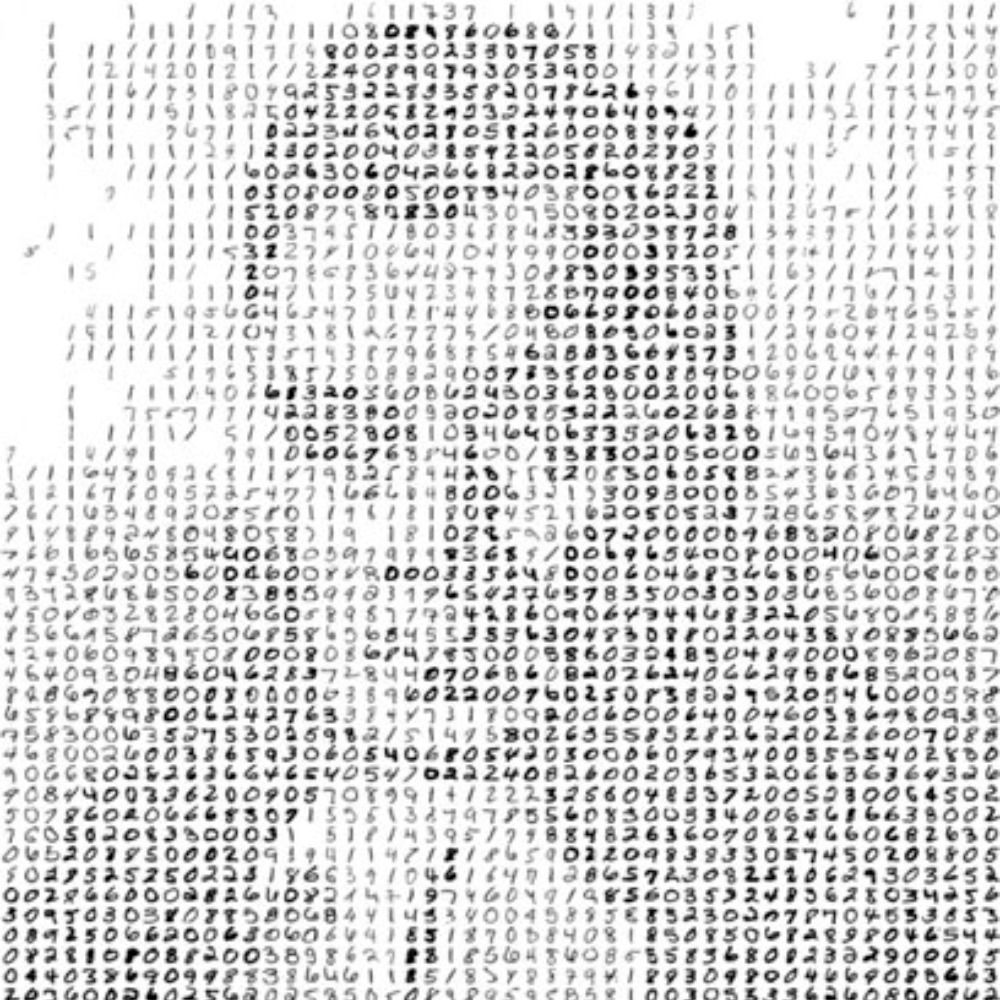
Excited to announce a new book telling the story of mathematical approaches to studying the mind, from the origins of cognitive science to modern AI! The Laws of Thought will be published in February and is available for pre-order now.

December 18, 2025 at 3:59 PM
Excited to announce a new book telling the story of mathematical approaches to studying the mind, from the origins of cognitive science to modern AI! The Laws of Thought will be published in February and is available for pre-order now.
Reposted by Harrison Ritz

I have been using Claude Code recently, and I’m now convinced that LLM coding agents can solve one of the biggest problems in neuroscience: technical debt.
Labs generate tons of low-quality code bc the incentive structure rewards short-term productivity over longer-term concerns like 1/
Labs generate tons of low-quality code bc the incentive structure rewards short-term productivity over longer-term concerns like 1/
February 11, 2026 at 2:11 PM
I have been using Claude Code recently, and I’m now convinced that LLM coding agents can solve one of the biggest problems in neuroscience: technical debt.
Labs generate tons of low-quality code bc the incentive structure rewards short-term productivity over longer-term concerns like 1/
Labs generate tons of low-quality code bc the incentive structure rewards short-term productivity over longer-term concerns like 1/
Reposted by Harrison Ritz

This cool post on .gitconfig by @csgillespie.bsky.social (@jumpingrivers.com) is incredibly useful, especially the conditional includes tip.
www.jumpingrivers.com/blog/recomme...
#rstats #databs
www.jumpingrivers.com/blog/recomme...
#rstats #databs

Building a Robust .gitconfig
Explore how to optimise your Git workflow with a well-crafted .gitconfig file.
From commit signing and branch management to conditional includes for work-personal separation, learn the settings that t...
www.jumpingrivers.com
February 10, 2026 at 1:04 AM
This cool post on .gitconfig by @csgillespie.bsky.social (@jumpingrivers.com) is incredibly useful, especially the conditional includes tip.
www.jumpingrivers.com/blog/recomme...
#rstats #databs
www.jumpingrivers.com/blog/recomme...
#rstats #databs
Where is the effort research on ‘babies aren’t weak, they’re just unmotivated’
February 10, 2026 at 3:36 PM
Where is the effort research on ‘babies aren’t weak, they’re just unmotivated’
Reposted by Harrison Ritz

In case this important point gets overlooked: along with our Nature paper, we’ve publicly released two large and scarce datasets—PIPD and PIET. IMHO, these are the best open Parkinson's and Tremor datasets available to date.
See threads (1/4) 👇
nature.com/articles/s41...
See threads (1/4) 👇
nature.com/articles/s41...

Parkinson’s disease as a somato-cognitive action network disorder - Nature
The substantia nigra and all Parkinson’s disease deep-brain stimulation targets are selectively connected to the somato-cognitive action network rather than to effector-specific motor regions.
nature.com
February 10, 2026 at 1:56 AM
In case this important point gets overlooked: along with our Nature paper, we’ve publicly released two large and scarce datasets—PIPD and PIET. IMHO, these are the best open Parkinson's and Tremor datasets available to date.
See threads (1/4) 👇
nature.com/articles/s41...
See threads (1/4) 👇
nature.com/articles/s41...
Reposted by Harrison Ritz
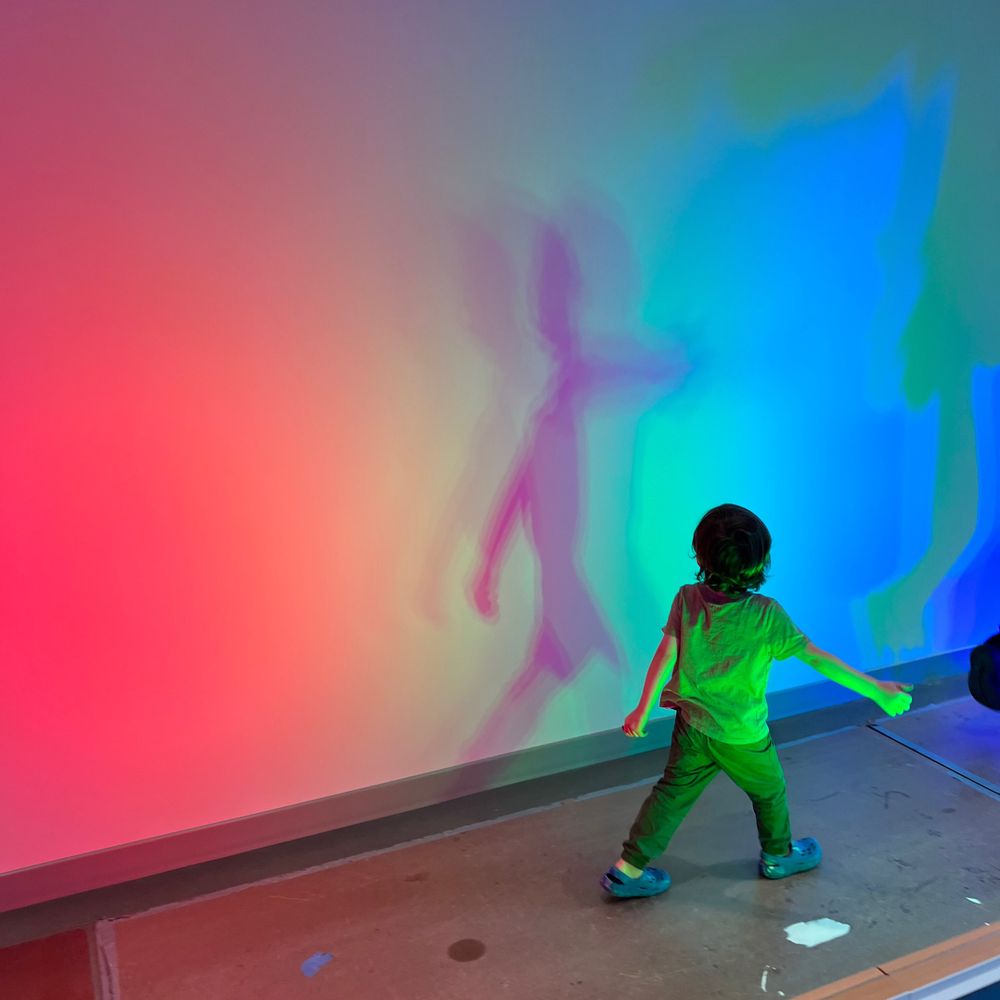
Very proud that this is finally out!
Come for the new auditory illusion, stay for the brain imaging and speech analysis…..
Come for the new auditory illusion, stay for the brain imaging and speech analysis…..

Humans can use positive and negative spectrotemporal correlations to detect rising and falling pitch

Humans can use positive and negative spectrotemporal correlations to detect rising and falling pitch
Nature Human Behaviour, Published online: 09 February 2026; doi:10.1038/s41562-025-02371-7Vaziri et al. examined how humans detect changes in auditory pitch, revealing that listeners rely on correlations in sound intensity over frequency and time, processing that is reminiscent of visual motion detection.
dlvr.it
February 9, 2026 at 8:41 PM
Very proud that this is finally out!
Come for the new auditory illusion, stay for the brain imaging and speech analysis…..
Come for the new auditory illusion, stay for the brain imaging and speech analysis…..


February 9, 2026 at 7:15 PM
Reposted by Harrison Ritz
Posterior-SBC now also with peer-review stamp in Statistics and Computing doi.org/10.1007/s112... (update your bib files)
February 9, 2026 at 5:00 PM
Posterior-SBC now also with peer-review stamp in Statistics and Computing doi.org/10.1007/s112... (update your bib files)
Reposted by Harrison Ritz

Well-predicting machine learning in no way means that you can understand how the world works.
open.substack.com/pub/kording/...
open.substack.com/pub/kording/...

Forward vs Inverse problems: why high performance machine learning usually means little about how the world works
Understanding causality from machine learning is unfortunately usually impossible; life sciences take note
open.substack.com
February 7, 2026 at 6:31 PM
Well-predicting machine learning in no way means that you can understand how the world works.
open.substack.com/pub/kording/...
open.substack.com/pub/kording/...
Reposted by Harrison Ritz

MEG meets fMRI!
Quantum Sensing MRI for Noninvasive Detection of Neuronal Electrical Activity in Human Brains
arxiv.org/abs/2601.16423
Quantum Sensing MRI for Noninvasive Detection of Neuronal Electrical Activity in Human Brains
arxiv.org/abs/2601.16423

February 6, 2026 at 10:28 PM
MEG meets fMRI!
Quantum Sensing MRI for Noninvasive Detection of Neuronal Electrical Activity in Human Brains
arxiv.org/abs/2601.16423
Quantum Sensing MRI for Noninvasive Detection of Neuronal Electrical Activity in Human Brains
arxiv.org/abs/2601.16423
looks like an awesome setup for brms

First release of stanflow! v0.1.0 was a few days later than I'd like, but its up now.
Stanflow is a metapackage a la tidyverse for a Stan Bayesian workflow--see the README for more details/features!
Feedback/issues/PRs are always appreciated.
#rstats #bayes
Stanflow is a metapackage a la tidyverse for a Stan Bayesian workflow--see the README for more details/features!
Feedback/issues/PRs are always appreciated.
#rstats #bayes

GitHub - VisruthSK/stanflow: R Package for a Mildly Opinionated Stan Bayesian Workflow
R Package for a Mildly Opinionated Stan Bayesian Workflow - VisruthSK/stanflow
github.com
February 6, 2026 at 6:09 PM
looks like an awesome setup for brms