


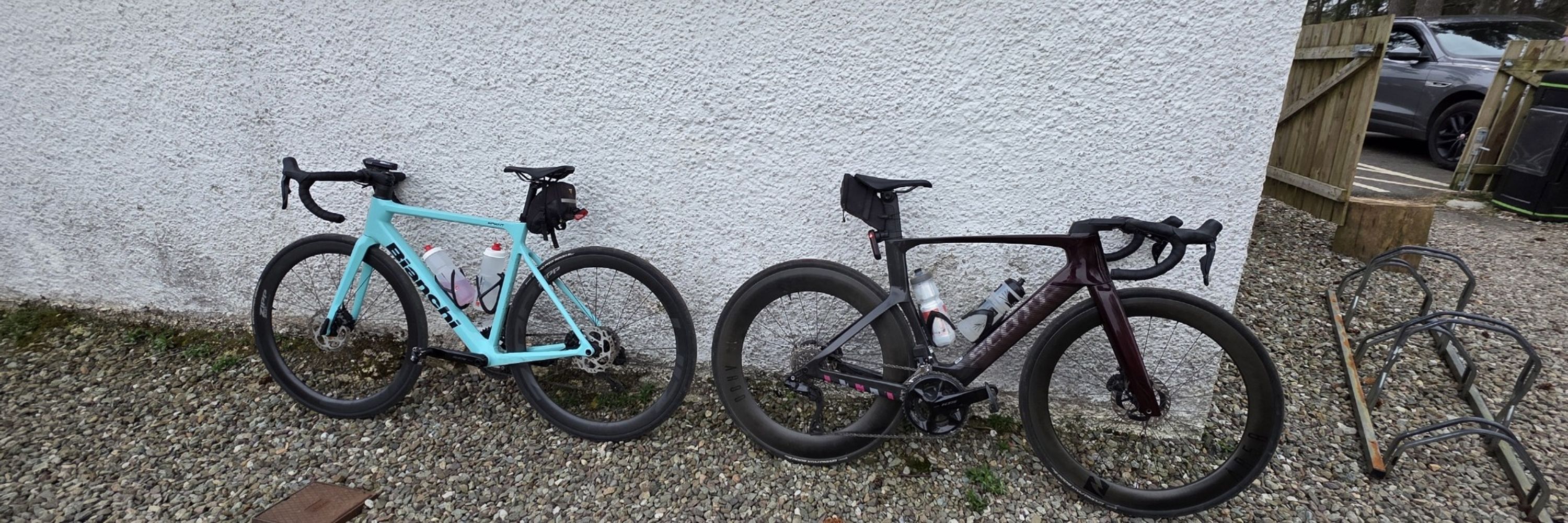

Alejandro Brenes
@ajbrenes.com
Wellcome Early Career Fellow @edinuni-irr.bsky.social @edinburgh-uni.bsky.social
| neutrophils single cell proteomics | road cyclist and aero bike enthusiast 🇨🇷🏴
Creator of the Immunological Proteome Resource @immpres.bsky.social
| neutrophils single cell proteomics | road cyclist and aero bike enthusiast 🇨🇷🏴
Creator of the Immunological Proteome Resource @immpres.bsky.social
Pinned
Alejandro Brenes
@ajbrenes.com
· Dec 15
Excited to share our work at @natcomms.nature.com
We used single cell proteomics to define the functional heterogeneity of human neutrophils in glioblastoma, finding pro and anti-tumorigenic effector states invisible to scRNAseq.
SCP will revolutionise immunology, this is just the start
We used single cell proteomics to define the functional heterogeneity of human neutrophils in glioblastoma, finding pro and anti-tumorigenic effector states invisible to scRNAseq.
SCP will revolutionise immunology, this is just the start
Reposted by Alejandro Brenes

First up @biomarkella.bsky.social a first-year PhD student in the @emmottlab.bsky.social undertaking a PhD project in partnership with Cellenion.
Her research focuses on extending single-cell proteomics to study viral infection, with interest in lipid dysregulation and a focus on coronaviruses.
Her research focuses on extending single-cell proteomics to study viral infection, with interest in lipid dysregulation and a focus on coronaviruses.

February 10, 2026 at 2:27 PM
First up @biomarkella.bsky.social a first-year PhD student in the @emmottlab.bsky.social undertaking a PhD project in partnership with Cellenion.
Her research focuses on extending single-cell proteomics to study viral infection, with interest in lipid dysregulation and a focus on coronaviruses.
Her research focuses on extending single-cell proteomics to study viral infection, with interest in lipid dysregulation and a focus on coronaviruses.

February 10, 2026 at 12:04 AM
Reposted by Alejandro Brenes
The wasteful nature of the closed peer review cycle was a key motivation for projects like @embo.org's @reviewcommons.org project.
When I spoke with Maria Leptin about it for the EMBO Podcast a few years ago, that was the quote I pulled for the title"The idea was not to waste reviews"
When I spoke with Maria Leptin about it for the EMBO Podcast a few years ago, that was the quote I pulled for the title"The idea was not to waste reviews"
February 8, 2026 at 11:02 AM
The wasteful nature of the closed peer review cycle was a key motivation for projects like @embo.org's @reviewcommons.org project.
When I spoke with Maria Leptin about it for the EMBO Podcast a few years ago, that was the quote I pulled for the title"The idea was not to waste reviews"
When I spoke with Maria Leptin about it for the EMBO Podcast a few years ago, that was the quote I pulled for the title"The idea was not to waste reviews"
Conflicted, have always like JPR but the AI written paper and the AI cover arts are starting to really put me off
February 8, 2026 at 5:09 PM
Conflicted, have always like JPR but the AI written paper and the AI cover arts are starting to really put me off
Reposted by Alejandro Brenes


Reposted by Alejandro Brenes

So now we have it- not only the reduction from 12-13 to 3 grants from each board recommended for funding but the budget for applicant-led research to be reduced from £200 million to £113 million per year. This is appalling, Especially given all that is happening with medical research in the US.

Medical Research Council ‘will fund fewer applicant-led grants’.
Confirmation from deputy leader comes as council restructures investments, with calls on hold until summer.
www.researchprofessionalnews.com/rr-news-uk-r...
Confirmation from deputy leader comes as council restructures investments, with calls on hold until summer.
www.researchprofessionalnews.com/rr-news-uk-r...

Medical Research Council ‘will fund fewer applicant-led grants’ - Research Professional News
Confirmation from deputy leader comes as council restructures investments, with calls on hold until summer
www.researchprofessionalnews.com
February 6, 2026 at 10:04 AM
So now we have it- not only the reduction from 12-13 to 3 grants from each board recommended for funding but the budget for applicant-led research to be reduced from £200 million to £113 million per year. This is appalling, Especially given all that is happening with medical research in the US.
To mark the highlights of AI use in research i thought it would be good to commemorate the two year anniversary of this crown jewel.
Published in Frontiers in Cell and Developmental Biology. Frontiers are frequently front runners in this type of scanfals.
Who remembers #ratgate ?
Published in Frontiers in Cell and Developmental Biology. Frontiers are frequently front runners in this type of scanfals.
Who remembers #ratgate ?

February 6, 2026 at 10:55 AM
To mark the highlights of AI use in research i thought it would be good to commemorate the two year anniversary of this crown jewel.
Published in Frontiers in Cell and Developmental Biology. Frontiers are frequently front runners in this type of scanfals.
Who remembers #ratgate ?
Published in Frontiers in Cell and Developmental Biology. Frontiers are frequently front runners in this type of scanfals.
Who remembers #ratgate ?
one of the things @brukercorporation.bsky.social really needs to work on is how much longer it takes to search .d files compared to raw files.
It is a serious consideration for single cell proteomics when the search times can be >10 times longer. The good thing is that it's already improved a bit.
It is a serious consideration for single cell proteomics when the search times can be >10 times longer. The good thing is that it's already improved a bit.
February 4, 2026 at 5:37 PM
one of the things @brukercorporation.bsky.social really needs to work on is how much longer it takes to search .d files compared to raw files.
It is a serious consideration for single cell proteomics when the search times can be >10 times longer. The good thing is that it's already improved a bit.
It is a serious consideration for single cell proteomics when the search times can be >10 times longer. The good thing is that it's already improved a bit.
About time

A series of medical royal colleges are stepping back from Elon Musk’s social media platform X after issues of abuse and hatred.
Three have left, and two more are reviewing their activity. @stokel.bsky.social reports
www.bmj.com/content/392/...
Three have left, and two more are reviewing their activity. @stokel.bsky.social reports
www.bmj.com/content/392/...

February 4, 2026 at 5:32 PM
About time
Reposted by Alejandro Brenes
dplyr 1.2.0 is out now and we are SO excited!
- `filter_out()` for dropping rows
- `recode_values()`, `replace_values()`, and `replace_when()` that join `case_when()` as a complete family of recoding/replacing tools
These are huge quality of life wins for #rstats!
tidyverse.org/blog/2026/02...
- `filter_out()` for dropping rows
- `recode_values()`, `replace_values()`, and `replace_when()` that join `case_when()` as a complete family of recoding/replacing tools
These are huge quality of life wins for #rstats!
tidyverse.org/blog/2026/02...

dplyr 1.2.0
dplyr 1.2.0 fills in some important gaps in dplyr's API: we've added a new complement to `filter()` focused on dropping rows, and we've expanded the `case_when()` family with three new recoding and re...
tidyverse.org
February 4, 2026 at 11:39 AM
dplyr 1.2.0 is out now and we are SO excited!
- `filter_out()` for dropping rows
- `recode_values()`, `replace_values()`, and `replace_when()` that join `case_when()` as a complete family of recoding/replacing tools
These are huge quality of life wins for #rstats!
tidyverse.org/blog/2026/02...
- `filter_out()` for dropping rows
- `recode_values()`, `replace_values()`, and `replace_when()` that join `case_when()` as a complete family of recoding/replacing tools
These are huge quality of life wins for #rstats!
tidyverse.org/blog/2026/02...
Reposted by Alejandro Brenes
'Ian Chapman ‘very sorry’ for not engaging on [UKRI] funding changes [...] For BBSRC (...) he said the opportunities will re-start “in a matter of weeks”. On MRC, he said he expects the pause “to run to early summer”.'
www.researchprofessionalnews.com/rr-news-uk-r...
www.researchprofessionalnews.com/rr-news-uk-r...

Ian Chapman ‘very sorry’ for not engaging on funding changes - Research Professional News
Chief executive says UKRI has “not done our communications in the right way”
www.researchprofessionalnews.com
February 3, 2026 at 2:46 PM
'Ian Chapman ‘very sorry’ for not engaging on [UKRI] funding changes [...] For BBSRC (...) he said the opportunities will re-start “in a matter of weeks”. On MRC, he said he expects the pause “to run to early summer”.'
www.researchprofessionalnews.com/rr-news-uk-r...
www.researchprofessionalnews.com/rr-news-uk-r...
Reposted by Alejandro Brenes

I have a 3-year postdoc position available at University of Manchester for a mass spec expert in proteomics. The person will be involved in exciting projects in single cell proteomics, drug discovery and innate immunity - on timsTOF Ultra AIP & HF & Astral Zoom.
www.jobs.ac.uk/job/DQJ093/r...
www.jobs.ac.uk/job/DQJ093/r...
Home - Trost Lab
www.trostlab.org
February 2, 2026 at 7:53 PM
I have a 3-year postdoc position available at University of Manchester for a mass spec expert in proteomics. The person will be involved in exciting projects in single cell proteomics, drug discovery and innate immunity - on timsTOF Ultra AIP & HF & Astral Zoom.
www.jobs.ac.uk/job/DQJ093/r...
www.jobs.ac.uk/job/DQJ093/r...
Reposted by Alejandro Brenes
UKRI ”We expect to have fully transitioned to the new model by the start of the 2027 & 28 financial year.” Worrying - so how long is the pause? More logical to continue current funding model while developing new one! Researchers with key skills will be forced out of science while funding is paused
February 1, 2026 at 7:07 PM
UKRI ”We expect to have fully transitioned to the new model by the start of the 2027 & 28 financial year.” Worrying - so how long is the pause? More logical to continue current funding model while developing new one! Researchers with key skills will be forced out of science while funding is paused
Reposted by Alejandro Brenes

I am sorry. We all knew the three buckets were coming. We are all prepared for a shift in priority. But this message does nothing for all the UK scientists dependent on project grant funding. It doesn’t actually give any information
www.ukri.org/news/open-le...
www.ukri.org/news/open-le...

Open letter from Ian Chapman to research and innovation community
UKRI Chief Executive outlines changes to UKRI investment approach, addressing concerns about research funding and the financial position of STFC.
www.ukri.org
February 1, 2026 at 6:45 PM
I am sorry. We all knew the three buckets were coming. We are all prepared for a shift in priority. But this message does nothing for all the UK scientists dependent on project grant funding. It doesn’t actually give any information
www.ukri.org/news/open-le...
www.ukri.org/news/open-le...
Reposted by Alejandro Brenes

At a time when the UK should be capitalising on its global reputation as a great place to do science, this is an enormous own goal. I am so sorry for all those who jobs are going to be impacted.
Both MRC and BBSRC responsive modes now withdrawn until further notice. Existing applications unlikely to succeed (late 2025 round expecting 1-5% success rate).
Listen, I get that UKRI wants to pivot. But killing both at once is devastating.
Let's hope at least one opens by summer... #AcademicSky
Listen, I get that UKRI wants to pivot. But killing both at once is devastating.
Let's hope at least one opens by summer... #AcademicSky

MRC instructs grant review boards to slash funding rates - Research Professional News
Boards asked to recommend just three applications for funding, as BBSRC also suspends calls
www.researchprofessionalnews.com
February 1, 2026 at 2:07 PM
At a time when the UK should be capitalising on its global reputation as a great place to do science, this is an enormous own goal. I am so sorry for all those who jobs are going to be impacted.
Reposted by Alejandro Brenes

Rumours of 'more news in spring', which likely means no rounds until summer and no money being released until 2027 at the earliest. Given the virtual cancellation of the current round, where applicants and reviewers have already poured thousands of hours of work and effort, that's a 12 month gap.
We need to be shouting about the effects of this on junior researchers from the roofs, writing to our MPs. We are risking a "missing generation" of researchers.
February 1, 2026 at 10:57 AM
Rumours of 'more news in spring', which likely means no rounds until summer and no money being released until 2027 at the earliest. Given the virtual cancellation of the current round, where applicants and reviewers have already poured thousands of hours of work and effort, that's a 12 month gap.
Reposted by Alejandro Brenes

A new study from Anthropic finds that gains in coding efficiency when relying on AI assistance did did not meet statistical significance; AI use noticeably degraded programmers’ understanding of what they were doing. Incredible.

The latest from Anthropic: using Anthropic's products makes you worse at your job

How AI assistance impacts the formation of coding skills
Anthropic is an AI safety and research company that's working to build reliable, interpretable, and steerable AI systems.
www.anthropic.com
January 30, 2026 at 11:47 PM
A new study from Anthropic finds that gains in coding efficiency when relying on AI assistance did did not meet statistical significance; AI use noticeably degraded programmers’ understanding of what they were doing. Incredible.
Reposted by Alejandro Brenes
📣 I'm excited to share our latest preprint!
We adapt and characterise a neurosphere-based CNCC differentiation protocol, and demonstrate utility for quantitative phenotyping and craniofacial disease modelling! 🧫
Read about Array-CNCC here:
www.biorxiv.org/content/10.6...
@uoe-igc.bsky.social
We adapt and characterise a neurosphere-based CNCC differentiation protocol, and demonstrate utility for quantitative phenotyping and craniofacial disease modelling! 🧫
Read about Array-CNCC here:
www.biorxiv.org/content/10.6...
@uoe-igc.bsky.social

January 28, 2026 at 2:37 PM
📣 I'm excited to share our latest preprint!
We adapt and characterise a neurosphere-based CNCC differentiation protocol, and demonstrate utility for quantitative phenotyping and craniofacial disease modelling! 🧫
Read about Array-CNCC here:
www.biorxiv.org/content/10.6...
@uoe-igc.bsky.social
We adapt and characterise a neurosphere-based CNCC differentiation protocol, and demonstrate utility for quantitative phenotyping and craniofacial disease modelling! 🧫
Read about Array-CNCC here:
www.biorxiv.org/content/10.6...
@uoe-igc.bsky.social
Reposted by Alejandro Brenes

It is my great honor to announce that registration for the 7th ESCP Single Cell Proteomics Conference is now open: lnkd.in/e4iyiQjf
With around 250 participants, it is one of the largest SCP conferences worldwide. We are also proud to announce that there is no participation fee for our conference.
With around 250 participants, it is one of the largest SCP conferences worldwide. We are also proud to announce that there is no participation fee for our conference.
January 28, 2026 at 4:23 PM
It is my great honor to announce that registration for the 7th ESCP Single Cell Proteomics Conference is now open: lnkd.in/e4iyiQjf
With around 250 participants, it is one of the largest SCP conferences worldwide. We are also proud to announce that there is no participation fee for our conference.
With around 250 participants, it is one of the largest SCP conferences worldwide. We are also proud to announce that there is no participation fee for our conference.
Reposted by Alejandro Brenes

Applications are now open for @olgavitek.bsky.social 's May Intitute on computation and statistics for mass spectrometry and proteomics at @northeasternu.bsky.social !
--> computationalproteomics.khoury.northeastern.edu
--> computationalproteomics.khoury.northeastern.edu
May Institute – Computation and statistics for mass spectrometry and proteomics
computationalproteomics.khoury.northeastern.edu
January 20, 2026 at 11:26 PM
Applications are now open for @olgavitek.bsky.social 's May Intitute on computation and statistics for mass spectrometry and proteomics at @northeasternu.bsky.social !
--> computationalproteomics.khoury.northeastern.edu
--> computationalproteomics.khoury.northeastern.edu
Reposted by Alejandro Brenes
Single-cell proteomics is moving past descriptive snapshots to quantitative models of cellular regulation and biological mechanisms.
Come to #Boston this July to shape the next chapter and have your voice heard.
Abstract deadline: Apr 1, 2026.
single-cell.net/proteomics/s...
Come to #Boston this July to shape the next chapter and have your voice heard.
Abstract deadline: Apr 1, 2026.
single-cell.net/proteomics/s...

January 20, 2026 at 1:48 PM
Single-cell proteomics is moving past descriptive snapshots to quantitative models of cellular regulation and biological mechanisms.
Come to #Boston this July to shape the next chapter and have your voice heard.
Abstract deadline: Apr 1, 2026.
single-cell.net/proteomics/s...
Come to #Boston this July to shape the next chapter and have your voice heard.
Abstract deadline: Apr 1, 2026.
single-cell.net/proteomics/s...
Reposted by Alejandro Brenes

Proteoform medicine: characterizing and targeting protein forms in human disease go.nature.com/45P6t8z #Review by Jennifer A. Korchak, S. Stephen Yi, Neil L. Kelleher (@nlkproteomics.bsky.social), Nidhi Sahni & Gloria M. Sheynkman #proteomics

Proteoform medicine: characterizing and targeting protein forms in human disease - Nature Reviews Genetics
Proteoforms are the diverse protein molecules produced from a single gene whose primary sequence and composition can be diversified by genetic, transcriptomic, translational and post-translational var...
go.nature.com
January 15, 2026 at 2:35 PM
Proteoform medicine: characterizing and targeting protein forms in human disease go.nature.com/45P6t8z #Review by Jennifer A. Korchak, S. Stephen Yi, Neil L. Kelleher (@nlkproteomics.bsky.social), Nidhi Sahni & Gloria M. Sheynkman #proteomics
Small blog post about our recent @natcomms.nature.com paper about using single cell proteomics to define the functional states of human neutrophils in glioblastoma. The 'behind the paper' write up is more informal but hopefully informative and fun.
#immunosky #proteomics
#immunosky #proteomics
Single cell proteomics of human neutrophils in glioblastoma
Neutrophils infiltrate glioblastomas with the capacity to engage pro/anti tumoural responses. Here we developed single cell proteomic workflows to stratify neutrophil heterogeneity by function. This w...
go.nature.com
January 16, 2026 at 3:33 PM
Small blog post about our recent @natcomms.nature.com paper about using single cell proteomics to define the functional states of human neutrophils in glioblastoma. The 'behind the paper' write up is more informal but hopefully informative and fun.
#immunosky #proteomics
#immunosky #proteomics
Reposted by Alejandro Brenes
I’m excited to start 2026 with our new collaborative research paper examining circulating B cell populations in acute ischemic stroke patients, which is particularly exciting as we see translation of our previous data from animal models into patients. www.sciencedirect.com/science/arti...

Acute ischaemic stroke alters the composition and function of circulating B cells
Distinct B cell populations are found in circulation, including those with innate-like properties, that have varied functions in pathogen protection, …
www.sciencedirect.com
January 12, 2026 at 3:34 PM
I’m excited to start 2026 with our new collaborative research paper examining circulating B cell populations in acute ischemic stroke patients, which is particularly exciting as we see translation of our previous data from animal models into patients. www.sciencedirect.com/science/arti...
Reposted by Alejandro Brenes
Many articles reported using an antibody ... that didn’t even bind the key protein in Laflamme’s testing. Those articles had been cited over 3,000 times.
A key question is:
◼️ 𝐂𝐚𝐧 𝐩𝐫𝐨𝐭𝐞𝐢𝐧 𝐛𝐢𝐧𝐝𝐞𝐫𝐬 𝐚𝐜𝐡𝐢𝐞𝐯𝐞 𝐡𝐢𝐠𝐡 𝐬𝐩𝐞𝐜𝐢𝐟𝐢𝐜𝐢𝐭𝐲 𝐟𝐨𝐫 𝐞𝐯𝐞𝐫𝐲 𝐞𝐩𝐢𝐭𝐨𝐩𝐞 & 𝐩𝐫𝐨𝐭𝐞𝐨𝐟𝐨𝐫𝐦?
A key question is:
◼️ 𝐂𝐚𝐧 𝐩𝐫𝐨𝐭𝐞𝐢𝐧 𝐛𝐢𝐧𝐝𝐞𝐫𝐬 𝐚𝐜𝐡𝐢𝐞𝐯𝐞 𝐡𝐢𝐠𝐡 𝐬𝐩𝐞𝐜𝐢𝐟𝐢𝐜𝐢𝐭𝐲 𝐟𝐨𝐫 𝐞𝐯𝐞𝐫𝐲 𝐞𝐩𝐢𝐭𝐨𝐩𝐞 & 𝐩𝐫𝐨𝐭𝐞𝐨𝐟𝐨𝐫𝐦?

December 30, 2025 at 1:36 PM
Many articles reported using an antibody ... that didn’t even bind the key protein in Laflamme’s testing. Those articles had been cited over 3,000 times.
A key question is:
◼️ 𝐂𝐚𝐧 𝐩𝐫𝐨𝐭𝐞𝐢𝐧 𝐛𝐢𝐧𝐝𝐞𝐫𝐬 𝐚𝐜𝐡𝐢𝐞𝐯𝐞 𝐡𝐢𝐠𝐡 𝐬𝐩𝐞𝐜𝐢𝐟𝐢𝐜𝐢𝐭𝐲 𝐟𝐨𝐫 𝐞𝐯𝐞𝐫𝐲 𝐞𝐩𝐢𝐭𝐨𝐩𝐞 & 𝐩𝐫𝐨𝐭𝐞𝐨𝐟𝐨𝐫𝐦?
A key question is:
◼️ 𝐂𝐚𝐧 𝐩𝐫𝐨𝐭𝐞𝐢𝐧 𝐛𝐢𝐧𝐝𝐞𝐫𝐬 𝐚𝐜𝐡𝐢𝐞𝐯𝐞 𝐡𝐢𝐠𝐡 𝐬𝐩𝐞𝐜𝐢𝐟𝐢𝐜𝐢𝐭𝐲 𝐟𝐨𝐫 𝐞𝐯𝐞𝐫𝐲 𝐞𝐩𝐢𝐭𝐨𝐩𝐞 & 𝐩𝐫𝐨𝐭𝐞𝐨𝐟𝐨𝐫𝐦?