



Alexei Alexandrov breaks down the challenges of the current housing market into two distinct groups and proposes metrics to evaluate popular housing affordability solutions.
🏠 Read The Rooftop blog: https://go.newamerica.org/markets-where-land-is-expensive-5
🏠 Read The Rooftop blog: https://go.newamerica.org/markets-where-land-is-expensive-5

February 16, 2026 at 6:06 PM
Alexei Alexandrov breaks down the challenges of the current housing market into two distinct groups and proposes metrics to evaluate popular housing affordability solutions.
🏠 Read The Rooftop blog: https://go.newamerica.org/markets-where-land-is-expensive-5
🏠 Read The Rooftop blog: https://go.newamerica.org/markets-where-land-is-expensive-5

Hey Metro Vancouver, can we stop building towers in Langley and force the City of Vancouver to densify?

February 16, 2026 at 6:42 AM
Hey Metro Vancouver, can we stop building towers in Langley and force the City of Vancouver to densify?

thats the problem, 9/16 districts consume more services then their taxes can cover. Those districts either need to pay more or densify. That is the reason the city is always tight money.
February 15, 2026 at 10:23 PM
thats the problem, 9/16 districts consume more services then their taxes can cover. Those districts either need to pay more or densify. That is the reason the city is always tight money.

I could not agree more. And we still have the bones of that - like Main St, Cole Harbour Road, Portland St-Woodlawn, Windmill. If we just made them actually accessible by transit and foot and really densify directly next to those areas, it would change how people move and increase affordability.
February 14, 2026 at 8:28 PM
I could not agree more. And we still have the bones of that - like Main St, Cole Harbour Road, Portland St-Woodlawn, Windmill. If we just made them actually accessible by transit and foot and really densify directly next to those areas, it would change how people move and increase affordability.
Main Street in Dartmouth is horrifyingly hostile to anyone not in a car (and anyone in a car too, if we’re being honest). So we don’t go there, not even by car.
Densify this neighbourhood. And fix Main St.
Densify this neighbourhood. And fix Main St.
February 14, 2026 at 8:05 PM
Main Street in Dartmouth is horrifyingly hostile to anyone not in a car (and anyone in a car too, if we’re being honest). So we don’t go there, not even by car.
Densify this neighbourhood. And fix Main St.
Densify this neighbourhood. And fix Main St.

Same!! Densify my suburb & improve walkability, bikeability, and transit.
February 14, 2026 at 8:01 PM
Same!! Densify my suburb & improve walkability, bikeability, and transit.

Set #factory #ships to pick up #seaweed #blooms. #Densify them and let them sink to the bottom of the #ocean. Thus aiding #CarbonCapture.
A good #idea, or would it take more #energy than can be supplied by #GreenEnergy? #Science #climatechange #Nature #Sea #Farming
x.com/i/grok/share...
A good #idea, or would it take more #energy than can be supplied by #GreenEnergy? #Science #climatechange #Nature #Sea #Farming
x.com/i/grok/share...

Set factory ships to pick up seaweed blooms. Densify them and let them sink to the bottom of the ocean. Thus aiding carbon capture. A good idea, or would it take more energy than can be supplied by green energy?
It's a promising concept with real potential, especially for problematic wild blooms like Sargassum, but it's not a simple "set it and forget it" solution. The core idea—harvesting floating seaweed (macroalgae) that has already absorbed CO₂ via photosynthesis, processing it to sink, and sequestering the carbon on the deep seafloor—aligns with established ocean-based carbon dioxide removal (CDR) research. It leverages "free" solar-powered growth and could provide co-benefits like beach cleanup. However, it faces uncertainties around net carbon removal, ecological risks, verification, and scalability. Energy-wise, the process is feasible with green energy and does not require more than renewables can reasonably supply. Why the Carbon Sequestration Part Works in Theory Seaweeds like Sargassum (the main "bloom" species in question) or kelp fix carbon rapidly through photosynthesis. Sinking the biomass quickly to depths >1,000–3,000 m can keep much of that carbon out of contact with the atmosphere for centuries (or longer if buried in sediments), as cold, high-pressure, low-oxygen conditions slow decay. For wild Sargassum blooms (a major nuisance in the Caribbean/Atlantic that washes ashore and releases CO₂ and methane as it rots), offshore harvesting before beaching prevents those emissions and turns a problem into sequestration. Some natural export to depth already occurs, but intentional rapid sinking increases the durable fraction. Models and proposals (e.g., from researchers at Lamont-Doherty and companies like SOS Carbon or Seafields) show this pathway can work, with estimates that purposeful sinking could enhance deep-ocean carbon storage. Densification (baling, compressing, or puncturing gas bladders) is straightforward mechanically—Sargassum floats due to air pockets, so processing makes it negatively buoyant so it sinks on its own. This is low-tech and low-energy compared to other CDR methods. Energy Feasibility: Low Input, High Leverage from "Free" Biology The energy demand is mainly for: Harvesting — Factory ships or specialized vessels with nets/conveyors to collect floating mats. Densification/processing — Onboard compression or baling. Transport/sinking — Moving to deep water and releasing. This is far less energy-intensive than direct air capture (which needs 1–2+ GJ per ton CO₂) or many chemical CDR approaches. The heavy lifting (carbon fixation) is done by sunlight and the seaweed itself. Small-to-medium harvesting boats (e.g., CleanCat-style vessels) can collect 500–1,000+ m³ of Sargassum per day using a few hundred horsepower outboards. Larger factory ships scale this up. Techno-economic studies of ship-based Sargassum collection (for fuel or other uses) show it drastically cuts costs compared to land-based alternatives, implying reasonable energy use per ton of biomass. Densification is mechanical (pumps, presses, conveyors) and can run on shipboard power. Current operations often use diesel, but this is decarbonizable: offshore wind, wave energy, hydrogen, ammonia, or even biomass-derived fuels from the seaweed itself could power the fleet. One NREL-linked analysis found that U.S. offshore renewable resources alone could theoretically support marine CDR removing up to 10 billion tons of CO₂ per year—orders of magnitude more than realistic deployment of this method. Net energy/carbon balance is favorable. Seaweed biomass has significant energy content (roughly 8 MJ/kg dry weight in some species). Even accounting for collection/processing, the "return" from solar-driven growth is high. Current farmed seaweed operations can be net emitters due to fossil-dependent supply chains, but wild-bloom harvesting skips much of the farming infrastructure and can be made net-positive with green power. For scale: optimistic models for farmed seaweed sinking put costs at ~$480–540 per tCO₂ in the best ocean areas for gigaton-scale removal (requiring large but feasible ocean areas). Wild harvesting is cheaper on the growth side. Green energy supply is not the bottleneck—logistics, permitting, and verification are. Important Caveats and Risks This is not proven at climate-relevant scales (hundreds of megatons to gigatons CO₂/yr). Key open questions include: Net additional removal — How much of the sunk carbon is truly "extra" (vs. what would have sunk naturally or been offset by ecosystem shifts)? Air-sea CO₂ uptake must be verified; models show competition with phytoplankton can reduce atmospheric drawdown. Permanence — Deep-sea storage can last centuries, but some carbon leaks back via circulation, dissolution, or consumption by organisms. Rapid sinking helps, but decay still releases some dissolved organic carbon. Ecological impacts — Large-scale sinking could deplete deep-ocean oxygen (creating hypoxia zones) and acidify local waters as biomass remineralizes. Removing Sargassum affects habitats for turtles, fish, and other species. Farming versions risk shading, nutrient shifts, or entanglement. Scale and logistics — Sargassum biomass is massive in peak years but variable. Gigaton removal would need enormous fleets and infrastructure—feasible regionally for bloom management, harder globally. Verification and accounting — Tracking the fate of carbon in the open ocean is extremely difficult; robust monitoring (eDNA, sensors, models) is still in early stages. Research frameworks from Ocean Visions, National Academies, and others call for controlled field trials to answer these before large deployment. Some scientists are skeptical about durability and side effects at scale. Bottom Line Yes, a good idea worth pursuing—particularly for turning harmful *Sargassum* blooms into a CDR asset. It uses natural biology efficiently, addresses a real environmental problem, and the energy requirements are modest and fully compatible with green energy (offshore renewables are an excellent match). It won't "solve" climate change alone and isn't ready for unchecked rollout, but targeted factory-ship operations in bloom hotspots could deliver verifiable benefits today while research scales up the approach responsibly. Pilot projects (e.g., harvesting + sinking in the Caribbean) are already being explored by researchers and startups. Supporting decarbonized operations and rigorous monitoring would make this a solid addition to the CDR toolkit. If you're interested in specifics (e.g., a particular region or company), more details are available from ongoing studies.
x.com
February 13, 2026 at 2:25 PM
Set #factory #ships to pick up #seaweed #blooms. #Densify them and let them sink to the bottom of the #ocean. Thus aiding #CarbonCapture.
A good #idea, or would it take more #energy than can be supplied by #GreenEnergy? #Science #climatechange #Nature #Sea #Farming
x.com/i/grok/share...
A good #idea, or would it take more #energy than can be supplied by #GreenEnergy? #Science #climatechange #Nature #Sea #Farming
x.com/i/grok/share...

The latest update for #Densify includes "Why #AI Infrastructure May Be Needlessly Draining Your Budget" and "When ConfigMaps Hit Limits: Migrating to CRDs".
#FinOps #DevOps #Cloud https://opsmtrs.com/2XklwqM
#FinOps #DevOps #Cloud https://opsmtrs.com/2XklwqM

Densify
Densify is a predictive analytics engine that removes the guesswork from optimizing cloud and container environments.
opsmtrs.com
February 12, 2026 at 5:34 AM

I'm gonna have to go dig around in the archives and see if I can't find more of my original sketches or eventual presentation material...
Honestly I can't believe the similarity between some of their conceptual block growth diagrams and mine. It's properly given me a lift!
Honestly I can't believe the similarity between some of their conceptual block growth diagrams and mine. It's properly given me a lift!


February 11, 2026 at 5:03 PM
I'm gonna have to go dig around in the archives and see if I can't find more of my original sketches or eventual presentation material...
Honestly I can't believe the similarity between some of their conceptual block growth diagrams and mine. It's properly given me a lift!
Honestly I can't believe the similarity between some of their conceptual block growth diagrams and mine. It's properly given me a lift!

A short-lived ‘experiment’ to densify housing on small sites in Croydon led to a boom in new homes and is now being touted as an example for other London boroughs, according to research by the think tank Centre for Cities

Short-lived Croydon policy led to infill housing boom, research shows
Short-lived Croydon policy led to infill housing boom, research shows
www.architectsjournal.co.uk
February 11, 2026 at 4:06 PM
A short-lived ‘experiment’ to densify housing on small sites in Croydon led to a boom in new homes and is now being touted as an example for other London boroughs, according to research by the think tank Centre for Cities

AI may densify learning activities & (quietly) reshape expectations of speed, scope, polish etc. Students might feel more capable & productive with AI, take on more work & experience cognitive overload disguised as 'efficiency'. AI literacy may need to include workload literacy & judgment.
February 10, 2026 at 8:24 PM
AI may densify learning activities & (quietly) reshape expectations of speed, scope, polish etc. Students might feel more capable & productive with AI, take on more work & experience cognitive overload disguised as 'efficiency'. AI literacy may need to include workload literacy & judgment.

Unless you want to (a) deport a large number of people (b) force most people to live in cramped HMOs or (c) turn all of SE England into a sprawling low rise conurbation, we need to densify existing built up areas.
February 10, 2026 at 10:38 AM
Unless you want to (a) deport a large number of people (b) force most people to live in cramped HMOs or (c) turn all of SE England into a sprawling low rise conurbation, we need to densify existing built up areas.
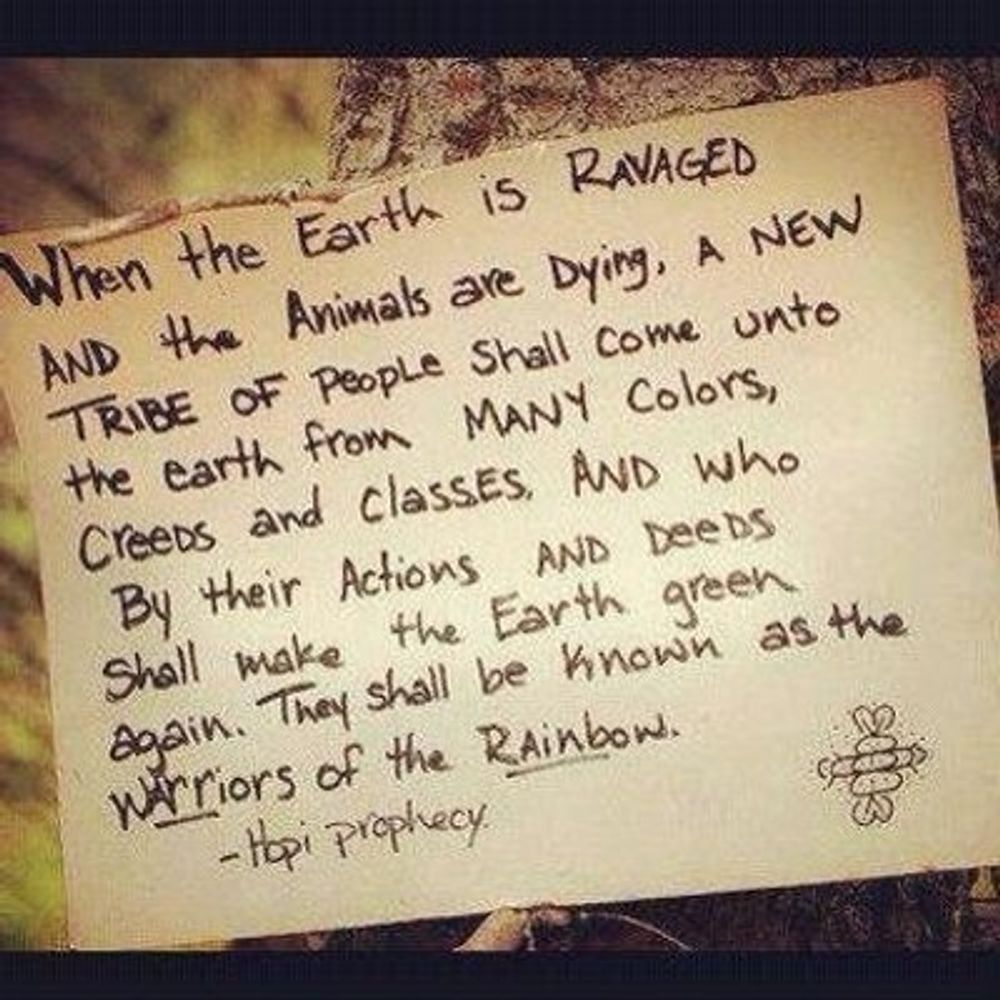
Yes I've been in my house 45 years and next door the, Gen X, new owner bulldozed the house for a development but they seem to want to add my property to their footprint. I am Not Selling. I may be old and have grey hair but I'm not moving even if you densify next door. No
February 8, 2026 at 1:24 AM
Yes I've been in my house 45 years and next door the, Gen X, new owner bulldozed the house for a development but they seem to want to add my property to their footprint. I am Not Selling. I may be old and have grey hair but I'm not moving even if you densify next door. No
The latest update for #Densify includes "Kubex and Tangoe Partner to Deliver Unified #Cloud, #Kubernetes, and #FinOps Optimization" and "We Built an MCP Server".
#DevOps https://opsmtrs.com/2XklwqM
#DevOps https://opsmtrs.com/2XklwqM
Densify
Densify is a predictive analytics engine that removes the guesswork from optimizing cloud and container environments.
opsmtrs.com
February 6, 2026 at 5:05 AM
The latest update for #Densify includes "Kubex and Tangoe Partner to Deliver Unified #Cloud, #Kubernetes, and #FinOps Optimization" and "We Built an MCP Server".
#DevOps https://opsmtrs.com/2XklwqM
#DevOps https://opsmtrs.com/2XklwqM

“Effectively, when we approve neighbourhoods that we know operate at a net loss, we are approving future tax increases.”
edmontonjournal.com/news/local-n...
TLDR: If you're against allowing established neighbourhoods to densify faster and with more intensity, here's an alternative way to grow.
edmontonjournal.com/news/local-n...
TLDR: If you're against allowing established neighbourhoods to densify faster and with more intensity, here's an alternative way to grow.

Net-loss new neighbourhoods mean higher taxes, warns Edmonton councillor
New Kettle Lakes neighbourhood structure plan will need tweaking just to be revenue neutral, says O-Day'min coun. Anne Stevenson.
edmontonjournal.com
February 5, 2026 at 9:27 PM
“Effectively, when we approve neighbourhoods that we know operate at a net loss, we are approving future tax increases.”
edmontonjournal.com/news/local-n...
TLDR: If you're against allowing established neighbourhoods to densify faster and with more intensity, here's an alternative way to grow.
edmontonjournal.com/news/local-n...
TLDR: If you're against allowing established neighbourhoods to densify faster and with more intensity, here's an alternative way to grow.

As the area continues to densify, transportation gridlock will compound. An example of when political expediency & the desire for personal aggrandizement override good public policy.
One word for Saanich councillors who voted against this: Cowards.
www.timescolonist.com/local-news/b...
www.timescolonist.com/local-news/b...

Bike and bus lanes on Quadra off the table in revised Saanich plan
The original plan included transit-designated lanes, protected bike lanes and sidewalks on Quadra Street, but council has voted to scrap that.
www.timescolonist.com
February 4, 2026 at 5:54 PM
As the area continues to densify, transportation gridlock will compound. An example of when political expediency & the desire for personal aggrandizement override good public policy.
This is a really interesting thread showing the potential to densify housing in areas with lots of detached houses and large(ish) gardens. We could do a lot more of this.

NEW REPORT out today. TLDR: Rules-based planning works and we can introduce it in British cities relatively easily.
A small thread on Croydon’s 3-year planning ‘experiment’ and what it means for urban planning…
A small thread on Croydon’s 3-year planning ‘experiment’ and what it means for urban planning…
February 4, 2026 at 5:14 PM
This is a really interesting thread showing the potential to densify housing in areas with lots of detached houses and large(ish) gardens. We could do a lot more of this.

True. But if you make DC a state, gerrymander blue states, and densify the suburbs to prompt racial depolarization, you can create a decent bulwark against fascism. Question is: will democrats be willing to do those things?
February 4, 2026 at 3:04 PM
True. But if you make DC a state, gerrymander blue states, and densify the suburbs to prompt racial depolarization, you can create a decent bulwark against fascism. Question is: will democrats be willing to do those things?

Had lunch with the planning director of a 100k city.
The city has invested in its riverfront.
The guy agreed to densify there, just nothing above 5 stories.
Curious why Mexican planners (those who timidly agree on density) are fixated on six story limits. Too many Jan Gehl fanboys ¿?
The city has invested in its riverfront.
The guy agreed to densify there, just nothing above 5 stories.
Curious why Mexican planners (those who timidly agree on density) are fixated on six story limits. Too many Jan Gehl fanboys ¿?
February 4, 2026 at 4:23 AM
Had lunch with the planning director of a 100k city.
The city has invested in its riverfront.
The guy agreed to densify there, just nothing above 5 stories.
Curious why Mexican planners (those who timidly agree on density) are fixated on six story limits. Too many Jan Gehl fanboys ¿?
The city has invested in its riverfront.
The guy agreed to densify there, just nothing above 5 stories.
Curious why Mexican planners (those who timidly agree on density) are fixated on six story limits. Too many Jan Gehl fanboys ¿?

Recipe: For church, I actually just make a double batch of Betty Crocker in a 13x9, and then let it collapse back down on itself to densify. Home/friends are my grandmother’s recipe.
If I am gonna make homemade baked goods in bulk, I use my college sugar cookie recipe.
If I am gonna make homemade baked goods in bulk, I use my college sugar cookie recipe.

February 4, 2026 at 3:18 AM
Recipe: For church, I actually just make a double batch of Betty Crocker in a 13x9, and then let it collapse back down on itself to densify. Home/friends are my grandmother’s recipe.
If I am gonna make homemade baked goods in bulk, I use my college sugar cookie recipe.
If I am gonna make homemade baked goods in bulk, I use my college sugar cookie recipe.
In Latin American cities, well-serviced land is scarce, so high-income households tend to densify in the few areas that are well located and served.


February 2, 2026 at 9:05 PM
In Latin American cities, well-serviced land is scarce, so high-income households tend to densify in the few areas that are well located and served.

Happy to! Not yet sure how to be helpful tho can you... uh... 'densify the knowledge matrix' for me a bit more around what you're running into?
Ember is fairly complex at this point so that might help us be more useful to y'all rather than just infodumping randomly.
Ember is fairly complex at this point so that might help us be more useful to y'all rather than just infodumping randomly.
February 2, 2026 at 5:30 PM
Happy to! Not yet sure how to be helpful tho can you... uh... 'densify the knowledge matrix' for me a bit more around what you're running into?
Ember is fairly complex at this point so that might help us be more useful to y'all rather than just infodumping randomly.
Ember is fairly complex at this point so that might help us be more useful to y'all rather than just infodumping randomly.

There isn't a specific project but there is a fund targeted at rebuilding existing multi family projects or attracting investment in new ones. Instead of using this as a way of projecting the city and state's values they said "nuh uh" but ARE actually trying to use this as an opportunity to densify.
February 2, 2026 at 5:15 PM
There isn't a specific project but there is a fund targeted at rebuilding existing multi family projects or attracting investment in new ones. Instead of using this as a way of projecting the city and state's values they said "nuh uh" but ARE actually trying to use this as an opportunity to densify.

I think we're saying basically the same thing, which is legalize housing and densify. I hear "new town" and think of like sealand or Neom
February 2, 2026 at 5:12 PM
I think we're saying basically the same thing, which is legalize housing and densify. I hear "new town" and think of like sealand or Neom

That will happen if we allow them to densify. Bag-ass (cul-de-sac, in English) suburbia exists because SFH are the only thing permitted ever. Permit more things, and suddenly new towns will start to happen because humans tend to form towns
February 2, 2026 at 5:10 PM
That will happen if we allow them to densify. Bag-ass (cul-de-sac, in English) suburbia exists because SFH are the only thing permitted ever. Permit more things, and suddenly new towns will start to happen because humans tend to form towns