



@suiliangxia.bsky.social
Reposted

Mapping single-cell diploid chromatin fiber architectures using DAF-seq - @uwgenome.bsky.social @uwdeptmedicine.bsky.social go.nature.com/4rFTAHy

Mapping single-cell diploid chromatin fiber architectures using DAF-seq - Nature Biotechnology
Single-molecule chromatin fiber sequencing exposes single-cell-level heterogeneity in the chromatin architecture of individual regulatory elements.
go.nature.com
December 3, 2025 at 7:43 PM
Mapping single-cell diploid chromatin fiber architectures using DAF-seq - @uwgenome.bsky.social @uwdeptmedicine.bsky.social go.nature.com/4rFTAHy
Reposted

A little late to this, but very happy to see this nice paper from @nilskrietenstein.bsky.social and co out now at @natcomms.nature.com 🍻 www.nature.com/articles/s41...

Deciphering histone mark-specific fine-scale chromatin organization at high resolution with Micro-C-ChIP - Nature Communications
Here, the authors introduce Micro-C-ChIP, a strategy combining Micro-C with chromatin immunoprecipitation to map 3D genome organization at nucleosome resolution for defined histone modifications.
www.nature.com
December 2, 2025 at 2:44 PM
A little late to this, but very happy to see this nice paper from @nilskrietenstein.bsky.social and co out now at @natcomms.nature.com 🍻 www.nature.com/articles/s41...
Reposted

Very pleased to share our latest paper published in Cell:
BRAIN-MAGNET: A functional genomics atlas for interpretation of non-coding variants: Cell www.cell.com/cell/fulltex...
@cellpress.bsky.social, @cp-cell.bsky.social, @ruizhideng.bsky.social #enhancer
here is a thread about our findings:
BRAIN-MAGNET: A functional genomics atlas for interpretation of non-coding variants: Cell www.cell.com/cell/fulltex...
@cellpress.bsky.social, @cp-cell.bsky.social, @ruizhideng.bsky.social #enhancer
here is a thread about our findings:

BRAIN-MAGNET: A functional genomics atlas for interpretation of non-coding variants
BRAIN-MAGNET, a convolutional neural network trained on 148,198 functionally tested
non-coding regulatory elements, predicts enhancer activity directly from DNA sequence
and identifies nucleotides ess...
www.cell.com
November 20, 2025 at 9:38 AM
Very pleased to share our latest paper published in Cell:
BRAIN-MAGNET: A functional genomics atlas for interpretation of non-coding variants: Cell www.cell.com/cell/fulltex...
@cellpress.bsky.social, @cp-cell.bsky.social, @ruizhideng.bsky.social #enhancer
here is a thread about our findings:
BRAIN-MAGNET: A functional genomics atlas for interpretation of non-coding variants: Cell www.cell.com/cell/fulltex...
@cellpress.bsky.social, @cp-cell.bsky.social, @ruizhideng.bsky.social #enhancer
here is a thread about our findings:
Reposted
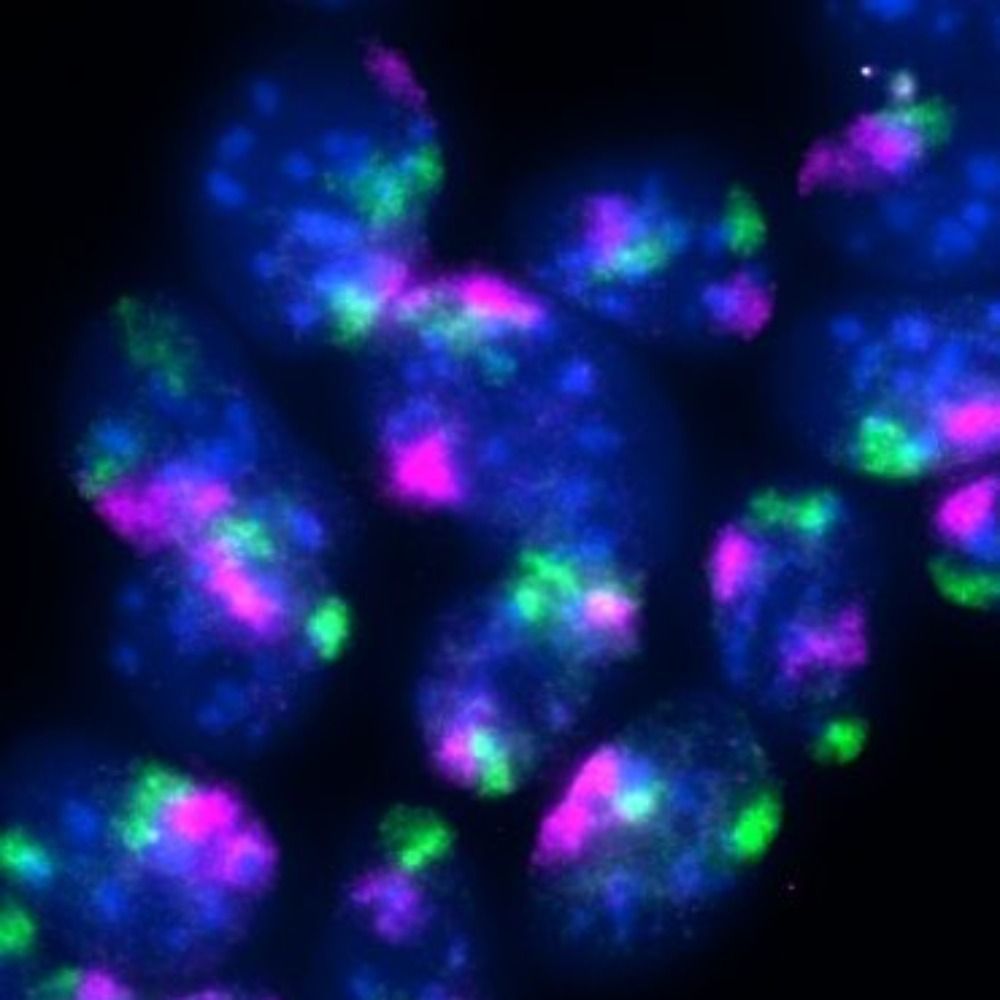
Here is a copy of last year's Twitter thread explaining our preprint - jump to (21) for the new stuff 👀
Synergy between cis-regulatory elements can render cohesin dispensable for distal enhancer function
now revised and journal accepted at www.science.org/doi/10.1126/...
🧵👇
Synergy between cis-regulatory elements can render cohesin dispensable for distal enhancer function
now revised and journal accepted at www.science.org/doi/10.1126/...
🧵👇
November 27, 2025 at 9:59 PM
Here is a copy of last year's Twitter thread explaining our preprint - jump to (21) for the new stuff 👀
Synergy between cis-regulatory elements can render cohesin dispensable for distal enhancer function
now revised and journal accepted at www.science.org/doi/10.1126/...
🧵👇
Synergy between cis-regulatory elements can render cohesin dispensable for distal enhancer function
now revised and journal accepted at www.science.org/doi/10.1126/...
🧵👇
Reposted

How to keep in step when your (protein) partner speeds up…
Here we investigated the adaptive remodeling of a protein-protein interaction surface essential for telomere protection.
Congrats to whole team!
www.science.org/doi/10.1126/...
Here we investigated the adaptive remodeling of a protein-protein interaction surface essential for telomere protection.
Congrats to whole team!
www.science.org/doi/10.1126/...

Rapid compensatory evolution within a multiprotein complex preserves telomere integrity
Intragenomic conflict with selfish genetic elements spurs adaptive changes in subunits of essential multiprotein complexes. Whether and how these adaptive changes disrupt interactions within such comp...
www.science.org
November 28, 2025 at 5:22 PM
How to keep in step when your (protein) partner speeds up…
Here we investigated the adaptive remodeling of a protein-protein interaction surface essential for telomere protection.
Congrats to whole team!
www.science.org/doi/10.1126/...
Here we investigated the adaptive remodeling of a protein-protein interaction surface essential for telomere protection.
Congrats to whole team!
www.science.org/doi/10.1126/...
Reposted

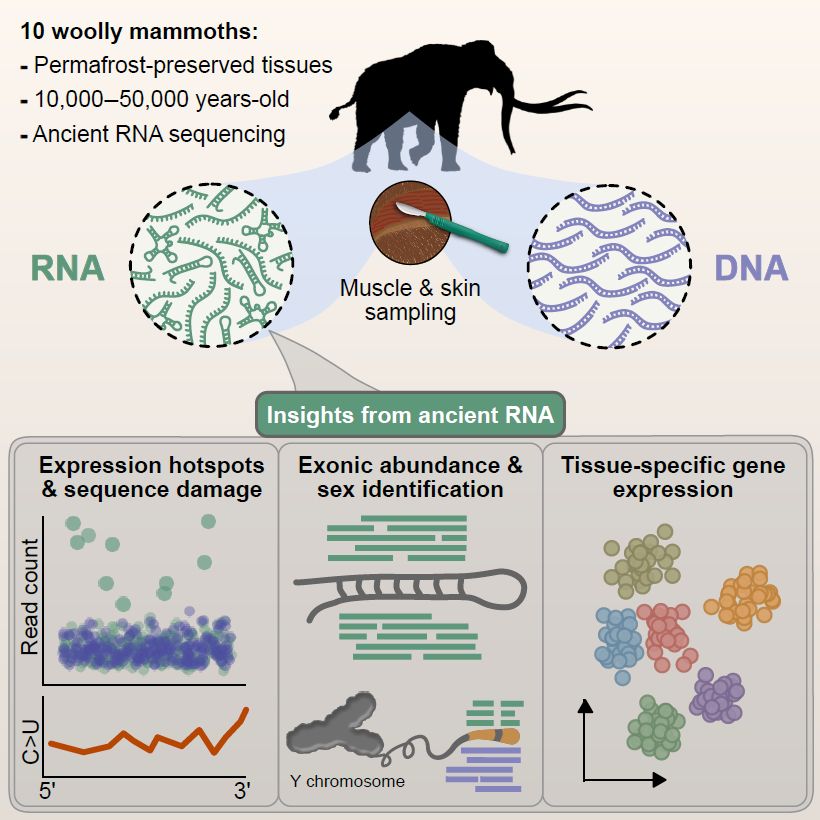
🦣🧬🦣🤯💥We are pleased to share our new paper about ancient RNA expression profiles from the Woolly Mammoth, now published in Cell @cellpress.bsky.social
www.cell.com/cell/fulltex...
If you want to know more, read the 🧵 below:
www.cell.com/cell/fulltex...
If you want to know more, read the 🧵 below:
November 14, 2025 at 4:08 PM
🦣🧬🦣🤯💥We are pleased to share our new paper about ancient RNA expression profiles from the Woolly Mammoth, now published in Cell @cellpress.bsky.social
www.cell.com/cell/fulltex...
If you want to know more, read the 🧵 below:
www.cell.com/cell/fulltex...
If you want to know more, read the 🧵 below:
Reposted

📣 I hereby make my Bluesky debut to announce that our work linking DNA binding affinities and kinetics 𝘪𝘯 𝘷𝘪𝘵𝘳𝘰 and 𝘪𝘯 𝘷𝘪𝘷𝘰 for the human transcription factor KLF1 just got published in Cell! @cp-cell.bsky.social
www.cell.com/cell/fulltex...
Key findings in a thread (1/6):
www.cell.com/cell/fulltex...
Key findings in a thread (1/6):

November 27, 2025 at 1:17 PM
📣 I hereby make my Bluesky debut to announce that our work linking DNA binding affinities and kinetics 𝘪𝘯 𝘷𝘪𝘵𝘳𝘰 and 𝘪𝘯 𝘷𝘪𝘷𝘰 for the human transcription factor KLF1 just got published in Cell! @cp-cell.bsky.social
www.cell.com/cell/fulltex...
Key findings in a thread (1/6):
www.cell.com/cell/fulltex...
Key findings in a thread (1/6):
Reposted

Bah, who needs cohesin if you're at the right place (near). Grover once taught us the difference between near and far (my favourite Sesame Street piece), and now amazing work from @elphegenoralab.bsky.social led by @karissalhansen.bsky.social shows us how: www.science.org/doi/10.1126/...

Synergy between regulatory elements can render cohesin dispensable for distal enhancer function
Enhancers are critical genetic elements controlling transcription from promoters, yet how they convey regulatory information across large genomic distances remains unclear. Here, we engineer pluripote...
www.science.org
November 27, 2025 at 7:10 PM
Bah, who needs cohesin if you're at the right place (near). Grover once taught us the difference between near and far (my favourite Sesame Street piece), and now amazing work from @elphegenoralab.bsky.social led by @karissalhansen.bsky.social shows us how: www.science.org/doi/10.1126/...
Reposted

www.nature.com/articles/s41...
Progressive coevolution of the yeast centromere and kinetochore
🤩
@helsenjana.bsky.social @gautamdey.bsky.social
Progressive coevolution of the yeast centromere and kinetochore
🤩
@helsenjana.bsky.social @gautamdey.bsky.social

Progressive coevolution of the yeast centromere and kinetochore - Nature
Thousands of centromeres were identified and tracked across two major fungal clades, showing that new centromeres spread progressively and that the kinetochore acts as a filter to determine which new ...
www.nature.com
November 27, 2025 at 6:22 PM
www.nature.com/articles/s41...
Progressive coevolution of the yeast centromere and kinetochore
🤩
@helsenjana.bsky.social @gautamdey.bsky.social
Progressive coevolution of the yeast centromere and kinetochore
🤩
@helsenjana.bsky.social @gautamdey.bsky.social
Reposted

Our latest paper has just been published in Cell!
doi.org/10.1016/j.ce...
We developed a new method called MCC ultra, which allows 3D chromatin structure to be visualised with a 1 base pair pixel size.
doi.org/10.1016/j.ce...
We developed a new method called MCC ultra, which allows 3D chromatin structure to be visualised with a 1 base pair pixel size.

November 5, 2025 at 5:20 PM
Our latest paper has just been published in Cell!
doi.org/10.1016/j.ce...
We developed a new method called MCC ultra, which allows 3D chromatin structure to be visualised with a 1 base pair pixel size.
doi.org/10.1016/j.ce...
We developed a new method called MCC ultra, which allows 3D chromatin structure to be visualised with a 1 base pair pixel size.
Reposted
We seem to be in the golden age of centromere biology

A new and fascinating story from @bencarty.bsky.social and the group, with crucial help from the teams of @naltemose.bsky.social, Simona Giunta, and @dfachinetti.bsky.social. Many thanks to all for a fantastic collaboration.
www.nature.com/articles/s41...
www.nature.com/articles/s41...

November 25, 2025 at 12:41 PM
We seem to be in the golden age of centromere biology
Reposted
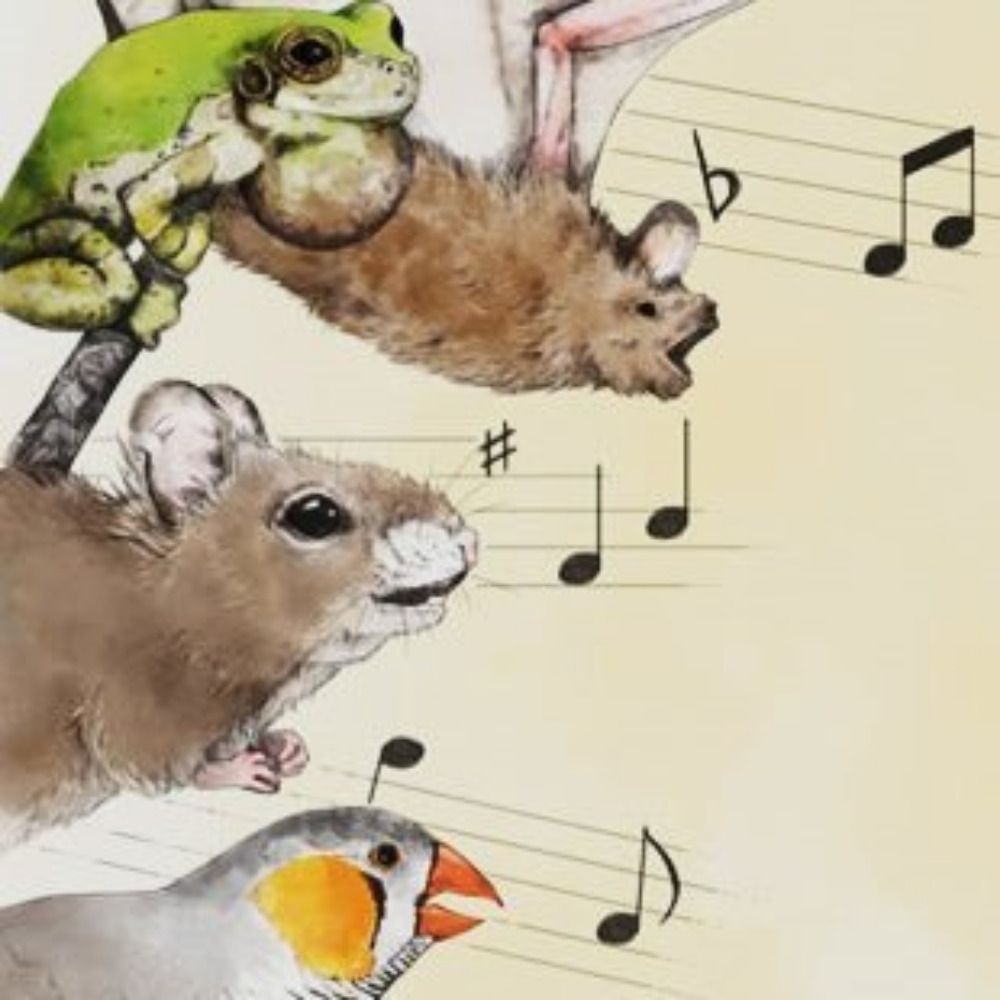
Congrats to @robertslab.bsky.social, the version of record of this paper is now published in @elife.bsky.social
Nice use of optimal transport methods to measure acoustic distance, if you're into that sort of thing 😉
elifesciences.org/articles/101...
#prattle 💬
#bioacoustics
Nice use of optimal transport methods to measure acoustic distance, if you're into that sort of thing 😉
elifesciences.org/articles/101...
#prattle 💬
#bioacoustics

A deep learning approach for the analysis of birdsong
An open-source deep learning toolkit performs accurate annotation and similarity scoring of zebra finch song, along with comprehensive feature extraction, enabling consistent, interpretable comparison...
elifesciences.org
November 24, 2025 at 6:23 PM
Congrats to @robertslab.bsky.social, the version of record of this paper is now published in @elife.bsky.social
Nice use of optimal transport methods to measure acoustic distance, if you're into that sort of thing 😉
elifesciences.org/articles/101...
#prattle 💬
#bioacoustics
Nice use of optimal transport methods to measure acoustic distance, if you're into that sort of thing 😉
elifesciences.org/articles/101...
#prattle 💬
#bioacoustics
Reposted

Unrelated to mim itself, but this is also the first preprint I've prepared in @typst.app rather than LaTeX. It was soooo much nicer. Folks; what are we doing? Why don't our journals accept manuscript sources in Typst!
Ok; mim (github.com/COMBINE-lab/...) preprint submitted! Excited for folks to see it and share thoughts. The key takeaway; mim allows the quick, one-time, building of a small auxiliary index that then allows scaling gzipped FASTQ parsing linearly in # of threads. 1/2

GitHub - COMBINE-lab/mim: A small, auxiliary index to massively improve parallel fastq parsing
A small, auxiliary index to massively improve parallel fastq parsing - COMBINE-lab/mim
github.com
November 25, 2025 at 2:38 PM
Unrelated to mim itself, but this is also the first preprint I've prepared in @typst.app rather than LaTeX. It was soooo much nicer. Folks; what are we doing? Why don't our journals accept manuscript sources in Typst!
Reposted

Great keynote talk on the fundamentals of storytelling by @antonyjohnston.bsky.social at the ever-brilliant AdventureX

November 23, 2025 at 4:29 PM
Great keynote talk on the fundamentals of storytelling by @antonyjohnston.bsky.social at the ever-brilliant AdventureX
Reposted

miRNA have multiple functions beyond their role in modulating translation.

November 23, 2025 at 3:18 PM
miRNA have multiple functions beyond their role in modulating translation.
Reposted

I'm very pleased to announce the official publication of our lab's paper "DNA mutagenesis driven by transcription factor competition with mismatch repair" in today's issue of Cell! www.cell.com/cell/abstrac...

DNA mutagenesis driven by transcription factor competition with mismatch repair
Competition between transcription factors and mismatch repair machinery drives localized
hypermutation at regulatory elements, with implications for cancer and genome evolution.
www.cell.com
October 2, 2025 at 11:37 PM
I'm very pleased to announce the official publication of our lab's paper "DNA mutagenesis driven by transcription factor competition with mismatch repair" in today's issue of Cell! www.cell.com/cell/abstrac...
Reposted
To probe gene-scale chromatin physics, we built 96-mer (20 kb) arrays with defined histone marks. Combining single-molecule tracking, AFM imaging, and developing in vitro Hi-C, we saw how specific modifications dictate chromatin structure and dynamics. www.science.org/doi/10.1126/...

Gene-scale in vitro reconstitution reveals histone acetylation directly controls chromatin architecture
Reconstituting 20-kb chromatin shows that tuning acetylation alone reshapes its folding, dynamics, and contact domain formation.
www.science.org
November 20, 2025 at 7:46 AM
To probe gene-scale chromatin physics, we built 96-mer (20 kb) arrays with defined histone marks. Combining single-molecule tracking, AFM imaging, and developing in vitro Hi-C, we saw how specific modifications dictate chromatin structure and dynamics. www.science.org/doi/10.1126/...
Reposted

Salk researchers are using a little flowering plant to answer the question: How do cells generate new epigenetic change? The answer marks a major shift in plant biology and may inform future epigenetic engineering strategies with medical and agricultural applications.
www.salk.edu/news-release...
www.salk.edu/news-release...

Epigenetic changes regulate gene expression, but what regulates epigenetics? - Salk Institute for Biological Studies
LA JOLLA—All the cells in an organism have the exact same genetic sequence. What differs across cell types is their epigenetics—meticulously placed chemical tags that influence which genes are express...
www.salk.edu
November 21, 2025 at 11:14 PM
Salk researchers are using a little flowering plant to answer the question: How do cells generate new epigenetic change? The answer marks a major shift in plant biology and may inform future epigenetic engineering strategies with medical and agricultural applications.
www.salk.edu/news-release...
www.salk.edu/news-release...
Reposted

Thrilled to share this last little bit of my thesis work w/ @siegenthalerlab.bsky.social! 🐭🧠 Generating the PDGFRa cKO line we use in this paper was no trivial task, spanning multiple years (& a pandemic!) We were extremely excited to see this phenotype & even more excited to share it with everyone!
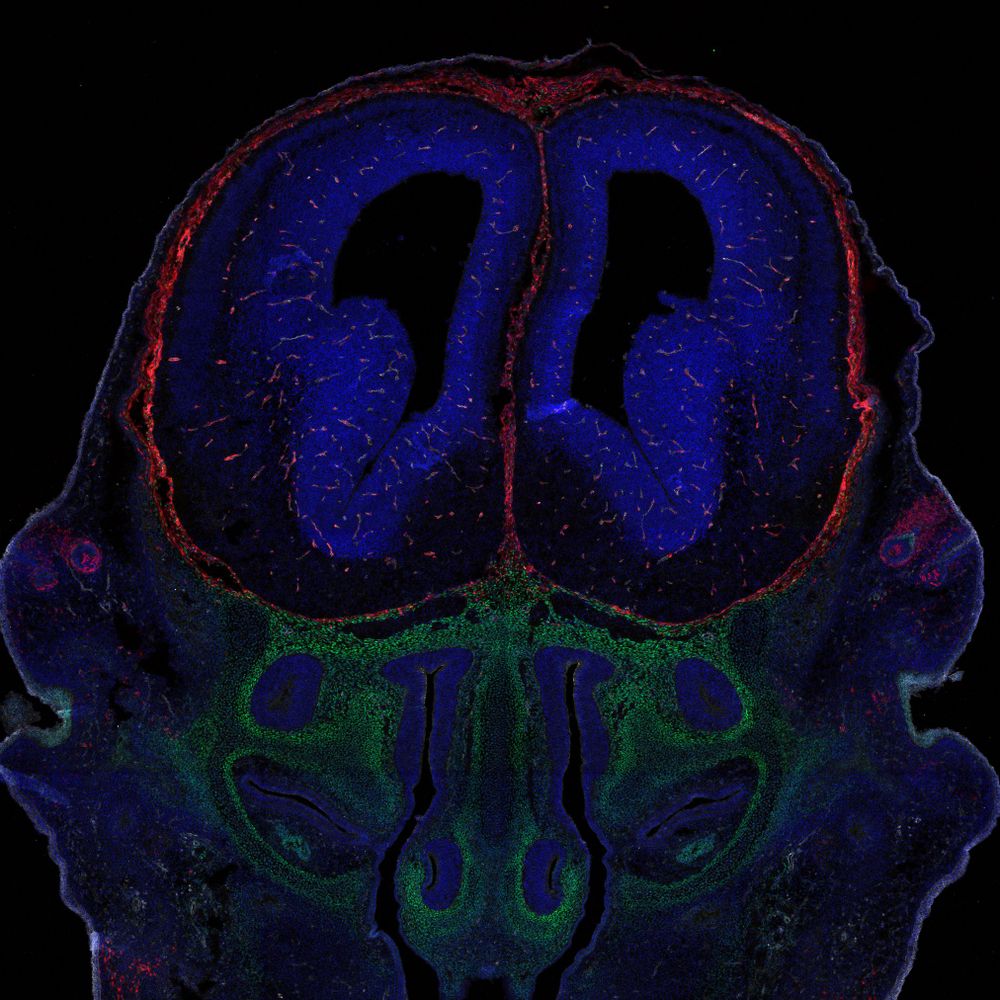
Our work out in @devbiol.bsky.social, PDGFra is needed for 🧠 perivascular fibroblast development... ⬇️ perivascular fibroblast = ⬇️ perivascular macrophage...cross-talk? 👀
Led by Hannah Jones @hejcell.bsky.social w/ Kelsey Abrams, Sophia Kim, excited for more projects w/ @fantauzzolab.bsky.social!
Led by Hannah Jones @hejcell.bsky.social w/ Kelsey Abrams, Sophia Kim, excited for more projects w/ @fantauzzolab.bsky.social!
November 20, 2025 at 8:01 PM
Thrilled to share this last little bit of my thesis work w/ @siegenthalerlab.bsky.social! 🐭🧠 Generating the PDGFRa cKO line we use in this paper was no trivial task, spanning multiple years (& a pandemic!) We were extremely excited to see this phenotype & even more excited to share it with everyone!
Reposted

Single-cell analysis of fruit fly motor neurons shows that RNA editing occurs at widely varying rates, contributing to neuronal diversity and potentially influencing neural function and development. doi.org/hbb3pz

RNA editing study finds many ways for neurons to diversify
All starting from the same DNA, neurons ultimately take on individual characteristics in the brain and body. Differences in which genes they transcribe into RNA help determine which type of neuron they become, and from there, a new MIT study shows, individual cells edit a selection of sites in those RNA transcripts, each at their own widely varying rates.
medicalxpress.com
November 20, 2025 at 9:55 PM
Single-cell analysis of fruit fly motor neurons shows that RNA editing occurs at widely varying rates, contributing to neuronal diversity and potentially influencing neural function and development. doi.org/hbb3pz
Reposted
New findings show that both mechanical forces and chemical signals are essential for early human embryonic development, offering new insights into tissue formation and self-organization. doi.org/hbb3p4

Light-controlled embryos reveal power of mechanical forces in human development
Only two weeks after fertilization, the first sign of the formation of the three axes of the human body (head/tail, ventral/dorsal, and right/left) begins to appear.
phys.org
November 20, 2025 at 10:00 PM
New findings show that both mechanical forces and chemical signals are essential for early human embryonic development, offering new insights into tissue formation and self-organization. doi.org/hbb3p4
Reposted
A wonderful visualization of the importance of perspective.
Keep it in mind the next time you do dimensionality reduction.
Keep it in mind the next time you do dimensionality reduction.

November 20, 2025 at 3:18 PM
A wonderful visualization of the importance of perspective.
Keep it in mind the next time you do dimensionality reduction.
Keep it in mind the next time you do dimensionality reduction.
Reposted

We are pleased to announce a new preprint by @mlweilert.bsky.social: “Widespread low-affinity motifs enhance chromatin accessibility and regulatory potential in mESCs” (www.biorxiv.org/content/10.1...). See summary and longer recap below:
(TLDR; low-affinity motifs matter as pioneers!)
(TLDR; low-affinity motifs matter as pioneers!)

Widespread low-affinity motifs enhance chromatin accessibility and regulatory potential in mESCs
Low-affinity transcription factor (TF) motifs are an important element of the cis-regulatory code, yet they are notoriously difficult to map and mechanistically incompletely understood, limiting our a...
www.biorxiv.org
November 19, 2025 at 8:57 PM
We are pleased to announce a new preprint by @mlweilert.bsky.social: “Widespread low-affinity motifs enhance chromatin accessibility and regulatory potential in mESCs” (www.biorxiv.org/content/10.1...). See summary and longer recap below:
(TLDR; low-affinity motifs matter as pioneers!)
(TLDR; low-affinity motifs matter as pioneers!)
Reposted

How do GWAS and rare variant burden tests rank gene signals?
In new work @nature.com with @hakha.bsky.social, @jkpritch.bsky.social, and our wonderful coauthors we find that the key factors are what we call Specificity, Length, and Luck!
🧬🧪🧵
www.nature.com/articles/s41...
In new work @nature.com with @hakha.bsky.social, @jkpritch.bsky.social, and our wonderful coauthors we find that the key factors are what we call Specificity, Length, and Luck!
🧬🧪🧵
www.nature.com/articles/s41...

Specificity, length and luck drive gene rankings in association studies - Nature
Genetic association tests prioritize candidate genes based on different criteria.
www.nature.com
November 7, 2025 at 12:05 AM
How do GWAS and rare variant burden tests rank gene signals?
In new work @nature.com with @hakha.bsky.social, @jkpritch.bsky.social, and our wonderful coauthors we find that the key factors are what we call Specificity, Length, and Luck!
🧬🧪🧵
www.nature.com/articles/s41...
In new work @nature.com with @hakha.bsky.social, @jkpritch.bsky.social, and our wonderful coauthors we find that the key factors are what we call Specificity, Length, and Luck!
🧬🧪🧵
www.nature.com/articles/s41...
Reposted

Thrilled to share our new review in Current Opinion in Genetics & Development on TE driven innovation in gene regulation🤘. I am honored to be part of this with two major TE aficionados @cedricfeschotte.bsky.social and @trono-lab.bsky.social
#TEsky #TEworldwide
authors.elsevier.com/c/1m6MC,LqAZ...
#TEsky #TEworldwide
authors.elsevier.com/c/1m6MC,LqAZ...
November 15, 2025 at 5:23 PM
Thrilled to share our new review in Current Opinion in Genetics & Development on TE driven innovation in gene regulation🤘. I am honored to be part of this with two major TE aficionados @cedricfeschotte.bsky.social and @trono-lab.bsky.social
#TEsky #TEworldwide
authors.elsevier.com/c/1m6MC,LqAZ...
#TEsky #TEworldwide
authors.elsevier.com/c/1m6MC,LqAZ...