



James Davies
@jojdavies.bsky.social
Professor of Genomics at Oxford University. Interested in chromatin structure, gene regulation and genome editing
Pinned
James Davies
@jojdavies.bsky.social
· Nov 5

Our latest paper has just been published in Cell!
doi.org/10.1016/j.ce...
We developed a new method called MCC ultra, which allows 3D chromatin structure to be visualised with a 1 base pair pixel size.
doi.org/10.1016/j.ce...
We developed a new method called MCC ultra, which allows 3D chromatin structure to be visualised with a 1 base pair pixel size.
Reposted by James Davies
Excited to share that a part of my PhD work is online now on BioRxiv!
www.biorxiv.org/content/10.6...
We developed a genome editing approach to target the JAK2 V617F mutation and demonstrate its potential to alleviate MPN hallmarks in primary patient cells.
Thread 👇
www.biorxiv.org/content/10.6...
We developed a genome editing approach to target the JAK2 V617F mutation and demonstrate its potential to alleviate MPN hallmarks in primary patient cells.
Thread 👇
December 20, 2025 at 9:37 AM
Excited to share that a part of my PhD work is online now on BioRxiv!
www.biorxiv.org/content/10.6...
We developed a genome editing approach to target the JAK2 V617F mutation and demonstrate its potential to alleviate MPN hallmarks in primary patient cells.
Thread 👇
www.biorxiv.org/content/10.6...
We developed a genome editing approach to target the JAK2 V617F mutation and demonstrate its potential to alleviate MPN hallmarks in primary patient cells.
Thread 👇
Reposted by James Davies
Our Science paper is out!
Huge congratulations to @huabin-zhou.bsky.social, Mike Rosen, and the brilliant @janhuemar.bsky.social @juliamaristany.bsky.social and @kieran-russell.bsky.social from our group
News: bit.ly/4avnkAr and bit.ly/3XBGVHS
Great perspective by @vram142.bsky.social +K Zhang
Huge congratulations to @huabin-zhou.bsky.social, Mike Rosen, and the brilliant @janhuemar.bsky.social @juliamaristany.bsky.social and @kieran-russell.bsky.social from our group
News: bit.ly/4avnkAr and bit.ly/3XBGVHS
Great perspective by @vram142.bsky.social +K Zhang
December 5, 2025 at 9:47 AM
Our Science paper is out!
Huge congratulations to @huabin-zhou.bsky.social, Mike Rosen, and the brilliant @janhuemar.bsky.social @juliamaristany.bsky.social and @kieran-russell.bsky.social from our group
News: bit.ly/4avnkAr and bit.ly/3XBGVHS
Great perspective by @vram142.bsky.social +K Zhang
Huge congratulations to @huabin-zhou.bsky.social, Mike Rosen, and the brilliant @janhuemar.bsky.social @juliamaristany.bsky.social and @kieran-russell.bsky.social from our group
News: bit.ly/4avnkAr and bit.ly/3XBGVHS
Great perspective by @vram142.bsky.social +K Zhang
Fascinating paper on a number of levels…
Anyone else think that NASA are basically saying that it’s likely that DNA/RNA/protein based life is likely to predate the solar system and arrived on earth on a comet…
So there are likely to be DNA based life forms throughout the universe?
Anyone else think that NASA are basically saying that it’s likely that DNA/RNA/protein based life is likely to predate the solar system and arrived on earth on a comet…
So there are likely to be DNA based life forms throughout the universe?

Samples from the asteroid Bennu include all five RNA and DNA bases and 14 amino acids, including tryptophan, indicating the range of prebiotic organic molecules that could have been delivered via impacts to the early Earth—and other planets. In PNAS: https://ow.ly/pAvY50XAi74

December 2, 2025 at 8:22 PM
Fascinating paper on a number of levels…
Anyone else think that NASA are basically saying that it’s likely that DNA/RNA/protein based life is likely to predate the solar system and arrived on earth on a comet…
So there are likely to be DNA based life forms throughout the universe?
Anyone else think that NASA are basically saying that it’s likely that DNA/RNA/protein based life is likely to predate the solar system and arrived on earth on a comet…
So there are likely to be DNA based life forms throughout the universe?
Reposted by James Davies
New lab preprint! ERCC6L2 disease is a recessive bone marrow failure syndrome caused by mutations in the putative DNA helicase ERCC6L2. Using mouse genetics, biochemistry and AF3 we uncover ERCC6L2-MRI as a KU-regulatory complex stimulating NHEJ at staggered DSBs: www.biorxiv.org/content/10.1...

The ERCC6L2-MRI-KU complex coordinates NHEJ at staggered DNA double-strand breaks
ERCC6L2 disease is a recessive bone marrow failure (BMF) syndrome caused by mutations in the SNF2-like putative DNA helicase ERCC6L2. While implicated in DNA replication, double strand break (DSB) rep...
www.biorxiv.org
December 1, 2025 at 9:28 PM
New lab preprint! ERCC6L2 disease is a recessive bone marrow failure syndrome caused by mutations in the putative DNA helicase ERCC6L2. Using mouse genetics, biochemistry and AF3 we uncover ERCC6L2-MRI as a KU-regulatory complex stimulating NHEJ at staggered DSBs: www.biorxiv.org/content/10.1...
Thanks so much for highlighting our images created with @rcollepardo.bsky.social
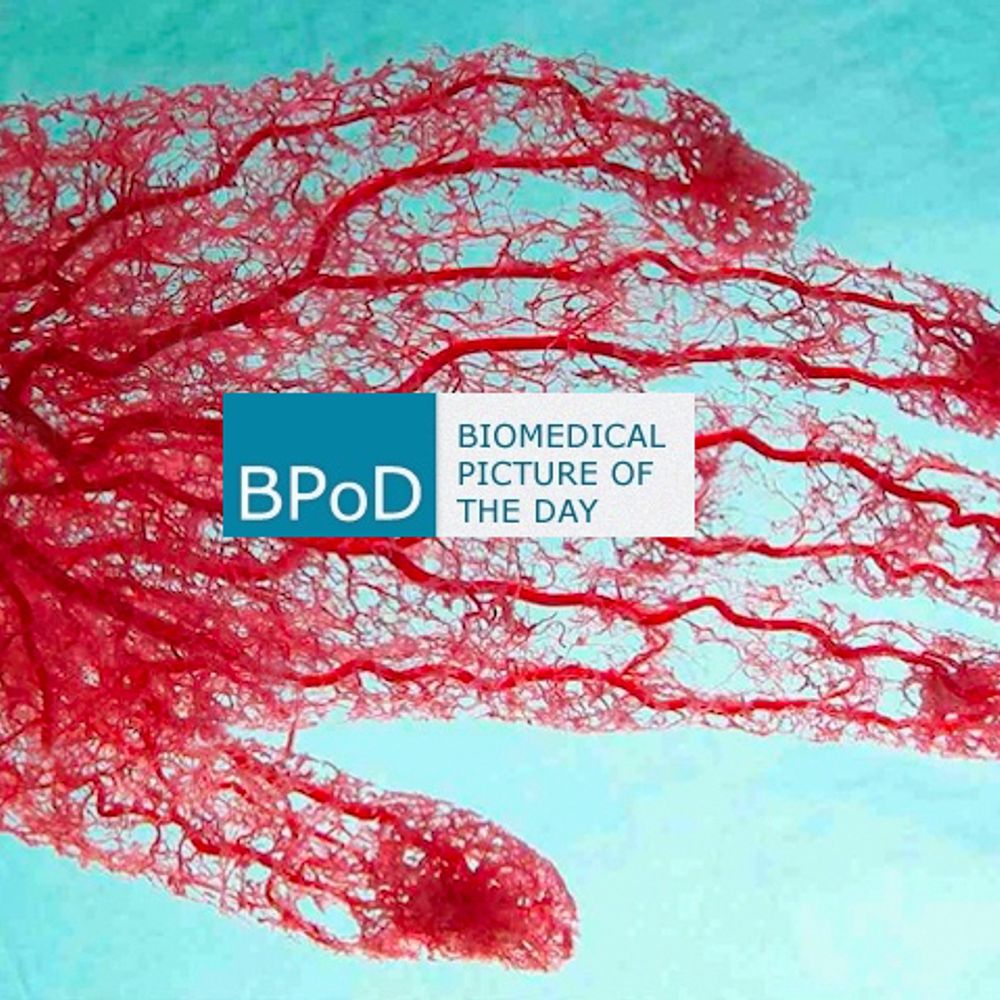
Mapping chromatin's structure at base-pair resolution reveals how it mediates cis-regulatory element interactions
📹 Hangpeng Li et al @jojdavies.bsky.social, MRC Molecular Haematology Unit, @imm.ox.ac.uk @ox.ac.uk in @cellpress.bsky.social
➡️ bpod.org.uk/archive/2025...
📹 Hangpeng Li et al @jojdavies.bsky.social, MRC Molecular Haematology Unit, @imm.ox.ac.uk @ox.ac.uk in @cellpress.bsky.social
➡️ bpod.org.uk/archive/2025...
December 1, 2025 at 4:01 PM
Thanks so much for highlighting our images created with @rcollepardo.bsky.social
Reposted by James Davies

Scientists have the most detailed view yet of how DNA folds and functions inside living cells!
The breakthrough helps us understand how genetic differences lead to disease and opens up fresh routes for drug discovery 👇
shorturl.at/nQjsx
@jojdavies.bsky.social @imm.ox.ac.uk @medsci.ox.ac.uk
The breakthrough helps us understand how genetic differences lead to disease and opens up fresh routes for drug discovery 👇
shorturl.at/nQjsx
@jojdavies.bsky.social @imm.ox.ac.uk @medsci.ox.ac.uk

Oxford scientists capture genome’s structure in unprecedented detail
RDM scientists have achieved the most detailed view yet of how DNA folds and functions inside living cells, revealing the physical structures that control when and how genes are switched on.
shorturl.at
November 6, 2025 at 11:18 AM
Scientists have the most detailed view yet of how DNA folds and functions inside living cells!
The breakthrough helps us understand how genetic differences lead to disease and opens up fresh routes for drug discovery 👇
shorturl.at/nQjsx
@jojdavies.bsky.social @imm.ox.ac.uk @medsci.ox.ac.uk
The breakthrough helps us understand how genetic differences lead to disease and opens up fresh routes for drug discovery 👇
shorturl.at/nQjsx
@jojdavies.bsky.social @imm.ox.ac.uk @medsci.ox.ac.uk
Reposted by James Davies
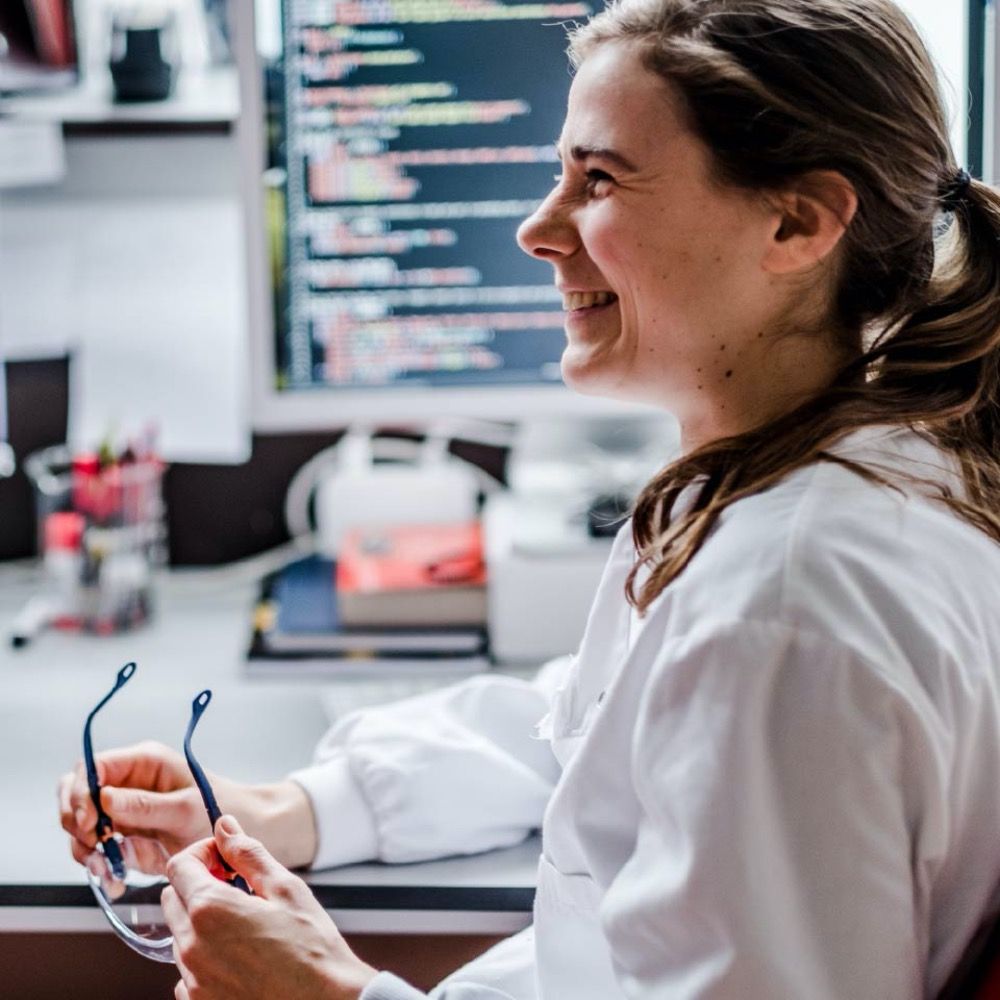
Happy to share our latest publication, in which we show that the arrangement of nucleosomes around CTCF sites contributes to higher-order organisation of chromatin into TADs: www.embopress.org/doi/full/10....

October 27, 2025 at 11:49 AM
Happy to share our latest publication, in which we show that the arrangement of nucleosomes around CTCF sites contributes to higher-order organisation of chromatin into TADs: www.embopress.org/doi/full/10....
Reposted by James Davies

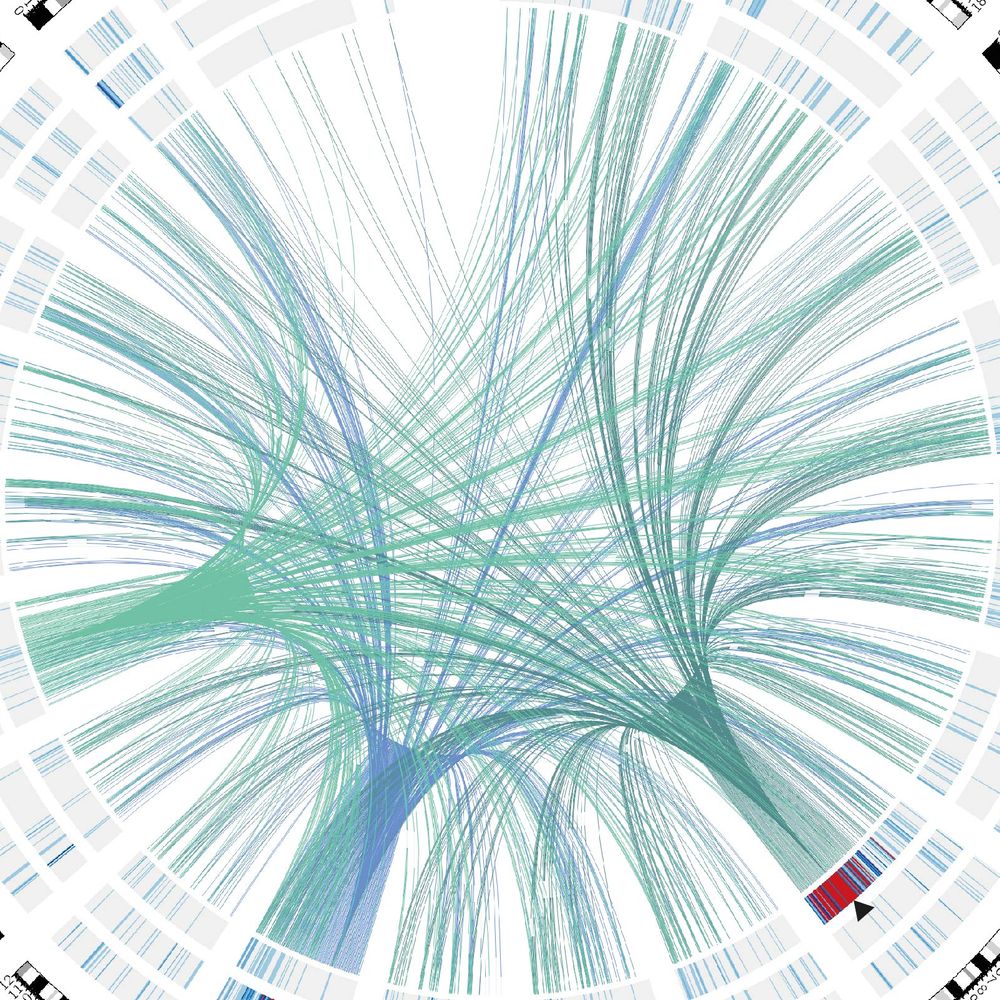
Not from Tron or a psychedelic wallpaper. This exquisite pic reveals chromatin at base-pair resolution, captured by #ListerFellow James Davies and collaborators🤩
"For the first time, we can see how the genome's control switches are physically arranged inside cells." @jojdavies.bsky.social
"For the first time, we can see how the genome's control switches are physically arranged inside cells." @jojdavies.bsky.social


November 5, 2025 at 4:50 PM
Not from Tron or a psychedelic wallpaper. This exquisite pic reveals chromatin at base-pair resolution, captured by #ListerFellow James Davies and collaborators🤩
"For the first time, we can see how the genome's control switches are physically arranged inside cells." @jojdavies.bsky.social
"For the first time, we can see how the genome's control switches are physically arranged inside cells." @jojdavies.bsky.social
Our latest paper has just been published in Cell!
doi.org/10.1016/j.ce...
We developed a new method called MCC ultra, which allows 3D chromatin structure to be visualised with a 1 base pair pixel size.
doi.org/10.1016/j.ce...
We developed a new method called MCC ultra, which allows 3D chromatin structure to be visualised with a 1 base pair pixel size.
November 5, 2025 at 5:20 PM
Our latest paper has just been published in Cell!
doi.org/10.1016/j.ce...
We developed a new method called MCC ultra, which allows 3D chromatin structure to be visualised with a 1 base pair pixel size.
doi.org/10.1016/j.ce...
We developed a new method called MCC ultra, which allows 3D chromatin structure to be visualised with a 1 base pair pixel size.
Reposted by James Davies

Optimization of a bespoke base editor to treat a severe pediatric vascular disease! 🫀🧬
Our manuscript describes:
1️⃣ Engineering a target-specific BE🧬
2⃣ A *must avoid* bystander edit that occurs with WT SpCas9 BEs! 🙅♂️
3⃣ Extension of lifespan after in vivo editing! 🐁✅
www.nature.com/articles/s41...
Our manuscript describes:
1️⃣ Engineering a target-specific BE🧬
2⃣ A *must avoid* bystander edit that occurs with WT SpCas9 BEs! 🙅♂️
3⃣ Extension of lifespan after in vivo editing! 🐁✅
www.nature.com/articles/s41...

Treatment of a severe vascular disease using a bespoke CRISPR–Cas9 base editor in mice - Nature Biomedical Engineering
Engineering a mutant-specific customized base editor precisely corrects a mutation while minimizing bystander edits, leading to substantial phenotypic recovery in mouse models of multisystemic smooth ...
www.nature.com
September 12, 2025 at 2:00 AM
Optimization of a bespoke base editor to treat a severe pediatric vascular disease! 🫀🧬
Our manuscript describes:
1️⃣ Engineering a target-specific BE🧬
2⃣ A *must avoid* bystander edit that occurs with WT SpCas9 BEs! 🙅♂️
3⃣ Extension of lifespan after in vivo editing! 🐁✅
www.nature.com/articles/s41...
Our manuscript describes:
1️⃣ Engineering a target-specific BE🧬
2⃣ A *must avoid* bystander edit that occurs with WT SpCas9 BEs! 🙅♂️
3⃣ Extension of lifespan after in vivo editing! 🐁✅
www.nature.com/articles/s41...
Reposted by James Davies
We’re really excited to see Hangpeng Li present our latest work at the CSH Mechanisms of Eukaryotic Transcription meeting.

August 27, 2025 at 8:48 PM
We’re really excited to see Hangpeng Li present our latest work at the CSH Mechanisms of Eukaryotic Transcription meeting.
Reposted by James Davies

In Brief: A new center in San Francisco will offer tailor-made CRISPR therapies to cure children with rare diseases www.nature.com/articles/s41...
Children with rare genetic diseases get CRISPR Cures center - Nature Biotechnology
Nature Biotechnology - Children with rare genetic diseases get CRISPR Cures center
www.nature.com
August 26, 2025 at 4:04 PM
In Brief: A new center in San Francisco will offer tailor-made CRISPR therapies to cure children with rare diseases www.nature.com/articles/s41...
Reposted by James Davies

Excited that the paper presenting our mouse brain in vivo CRISPR screening platform is out today in @natneuro.nature.com!
Great team effort, led by Biswa Ramani and @ivlrose.bsky.social in the Kampmann lab.
www.nature.com/articles/s41...
Great team effort, led by Biswa Ramani and @ivlrose.bsky.social in the Kampmann lab.
www.nature.com/articles/s41...

CRISPR screening by AAV episome-sequencing (CrAAVe-seq): a scalable cell-type-specific in vivo platform uncovers neuronal essential genes - Nature Neuroscience
The authors developed an adeno-associated virus-based high-throughput in vivo CRISPR screening platform for endogenous mouse brain cell types. Using this platform, they define genes and pathways essen...
www.nature.com
August 22, 2025 at 10:15 PM
Excited that the paper presenting our mouse brain in vivo CRISPR screening platform is out today in @natneuro.nature.com!
Great team effort, led by Biswa Ramani and @ivlrose.bsky.social in the Kampmann lab.
www.nature.com/articles/s41...
Great team effort, led by Biswa Ramani and @ivlrose.bsky.social in the Kampmann lab.
www.nature.com/articles/s41...
Reposted by James Davies
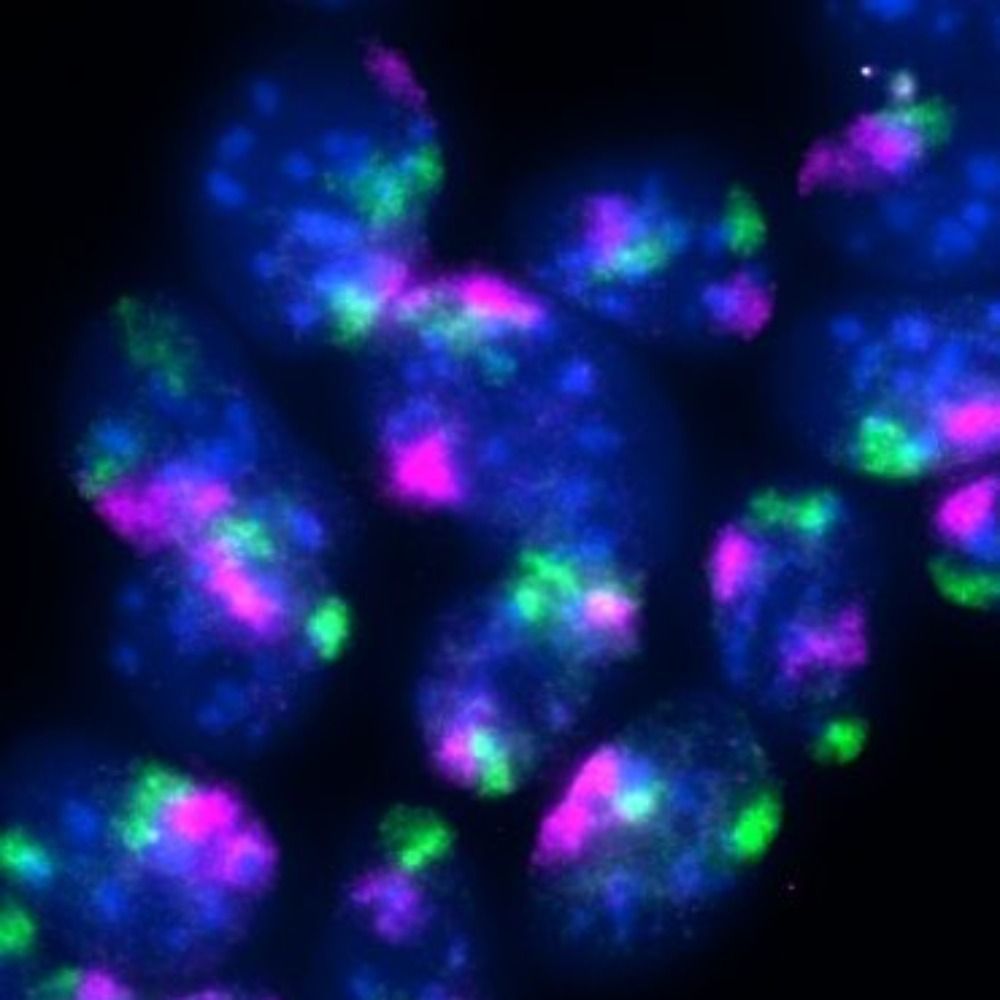
New preprint with @gfudenberg.bsky.social
We find the rate of cohesin loop extrusion in cells is set by NIPBL dosage and tunes many aspects of chromosome folding.
This provides a molecular basis for NIPBL haploinsufficiency in humans. 🧵👇
www.biorxiv.org/content/10.1...
We find the rate of cohesin loop extrusion in cells is set by NIPBL dosage and tunes many aspects of chromosome folding.
This provides a molecular basis for NIPBL haploinsufficiency in humans. 🧵👇
www.biorxiv.org/content/10.1...

NIPBL dosage shapes genome folding by tuning the rate of cohesin loop extrusion
Cohesin loop extrusion is a major driver of chromosome folding, but how its dynamics are controlled to shape the genome remains elusive. Here we disentangle the contributions of the cohesin cofactors ...
www.biorxiv.org
August 16, 2025 at 3:03 AM
New preprint with @gfudenberg.bsky.social
We find the rate of cohesin loop extrusion in cells is set by NIPBL dosage and tunes many aspects of chromosome folding.
This provides a molecular basis for NIPBL haploinsufficiency in humans. 🧵👇
www.biorxiv.org/content/10.1...
We find the rate of cohesin loop extrusion in cells is set by NIPBL dosage and tunes many aspects of chromosome folding.
This provides a molecular basis for NIPBL haploinsufficiency in humans. 🧵👇
www.biorxiv.org/content/10.1...
Reposted by James Davies
Thrilled that our paper is in print @science.org!!
*Platelets sequester cell free DNA, including free fetal and tumour-derived DNA*
Tweetorial from @l-cmurphy.bsky.social below. Check out the news feature science.org/content/arti... and terrific editorial from Dennis Lo #platelets_in_the_limelight
*Platelets sequester cell free DNA, including free fetal and tumour-derived DNA*
Tweetorial from @l-cmurphy.bsky.social below. Check out the news feature science.org/content/arti... and terrific editorial from Dennis Lo #platelets_in_the_limelight
August 15, 2025 at 5:37 AM
Thrilled that our paper is in print @science.org!!
*Platelets sequester cell free DNA, including free fetal and tumour-derived DNA*
Tweetorial from @l-cmurphy.bsky.social below. Check out the news feature science.org/content/arti... and terrific editorial from Dennis Lo #platelets_in_the_limelight
*Platelets sequester cell free DNA, including free fetal and tumour-derived DNA*
Tweetorial from @l-cmurphy.bsky.social below. Check out the news feature science.org/content/arti... and terrific editorial from Dennis Lo #platelets_in_the_limelight
Reposted by James Davies
