



Marintia Nava-García
@marintianava.bsky.social
Passionate about cell biology. PhD @ViennaBiocenter. Currently doing a postdoc at IGBMC.
Reposted by Marintia Nava-García

And another Asgard paper. Cells in motion! Wow! www.biorxiv.org/content/10.1...

Dynamic protrusions mediate unique crawling motility in Asgard Archaea (Promethearchaeota)
Crawling motility is a hallmark of eukaryotic cells and requires a dynamic actin cytoskeleton, regulated adhesion, and spatially organized signalling pathways. Asgard archaea (phylum Promethearchaeota...
www.biorxiv.org
December 2, 2025 at 5:04 PM
And another Asgard paper. Cells in motion! Wow! www.biorxiv.org/content/10.1...
Reposted by Marintia Nava-García
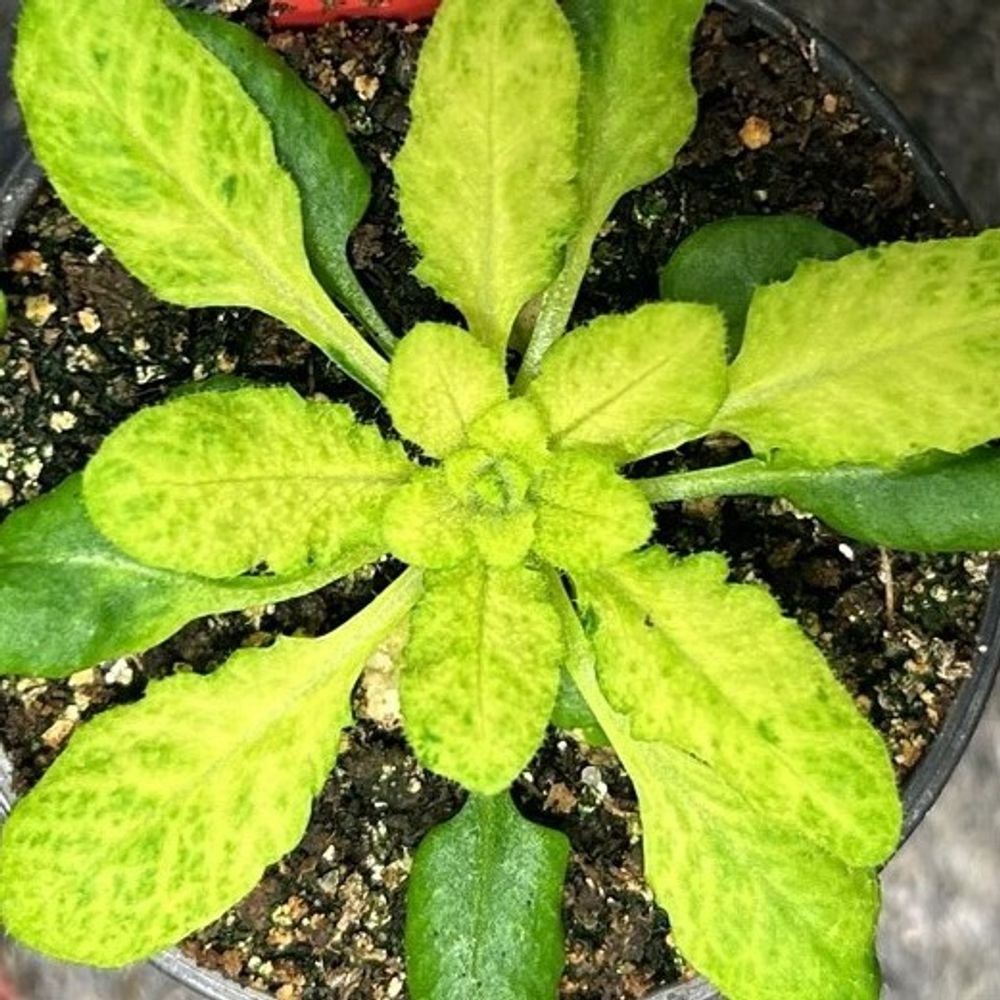
Preprint alert! It is my great pleasure to announce the first manuscript from the lab, a story that started @gmivienna.bsky.social and was mainly accomplished by the intrepid @gesahoffmann.bsky.social at @mpi-mp-potsdam.bsky.social. A brief thread with our findings
www.biorxiv.org/content/10.1...
www.biorxiv.org/content/10.1...

AGO5 restricts virus vertical transmission in plant gametophytes
The propagation of a viral infection from a host parent to its progeny is known as vertical transmission, or seed transmission in plants. It allows viral infections to rapidly spread locally via polle...
www.biorxiv.org
December 2, 2025 at 12:34 PM
Preprint alert! It is my great pleasure to announce the first manuscript from the lab, a story that started @gmivienna.bsky.social and was mainly accomplished by the intrepid @gesahoffmann.bsky.social at @mpi-mp-potsdam.bsky.social. A brief thread with our findings
www.biorxiv.org/content/10.1...
www.biorxiv.org/content/10.1...
Reposted by Marintia Nava-García
New preprint from the lab!!🎉
We show that Asgard archaea ESCRT-III proteins can trigger membrane fission and reveal its molecular mechanism, offering clues to how these cells may have built internal compartments. But do these organisms even have these compartments?
www.biorxiv.org/content/10.1...
We show that Asgard archaea ESCRT-III proteins can trigger membrane fission and reveal its molecular mechanism, offering clues to how these cells may have built internal compartments. But do these organisms even have these compartments?
www.biorxiv.org/content/10.1...

Molecular basis for cellular compartmentalization by an ancient membrane fission mechanism
The emergence of cell compartmentalization depends on membrane fission to create the endomembrane compartments. In eukaryotes, membrane fission is commonly executed by ESCRT-III, a protein complex con...
www.biorxiv.org
December 1, 2025 at 9:09 AM
New preprint from the lab!!🎉
We show that Asgard archaea ESCRT-III proteins can trigger membrane fission and reveal its molecular mechanism, offering clues to how these cells may have built internal compartments. But do these organisms even have these compartments?
www.biorxiv.org/content/10.1...
We show that Asgard archaea ESCRT-III proteins can trigger membrane fission and reveal its molecular mechanism, offering clues to how these cells may have built internal compartments. But do these organisms even have these compartments?
www.biorxiv.org/content/10.1...
Reposted by Marintia Nava-García
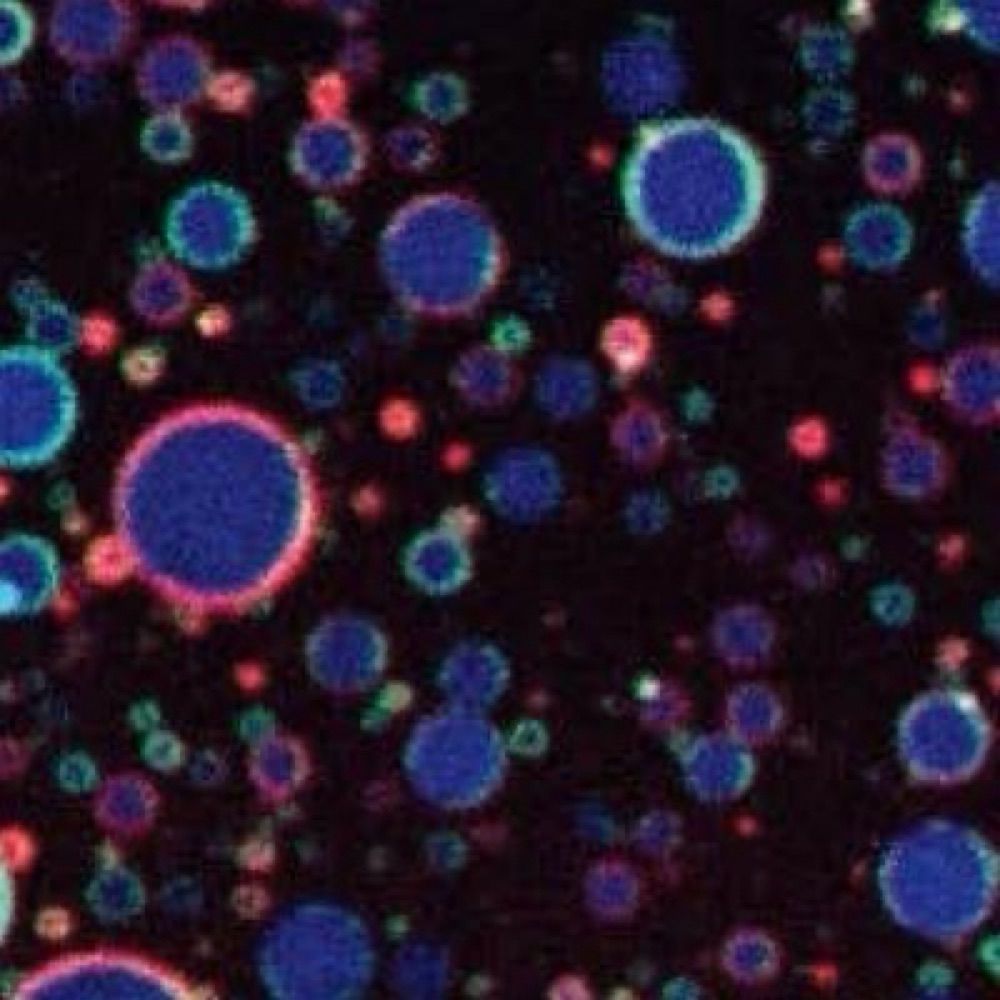
And the saga continues! Our collaborative work with outstanding Justin Korfhage & Thomas Melia’s lab in PNAS shows that ATG2A transfers triglycerides and does so bidirectionally! An exciting twist in our understanding of lipid transport.
Definitely worth a deep read:
www.pnas.org/doi/10.1073/...
Definitely worth a deep read:
www.pnas.org/doi/10.1073/...
November 27, 2025 at 10:41 AM
And the saga continues! Our collaborative work with outstanding Justin Korfhage & Thomas Melia’s lab in PNAS shows that ATG2A transfers triglycerides and does so bidirectionally! An exciting twist in our understanding of lipid transport.
Definitely worth a deep read:
www.pnas.org/doi/10.1073/...
Definitely worth a deep read:
www.pnas.org/doi/10.1073/...
Reposted by Marintia Nava-García
How do new centromeres evolve while staying compatible with the division machinery?
Discover it in our new Nature paper! We show centromeres transition gradually via a mix of drift, selection, and sex, reaching new states that still work with the kinetochore.
👉 doi.org/10.1038/s41586-025-09779-1
Discover it in our new Nature paper! We show centromeres transition gradually via a mix of drift, selection, and sex, reaching new states that still work with the kinetochore.
👉 doi.org/10.1038/s41586-025-09779-1

November 26, 2025 at 4:21 PM
How do new centromeres evolve while staying compatible with the division machinery?
Discover it in our new Nature paper! We show centromeres transition gradually via a mix of drift, selection, and sex, reaching new states that still work with the kinetochore.
👉 doi.org/10.1038/s41586-025-09779-1
Discover it in our new Nature paper! We show centromeres transition gradually via a mix of drift, selection, and sex, reaching new states that still work with the kinetochore.
👉 doi.org/10.1038/s41586-025-09779-1
Reposted by Marintia Nava-García
Is it a flagellate? A tiny ball with tentacles? Contamination in my ciliate culture? NEW SUPERGROUP OF EUKARYOTES? Yes to all 4! Meet Solarion - just out in #Nature doi.org/10.1038/s415... Huge congrats to Marek Valt, Cepicka Lab & the star team! Very happy to be part of this project. #ProtistsOnSky


November 19, 2025 at 9:39 PM
Is it a flagellate? A tiny ball with tentacles? Contamination in my ciliate culture? NEW SUPERGROUP OF EUKARYOTES? Yes to all 4! Meet Solarion - just out in #Nature doi.org/10.1038/s415... Huge congrats to Marek Valt, Cepicka Lab & the star team! Very happy to be part of this project. #ProtistsOnSky
Reposted by Marintia Nava-García

Great work from the lab of @jojdavies.bsky.social
Mapping chromatin structure at base-pair resolution unveils a unified model of cis-regulatory element interactions
www.cell.com/cell/fulltex...
Mapping chromatin structure at base-pair resolution unveils a unified model of cis-regulatory element interactions
www.cell.com/cell/fulltex...

Mapping chromatin structure at base-pair resolution unveils a unified model of cis-regulatory element interactions
Li et al. apply base-pair resolution Micro Capture-C ultra to map chromatin contacts
between individual motifs within cis-regulatory elements and reveal a unified model
of biophysically mediated enhan...
www.cell.com
November 17, 2025 at 6:55 AM
Great work from the lab of @jojdavies.bsky.social
Mapping chromatin structure at base-pair resolution unveils a unified model of cis-regulatory element interactions
www.cell.com/cell/fulltex...
Mapping chromatin structure at base-pair resolution unveils a unified model of cis-regulatory element interactions
www.cell.com/cell/fulltex...
Reposted by Marintia Nava-García
Launching celldynamicslab.com, the homepage of our new group at EPFL working on cell fragmentation, membrane and cortex mechanics, FLIM imaging, and microfluidics tools. MSc/PhD or postdocs interested in quantitative cell biology are welcome to reach out. We're also hiring a lab manager in 2026!
Main - Cell Dynamics and Fragmentation Lab
The Cell Dynamics and Fragmentation lab at We study how single cells move and fragment in complex environments using microfluidics. We bring tools and concep...
celldynamicslab.com
November 11, 2025 at 5:10 PM
Launching celldynamicslab.com, the homepage of our new group at EPFL working on cell fragmentation, membrane and cortex mechanics, FLIM imaging, and microfluidics tools. MSc/PhD or postdocs interested in quantitative cell biology are welcome to reach out. We're also hiring a lab manager in 2026!
Reposted by Marintia Nava-García
And just when you thought things were settling down, the enigmatic Asgard archaea have another surprise in store! Cell cycle/life cycle stage-specific internal compartments with almost no eukaryote-derived clues as to how they might function.
Beautiful tomography and microscopy - congrats all 🤩
Beautiful tomography and microscopy - congrats all 🤩
An Asgard archaeon with internal membrane compartments
Brilliant study led by @fmacleod.bsky.social and Andriko von Kügelgen. Tight collaboration with @buzzbaum.bsky.social and lab. Congrats to all authors!
www.biorxiv.org/content/10.1...
Brilliant study led by @fmacleod.bsky.social and Andriko von Kügelgen. Tight collaboration with @buzzbaum.bsky.social and lab. Congrats to all authors!
www.biorxiv.org/content/10.1...

November 7, 2025 at 10:56 AM
And just when you thought things were settling down, the enigmatic Asgard archaea have another surprise in store! Cell cycle/life cycle stage-specific internal compartments with almost no eukaryote-derived clues as to how they might function.
Beautiful tomography and microscopy - congrats all 🤩
Beautiful tomography and microscopy - congrats all 🤩
Reposted by Marintia Nava-García
We have wondered what a complex archaeal cell might look like ever since 2014. It’s been a long road (and the journey is far from over), but it’s a good time to pause for breath and look. These Asgard archaeal cells are a surprise! And that is the joy of being a cell biologist.

November 7, 2025 at 11:02 AM
We have wondered what a complex archaeal cell might look like ever since 2014. It’s been a long road (and the journey is far from over), but it’s a good time to pause for breath and look. These Asgard archaeal cells are a surprise! And that is the joy of being a cell biologist.
Reposted by Marintia Nava-García
An Asgard archaeon with internal membrane compartments
Brilliant study led by @fmacleod.bsky.social and Andriko von Kügelgen. Tight collaboration with @buzzbaum.bsky.social and lab. Congrats to all authors!
www.biorxiv.org/content/10.1...
Brilliant study led by @fmacleod.bsky.social and Andriko von Kügelgen. Tight collaboration with @buzzbaum.bsky.social and lab. Congrats to all authors!
www.biorxiv.org/content/10.1...
November 7, 2025 at 10:44 AM
An Asgard archaeon with internal membrane compartments
Brilliant study led by @fmacleod.bsky.social and Andriko von Kügelgen. Tight collaboration with @buzzbaum.bsky.social and lab. Congrats to all authors!
www.biorxiv.org/content/10.1...
Brilliant study led by @fmacleod.bsky.social and Andriko von Kügelgen. Tight collaboration with @buzzbaum.bsky.social and lab. Congrats to all authors!
www.biorxiv.org/content/10.1...
Reposted by Marintia Nava-García
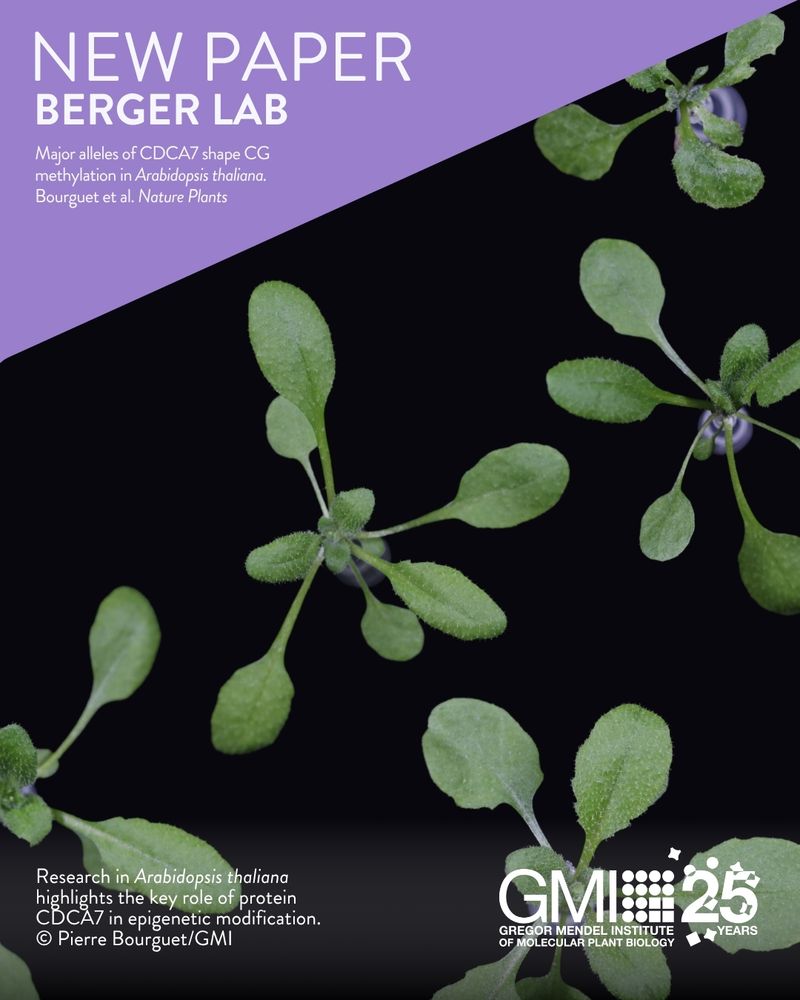
How is epigenetic information inherited? We found that CDCA7 proteins are critical players in the inheritance of DNA methylation at CG sites in plants, and this is true both in the lab and in the wild. How does this work? 🧵👇

New paper! Work led by @p-bourguet.bsky.social and Frédéric Berger at the GMI of the @oeaw.bsky.social and @esasaki007.bsky.social identified how protein CDCA7 helps plants stably maintain epigenetic modifications across generations.
Read more: www.oeaw.ac.at/gmi/detail/n...
Read more: www.oeaw.ac.at/gmi/detail/n...
November 7, 2025 at 5:05 PM
How is epigenetic information inherited? We found that CDCA7 proteins are critical players in the inheritance of DNA methylation at CG sites in plants, and this is true both in the lab and in the wild. How does this work? 🧵👇
Reposted by Marintia Nava-García

Curious about my main PhD work?!🔬🌱 Please have a look on @biorxivpreprint.bsky.social biorxiv.org/content/10.1101/2025.11.04.686542v1
Connecting auxin-autophagy-development
Connecting auxin-autophagy-development
Cool #preprint by @cate-giannini.bsky.social at @frimllab.bsky.social addressing how #auxin induces #autophagy. Glad we can contribute... www.biorxiv.org/content/10.1...

November 6, 2025 at 11:14 AM
Curious about my main PhD work?!🔬🌱 Please have a look on @biorxivpreprint.bsky.social biorxiv.org/content/10.1101/2025.11.04.686542v1
Connecting auxin-autophagy-development
Connecting auxin-autophagy-development
Reposted by Marintia Nava-García

🚨Our collaboration with @centriolelab.bsky.social & @gautamdey.bsky.social is out today in @cp-cell.bsky.social
We show that #Expansion #Microscopy is a broad-spectrum modality for Euks, enabling 3D phenotypic maps rooted to phylogeny.
#ProtistsOnSky #SciComm #SciSky
www.cell.com/cell/fulltex...
We show that #Expansion #Microscopy is a broad-spectrum modality for Euks, enabling 3D phenotypic maps rooted to phylogeny.
#ProtistsOnSky #SciComm #SciSky
www.cell.com/cell/fulltex...
October 31, 2025 at 2:42 PM
🚨Our collaboration with @centriolelab.bsky.social & @gautamdey.bsky.social is out today in @cp-cell.bsky.social
We show that #Expansion #Microscopy is a broad-spectrum modality for Euks, enabling 3D phenotypic maps rooted to phylogeny.
#ProtistsOnSky #SciComm #SciSky
www.cell.com/cell/fulltex...
We show that #Expansion #Microscopy is a broad-spectrum modality for Euks, enabling 3D phenotypic maps rooted to phylogeny.
#ProtistsOnSky #SciComm #SciSky
www.cell.com/cell/fulltex...
Reposted by Marintia Nava-García
🧠 The Lipid #Brain Atlas is out now! If you think #lipids are boring and membranes are all the same, prepare to be surprised. Led by @lucafusarbassini.bsky.social with Giovanni D'Angelo's lab, we mapped membrane lipids in the mouse brain at high resolution.
www.biorxiv.org/cgi/content/...
www.biorxiv.org/cgi/content/...

October 16, 2025 at 6:23 AM
🧠 The Lipid #Brain Atlas is out now! If you think #lipids are boring and membranes are all the same, prepare to be surprised. Led by @lucafusarbassini.bsky.social with Giovanni D'Angelo's lab, we mapped membrane lipids in the mouse brain at high resolution.
www.biorxiv.org/cgi/content/...
www.biorxiv.org/cgi/content/...
Reposted by Marintia Nava-García
Lipid imaging on the cover of @nature.com! Great times for lipid cell biology indeed. And a fantastic recognition of all the hard work by the team, especially Juan M. Iglesias-Artola and Kristin Böhlig (who made the cover). Link to article: www.nature.com/articles/s41...

October 9, 2025 at 9:01 AM
Lipid imaging on the cover of @nature.com! Great times for lipid cell biology indeed. And a fantastic recognition of all the hard work by the team, especially Juan M. Iglesias-Artola and Kristin Böhlig (who made the cover). Link to article: www.nature.com/articles/s41...
Reposted by Marintia Nava-García
Exercising fathers, enhanced endurance and metabolic heath in offspring, through sperm microRNAs (as demonstrated in mice)
www.cell.com/cell-metabol...
www.cell.com/cell-metabol...

Paternal exercise confers endurance capacity to offspring through sperm microRNAs
Yin et al. show that paternal exercise improves offspring endurance capacity and metabolic
health via sperm microRNAs that reprogram gene expression in early embryos, revealing
how exercise benefits c...
www.cell.com
October 6, 2025 at 3:17 PM
Exercising fathers, enhanced endurance and metabolic heath in offspring, through sperm microRNAs (as demonstrated in mice)
www.cell.com/cell-metabol...
www.cell.com/cell-metabol...
Reposted by Marintia Nava-García
Latest from ours: www.cell.com/cell-reports...
This is two stories in one: a case study/cautionary tale on developing genetic tools in new organisms, and the first hint at a gene regulatory network for choanoflagellate multicellular development (which turn out to involve a Hippo/YAP/ECM loop!) A 🧵
This is two stories in one: a case study/cautionary tale on developing genetic tools in new organisms, and the first hint at a gene regulatory network for choanoflagellate multicellular development (which turn out to involve a Hippo/YAP/ECM loop!) A 🧵

October 5, 2025 at 10:35 AM
Latest from ours: www.cell.com/cell-reports...
This is two stories in one: a case study/cautionary tale on developing genetic tools in new organisms, and the first hint at a gene regulatory network for choanoflagellate multicellular development (which turn out to involve a Hippo/YAP/ECM loop!) A 🧵
This is two stories in one: a case study/cautionary tale on developing genetic tools in new organisms, and the first hint at a gene regulatory network for choanoflagellate multicellular development (which turn out to involve a Hippo/YAP/ECM loop!) A 🧵
Very happy and lucky to continue my scientific journey as a postdoc in the Sumara Lab! 🌞
Today we welcomed our new postdoc, Dr. Marintia Nava @marintianava.bsky.social, to the lab! We’re so happy to have her on board and wish her the best of luck as she begins her exciting work on Annulate Lamellae. Welcome, Marintia! 😁🤩🌟

October 2, 2025 at 4:58 AM
Very happy and lucky to continue my scientific journey as a postdoc in the Sumara Lab! 🌞
Reposted by Marintia Nava-García

Did you know that all nuclear pore complexes (NPCs) are not the same? @luskinglab.bsky.social propose a new hypothesis for how nuclear mechanics may impact the compositional plasticity of NPCs with implications for tissue-specific diseases caused by NPC dysfunction.
www.nature.com/articles/s41...
www.nature.com/articles/s41...

Nuclear mechanics as a determinant of nuclear pore complex plasticity - Nature Cell Biology
In this Review, Lusk et al. discuss emerging insights into nuclear pore complex variability with regard to composition and dilation state, and propose nuclear mechanics as a key determinant of driving...
www.nature.com
September 19, 2025 at 3:50 PM
Did you know that all nuclear pore complexes (NPCs) are not the same? @luskinglab.bsky.social propose a new hypothesis for how nuclear mechanics may impact the compositional plasticity of NPCs with implications for tissue-specific diseases caused by NPC dysfunction.
www.nature.com/articles/s41...
www.nature.com/articles/s41...
Reposted by Marintia Nava-García

Very excited to share new work out today in @natchembio.nature.com on a new approach - FACES - for selectively imaging of phospholipids and other biomolecules at spatial resolutions down to individual membrane leaflets (1/n) www.nature.com/articles/s41...

Leaflet-specific phospholipid imaging using genetically encoded proximity sensors - Nature Chemical Biology
An approach combining bioorthogonal chemistry with genetically encoded fluorogen-activating proteins enables subcellular imaging of phospholipids and glycans, as well as the visualization of lipid tra...
www.nature.com
September 15, 2025 at 6:03 PM
Very excited to share new work out today in @natchembio.nature.com on a new approach - FACES - for selectively imaging of phospholipids and other biomolecules at spatial resolutions down to individual membrane leaflets (1/n) www.nature.com/articles/s41...
Reposted by Marintia Nava-García
Excited to share the preprint from my postdoc work @ellenberglab.bsky.social! 🌟
During mitotic exit, cells rebuild thousands of nuclear pores within minutes. How do tiny holes expand to selective channels, and how is this coordinated with the nuclear envelope remodeling? 🔗 doi.org/10.1101/2025...
During mitotic exit, cells rebuild thousands of nuclear pores within minutes. How do tiny holes expand to selective channels, and how is this coordinated with the nuclear envelope remodeling? 🔗 doi.org/10.1101/2025...

Hydrophobic interactions of FG-nucleoporins are required for dilating nuclear membrane pores into selective transport channels after mitosis
Nuclear envelope (NE) reformation after mitosis is essential for daughter cell viability and requires tightly coordinated nuclear pore complex (NPC) assembly and nuclear membrane reformation. To revea...
doi.org
September 9, 2025 at 1:15 PM
Excited to share the preprint from my postdoc work @ellenberglab.bsky.social! 🌟
During mitotic exit, cells rebuild thousands of nuclear pores within minutes. How do tiny holes expand to selective channels, and how is this coordinated with the nuclear envelope remodeling? 🔗 doi.org/10.1101/2025...
During mitotic exit, cells rebuild thousands of nuclear pores within minutes. How do tiny holes expand to selective channels, and how is this coordinated with the nuclear envelope remodeling? 🔗 doi.org/10.1101/2025...
Reposted by Marintia Nava-García

ICYMI: New Online! Structure, function and assembly of nuclear pore complexes

Structure, function and assembly of nuclear pore complexes
Nature Reviews Molecular Cell Biology, Published online: 09 September 2025; doi:10.1038/s41580-025-00881-wRecent near-atomic structures of the nuclear pore complex provide insights into its assembly and function — how it acts as a selective permeability barrier, regulates nucleocytoplasmic transport such as mRNA export, and integrates mechanical forces experienced by the cell and nucleus.
bit.ly
September 12, 2025 at 12:08 PM
ICYMI: New Online! Structure, function and assembly of nuclear pore complexes
Reposted by Marintia Nava-García
New preprint from the lab! Please check it out. 🚨
Have you ever wondered how cells decide when it’s time to divide? So did we!
www.biorxiv.org/content/10.1...
Have you ever wondered how cells decide when it’s time to divide? So did we!
www.biorxiv.org/content/10.1...

Chromosome condensation mechanically primes the nucleus for mitosis
Timely and accurate transition into mitosis is essential to preserve genome integrity and avoid chromosome segregation errors. This transition depends on spatial and temporal activity patterns of the ...
www.biorxiv.org
September 3, 2025 at 10:07 AM
New preprint from the lab! Please check it out. 🚨
Have you ever wondered how cells decide when it’s time to divide? So did we!
www.biorxiv.org/content/10.1...
Have you ever wondered how cells decide when it’s time to divide? So did we!
www.biorxiv.org/content/10.1...
Reposted by Marintia Nava-García

For some three billion years, unicellular organisms ruled Earth. Then, around one billion years ago, a new chapter of life began
go.nature.com/3JyRV4S
go.nature.com/3JyRV4S

How did life get multicellular? Five simple organisms could have the answer
Single-celled species that often stick together in colonies have researchers rethinking the origin of animals.
go.nature.com
August 27, 2025 at 10:19 AM
For some three billion years, unicellular organisms ruled Earth. Then, around one billion years ago, a new chapter of life began
go.nature.com/3JyRV4S
go.nature.com/3JyRV4S