




Linda Kim
@kimlinda.bsky.social
🇰🇷🇨🇦 | Exploring cerebellum & therapeutic neuromodulation, one neuron at a time | DMRF Mahlon DeLong Awardee | Postdoc @SillitoeLab | @bcmhouston |🐈⬛☕️🚴🏻♀️🏕️⛳️
Reposted by Linda Kim
Excited to share our latest Nature publication, headed by the Pacold lab. Our experimental compound shows great promise as a novel, mechanistic treatment for a pediatric disorder that can prove fatal. It also highlights the therapeutic relevance of the cerebellum. #neuroskyence tinyurl.com/yh9736m9

Coenzyme Q headgroup intermediates can ameliorate a mitochondrial encephalopathy - Nature
Decreased brain coenzyme Q10 levels cause encephalopathy and are associated with neurodegeneration; supplementation with 4-HMA or 4-HB restores coenzyme Q10 synthesis in mice and humans with HPDL vari...
www.nature.com
July 11, 2025 at 8:02 PM
Excited to share our latest Nature publication, headed by the Pacold lab. Our experimental compound shows great promise as a novel, mechanistic treatment for a pediatric disorder that can prove fatal. It also highlights the therapeutic relevance of the cerebellum. #neuroskyence tinyurl.com/yh9736m9
Reposted by Linda Kim
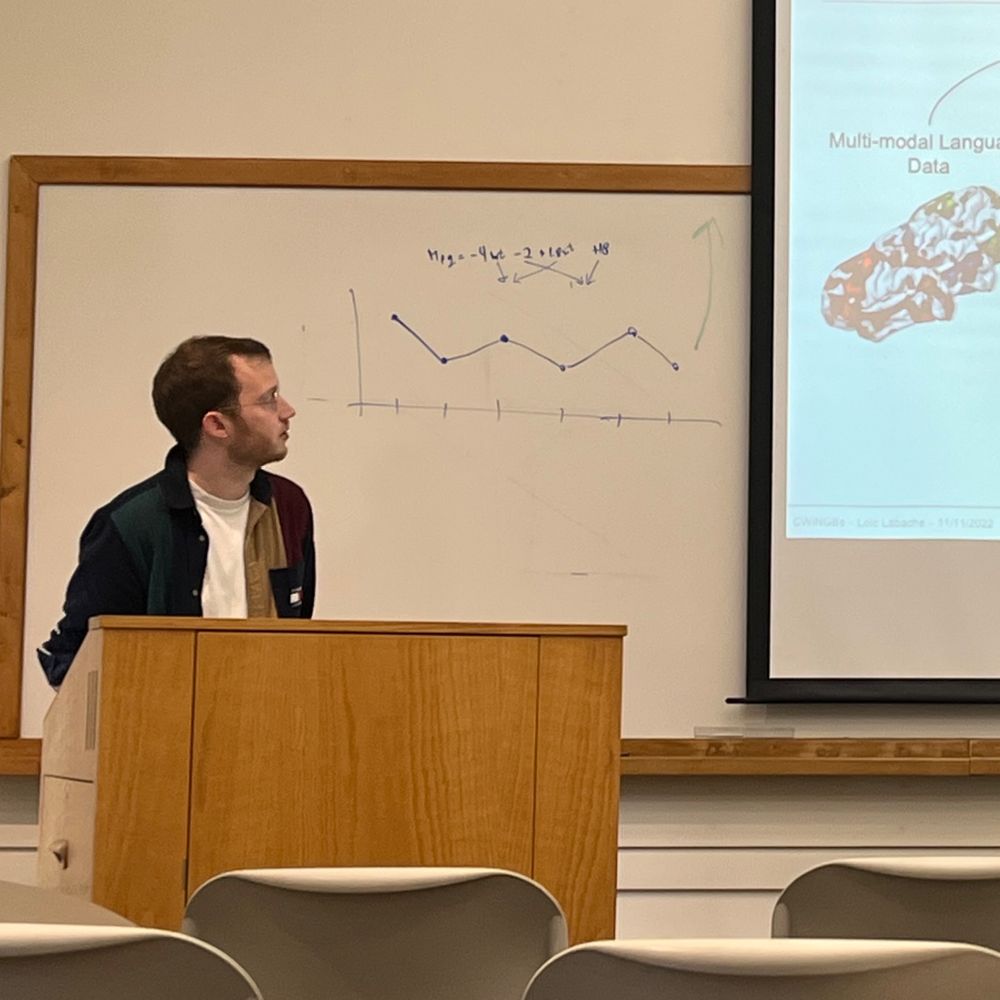
🚨 New #preprint: The molecular and cellular underpinnings of human brain lateralization
🔗 doi.org/10.1101/2025...
🧠 We identify an acetylcholine-norepinephrine axis underlying functional lateralization, along with mitochondrial and cellular correlates. 🧵1/9👇
#neuroskyence
🔗 doi.org/10.1101/2025...
🧠 We identify an acetylcholine-norepinephrine axis underlying functional lateralization, along with mitochondrial and cellular correlates. 🧵1/9👇
#neuroskyence

The molecular and cellular underpinnings of human brain lateralization
Hemispheric specialization is a fundamental characteristic of human brain organization, where most individuals exhibit left-hemisphere dominance for language and right-hemisphere dominance for visuosp...
doi.org
April 12, 2025 at 10:28 AM
🚨 New #preprint: The molecular and cellular underpinnings of human brain lateralization
🔗 doi.org/10.1101/2025...
🧠 We identify an acetylcholine-norepinephrine axis underlying functional lateralization, along with mitochondrial and cellular correlates. 🧵1/9👇
#neuroskyence
🔗 doi.org/10.1101/2025...
🧠 We identify an acetylcholine-norepinephrine axis underlying functional lateralization, along with mitochondrial and cellular correlates. 🧵1/9👇
#neuroskyence
Reposted by Linda Kim

In case you missed it, we recently published one of the largest studies of the aging brain.
It reveals new insights into how the brain ages including possible connections between diet, inflammation, and brain health.
🧠📈 More at alleninstitute.org/news/key-pla...
#studyBRAIN #BrainAwarenessWeek
It reveals new insights into how the brain ages including possible connections between diet, inflammation, and brain health.
🧠📈 More at alleninstitute.org/news/key-pla...
#studyBRAIN #BrainAwarenessWeek

Key players in brain aging: New research identifies age-related damage on a cellular level
New research identifies age-related damage on a cellular level
alleninstitute.org
March 10, 2025 at 8:51 PM
In case you missed it, we recently published one of the largest studies of the aging brain.
It reveals new insights into how the brain ages including possible connections between diet, inflammation, and brain health.
🧠📈 More at alleninstitute.org/news/key-pla...
#studyBRAIN #BrainAwarenessWeek
It reveals new insights into how the brain ages including possible connections between diet, inflammation, and brain health.
🧠📈 More at alleninstitute.org/news/key-pla...
#studyBRAIN #BrainAwarenessWeek
Reposted by Linda Kim
To understand the brain, we must first understand its parts — the cells. 🧠📈
Together with our partners across the country, we're cataloging cell types in the brain with the most detailed map of the motor cortex ever.
🎬 www.youtube.com/watch?v=ylt2...
#BrainWeek #BrainAwarenessWeek #studyBRAIN
Together with our partners across the country, we're cataloging cell types in the brain with the most detailed map of the motor cortex ever.
🎬 www.youtube.com/watch?v=ylt2...
#BrainWeek #BrainAwarenessWeek #studyBRAIN

What are the cells that make up our brains?
YouTube video by Allen Institute
www.youtube.com
March 10, 2025 at 9:00 PM
To understand the brain, we must first understand its parts — the cells. 🧠📈
Together with our partners across the country, we're cataloging cell types in the brain with the most detailed map of the motor cortex ever.
🎬 www.youtube.com/watch?v=ylt2...
#BrainWeek #BrainAwarenessWeek #studyBRAIN
Together with our partners across the country, we're cataloging cell types in the brain with the most detailed map of the motor cortex ever.
🎬 www.youtube.com/watch?v=ylt2...
#BrainWeek #BrainAwarenessWeek #studyBRAIN
Reposted by Linda Kim

Viewpoint with Mark Edwards debating the relevance of clinical phenomenology in movement disorders!
doi.org/10.1002/mds....
doi.org/10.1002/mds....
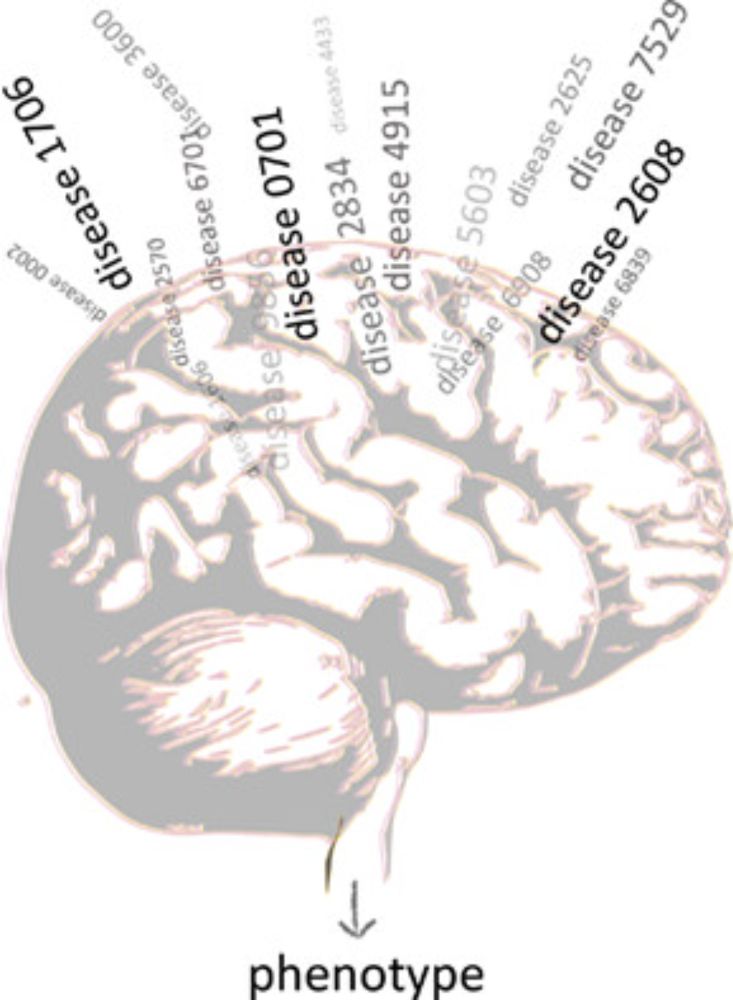
Between Nothing and Everything: Phenomenology in Movement Disorders
Click on the article title to read more.
doi.org
February 4, 2025 at 10:08 AM
Viewpoint with Mark Edwards debating the relevance of clinical phenomenology in movement disorders!
doi.org/10.1002/mds....
doi.org/10.1002/mds....
Reposted by Linda Kim

New in 𝐶𝑒𝑙𝑙
𝗣𝗮𝘆(𝗹𝗼𝗮𝗱) 𝗧𝗵𝗿𝗼𝘂𝗴𝗵 𝘁𝗵𝗲 𝗡𝗼𝘀𝗲
Intranasal 𝐿𝑎𝑐𝑡𝑜𝑏𝑎𝑐𝑖𝑙𝑙𝑢𝑠 𝑝𝑙𝑎𝑛𝑡𝑎𝑟𝑢𝑚 (Lp) engineered to release drugs in the olfactory epithelium, facilitating their transport to the brain
intranasal Lp-secreted leptin (appetite-regulating hormone) reduced obesity in mice
www.cell.com/cell/fulltex...
𝗣𝗮𝘆(𝗹𝗼𝗮𝗱) 𝗧𝗵𝗿𝗼𝘂𝗴𝗵 𝘁𝗵𝗲 𝗡𝗼𝘀𝗲
Intranasal 𝐿𝑎𝑐𝑡𝑜𝑏𝑎𝑐𝑖𝑙𝑙𝑢𝑠 𝑝𝑙𝑎𝑛𝑡𝑎𝑟𝑢𝑚 (Lp) engineered to release drugs in the olfactory epithelium, facilitating their transport to the brain
intranasal Lp-secreted leptin (appetite-regulating hormone) reduced obesity in mice
www.cell.com/cell/fulltex...

February 9, 2025 at 1:29 AM
New in 𝐶𝑒𝑙𝑙
𝗣𝗮𝘆(𝗹𝗼𝗮𝗱) 𝗧𝗵𝗿𝗼𝘂𝗴𝗵 𝘁𝗵𝗲 𝗡𝗼𝘀𝗲
Intranasal 𝐿𝑎𝑐𝑡𝑜𝑏𝑎𝑐𝑖𝑙𝑙𝑢𝑠 𝑝𝑙𝑎𝑛𝑡𝑎𝑟𝑢𝑚 (Lp) engineered to release drugs in the olfactory epithelium, facilitating their transport to the brain
intranasal Lp-secreted leptin (appetite-regulating hormone) reduced obesity in mice
www.cell.com/cell/fulltex...
𝗣𝗮𝘆(𝗹𝗼𝗮𝗱) 𝗧𝗵𝗿𝗼𝘂𝗴𝗵 𝘁𝗵𝗲 𝗡𝗼𝘀𝗲
Intranasal 𝐿𝑎𝑐𝑡𝑜𝑏𝑎𝑐𝑖𝑙𝑙𝑢𝑠 𝑝𝑙𝑎𝑛𝑡𝑎𝑟𝑢𝑚 (Lp) engineered to release drugs in the olfactory epithelium, facilitating their transport to the brain
intranasal Lp-secreted leptin (appetite-regulating hormone) reduced obesity in mice
www.cell.com/cell/fulltex...
Reposted by Linda Kim

FDA approves new pain killer- First non-opioid analgesic in decades targets sodium channels.
#painresearch
#physio
#neuroskyence
🛟🧪
www.nature.com/articles/d41...
#painresearch
#physio
#neuroskyence
🛟🧪
www.nature.com/articles/d41...

US drug agency approves potent painkiller — the first non-opioid in decades
The FDA’s nod for suzetrigine bolsters confidence in the pharmaceutical industry’s strategy to target sodium channels.
www.nature.com
February 1, 2025 at 8:58 AM
FDA approves new pain killer- First non-opioid analgesic in decades targets sodium channels.
#painresearch
#physio
#neuroskyence
🛟🧪
www.nature.com/articles/d41...
#painresearch
#physio
#neuroskyence
🛟🧪
www.nature.com/articles/d41...
Reposted by Linda Kim

VNS at mid-intensity decreased anxiety-like behavior without affecting reward or aversion in rats. This intensity also increased c-Fos expression in noradrenergic NTS neurons while reducing it in the LC. #neuroskyence 🩺
Butler et al. Brain Stim
www.sciencedirect.com/science/arti...
Butler et al. Brain Stim
www.sciencedirect.com/science/arti...

February 1, 2025 at 6:06 PM
VNS at mid-intensity decreased anxiety-like behavior without affecting reward or aversion in rats. This intensity also increased c-Fos expression in noradrenergic NTS neurons while reducing it in the LC. #neuroskyence 🩺
Butler et al. Brain Stim
www.sciencedirect.com/science/arti...
Butler et al. Brain Stim
www.sciencedirect.com/science/arti...
Reposted by Linda Kim

I think it is obvious we need to pay 'more' attention to resilience factors, and invest 'more' in understanding what is vulnerable. How can we use 'intrinsic characteristics' of cells to our advantage? To use a Star Wars analogy, 'use the force Luke.' Let us move – a fortiori – with stronger reason.

February 1, 2025 at 3:24 PM
I think it is obvious we need to pay 'more' attention to resilience factors, and invest 'more' in understanding what is vulnerable. How can we use 'intrinsic characteristics' of cells to our advantage? To use a Star Wars analogy, 'use the force Luke.' Let us move – a fortiori – with stronger reason.
Reposted by Linda Kim
Guess what? There are early motor signs even in Alzheimer's and Lewy Body Disease. Are there early motor features that predict pathology or co-pathology? Spoiler alert: Look at the face. Daniel Oh and colleagues collected the information and collected brains to teach us.

January 28, 2025 at 5:04 PM
Guess what? There are early motor signs even in Alzheimer's and Lewy Body Disease. Are there early motor features that predict pathology or co-pathology? Spoiler alert: Look at the face. Daniel Oh and colleagues collected the information and collected brains to teach us.
Reposted by Linda Kim

Mysterious Blobs Found inside Cells Are Rewriting the Story of How Life Works
Tiny specks called biomolecular condensates are leading to a new understanding of the cell
www.scientificamerican.com/article/myst...
Tiny specks called biomolecular condensates are leading to a new understanding of the cell
www.scientificamerican.com/article/myst...

Mysterious Blobs in Cells Are Changing the Way We Understand Life
Tiny specks called biomolecular condensates are leading to a new understanding of the cell
www.scientificamerican.com
January 22, 2025 at 10:35 PM
Mysterious Blobs Found inside Cells Are Rewriting the Story of How Life Works
Tiny specks called biomolecular condensates are leading to a new understanding of the cell
www.scientificamerican.com/article/myst...
Tiny specks called biomolecular condensates are leading to a new understanding of the cell
www.scientificamerican.com/article/myst...
Reposted by Linda Kim

🚨 New Research! 🚨
Our new preprint is live on BioRxiv. Check out the link below if you're interested in learning more about how spinal circuits modulate breathing!
www.biorxiv.org/content/10.1...
Our new preprint is live on BioRxiv. Check out the link below if you're interested in learning more about how spinal circuits modulate breathing!
www.biorxiv.org/content/10.1...
www.biorxiv.org
January 22, 2025 at 9:29 PM
🚨 New Research! 🚨
Our new preprint is live on BioRxiv. Check out the link below if you're interested in learning more about how spinal circuits modulate breathing!
www.biorxiv.org/content/10.1...
Our new preprint is live on BioRxiv. Check out the link below if you're interested in learning more about how spinal circuits modulate breathing!
www.biorxiv.org/content/10.1...
Reposted by Linda Kim

The ‘go’ and ‘no-go’ pathways in the basal ganglia are not the only pathways that control movement, as a new study reveals two additional circuits that modulate dopamine and movement.
By @claudia-lopez.bsky.social
#neuroskyence
www.thetransmitter.org/basal-gangli...
By @claudia-lopez.bsky.social
#neuroskyence
www.thetransmitter.org/basal-gangli...
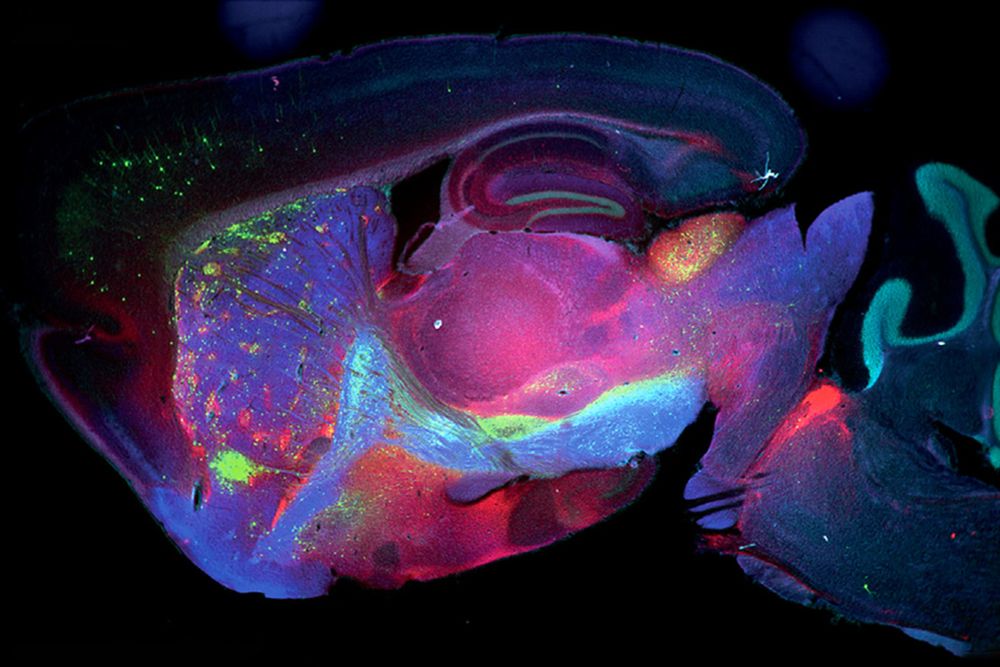
Newly characterized striatal circuits add twist to ‘go/no-go’ model of movement control
The two novel pathways control dopamine release in opposing ways and may link motivation and mood to action, a new study shows.
www.thetransmitter.org
January 24, 2025 at 3:04 PM
The ‘go’ and ‘no-go’ pathways in the basal ganglia are not the only pathways that control movement, as a new study reveals two additional circuits that modulate dopamine and movement.
By @claudia-lopez.bsky.social
#neuroskyence
www.thetransmitter.org/basal-gangli...
By @claudia-lopez.bsky.social
#neuroskyence
www.thetransmitter.org/basal-gangli...
New from @sarahdonofrio.bsky.social: Aging leads to patterned Purkinje cell loss in the cerebellum, seen in both mice and humans. More insights into how aging shapes neuronal vulnerability here: www.biorxiv.org/content/10.1...
#neuroskyence
#neuroskyence

Cerebellar Purkinje cell stripe patterns reveal a differential vulnerability and resistance to cell loss during normal aging in mice
Age-related neurodegenerative diseases involve reduced cell numbers and impaired behavioral capacity. Neurodegeneration and behavioral deficits also occur during aging, and notably in the absence of d...
www.biorxiv.org
January 27, 2025 at 3:55 PM
New from @sarahdonofrio.bsky.social: Aging leads to patterned Purkinje cell loss in the cerebellum, seen in both mice and humans. More insights into how aging shapes neuronal vulnerability here: www.biorxiv.org/content/10.1...
#neuroskyence
#neuroskyence
Reposted by Linda Kim

How important are your #postdoc years in the likelihood of you staying & succeeding in #academia?
In our newly published paper in @pnas.org, "Postdoc Publications and Citations Link to Academic Retention and Faculty Success," we study the journey of #CareerSuccess of ~45,000 #postdocs.
🧵1/7
In our newly published paper in @pnas.org, "Postdoc Publications and Citations Link to Academic Retention and Faculty Success," we study the journey of #CareerSuccess of ~45,000 #postdocs.
🧵1/7

January 21, 2025 at 3:55 PM
How important are your #postdoc years in the likelihood of you staying & succeeding in #academia?
In our newly published paper in @pnas.org, "Postdoc Publications and Citations Link to Academic Retention and Faculty Success," we study the journey of #CareerSuccess of ~45,000 #postdocs.
🧵1/7
In our newly published paper in @pnas.org, "Postdoc Publications and Citations Link to Academic Retention and Faculty Success," we study the journey of #CareerSuccess of ~45,000 #postdocs.
🧵1/7
Reposted by Linda Kim

Nature Neuroscience
Dynamical constraints on neural population activity
www.nature.com/articles/s41...
Dynamical constraints on neural population activity
www.nature.com/articles/s41...

Dynamical constraints on neural population activity - Nature Neuroscience
Oby, Degenhart, Grigsby and colleagues used a brain–computer interface to challenge monkeys to override their natural time courses of neural activity. They found the time courses to be highly robust, ...
www.nature.com
January 19, 2025 at 3:23 PM
Nature Neuroscience
Dynamical constraints on neural population activity
www.nature.com/articles/s41...
Dynamical constraints on neural population activity
www.nature.com/articles/s41...
Reposted by Linda Kim

New study demonstrates that tiny one-celled sea creatures use the same type of molecular machinery that
#neurons and muscle cells use to communicate. Could be a pathway to advance #AI and #robotics? scienceblog.com/553045/tiny-... #neuroscience
#neurons and muscle cells use to communicate. Could be a pathway to advance #AI and #robotics? scienceblog.com/553045/tiny-... #neuroscience

Tiny Sea Creatures Caught 'Talking' to Their Colony Mates
In a discovery that challenges our understanding of social behavior, researchers have found that tiny single-celled organisms can coordinate their actions
scienceblog.com
January 16, 2025 at 4:16 PM
New study demonstrates that tiny one-celled sea creatures use the same type of molecular machinery that
#neurons and muscle cells use to communicate. Could be a pathway to advance #AI and #robotics? scienceblog.com/553045/tiny-... #neuroscience
#neurons and muscle cells use to communicate. Could be a pathway to advance #AI and #robotics? scienceblog.com/553045/tiny-... #neuroscience
Huge congrats to @sarahdonofrio.bsky.social for her beautiful science communication piece, highlighted in Nature Features and Opinion! Dive into the fascinating story of how a neuroscientist unraveled his own long COVID mystery. www.youcanknowthings.com/how-one-neur.... #neuroskyence
January 14, 2025 at 4:33 PM
Huge congrats to @sarahdonofrio.bsky.social for her beautiful science communication piece, highlighted in Nature Features and Opinion! Dive into the fascinating story of how a neuroscientist unraveled his own long COVID mystery. www.youcanknowthings.com/how-one-neur.... #neuroskyence
Reposted by Linda Kim

Lots of good discussion on this compelling new paper this week:
www.cell.com/neuron/abstr...
I'd like to offer my $0.02 along with some historical background that the article didn't give. 1/ #Neuroskyence #PsychSciSky
www.cell.com/neuron/abstr...
I'd like to offer my $0.02 along with some historical background that the article didn't give. 1/ #Neuroskyence #PsychSciSky

The unbearable slowness of being: Why do we live at 10 bits/s?
Zheng and Meister write about the paradoxical slowness of human behavior. Although our senses gather data at 109 bits/s, our overall information throughput is only 10 bits/s. This stark contrast touches on many fundamental aspects of brain function.
www.cell.com
December 21, 2024 at 6:03 PM
Lots of good discussion on this compelling new paper this week:
www.cell.com/neuron/abstr...
I'd like to offer my $0.02 along with some historical background that the article didn't give. 1/ #Neuroskyence #PsychSciSky
www.cell.com/neuron/abstr...
I'd like to offer my $0.02 along with some historical background that the article didn't give. 1/ #Neuroskyence #PsychSciSky
Reposted by Linda Kim

really great thread by Blake. Each neuron in an artificial neural network (ANN) isn't supposed to accurately model a neuron in the brain.
Instead, ANNs are good models of computation (through dynamics/manifolds) based on the collective activity of simpler "functions" (i.e., the neurons)
Instead, ANNs are good models of computation (through dynamics/manifolds) based on the collective activity of simpler "functions" (i.e., the neurons)

1/ Okay, one thing that has been revealed to me from the replies to this is that many people don't know (or refuse to recognize) the following fact:
The unts in ANN are actually not a terrible approximation of how real neurons work!
A tiny 🧵.
🧠📈 #NeuroAI #MLSky
The unts in ANN are actually not a terrible approximation of how real neurons work!
A tiny 🧵.
🧠📈 #NeuroAI #MLSky
Why does anyone have any issue with this?
I've seen people suggesting it's problematic, that neuroscientists won't like it, and so on.
But, I literally don't see why this is problematic...
I've seen people suggesting it's problematic, that neuroscientists won't like it, and so on.
But, I literally don't see why this is problematic...
December 17, 2024 at 11:27 AM
really great thread by Blake. Each neuron in an artificial neural network (ANN) isn't supposed to accurately model a neuron in the brain.
Instead, ANNs are good models of computation (through dynamics/manifolds) based on the collective activity of simpler "functions" (i.e., the neurons)
Instead, ANNs are good models of computation (through dynamics/manifolds) based on the collective activity of simpler "functions" (i.e., the neurons)
Reposted by Linda Kim
Very proud to share a new review (more like a long perspective), just out in Science Advances: rebrand.ly/mdbi8q8. Ilana Nisky and Tamar @cambridgeuni.bsky.social joined heads (brains) to reimagine how to make the most out of artificial haptic interfaces. A thread (1/8)
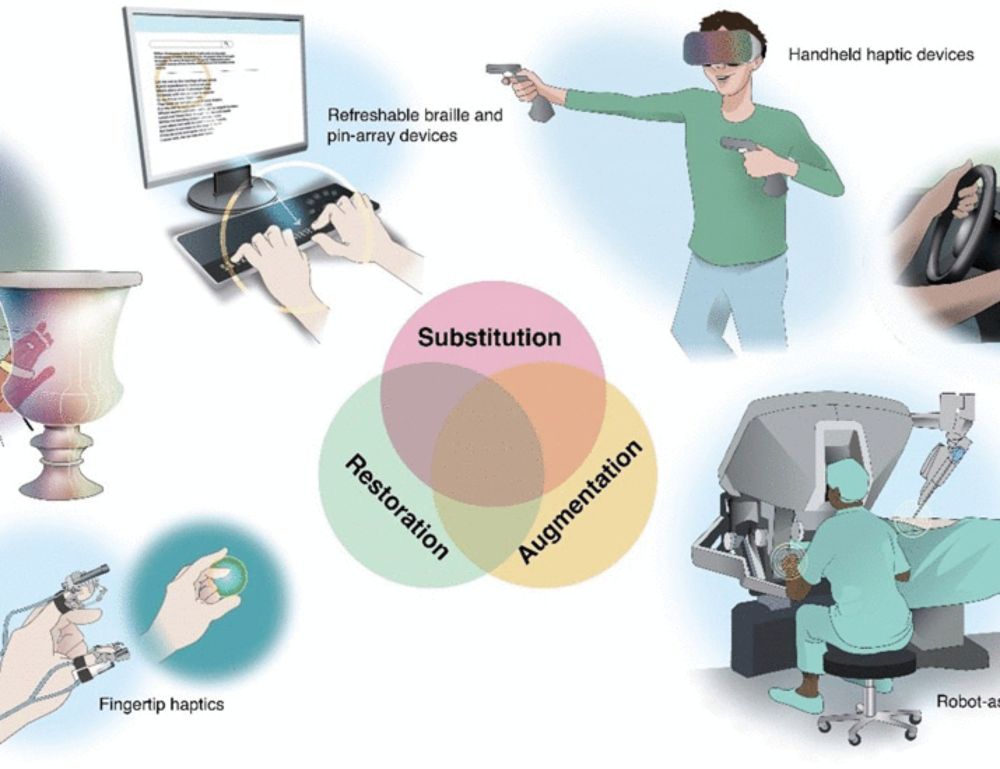
A neurocognitive pathway for engineering artificial touch
Neurocognitive congruence is key to designing artificial touch that best integrates with human perception and action.
rebrand.ly
December 19, 2024 at 9:21 PM
Very proud to share a new review (more like a long perspective), just out in Science Advances: rebrand.ly/mdbi8q8. Ilana Nisky and Tamar @cambridgeuni.bsky.social joined heads (brains) to reimagine how to make the most out of artificial haptic interfaces. A thread (1/8)
Reposted by Linda Kim

Final first-author paper from my postdoc w/ the brilliant @sylvainbaillet.bsky.social + crew!
We find converging evidence for a pathway b/w norepinephrine ➡️ cortical alpha rhythms ➡️ cognitive dysfunction in #Parkinson's disease
academic.oup.com/brain/advanc...
🧵👇
(1/n)
We find converging evidence for a pathway b/w norepinephrine ➡️ cortical alpha rhythms ➡️ cognitive dysfunction in #Parkinson's disease
academic.oup.com/brain/advanc...
🧵👇
(1/n)

December 16, 2024 at 7:06 PM
Final first-author paper from my postdoc w/ the brilliant @sylvainbaillet.bsky.social + crew!
We find converging evidence for a pathway b/w norepinephrine ➡️ cortical alpha rhythms ➡️ cognitive dysfunction in #Parkinson's disease
academic.oup.com/brain/advanc...
🧵👇
(1/n)
We find converging evidence for a pathway b/w norepinephrine ➡️ cortical alpha rhythms ➡️ cognitive dysfunction in #Parkinson's disease
academic.oup.com/brain/advanc...
🧵👇
(1/n)
Reposted by Linda Kim
Brains balance individual neuron activity and scalable teamwork using a fractal hierarchy, optimizing efficiency and adaptability. This universal principle, found across species, enables resilience and rapid adaptation. #Neuroscience #BrainEfficiency #FractalApproach #Neurons #BrainResearch

How neurons work together: A fractal approach to brain efficiency
Brains balance individual neuron activity and scalable teamwork using a fractal hierarchy, optimizing efficiency and adaptability. This universal principle, found across species, enables resilience and rapid adaptation.
www.psypost.org
December 13, 2024 at 1:11 PM
Brains balance individual neuron activity and scalable teamwork using a fractal hierarchy, optimizing efficiency and adaptability. This universal principle, found across species, enables resilience and rapid adaptation. #Neuroscience #BrainEfficiency #FractalApproach #Neurons #BrainResearch
Reposted by Linda Kim

Multi-timescale neural dynamics for multisensory integration
www.nature.com/articles/s41...
#neuroscience
www.nature.com/articles/s41...
#neuroscience

Multi-timescale neural dynamics for multisensory integration - Nature Reviews Neuroscience
How the brain routinely processes information from different sensory modalities during everyday tasks is not well understood. In this Perspective, Engel and Senkowski propose how oscillatory neural me...
www.nature.com
December 13, 2024 at 3:28 AM
Multi-timescale neural dynamics for multisensory integration
www.nature.com/articles/s41...
#neuroscience
www.nature.com/articles/s41...
#neuroscience