




Earl K. Miller
@earlkmiller.bsky.social
Picower Professor of Neuroscience @ MIT
Cognitive neuroscience, executive brain functions, consciousness, and bass guitar. You know, the good stuff.
ekmillerlab.mit.edu
Co-founder, Neuroblox
https://www.neuroblox.ai/
Cognitive neuroscience, executive brain functions, consciousness, and bass guitar. You know, the good stuff.
ekmillerlab.mit.edu
Co-founder, Neuroblox
https://www.neuroblox.ai/
Ha! Thanks for the name check. And thanks for the paper. The real Earl wonders why spikes and waves are considered adversarial when they are both electrical signals, a "duality". This is an interesting and reasonable reformulation.
arxiv.org/abs/2511.06602
#neuroscience
arxiv.org/abs/2511.06602
#neuroscience

January 6, 2026 at 4:53 PM
Ha! Thanks for the name check. And thanks for the paper. The real Earl wonders why spikes and waves are considered adversarial when they are both electrical signals, a "duality". This is an interesting and reasonable reformulation.
arxiv.org/abs/2511.06602
#neuroscience
arxiv.org/abs/2511.06602
#neuroscience
Traveling waves. Your brain has them for a reason.
Dynamical Mechanisms for Coordinating Long-term Working Memory Based on the Precision of Spike-timing in Cortical Neurons
arxiv.org/abs/2512.15891
#neuroscience
Dynamical Mechanisms for Coordinating Long-term Working Memory Based on the Precision of Spike-timing in Cortical Neurons
arxiv.org/abs/2512.15891
#neuroscience

Dynamical Mechanisms for Coordinating Long-term Working Memory Based on the Precision of Spike-timing in Cortical Neurons
In the last century, most sensorimotor studies of cortical neurons relied on average firing rates. Rate coding is efficient for fast sensorimotor processing that occurs within a few seconds. Much less...
arxiv.org
January 5, 2026 at 7:40 PM
Traveling waves. Your brain has them for a reason.
Dynamical Mechanisms for Coordinating Long-term Working Memory Based on the Precision of Spike-timing in Cortical Neurons
arxiv.org/abs/2512.15891
#neuroscience
Dynamical Mechanisms for Coordinating Long-term Working Memory Based on the Precision of Spike-timing in Cortical Neurons
arxiv.org/abs/2512.15891
#neuroscience

Reposted by Earl K. Miller
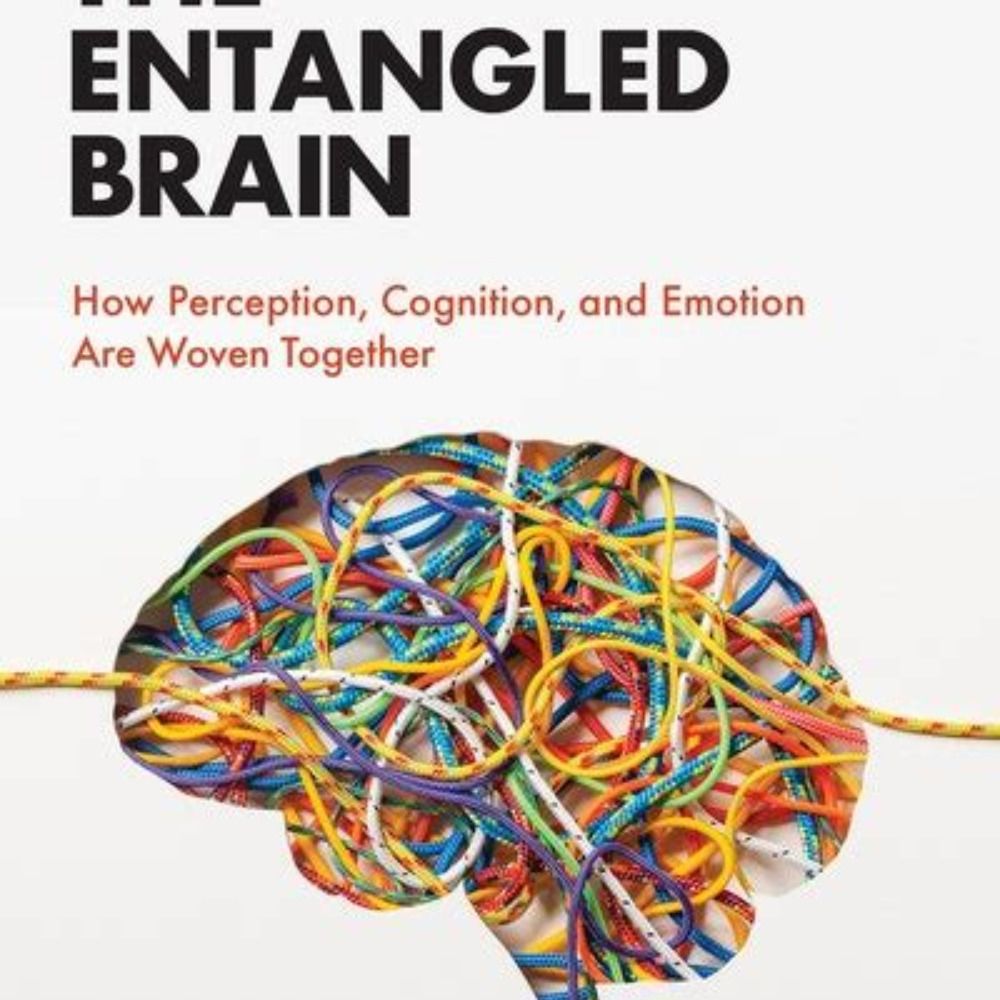
𝗦𝗽𝗮𝘁𝗶𝗮𝗹𝗹𝘆 𝗱𝗶𝘀𝘁𝗿𝗶𝗯𝘂𝘁𝗲𝗱 𝗽𝗿𝗼𝗰𝗲𝘀𝘀𝗶𝗻𝗴 𝗶𝗻 𝘁𝗵𝗲 𝗺𝗼𝘂𝘀𝗲 𝗯𝗿𝗮𝗶𝗻
If we leave aside the more extreme discussions about "everything everywhere" and modularity this is a very cool paper.
So much can be done with data from 260 regions and 60K neurons.
doi.org/10.1101/2025...
#neuroskyence
If we leave aside the more extreme discussions about "everything everywhere" and modularity this is a very cool paper.
So much can be done with data from 260 regions and 60K neurons.
doi.org/10.1101/2025...
#neuroskyence

January 3, 2026 at 5:30 PM
𝗦𝗽𝗮𝘁𝗶𝗮𝗹𝗹𝘆 𝗱𝗶𝘀𝘁𝗿𝗶𝗯𝘂𝘁𝗲𝗱 𝗽𝗿𝗼𝗰𝗲𝘀𝘀𝗶𝗻𝗴 𝗶𝗻 𝘁𝗵𝗲 𝗺𝗼𝘂𝘀𝗲 𝗯𝗿𝗮𝗶𝗻
If we leave aside the more extreme discussions about "everything everywhere" and modularity this is a very cool paper.
So much can be done with data from 260 regions and 60K neurons.
doi.org/10.1101/2025...
#neuroskyence
If we leave aside the more extreme discussions about "everything everywhere" and modularity this is a very cool paper.
So much can be done with data from 260 regions and 60K neurons.
doi.org/10.1101/2025...
#neuroskyence
On biological and artificial consciousness: A case for biological computationalism
doi.org/10.1016/j.ne...
#neuroscience
doi.org/10.1016/j.ne...
#neuroscience
Redirecting
doi.org
December 31, 2025 at 2:11 PM
On biological and artificial consciousness: A case for biological computationalism
doi.org/10.1016/j.ne...
#neuroscience
doi.org/10.1016/j.ne...
#neuroscience
Reposted by Earl K. Miller

Thanks to @earlkmiller.bsky.social and @nicolecrust.bsky.social for recommending the Charlie Gross book on here. I found it really inspiring and enjoyed hearing about the ~4000 yrs of debate about functional localization 🥳
December 31, 2025 at 1:56 AM
Thanks to @earlkmiller.bsky.social and @nicolecrust.bsky.social for recommending the Charlie Gross book on here. I found it really inspiring and enjoyed hearing about the ~4000 yrs of debate about functional localization 🥳
Brain Model Discovers Neurons That Reliably Predict Mistakes - NeuroEdge share.google/1kShgzjdGtap...
#neuroscience
#neuroscience

Brain Model Discovers Neurons That Reliably Predict Mistakes
About 20 percent of neurons in a learning brain seem to be doing something counterintuitive. When these cells become more active, mistakes follow. A new computational model of the brain, built to mirr...
share.google
December 30, 2025 at 3:24 PM
Brain Model Discovers Neurons That Reliably Predict Mistakes - NeuroEdge share.google/1kShgzjdGtap...
#neuroscience
#neuroscience
Biology-inspired brain model matches animal learning and reveals overlooked neuron activity
phys.org/news/2025-12...
#neuroscience
phys.org/news/2025-12...
#neuroscience

Biology-inspired brain model matches animal learning and reveals overlooked neuron activity
A new computational model of the brain based closely on its biology and physiology has not only learned a simple visual category learning task exactly as well as lab animals, but even enabled the disc...
phys.org
December 29, 2025 at 7:16 PM
Biology-inspired brain model matches animal learning and reveals overlooked neuron activity
phys.org/news/2025-12...
#neuroscience
phys.org/news/2025-12...
#neuroscience
Conjunctive population coding integrates sensory evidence to guide adaptive behavior
doi.org/10.1073/pnas...
#neuroscience
doi.org/10.1073/pnas...
#neuroscience
PNAS
Proceedings of the National Academy of Sciences (PNAS), a peer reviewed journal of the National Academy of Sciences (NAS) - an authoritative source of high-impact, original research that broadly spans...
doi.org
December 29, 2025 at 6:31 PM
Conjunctive population coding integrates sensory evidence to guide adaptive behavior
doi.org/10.1073/pnas...
#neuroscience
doi.org/10.1073/pnas...
#neuroscience
Reposted by Earl K. Miller

A new ‘biomimetic’ model of brain circuits and function at multiple scales produced naturalistic dynamics and learning, and even identified curious behavior by some neurons that had gone unnoticed in real-brain data.
picower.mit.edu/news/biology...
@earlkmiller.bsky.social #neuroscience
picower.mit.edu/news/biology...
@earlkmiller.bsky.social #neuroscience

Biology-based brain model matches animals in learning, enables new discovery
A new ‘biomimetic’ model of brain circuits and function at multiple scales produced naturalistic dynamics and learning, and even identified curious behavior by some neurons that had gone unnoticed in ...
picower.mit.edu
December 29, 2025 at 3:26 PM
A new ‘biomimetic’ model of brain circuits and function at multiple scales produced naturalistic dynamics and learning, and even identified curious behavior by some neurons that had gone unnoticed in real-brain data.
picower.mit.edu/news/biology...
@earlkmiller.bsky.social #neuroscience
picower.mit.edu/news/biology...
@earlkmiller.bsky.social #neuroscience
Biology-based brain model matches animals in learning, enables new discovery
picower.mit.edu/news/biology...
#neuroscience @picowerinstitute.bsky.social @mitbcs.bsky.social
picower.mit.edu/news/biology...
#neuroscience @picowerinstitute.bsky.social @mitbcs.bsky.social

Biology-based brain model matches animals in learning, enables new discovery
A new ‘biomimetic’ model of brain circuits and function at multiple scales produced naturalistic dynamics and learning, and even identified curious behavior by some neurons that had gone unnoticed in ...
picower.mit.edu
December 29, 2025 at 3:58 PM
Biology-based brain model matches animals in learning, enables new discovery
picower.mit.edu/news/biology...
#neuroscience @picowerinstitute.bsky.social @mitbcs.bsky.social
picower.mit.edu/news/biology...
#neuroscience @picowerinstitute.bsky.social @mitbcs.bsky.social
New paper! A biomimetic model, NOT trained on neural data, eerily matched the recordings and uncovered a new neural property. You don’t see that very often.
Biomimetic model of corticostriatal micro-assemblies discovers a neural code
www.nature.com/articles/s41...
#neuroscience
Biomimetic model of corticostriatal micro-assemblies discovers a neural code
www.nature.com/articles/s41...
#neuroscience
Biomimetic model of corticostriatal micro-assemblies discovers a neural code - Nature Communications
How neuron-level interactions produce complex cognitive behavior remains unclear. Here, the authors develop a brain circuit mechanistic model based on physiological computation, that uncovers an unexp...
www.nature.com
December 29, 2025 at 1:26 PM
New paper! A biomimetic model, NOT trained on neural data, eerily matched the recordings and uncovered a new neural property. You don’t see that very often.
Biomimetic model of corticostriatal micro-assemblies discovers a neural code
www.nature.com/articles/s41...
#neuroscience
Biomimetic model of corticostriatal micro-assemblies discovers a neural code
www.nature.com/articles/s41...
#neuroscience
Top-down selection of visual working memory contents is supported by alpha-band phase-synchronized oscillatory networks
share.google/cUE2BULQuwSb...
#neuroscience
share.google/cUE2BULQuwSb...
#neuroscience

Top-down selection of visual working memory contents is supported by alpha-band phase-synchronized oscillatory networks
Abstract. Visual working memory (VWM) maintenance depends on oscillatory network dynamics across multiple frequency bands throughout fronto-parietal and sensory brain areas. However, whether these net...
share.google
December 27, 2025 at 3:45 PM
Top-down selection of visual working memory contents is supported by alpha-band phase-synchronized oscillatory networks
share.google/cUE2BULQuwSb...
#neuroscience
share.google/cUE2BULQuwSb...
#neuroscience
From sensory to perceptual manifolds: The twist of neural geometry
doi.org/10.1126/scia...
#neuroscience
doi.org/10.1126/scia...
#neuroscience

From sensory to perceptual manifolds: The twist of neural geometry
The brain uses geometric twists to expand neural dimensionality, thus untangling perception from sensation.
doi.org
December 26, 2025 at 10:07 PM
From sensory to perceptual manifolds: The twist of neural geometry
doi.org/10.1126/scia...
#neuroscience
doi.org/10.1126/scia...
#neuroscience


Yeah, analog.
Consciousness May Require a New Kind of Computation
neurosciencenews.com/consciousnes...
#neuroscience
Consciousness May Require a New Kind of Computation
neurosciencenews.com/consciousnes...
#neuroscience

Consciousness May Require a New Kind of Computation - Neuroscience News
A new theoretical framework argues that the long-standing split between computational functionalism and biological naturalism misses how real brains actually compute.
neurosciencenews.com
December 24, 2025 at 10:29 PM
Yeah, analog.
Consciousness May Require a New Kind of Computation
neurosciencenews.com/consciousnes...
#neuroscience
Consciousness May Require a New Kind of Computation
neurosciencenews.com/consciousnes...
#neuroscience
A must-read review. It argues that brain areas are only one of several organizing principles and are not especially central, given their weak correspondence to function. Cytoarchitecture and connectivity are a starting point, not the endpoint.
www.nature.com/articles/s41...
#neuroscience
www.nature.com/articles/s41...
#neuroscience

Rethinking the centrality of brain areas in understanding functional organization - Nature Neuroscience
Parcellation of the cortex into functionally modular brain areas is foundational to neuroscience. Here, Hayden, Heilbronner and Yoo question the central status of brain areas in neuroscience from the ...
www.nature.com
December 23, 2025 at 5:21 PM
A must-read review. It argues that brain areas are only one of several organizing principles and are not especially central, given their weak correspondence to function. Cytoarchitecture and connectivity are a starting point, not the endpoint.
www.nature.com/articles/s41...
#neuroscience
www.nature.com/articles/s41...
#neuroscience
This review argues that ephaptic effects of electric fields and neural oscillations are central to consciousness.
On biological and artificial consciousness: A case for biological computationalism
doi.org/10.1016/j.ne...
#neuroscience
On biological and artificial consciousness: A case for biological computationalism
doi.org/10.1016/j.ne...
#neuroscience
Redirecting
doi.org
December 23, 2025 at 12:06 AM
This review argues that ephaptic effects of electric fields and neural oscillations are central to consciousness.
On biological and artificial consciousness: A case for biological computationalism
doi.org/10.1016/j.ne...
#neuroscience
On biological and artificial consciousness: A case for biological computationalism
doi.org/10.1016/j.ne...
#neuroscience
This review makes the case that we biology to understand consciousness. Yes, we do.
On biological and artificial consciousness: A case for biological computationalism
doi.org/10.1016/j.ne...
#neuroscience
On biological and artificial consciousness: A case for biological computationalism
doi.org/10.1016/j.ne...
#neuroscience
Redirecting
doi.org
December 23, 2025 at 12:03 AM
This review makes the case that we biology to understand consciousness. Yes, we do.
On biological and artificial consciousness: A case for biological computationalism
doi.org/10.1016/j.ne...
#neuroscience
On biological and artificial consciousness: A case for biological computationalism
doi.org/10.1016/j.ne...
#neuroscience
Reposted by Earl K. Miller

The “why not both” paper we’ve all been waiting for.
December 22, 2025 at 9:34 PM
The “why not both” paper we’ve all been waiting for.
New paper! Flexible cognition can arise when oscillatory activity organizes where information can be expressed in neuronal spiking.
Oscillatory control of cortical space as a computational dimension
www.cell.com/current-biol...
@picowerinstitute.bsky.social @mitbcs.bsky.social
#neuroscience
Oscillatory control of cortical space as a computational dimension
www.cell.com/current-biol...
@picowerinstitute.bsky.social @mitbcs.bsky.social
#neuroscience

Oscillatory control of cortical space as a computational dimension
Chen et al. show that alpha/beta oscillations form spatially structured patterns across
the cortical surface that encode task context and dynamically gate the expression
of sensory information in spik...
www.cell.com
December 22, 2025 at 9:19 PM
New paper! Flexible cognition can arise when oscillatory activity organizes where information can be expressed in neuronal spiking.
Oscillatory control of cortical space as a computational dimension
www.cell.com/current-biol...
@picowerinstitute.bsky.social @mitbcs.bsky.social
#neuroscience
Oscillatory control of cortical space as a computational dimension
www.cell.com/current-biol...
@picowerinstitute.bsky.social @mitbcs.bsky.social
#neuroscience
New results!
Ephaptic coupling can explain variability in neural activity
doi.org/10.64898/202...
Work led by @pinotsislab.bsky.social
#neuroscience
Ephaptic coupling can explain variability in neural activity
doi.org/10.64898/202...
Work led by @pinotsislab.bsky.social
#neuroscience

Ephaptic coupling can explain variability in neural activity
The waxing and waning cortical oscillatory power correlates with function and disease. This cross-trial variability has been thought to be due to neuromodulation, uncertainty encoding, and/or changes ...
doi.org
December 22, 2025 at 12:16 PM
New results!
Ephaptic coupling can explain variability in neural activity
doi.org/10.64898/202...
Work led by @pinotsislab.bsky.social
#neuroscience
Ephaptic coupling can explain variability in neural activity
doi.org/10.64898/202...
Work led by @pinotsislab.bsky.social
#neuroscience
Reposted by Earl K. Miller
Replay of this conversation between @lucinauddin.bsky.social and I now up. Among the things we discuss: What makes measuring the mood or emotion of a brain right in front of you different & more challenging than detecting life on an exoplanet light years away?
m.youtube.com/watch?v=tv3Q...
m.youtube.com/watch?v=tv3Q...
December 20, 2025 at 1:16 PM
Replay of this conversation between @lucinauddin.bsky.social and I now up. Among the things we discuss: What makes measuring the mood or emotion of a brain right in front of you different & more challenging than detecting life on an exoplanet light years away?
m.youtube.com/watch?v=tv3Q...
m.youtube.com/watch?v=tv3Q...
The superior colliculus is more complex than we thought.
Decoupling of visual feature selectivity in the retinocollicular pathway
www.cell.com/current-biol...
#neuroscience
Decoupling of visual feature selectivity in the retinocollicular pathway
www.cell.com/current-biol...
#neuroscience

Decoupling of visual feature selectivity in the retinocollicular pathway
Schwartz and Matsumoto et al. show that visual feature selectivity for luminance and
motion is coupled in the retina but becomes decoupled in the superior colliculus.
This transformation reorganizes t...
www.cell.com
December 20, 2025 at 3:51 PM
The superior colliculus is more complex than we thought.
Decoupling of visual feature selectivity in the retinocollicular pathway
www.cell.com/current-biol...
#neuroscience
Decoupling of visual feature selectivity in the retinocollicular pathway
www.cell.com/current-biol...
#neuroscience