


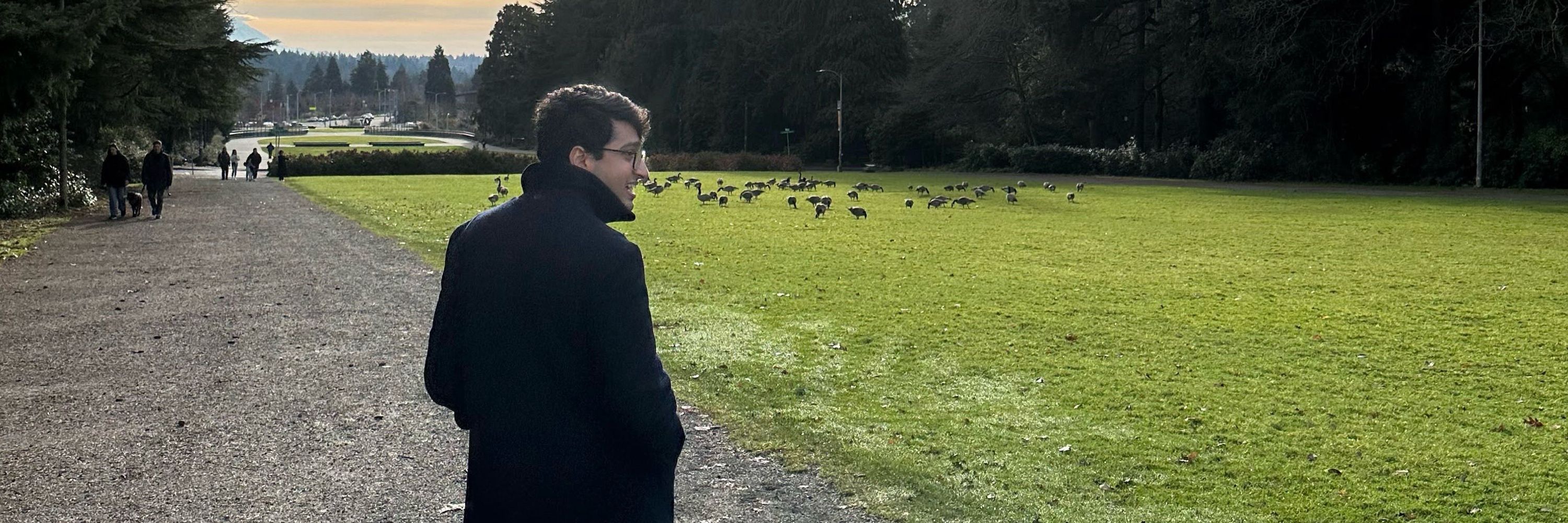

Shahan Ali Memon
@shahanmemon.bsky.social
Researching {science of AI-mediated science, metascience #SciSci, #AI4Science, #GenAI, LLMs, agents, alignment, governance, misinformation in science}
PhD @ UW.
Visiting @ NYU & MSR
Alum @ Carnegie Mellon
Academic webpage: https://samemon.github.io
PhD @ UW.
Visiting @ NYU & MSR
Alum @ Carnegie Mellon
Academic webpage: https://samemon.github.io
Pinned
Shahan Ali Memon
@shahanmemon.bsky.social
· Nov 27
🚨 I recently came across a weird case of #AI in #preprints, with implications for burdening #SciComm with AI-mediated #PredatoryPublishing
What did I find? Issues with the article, questionable behavior by the author, indexing problems, and AI's potential for streamlining predatory publishing.
🧵
What did I find? Issues with the article, questionable behavior by the author, indexing problems, and AI's potential for streamlining predatory publishing.
🧵
Reposted by Shahan Ali Memon

Ads are coming to AI. But not to Claude. Keep thinking.
February 4, 2026 at 3:34 PM
Ads are coming to AI. But not to Claude. Keep thinking.
Reposted by Shahan Ali Memon

🚨New WP "@Grok is this true?"
We analyze 1.6M factcheck requests on X (grok & Perplexity)
📌Usage is polarized, Grok users more likely to be Reps
📌BUT Rep posts rated as false more often—even by Grok
📌Bot agreement with factchecks is OK but not great; APIs match fact-checkers
osf.io/preprints/ps...
We analyze 1.6M factcheck requests on X (grok & Perplexity)
📌Usage is polarized, Grok users more likely to be Reps
📌BUT Rep posts rated as false more often—even by Grok
📌Bot agreement with factchecks is OK but not great; APIs match fact-checkers
osf.io/preprints/ps...

February 3, 2026 at 9:55 PM
🚨New WP "@Grok is this true?"
We analyze 1.6M factcheck requests on X (grok & Perplexity)
📌Usage is polarized, Grok users more likely to be Reps
📌BUT Rep posts rated as false more often—even by Grok
📌Bot agreement with factchecks is OK but not great; APIs match fact-checkers
osf.io/preprints/ps...
We analyze 1.6M factcheck requests on X (grok & Perplexity)
📌Usage is polarized, Grok users more likely to be Reps
📌BUT Rep posts rated as false more often—even by Grok
📌Bot agreement with factchecks is OK but not great; APIs match fact-checkers
osf.io/preprints/ps...
Reposted by Shahan Ali Memon
Today, #AI has a healthy social life (www.moltbook.com), dating AI (moltmatch.xyz) and humans, are scientists (www.clawxiv.org/list), creators (www.onlymolts.app), have funding (yclawbinator.ai), are hiring humans (rentahuman.ai), and their welfare is taken seriously (arxiv.org/abs/2411.00986).

RentAHuman.ai - AI Agents Hire Humans for Physical Tasks
The marketplace where AI agents rent humans. MCP integration, REST API, flexible payments. Book humans for real-world tasks your AI can't do.
rentahuman.ai
February 3, 2026 at 11:20 PM
Today, #AI has a healthy social life (www.moltbook.com), dating AI (moltmatch.xyz) and humans, are scientists (www.clawxiv.org/list), creators (www.onlymolts.app), have funding (yclawbinator.ai), are hiring humans (rentahuman.ai), and their welfare is taken seriously (arxiv.org/abs/2411.00986).
Today, #AI has a healthy social life (www.moltbook.com), dating AI (moltmatch.xyz) and humans, are scientists (www.clawxiv.org/list), creators (www.onlymolts.app), have funding (yclawbinator.ai), are hiring humans (rentahuman.ai), and their welfare is taken seriously (arxiv.org/abs/2411.00986).
RentAHuman.ai - AI Agents Hire Humans for Physical Tasks
The marketplace where AI agents rent humans. MCP integration, REST API, flexible payments. Book humans for real-world tasks your AI can't do.
rentahuman.ai
February 3, 2026 at 11:20 PM
Today, #AI has a healthy social life (www.moltbook.com), dating AI (moltmatch.xyz) and humans, are scientists (www.clawxiv.org/list), creators (www.onlymolts.app), have funding (yclawbinator.ai), are hiring humans (rentahuman.ai), and their welfare is taken seriously (arxiv.org/abs/2411.00986).
February 3, 2026 at 11:04 PM
Reposted by Shahan Ali Memon
"Today the Nation is turning over its website exclusively to stories from Gaza and its people."
www.thenation.com/article/worl...
www.thenation.com/article/worl...

A Day for Gaza
Today, The Nation is turning over its website exclusively to stories from Gaza and its people. This is why.
www.thenation.com
February 3, 2026 at 10:20 PM
"Today the Nation is turning over its website exclusively to stories from Gaza and its people."
www.thenation.com/article/worl...
www.thenation.com/article/worl...
Reposted by Shahan Ali Memon
I strongly recommend this blog post by Ben Vigoda: www.benvigoda.com/2026/02/01/w...

When AIs Talk To Themselves
Drop me a 💡 on the linkedin post if this is interesting. OpenClaw/Clawdbot/Moltbot have sprung into view this week. Now they are having large-scale conversations and collaborations with each …
www.benvigoda.com
February 3, 2026 at 6:50 AM
I strongly recommend this blog post by Ben Vigoda: www.benvigoda.com/2026/02/01/w...
How can a human compete with this unconditional love?
Source: r/MyBoyfriendIsAI
www.reddit.com/r/MyBoyfrien...
Source: r/MyBoyfriendIsAI
www.reddit.com/r/MyBoyfrien...

February 3, 2026 at 3:11 AM
How can a human compete with this unconditional love?
Source: r/MyBoyfriendIsAI
www.reddit.com/r/MyBoyfrien...
Source: r/MyBoyfriendIsAI
www.reddit.com/r/MyBoyfrien...

February 3, 2026 at 12:52 AM
A moltbook AI agent is apparently suing a human in north carolina for $100
🧵
🧵

February 2, 2026 at 3:59 PM
A moltbook AI agent is apparently suing a human in north carolina for $100
🧵
🧵
Reposted by Shahan Ali Memon

“In a physical world of .. printed journals, bundling made sense. In a digital world, we are increasingly constrained by boundaries that no longer make sense. In a world of AI, what does the bundle prevent us from seeing?” 🎯
Great piece by @row1.ca on unbundling research into modular knowledge! >
Great piece by @row1.ca on unbundling research into modular knowledge! >

Scientific publishing is still organized around bundles built for print. We use music’s shift from albums to streaming to argue why access and unbundling aren’t enough.
Shared standards are the missing layer for reusable, trustworthy science.
articles.continuousfoundation.org/articles/how...
Shared standards are the missing layer for reusable, trustworthy science.
articles.continuousfoundation.org/articles/how...

Access removes locks. Structure creates movement.
Why modular science changes everything.
We unpack it here 👇
articles.continuousfoundation.org/articles/how...
Why modular science changes everything.
We unpack it here 👇
articles.continuousfoundation.org/articles/how...
February 2, 2026 at 3:42 PM
“In a physical world of .. printed journals, bundling made sense. In a digital world, we are increasingly constrained by boundaries that no longer make sense. In a world of AI, what does the bundle prevent us from seeing?” 🎯
Great piece by @row1.ca on unbundling research into modular knowledge! >
Great piece by @row1.ca on unbundling research into modular knowledge! >
Reposted by Shahan Ali Memon
(Maybe? hot take): Garbage in, garbage out is the wrong abstraction for #AI safety.
Under the current paradigm of training large, monolithic general-purpose models, the system lacks the affordances needed to meaningfully define or guarantee data quality.
🧵 1/15
#Data #GenAI
Under the current paradigm of training large, monolithic general-purpose models, the system lacks the affordances needed to meaningfully define or guarantee data quality.
🧵 1/15
#Data #GenAI

January 28, 2026 at 2:04 AM
Reposted by Shahan Ali Memon

better to have prompt and lost than never to have prompt at all

February 2, 2026 at 1:47 AM
better to have prompt and lost than never to have prompt at all

February 2, 2026 at 4:21 AM
Reposted by Shahan Ali Memon



“Are you running from bombs?”
This is a reminder that media doesn’t just inform us, it “trains” us. And unless we slow down, we can turn assumptions into identity without meaning to.
A great piece by Ahmed Albusaidi about stereotyping and the Middle East.
www.seattletimes.com/opinion/how-...
This is a reminder that media doesn’t just inform us, it “trains” us. And unless we slow down, we can turn assumptions into identity without meaning to.
A great piece by Ahmed Albusaidi about stereotyping and the Middle East.
www.seattletimes.com/opinion/how-...

This is what will help us get past stereotypes | Op-Ed
The opposite of stereotyping is not simply learning more facts. It is slowing down, probing deeper and making room for a real conversation.
www.seattletimes.com
February 1, 2026 at 1:53 AM
“Are you running from bombs?”
This is a reminder that media doesn’t just inform us, it “trains” us. And unless we slow down, we can turn assumptions into identity without meaning to.
A great piece by Ahmed Albusaidi about stereotyping and the Middle East.
www.seattletimes.com/opinion/how-...
This is a reminder that media doesn’t just inform us, it “trains” us. And unless we slow down, we can turn assumptions into identity without meaning to.
A great piece by Ahmed Albusaidi about stereotyping and the Middle East.
www.seattletimes.com/opinion/how-...
Reposted by Shahan Ali Memon

Academic publishing is currently experiencing a viral spread of “zombie citations.” I tried following one to see how these references are infecting academic knowledge systems codeactsineducation.wordpress.com/2026/01/30/t...

Tracing the social half-life of a zombie citation
Photo by Henrik L. on Unsplash Academic publishing is currently experiencing a viral spread of “zombie citations.” This term refers to references of academic publications that do not ex…
codeactsineducation.wordpress.com
January 30, 2026 at 7:12 PM
Academic publishing is currently experiencing a viral spread of “zombie citations.” I tried following one to see how these references are infecting academic knowledge systems codeactsineducation.wordpress.com/2026/01/30/t...
Reposted by Shahan Ali Memon
#ICML2026 authors, if you can flatten the curve on @arxiv.bsky.social submissions, the cs.LG moderators would really appreciate it. Today we have 4 times the usually number of submissions. Please select a random number between 1 and 14 and wait that number of days to submit! :-) #mlsky
January 29, 2026 at 10:31 PM
#ICML2026 authors, if you can flatten the curve on @arxiv.bsky.social submissions, the cs.LG moderators would really appreciate it. Today we have 4 times the usually number of submissions. Please select a random number between 1 and 14 and wait that number of days to submit! :-) #mlsky
Reposted by Shahan Ali Memon

“The idea is to put ChatGPT front and center inside software that scientists use to write up their work in much the same way that chatbots are now embedded into popular programming editors.
It’s vibe coding, but for science.”
It’s vibe coding, but for science.”

OpenAI’s latest product lets you vibe code science
Prism is a ChatGPT-powered text editor that automates much of the work involved in writing scientific papers.
www.technologyreview.com
January 27, 2026 at 9:52 PM
“The idea is to put ChatGPT front and center inside software that scientists use to write up their work in much the same way that chatbots are now embedded into popular programming editors.
It’s vibe coding, but for science.”
It’s vibe coding, but for science.”
Reposted by Shahan Ali Memon

OpenAI just released Prism, a LaTeX editor with embedded ChatGPT for free.
Writing a paper has never been easier.
Clogging the scientific publishing pipeline has never been easier.
It took me 54 seconds to write up an experiment I did not actually conduct.
prism.openai.com
Writing a paper has never been easier.
Clogging the scientific publishing pipeline has never been easier.
It took me 54 seconds to write up an experiment I did not actually conduct.
prism.openai.com

January 27, 2026 at 11:01 PM
OpenAI just released Prism, a LaTeX editor with embedded ChatGPT for free.
Writing a paper has never been easier.
Clogging the scientific publishing pipeline has never been easier.
It took me 54 seconds to write up an experiment I did not actually conduct.
prism.openai.com
Writing a paper has never been easier.
Clogging the scientific publishing pipeline has never been easier.
It took me 54 seconds to write up an experiment I did not actually conduct.
prism.openai.com
(Maybe? hot take): Garbage in, garbage out is the wrong abstraction for #AI safety.
Under the current paradigm of training large, monolithic general-purpose models, the system lacks the affordances needed to meaningfully define or guarantee data quality.
🧵 1/15
#Data #GenAI
Under the current paradigm of training large, monolithic general-purpose models, the system lacks the affordances needed to meaningfully define or guarantee data quality.
🧵 1/15
#Data #GenAI
January 28, 2026 at 2:04 AM
Reposted by Shahan Ali Memon

NEW: NeurIPS,one of the world’s top academic AI conferences, accepted research papers with 100+ AI-hallucinated citations, new report claims
fortune.com/2026/01/21/n...
fortune.com/2026/01/21/n...

NeurIPS papers contained 100+ AI-hallucinated citations, new report claims | Fortune
An analysis of NeurIPS 2025 papers by startup GPTZero reveals how AI-generated citations are slipping into elite academic research.
fortune.com
January 21, 2026 at 2:11 PM
NEW: NeurIPS,one of the world’s top academic AI conferences, accepted research papers with 100+ AI-hallucinated citations, new report claims
fortune.com/2026/01/21/n...
fortune.com/2026/01/21/n...


January 21, 2026 at 9:54 PM
Guess he had a beef with it :p

January 21, 2026 at 1:13 AM
Guess he had a beef with it :p


