


Artem Yashchenko
@artemyashchenko.bsky.social
Cell biologist studying retina and gene regulation using #organoids and #machinelearning
PhD Student in the MCB program at the University of Washington/Seattle Children’s Research Institute
He/Him | Views/posts are my own
PhD Student in the MCB program at the University of Washington/Seattle Children’s Research Institute
He/Him | Views/posts are my own
Reposted by Artem Yashchenko

Europe is stepping up, helping Ukraine for the right moral reasons and helping their mutual economies.
"Saab is prepared to open a final-assembly plant in Ukraine as part of a proposed deal for Kyiv to buy up to 150 Gripen fighter jets, according to the Swedish defence group’s chief executive."
www.ft.com/content/9ab0...
www.ft.com/content/9ab0...

Saab ready to open plant in Ukraine for Gripen fighter jets
Kyiv agrees to buy up to 150 aircraft from the Swedish defence company
www.ft.com
October 27, 2025 at 1:55 PM
Europe is stepping up, helping Ukraine for the right moral reasons and helping their mutual economies.
Reposted by Artem Yashchenko

How do pleiotropic TFs generate organized diversity in developing tissues? @spinalorga.bsky.social shows that PAX3 & PAX7 organize #SpinalCord by acting as both repressors & pioneer activators, regulated by #morphogens to ensure precise neural subtype specification @plosbiology.org 🧪 plos.io/4qumsla

October 27, 2025 at 5:25 PM
How do pleiotropic TFs generate organized diversity in developing tissues? @spinalorga.bsky.social shows that PAX3 & PAX7 organize #SpinalCord by acting as both repressors & pioneer activators, regulated by #morphogens to ensure precise neural subtype specification @plosbiology.org 🧪 plos.io/4qumsla
Reposted by Artem Yashchenko
Cracking the code of the non-coding genome via allele-specific genomics?
Can we link non-coding elements—like lncRNAs and enhancers—to their protein-coding target genes, and in doing so, connect overlapping non-coding disease variants to their protein-coding counterparts?
Can we link non-coding elements—like lncRNAs and enhancers—to their protein-coding target genes, and in doing so, connect overlapping non-coding disease variants to their protein-coding counterparts?

October 24, 2025 at 2:44 AM
Cracking the code of the non-coding genome via allele-specific genomics?
Can we link non-coding elements—like lncRNAs and enhancers—to their protein-coding target genes, and in doing so, connect overlapping non-coding disease variants to their protein-coding counterparts?
Can we link non-coding elements—like lncRNAs and enhancers—to their protein-coding target genes, and in doing so, connect overlapping non-coding disease variants to their protein-coding counterparts?
Reposted by Artem Yashchenko
Ever wondered what drives enhancer-promoter specificity? Why would an enhancer activate one gene rather than another neighboring one?
Check our latest preprint, led by @mmasoura.bsky.social, to find out!
www.biorxiv.org/content/10.1...
Check our latest preprint, led by @mmasoura.bsky.social, to find out!
www.biorxiv.org/content/10.1...

Promoter-proximal gatekeepers restrict pleiotropic enhancer inputs to achieve tissue specificity
Developmental enhancers are central regulatory elements that can activate multiple genes, yet how they selectively regulate one gene over its neighbours remains unclear. Using the Drosophila twist E3 ...
www.biorxiv.org
October 16, 2025 at 12:34 PM
Ever wondered what drives enhancer-promoter specificity? Why would an enhancer activate one gene rather than another neighboring one?
Check our latest preprint, led by @mmasoura.bsky.social, to find out!
www.biorxiv.org/content/10.1...
Check our latest preprint, led by @mmasoura.bsky.social, to find out!
www.biorxiv.org/content/10.1...
Reposted by Artem Yashchenko

An infant with an inherited life-threatening metabolic condition has responded to a tailored therapy that uses CRISPR to correct a specific mutation
go.nature.com/3Jmdbuy
go.nature.com/3Jmdbuy

A baby benefits from personalized gene editing in the clinic
An infant with an inherited life-threatening metabolic condition has responded to a tailored therapy that uses the gene-editing tool CRISPR to correct a specific mutation.
go.nature.com
August 19, 2025 at 3:08 PM
An infant with an inherited life-threatening metabolic condition has responded to a tailored therapy that uses CRISPR to correct a specific mutation
go.nature.com/3Jmdbuy
go.nature.com/3Jmdbuy
Reposted by Artem Yashchenko

1/5: How does a presumably redundant microRNA contribute to mammalian brain development and neurodevelopmental disease? Check out our new work led by Dr. Santiago Fregoso now on bioRxiv! www.biorxiv.org/content/10.1... #Neurodev #miRNA #hydrocephalus #Genetics #bioRxiv.

Loss of miR-9-2 Causes Cerebral Hemorrhage and Hydrocephalus by Widespread Disruption of Cell-Type-Specific Neurodevelopmental Gene Networks.
MIR-9-2 is a broadly and highly expressed microRNA in the developing brain and is frequently deleted in 5q14.3 Microdeletion Syndrome, a rare but severe neurodevelopmental disorder. Despite this, litt...
www.biorxiv.org
August 2, 2025 at 12:02 AM
1/5: How does a presumably redundant microRNA contribute to mammalian brain development and neurodevelopmental disease? Check out our new work led by Dr. Santiago Fregoso now on bioRxiv! www.biorxiv.org/content/10.1... #Neurodev #miRNA #hydrocephalus #Genetics #bioRxiv.
Reposted by Artem Yashchenko

Seattle Children’s researchers are making breakthrough discoveries in the quest to prevent #SIDS.
Learn more in this story from KOMO News:
#MedSky
komonews.com/news/local/r...
Learn more in this story from KOMO News:
#MedSky
komonews.com/news/local/r...

Seattle researchers hit 'breakthrough moment' in understanding SIDS
It is one of the most horrific tragedies for a parent: the sudden, unexplained death of a seemingly healthy baby.
komonews.com
August 1, 2025 at 4:27 PM
Seattle Children’s researchers are making breakthrough discoveries in the quest to prevent #SIDS.
Learn more in this story from KOMO News:
#MedSky
komonews.com/news/local/r...
Learn more in this story from KOMO News:
#MedSky
komonews.com/news/local/r...
Reposted by Artem Yashchenko

On Sunday I will cycle 50 km to raise money to support research to prevent blindness. If you can, please sponsor me! fightingblindness.akaraisin.com/ui/MOVEFORSI...
fightingblindness.akaraisin.com
June 20, 2025 at 5:37 PM
On Sunday I will cycle 50 km to raise money to support research to prevent blindness. If you can, please sponsor me! fightingblindness.akaraisin.com/ui/MOVEFORSI...
Reposted by Artem Yashchenko
The CRISPR family’s most versatile member has made its medical debut: a cutting-edge gene-editing technique known as prime editing has been used to treat a person for the first time
https://go.nature.com/3YNta9V
https://go.nature.com/3YNta9V

World first: ultra-powerful CRISPR treatment trialled in a person
Immune-cell function improved in a teenager whose DNA was altered using prime editing.
go.nature.com
May 19, 2025 at 1:58 PM
The CRISPR family’s most versatile member has made its medical debut: a cutting-edge gene-editing technique known as prime editing has been used to treat a person for the first time
https://go.nature.com/3YNta9V
https://go.nature.com/3YNta9V
Reposted by Artem Yashchenko
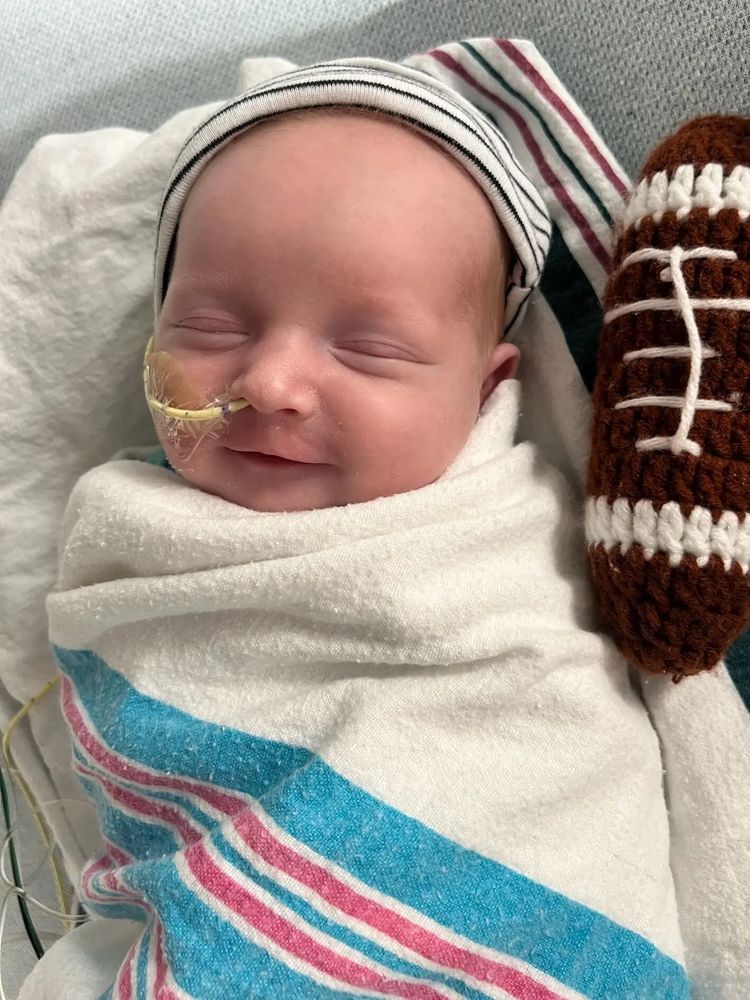
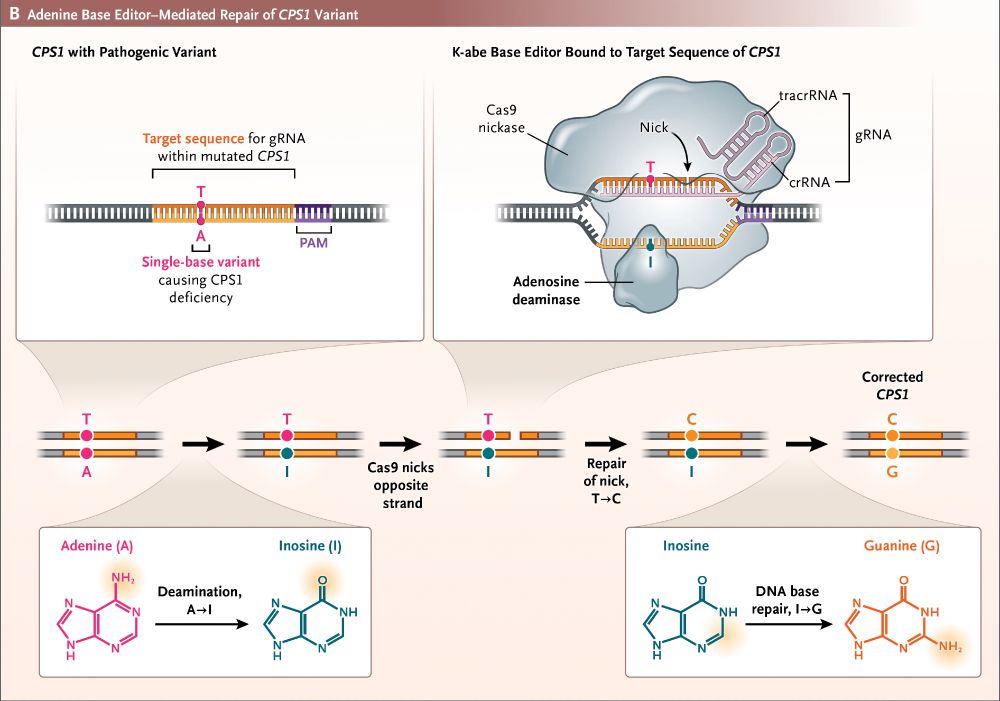
Today "a milestone in the evolution of personalized therapies for rare & ultra-rare inborn errors of metabolism"
—the 1st human to undergo custom genome editing
—from decades of NIH funded research
www.nejm.org/doi/full/10....
@nejm.org
www.nejm.org/doi/full/10....
www.nytimes.com/2025/05/15/h...
—the 1st human to undergo custom genome editing
—from decades of NIH funded research
www.nejm.org/doi/full/10....
@nejm.org
www.nejm.org/doi/full/10....
www.nytimes.com/2025/05/15/h...
May 15, 2025 at 6:05 PM
Today "a milestone in the evolution of personalized therapies for rare & ultra-rare inborn errors of metabolism"
—the 1st human to undergo custom genome editing
—from decades of NIH funded research
www.nejm.org/doi/full/10....
@nejm.org
www.nejm.org/doi/full/10....
www.nytimes.com/2025/05/15/h...
—the 1st human to undergo custom genome editing
—from decades of NIH funded research
www.nejm.org/doi/full/10....
@nejm.org
www.nejm.org/doi/full/10....
www.nytimes.com/2025/05/15/h...
Reposted by Artem Yashchenko
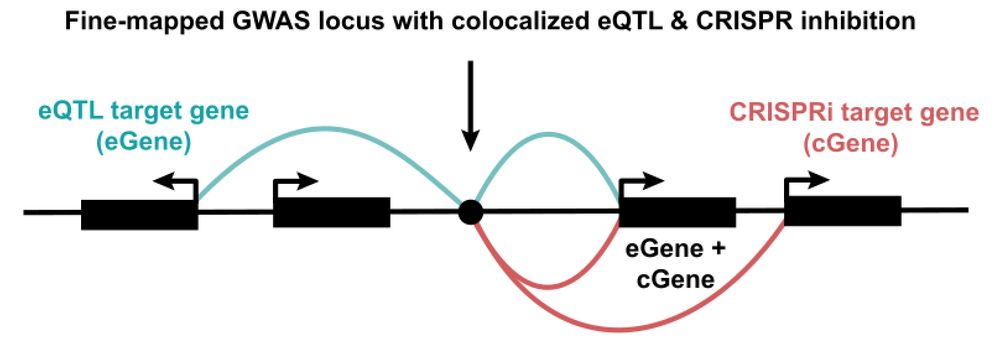
Our new contribution to the quest to find causal GWAS genes! Sam Ghatan from my lab at @nygenome.org led a systematic comparison of eQTLs and CRISPRi+scRNA-seq screens. TL;DR: they provide highly complementary insights, with ortogonal pros and cons. 🧵👇
www.biorxiv.org/content/10.1...
www.biorxiv.org/content/10.1...
May 6, 2025 at 5:01 PM
Our new contribution to the quest to find causal GWAS genes! Sam Ghatan from my lab at @nygenome.org led a systematic comparison of eQTLs and CRISPRi+scRNA-seq screens. TL;DR: they provide highly complementary insights, with ortogonal pros and cons. 🧵👇
www.biorxiv.org/content/10.1...
www.biorxiv.org/content/10.1...
Reposted by Artem Yashchenko

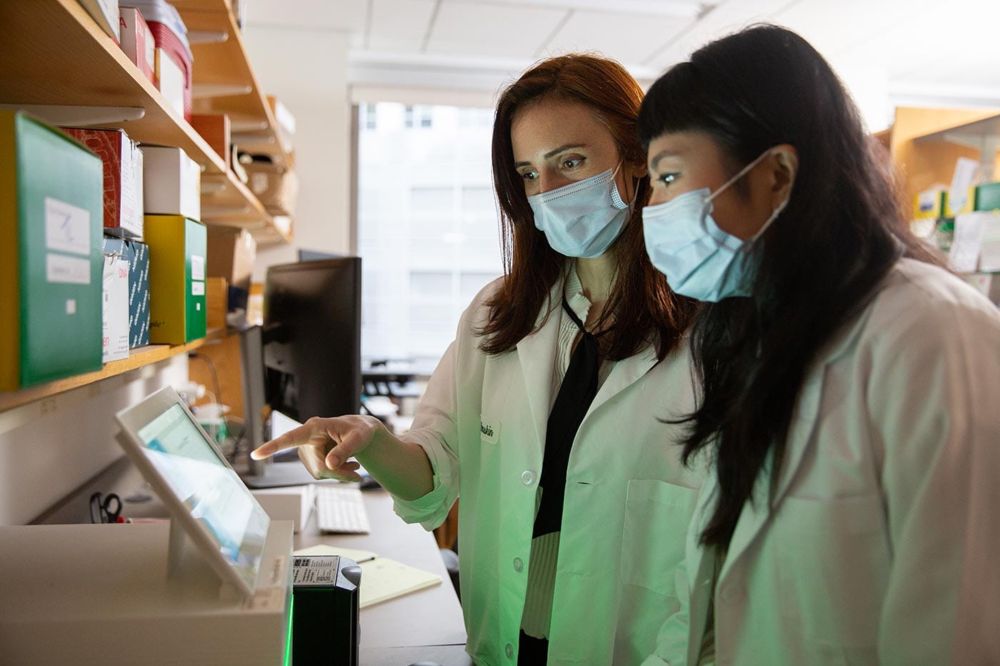
If you are immigrant into the US and work in the biomedical sciences (like me) and are still young (not like me), please apply for the Vilcek prizes for Creative Promise founded by an inspiring immigrant couple, Marica and Jan Vilcek.
vilcek.org/prizes/vilce...
vilcek.org/prizes/vilce...
Vilcek Prizes for Creative Promise - Vilcek Foundation
The Creative Promise Prizes are awarded to young immigrant professionals who have demonstrated outstanding achievement early in their careers.
vilcek.org
March 18, 2025 at 1:45 PM
If you are immigrant into the US and work in the biomedical sciences (like me) and are still young (not like me), please apply for the Vilcek prizes for Creative Promise founded by an inspiring immigrant couple, Marica and Jan Vilcek.
vilcek.org/prizes/vilce...
vilcek.org/prizes/vilce...
Reposted by Artem Yashchenko
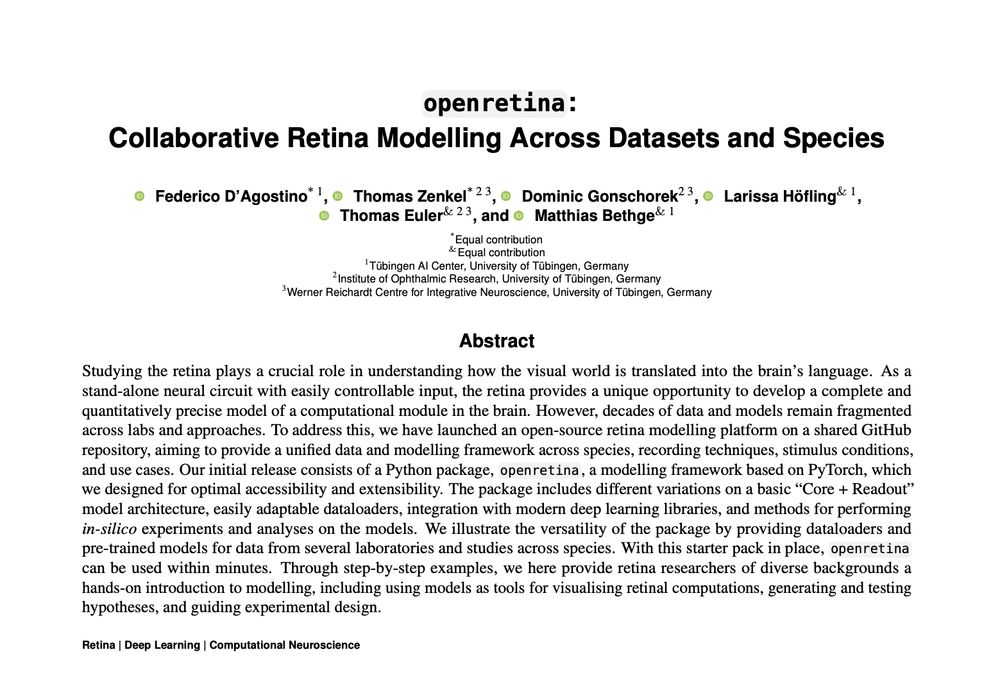
🚨 New paper alert! 🚨
We’ve just launched openretina, an open-source framework for collaborative retina modeling across datasets and species.
A 🧵👇 (1/9)
We’ve just launched openretina, an open-source framework for collaborative retina modeling across datasets and species.
A 🧵👇 (1/9)
March 14, 2025 at 9:41 AM
🚨 New paper alert! 🚨
We’ve just launched openretina, an open-source framework for collaborative retina modeling across datasets and species.
A 🧵👇 (1/9)
We’ve just launched openretina, an open-source framework for collaborative retina modeling across datasets and species.
A 🧵👇 (1/9)
Reposted by Artem Yashchenko
Saying goodbye is hard! So is interpreting non-coding variants in visual disorders! Luckily, that is the gift that Dr. Leah VandenBosch left us with after a very successful postdoc in the Cherry Lab. Check your own favorite retinal regulatory variants here: genome.ucsc.edu/s/CherryLab/...

February 26, 2025 at 2:49 AM
Saying goodbye is hard! So is interpreting non-coding variants in visual disorders! Luckily, that is the gift that Dr. Leah VandenBosch left us with after a very successful postdoc in the Cherry Lab. Check your own favorite retinal regulatory variants here: genome.ucsc.edu/s/CherryLab/...
Reposted by Artem Yashchenko
Excited to finally share that our paper looking at the effect of rare non-coding variants using WGS on circulating protein levels in the UKB has been released in Nature Genetics @naturegenet.bsky.social! We now analyse the full 3,000 circulating proteins in all 50,000 individuals rdcu.be/ea16i
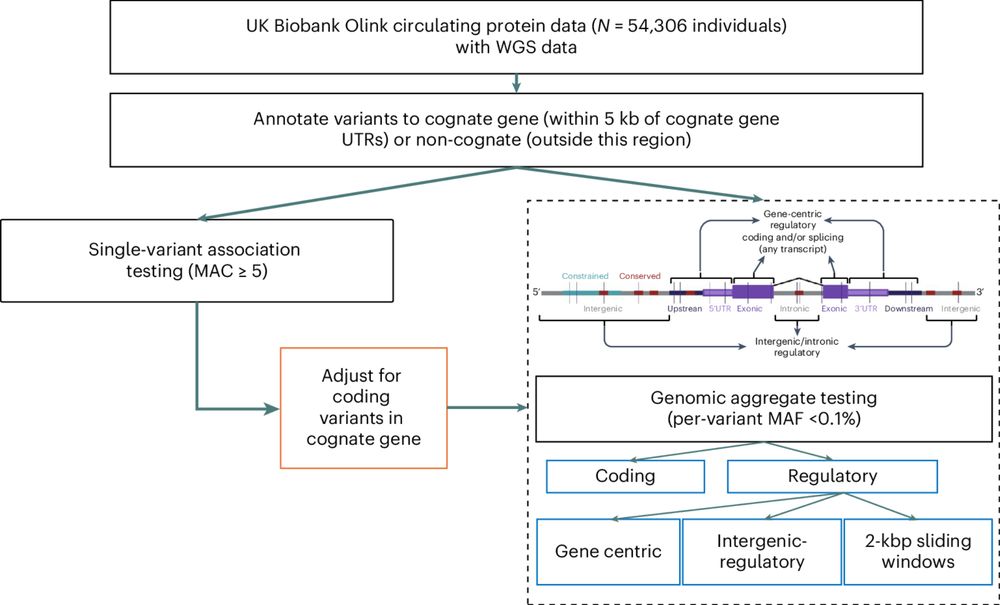
Whole-genome sequencing analysis identifies rare, large-effect noncoding variants and regulatory regions associated with circulating protein levels
Nature Genetics - Rare variant association analysis of plasma proteins using whole-genome sequencing data in 54,306 individuals in the UK Biobank demonstrates that combining both single-variant and...
rdcu.be
February 24, 2025 at 6:26 PM
Excited to finally share that our paper looking at the effect of rare non-coding variants using WGS on circulating protein levels in the UKB has been released in Nature Genetics @naturegenet.bsky.social! We now analyse the full 3,000 circulating proteins in all 50,000 individuals rdcu.be/ea16i
Reposted by Artem Yashchenko

#Neuroskyence students! We're brainstorming ways to support your development over this summer break, esp. given the changes in summer intern programs across our fields. What other opportunities would you like to see?
Some ideas: undergrad-focused webinars, self-paced courses, challenges, etc.
Some ideas: undergrad-focused webinars, self-paced courses, challenges, etc.
February 25, 2025 at 5:01 PM
#Neuroskyence students! We're brainstorming ways to support your development over this summer break, esp. given the changes in summer intern programs across our fields. What other opportunities would you like to see?
Some ideas: undergrad-focused webinars, self-paced courses, challenges, etc.
Some ideas: undergrad-focused webinars, self-paced courses, challenges, etc.
I was touched by the great turnout in Seattle to support #Ukraine. Thank you to the organizers and @adamsmith.house.gov for your speech. We must continue arming Ukraine and defend democracy against Russian invasion. #StandWithUkraine 🇺🇦"
February 24, 2025 at 2:33 AM
I was touched by the great turnout in Seattle to support #Ukraine. Thank you to the organizers and @adamsmith.house.gov for your speech. We must continue arming Ukraine and defend democracy against Russian invasion. #StandWithUkraine 🇺🇦"
Reposted by Artem Yashchenko

Since 2022, people around the world have stood in solidarity, joining rallies to support Ukraine and refusing to let russia silence the truth. They chose Ukraine’s side, united in the fight for freedom. Join in, speak up, #StandWithUkraine:
uaworldmap.ukrainianworldcongress.org/en?fbclid=PA...
uaworldmap.ukrainianworldcongress.org/en?fbclid=PA...
February 23, 2025 at 4:08 PM
Since 2022, people around the world have stood in solidarity, joining rallies to support Ukraine and refusing to let russia silence the truth. They chose Ukraine’s side, united in the fight for freedom. Join in, speak up, #StandWithUkraine:
uaworldmap.ukrainianworldcongress.org/en?fbclid=PA...
uaworldmap.ukrainianworldcongress.org/en?fbclid=PA...
As Russia's full-scale war hits the three-year mark, it's more important than ever to #StandWithUkraine. I encourage you to raise your voices for peace and justice by attending one of the events organized worldwide.
#RussiaIsATerroristState
#RussiaIsATerroristState

Global Events Where You Can Stand With Ukraine as Russia’s Full-Scale War Hits the Three-Year Mark
Global events mark three years since Russia's invasion of Ukraine, showcasing solidarity and raising awareness for ongoing support and resilience.
united24media.com
February 21, 2025 at 8:24 PM
As Russia's full-scale war hits the three-year mark, it's more important than ever to #StandWithUkraine. I encourage you to raise your voices for peace and justice by attending one of the events organized worldwide.
#RussiaIsATerroristState
#RussiaIsATerroristState
Since Russia's invasion of Ukraine, almost 20,000 Ukrainian children have been kidnapped by Russia. DNA testing might be the only way to one day reconnect them with their families.


January 22, 2025 at 4:28 AM
Since Russia's invasion of Ukraine, almost 20,000 Ukrainian children have been kidnapped by Russia. DNA testing might be the only way to one day reconnect them with their families.
Moosajee Lab developed the first model for RDH12-autosomal dominant retinitis pigmentosa using #retinalorganoids and showed shorter photoreceptor segments and fewer photoreceptors as compared to controls.
#visionreseach
www.biorxiv.org/content/10.1...
#visionreseach
www.biorxiv.org/content/10.1...

Dominant RDH12-retinitis pigmentosa impairs photoreceptor development and cone function in retinal organoids
Retinal dehydrogenase 12 (RDH12) is a photoreceptor NADPH-dependent retinal reductase enzyme, converting all- trans -retinal to all- trans -retinol. Heterozygous variants in RDH12 cause a rare autosom...
www.biorxiv.org
December 22, 2024 at 5:06 AM
Moosajee Lab developed the first model for RDH12-autosomal dominant retinitis pigmentosa using #retinalorganoids and showed shorter photoreceptor segments and fewer photoreceptors as compared to controls.
#visionreseach
www.biorxiv.org/content/10.1...
#visionreseach
www.biorxiv.org/content/10.1...
Reposted by Artem Yashchenko
As a result of this morning's shelling, 630 residential buildings, 16 medical facilities, 17 schools, and 13 kindergartens have been left without heat.
We can’t fully protect🇺🇦schools from russian missiles, but we can #BringLightBack to them:
u24.gov.ua/bring-light-...
We can’t fully protect🇺🇦schools from russian missiles, but we can #BringLightBack to them:
u24.gov.ua/bring-light-...

December 20, 2024 at 12:32 PM
As a result of this morning's shelling, 630 residential buildings, 16 medical facilities, 17 schools, and 13 kindergartens have been left without heat.
We can’t fully protect🇺🇦schools from russian missiles, but we can #BringLightBack to them:
u24.gov.ua/bring-light-...
We can’t fully protect🇺🇦schools from russian missiles, but we can #BringLightBack to them:
u24.gov.ua/bring-light-...
Reposted by Artem Yashchenko
So excited that our work on predicting gene expression from histone modifications using deep learning is out in NAR today. Brilliant to work with lead author @al-murphy.bsky.social and collaborators Aydan Askarova, @borislenhard.bsky.social and Nathan Skene 🧬⭐️🙏
academic.oup.com/nar/advance-...
academic.oup.com/nar/advance-...

Predicting gene expression from histone marks using chromatin deep learning models depends on histone mark function, regulatory distance and cellular states
Abstract. To understand the complex relationship between histone mark activity and gene expression, recent advances have used in silico predictions based o
academic.oup.com
December 11, 2024 at 5:02 PM
So excited that our work on predicting gene expression from histone modifications using deep learning is out in NAR today. Brilliant to work with lead author @al-murphy.bsky.social and collaborators Aydan Askarova, @borislenhard.bsky.social and Nathan Skene 🧬⭐️🙏
academic.oup.com/nar/advance-...
academic.oup.com/nar/advance-...
A new interesting study investigating mitochondrial DNA (mtDNA) cis-effects on mtDNA encoded genes, mtDNA trans-effects on nucDNA encoded genes, and nucDNA trans-effects on mtDNA encoded genes.
#genomics #generegulation
#genomics #generegulation

Interplay between mitochondrial and nuclear DNA in gene expression regulation https://www.biorxiv.org/content/10.1101/2024.12.10.627680v1
December 11, 2024 at 6:17 AM
A new interesting study investigating mitochondrial DNA (mtDNA) cis-effects on mtDNA encoded genes, mtDNA trans-effects on nucDNA encoded genes, and nucDNA trans-effects on mtDNA encoded genes.
#genomics #generegulation
#genomics #generegulation
An exciting preprint from Choudhary Lab addressing how cohesin and CTCF control gene expression and their role in precise enhancers targeting.
Cohesin appears to facilitate enhancer-mediated gene regulation via enhancers that depend on p300/CBP.
Cohesin appears to facilitate enhancer-mediated gene regulation via enhancers that depend on p300/CBP.

A unified model of gene expression control by cohesin and CTCF https://www.biorxiv.org/content/10.1101/2024.11.29.625887v1
A unified model of gene expression control by cohesin and CTCF https://www.biorxiv.org/content/10.1101/2024.11.29.625887v1
Cohesin and CTCF fold vertebrate genomes into loops and topologically associating domains (TADs). Th
www.biorxiv.org
December 11, 2024 at 3:35 AM
An exciting preprint from Choudhary Lab addressing how cohesin and CTCF control gene expression and their role in precise enhancers targeting.
Cohesin appears to facilitate enhancer-mediated gene regulation via enhancers that depend on p300/CBP.
Cohesin appears to facilitate enhancer-mediated gene regulation via enhancers that depend on p300/CBP.