




Shahab Bakhtiari
@shahabbakht.bsky.social
|| assistant prof at University of Montreal || leading the systems neuroscience and AI lab (SNAIL: https://www.snailab.ca/) 🐌 || associate academic member of Mila (Quebec AI Institute) || #NeuroAI || vision and learning in brains and machines
Pinned
Shahab Bakhtiari
@shahabbakht.bsky.social
· Sep 30
🚨 New preprint alert!
🧠🤖
We propose a theory of how learning curriculum affects generalization through neural population dimensionality. Learning curriculum is a determining factor of neural dimensionality - where you start from determines where you end up.
🧠📈
A 🧵:
tinyurl.com/yr8tawj3
🧠🤖
We propose a theory of how learning curriculum affects generalization through neural population dimensionality. Learning curriculum is a determining factor of neural dimensionality - where you start from determines where you end up.
🧠📈
A 🧵:
tinyurl.com/yr8tawj3

The curriculum effect in visual learning: the role of readout dimensionality
Generalization of visual perceptual learning (VPL) to unseen conditions varies across tasks. Previous work suggests that training curriculum may be integral to generalization, yet a theoretical explan...
tinyurl.com
So excited to see this preprint released from the lab into the wild.
Charlotte has developed a theory for how learning curriculum influences learning generalization.
Our theory makes straightforward neural predictions that can be tested in future experiments. (1/4)
🧠🤖 🧠📈 #MLSky
Charlotte has developed a theory for how learning curriculum influences learning generalization.
Our theory makes straightforward neural predictions that can be tested in future experiments. (1/4)
🧠🤖 🧠📈 #MLSky
Reposted by Shahab Bakhtiari
What can cognitive science learn from AI? In infinitefaculty.substack.com/p/what-cogni... I outline how AI has found that scale and richness of learning experiences fundamentally change learning & generalization — and how I believe we should rethink cognitive experiments & theories in response.

What cognitive science can learn from AI
#3 in a series on cognitive science and AI
infinitefaculty.substack.com
January 5, 2026 at 6:10 PM
What can cognitive science learn from AI? In infinitefaculty.substack.com/p/what-cogni... I outline how AI has found that scale and richness of learning experiences fundamentally change learning & generalization — and how I believe we should rethink cognitive experiments & theories in response.
Reposted by Shahab Bakhtiari

This paper had a pretty shocking headline result (40% of voxels!), so I dug into it, and I think it is wrong. Essentially: they compare two noisy measures and find that about 40% of voxels have different sign between the two. I think this is just noise!
Would love to hear expert views on this paper. It appears to show that the operationalization of brain activity the field has relied on for 3 decades—the BOLD response—is not actually a sensible measure of brain activity.
www.nature.com/articles/s41...
www.nature.com/articles/s41...

BOLD signal changes can oppose oxygen metabolism across the human cortex - Nature Neuroscience
Using quantitative brain imaging, the authors show opposite fMRI BOLD signal to metabolic activity due to variable oxygen extraction across the human cortex. This questions the canonical interpretatio...
www.nature.com
January 5, 2026 at 5:22 PM
This paper had a pretty shocking headline result (40% of voxels!), so I dug into it, and I think it is wrong. Essentially: they compare two noisy measures and find that about 40% of voxels have different sign between the two. I think this is just noise!
Reposted by Shahab Bakhtiari
New preprint. We show that in addition to reward prediction errors (RPEs), dorsal striatal dopamine signals encode sensory prediction errors (SPEs), the difference between sensory prior & observed stimulus. www.biorxiv.org/content/10.6...

Dorsal striatal dopamine integrates sensory and reward prediction errors to guide perceptual decisions
Perceptual decisions are shaped by expectations about sensory stimuli and rewards, learned through sensory and reward prediction errors. Dopamine is known to convey reward prediction errors that shape...
www.biorxiv.org
January 5, 2026 at 10:49 AM
New preprint. We show that in addition to reward prediction errors (RPEs), dorsal striatal dopamine signals encode sensory prediction errors (SPEs), the difference between sensory prior & observed stimulus. www.biorxiv.org/content/10.6...
Reposted by Shahab Bakhtiari

The last year was very hard as my father was dying. It became that much harder when I discovered that AI played a role in amplifying his physical pain, and perhaps hastening the end of his life. It wasn’t easy to write about what happened, but I’ve tried.
open.substack.com/pub/buildcog...
open.substack.com/pub/buildcog...

The role of AI in the death of my father
A sad strange story
open.substack.com
January 5, 2026 at 12:54 PM
The last year was very hard as my father was dying. It became that much harder when I discovered that AI played a role in amplifying his physical pain, and perhaps hastening the end of his life. It wasn’t easy to write about what happened, but I’ve tried.
open.substack.com/pub/buildcog...
open.substack.com/pub/buildcog...
Reposted by Shahab Bakhtiari

If this result generalises, then the field's great dendritic computation dream is over
Some things we learned: 1. CA1 pyramidal neuron dendritic voltage dynamics during behavior are low-dimensional, well described by just two or three compartments (basal, soma, apical). This rules out models in which dendritic branches act as distinct computational compartments.
January 4, 2026 at 8:54 PM
If this result generalises, then the field's great dendritic computation dream is over
Apple’s real 'edge' might be Edge AI. On-device continual learning is still a tough nut to crack (catastrophic forgetting, energy consumption, etc.), but Apple may have the right pieces in place to get there first.
People keeps saying Apple is "falling behind in AI."
But I think it's because they're the only big tech company that isn't ok with rushing out a low-quality product that constantly spits out misinformation.
Reporting says the holdup is that Apple's not satisfied with the high error rate. Good.
But I think it's because they're the only big tech company that isn't ok with rushing out a low-quality product that constantly spits out misinformation.
Reporting says the holdup is that Apple's not satisfied with the high error rate. Good.
January 2, 2026 at 6:11 PM
Apple’s real 'edge' might be Edge AI. On-device continual learning is still a tough nut to crack (catastrophic forgetting, energy consumption, etc.), but Apple may have the right pieces in place to get there first.
Great piece as always by @markdhumphries.bsky.social.
I’d bet a lot of the pushback foundation models in neuroscience receive is simply because of the name. Call them anything else and they’d be perfectly fine :)
I’d bet a lot of the pushback foundation models in neuroscience receive is simply because of the name. Call them anything else and they’d be perfectly fine :)
Just published my review of neuroscience in 2025, on The Spike.
The 10th of these, would you believe?
This year we have foundation models, breakthroughs in using light to understand the brain, a gene therapy, and more
Enjoy!
medium.com/the-spike/20...
The 10th of these, would you believe?
This year we have foundation models, breakthroughs in using light to understand the brain, a gene therapy, and more
Enjoy!
medium.com/the-spike/20...

2025: A Review of the Year in Neuroscience
Enlightening the brain
medium.com
December 31, 2025 at 6:42 AM
Great piece as always by @markdhumphries.bsky.social.
I’d bet a lot of the pushback foundation models in neuroscience receive is simply because of the name. Call them anything else and they’d be perfectly fine :)
I’d bet a lot of the pushback foundation models in neuroscience receive is simply because of the name. Call them anything else and they’d be perfectly fine :)
Reposted by Shahab Bakhtiari
Just published my review of neuroscience in 2025, on The Spike.
The 10th of these, would you believe?
This year we have foundation models, breakthroughs in using light to understand the brain, a gene therapy, and more
Enjoy!
medium.com/the-spike/20...
The 10th of these, would you believe?
This year we have foundation models, breakthroughs in using light to understand the brain, a gene therapy, and more
Enjoy!
medium.com/the-spike/20...
2025: A Review of the Year in Neuroscience
Enlightening the brain
medium.com
December 30, 2025 at 3:52 PM
Just published my review of neuroscience in 2025, on The Spike.
The 10th of these, would you believe?
This year we have foundation models, breakthroughs in using light to understand the brain, a gene therapy, and more
Enjoy!
medium.com/the-spike/20...
The 10th of these, would you believe?
This year we have foundation models, breakthroughs in using light to understand the brain, a gene therapy, and more
Enjoy!
medium.com/the-spike/20...
Most likely captured on a phone, this image perfectly captures the reality of Iran today.

December 30, 2025 at 4:46 AM
Most likely captured on a phone, this image perfectly captures the reality of Iran today.
James makes a crucial point in this thread about AI in data analysis. It reminded me of this recent paper: osf.io/preprints/ps....
While I don’t agree with every argument made, I found the particular segment below especially useful.
While I don’t agree with every argument made, I found the particular segment below especially useful.

December 26, 2025 at 6:37 PM
James makes a crucial point in this thread about AI in data analysis. It reminded me of this recent paper: osf.io/preprints/ps....
While I don’t agree with every argument made, I found the particular segment below especially useful.
While I don’t agree with every argument made, I found the particular segment below especially useful.
Andrew’s latest blog series has the potential to be a full curriculum.
It’s made me think more about the value of non-interdisciplinary foundations. There’s a strong case for ensuring students are expert cognitive (neuro)scientists before they transition into interdisciplinary spaces eg neuroAI 1/3
It’s made me think more about the value of non-interdisciplinary foundations. There’s a strong case for ensuring students are expert cognitive (neuro)scientists before they transition into interdisciplinary spaces eg neuroAI 1/3
New post! Last week I shared why I thought cognitive (neuro)science hasn’t contributed as much as one might hope to the design of AI systems; this week I'm sharing my thoughts on how methods and principles from these fields *have* been useful in my work. infinitefaculty.substack.com/p/how-cognit...

How cognitive science can contribute to AI: methods for understanding
#2 in a series on cognitive science and AI
infinitefaculty.substack.com
December 23, 2025 at 8:27 PM
Andrew’s latest blog series has the potential to be a full curriculum.
It’s made me think more about the value of non-interdisciplinary foundations. There’s a strong case for ensuring students are expert cognitive (neuro)scientists before they transition into interdisciplinary spaces eg neuroAI 1/3
It’s made me think more about the value of non-interdisciplinary foundations. There’s a strong case for ensuring students are expert cognitive (neuro)scientists before they transition into interdisciplinary spaces eg neuroAI 1/3
Reposted by Shahab Bakhtiari

If you're (1) into nhp neurophysiology and/or biological motor control, (2) a foreign big shot and (3) interested in moving here, please reach out -- this new program looks extremely attractive (min. $8M over 8y)! www.uwo.ca/research/can...

Canada-Impact-Plus - Research - Western University
www.uwo.ca
December 18, 2025 at 9:15 PM
If you're (1) into nhp neurophysiology and/or biological motor control, (2) a foreign big shot and (3) interested in moving here, please reach out -- this new program looks extremely attractive (min. $8M over 8y)! www.uwo.ca/research/can...
Reposted by Shahab Bakhtiari
Our paper on data constrained RNN that generalize to optogenetic perturbations now citable on eLife:
doi.org/10.7554/eLif...
doi.org/10.7554/eLif...
December 18, 2025 at 11:07 PM
Our paper on data constrained RNN that generalize to optogenetic perturbations now citable on eLife:
doi.org/10.7554/eLif...
doi.org/10.7554/eLif...
Reposted by Shahab Bakhtiari

Generative AI systems are being built primarily for entertainment, design and communication, but their potential for neuroscience is vast. @shahabbakht.bsky.social explores how this technology could help capture an animal’s ecological experience.
#neuroskyence
www.thetransmitter.org/artificial-i...
#neuroskyence
www.thetransmitter.org/artificial-i...

Seeing the world as animals do: How to leverage generative AI for ecological neuroscience
Generative artificial intelligence will offer a new way to see, simulate and hypothesize about how animals experience their worlds. In doing so, it could help bridge the long-standing gap between…
www.thetransmitter.org
December 18, 2025 at 9:17 PM
Generative AI systems are being built primarily for entertainment, design and communication, but their potential for neuroscience is vast. @shahabbakht.bsky.social explores how this technology could help capture an animal’s ecological experience.
#neuroskyence
www.thetransmitter.org/artificial-i...
#neuroskyence
www.thetransmitter.org/artificial-i...
Reposted by Shahab Bakhtiari
Excited to announce a new book telling the story of mathematical approaches to studying the mind, from the origins of cognitive science to modern AI! The Laws of Thought will be published in February and is available for pre-order now.

December 18, 2025 at 3:59 PM
Excited to announce a new book telling the story of mathematical approaches to studying the mind, from the origins of cognitive science to modern AI! The Laws of Thought will be published in February and is available for pre-order now.
The strongest argument is that this is just what people who actually do drug development say.
www.prospectmagazine.co.uk/ideas/techno...
www.prospectmagazine.co.uk/ideas/techno...
DeepMind has predicted the shape of every protein known to science. How excited should we be?
The AI-based breakthrough, like the sequencing of the human genome, may not turbocharge the development of new drugs as some hope. But as a resource f...
www.prospectmagazine.co.uk
December 18, 2025 at 2:32 AM
Reposted by Shahab Bakhtiari
Why isn’t modern AI built around principles from cognitive science or neuroscience? Starting a substack (infinitefaculty.substack.com/p/why-isnt-m...) by writing down my thoughts on that question: as part of a first series of posts giving my current thoughts on the relation between these fields. 1/3

Why isn’t modern AI built around principles from cognitive science?
First post in a series on cognitive science and AI
infinitefaculty.substack.com
December 16, 2025 at 3:40 PM
Why isn’t modern AI built around principles from cognitive science or neuroscience? Starting a substack (infinitefaculty.substack.com/p/why-isnt-m...) by writing down my thoughts on that question: as part of a first series of posts giving my current thoughts on the relation between these fields. 1/3
Reposted by Shahab Bakhtiari
“Why AGI Will Not Happen” by Tim Dettmers.
timdettmers.com/2025/12/10/w...
This essay is worth reading. Discusses diminishing returns (and risks) of scaling. The contrast between West and East: “Winner takes all” approach of building the biggest thing vs a long-term focus on practicality.
timdettmers.com/2025/12/10/w...
This essay is worth reading. Discusses diminishing returns (and risks) of scaling. The contrast between West and East: “Winner takes all” approach of building the biggest thing vs a long-term focus on practicality.

December 14, 2025 at 3:04 AM
“Why AGI Will Not Happen” by Tim Dettmers.
timdettmers.com/2025/12/10/w...
This essay is worth reading. Discusses diminishing returns (and risks) of scaling. The contrast between West and East: “Winner takes all” approach of building the biggest thing vs a long-term focus on practicality.
timdettmers.com/2025/12/10/w...
This essay is worth reading. Discusses diminishing returns (and risks) of scaling. The contrast between West and East: “Winner takes all” approach of building the biggest thing vs a long-term focus on practicality.
Reposted by Shahab Bakhtiari
Always such a vibrant NeuroAI community in Montreal !
Very cool talk by Richard Naud (University of Ottawa) @ #MAIN2025
“Modular Organization of Electrical Fluctuations in the Mouse Brain”
@neuronaud.bsky.social
“Modular Organization of Electrical Fluctuations in the Mouse Brain”
@neuronaud.bsky.social

December 13, 2025 at 9:41 PM
Always such a vibrant NeuroAI community in Montreal !
Reposted by Shahab Bakhtiari
Yup I realized that when one of his New Yorker articles discussed his great idea that the brain might have a special region for face recognition, all presented as his idea long after this had been widely published.
Incredible piece on Oliver Sacks. If you were ever awed at his supposedly true stories (I remember being stunned by the account of the autistic twins who rattled off large prime numbers), read this. He told wonderful stories, but they were in large part fiction.
www.newyorker.com/magazine/202...
www.newyorker.com/magazine/202...

Oliver Sacks Put Himself Into His Case Studies. What Was the Cost?
The scientist was famous for linking healing with storytelling. Sometimes that meant reshaping patients’ reality.
www.newyorker.com
December 12, 2025 at 11:29 PM
Yup I realized that when one of his New Yorker articles discussed his great idea that the brain might have a special region for face recognition, all presented as his idea long after this had been widely published.
Reposted by Shahab Bakhtiari
Our first Keynote lecture of this year’s MAIN 2025…..🥁
Andreas Tolias(Stanford, CA, USA)
@andreastolias.bsky.social
"Foundation models and digital twins of the brain"
#Foundationmodels #MAIN2025 #Neuroscience #AI
Andreas Tolias(Stanford, CA, USA)
@andreastolias.bsky.social
"Foundation models and digital twins of the brain"
#Foundationmodels #MAIN2025 #Neuroscience #AI


December 12, 2025 at 4:59 PM
Our first Keynote lecture of this year’s MAIN 2025…..🥁
Andreas Tolias(Stanford, CA, USA)
@andreastolias.bsky.social
"Foundation models and digital twins of the brain"
#Foundationmodels #MAIN2025 #Neuroscience #AI
Andreas Tolias(Stanford, CA, USA)
@andreastolias.bsky.social
"Foundation models and digital twins of the brain"
#Foundationmodels #MAIN2025 #Neuroscience #AI
Reposted by Shahab Bakhtiari
If you've been interested in FROs, you'll want to see this from NSF:
sam.gov/opp/7332ade9...
"sustained... support to... independent organizational structures operating outside of existing academic, start-up, and industry constraints... a dedicated, full-time team... operational independence..."
sam.gov/opp/7332ade9...
"sustained... support to... independent organizational structures operating outside of existing academic, start-up, and industry constraints... a dedicated, full-time team... operational independence..."
December 12, 2025 at 4:19 PM
If you've been interested in FROs, you'll want to see this from NSF:
sam.gov/opp/7332ade9...
"sustained... support to... independent organizational structures operating outside of existing academic, start-up, and industry constraints... a dedicated, full-time team... operational independence..."
sam.gov/opp/7332ade9...
"sustained... support to... independent organizational structures operating outside of existing academic, start-up, and industry constraints... a dedicated, full-time team... operational independence..."
Reposted by Shahab Bakhtiari

I dislike that Time Magazine has chosen to conflate CEOs with the people who actually got their hands dirty making the technology work.
I’m incensed that Fei Fei Li is half off the page. I’m sure she is too gracious to say it.
I’m incensed that Fei Fei Li is half off the page. I’m sure she is too gracious to say it.

December 12, 2025 at 1:59 PM
I dislike that Time Magazine has chosen to conflate CEOs with the people who actually got their hands dirty making the technology work.
I’m incensed that Fei Fei Li is half off the page. I’m sure she is too gracious to say it.
I’m incensed that Fei Fei Li is half off the page. I’m sure she is too gracious to say it.
Reposted by Shahab Bakhtiari
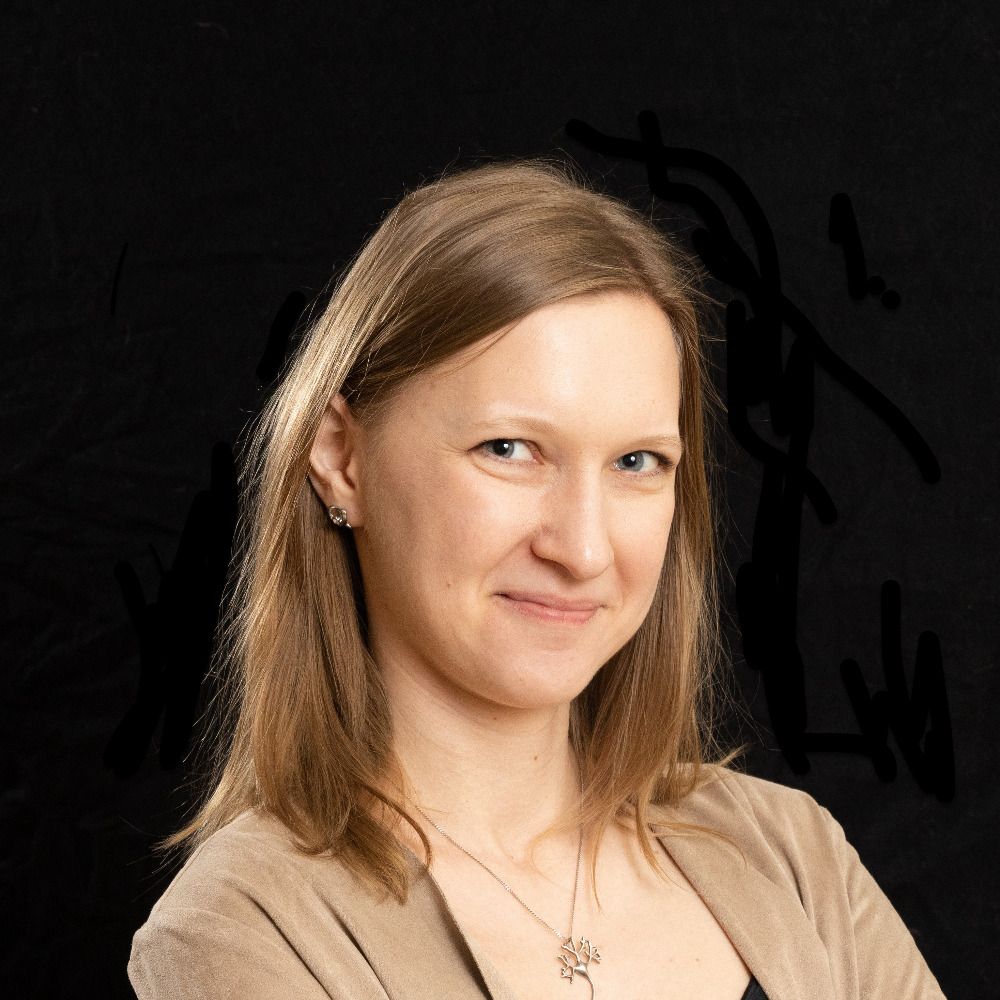
The last chapter of my PhD (expanded) is finally out as a preprint!
“Semantic reasoning takes place largely outside the language network” 🧠🧐
www.biorxiv.org/content/10.6...
What is semantic reasoning? Read on! 🧵👇
“Semantic reasoning takes place largely outside the language network” 🧠🧐
www.biorxiv.org/content/10.6...
What is semantic reasoning? Read on! 🧵👇

Semantic reasoning takes place largely outside the language network
The brain's language network is often implicated in the representation and manipulation of abstract semantic knowledge. However, this view is inconsistent with a large body of evidence suggesting that...
www.biorxiv.org
December 11, 2025 at 6:34 PM
The last chapter of my PhD (expanded) is finally out as a preprint!
“Semantic reasoning takes place largely outside the language network” 🧠🧐
www.biorxiv.org/content/10.6...
What is semantic reasoning? Read on! 🧵👇
“Semantic reasoning takes place largely outside the language network” 🧠🧐
www.biorxiv.org/content/10.6...
What is semantic reasoning? Read on! 🧵👇
Reposted by Shahab Bakhtiari

