



Raaj Gowrishankar
@outraajeous.bsky.social
Neurobiology of motivated behavior. Assistant Professor, MUSC | Postdoc, UW | Ph.D., Vanderbilt. he/him 🌈
http://www.raajgowrishankarlab.org/
http://www.raajgowrishankarlab.org/
Pinned
Gowrishankar Lab
www.raajgowrishankarlab.org
The Gowrishankar lab will be opening its doors @neuro_MUSC on Dec 1, 2025! We will be hiring at all levels. I will also be at @SfNtweets presenting my lab's vision on Wednesday, Nov 19, 8AM-12PM at poster board GG7. If you're interested, please reach out!
www.raajgowrishankarlab.org
www.raajgowrishankarlab.org
Reposted by Raaj Gowrishankar
🔬🧠 Releasing the 1.0 version of #Suite2p and THE PAPER w/ @marius10p.bsky.social! Now with GPU acceleration. Want to use Suite2p but don’t have 100,000 neuron recordings? We show you how to get those with a standard 2p microscope #neuroscience #imaging #neuroAI www.biorxiv.org/content/10.6...
February 12, 2026 at 1:33 AM
🔬🧠 Releasing the 1.0 version of #Suite2p and THE PAPER w/ @marius10p.bsky.social! Now with GPU acceleration. Want to use Suite2p but don’t have 100,000 neuron recordings? We show you how to get those with a standard 2p microscope #neuroscience #imaging #neuroAI www.biorxiv.org/content/10.6...
Reposted by Raaj Gowrishankar

Very excited to post our paper led by @daburke.bsky.social www.nature.com/articles/s41... where we uncover a simple mathematical rule underlying how brains learn that a cue predicts a reward. 1/26

Duration between rewards controls the rate of behavioral and dopaminergic learning - Nature Neuroscience
Cue–reward learning rate scales proportionally with the time between rewards. Consequently, learning over a fixed duration is independent of the number of trials. This challenges trial-based dopamine ...
www.nature.com
February 15, 2026 at 8:00 PM
Very excited to post our paper led by @daburke.bsky.social www.nature.com/articles/s41... where we uncover a simple mathematical rule underlying how brains learn that a cue predicts a reward. 1/26
Reposted by Raaj Gowrishankar

Nice work from my long time collaborator and pal Andrew Holmes' lab, led by the amazing Olena Bukalo.
www.nature.com/articles/s41...
www.nature.com/articles/s41...

Astrocytes enable amygdala neural representations supporting memory - Nature
Astrocytes in the basolateral amygdala dynamically track fear state and support fear memory retrieval and extinction.
www.nature.com
February 13, 2026 at 11:03 PM
Nice work from my long time collaborator and pal Andrew Holmes' lab, led by the amazing Olena Bukalo.
www.nature.com/articles/s41...
www.nature.com/articles/s41...
Reposted by Raaj Gowrishankar

Happy to share the newest study from our lab, led by superstar postdoc Dr. Rodrigo Campos Cardoso, where we resolve the infralimbic cortex GABAergic circuits of fear extinction: tinyurl.com/38vvr2my
February 10, 2026 at 12:44 PM
Happy to share the newest study from our lab, led by superstar postdoc Dr. Rodrigo Campos Cardoso, where we resolve the infralimbic cortex GABAergic circuits of fear extinction: tinyurl.com/38vvr2my
Reposted by Raaj Gowrishankar

Same task, different strategy ↔️
Why do identical neural network models develop separate internal approaches to solve the same problem?
@annhuang42.bsky.social explores the factors driving variability in task-trained networks in our latest @kempnerinstitute.bsky.social Deeper Learning blog.
Why do identical neural network models develop separate internal approaches to solve the same problem?
@annhuang42.bsky.social explores the factors driving variability in task-trained networks in our latest @kempnerinstitute.bsky.social Deeper Learning blog.

🤖📊 NEW in the Deeper Learning blog: @annhuang42.bsky.social & @kanakarajanphd.bsky.social break down their recent work examining how #RNNs solve the same task in different ways, and why that matters. Joint work with @satpreetsingh.bsky.social & @flavioh.bsky.social bit.ly/4kj4fVd #NeuroAI

Measuring and Controlling Solution Degeneracy Across Task-Trained Recurrent Neural Networks - Kempner Institute
Despite reaching equal performance success when trained on the same task, artificial neural networks can develop dramatically different internal solutions, much like different students solving the sam...
bit.ly
February 9, 2026 at 7:07 PM
Same task, different strategy ↔️
Why do identical neural network models develop separate internal approaches to solve the same problem?
@annhuang42.bsky.social explores the factors driving variability in task-trained networks in our latest @kempnerinstitute.bsky.social Deeper Learning blog.
Why do identical neural network models develop separate internal approaches to solve the same problem?
@annhuang42.bsky.social explores the factors driving variability in task-trained networks in our latest @kempnerinstitute.bsky.social Deeper Learning blog.
Reposted by Raaj Gowrishankar

We identified how mechanical forces shape myelin development. The TMEM63A channel in oligodendrocytes converts physical cues into molecular signals that control myelin growth.
Oligodendrocyte mechanotransduction channel TMEM63A regulates myelin sheath geometry: Neuron www.cell.com/neuron/fullt...
Oligodendrocyte mechanotransduction channel TMEM63A regulates myelin sheath geometry: Neuron www.cell.com/neuron/fullt...

Oligodendrocyte mechanotransduction channel TMEM63A regulates myelin sheath geometry
Dereddi, Djannatian, and colleagues show that oligodendrocytes use mechanical cues
to measure axon size. The stretch-activated channel TMEM63A converts membrane tension
into calcium signals, which cal...
www.cell.com
January 2, 2026 at 3:55 PM
We identified how mechanical forces shape myelin development. The TMEM63A channel in oligodendrocytes converts physical cues into molecular signals that control myelin growth.
Oligodendrocyte mechanotransduction channel TMEM63A regulates myelin sheath geometry: Neuron www.cell.com/neuron/fullt...
Oligodendrocyte mechanotransduction channel TMEM63A regulates myelin sheath geometry: Neuron www.cell.com/neuron/fullt...
Reposted by Raaj Gowrishankar

Taking the #GRCBasalGanglia Oath ✋🏼
I acknowledge that the go/no-go model of the BG was useful but it is outdated and incorrect, or at least incomplete. I pledge not to use the go/no-go model as a strawman to motivate my work.
I acknowledge that the go/no-go model of the BG was useful but it is outdated and incorrect, or at least incomplete. I pledge not to use the go/no-go model as a strawman to motivate my work.

February 2, 2026 at 7:57 PM
Taking the #GRCBasalGanglia Oath ✋🏼
I acknowledge that the go/no-go model of the BG was useful but it is outdated and incorrect, or at least incomplete. I pledge not to use the go/no-go model as a strawman to motivate my work.
I acknowledge that the go/no-go model of the BG was useful but it is outdated and incorrect, or at least incomplete. I pledge not to use the go/no-go model as a strawman to motivate my work.
Reposted by Raaj Gowrishankar

Our latest preprint. More evidence that diabetic neuropathy is a neuro degenerative disease. Very proud of @ish1789.bsky.social and our whole PRECISION group who made this work possible. #HEALinitiative funded

Progressive neurodegeneration in human dorsal root ganglion from diabetes to painful neuropathy https://www.biorxiv.org/content/10.64898/2026.01.16.700028v1
January 21, 2026 at 2:34 AM
Our latest preprint. More evidence that diabetic neuropathy is a neuro degenerative disease. Very proud of @ish1789.bsky.social and our whole PRECISION group who made this work possible. #HEALinitiative funded
Reposted by Raaj Gowrishankar
Chronic corticosterone shifts behavior from flexible to inflexible by differentially regulating striatal plasticity genes:
Cort ⬇️ plasticity gene expression in the dorsomedial striatum & ⬆️ plasticity programs in the dorsolateral striatum
Cort ⬇️ plasticity gene expression in the dorsomedial striatum & ⬆️ plasticity programs in the dorsolateral striatum

Corticosterone accelerates behavioral inflexibility via plasticity-related gene expression in the dorsal striatum
Neuropsychopharmacology - Corticosterone accelerates behavioral inflexibility via plasticity-related gene expression in the dorsal striatum
www.nature.com
January 30, 2026 at 5:30 PM
Chronic corticosterone shifts behavior from flexible to inflexible by differentially regulating striatal plasticity genes:
Cort ⬇️ plasticity gene expression in the dorsomedial striatum & ⬆️ plasticity programs in the dorsolateral striatum
Cort ⬇️ plasticity gene expression in the dorsomedial striatum & ⬆️ plasticity programs in the dorsolateral striatum
Reposted by Raaj Gowrishankar
speaker: any questions
me in my mind: yes how did you get funding for this
me in my mind: yes how did you get funding for this
January 29, 2026 at 2:23 PM
speaker: any questions
me in my mind: yes how did you get funding for this
me in my mind: yes how did you get funding for this
Reposted by Raaj Gowrishankar
This Research Highlight discusses findings showing that heavy alcohol use decreases BDNF in the ventrolateral orbitofrontal cortex (vlOFC) of mice & that increased BDNF in the vlOFC–dorsolateral striatum pathway decreases alcohol intake, seeking & relapse
Orbitofrontal BDNF puts the brakes on alcohol intake and relapse
Neuropsychopharmacology - Orbitofrontal BDNF puts the brakes on alcohol intake and relapse
www.nature.com
January 27, 2026 at 4:31 PM
This Research Highlight discusses findings showing that heavy alcohol use decreases BDNF in the ventrolateral orbitofrontal cortex (vlOFC) of mice & that increased BDNF in the vlOFC–dorsolateral striatum pathway decreases alcohol intake, seeking & relapse
Reposted by Raaj Gowrishankar
Main postdoc study out! We can redefine prefrontal cortex regions with single-unit activity! Grateful to @carlenlab.bsky.social and @weltgeischt.bsky.social who made this crazy project real. Thanks to all co-authors, collaborators, and reviewers.
www.nature.com/articles/s41...
www.nature.com/articles/s41...

A prefrontal cortex map based on single-neuron activity - Nature Neuroscience
The authors mapped spontaneous and choice activity across mouse prefrontal cortex. The activity maps aligned with intrinsic connectivity rather than anatomical subregions, suggesting that connectivity...
www.nature.com
January 20, 2026 at 10:53 AM
Main postdoc study out! We can redefine prefrontal cortex regions with single-unit activity! Grateful to @carlenlab.bsky.social and @weltgeischt.bsky.social who made this crazy project real. Thanks to all co-authors, collaborators, and reviewers.
www.nature.com/articles/s41...
www.nature.com/articles/s41...
Reposted by Raaj Gowrishankar

🥳🥳🥳 Pretty fab start to 2026!!
Paper alert: Our study led by @evapillai.bsky.social and @sudimukherjee.bsky.social showing that mechanical properties of the #brain actively shape the molecular landscape during development and #axonpathfinding is finally out! www.nature.com/articles/s41... @pdncambridge.bsky.social @fau.de @MPZPM

Long-range chemical signalling in vivo is regulated by mechanical signals - Nature Materials
Tissue stiffness mediated by Piezo1 is shown to regulate the expression of diffusive guidance cues in the developing Xenopus laevis brain, revealing a crosstalk between mechanical signals and long-ran...
www.nature.com
January 19, 2026 at 4:51 PM
🥳🥳🥳 Pretty fab start to 2026!!
Reposted by Raaj Gowrishankar

paper🚨
When we learn a category, do we learn the structure of the world, or just where to draw the line? In a cross-species study, we show that humans, rats & mice adapt optimally to changing sensory statistics, yet rely on fundamentally different learning algorithms.
www.biorxiv.org/content/10.1...
When we learn a category, do we learn the structure of the world, or just where to draw the line? In a cross-species study, we show that humans, rats & mice adapt optimally to changing sensory statistics, yet rely on fundamentally different learning algorithms.
www.biorxiv.org/content/10.1...

Different learning algorithms achieve shared optimal outcomes in humans, rats, and mice
Animals must exploit environmental regularities to make adaptive decisions, yet the learning algorithms that enabels this flexibility remain unclear. A central question across neuroscience, cognitive science, and machine learning, is whether learning relies on generative or discriminative strategies. Generative learners build internal models the sensory world itself, capturing its statistical structure; discriminative learners map stimuli directly onto choices, ignoring input statistics. These strategies rely on fundamentally different internal representations and entail distinct computational trade-offs: generative learning supports flexible generalisation and transfer, whereas discriminative learning is efficient but task-specific. We compared humans, rats, and mice performing the same auditory categorisation task, where category boundaries and rewards were fixed but sensory statistics varied. All species adapted their behaviour near-optimally, consistent with a normative observer constrained by sensory and decision noise. Yet their underlying algorithms diverged: humans predominantly relied on generative representations, mice on discriminative boundary-tracking, and rats spanned both regimes. Crucially, end-point performance concealed these differences, only learning trajectories and trial-to-trial updates revealed the divergence. These results show that similar near-optimal behaviour can mask fundamentally different internal representations, establishing a comparative framework for uncovering the hidden strategies that support statistical learning. ### Competing Interest Statement The authors have declared no competing interest. Wellcome Trust, https://ror.org/029chgv08, 219880/Z/19/Z, 225438/Z/22/Z, 219627/Z/19/Z Gatsby Charitable Foundation, GAT3755 UK Research and Innovation, https://ror.org/001aqnf71, EP/Z000599/1
www.biorxiv.org
November 17, 2025 at 7:18 PM
paper🚨
When we learn a category, do we learn the structure of the world, or just where to draw the line? In a cross-species study, we show that humans, rats & mice adapt optimally to changing sensory statistics, yet rely on fundamentally different learning algorithms.
www.biorxiv.org/content/10.1...
When we learn a category, do we learn the structure of the world, or just where to draw the line? In a cross-species study, we show that humans, rats & mice adapt optimally to changing sensory statistics, yet rely on fundamentally different learning algorithms.
www.biorxiv.org/content/10.1...
Reposted by Raaj Gowrishankar

🧠⚡️💊New @nature.com publication !
Mimicking opioid analgesia in cortical pain circuits
We built a brain-behavior framework to decode spontaneous chronic pain in mice—and to biologically mimic morphine with a synthetic opioid gene therapy
nature.com/articles/s41...
@pennmedicine.bsky.social
Mimicking opioid analgesia in cortical pain circuits
We built a brain-behavior framework to decode spontaneous chronic pain in mice—and to biologically mimic morphine with a synthetic opioid gene therapy
nature.com/articles/s41...
@pennmedicine.bsky.social

Researchers identify the neurons involved in the emotional distress associated with pain
go.nature.com/4qIKkB8
go.nature.com/4qIKkB8

Chronic pain could be eased by uncoupling the sensory and emotional experiences
Researchers identify the neurons involved in the emotional distress associated with pain, and design a genetic approach that could soothe suffering without opioid drugs.
go.nature.com
January 8, 2026 at 6:01 PM
🧠⚡️💊New @nature.com publication !
Mimicking opioid analgesia in cortical pain circuits
We built a brain-behavior framework to decode spontaneous chronic pain in mice—and to biologically mimic morphine with a synthetic opioid gene therapy
nature.com/articles/s41...
@pennmedicine.bsky.social
Mimicking opioid analgesia in cortical pain circuits
We built a brain-behavior framework to decode spontaneous chronic pain in mice—and to biologically mimic morphine with a synthetic opioid gene therapy
nature.com/articles/s41...
@pennmedicine.bsky.social
Reposted by Raaj Gowrishankar

Honored to be appointed Chief Scientific Officer @lieberinstitute.bsky.social. LIBD is a uniquely collaborative place with extraordinary biological resources and a commitment to translation 🧠🔬🧪. Grateful to my colleagues and excited to help guide our next chapter!
www.libd.org/keri-martino...
www.libd.org/keri-martino...

Keri Martinowich, Ph.D., Chief Scientific Officer | The Lieber Institute for Brain Development | Research & Discovery
Lieber Institute for Brain Development Appoints Keri Martinowich, Ph.D., as Chief Scientific Officer Baltimore, MD (January 6, 2025) — The Lieber Institute for Brain Development (LIBD) announced the a...
www.libd.org
January 9, 2026 at 1:07 PM
Honored to be appointed Chief Scientific Officer @lieberinstitute.bsky.social. LIBD is a uniquely collaborative place with extraordinary biological resources and a commitment to translation 🧠🔬🧪. Grateful to my colleagues and excited to help guide our next chapter!
www.libd.org/keri-martino...
www.libd.org/keri-martino...
Reposted by Raaj Gowrishankar
What is the computational role of dendritic excitations? Byung Hun Lee and team mapped voltage dynamics throughout the dendritic trees of CA1 pyramidal neurons in mice navigating in virtual reality. www.biorxiv.org/content/10.6...
January 4, 2026 at 6:17 AM
What is the computational role of dendritic excitations? Byung Hun Lee and team mapped voltage dynamics throughout the dendritic trees of CA1 pyramidal neurons in mice navigating in virtual reality. www.biorxiv.org/content/10.6...
Reposted by Raaj Gowrishankar
Interactions between striatal–prefrontal & hippocampal–prefrontal systems shape value-based learning & goal-directed behavior during adolescence; asynchronous maturation of these circuits may contribute to vulnerability to mental health disorders

Striatal and hippocampal contributions to value-based learning in adolescence
Neuropsychopharmacology - Striatal and hippocampal contributions to value-based learning in adolescence
www.nature.com
January 6, 2026 at 4:31 PM
Interactions between striatal–prefrontal & hippocampal–prefrontal systems shape value-based learning & goal-directed behavior during adolescence; asynchronous maturation of these circuits may contribute to vulnerability to mental health disorders
Reposted by Raaj Gowrishankar

New Year, new paper from our lab. Emily Kramer used 3D light-sheet imaging and tissue clearing to examine the spatial architecture of mouse amygdala engram ensembles.
onlinelibrary.wiley.com/doi/10.1002/...
onlinelibrary.wiley.com/doi/10.1002/...

Examining the Three‐Dimensional Spatial Architecture of Mouse Amygdala Engram Ensembles
Memories are stored in a sparse population of neurons active at the time of an event, an engram ensemble, and reactivation of the engram ensemble drives memory recall. Although the amygdala is essent...
onlinelibrary.wiley.com
January 1, 2026 at 2:43 PM
New Year, new paper from our lab. Emily Kramer used 3D light-sheet imaging and tissue clearing to examine the spatial architecture of mouse amygdala engram ensembles.
onlinelibrary.wiley.com/doi/10.1002/...
onlinelibrary.wiley.com/doi/10.1002/...
Reposted by Raaj Gowrishankar
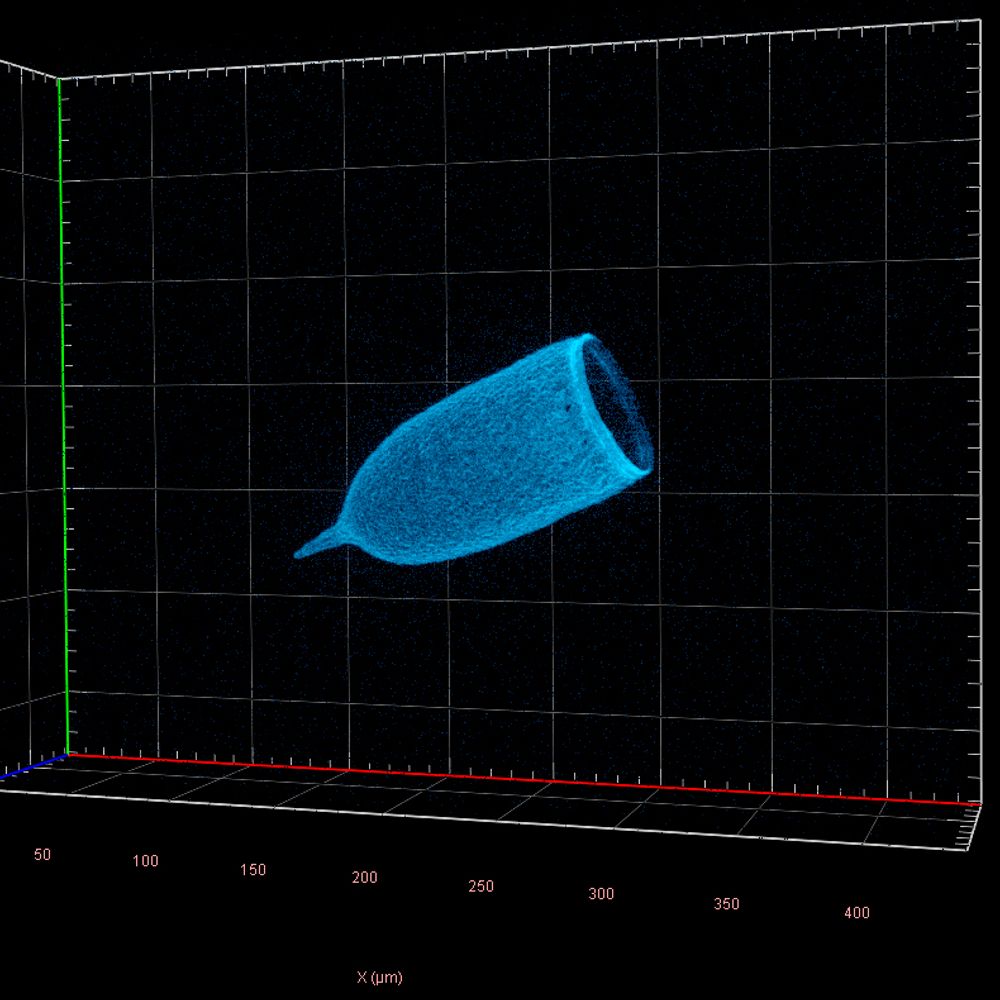
Finally, we’ve solved a long-standing mystery: what tintinnid shells are actually made of:
A new class of biomaterial formed by remarkable structural proteins unique to tintinnids.
A major milestone after 3 years of work! Read about it in our preprint: doi.org/10.64898/202...
#ProtistsOnSky
A new class of biomaterial formed by remarkable structural proteins unique to tintinnids.
A major milestone after 3 years of work! Read about it in our preprint: doi.org/10.64898/202...
#ProtistsOnSky

December 27, 2025 at 10:30 AM
Finally, we’ve solved a long-standing mystery: what tintinnid shells are actually made of:
A new class of biomaterial formed by remarkable structural proteins unique to tintinnids.
A major milestone after 3 years of work! Read about it in our preprint: doi.org/10.64898/202...
#ProtistsOnSky
A new class of biomaterial formed by remarkable structural proteins unique to tintinnids.
A major milestone after 3 years of work! Read about it in our preprint: doi.org/10.64898/202...
#ProtistsOnSky
Reposted by Raaj Gowrishankar

New paper drop! 🧠💊 Our new paper out in Molecular Psychiatry shows that the serotonin 1B receptor is important for the neural and antidepressant/anxiolytic behavioral responses to psilocybin in mice.
www.nature.com/articles/s41...
www.nature.com/articles/s41...

The serotonin 1B receptor is required for some of the behavioral effects of psilocybin in mice - Molecular Psychiatry
Molecular Psychiatry - The serotonin 1B receptor is required for some of the behavioral effects of psilocybin in mice
www.nature.com
December 21, 2025 at 7:50 PM
New paper drop! 🧠💊 Our new paper out in Molecular Psychiatry shows that the serotonin 1B receptor is important for the neural and antidepressant/anxiolytic behavioral responses to psilocybin in mice.
www.nature.com/articles/s41...
www.nature.com/articles/s41...
Reposted by Raaj Gowrishankar

Thank you - so happy to join such an exciting and supportive department!

Welcome to Vancouver and UBC! We’re excited to have you @milanium.bsky.social!
en route to Vancouver. thrilled to start my lab @psych.ubc.ca @arts.ubc.ca and join the @dmcbrainhealth.bsky.social - doors open Jan 2026. it's great to be back, 🇨🇦.
December 22, 2025 at 2:51 AM
Thank you - so happy to join such an exciting and supportive department!
Reposted by Raaj Gowrishankar

Cool basal ganglia preprints today!
2 on DA/ACh
1. @paulkramer.bsky.social
www.biorxiv.org/content/10.6...
2. @arifahamid.bsky.social
www.biorxiv.org/content/10.6...
Motor learning @juangallego.bsky.social and @clopathlab.bsky.social
www.biorxiv.org/content/10.6...
2 on DA/ACh
1. @paulkramer.bsky.social
www.biorxiv.org/content/10.6...
2. @arifahamid.bsky.social
www.biorxiv.org/content/10.6...
Motor learning @juangallego.bsky.social and @clopathlab.bsky.social
www.biorxiv.org/content/10.6...

Excitatory nicotinic signaling drives action potential bursting in dopaminergic axons
Axons of dopamine (DA) neurons express nicotinic receptors (nAChRs) that have been shown to both facilitate and suppress striatal DA release, but the mechanisms underlying these opposing actions are u...
www.biorxiv.org
December 21, 2025 at 12:05 PM
Cool basal ganglia preprints today!
2 on DA/ACh
1. @paulkramer.bsky.social
www.biorxiv.org/content/10.6...
2. @arifahamid.bsky.social
www.biorxiv.org/content/10.6...
Motor learning @juangallego.bsky.social and @clopathlab.bsky.social
www.biorxiv.org/content/10.6...
2 on DA/ACh
1. @paulkramer.bsky.social
www.biorxiv.org/content/10.6...
2. @arifahamid.bsky.social
www.biorxiv.org/content/10.6...
Motor learning @juangallego.bsky.social and @clopathlab.bsky.social
www.biorxiv.org/content/10.6...
Reposted by Raaj Gowrishankar
In a recent pub, grad students Kijoon and Corinne co-led a study where we made molecular tools to manipulate transposable elements (TEs) in mouse prefrontal cortex. We saw that transcriptional escape of brain TEs uniquely impaired complex social behavior.
Read it here:
www.pnas.org/doi/10.1073/...
Read it here:
www.pnas.org/doi/10.1073/...

Derepression of transposable elements in the mouse prefrontal cortex disrupts social behavior | PNAS
The neurobiological origins of social behaviors are poorly understood. Previous studies
have linked the function of a single Krüppel-associated box...
www.pnas.org
December 17, 2025 at 4:56 PM
In a recent pub, grad students Kijoon and Corinne co-led a study where we made molecular tools to manipulate transposable elements (TEs) in mouse prefrontal cortex. We saw that transcriptional escape of brain TEs uniquely impaired complex social behavior.
Read it here:
www.pnas.org/doi/10.1073/...
Read it here:
www.pnas.org/doi/10.1073/...
Reposted by Raaj Gowrishankar

Thrilled this is out, led by former PD Cameron Ogg (now with her own lab at @rhodescollege.bsky.social!). It was a driven by a desire to see, in real-time, how LC activity/NE release influences downstream targets in behaving animals. SO hard to do, but Cameron did it! www.cell.com/cell-reports...

Locus coeruleus norepinephrine neurons facilitate orbitofrontal cortex remapping and behavioral flexibility
Ogg et al. use in vivo imaging techniques to record activity in the locus coeruleus
(LC) and the orbitofrontal cortex (OFC) during a reversal learning task in freely
moving rodents. They show that man...
www.cell.com
December 15, 2025 at 2:47 PM
Thrilled this is out, led by former PD Cameron Ogg (now with her own lab at @rhodescollege.bsky.social!). It was a driven by a desire to see, in real-time, how LC activity/NE release influences downstream targets in behaving animals. SO hard to do, but Cameron did it! www.cell.com/cell-reports...