




Mike Lacy
@mlacyphd.bsky.social
I work @addgene.bsky.social curating DNA and web content.
#OpenScience supporter, previously at ASCB, science publishing/preprints.
Yale Biophysics PhD. Opinions my own. He/him
#OpenScience supporter, previously at ASCB, science publishing/preprints.
Yale Biophysics PhD. Opinions my own. He/him
Pinned
Mike Lacy
@mlacyphd.bsky.social
· Nov 12
👋 Intro for new folks:
I'm a scientific curator at @addgene.bsky.social. You might see my blog posts or get emails from me about depositing plasmids. Our team mainly works behind the scenes cleaning up data, making/updating webpages, and more. I'm always on the lookout for cool new science to share!
I'm a scientific curator at @addgene.bsky.social. You might see my blog posts or get emails from me about depositing plasmids. Our team mainly works behind the scenes cleaning up data, making/updating webpages, and more. I'm always on the lookout for cool new science to share!
Reposted by Mike Lacy
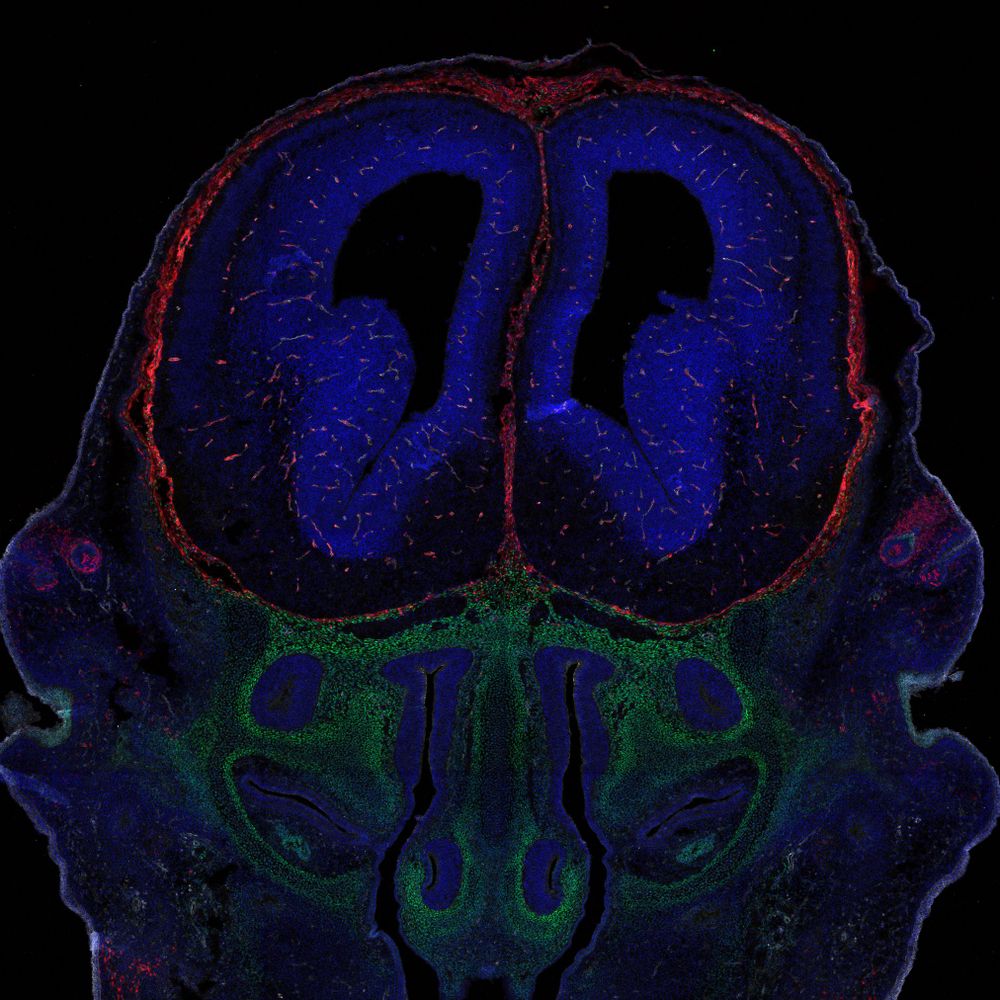
Scientist's way of saying 'I ❤️ you'
"I found this paper/preprint that made me think of your project."
"I checked the mice/cells/plates already."
"I just sent you the edits you requested."
"I have a slide/diagram that will work for that."
"I had that problem with [lab equipment], I have a fix."
"I found this paper/preprint that made me think of your project."
"I checked the mice/cells/plates already."
"I just sent you the edits you requested."
"I have a slide/diagram that will work for that."
"I had that problem with [lab equipment], I have a fix."
February 12, 2026 at 1:19 PM
Scientist's way of saying 'I ❤️ you'
"I found this paper/preprint that made me think of your project."
"I checked the mice/cells/plates already."
"I just sent you the edits you requested."
"I have a slide/diagram that will work for that."
"I had that problem with [lab equipment], I have a fix."
"I found this paper/preprint that made me think of your project."
"I checked the mice/cells/plates already."
"I just sent you the edits you requested."
"I have a slide/diagram that will work for that."
"I had that problem with [lab equipment], I have a fix."
Reposted by Mike Lacy

❤️ Happy Love Data Week! #LoveData26
Coming up 2/11: Improving Data Sharing w/ GREI’s Submission Checklist
Learn to plan, prepare, & publish data in a generalist repository. This webinar shares steps to more FAIR data, ft. examples from NIH-funded researchers.
Register:
Coming up 2/11: Improving Data Sharing w/ GREI’s Submission Checklist
Learn to plan, prepare, & publish data in a generalist repository. This webinar shares steps to more FAIR data, ft. examples from NIH-funded researchers.
Register:

Welcome! You are invited to join a webinar: Streamlining Data Sharing: Practical Tools and Researcher Stories from the NIH GREI. After registering, you will receive a confirmation email about joining the webinar.
Join GREI for a three-part series showcasing tools and examples that make it easier to plan, share, and submit data under the NIH Data Management and Sharing Policy. Register for the specific session(s) that fit your interests—one, several, or all.
▶︎ Webinar 1: Simplifying Repository Selection with GREI’s Flowchart and Comparison Chart (Jan 28)
Feeling overwhelmed by the number of available data repositories? This session introduces two complementary tools designed to make the selection process easier: the Generalist Repository Selection Flowchart (https://doi.org/10.5281/zenodo.11105429) and the Generalist Repository Comparison Chart (https://doi.org/10.5281/zenodo.3946719). You will learn how to use these resources to efficiently navigate key decision points. The session will also feature real-world examples that highlight how researchers are sharing and reusing data across GREI repositories to advance their work.
▶︎ Webinar 2: Improving Data Sharing with GREI’s Submission Checklist (Feb 11)
This session will help you make your dataset more FAIR. We will walk through GREI's Data Submission Checklist (https://doi.org/10.5281/zenodo.14278906), which provides practical guidance for planning, preparing, and publishing your data in a generalist repository. This session will highlight stories from NIH-funded researchers that show how sharing and reusing data through GREI repositories can increase research impact and visibility.
▶︎ Webinar 3: Strengthening Your DMS Plans with GREI’s Practical Guide (Feb 25)
A clear and comprehensive Data Management and Sharing (DMS) Plan is essential for meeting NIH policy requirements. This session introduces GREI’s guide to help you incorporate generalist repositories into your DMS Plan (https://doi.org/10.5281/zenodo.14278957), offering recommended language and concrete examples. Learn how to write a stronger, more compliant plan and hear stories from researchers benefiting from sharing data via GREI repositories.
cos-io.zoom.us
February 9, 2026 at 5:26 PM
❤️ Happy Love Data Week! #LoveData26
Coming up 2/11: Improving Data Sharing w/ GREI’s Submission Checklist
Learn to plan, prepare, & publish data in a generalist repository. This webinar shares steps to more FAIR data, ft. examples from NIH-funded researchers.
Register:
Coming up 2/11: Improving Data Sharing w/ GREI’s Submission Checklist
Learn to plan, prepare, & publish data in a generalist repository. This webinar shares steps to more FAIR data, ft. examples from NIH-funded researchers.
Register:
Reposted by Mike Lacy
Been on multiple search committees
For me (personally so YMMV)…I basically dismiss everything that’s labeled *submitted* unless there’s a preprint I can read
For me (personally so YMMV)…I basically dismiss everything that’s labeled *submitted* unless there’s a preprint I can read

You can read more about that experience here: www.nature.com/articles/s41...
Preprints as tools to advance careers - Nature Reviews Cancer
The practice of posting preprint manuscripts on servers such as bioRxiv has become increasingly common. In this Comment, Hindle and Sever explore the utility of preprints for advancing researchers…
www.nature.com
February 5, 2026 at 8:05 PM
Been on multiple search committees
For me (personally so YMMV)…I basically dismiss everything that’s labeled *submitted* unless there’s a preprint I can read
For me (personally so YMMV)…I basically dismiss everything that’s labeled *submitted* unless there’s a preprint I can read
Reposted by Mike Lacy
Using ampicillin as a selectable marker? You can skip the post-transformation outgrowth! Why? Because Amp targets cell wall synthesis, not protein synthesis, so the bacteria isn’t impeded from making the protein it needs to combat it! youtu.be/XZn8QG6dzgc

Using ampicillin as a selectable marker? You can skip the post-transformation outgrowth!
YouTube video by the bumbling biochemist
youtu.be
February 5, 2026 at 12:47 AM
Using ampicillin as a selectable marker? You can skip the post-transformation outgrowth! Why? Because Amp targets cell wall synthesis, not protein synthesis, so the bacteria isn’t impeded from making the protein it needs to combat it! youtu.be/XZn8QG6dzgc
Reposted by Mike Lacy
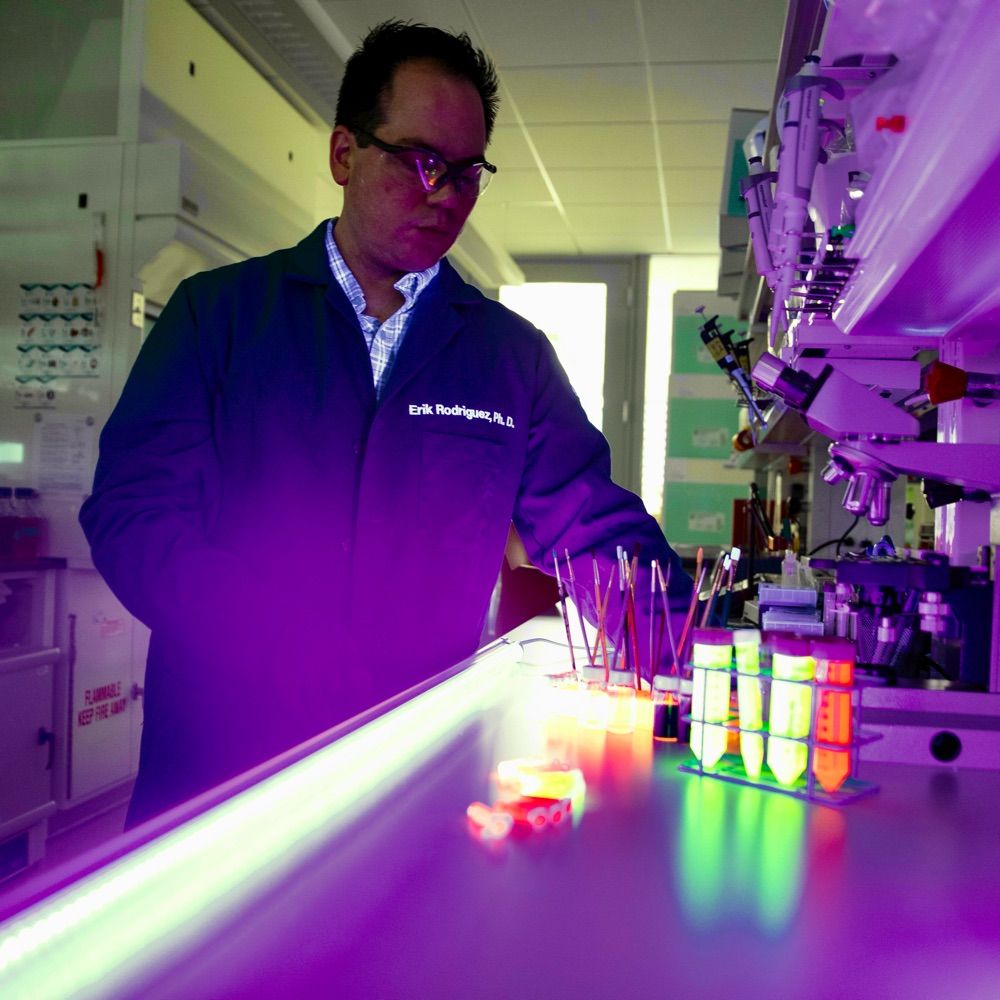
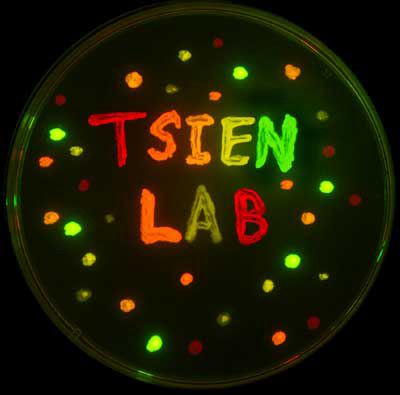
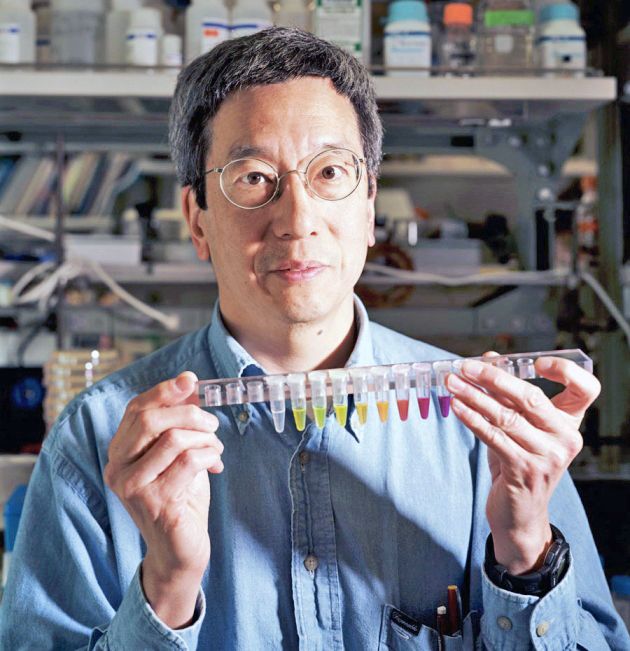
Today, I would like to honor the memory of Roger Y. Tsien, born on February 1, 1952. His legacy lives with all who use his technologies, including calcium sensors, fluorescent proteins, the acetoxymethyl (AM) ester, & many more! #FluorescenceFriday
www.nature.com/articles/nme...
www.nature.com/articles/nme...


January 30, 2026 at 2:52 PM
Today, I would like to honor the memory of Roger Y. Tsien, born on February 1, 1952. His legacy lives with all who use his technologies, including calcium sensors, fluorescent proteins, the acetoxymethyl (AM) ester, & many more! #FluorescenceFriday
www.nature.com/articles/nme...
www.nature.com/articles/nme...
Reposted by Mike Lacy
I had intended to post something about this new Google DeepMind paper that appeared yesterday in Nature, but the press coverage has added to what there is to say. So this is a long 🧵
www.nature.com/articles/s41...
www.nature.com/articles/s41...

Advancing regulatory variant effect prediction with AlphaGenome - Nature
AlphaGenome, a deep learning model that inputs 1-Mb DNA sequence to predict functional genomic tracks at single-base resolution across diverse modalities, outperforms existing models in variant effect...
www.nature.com
January 30, 2026 at 9:47 AM
I had intended to post something about this new Google DeepMind paper that appeared yesterday in Nature, but the press coverage has added to what there is to say. So this is a long 🧵
www.nature.com/articles/s41...
www.nature.com/articles/s41...
Reposted by Mike Lacy

Make your gene knockouts more efficient with multiplexed Cas12a sgRNAs. Our new paper is out now, with tools available from @addgene.bsky.social , www.plasmids.eu and @vdrc-flies.bsky.social.
www.nature.com/articles/s41...
#CRISPR #geneediting #Drosophila 🧪🧬✂️🔬🪰
Summary 🧵 below.
www.nature.com/articles/s41...
#CRISPR #geneediting #Drosophila 🧪🧬✂️🔬🪰
Summary 🧵 below.

January 29, 2026 at 9:26 AM
Make your gene knockouts more efficient with multiplexed Cas12a sgRNAs. Our new paper is out now, with tools available from @addgene.bsky.social , www.plasmids.eu and @vdrc-flies.bsky.social.
www.nature.com/articles/s41...
#CRISPR #geneediting #Drosophila 🧪🧬✂️🔬🪰
Summary 🧵 below.
www.nature.com/articles/s41...
#CRISPR #geneediting #Drosophila 🧪🧬✂️🔬🪰
Summary 🧵 below.
Reposted by Mike Lacy
A few months at nursery gives a roughly 1-year-old baby more new microbes for its gut microbiome than it has acquired in its WHOLE LIFE up until that point from its family. 🤯
🧪 #microbiome #science
My latest for @nature.com
www.nature.com/articles/d41...
🧪 #microbiome #science
My latest for @nature.com
www.nature.com/articles/d41...

Sending babies to nursery completely reshapes their microbiomes
Socializing at a young age helps to develop greater diversity in their microbiota, according to an analysis of baby-to-baby transmission of gut bacteria.
www.nature.com
January 21, 2026 at 7:57 PM
A few months at nursery gives a roughly 1-year-old baby more new microbes for its gut microbiome than it has acquired in its WHOLE LIFE up until that point from its family. 🤯
🧪 #microbiome #science
My latest for @nature.com
www.nature.com/articles/d41...
🧪 #microbiome #science
My latest for @nature.com
www.nature.com/articles/d41...
Reposted by Mike Lacy

Great news! @mariaingaramo.bsky.social 's company (Nonfiction Labs) made a remote-controlled antibody.
Its binding turns on and off with a magnet.
This is a HUGE step towards our dream of magnetically controlled drugs. Imagine a cancer drug that ONLY attacks the tumor, not the rest of your body.
Its binding turns on and off with a magnet.
This is a HUGE step towards our dream of magnetically controlled drugs. Imagine a cancer drug that ONLY attacks the tumor, not the rest of your body.
January 13, 2026 at 4:57 AM
Great news! @mariaingaramo.bsky.social 's company (Nonfiction Labs) made a remote-controlled antibody.
Its binding turns on and off with a magnet.
This is a HUGE step towards our dream of magnetically controlled drugs. Imagine a cancer drug that ONLY attacks the tumor, not the rest of your body.
Its binding turns on and off with a magnet.
This is a HUGE step towards our dream of magnetically controlled drugs. Imagine a cancer drug that ONLY attacks the tumor, not the rest of your body.
Reposted by Mike Lacy
Help requested: my friend is interviewing for TTF positions at private SLACs in the US, and wants to prepare a startup package list that is fitting. Can anyone share startup $ ranges at their SLACs, so it's a reasonable number? Please RT.
January 20, 2026 at 7:11 PM
Help requested: my friend is interviewing for TTF positions at private SLACs in the US, and wants to prepare a startup package list that is fitting. Can anyone share startup $ ranges at their SLACs, so it's a reasonable number? Please RT.
Reposted by Mike Lacy
This is so grim. Science isn’t just something nerds do, but the foundation of the modern world. What the Trump regime has done to US science will harm Americans for generations.

‘Shattered’: US scientists speak out about how Trump policies disrupted their careers
Researchers lay bare the human toll of lay-offs, funding cuts and attacks on science one year after the president’s return to the White House.
www.nature.com
January 20, 2026 at 11:23 AM
This is so grim. Science isn’t just something nerds do, but the foundation of the modern world. What the Trump regime has done to US science will harm Americans for generations.
Reposted by Mike Lacy
One of my concerns with AI-assisted research in biology is that we're already looking only in the lamplight and AI incentivizes us to narrow the beam. Seems like it's happening...
www.nature.com/articles/s41...
www.nature.com/articles/s41...

Artificial intelligence tools expand scientists’ impact but contract science’s focus - Nature
Artificial intelligence boosts individual scientists’ output, citations and career progression, but collectively narrows research diversity and reduces collaboration, concentrating work in data-rich a...
www.nature.com
January 15, 2026 at 4:08 PM
One of my concerns with AI-assisted research in biology is that we're already looking only in the lamplight and AI incentivizes us to narrow the beam. Seems like it's happening...
www.nature.com/articles/s41...
www.nature.com/articles/s41...
Reposted by Mike Lacy
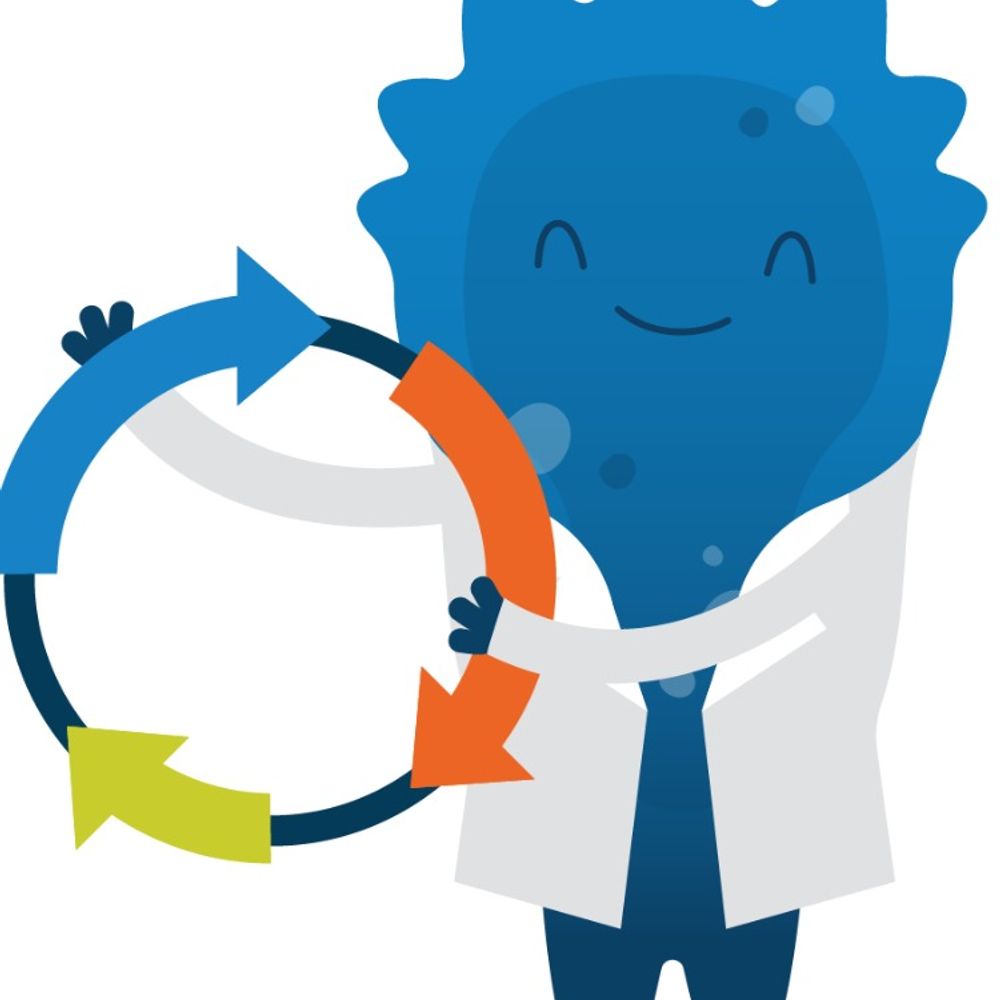
Are you an industry scientist? Addgene's mission is to empower scientists with access to research materials, and that means you too! Our repository includes nearly 10,000 tools available to industry laboratories. Check them out in our latest blog post:

blog.addgene.org
Addgene’s Expanding Collection of Research Tools for Industry Scientists
twp.ai
January 15, 2026 at 1:00 PM
Are you an industry scientist? Addgene's mission is to empower scientists with access to research materials, and that means you too! Our repository includes nearly 10,000 tools available to industry laboratories. Check them out in our latest blog post:
Reposted by Mike Lacy
2) What's REPROcode? A barcoded, arrayed lentiviral library of 408 immune TFs (now available through Addgene - www.addgene.org/Filipe_Perei...) + scRNA-seq that links which reprogramming TFs a cell receives to the identity it acquires. With no extra barcode PCR steps!

January 14, 2026 at 4:42 PM
2) What's REPROcode? A barcoded, arrayed lentiviral library of 408 immune TFs (now available through Addgene - www.addgene.org/Filipe_Perei...) + scRNA-seq that links which reprogramming TFs a cell receives to the identity it acquires. With no extra barcode PCR steps!
Reposted by Mike Lacy
It's easier to tear down than build up, and in science we have a bad case of that. So: how to lead a journal club that actually finds value in what you read. scientistseessquirre... 🧪

How to lead a journal club you won’t be embarrassed by later
One of the jobs facing an early-career scientist, and a developing writer, is to learn what their field’s literature looks like. One of the best tools to that end is the journal club. If you’ve nev…
scientistseessquirrel.wordpress.com
January 13, 2026 at 2:08 PM
It's easier to tear down than build up, and in science we have a bad case of that. So: how to lead a journal club that actually finds value in what you read. scientistseessquirre... 🧪
Reposted by Mike Lacy
Preprints of pandemic potential - new historical piece from me on the history of bioRxiv/medRxiv, their role in the pandemic, and the way forward. 1/n journals.asm.org/doi/10.1128/...

January 12, 2026 at 2:33 PM
Preprints of pandemic potential - new historical piece from me on the history of bioRxiv/medRxiv, their role in the pandemic, and the way forward. 1/n journals.asm.org/doi/10.1128/...
Reposted by Mike Lacy
🔬 🖥️ Applications are open for the CSHL course Quantitative Imaging: From Acquisition to Analysis (April 6–21, 2026)!
An intensive, hands-on course covering advanced fluorescence microscopy and quantitative image analysis using open-source tools.
🗓️ Apply online by Jan 30, 2026
An intensive, hands-on course covering advanced fluorescence microscopy and quantitative image analysis using open-source tools.
🗓️ Apply online by Jan 30, 2026

Quantitative Imaging: From Acquisition to Analysis
Cold Spring Harbor Laboratory Meetings & Courses -- a private, non-profit institution with research programs in cancer, neuroscience, plant biology, genomics, bioinformatics.
meetings.cshl.edu
January 6, 2026 at 7:18 PM
🔬 🖥️ Applications are open for the CSHL course Quantitative Imaging: From Acquisition to Analysis (April 6–21, 2026)!
An intensive, hands-on course covering advanced fluorescence microscopy and quantitative image analysis using open-source tools.
🗓️ Apply online by Jan 30, 2026
An intensive, hands-on course covering advanced fluorescence microscopy and quantitative image analysis using open-source tools.
🗓️ Apply online by Jan 30, 2026
Reposted by Mike Lacy
Giving the gift of negative data 🥰
Since I joined @lsajournal.org I have handled several stellar manuscripts that report null results. These papers do very well and reviewers almost always appreciate them!
Thanks @rockefeller.edu news team for the article!
www.rockefeller.edu/news/38829-t...
Since I joined @lsajournal.org I have handled several stellar manuscripts that report null results. These papers do very well and reviewers almost always appreciate them!
Thanks @rockefeller.edu news team for the article!
www.rockefeller.edu/news/38829-t...

The value of publishing negative data - News
Scientific journals love news-worthy results. Editors want to publish studies with novel data that scientists will eagerly read and cite in their own work. Because of this desire for novelty, studies ...
www.rockefeller.edu
December 23, 2025 at 1:26 PM
Giving the gift of negative data 🥰
Since I joined @lsajournal.org I have handled several stellar manuscripts that report null results. These papers do very well and reviewers almost always appreciate them!
Thanks @rockefeller.edu news team for the article!
www.rockefeller.edu/news/38829-t...
Since I joined @lsajournal.org I have handled several stellar manuscripts that report null results. These papers do very well and reviewers almost always appreciate them!
Thanks @rockefeller.edu news team for the article!
www.rockefeller.edu/news/38829-t...
Reposted by Mike Lacy

Interesting to see support for the hypothesis that the rainbow palette isn’t inherently ordered (the colors don’t map to "more" or "less").
www.sciencedirect.com/science/arti...
#dataviz 📊 #color 🎨
www.sciencedirect.com/science/arti...
#dataviz 📊 #color 🎨

January 6, 2026 at 12:59 AM
Interesting to see support for the hypothesis that the rainbow palette isn’t inherently ordered (the colors don’t map to "more" or "less").
www.sciencedirect.com/science/arti...
#dataviz 📊 #color 🎨
www.sciencedirect.com/science/arti...
#dataviz 📊 #color 🎨
Reposted by Mike Lacy
We recently published a paper in @plosbiology.org
We found a lot of problems in animal studies of hemorrhagic stroke.
Research integrity folks found the paper but the neuroscience community seems to have missed it completely.
I'd like them to read it too!
doi.org/10.1371/journal.pbio.3003438
We found a lot of problems in animal studies of hemorrhagic stroke.
Research integrity folks found the paper but the neuroscience community seems to have missed it completely.
I'd like them to read it too!
doi.org/10.1371/journal.pbio.3003438

High prevalence of articles with image-related problems in animal studies of subarachnoid hemorrhage and low rates of correction by publishers
Unchallenged erroneous articles can undermine scientific progress and mislead future research. This study shows that image-related issues affect 40% of reviewed articles on early brain injury in anima...
doi.org
January 5, 2026 at 11:41 AM
We recently published a paper in @plosbiology.org
We found a lot of problems in animal studies of hemorrhagic stroke.
Research integrity folks found the paper but the neuroscience community seems to have missed it completely.
I'd like them to read it too!
doi.org/10.1371/journal.pbio.3003438
We found a lot of problems in animal studies of hemorrhagic stroke.
Research integrity folks found the paper but the neuroscience community seems to have missed it completely.
I'd like them to read it too!
doi.org/10.1371/journal.pbio.3003438
"We need to stop measuring what's easy to measure and start looking for what's important." - Tony Ross-Hellauer [2021]
Example case study: UniProt database saves users €1000s per year in the "time they would have otherwise spent digging up the information from other sources"
Example case study: UniProt database saves users €1000s per year in the "time they would have otherwise spent digging up the information from other sources"
"hard to measure social and economic impacts of making papers and data free...little strong evidence of long-lasting and widespread effects [but] indicators remain to be fully developed" www.science.org/content/arti...

Is ‘open science’ delivering benefits? Major study finds proof is sparse
It’s hard to measure social and economic impacts of making papers and data free, researchers say
www.science.org
January 2, 2026 at 4:35 PM
"We need to stop measuring what's easy to measure and start looking for what's important." - Tony Ross-Hellauer [2021]
Example case study: UniProt database saves users €1000s per year in the "time they would have otherwise spent digging up the information from other sources"
Example case study: UniProt database saves users €1000s per year in the "time they would have otherwise spent digging up the information from other sources"
Reposted by Mike Lacy

A free, open-access library of high-quality organism illustrations for science communication

A free, open-access library of high-quality organism illustrations for science communication
We create vector graphics of model organisms and emerging biological research organisms to enhance our publications. We’re sharing these editable graphics under a CC0 license for other scientists to...
doi.org
December 29, 2025 at 6:03 PM
A free, open-access library of high-quality organism illustrations for science communication
Reposted by Mike Lacy

On delayed application review, the NIH grant terminations lawsuit appears to be headed for a settlement.
Both plaintiffs and defendants have submitted a joint document outlining their agreement. Judge Young must sign off on it before it takes effect.
Here's what it says and what all this means 🧵
Both plaintiffs and defendants have submitted a joint document outlining their agreement. Judge Young must sign off on it before it takes effect.
Here's what it says and what all this means 🧵
December 29, 2025 at 11:49 PM
On delayed application review, the NIH grant terminations lawsuit appears to be headed for a settlement.
Both plaintiffs and defendants have submitted a joint document outlining their agreement. Judge Young must sign off on it before it takes effect.
Here's what it says and what all this means 🧵
Both plaintiffs and defendants have submitted a joint document outlining their agreement. Judge Young must sign off on it before it takes effect.
Here's what it says and what all this means 🧵
Reposted by Mike Lacy

We’ve highlighted some wonderful images and researchers in our ‘Featured image’ series in 2025. To celebrate, we’re inviting you to vote for your favourite in our image competition!
#FluorescenceFriday
Check them out here: focalplane.biologists.com/2025/12/19/v...
#FluorescenceFriday
Check them out here: focalplane.biologists.com/2025/12/19/v...

Vote for your favourite 'Featured image' from 2025 - FocalPlane
Vote for your favourite 'Featured image' from 2025 - News
focalplane.biologists.com
December 19, 2025 at 10:58 AM
We’ve highlighted some wonderful images and researchers in our ‘Featured image’ series in 2025. To celebrate, we’re inviting you to vote for your favourite in our image competition!
#FluorescenceFriday
Check them out here: focalplane.biologists.com/2025/12/19/v...
#FluorescenceFriday
Check them out here: focalplane.biologists.com/2025/12/19/v...