



Fillip Port
@crisprflydesign.bsky.social
Scientist at the German Cancer Reseach Center in Heidelberg. We develop genome engineering tools for functional genomics. #CRISPR #Drosophila #openscience
Pinned
Our new preprint is out - please share!
We asked: How can we make CRISPR knockouts in vivo more efficient? And set up an assay that enables detection of CRISPR cutting with 100s-1000s of sgRNAs over entire chromosome arms in living animals.
Grab a ☕ and let’s dive in. 🧵🧪 1/n
#CRISPR #geneediting
We asked: How can we make CRISPR knockouts in vivo more efficient? And set up an assay that enables detection of CRISPR cutting with 100s-1000s of sgRNAs over entire chromosome arms in living animals.
Grab a ☕ and let’s dive in. 🧵🧪 1/n
#CRISPR #geneediting
Reposted by Fillip Port

Thanks @michaelboutros.bsky.social and @crisprflydesign.bsky.social for sharing! 🧪🧬✂️🔬🪰
Multiplexed Cas12a editing plasmids here: www.addgene.org/browse/artic...
Multiplexed Cas12a editing plasmids here: www.addgene.org/browse/artic...
February 10, 2026 at 5:43 PM
Thanks @michaelboutros.bsky.social and @crisprflydesign.bsky.social for sharing! 🧪🧬✂️🔬🪰
Multiplexed Cas12a editing plasmids here: www.addgene.org/browse/artic...
Multiplexed Cas12a editing plasmids here: www.addgene.org/browse/artic...
Reposted by Fillip Port
Make your gene knockouts more efficient with multiplexed Cas12a sgRNAs. Our new paper is out now, with tools available from @addgene.bsky.social , www.plasmids.eu and @vdrc-flies.bsky.social.
www.nature.com/articles/s41...
#CRISPR #geneediting #Drosophila 🧪🧬✂️🔬🪰
Summary 🧵 below.
www.nature.com/articles/s41...
#CRISPR #geneediting #Drosophila 🧪🧬✂️🔬🪰
Summary 🧵 below.

January 29, 2026 at 9:26 AM
Make your gene knockouts more efficient with multiplexed Cas12a sgRNAs. Our new paper is out now, with tools available from @addgene.bsky.social , www.plasmids.eu and @vdrc-flies.bsky.social.
www.nature.com/articles/s41...
#CRISPR #geneediting #Drosophila 🧪🧬✂️🔬🪰
Summary 🧵 below.
www.nature.com/articles/s41...
#CRISPR #geneediting #Drosophila 🧪🧬✂️🔬🪰
Summary 🧵 below.
Reposted by Fillip Port

FoldMason is out now in @science.org. It generates accurate multiple structure alignments for thousands of protein structures in seconds. Great work by Cameron L. M. Gilchrist and @milot.bsky.social.
📄 www.science.org/doi/10.1126/...
🌐 search.foldseek.com/foldmason
💾 github.com/steineggerla...
📄 www.science.org/doi/10.1126/...
🌐 search.foldseek.com/foldmason
💾 github.com/steineggerla...

Multiple protein structure alignment at scale with FoldMason
Protein structure is conserved beyond sequence, making multiple structural alignment (MSTA) essential for analyzing distantly related proteins. Computational prediction methods have vastly extended ou...
www.science.org
January 30, 2026 at 6:11 AM
FoldMason is out now in @science.org. It generates accurate multiple structure alignments for thousands of protein structures in seconds. Great work by Cameron L. M. Gilchrist and @milot.bsky.social.
📄 www.science.org/doi/10.1126/...
🌐 search.foldseek.com/foldmason
💾 github.com/steineggerla...
📄 www.science.org/doi/10.1126/...
🌐 search.foldseek.com/foldmason
💾 github.com/steineggerla...
Thanks for your kind words, Simon! Still harvesting the fruits of the seeds planted and nurtured in your lab... 🌱🙏
January 29, 2026 at 5:27 PM
Thanks for your kind words, Simon! Still harvesting the fruits of the seeds planted and nurtured in your lab... 🌱🙏
Reposted by Fillip Port

New paper from Narod Kebabci – “A predicted cancer dependency map for paralog pairs” www.biorxiv.org/content/10.6...
Background: The Cancer Dependency Map from @depmap.org is a fantastic resource that characterises genetic dependencies at genome-wide scale across ~1,000 cancer cell lines. 1/9
Background: The Cancer Dependency Map from @depmap.org is a fantastic resource that characterises genetic dependencies at genome-wide scale across ~1,000 cancer cell lines. 1/9
A predicted cancer dependency map for paralog pairs
Background Genome-wide CRISPR screening has enabled the development of dependency maps in hundreds of cancer cell lines, facilitating the identification of genetic vulnerabilities associated with specific biomarkers. Paralogs, despite being common drug targets, are often missed in these screens as their individual disruption rarely causes a significant fitness defect. Combinatorial screens have revealed that paralog pairs are often synthetic lethal but that these effects are highly context specific. To develop paralogs as therapeutic targets we must identify which paralog pairs are synthetic lethal in which cancer contexts. Results We develop a machine learning classifier to predict cell-line specific synthetic lethality between paralog pairs. We demonstrate the utility of features derived from the cell-line specific expression and essentiality of the pair and their protein-protein interaction partners for this purpose. We evaluate our predictions across multiple scenarios: predicting for the same pairs in unseen cell lines, for new gene pairs in seen cell lines, and for entirely uncharacterized pairs in unseen cell lines. We show that we can make predictions across all scenarios. We validate our predictions using independent combinatorial CRISPR screens and show that the agreement between our predictions and published experiments approaches the agreement across experiments. Conclusions Our classifier predicts cell-line-specific synthetic lethality between paralog pairs and provides insights into the underlying features driving these interactions. We make our predictions for 1,005 cell lines available as a resource to facilitate the discovery of context-specific paralog synthetic lethalities and to guide the design of more targeted combinatorial screens. ### Competing Interest Statement The authors have declared no competing interest. Research Ireland, 20/FFP-P/8641, 18/CRT/6214
www.biorxiv.org
January 29, 2026 at 9:29 AM
New paper from Narod Kebabci – “A predicted cancer dependency map for paralog pairs” www.biorxiv.org/content/10.6...
Background: The Cancer Dependency Map from @depmap.org is a fantastic resource that characterises genetic dependencies at genome-wide scale across ~1,000 cancer cell lines. 1/9
Background: The Cancer Dependency Map from @depmap.org is a fantastic resource that characterises genetic dependencies at genome-wide scale across ~1,000 cancer cell lines. 1/9
This work represents a major team effort, with much of it driven by fantastic undergraduates doing their master thesis, rotations, or pre-university gap year in the lab. Huge thanks to everyone involved! I'm very happy about what we accomplished together.
January 29, 2026 at 9:26 AM
This work represents a major team effort, with much of it driven by fantastic undergraduates doing their master thesis, rotations, or pre-university gap year in the lab. Huge thanks to everyone involved! I'm very happy about what we accomplished together.
So multiplexed Cas12a is safe and specific, but does it actually improve knockout efficiency? Direct comparisons with two established Cas9 libraries show superior performance, uncovering phenotypes that existing approaches miss.

January 29, 2026 at 9:26 AM
So multiplexed Cas12a is safe and specific, but does it actually improve knockout efficiency? Direct comparisons with two established Cas9 libraries show superior performance, uncovering phenotypes that existing approaches miss.
The results were very reassuring: >99% of sgRNA arrays showed on-target activity, while we detected no reproducible off-target cutting on the chromosome arms we screened.

January 29, 2026 at 9:26 AM
The results were very reassuring: >99% of sgRNA arrays showed on-target activity, while we detected no reproducible off-target cutting on the chromosome arms we screened.
And what about off-target activity you ask? Well, this has so far been difficult to assess in flies due to limited methods. So one of my favorite parts of this paper: we developed an assay to visualize DNA cutting with thousands of sgRNAs over entire chromosome arms.
January 29, 2026 at 9:26 AM
And what about off-target activity you ask? Well, this has so far been difficult to assess in flies due to limited methods. So one of my favorite parts of this paper: we developed an assay to visualize DNA cutting with thousands of sgRNAs over entire chromosome arms.
Another potential problem: proximity effects, where cutting one gene also deletes neighbors or entire chromosome arms. Testing genes adjacent to characterized loci, we found minimal evidence of such effects in Drosophila (though rare cases do occur).

January 29, 2026 at 9:26 AM
Another potential problem: proximity effects, where cutting one gene also deletes neighbors or entire chromosome arms. Testing genes adjacent to characterized loci, we found minimal evidence of such effects in Drosophila (though rare cases do occur).
As expected, DNA cutting causes an increase in cell death, which is moderate when cut sites are clustered, but excessive when they are distributed over different chromosomes (which is likely to give rise to genomic rearrangements).

January 29, 2026 at 9:26 AM
As expected, DNA cutting causes an increase in cell death, which is moderate when cut sites are clustered, but excessive when they are distributed over different chromosomes (which is likely to give rise to genomic rearrangements).
Mutagenesis through CRISPR nucleases works by creating DNA double-strand breaks, which can cause various side effects, so first we assessed whether causing multiple breaks in close proximity is well tolerated in flies.
January 29, 2026 at 9:26 AM
Mutagenesis through CRISPR nucleases works by creating DNA double-strand breaks, which can cause various side effects, so first we assessed whether causing multiple breaks in close proximity is well tolerated in flies.
These resources are publicly available: fly lines from VDRC, plasmids from Addgene and EPR.
shop.vbc.ac.at/vdrc_store/v...
www.addgene.org/browse/artic...
www.plasmids.eu
shop.vbc.ac.at/vdrc_store/v...
www.addgene.org/browse/artic...
www.plasmids.eu
Heidelberg CFD CRISPR Library
shop.vbc.ac.at
January 29, 2026 at 9:26 AM
These resources are publicly available: fly lines from VDRC, plasmids from Addgene and EPR.
shop.vbc.ac.at/vdrc_store/v...
www.addgene.org/browse/artic...
www.plasmids.eu
shop.vbc.ac.at/vdrc_store/v...
www.addgene.org/browse/artic...
www.plasmids.eu
We systematically tested Cas12a mutagenesis with 4 sgRNAs per gene in Drosophila. This included building a modular toolkit: sgRNA arrays for 800+ genes, optimized Cas12a transgenes, and activity reporters to map and measure Cas12a activity in vivo.

January 29, 2026 at 9:26 AM
We systematically tested Cas12a mutagenesis with 4 sgRNAs per gene in Drosophila. This included building a modular toolkit: sgRNA arrays for 800+ genes, optimized Cas12a transgenes, and activity reporters to map and measure Cas12a activity in vivo.
Multiplexing sgRNAs addresses these issues through redundancy and synergism. While Cas9 arrays with more than 2 sgRNAs are difficult to construct, arrays with 4 Cas12a sgRNAs are compact enough to be synthesized as a single oligonucleotide. ➡️ Easy cloning at scale.
January 29, 2026 at 9:26 AM
Multiplexing sgRNAs addresses these issues through redundancy and synergism. While Cas9 arrays with more than 2 sgRNAs are difficult to construct, arrays with 4 Cas12a sgRNAs are compact enough to be synthesized as a single oligonucleotide. ➡️ Easy cloning at scale.
CRISPR gene editing is the most common way to test gene function, but knock-out efficiency is typically limited by silent mutations, inactive sgRNAs and inaccessible target sites.

a man in a superhero costume is holding a knife in front of a sign that says nickelodeon
Alt: Gif of a man in a superhero costume who is trying - and failing - to cut through a red tape with scissors.
media.tenor.com
January 29, 2026 at 9:26 AM
CRISPR gene editing is the most common way to test gene function, but knock-out efficiency is typically limited by silent mutations, inactive sgRNAs and inaccessible target sites.
Make your gene knockouts more efficient with multiplexed Cas12a sgRNAs. Our new paper is out now, with tools available from @addgene.bsky.social , www.plasmids.eu and @vdrc-flies.bsky.social.
www.nature.com/articles/s41...
#CRISPR #geneediting #Drosophila 🧪🧬✂️🔬🪰
Summary 🧵 below.
www.nature.com/articles/s41...
#CRISPR #geneediting #Drosophila 🧪🧬✂️🔬🪰
Summary 🧵 below.
January 29, 2026 at 9:26 AM
Make your gene knockouts more efficient with multiplexed Cas12a sgRNAs. Our new paper is out now, with tools available from @addgene.bsky.social , www.plasmids.eu and @vdrc-flies.bsky.social.
www.nature.com/articles/s41...
#CRISPR #geneediting #Drosophila 🧪🧬✂️🔬🪰
Summary 🧵 below.
www.nature.com/articles/s41...
#CRISPR #geneediting #Drosophila 🧪🧬✂️🔬🪰
Summary 🧵 below.
Reposted by Fillip Port

This is such an important point and here in Europe we should be building the skills and connections now to make sure that the truth continues to matter and powerful people can be held to account.
The alternative is going down and down the spiral of democratic disenchantment and erosion…
The alternative is going down and down the spiral of democratic disenchantment and erosion…

The events of the last 24 hours show why it's important to build functional verification structures in public and counterpublic spaces to resist the authoritarian erosion of our democratic systems, as described in this thread.
🧵 @jburnmurdoch.ft.com is spot on about the conditions in his FT piece. Liberal democracy held it together thanks to growth, good demographics, and the promise of a better future. Those days are gone, and that’s the "why" behind the erosion. However...
January 25, 2026 at 9:36 AM
This is such an important point and here in Europe we should be building the skills and connections now to make sure that the truth continues to matter and powerful people can be held to account.
The alternative is going down and down the spiral of democratic disenchantment and erosion…
The alternative is going down and down the spiral of democratic disenchantment and erosion…
Reposted by Fillip Port
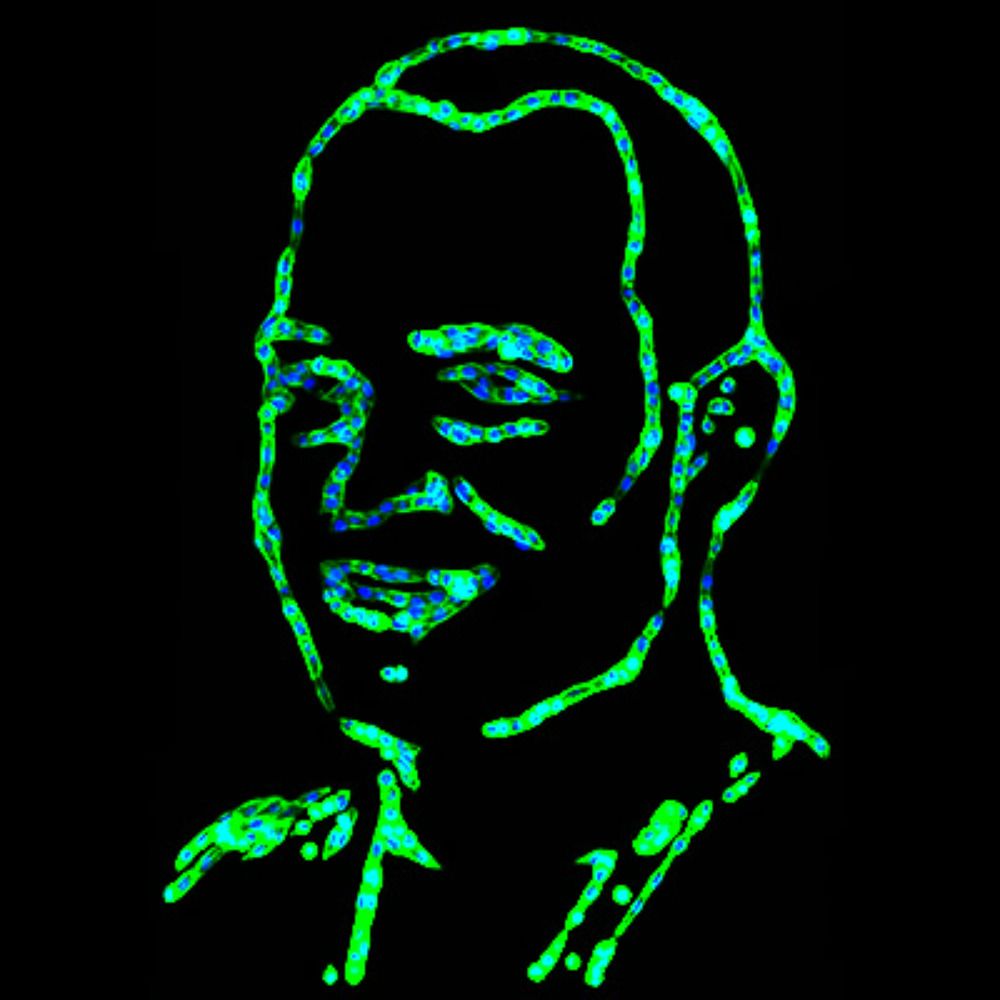
#LivingArchitectures
We put cells and cytoskeleton filaments on the architecture of the musée d'Orsay.
www.musee-orsay.fr/fr/agenda/ev...
Scientists of the #CytoMorphoLab adapted their protocols to illustrate the questions that keep them awake at night.
-> Two shows on the 24th and 25th of January.
We put cells and cytoskeleton filaments on the architecture of the musée d'Orsay.
www.musee-orsay.fr/fr/agenda/ev...
Scientists of the #CytoMorphoLab adapted their protocols to illustrate the questions that keep them awake at night.
-> Two shows on the 24th and 25th of January.


December 5, 2025 at 4:11 PM
#LivingArchitectures
We put cells and cytoskeleton filaments on the architecture of the musée d'Orsay.
www.musee-orsay.fr/fr/agenda/ev...
Scientists of the #CytoMorphoLab adapted their protocols to illustrate the questions that keep them awake at night.
-> Two shows on the 24th and 25th of January.
We put cells and cytoskeleton filaments on the architecture of the musée d'Orsay.
www.musee-orsay.fr/fr/agenda/ev...
Scientists of the #CytoMorphoLab adapted their protocols to illustrate the questions that keep them awake at night.
-> Two shows on the 24th and 25th of January.
Reposted by Fillip Port

#LivingArchitectures
Congratulations @manuelthery.bsky.social @lblanchoin.bsky.social and all Scientists of the #CytoMorphoLab for their poetic vision of the microscopic level.
Congratulations @manuelthery.bsky.social @lblanchoin.bsky.social and all Scientists of the #CytoMorphoLab for their poetic vision of the microscopic level.


January 24, 2026 at 9:59 PM
#LivingArchitectures
Congratulations @manuelthery.bsky.social @lblanchoin.bsky.social and all Scientists of the #CytoMorphoLab for their poetic vision of the microscopic level.
Congratulations @manuelthery.bsky.social @lblanchoin.bsky.social and all Scientists of the #CytoMorphoLab for their poetic vision of the microscopic level.
Reposted by Fillip Port

😵

Time to dump ChatGPT!
The latest model of ChatGPT has begun to cite Elon Musk’s Grokipedia as a source on a wide range of queries, including on Iranian conglomerates and Holocaust deniers, raising concerns about misinformation on the platform.
The latest model of ChatGPT has begun to cite Elon Musk’s Grokipedia as a source on a wide range of queries, including on Iranian conglomerates and Holocaust deniers, raising concerns about misinformation on the platform.

Latest ChatGPT model uses Elon Musk’s Grokipedia as source, tests reveal
Guardian found OpenAI’s platform cited Grokipedia on topics including Iran and Holocaust deniers
www.theguardian.com
January 25, 2026 at 12:55 PM
😵
Clever new method for assembling DNA oligos into larger sequences without the need for unique overlap sequences. Can't wait for those 'this sequence is too complex' rejection messages from DNA suppliers to become a thing of the past. 🧬🧪
www.nature.com/articles/s41...
www.nature.com/articles/s41...

Construction of complex and diverse DNA sequences using DNA three-way junctions - Nature
Sidewinder enables high-fidelity DNA assembly by separating the information that guides assembly from the final assembled sequence.
www.nature.com
January 22, 2026 at 8:29 AM
Clever new method for assembling DNA oligos into larger sequences without the need for unique overlap sequences. Can't wait for those 'this sequence is too complex' rejection messages from DNA suppliers to become a thing of the past. 🧬🧪
www.nature.com/articles/s41...
www.nature.com/articles/s41...
All the best and have a fantastic start in Bilbao. We will miss you here...
January 21, 2026 at 10:41 AM
All the best and have a fantastic start in Bilbao. We will miss you here...
Reposted by Fillip Port

New preprint on technologies to scale up CRISPR screens.
We use them to map 665,856 pairwise genetic perturbations and outline a path to comprehensive interaction mapping in human cells.
We also introduce an approach for cloning lentiviral libraries with billions of elements.
We use them to map 665,856 pairwise genetic perturbations and outline a path to comprehensive interaction mapping in human cells.
We also introduce an approach for cloning lentiviral libraries with billions of elements.

January 20, 2026 at 1:42 PM
New preprint on technologies to scale up CRISPR screens.
We use them to map 665,856 pairwise genetic perturbations and outline a path to comprehensive interaction mapping in human cells.
We also introduce an approach for cloning lentiviral libraries with billions of elements.
We use them to map 665,856 pairwise genetic perturbations and outline a path to comprehensive interaction mapping in human cells.
We also introduce an approach for cloning lentiviral libraries with billions of elements.
Reposted by Fillip Port
We are recruiting a tenure track professor in the broader area of molecular biology @zmbh.uni-heidelberg.de at Heidelberg University! www.nature.com/naturecareer... Please share and apply!

Tenure Track Professorship (W1 with Tenure Track to W3) in “Molecular Biology" (f/m/d) - Heidelberg job with Universität Heidelberg | 12850668
The Center for Molecular Biology of Heidelberg University (ZMBH) and the Faculty of Biosciences invite applications for a Tenure Track Professors...
www.nature.com
December 9, 2025 at 6:11 PM
We are recruiting a tenure track professor in the broader area of molecular biology @zmbh.uni-heidelberg.de at Heidelberg University! www.nature.com/naturecareer... Please share and apply!