



Craig M. Crews
@craigmcrews.bsky.social
Pinned
Craig M. Crews
@craigmcrews.bsky.social
· Mar 11

It's an honor to share this year's Passano Award with Ray Deshaies, Ph.D. for the development of PROTACs, a new therapeutic modality that targets proteins for degradation via co-opting the cellular protein recycling machinery.
Reposted by Craig M. Crews


January 24, 2026 at 3:06 PM
Reposted by Craig M. Crews

📢 #RSCChemBio is sponsoring two poster prizes at the EMBO-EMBL Chemical Biology Workshop 2026!
📅 8 - 11th September 2026
📍 EMBL Heidelberg, Germany
🔗 www.embl.org/about/i...
Submit your abstract by 2nd June 2026 to a part of the event!
EMBO #ChemicalBiology
📅 8 - 11th September 2026
📍 EMBL Heidelberg, Germany
🔗 www.embl.org/about/i...
Submit your abstract by 2nd June 2026 to a part of the event!
EMBO #ChemicalBiology

January 9, 2026 at 6:03 PM
📢 #RSCChemBio is sponsoring two poster prizes at the EMBO-EMBL Chemical Biology Workshop 2026!
📅 8 - 11th September 2026
📍 EMBL Heidelberg, Germany
🔗 www.embl.org/about/i...
Submit your abstract by 2nd June 2026 to a part of the event!
EMBO #ChemicalBiology
📅 8 - 11th September 2026
📍 EMBL Heidelberg, Germany
🔗 www.embl.org/about/i...
Submit your abstract by 2nd June 2026 to a part of the event!
EMBO #ChemicalBiology
Reposted by Craig M. Crews

Why can axolotls regrow limbs, but humans can’t?
New work shows regeneration depends on cells from all sides of the limb coordinating their positional memories.
🔗 buff.ly/IPRgJYI
New work shows regeneration depends on cells from all sides of the limb coordinating their positional memories.
🔗 buff.ly/IPRgJYI

January 25, 2026 at 9:21 AM
Why can axolotls regrow limbs, but humans can’t?
New work shows regeneration depends on cells from all sides of the limb coordinating their positional memories.
🔗 buff.ly/IPRgJYI
New work shows regeneration depends on cells from all sides of the limb coordinating their positional memories.
🔗 buff.ly/IPRgJYI
Reposted by Craig M. Crews

Reposted by Craig M. Crews


Reposted by Craig M. Crews

Pour a glass of champagne AND red Bordeaux—Our newest work with GSK @scripps.edu is out in @nature.com! Here we describe SB-405483, the first allosteric CRBN ligand which potentiates neosubstrate degradation. Congrats Vanessa and all authors! 🍷💫💐 www.nature.com/articles/s41...

January 21, 2026 at 4:29 PM
Pour a glass of champagne AND red Bordeaux—Our newest work with GSK @scripps.edu is out in @nature.com! Here we describe SB-405483, the first allosteric CRBN ligand which potentiates neosubstrate degradation. Congrats Vanessa and all authors! 🍷💫💐 www.nature.com/articles/s41...
Reposted by Craig M. Crews
Our research on magneto-sensitive fluorescent proteins and some of their applications has now been published!
Huge thank you to the many many people involved in making this happen. 🧪
www.nature.com/articles/s41...
Huge thank you to the many many people involved in making this happen. 🧪
www.nature.com/articles/s41...

Quantum spin resonance in engineered proteins for multimodal sensing - Nature
A recently developed class of magneto-sensitive fluorescent proteins are engineered to alter the properties of their response to magnetic fields and radio frequencies, enabling multimodal sensing of b...
www.nature.com
January 21, 2026 at 4:19 PM
Our research on magneto-sensitive fluorescent proteins and some of their applications has now been published!
Huge thank you to the many many people involved in making this happen. 🧪
www.nature.com/articles/s41...
Huge thank you to the many many people involved in making this happen. 🧪
www.nature.com/articles/s41...
Reposted by Craig M. Crews

New preprint on technologies to scale up CRISPR screens.
We use them to map 665,856 pairwise genetic perturbations and outline a path to comprehensive interaction mapping in human cells.
We also introduce an approach for cloning lentiviral libraries with billions of elements.
We use them to map 665,856 pairwise genetic perturbations and outline a path to comprehensive interaction mapping in human cells.
We also introduce an approach for cloning lentiviral libraries with billions of elements.

January 20, 2026 at 1:42 PM
New preprint on technologies to scale up CRISPR screens.
We use them to map 665,856 pairwise genetic perturbations and outline a path to comprehensive interaction mapping in human cells.
We also introduce an approach for cloning lentiviral libraries with billions of elements.
We use them to map 665,856 pairwise genetic perturbations and outline a path to comprehensive interaction mapping in human cells.
We also introduce an approach for cloning lentiviral libraries with billions of elements.

Reposted by Craig M. Crews
I’m thrilled to share our work on phage triggers of the bacterial immune system in its final form @natmicrobiol.nature.com www.nature.com/articles/s41...

A phage protein screen identifies triggers of the bacterial innate immune system - Nature Microbiology
A library of 400 phage protein-coding genes is used to find a trove of antiphage systems, revealing systems that target tail fibre and major capsid proteins.
www.nature.com
January 18, 2026 at 10:45 PM
I’m thrilled to share our work on phage triggers of the bacterial immune system in its final form @natmicrobiol.nature.com www.nature.com/articles/s41...
Reposted by Craig M. Crews

Interested in younger-looking brain based on MRI-derived estimates of brain age?
Possible with regular aerobic exercise
Adults exercising consistently for 1y showed slower brain aging
www.sciencedirect.com/science/arti...
Possible with regular aerobic exercise
Adults exercising consistently for 1y showed slower brain aging
www.sciencedirect.com/science/arti...

Fitness and exercise effects on brain age: A randomized clinical trial
Midlife lifestyle factors, including physical activity, are associated with late-life brain health, yet the role of aerobic exercise on structural bra…
www.sciencedirect.com
January 19, 2026 at 11:00 AM
Interested in younger-looking brain based on MRI-derived estimates of brain age?
Possible with regular aerobic exercise
Adults exercising consistently for 1y showed slower brain aging
www.sciencedirect.com/science/arti...
Possible with regular aerobic exercise
Adults exercising consistently for 1y showed slower brain aging
www.sciencedirect.com/science/arti...
Reposted by Craig M. Crews

Have a look at our new structure of co translational folding in yeast. This is collaborative work initialized by the Rospert lab from the @uni-freiburg.de. Structural work has been done by the amazing @lgrundmann.bsky.social Stay tuned for the next ribosome paper from him, following very soon.

🧪Scientists from our Haselbach lab captured how proteins begin to fold as they’re being made.
Using cryo-EM, they visualised chaperones guiding nascent proteins on the ribosome: https://www.nature.com/articles/s41467-025-67685-6
Using cryo-EM, they visualised chaperones guiding nascent proteins on the ribosome: https://www.nature.com/articles/s41467-025-67685-6

January 19, 2026 at 11:09 AM
Have a look at our new structure of co translational folding in yeast. This is collaborative work initialized by the Rospert lab from the @uni-freiburg.de. Structural work has been done by the amazing @lgrundmann.bsky.social Stay tuned for the next ribosome paper from him, following very soon.
Reposted by Craig M. Crews
0/10
🥳 our #exocyst paper out in @cp-cell.bsky.social, led by Marta, Sebas & @sasmeek.bsky.social in collab with @jonasries.bsky.social, @cmanzo.bsky.social & Castaño-Díez labs #Quantitative_Cell_Biology
Continuum architecture dynamics of vesicle tethering in exocytosis
www.cell.com/cell/fulltex...
🥳 our #exocyst paper out in @cp-cell.bsky.social, led by Marta, Sebas & @sasmeek.bsky.social in collab with @jonasries.bsky.social, @cmanzo.bsky.social & Castaño-Díez labs #Quantitative_Cell_Biology
Continuum architecture dynamics of vesicle tethering in exocytosis
www.cell.com/cell/fulltex...

Continuum architecture dynamics of vesicle tethering in exocytosis
Data from complementary imaging techniques were integrated into a model that resolves
the dynamic exocyst ensemble and membrane architecture during exocytosis, an essential
cellular pathway. Sec18 med...
www.cell.com
January 16, 2026 at 5:28 PM
0/10
🥳 our #exocyst paper out in @cp-cell.bsky.social, led by Marta, Sebas & @sasmeek.bsky.social in collab with @jonasries.bsky.social, @cmanzo.bsky.social & Castaño-Díez labs #Quantitative_Cell_Biology
Continuum architecture dynamics of vesicle tethering in exocytosis
www.cell.com/cell/fulltex...
🥳 our #exocyst paper out in @cp-cell.bsky.social, led by Marta, Sebas & @sasmeek.bsky.social in collab with @jonasries.bsky.social, @cmanzo.bsky.social & Castaño-Díez labs #Quantitative_Cell_Biology
Continuum architecture dynamics of vesicle tethering in exocytosis
www.cell.com/cell/fulltex...
Reposted by Craig M. Crews

In a new Science study, researchers introduce DrugCLIP, a contrastive learning framework that virtually screens small molecules and protein pockets, analyzing protein-ligand interactions 10 million times faster than most standard molecular docking approaches. https://scim.ag/45FfSj2

Deep contrastive learning enables genome-wide virtual screening
Recent breakthroughs in protein structure prediction have opened new avenues for genome-wide drug discovery, yet existing virtual screening methods remain computationally prohibitive. We present DrugC...
scim.ag
January 17, 2026 at 7:15 PM
In a new Science study, researchers introduce DrugCLIP, a contrastive learning framework that virtually screens small molecules and protein pockets, analyzing protein-ligand interactions 10 million times faster than most standard molecular docking approaches. https://scim.ag/45FfSj2
Reposted by Craig M. Crews
🧬 A major data reanalysis in December's most-read Genetics paper uncovers thousands of previously hidden protein-coding regions in human and mouse genomes: buff.ly/QxyMbME
Have a paper people should see? See what our Editors look for: buff.ly/tzg18vc
Have a paper people should see? See what our Editors look for: buff.ly/tzg18vc

January 17, 2026 at 11:44 PM
🧬 A major data reanalysis in December's most-read Genetics paper uncovers thousands of previously hidden protein-coding regions in human and mouse genomes: buff.ly/QxyMbME
Have a paper people should see? See what our Editors look for: buff.ly/tzg18vc
Have a paper people should see? See what our Editors look for: buff.ly/tzg18vc
Reposted by Craig M. Crews

Iterative Bump-and-hole engineering creates a bioorthogonal reporter for N-acetylglucosaminyltransferase I [new]
MGAT1-spec. bioorthogonal GlcNAc analog enables select. MGAT1 substrate tagging in cells.
MGAT1-spec. bioorthogonal GlcNAc analog enables select. MGAT1 substrate tagging in cells.


January 18, 2026 at 2:31 AM
Iterative Bump-and-hole engineering creates a bioorthogonal reporter for N-acetylglucosaminyltransferase I [new]
MGAT1-spec. bioorthogonal GlcNAc analog enables select. MGAT1 substrate tagging in cells.
MGAT1-spec. bioorthogonal GlcNAc analog enables select. MGAT1 substrate tagging in cells.
Reposted by Craig M. Crews

A new AI tool reduces the computing power required to virtually screen for small molecule–protein interactions.

AI tool dramatically reduces computing power needed to find protein-binding molecules
New protocol is up to 10 million times faster than current docking-based methods
www.chemistryworld.com
January 18, 2026 at 11:00 AM
A new AI tool reduces the computing power required to virtually screen for small molecule–protein interactions.
Reposted by Craig M. Crews
'This video is the culmination of several yrs attempting to: (1) Figure out best practices for modeling ptn-ptn interactions; (2) Understand the outputs of programs like AlphaFold & adjacent software including quantitative metrics;(3) Communicate my thoughts to unwitting victims through workshops'

AlphaFold protein interaction modeling tutorial and workshop - the Node
This video is the culmination of several years attempting to: (1) Figure out best practices for modeling protein-protein interactions; (2) Understand the This video is the culmination of several years...
thenode.biologists.com
January 18, 2026 at 8:52 AM
'This video is the culmination of several yrs attempting to: (1) Figure out best practices for modeling ptn-ptn interactions; (2) Understand the outputs of programs like AlphaFold & adjacent software including quantitative metrics;(3) Communicate my thoughts to unwitting victims through workshops'
Reposted by Craig M. Crews

The presence of AU-rich elements (AREs) and Pumilio2 binding sites is a stronger predictor of half-lives.

January 17, 2026 at 1:10 PM
The presence of AU-rich elements (AREs) and Pumilio2 binding sites is a stronger predictor of half-lives.
Reposted by Craig M. Crews
An elegant approach for quantifying histone PTMs in single cells.
It achieves scalability by combining multiplexing and parallelization.
I am glad to see creative extensions of nPOP, just as @andrewleduc.bsky.social and I hoped would be enabled by its flexible design.
1/2
It achieves scalability by combining multiplexing and parallelization.
I am glad to see creative extensions of nPOP, just as @andrewleduc.bsky.social and I hoped would be enabled by its flexible design.
1/2

January 16, 2026 at 1:48 PM
An elegant approach for quantifying histone PTMs in single cells.
It achieves scalability by combining multiplexing and parallelization.
I am glad to see creative extensions of nPOP, just as @andrewleduc.bsky.social and I hoped would be enabled by its flexible design.
1/2
It achieves scalability by combining multiplexing and parallelization.
I am glad to see creative extensions of nPOP, just as @andrewleduc.bsky.social and I hoped would be enabled by its flexible design.
1/2
Reposted by Craig M. Crews

So cool - someone finally hacked 'the vault'.
www.science.org/doi/10.1126/...
www.science.org/doi/10.1126/...

A genetically encoded device for transcriptome storage in mammalian cells
Understanding how cells make decisions over time requires the ability to link past molecular states to future phenotypic outcomes. We present TimeVault, a genetically encoded system that records and s...
www.science.org
January 16, 2026 at 1:10 PM
So cool - someone finally hacked 'the vault'.
www.science.org/doi/10.1126/...
www.science.org/doi/10.1126/...
Reposted by Craig M. Crews
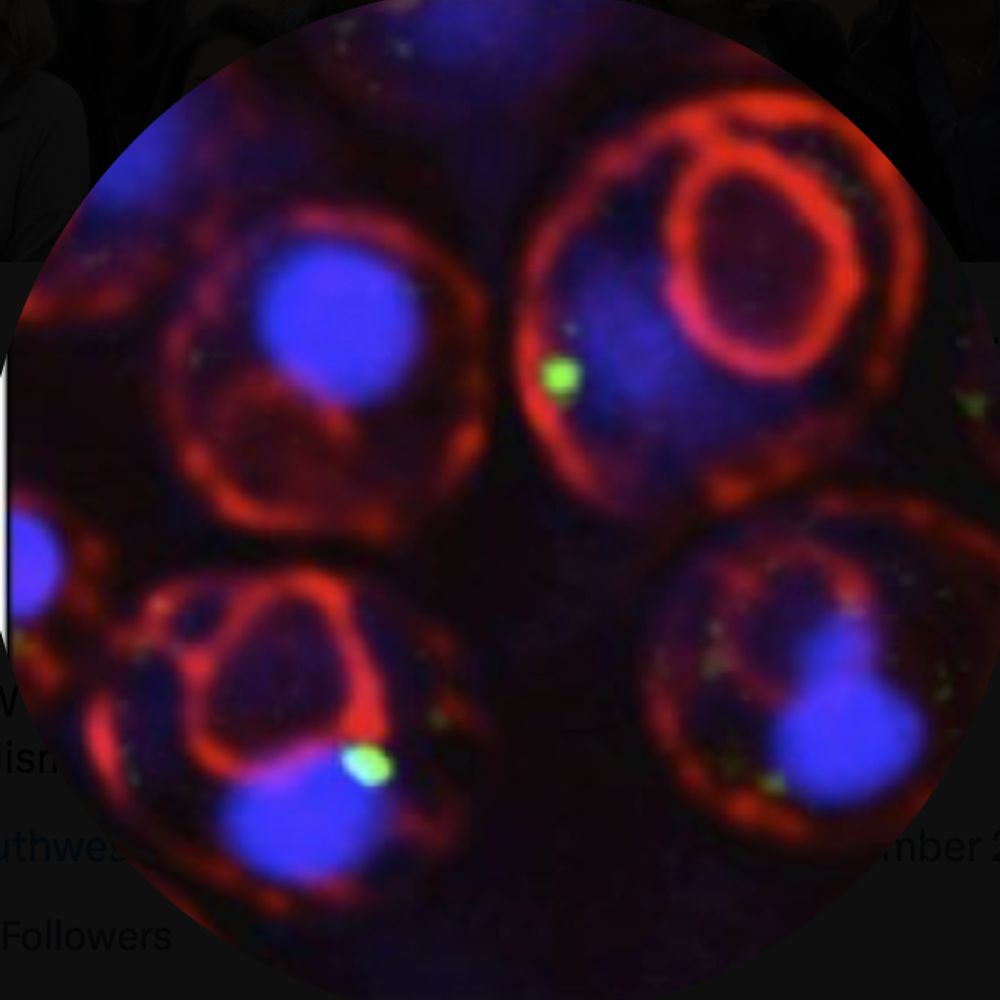
With so many great reviews on LDs already out, do we need another?
Sarah @cohenlaboratory.bsky.social and I were approached by
@natrevmcb.nature.com to do a review on LD heterogeneity and inter-organelle contacts...topics in reviews, but not a focus. Fun project!
www.nature.com/articles/s41...
Sarah @cohenlaboratory.bsky.social and I were approached by
@natrevmcb.nature.com to do a review on LD heterogeneity and inter-organelle contacts...topics in reviews, but not a focus. Fun project!
www.nature.com/articles/s41...

Heterogeneity, dynamics and organelle interactions of lipid droplets - Nature Reviews Molecular Cell Biology
Lipid droplets have key roles in energy storage and lipid metabolism. This Review discusses tools used for assessing lipid droplet heterogeneity, and how their heterogeneous composition and interactio...
www.nature.com
January 16, 2026 at 2:18 PM
With so many great reviews on LDs already out, do we need another?
Sarah @cohenlaboratory.bsky.social and I were approached by
@natrevmcb.nature.com to do a review on LD heterogeneity and inter-organelle contacts...topics in reviews, but not a focus. Fun project!
www.nature.com/articles/s41...
Sarah @cohenlaboratory.bsky.social and I were approached by
@natrevmcb.nature.com to do a review on LD heterogeneity and inter-organelle contacts...topics in reviews, but not a focus. Fun project!
www.nature.com/articles/s41...
Reposted by Craig M. Crews
Lara Bareis, Nils Johnsson and colleagues identify a short linear motif, conserved from yeast to human, that directs proteins to the cell cortex by binding to the Spa2 family of scaffold proteins.
journals.biologists.com/jcs/article/...
#OpenAccess #ReadandPublish
journals.biologists.com/jcs/article/...
#OpenAccess #ReadandPublish

January 15, 2026 at 9:38 AM
Lara Bareis, Nils Johnsson and colleagues identify a short linear motif, conserved from yeast to human, that directs proteins to the cell cortex by binding to the Spa2 family of scaffold proteins.
journals.biologists.com/jcs/article/...
#OpenAccess #ReadandPublish
journals.biologists.com/jcs/article/...
#OpenAccess #ReadandPublish
Reposted by Craig M. Crews
Discovery and development of a new oxazolidinone with reduced toxicity for the treatment of tuberculosis @naturemedicine.bsky.social
www.nature.com/articles/s41...
www.nature.com/articles/s41...

January 15, 2026 at 1:58 AM
Discovery and development of a new oxazolidinone with reduced toxicity for the treatment of tuberculosis @naturemedicine.bsky.social
www.nature.com/articles/s41...
www.nature.com/articles/s41...
Reposted by Craig M. Crews

📝 Online now - the Review "Chemical biology approaches for protein tagging in mammalian cells" from Kaitlyn Toy, Jenna Beyer, and @gburslem.bsky.social.
#SelfLabelingProteinTags #GeneticCodeExpansion #ncAAs #SplitInteins #SpatiotemporalControl
Read it here 👉 authors.elsevier.com/a/1mRdq3S6Gf...
#SelfLabelingProteinTags #GeneticCodeExpansion #ncAAs #SplitInteins #SpatiotemporalControl
Read it here 👉 authors.elsevier.com/a/1mRdq3S6Gf...

January 14, 2026 at 1:54 PM
📝 Online now - the Review "Chemical biology approaches for protein tagging in mammalian cells" from Kaitlyn Toy, Jenna Beyer, and @gburslem.bsky.social.
#SelfLabelingProteinTags #GeneticCodeExpansion #ncAAs #SplitInteins #SpatiotemporalControl
Read it here 👉 authors.elsevier.com/a/1mRdq3S6Gf...
#SelfLabelingProteinTags #GeneticCodeExpansion #ncAAs #SplitInteins #SpatiotemporalControl
Read it here 👉 authors.elsevier.com/a/1mRdq3S6Gf...