


Arnau Sebé-Pedrós
@arnausebe.bsky.social
Group leader CRG; Associate Faculty ToL Sanger Institute.
Genome regulation, chromatin, cell types, and evolution. https://www.sebepedroslab.org
Genome regulation, chromatin, cell types, and evolution. https://www.sebepedroslab.org
Reposted by Arnau Sebé-Pedrós
The day is finally here!! On behalf of all the co-organizers the Comparative Genomics of Unicellular Eukaryotes website is open.
comparativegenomics2026.com
Invited speakers will be added to the website in the coming weeks. Watch this (well, that^) space!
comparativegenomics2026.com
Invited speakers will be added to the website in the coming weeks. Watch this (well, that^) space!
CGUE 2026 – Comparative Genomics of Unicellular Eukaryotes 2026. San Feliu, Spain. 5-10 October
comparativegenomics2026.com
January 30, 2026 at 4:20 PM
The day is finally here!! On behalf of all the co-organizers the Comparative Genomics of Unicellular Eukaryotes website is open.
comparativegenomics2026.com
Invited speakers will be added to the website in the coming weeks. Watch this (well, that^) space!
comparativegenomics2026.com
Invited speakers will be added to the website in the coming weeks. Watch this (well, that^) space!
Reposted by Arnau Sebé-Pedrós
Please share🙏:
Our lab opens 2 PhD positions to investigate fungi's evolution: #Barcelona
Wet lab in Biochemistry/Structural Biology of cryo-tolerant fungi
www.upf.edu/documents/d/...
Computational in Physical Chemistry of cellular processes under extrem environments
www.upf.edu/documents/d/...
Our lab opens 2 PhD positions to investigate fungi's evolution: #Barcelona
Wet lab in Biochemistry/Structural Biology of cryo-tolerant fungi
www.upf.edu/documents/d/...
Computational in Physical Chemistry of cellular processes under extrem environments
www.upf.edu/documents/d/...
www.upf.edu
January 26, 2026 at 11:53 AM
Please share🙏:
Our lab opens 2 PhD positions to investigate fungi's evolution: #Barcelona
Wet lab in Biochemistry/Structural Biology of cryo-tolerant fungi
www.upf.edu/documents/d/...
Computational in Physical Chemistry of cellular processes under extrem environments
www.upf.edu/documents/d/...
Our lab opens 2 PhD positions to investigate fungi's evolution: #Barcelona
Wet lab in Biochemistry/Structural Biology of cryo-tolerant fungi
www.upf.edu/documents/d/...
Computational in Physical Chemistry of cellular processes under extrem environments
www.upf.edu/documents/d/...
Reposted by Arnau Sebé-Pedrós
📣 Please spread: we’re hiring a Lab Manager! It is a critical position in our new lab. As our lab moves to Barcelona and joins the @crg.eu, we’re looking for a Lab Manager to help build the lab and set the lab atmosphere.
🔗 Apply here 👉 recruitment.crg.eu/content/jobs...
🔗 Apply here 👉 recruitment.crg.eu/content/jobs...

January 23, 2026 at 6:41 AM
📣 Please spread: we’re hiring a Lab Manager! It is a critical position in our new lab. As our lab moves to Barcelona and joins the @crg.eu, we’re looking for a Lab Manager to help build the lab and set the lab atmosphere.
🔗 Apply here 👉 recruitment.crg.eu/content/jobs...
🔗 Apply here 👉 recruitment.crg.eu/content/jobs...
Reposted by Arnau Sebé-Pedrós
Need a bit of escapism? Not exactly Lord of the Rings, but in similar vein:
doi.org/10.1038/s443...
doi.org/10.1038/s443...

Epimutations: raw material for evolution? - The EMBO Journal
Epigenetics is fundamental to cell differentiation as it enables cells with identical genomes to adopt distinct fates. Some epigenetic information can also be transmitted between generations, in a pro...
link.springer.com
January 6, 2026 at 6:33 PM
Need a bit of escapism? Not exactly Lord of the Rings, but in similar vein:
doi.org/10.1038/s443...
doi.org/10.1038/s443...
Reposted by Arnau Sebé-Pedrós
TF-MINDI is out! A new method to learn cis-regulatory codes through rich embeddings of TF binding sites. TF-MINDI decomposes motif neighbourhoods, and works downstream of any sequence-to-function deep learning model. We deeply study the enhancer code in human neural development, check out the thread

January 15, 2026 at 12:32 PM
TF-MINDI is out! A new method to learn cis-regulatory codes through rich embeddings of TF binding sites. TF-MINDI decomposes motif neighbourhoods, and works downstream of any sequence-to-function deep learning model. We deeply study the enhancer code in human neural development, check out the thread
Reposted by Arnau Sebé-Pedrós
Thrilled to share that I’ve been awarded a FIS-3 Advanced Grant (ERC-inspired) to study the evolution of neurogenic GRNs.
Recruiting soon: 4 postdocs + 3 PhDs
Press release in Italian — to decolonise scientific language 😄
magazine.unibo.it/it/articoli/...
Email me if interested in joining the lab
Recruiting soon: 4 postdocs + 3 PhDs
Press release in Italian — to decolonise scientific language 😄
magazine.unibo.it/it/articoli/...
Email me if interested in joining the lab

Un viaggio all’origine dei sistemi nervosi
Il nuovo progetto GRNevo, finanziato con un grant FIS-3 Advanced da 1,9 milioni di euro, studierà come si formano i neuroni durante lo sviluppo in specie animali molto distanti tra loro: dal moscerino...
magazine.unibo.it
January 13, 2026 at 11:14 AM
Thrilled to share that I’ve been awarded a FIS-3 Advanced Grant (ERC-inspired) to study the evolution of neurogenic GRNs.
Recruiting soon: 4 postdocs + 3 PhDs
Press release in Italian — to decolonise scientific language 😄
magazine.unibo.it/it/articoli/...
Email me if interested in joining the lab
Recruiting soon: 4 postdocs + 3 PhDs
Press release in Italian — to decolonise scientific language 😄
magazine.unibo.it/it/articoli/...
Email me if interested in joining the lab
Reposted by Arnau Sebé-Pedrós
Our latest: Independent origins of spicules reconcile paleontological and molecular evidence of sponge evolutionary history, led by @meleonora-rossi.bsky.social with help from friends @bristolpalaeo.bsky.social including @anariesgo.bsky.social @evopalaeo.bsky.social Davide Pisani and many others

Independent origins of spicules reconcile paleontological and molecular evidence of sponge evolutionary history
Sponges have a cryptic Ediacaran history because ancestral sponges were soft-bodied and had low fossilization potential.
www.science.org
January 8, 2026 at 7:39 AM
Our latest: Independent origins of spicules reconcile paleontological and molecular evidence of sponge evolutionary history, led by @meleonora-rossi.bsky.social with help from friends @bristolpalaeo.bsky.social including @anariesgo.bsky.social @evopalaeo.bsky.social Davide Pisani and many others
Reposted by Arnau Sebé-Pedrós
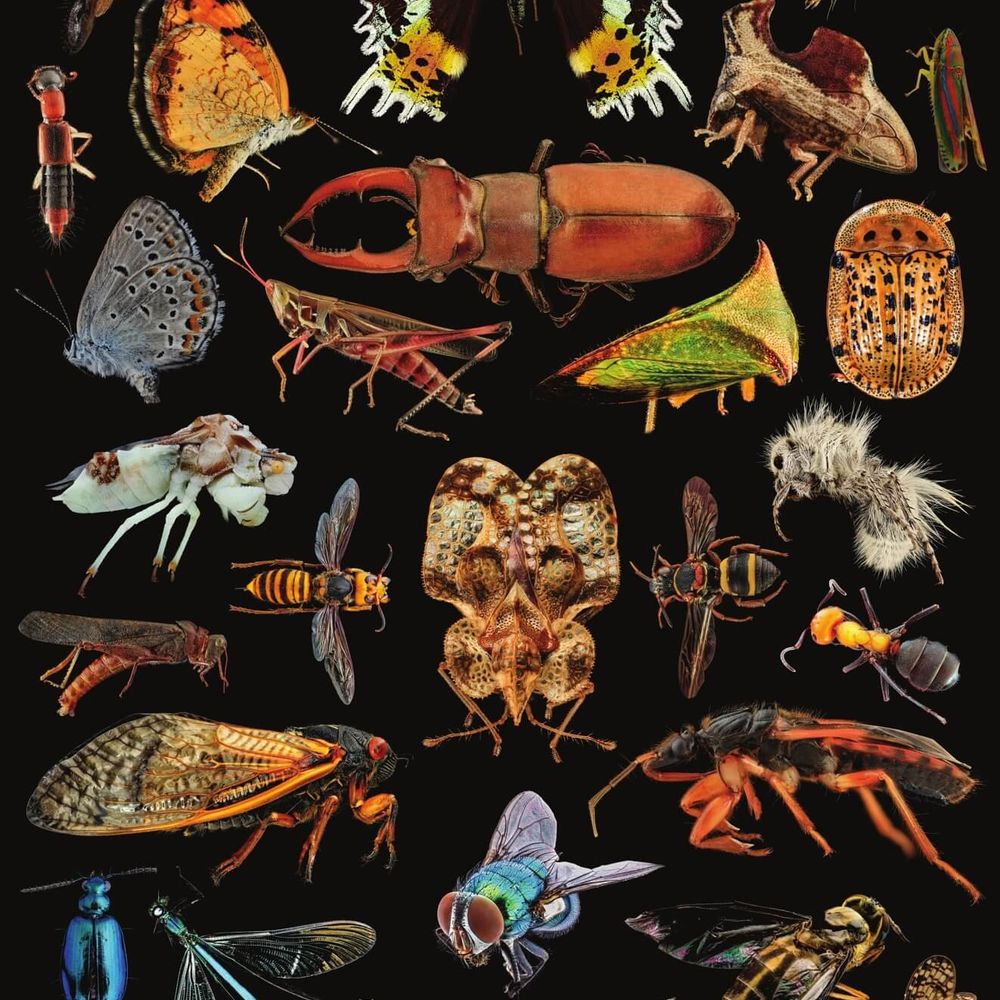
I am very happy (and a bit scared) to present to you what we have been working on over the last 4 years. This manuscript is exactly what I dreamt of when I started the lab and I could not be happier and prouder of the outcome!

Evolutionary dynamics of temporal transcription factor series in the insect optic lobe https://www.biorxiv.org/content/10.64898/2026.01.08.698497v1
January 10, 2026 at 9:43 AM
I am very happy (and a bit scared) to present to you what we have been working on over the last 4 years. This manuscript is exactly what I dreamt of when I started the lab and I could not be happier and prouder of the outcome!
Reposted by Arnau Sebé-Pedrós
Our eLetter github.com/caseywdunn/s... responding to a recent Science paper was just posted. The paper found more genes with consistent support for sponge-sister than ctenophore-sister. We found several technical issues that, when corrected, reverse the conclusions and recover ctenophore-sister.

January 9, 2026 at 11:44 AM
Our eLetter github.com/caseywdunn/s... responding to a recent Science paper was just posted. The paper found more genes with consistent support for sponge-sister than ctenophore-sister. We found several technical issues that, when corrected, reverse the conclusions and recover ctenophore-sister.
Reposted by Arnau Sebé-Pedrós

Our work on the evolution of the regulatory genome of echinoderms is now out in @natecoevo.nature.com. Led by my former PhD Marta Magri, Danila Voronov & Saoirse Foley. Great collaboration of Arnone, Hinman & Maeso labs, started long time ago with our missed José Luis Gomez-Skarmeta: rdcu.be/eXX8l

Deep conservation of cis-regulatory elements and chromatin organization in echinoderms uncover ancestral regulatory features of animal genomes
Nature Ecology & Evolution - Analysis of the 3D chromatin architecture and cis-regulatory elements in a sea urchin and a sea star reveals mechanisms of 3D chromatin organization in echinoderms...
rdcu.be
January 7, 2026 at 7:33 PM
Our work on the evolution of the regulatory genome of echinoderms is now out in @natecoevo.nature.com. Led by my former PhD Marta Magri, Danila Voronov & Saoirse Foley. Great collaboration of Arnone, Hinman & Maeso labs, started long time ago with our missed José Luis Gomez-Skarmeta: rdcu.be/eXX8l
Open Senior Bioinformatician position at
@sangerinstitute.bsky.social
Tree of Life, to work on the Biodiversity Cell Atlas initiative with @marakat.bsky.social and me.
📅 Apply by January 18
🔗 sanger.wd103.myworkdayjobs.com/en-US/Wellco...
Please share with anyone who might be interested!
@sangerinstitute.bsky.social
Tree of Life, to work on the Biodiversity Cell Atlas initiative with @marakat.bsky.social and me.
📅 Apply by January 18
🔗 sanger.wd103.myworkdayjobs.com/en-US/Wellco...
Please share with anyone who might be interested!
Senior Bioinformatician - Biodiversity Cell Atlas
Do you want to help us improve human health and understand life on Earth? Make your mark by shaping the future to enable or deliver life-changing science to solve some of humanity’s greatest challenge...
sanger.wd103.myworkdayjobs.com
January 2, 2026 at 1:12 PM
Open Senior Bioinformatician position at
@sangerinstitute.bsky.social
Tree of Life, to work on the Biodiversity Cell Atlas initiative with @marakat.bsky.social and me.
📅 Apply by January 18
🔗 sanger.wd103.myworkdayjobs.com/en-US/Wellco...
Please share with anyone who might be interested!
@sangerinstitute.bsky.social
Tree of Life, to work on the Biodiversity Cell Atlas initiative with @marakat.bsky.social and me.
📅 Apply by January 18
🔗 sanger.wd103.myworkdayjobs.com/en-US/Wellco...
Please share with anyone who might be interested!
Reposted by Arnau Sebé-Pedrós
Looking to start your lab in generative biology / AI?
Come join us at the @sangerinstitute.bsky.social
Sanger is core-funded so you can generate data at scale to train the next generation of models and understanding. Design/Engineering/Chemistry/Proteins/Pathways!
pls RT
tinyurl.com/GenGenFaculty
Come join us at the @sangerinstitute.bsky.social
Sanger is core-funded so you can generate data at scale to train the next generation of models and understanding. Design/Engineering/Chemistry/Proteins/Pathways!
pls RT
tinyurl.com/GenGenFaculty
Group Leader - Generative Biology and AI
Do you want to help us improve human health and understand life on Earth? Make your mark by shaping the future to enable or deliver life-changing science to solve some of humanity’s greatest challenge...
tinyurl.com
January 1, 2026 at 12:08 PM
Looking to start your lab in generative biology / AI?
Come join us at the @sangerinstitute.bsky.social
Sanger is core-funded so you can generate data at scale to train the next generation of models and understanding. Design/Engineering/Chemistry/Proteins/Pathways!
pls RT
tinyurl.com/GenGenFaculty
Come join us at the @sangerinstitute.bsky.social
Sanger is core-funded so you can generate data at scale to train the next generation of models and understanding. Design/Engineering/Chemistry/Proteins/Pathways!
pls RT
tinyurl.com/GenGenFaculty
Reposted by Arnau Sebé-Pedrós
🚨🚨🚨
We're looking for a research tech to work on alt splicing, pancreatic islets and diabetes. The goal is to set a high-throughput platform to investigate the role of alternative exons in beta cell biology!
Interested in joining our lab at @melisupf.bsky.social? 👇
www.upf.edu/documents/d/...
We're looking for a research tech to work on alt splicing, pancreatic islets and diabetes. The goal is to set a high-throughput platform to investigate the role of alternative exons in beta cell biology!
Interested in joining our lab at @melisupf.bsky.social? 👇
www.upf.edu/documents/d/...
www.upf.edu
December 23, 2025 at 12:36 PM
🚨🚨🚨
We're looking for a research tech to work on alt splicing, pancreatic islets and diabetes. The goal is to set a high-throughput platform to investigate the role of alternative exons in beta cell biology!
Interested in joining our lab at @melisupf.bsky.social? 👇
www.upf.edu/documents/d/...
We're looking for a research tech to work on alt splicing, pancreatic islets and diabetes. The goal is to set a high-throughput platform to investigate the role of alternative exons in beta cell biology!
Interested in joining our lab at @melisupf.bsky.social? 👇
www.upf.edu/documents/d/...
Excited to share the final version of our study on Nematostella cell type regulatory programs. Part of our @erc.europa.eu StG project, this was a challenging 5-year effort extraodinarily led by @aelek.bsky.social and @martaig.bsky.social.
www.nature.com/articles/s41...
www.nature.com/articles/s41...

Decoding cnidarian cell type gene regulation - Nature Ecology & Evolution
This study reconstructs the gene regulatory networks that define cell types in the sea anemone Nematostella vectensis, providing a valuable resource for comparative regulatory genomics and the evoluti...
www.nature.com
December 22, 2025 at 10:12 AM
Excited to share the final version of our study on Nematostella cell type regulatory programs. Part of our @erc.europa.eu StG project, this was a challenging 5-year effort extraodinarily led by @aelek.bsky.social and @martaig.bsky.social.
www.nature.com/articles/s41...
www.nature.com/articles/s41...
Reposted by Arnau Sebé-Pedrós
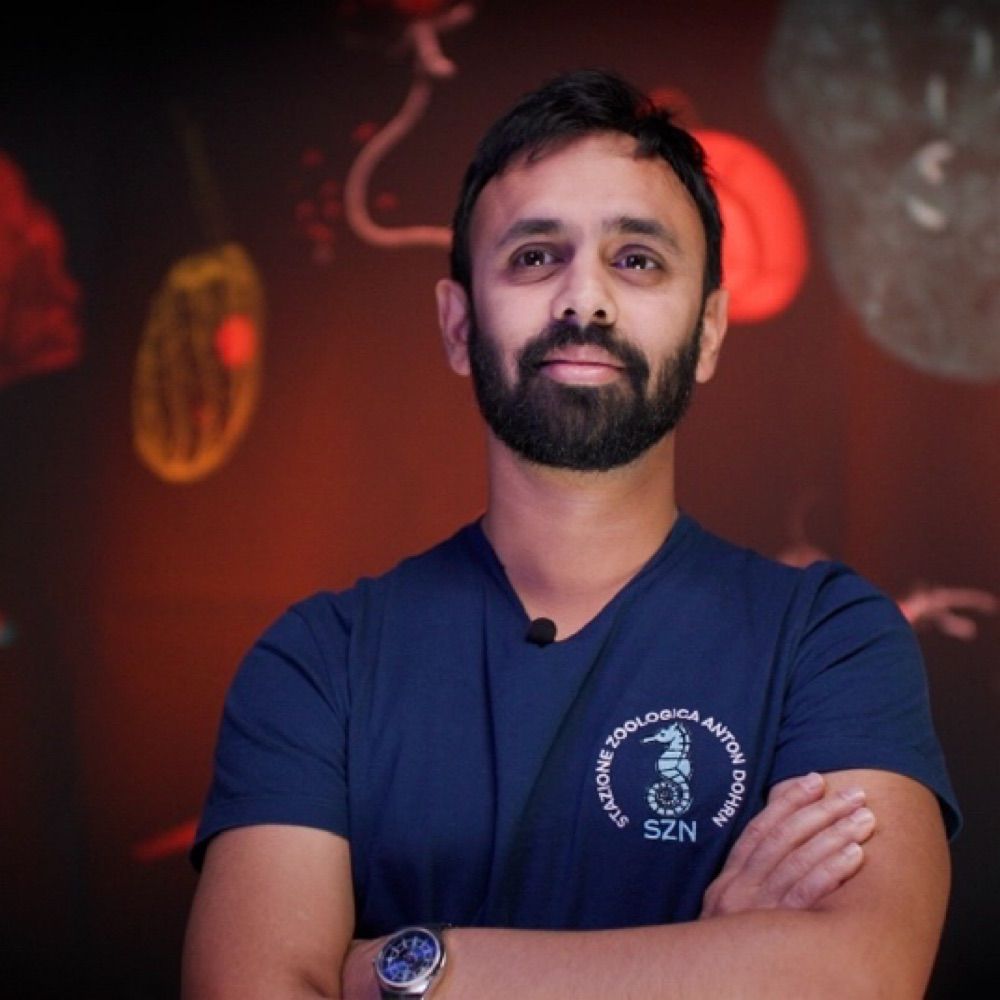
Thanks @jcellsci.bsky.social for this opportunity to contribute to your centenary collection with our take on the state of the field - 10 years after its modern reincarnation 🧪🌍
W/ @alebenoit.bsky.social @eelcotromer.bsky.social @fritzlaylin.bsky.social
journals.biologists.com/jcs/article/...
W/ @alebenoit.bsky.social @eelcotromer.bsky.social @fritzlaylin.bsky.social
journals.biologists.com/jcs/article/...

Evolutionary cell biology comes of age
Summary: This Perspective discusses how the discipline of evolutionary cell biology, by integrating evolutionary theory, comparative physiology and modern molecular approaches, works to understand how...
journals.biologists.com
December 19, 2025 at 4:13 PM
Thanks @jcellsci.bsky.social for this opportunity to contribute to your centenary collection with our take on the state of the field - 10 years after its modern reincarnation 🧪🌍
W/ @alebenoit.bsky.social @eelcotromer.bsky.social @fritzlaylin.bsky.social
journals.biologists.com/jcs/article/...
W/ @alebenoit.bsky.social @eelcotromer.bsky.social @fritzlaylin.bsky.social
journals.biologists.com/jcs/article/...
Reposted by Arnau Sebé-Pedrós

@science.org Multistep genomics on single cells and live cultures in subnanoliter capsules | Science www.science.org/doi/10.1126/...

Multistep genomics on single cells and live cultures in subnanoliter capsules
Single-cell sequencing methods uncover natural and induced variation between cells. Many functional genomic methods, however, require multiple steps that cannot yet be scaled to high throughput, inclu...
www.science.org
December 19, 2025 at 10:32 PM
@science.org Multistep genomics on single cells and live cultures in subnanoliter capsules | Science www.science.org/doi/10.1126/...
Reposted by Arnau Sebé-Pedrós

"How can funders avoid crossing the Szilard point?"
The Szilard point is "the threshold at which the total cost of competing for a grant equals (or surpasses) the value of the available funding."
The Szilard point is "the threshold at which the total cost of competing for a grant equals (or surpasses) the value of the available funding."

Point of no returns: researchers are crossing a threshold in the fight for funding
With so little money to go round, the costs of competing for grants can exceed what the grants are worth. When that happens, nobody wins.
www.nature.com
December 19, 2025 at 7:57 AM
"How can funders avoid crossing the Szilard point?"
The Szilard point is "the threshold at which the total cost of competing for a grant equals (or surpasses) the value of the available funding."
The Szilard point is "the threshold at which the total cost of competing for a grant equals (or surpasses) the value of the available funding."
Reposted by Arnau Sebé-Pedrós
Microbial eukaryotes keep challenging assumptions about eukaryotic cell and genome biology.
Our upcoming workshop explores the frontier of protist genomics and how it shapes cell biology, ecology and evolution.
Please save the date! Talks, posters and ECR events
Websites and details coming soon
Our upcoming workshop explores the frontier of protist genomics and how it shapes cell biology, ecology and evolution.
Please save the date! Talks, posters and ECR events
Websites and details coming soon

December 13, 2025 at 10:19 AM
Microbial eukaryotes keep challenging assumptions about eukaryotic cell and genome biology.
Our upcoming workshop explores the frontier of protist genomics and how it shapes cell biology, ecology and evolution.
Please save the date! Talks, posters and ECR events
Websites and details coming soon
Our upcoming workshop explores the frontier of protist genomics and how it shapes cell biology, ecology and evolution.
Please save the date! Talks, posters and ECR events
Websites and details coming soon
Reposted by Arnau Sebé-Pedrós

It is amazing that @dudinlab.bsky.social beautiful #ExM composition has been selected to highlight our #6mA work for the cover of @natgenet.nature.com. #Protists (and ichthyosporeans in particular) in the cover of NG must be quite unique!

December 11, 2025 at 11:59 AM
It is amazing that @dudinlab.bsky.social beautiful #ExM composition has been selected to highlight our #6mA work for the cover of @natgenet.nature.com. #Protists (and ichthyosporeans in particular) in the cover of NG must be quite unique!
Reposted by Arnau Sebé-Pedrós
Everybody ready for #EMBOevoChromo25 ?
I, for one, cannot wait. It's like scientific Christmas come early :)
I, for one, cannot wait. It's like scientific Christmas come early :)
December 4, 2025 at 1:54 PM
Everybody ready for #EMBOevoChromo25 ?
I, for one, cannot wait. It's like scientific Christmas come early :)
I, for one, cannot wait. It's like scientific Christmas come early :)
Reposted by Arnau Sebé-Pedrós
please share this postdoc job alert! come join the budding Biodiversity Cell Atlas initiative as a postdoc or senior postdoc at @sangerinstitute.bsky.social working closely with @arnausebe.bsky.social and me to make progress on what we cover in this paper www.nature.com/articles/s41...

The Biodiversity Cell Atlas: mapping the tree of life at cellular resolution - Nature
The Biodiversity Cell Atlas aims to create comprehensive single-cell molecular atlases across the eukaryotic tree of life, which will be phylogenetically informed, rely on high-quality genomes and use...
www.nature.com
December 3, 2025 at 1:29 PM
please share this postdoc job alert! come join the budding Biodiversity Cell Atlas initiative as a postdoc or senior postdoc at @sangerinstitute.bsky.social working closely with @arnausebe.bsky.social and me to make progress on what we cover in this paper www.nature.com/articles/s41...
Open postdoc position at @sangerinstitute.bsky.social Tree of Life to contribute to the Biodiversity Cell Atlas, with a focus on spatial transcriptomics.
Apply by January 4
sanger.wd103.myworkdayjobs.com/en-GB/Wellco...
Please share with anyone who might be interested!
Apply by January 4
sanger.wd103.myworkdayjobs.com/en-GB/Wellco...
Please share with anyone who might be interested!
Postdoctoral Fellow - Biodiversity Cell Atlas
Do you want to help us improve human health and understand life on Earth? Make your mark by shaping the future to enable or deliver life-changing science to solve some of humanity’s greatest challenge...
sanger.wd103.myworkdayjobs.com
December 3, 2025 at 12:27 PM
Open postdoc position at @sangerinstitute.bsky.social Tree of Life to contribute to the Biodiversity Cell Atlas, with a focus on spatial transcriptomics.
Apply by January 4
sanger.wd103.myworkdayjobs.com/en-GB/Wellco...
Please share with anyone who might be interested!
Apply by January 4
sanger.wd103.myworkdayjobs.com/en-GB/Wellco...
Please share with anyone who might be interested!
Reposted by Arnau Sebé-Pedrós
Wow! Radler et al. doi.org/10.1101/2025... These are #asgardarchaea with what? Pseudopodia? Should we call them archaepodia analogously to archaellum? Mindblowing anyway!
December 3, 2025 at 8:08 AM
Wow! Radler et al. doi.org/10.1101/2025... These are #asgardarchaea with what? Pseudopodia? Should we call them archaepodia analogously to archaellum? Mindblowing anyway!
Reposted by Arnau Sebé-Pedrós
I am very pleased to see our work, in which we describe a mutational hotspot at transcription start sites in the human germline, out:
www.nature.com/articles/s41...
Great work from @castellanoed.bsky.social, @vseplyarskiy.bsky.social, Miguel Cortés Guzmán and Clàudia Serrano Colomé!
www.nature.com/articles/s41...
Great work from @castellanoed.bsky.social, @vseplyarskiy.bsky.social, Miguel Cortés Guzmán and Clàudia Serrano Colomé!

Transcription start sites experience a high influx of heritable variants fueled by early development - Nature Communications
The impact of transcription on germline mutagenesis remains poorly understood. Here, the authors identify a mutational hotspot at transcription start sites in the human germline that is significantly ...
www.nature.com
December 1, 2025 at 1:35 PM
I am very pleased to see our work, in which we describe a mutational hotspot at transcription start sites in the human germline, out:
www.nature.com/articles/s41...
Great work from @castellanoed.bsky.social, @vseplyarskiy.bsky.social, Miguel Cortés Guzmán and Clàudia Serrano Colomé!
www.nature.com/articles/s41...
Great work from @castellanoed.bsky.social, @vseplyarskiy.bsky.social, Miguel Cortés Guzmán and Clàudia Serrano Colomé!
Reposted by Arnau Sebé-Pedrós

Excited to release the Herculean efforts of @scottchisholm.bsky.social &Co. defining the subcellular #hyperLOPIT spatial proteome of #Plasmodium schizonts. Proteomes defining 24 subcellular niches, including exported compartments in the blood cell, are identified.
www.biorxiv.org/content/10.1...
www.biorxiv.org/content/10.1...

November 28, 2025 at 8:30 AM
Excited to release the Herculean efforts of @scottchisholm.bsky.social &Co. defining the subcellular #hyperLOPIT spatial proteome of #Plasmodium schizonts. Proteomes defining 24 subcellular niches, including exported compartments in the blood cell, are identified.
www.biorxiv.org/content/10.1...
www.biorxiv.org/content/10.1...