



Timothy Tan
@timothyjtan.bsky.social
Research fellow at the Cancer Science Institute of Singapore | Cancer immunology focusing on antibodies and B cells in cancer | https://timothyjtan.github.io
Reposted by Timothy Tan

If the immune system is an army...
...
would you rather rely on one “super warrior” — or on a diverse team of fighters, even if none of them is the single strongest?
I’d go with the team.
Why? Check out our new study, just published in Science Immunology: www.science.org/doi/10.1126/...
...
would you rather rely on one “super warrior” — or on a diverse team of fighters, even if none of them is the single strongest?
I’d go with the team.
Why? Check out our new study, just published in Science Immunology: www.science.org/doi/10.1126/...

October 3, 2025 at 6:07 PM
If the immune system is an army...
...
would you rather rely on one “super warrior” — or on a diverse team of fighters, even if none of them is the single strongest?
I’d go with the team.
Why? Check out our new study, just published in Science Immunology: www.science.org/doi/10.1126/...
...
would you rather rely on one “super warrior” — or on a diverse team of fighters, even if none of them is the single strongest?
I’d go with the team.
Why? Check out our new study, just published in Science Immunology: www.science.org/doi/10.1126/...
Reposted by Timothy Tan

Di-Gembodies (dimerized nanobodies) for improved and duplexed CryoEM of small and challenging targets!
A collaboration of @cmd.ox.ac.uk, STRUBI, @diamondlightsource.bsky.social, @rosfrankinst.bsky.social
Out now in Nature Chemical Biology @natchembio.nature.com
www.nature.com/articles/s41...
A collaboration of @cmd.ox.ac.uk, STRUBI, @diamondlightsource.bsky.social, @rosfrankinst.bsky.social
Out now in Nature Chemical Biology @natchembio.nature.com
www.nature.com/articles/s41...

Covalently constrained ‘Di-Gembodies’ enable parallel structure solutions by cryo-EM - Nature Chemical Biology
Disulfide-based dimerization of modified identical and heterologous nanobody scaffolds enables higher-order assembly for high-resolution cryo-electron microscopy structure determination that is widely...
www.nature.com
August 15, 2025 at 10:00 AM
Di-Gembodies (dimerized nanobodies) for improved and duplexed CryoEM of small and challenging targets!
A collaboration of @cmd.ox.ac.uk, STRUBI, @diamondlightsource.bsky.social, @rosfrankinst.bsky.social
Out now in Nature Chemical Biology @natchembio.nature.com
www.nature.com/articles/s41...
A collaboration of @cmd.ox.ac.uk, STRUBI, @diamondlightsource.bsky.social, @rosfrankinst.bsky.social
Out now in Nature Chemical Biology @natchembio.nature.com
www.nature.com/articles/s41...
Reposted by Timothy Tan
🎲 Our paper on the genetics, energetics, and allostery in proteins with randomized cores and surfaces is out today @science.org!
🧬 By charting a protein’s sequence universe, we could rationalize which versions were kept through evolution – and why many stable ones were not.
🧬 By charting a protein’s sequence universe, we could rationalize which versions were kept through evolution – and why many stable ones were not.
July 25, 2025 at 6:27 AM
🎲 Our paper on the genetics, energetics, and allostery in proteins with randomized cores and surfaces is out today @science.org!
🧬 By charting a protein’s sequence universe, we could rationalize which versions were kept through evolution – and why many stable ones were not.
🧬 By charting a protein’s sequence universe, we could rationalize which versions were kept through evolution – and why many stable ones were not.
Reposted by Timothy Tan

💥 Couldn’t be more stoked our study identifying a completely new CMV virion surface complex involved in cell entry is now published at Nature Micro 🦠 H/T @paramyxologist.bsky.social + Lauren Henderson, Erica Ollmann Saphire Chris Benedict @natmicrobiol.nature.com www.nature.com/articles/s41...

The GATE glycoprotein complex enhances human cytomegalovirus entry in endothelial cells - Nature Microbiology
The gH-associated tropism and entry (GATE) complex consists of glycoprotein H, UL116 and UL141. This complex is abundant on human cytomegalovirus virions and enables entry into human endothelial cells...
www.nature.com
June 30, 2025 at 4:15 PM
💥 Couldn’t be more stoked our study identifying a completely new CMV virion surface complex involved in cell entry is now published at Nature Micro 🦠 H/T @paramyxologist.bsky.social + Lauren Henderson, Erica Ollmann Saphire Chris Benedict @natmicrobiol.nature.com www.nature.com/articles/s41...
Reposted by Timothy Tan
Wanted to highlight our latest preprint--a huge effort by multiple people and labs, but led primarily by @wsdewitt.github.io, Tatsuya Araki, and Ashni Vora, in a very close wet-dry collaboration with @matsen.bsky.social’s lab at the Hutch
www.biorxiv.org/content/10.1...
www.biorxiv.org/content/10.1...

Replaying germinal center evolution on a quantified affinity landscape
Darwinian evolution of immunoglobulin genes within germinal centers (GC) underlies the progressive increase in antibody affinity following antigen exposure. Whereas the mechanics of how competition be...
www.biorxiv.org
June 5, 2025 at 2:28 PM
Wanted to highlight our latest preprint--a huge effort by multiple people and labs, but led primarily by @wsdewitt.github.io, Tatsuya Araki, and Ashni Vora, in a very close wet-dry collaboration with @matsen.bsky.social’s lab at the Hutch
www.biorxiv.org/content/10.1...
www.biorxiv.org/content/10.1...
Reposted by Timothy Tan

Did you know that human immunoglobulin constant genes are crazy diverse? It's got me thinking...Proud of Uddalok Jana! And grateful for collabs @guryaari.bsky.social @williamlees.bsky.social @ayeletperes.bsky.social @e-engelbrecht1.bsky.social @yscientist.bsky.social
www.biorxiv.org/content/10.1...
www.biorxiv.org/content/10.1...

The human immunoglobulin heavy chain constant gene locus is enriched for large complex structural variants and coding polymorphisms that vary in frequency among human populations
The immunoglobulin heavy chain constant (IGHC) domain of antibodies (Ab) is responsible for a variety of effector functions critical to Ab mediated immunity. In human, this domain is encoded by genes ...
www.biorxiv.org
February 13, 2025 at 1:18 PM
Did you know that human immunoglobulin constant genes are crazy diverse? It's got me thinking...Proud of Uddalok Jana! And grateful for collabs @guryaari.bsky.social @williamlees.bsky.social @ayeletperes.bsky.social @e-engelbrecht1.bsky.social @yscientist.bsky.social
www.biorxiv.org/content/10.1...
www.biorxiv.org/content/10.1...
Reposted by Timothy Tan

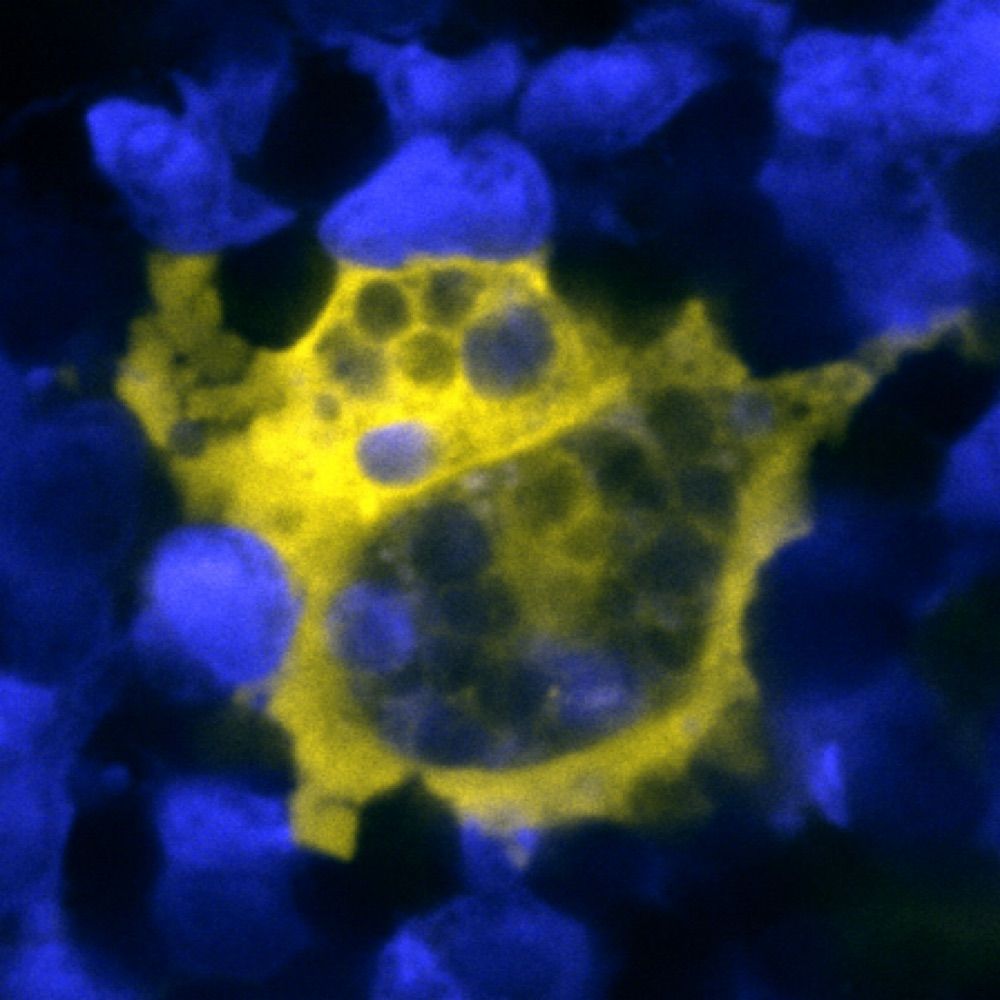
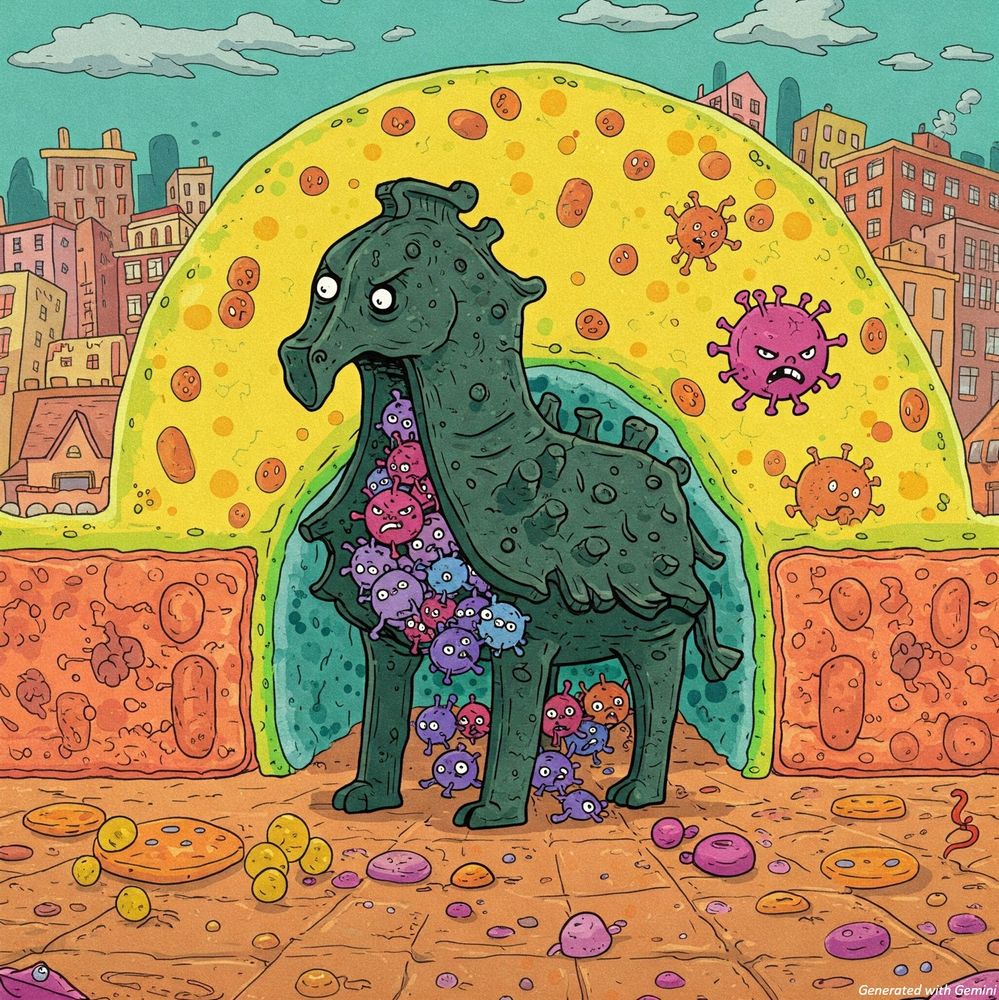
⚠️ Discovery of a new mode of viral transmission:
Deltaviruses spread through a viral Trojan Horse !
These viral satellites that do not encode their own glycoproteins, are in fact physically encapsulated within their helper virus particles!
www.biorxiv.org/content/10.1...
A thread 1/14
Deltaviruses spread through a viral Trojan Horse !
These viral satellites that do not encode their own glycoproteins, are in fact physically encapsulated within their helper virus particles!
www.biorxiv.org/content/10.1...
A thread 1/14
May 10, 2025 at 8:12 AM
⚠️ Discovery of a new mode of viral transmission:
Deltaviruses spread through a viral Trojan Horse !
These viral satellites that do not encode their own glycoproteins, are in fact physically encapsulated within their helper virus particles!
www.biorxiv.org/content/10.1...
A thread 1/14
Deltaviruses spread through a viral Trojan Horse !
These viral satellites that do not encode their own glycoproteins, are in fact physically encapsulated within their helper virus particles!
www.biorxiv.org/content/10.1...
A thread 1/14
Reposted by Timothy Tan

Excited to share @joelrc.bsky.social 's new paper examining the factors underlying cell-to-cell heterogeneity in interferon induction during flu infection:
www.biorxiv.org/content/10.1...
www.biorxiv.org/content/10.1...
Intrinsic OASL expression licenses interferon induction during influenza A virus infection
Effective control of viral infection requires rapid induction of the innate immune response, especially the type I and type III interferon (IFN) systems. Despite the critical role of IFN induction in ...
www.biorxiv.org
March 18, 2025 at 6:47 PM
Excited to share @joelrc.bsky.social 's new paper examining the factors underlying cell-to-cell heterogeneity in interferon induction during flu infection:
www.biorxiv.org/content/10.1...
www.biorxiv.org/content/10.1...
Reposted by Timothy Tan

1/46 Hey folks, we have a new paper out on the MuLTEE. Strap in and I’ll tell you the story of how this “little paper on polyploidy” turned into the most data rich paper our lab has produced, largely thanks to the leadership and work ethic of @kaitong25.bsky.social.
www.nature.com/articles/s41...
www.nature.com/articles/s41...
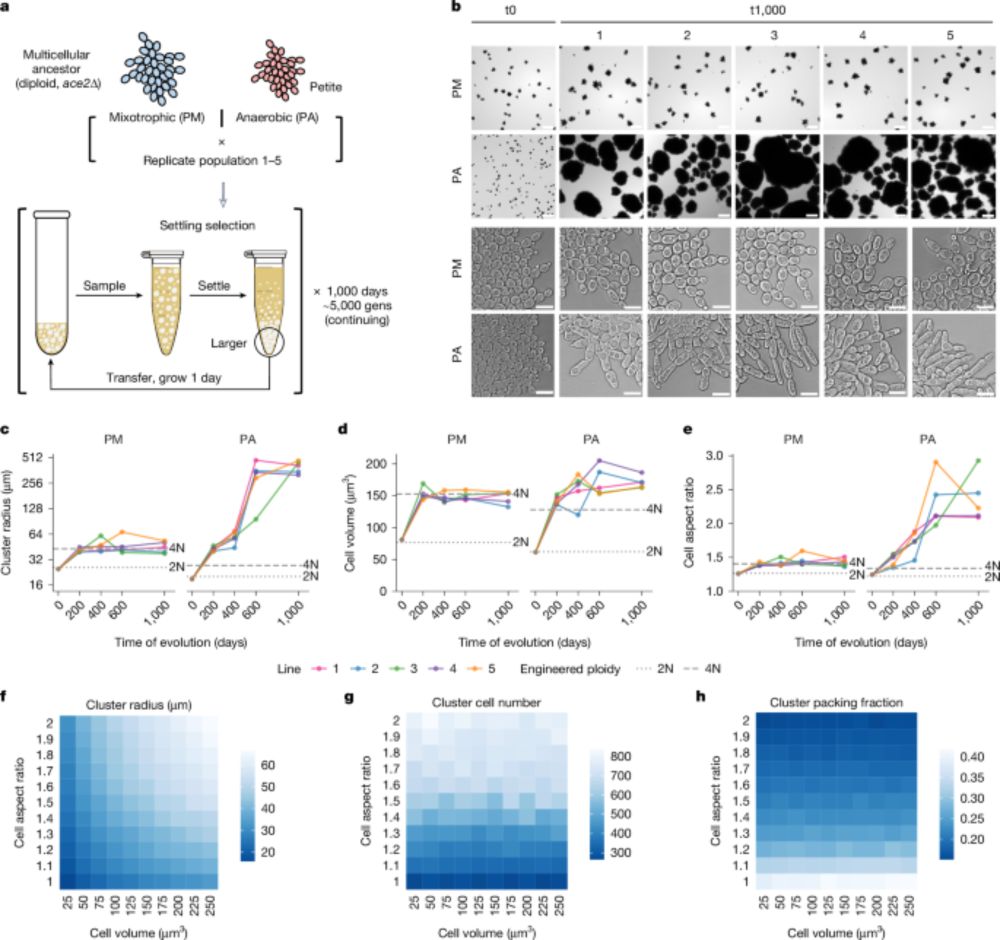
Genome duplication in a long-term multicellularity evolution experiment - Nature
In the Multicellularity Long Term Evolution Experiment, diploid yeast evolve to be tetraploid under selection for larger multicellular size, revealing how whole-genome duplication can arise due to its...
www.nature.com
March 5, 2025 at 11:00 PM
1/46 Hey folks, we have a new paper out on the MuLTEE. Strap in and I’ll tell you the story of how this “little paper on polyploidy” turned into the most data rich paper our lab has produced, largely thanks to the leadership and work ethic of @kaitong25.bsky.social.
www.nature.com/articles/s41...
www.nature.com/articles/s41...
Reposted by Timothy Tan
AIR-SPACE: integrative high-res spatial transcriptomics paired w/ high-fidelity long-read sequencing of TCR/BCR reveals adaptive antiviral immune response in lymph nodes
doi.org/10.1101/2025...
doi.org/10.1101/2025...

February 7, 2025 at 2:29 AM
AIR-SPACE: integrative high-res spatial transcriptomics paired w/ high-fidelity long-read sequencing of TCR/BCR reveals adaptive antiviral immune response in lymph nodes
doi.org/10.1101/2025...
doi.org/10.1101/2025...
Reposted by Timothy Tan

We have a new preprint on the receptor specificity of 2.3.4.4 H5 viruses. We introduced the hallmark Q226L mutation in several antigenic backgrounds and observed different phenotypes. #H5N1 #glycotime www.biorxiv.org/content/10.1...

The Q226L mutation can convert a highly pathogenic H5 2.3.4.4e virus to bind human-type receptors
H5Nx viruses continue to wreak havoc in avian and mammalian species worldwide. The virus distinguishes itself by the ability to replicate to high titers and transmit efficiently in a wide variety of h...
www.biorxiv.org
January 13, 2025 at 10:46 AM
We have a new preprint on the receptor specificity of 2.3.4.4 H5 viruses. We introduced the hallmark Q226L mutation in several antigenic backgrounds and observed different phenotypes. #H5N1 #glycotime www.biorxiv.org/content/10.1...
Reposted by Timothy Tan

Out today in @naturegenet.bsky.social -- PERFF-seq! With @tsionabay.bsky.social , @ronanchaligne.bsky.social, Bob Stickels, Meril Takizawa, + Ansu Satpathy, we describe this new assay to study rare populations with programmable nucleic acid cytometry. 1/n
www.nature.com/articles/s41...
www.nature.com/articles/s41...
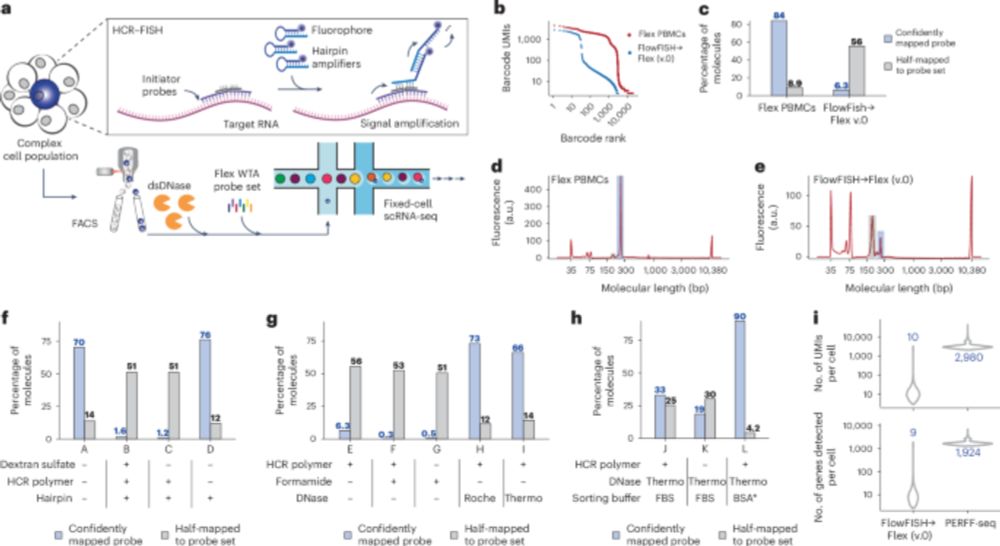
Transcript-specific enrichment enables profiling of rare cell states via single-cell RNA sequencing - Nature Genetics
Programmable Enrichment via RNA FlowFISH by sequencing (PERFF-seq) isolates rare cells based on RNA marker transcripts for single-cell RNA sequencing profiling of complex tissues, with applicability t...
www.nature.com
January 8, 2025 at 1:30 PM
Out today in @naturegenet.bsky.social -- PERFF-seq! With @tsionabay.bsky.social , @ronanchaligne.bsky.social, Bob Stickels, Meril Takizawa, + Ansu Satpathy, we describe this new assay to study rare populations with programmable nucleic acid cytometry. 1/n
www.nature.com/articles/s41...
www.nature.com/articles/s41...
Reposted by Timothy Tan

Super excited to finally share PANCS-Binders: our group's decade-long quest to accelerate protein binder discovery.
TLDR: PANCS-binders is fast (2 days), cheap (pennies), has extremely high fidelity (low false positive and negatives), and high-throughput.
1/n
TLDR: PANCS-binders is fast (2 days), cheap (pennies), has extremely high fidelity (low false positive and negatives), and high-throughput.
1/n
While everyone esle has been concentrating on generative binder design, this group has demonstrated screening libraries in vivo! www.biorxiv.org/content/10.1...
#biosky
#biosky

High-throughput protein binder discovery by rapid in vivo selection
Proteins that selectively bind to a target of interest are foundational components of research pipelines, diagnostics, and therapeutics. Current immunization-based, display-based, and computational ap...
www.biorxiv.org
January 7, 2025 at 8:50 PM
Super excited to finally share PANCS-Binders: our group's decade-long quest to accelerate protein binder discovery.
TLDR: PANCS-binders is fast (2 days), cheap (pennies), has extremely high fidelity (low false positive and negatives), and high-throughput.
1/n
TLDR: PANCS-binders is fast (2 days), cheap (pennies), has extremely high fidelity (low false positive and negatives), and high-throughput.
1/n
Reposted by Timothy Tan

As a first #ImmunoSky post, I’m excited to share our latest pre-print, by the fantastic Mitchell Zheng!
www.biorxiv.org/content/10.1...
Our group is interested in virus-specific CD4 T cells, which means we often use in vitro stimulations (like the AIM assay) to find our cells of interest. 🧵 1/9
www.biorxiv.org/content/10.1...
Our group is interested in virus-specific CD4 T cells, which means we often use in vitro stimulations (like the AIM assay) to find our cells of interest. 🧵 1/9
www.biorxiv.org
December 20, 2024 at 3:39 AM
As a first #ImmunoSky post, I’m excited to share our latest pre-print, by the fantastic Mitchell Zheng!
www.biorxiv.org/content/10.1...
Our group is interested in virus-specific CD4 T cells, which means we often use in vitro stimulations (like the AIM assay) to find our cells of interest. 🧵 1/9
www.biorxiv.org/content/10.1...
Our group is interested in virus-specific CD4 T cells, which means we often use in vitro stimulations (like the AIM assay) to find our cells of interest. 🧵 1/9
Reposted by Timothy Tan

Happy New Year! (and first post here 😀) Excited to share the final version of our work where we combine deep mutational scanning, cryo-EM, and molecular dynamics to further resolve the mechanisms of pH sensing in GPCRs.
🧵(1/n)
www.cell.com/cell/fulltex...
🧵(1/n)
www.cell.com/cell/fulltex...
January 6, 2025 at 7:57 PM
Happy New Year! (and first post here 😀) Excited to share the final version of our work where we combine deep mutational scanning, cryo-EM, and molecular dynamics to further resolve the mechanisms of pH sensing in GPCRs.
🧵(1/n)
www.cell.com/cell/fulltex...
🧵(1/n)
www.cell.com/cell/fulltex...
Reposted by Timothy Tan
Vaccination with different group 2 influenza subtypes alters epitope targeting and breadth of hemagglutinin stem–specific human B cells www.science.org/doi/10.1126/...

Vaccination with different group 2 influenza subtypes alters epitope targeting and breadth of hemagglutinin stem–specific human B cells
Vaccination with different group 2 influenza subtypes alters the balance of the human B cell response toward two supersites on the influenza stem.
www.science.org
January 1, 2025 at 7:33 PM
Vaccination with different group 2 influenza subtypes alters epitope targeting and breadth of hemagglutinin stem–specific human B cells www.science.org/doi/10.1126/...
Reposted by Timothy Tan

Pleased to share our work looking at the evolutionary relationship between mutability, somatic hypermutation and codon optimality in human immunoglobulin genes and V(D)J repertoires. Such a fun project – check it out, online now at Molecular Cell! @cellpress.bsky.social
www.cell.com/molecular-ce...
www.cell.com/molecular-ce...
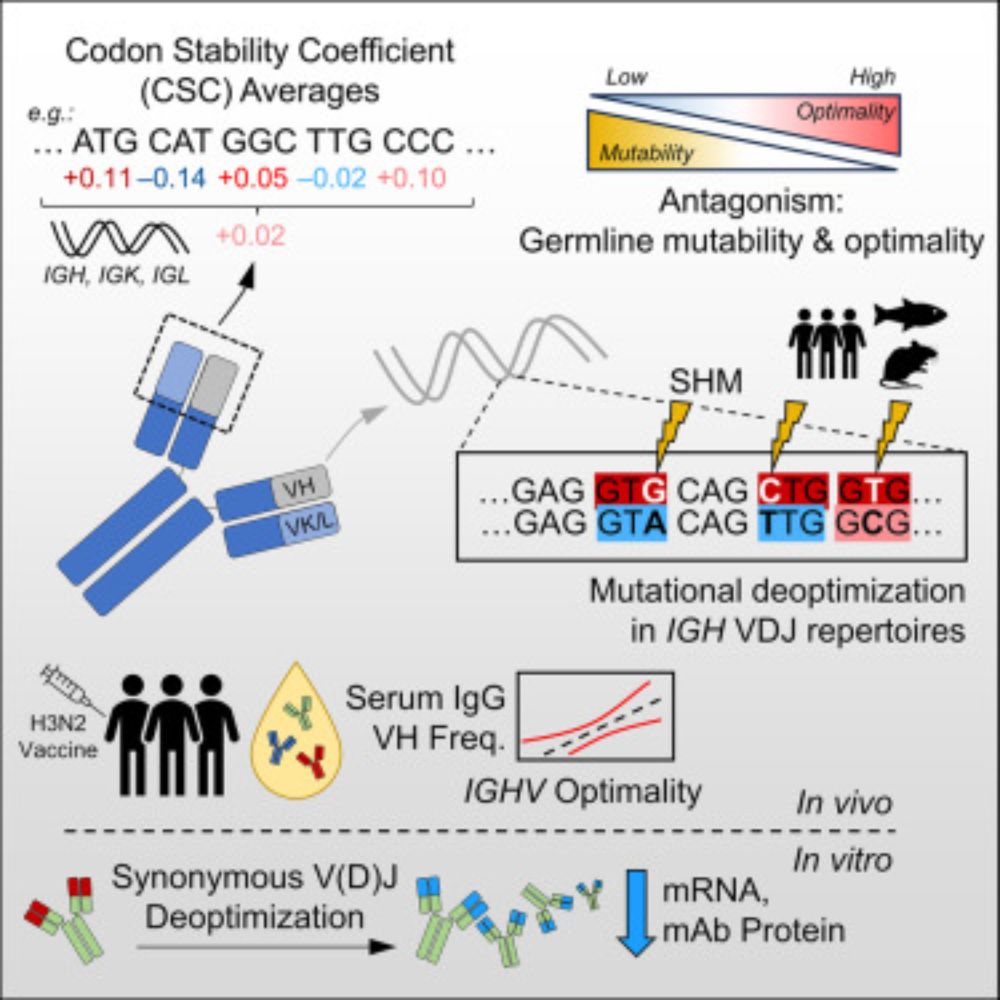
Mutability and hypermutation antagonize immunoglobulin codon optimality
McGrath et al. investigate the evolutionary relationship between V(D)J mutability, somatic hypermutation, and codon optimality within immunoglobulin repertoires in order to gain a better understanding of how diversification mechanisms might impact antibody expression efficiency.
www.cell.com
December 30, 2024 at 3:35 PM
Pleased to share our work looking at the evolutionary relationship between mutability, somatic hypermutation and codon optimality in human immunoglobulin genes and V(D)J repertoires. Such a fun project – check it out, online now at Molecular Cell! @cellpress.bsky.social
www.cell.com/molecular-ce...
www.cell.com/molecular-ce...
Reposted by Timothy Tan

Our lab's latest paper published in PLoS Pathogens! Looking at functional diversity of antiviral IFITMs in horseshoe bats doi.org/10.1371/jour...
Led by PhD student @nellymak.bsky.social in collaboration with @batresearch.bsky.social
@uoe-eid.bsky.social @edinuni-irr.bsky.social #Immunosky #Virosky
Led by PhD student @nellymak.bsky.social in collaboration with @batresearch.bsky.social
@uoe-eid.bsky.social @edinuni-irr.bsky.social #Immunosky #Virosky
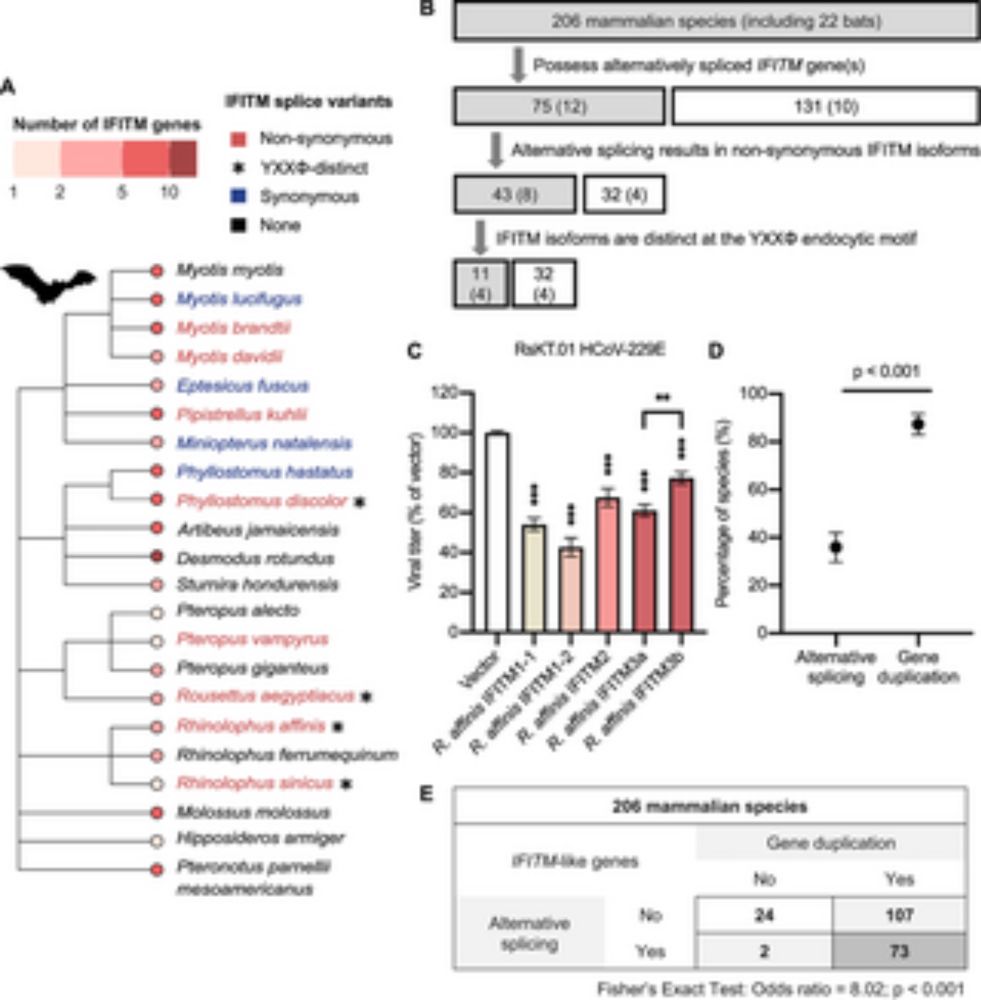
Alternative splicing expands the antiviral IFITM repertoire in Chinese rufous horseshoe bats
Author summary Zoonotic transmission occurs when viruses ‘jump’ from animals into human. This may lead to viral outbreaks such as the COVID-19 pandemic, posing a significant threat to public health. B...
doi.org
December 28, 2024 at 11:28 PM
Our lab's latest paper published in PLoS Pathogens! Looking at functional diversity of antiviral IFITMs in horseshoe bats doi.org/10.1371/jour...
Led by PhD student @nellymak.bsky.social in collaboration with @batresearch.bsky.social
@uoe-eid.bsky.social @edinuni-irr.bsky.social #Immunosky #Virosky
Led by PhD student @nellymak.bsky.social in collaboration with @batresearch.bsky.social
@uoe-eid.bsky.social @edinuni-irr.bsky.social #Immunosky #Virosky
Reposted by Timothy Tan

1/ We are excited to share our new paper in @jexpmed.bsky.social about humans with autosomal dominant IFNAR1 deficiency (doi.org/10.1084/jem....).
A common form of dominant human IFNAR1 deficiency impairs IFN-α and -ω but not IFN-β-dependent immunity | Journal of Experimental Medicine | Rockefeller University Press
This study identifies 11 IFNAR1 alleles impairing IFN-α/ω responses but sparing IFN-β, including an allele common in Southern China (P335del). Heterozygous
doi.org
December 17, 2024 at 3:11 PM
1/ We are excited to share our new paper in @jexpmed.bsky.social about humans with autosomal dominant IFNAR1 deficiency (doi.org/10.1084/jem....).
Reposted by Timothy Tan

Just published - pandemic influenza PB1 genes of avian origin reduce polymerase activity and virulence in low-pathogenic avian influenza viruses. Insights into host adaptation and zoonotic risk.
www.science.org/doi/abs/10.1...
www.science.org/doi/abs/10.1...

Effect of pandemic influenza A virus PB1 genes of avian origin on viral RNA polymerase activity and pathogenicity
Past influenza pandemics contained polymerase genes from avian influenza viruses, affecting viral replication and pathogenicity.
www.science.org
December 14, 2024 at 5:28 PM
Just published - pandemic influenza PB1 genes of avian origin reduce polymerase activity and virulence in low-pathogenic avian influenza viruses. Insights into host adaptation and zoonotic risk.
www.science.org/doi/abs/10.1...
www.science.org/doi/abs/10.1...
Reposted by Timothy Tan
This week in #ScienceImmunology: Germinal Center B cells require asparagine (Asn) #metabolism for their function. GC B cells can acquire exogenous Asn from their local environment, but when Asn is limited, they utilise the enzyme asparginine synthetase. @ajclarke.bsky.social @yfy1.bsky.social
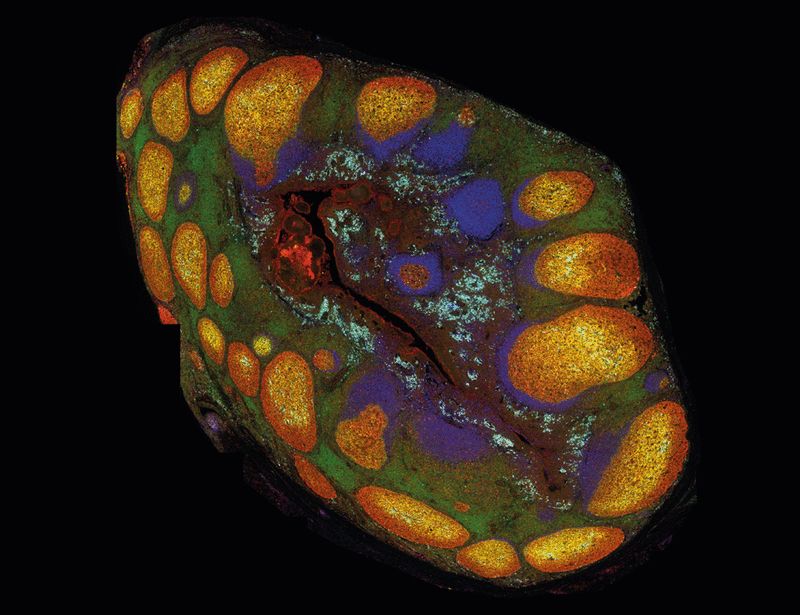
Asparagine availability controls germinal center B cell homeostasis
Asparagine metabolism is a critical regulator of germinal center B cell function.
www.science.org
December 14, 2024 at 1:28 PM
This week in #ScienceImmunology: Germinal Center B cells require asparagine (Asn) #metabolism for their function. GC B cells can acquire exogenous Asn from their local environment, but when Asn is limited, they utilise the enzyme asparginine synthetase. @ajclarke.bsky.social @yfy1.bsky.social
Reposted by Timothy Tan
@joelrc.bsky.social 's paper on differences between the seasonal H1N1 and H3N2 lineages in their relative capacity to antagonize IFN induction and signaling at the single cell level is out now in PLOS Pathogens:
journals.plos.org/plospathogen...
journals.plos.org/plospathogen...
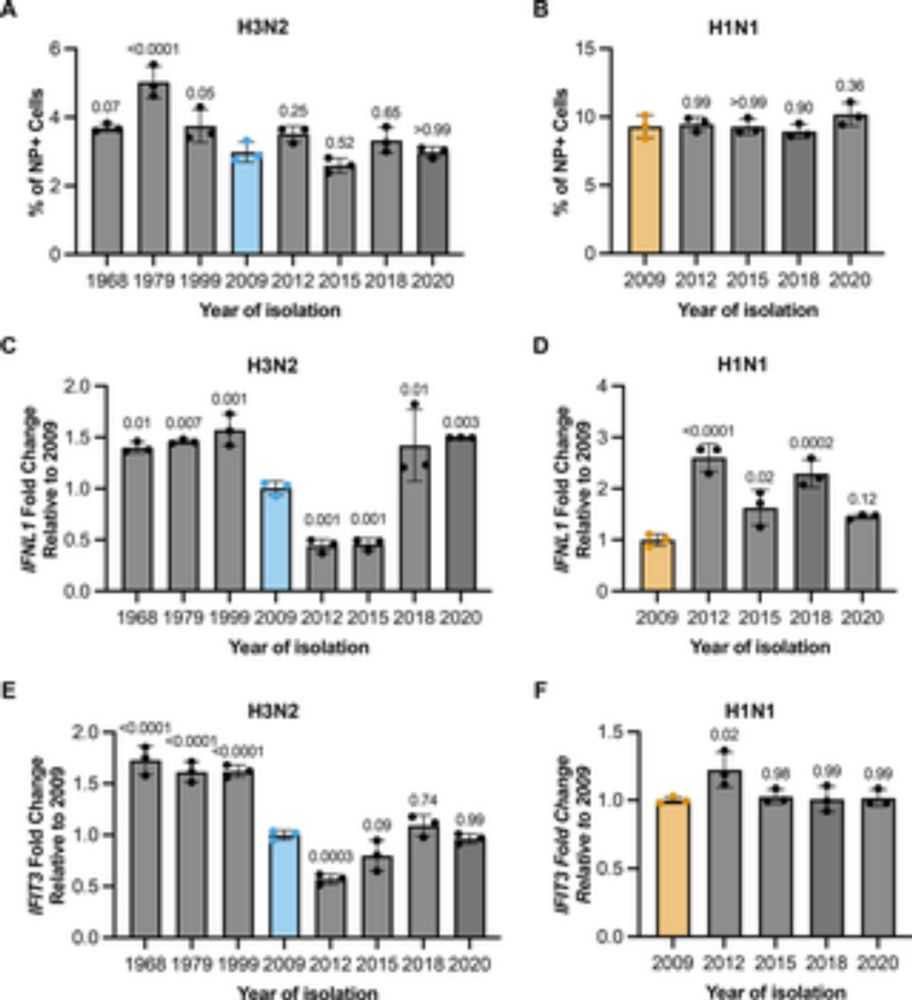
Seasonal influenza a virus lineages exhibit divergent abilities to antagonize interferon induction and signaling
Author summary Successful replication and transmission of influenza A viruses (IAVs) requires effective subversion of the innate immune response. We developed a new single cell method to examine the i...
journals.plos.org
December 12, 2024 at 6:58 PM
@joelrc.bsky.social 's paper on differences between the seasonal H1N1 and H3N2 lineages in their relative capacity to antagonize IFN induction and signaling at the single cell level is out now in PLOS Pathogens:
journals.plos.org/plospathogen...
journals.plos.org/plospathogen...
Reposted by Timothy Tan

Super excited to preprint our work on developing a Biomolecular Emulator (BioEmu): Scalable emulation of protein equilibrium ensembles with generative deep learning from @msftresearch.bsky.social ch AI for Science.
www.biorxiv.org/content/10.1...
www.biorxiv.org/content/10.1...
December 6, 2024 at 8:39 AM
Super excited to preprint our work on developing a Biomolecular Emulator (BioEmu): Scalable emulation of protein equilibrium ensembles with generative deep learning from @msftresearch.bsky.social ch AI for Science.
www.biorxiv.org/content/10.1...
www.biorxiv.org/content/10.1...
Reposted by Timothy Tan

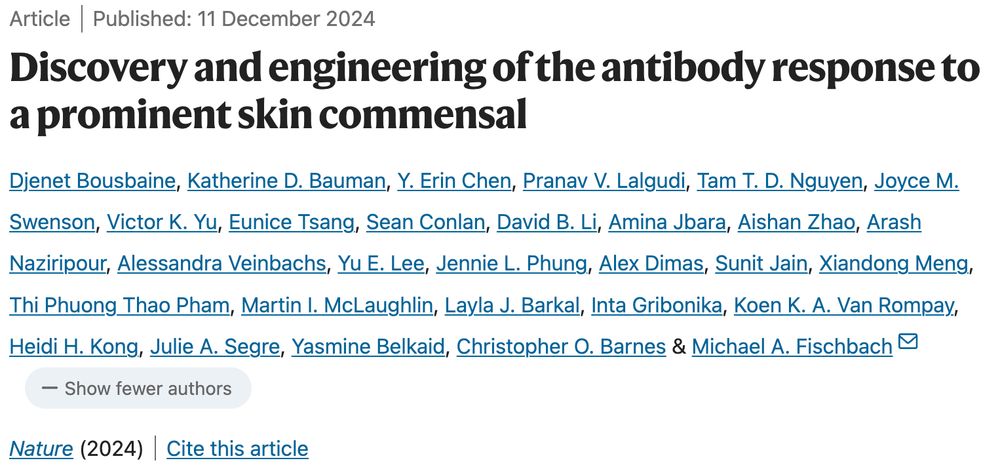
Today we report that an engineered skin bacterium, swabbed gently on the head of a mouse, can unleash a potent antibody response against a pathogen. Could lead to topical vaccines that are applied in a cream. @djenetbousbaine.bsky.social led the charge... @natureportfolio.bsky.social 1/55
December 11, 2024 at 4:29 PM
Today we report that an engineered skin bacterium, swabbed gently on the head of a mouse, can unleash a potent antibody response against a pathogen. Could lead to topical vaccines that are applied in a cream. @djenetbousbaine.bsky.social led the charge... @natureportfolio.bsky.social 1/55