



Kuldeep Kumar
@kkumar.bsky.social
Postdoc, Lab-Jacquemont, CHUSJ Research Center, University of Montreal. Investigating the impact of CNVs on the human brain. IIT-Engineer-ISRO-Neuro-Genetics.
Pinned
Kuldeep Kumar
@kkumar.bsky.social
· Dec 11
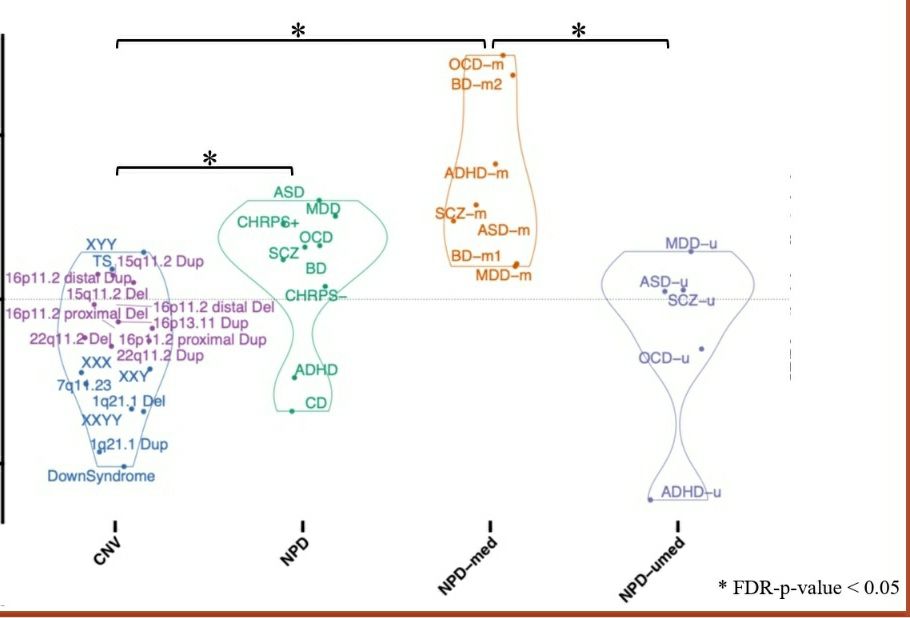
Interested in how cortical alterations in neurodevelopmental & psychiatric disorders (ASD, ADHD, BD, SCZ,...) relate to those observed in rare genetic risk for these conditions.
Visit our poster tomorrow @acnporg.bsky.social
We show discordance between CT/SA, impact of medication, age of onset..
Visit our poster tomorrow @acnporg.bsky.social
We show discordance between CT/SA, impact of medication, age of onset..
Reposted by Kuldeep Kumar

Many of our big insights into brain function come from trying to mimic it, writes @timothyoleary.bsky.social. This lesson should guide how we organize research programs.
www.thetransmitter.org/systems-neur...
#neuroskyence
www.thetransmitter.org/systems-neur...
#neuroskyence

Neuroscience needs engineers—for more reasons than you think
Adopting an engineering mindset will help the field focus its research priorities.
www.thetransmitter.org
November 3, 2025 at 2:22 PM
Many of our big insights into brain function come from trying to mimic it, writes @timothyoleary.bsky.social. This lesson should guide how we organize research programs.
www.thetransmitter.org/systems-neur...
#neuroskyence
www.thetransmitter.org/systems-neur...
#neuroskyence
Reposted by Kuldeep Kumar

This was a fantastic collaboration with lots of people including @hilarycmartin.bsky.social @jakobgrove.bsky.social, Experts by Experience, and several others who I can't seem to find on this app.
Article: www.nature.com/articles/s41...
Article: www.nature.com/articles/s41...

Polygenic and developmental profiles of autism differ by age at diagnosis - Nature
A study of several longitudinal birth cohorts and cross-sectional cohorts finds only moderate overlap in genetic variants between autism that is diagnosed earlier and that diagnosed later, so they may represent aetiologically different conditions.
www.nature.com
October 1, 2025 at 4:05 PM
This was a fantastic collaboration with lots of people including @hilarycmartin.bsky.social @jakobgrove.bsky.social, Experts by Experience, and several others who I can't seem to find on this app.
Article: www.nature.com/articles/s41...
Article: www.nature.com/articles/s41...
Reposted by Kuldeep Kumar

The age that autism is diagnosed may partly reflect underlying biological and developmental differences among individuals with autism, according to a study in Nature. go.nature.com/4gQ5gSV 🧬 🧪

October 1, 2025 at 10:43 PM
The age that autism is diagnosed may partly reflect underlying biological and developmental differences among individuals with autism, according to a study in Nature. go.nature.com/4gQ5gSV 🧬 🧪
Reposted by Kuldeep Kumar
The same genes can have disparate, sometimes opposing, effects on neuropsychiatric conditions, a study finds.
By Natalia Mesa
www.thetransmitter.org/spectrum/aut...
By Natalia Mesa
www.thetransmitter.org/spectrum/aut...

Autism-linked copy number variants always boost autism likelihood
By contrast, varied doses of the same genes decrease or increase the odds of five other conditions, with distinct biological consequences, two new preprints show.
www.thetransmitter.org
September 7, 2025 at 1:07 PM
The same genes can have disparate, sometimes opposing, effects on neuropsychiatric conditions, a study finds.
By Natalia Mesa
www.thetransmitter.org/spectrum/aut...
By Natalia Mesa
www.thetransmitter.org/spectrum/aut...
Reposted by Kuldeep Kumar
p-tau217 predicts cognitive changes prior to any cognitive impairment (again)
"The era of disease-modifying therapy in Alzheimer's disease is just starting."
jamanetwork.com/journals/jam...
jamanetwork.com/journals/jam...
"The era of disease-modifying therapy in Alzheimer's disease is just starting."
jamanetwork.com/journals/jam...
jamanetwork.com/journals/jam...

p-Tau 217, Tau PET, and Cognition in Preclinical Alzheimer Disease
This diagnostic/prognostic study examines longitudinal data from studies of older patients without cognitive impairment to consider whether plasma phosphorylated tau 217 and tau positron emission tomo...
jamanetwork.com
August 25, 2025 at 3:46 PM
p-tau217 predicts cognitive changes prior to any cognitive impairment (again)
"The era of disease-modifying therapy in Alzheimer's disease is just starting."
jamanetwork.com/journals/jam...
jamanetwork.com/journals/jam...
"The era of disease-modifying therapy in Alzheimer's disease is just starting."
jamanetwork.com/journals/jam...
jamanetwork.com/journals/jam...
Reposted by Kuldeep Kumar

New paper🥳
🧠 In TLE, brain changes go beyond the temporal lobe & beyond normal aging.
Our ENIGMA study (769 patients, 18 sites) found widespread gray & white matter decline, especially after 55. By Judy Chen and a terrific intl' team
Time for earlier diagnosis & deeper research
bit.ly/3HRYeQt
🧠 In TLE, brain changes go beyond the temporal lobe & beyond normal aging.
Our ENIGMA study (769 patients, 18 sites) found widespread gray & white matter decline, especially after 55. By Judy Chen and a terrific intl' team
Time for earlier diagnosis & deeper research
bit.ly/3HRYeQt

August 24, 2025 at 6:05 PM
New paper🥳
🧠 In TLE, brain changes go beyond the temporal lobe & beyond normal aging.
Our ENIGMA study (769 patients, 18 sites) found widespread gray & white matter decline, especially after 55. By Judy Chen and a terrific intl' team
Time for earlier diagnosis & deeper research
bit.ly/3HRYeQt
🧠 In TLE, brain changes go beyond the temporal lobe & beyond normal aging.
Our ENIGMA study (769 patients, 18 sites) found widespread gray & white matter decline, especially after 55. By Judy Chen and a terrific intl' team
Time for earlier diagnosis & deeper research
bit.ly/3HRYeQt
Reposted by Kuldeep Kumar

Age-related cerebello-thalamo-cortical white matter degradation and executive function performance across the lifespan https://www.biorxiv.org/content/10.1101/2025.08.22.671779v1
August 23, 2025 at 10:15 AM
Age-related cerebello-thalamo-cortical white matter degradation and executive function performance across the lifespan https://www.biorxiv.org/content/10.1101/2025.08.22.671779v1
Reposted by Kuldeep Kumar

Latest processing of UK Biobank brain imaging data - now with 82,000 usable first-scan datasets. Correlating brain IDPs with 13,000 non-imaging variables gives a rich manhattan-stye plot. 324,000 Bonferroni-significant associations.

August 22, 2025 at 11:35 AM
Latest processing of UK Biobank brain imaging data - now with 82,000 usable first-scan datasets. Correlating brain IDPs with 13,000 non-imaging variables gives a rich manhattan-stye plot. 324,000 Bonferroni-significant associations.
Reposted by Kuldeep Kumar

💥🧠🧬Finally out!! Our new paper on the overlapping genetic basis of brain structures and psychiatric disorders has been published in Nature Mental Health. The full list of shared genetic loci is also available online. Thank you so much, Aaron and all co-authors.
www.nature.com/articles/s44...
www.nature.com/articles/s44...

The overlapping genetic architecture of psychiatric disorders and cortical brain structure - Nature Mental Health
This study highlights sex differences in major depressive disorder using resting-state functional magnetic resonance imaging. Findings suggest hormonal fluctuations influence onset, emphasizing the ne...
www.nature.com
August 11, 2025 at 6:54 PM
💥🧠🧬Finally out!! Our new paper on the overlapping genetic basis of brain structures and psychiatric disorders has been published in Nature Mental Health. The full list of shared genetic loci is also available online. Thank you so much, Aaron and all co-authors.
www.nature.com/articles/s44...
www.nature.com/articles/s44...
Reposted by Kuldeep Kumar

1
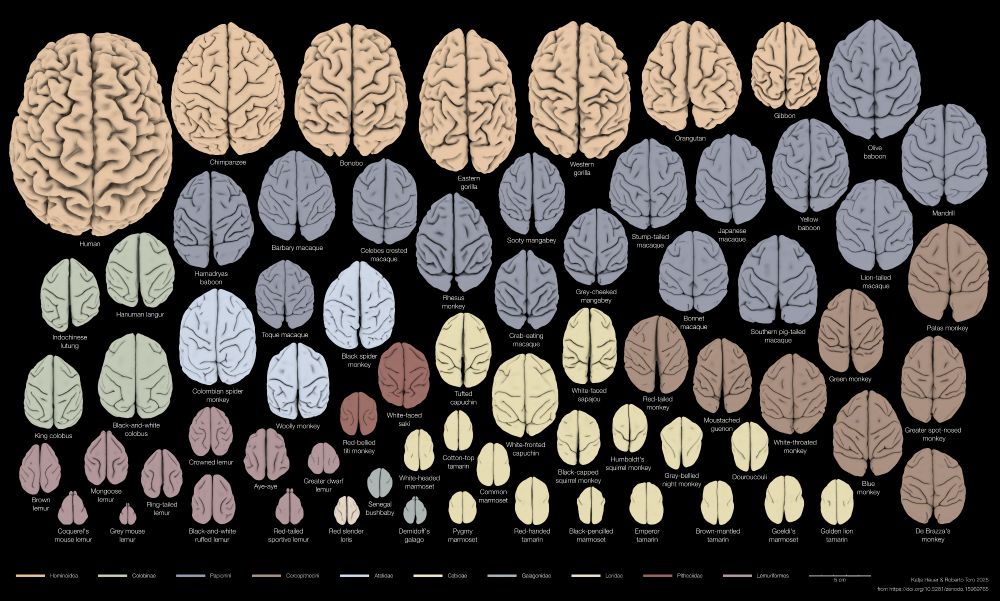
To predict the behaviour of a primate, would you rather base your guess on a closely related species or one with a similar brain shape? We looked at brains & behaviours of 70 species, you’ll be surprised!
🧵Thread on our new preprint with @r3rt0.bsky.social , doi.org/10.1101/2025...
To predict the behaviour of a primate, would you rather base your guess on a closely related species or one with a similar brain shape? We looked at brains & behaviours of 70 species, you’ll be surprised!
🧵Thread on our new preprint with @r3rt0.bsky.social , doi.org/10.1101/2025...
July 27, 2025 at 5:26 PM
1
To predict the behaviour of a primate, would you rather base your guess on a closely related species or one with a similar brain shape? We looked at brains & behaviours of 70 species, you’ll be surprised!
🧵Thread on our new preprint with @r3rt0.bsky.social , doi.org/10.1101/2025...
To predict the behaviour of a primate, would you rather base your guess on a closely related species or one with a similar brain shape? We looked at brains & behaviours of 70 species, you’ll be surprised!
🧵Thread on our new preprint with @r3rt0.bsky.social , doi.org/10.1101/2025...
Reposted by Kuldeep Kumar

For me, this work is a classic @ohbmofficial.bsky.social story: In 2023 I wasn't working with @bttyeo.bsky.social but I overheard him at his poster pointing to some accuracy curves saying "I don't why they have this particular shape". That kicked off the collab that led to these results.
3/11 Tom's model explains empirical prediction accuracies well across 76 phenotypes from 9 resting-fMRI & task-fMRI datasets (R2 = 0.89), spanning many scanners, acquisitions, racial groups, disorders & ages.
Does this mean that we should collect large datasets with short scans?
Does this mean that we should collect large datasets with short scans?


July 17, 2025 at 6:34 AM
For me, this work is a classic @ohbmofficial.bsky.social story: In 2023 I wasn't working with @bttyeo.bsky.social but I overheard him at his poster pointing to some accuracy curves saying "I don't why they have this particular shape". That kicked off the collab that led to these results.
Reposted by Kuldeep Kumar

The field of neuroscience views the goal of human genetics as "finding genes". This is an outdated view. In whole genome studies of rare variants, finding genes is the easy part. The more interesting and important goal is to map out the causal pathway from genes to brain function to cognitive traits
A cross-disorder analysis of CNVs finds novel loci and dose-dependent relationships of genes to psychiatric traits https://www.medrxiv.org/content/10.1101/2025.07.11.25331310v1
July 16, 2025 at 2:47 PM
The field of neuroscience views the goal of human genetics as "finding genes". This is an outdated view. In whole genome studies of rare variants, finding genes is the easy part. The more interesting and important goal is to map out the causal pathway from genes to brain function to cognitive traits
Reposted by Kuldeep Kumar
As we have learned, genes have dose-dependent effects on psychiatric traits. DOSAGE, it turns out, is a key element that helps unravel mechanisms of gene → pathway → cell type → brain region → diagnosis. Here we developed a framework to characterize cellular processes that mediate genetic effects.
Psychiatric disorders converge on common pathways but diverge in cellular context, spatial distribution, and directionality of genetic effects https://www.medrxiv.org/content/10.1101/2025.07.11.25331381v1
July 16, 2025 at 9:23 PM
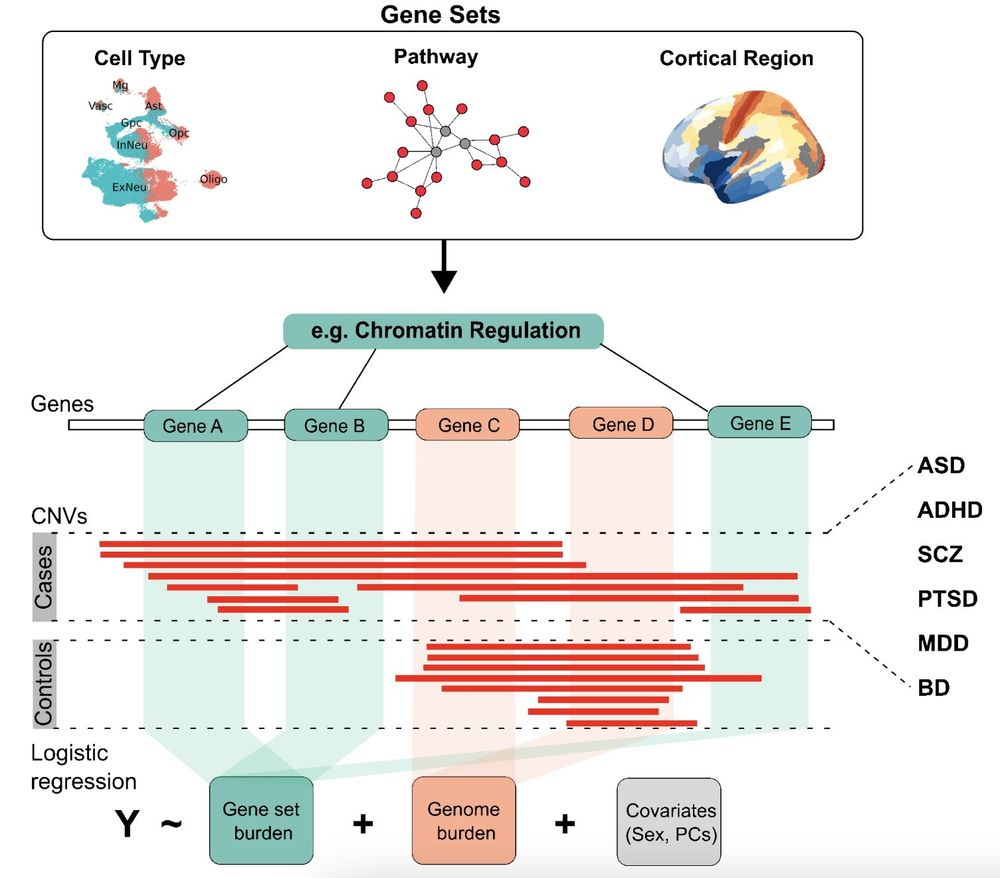
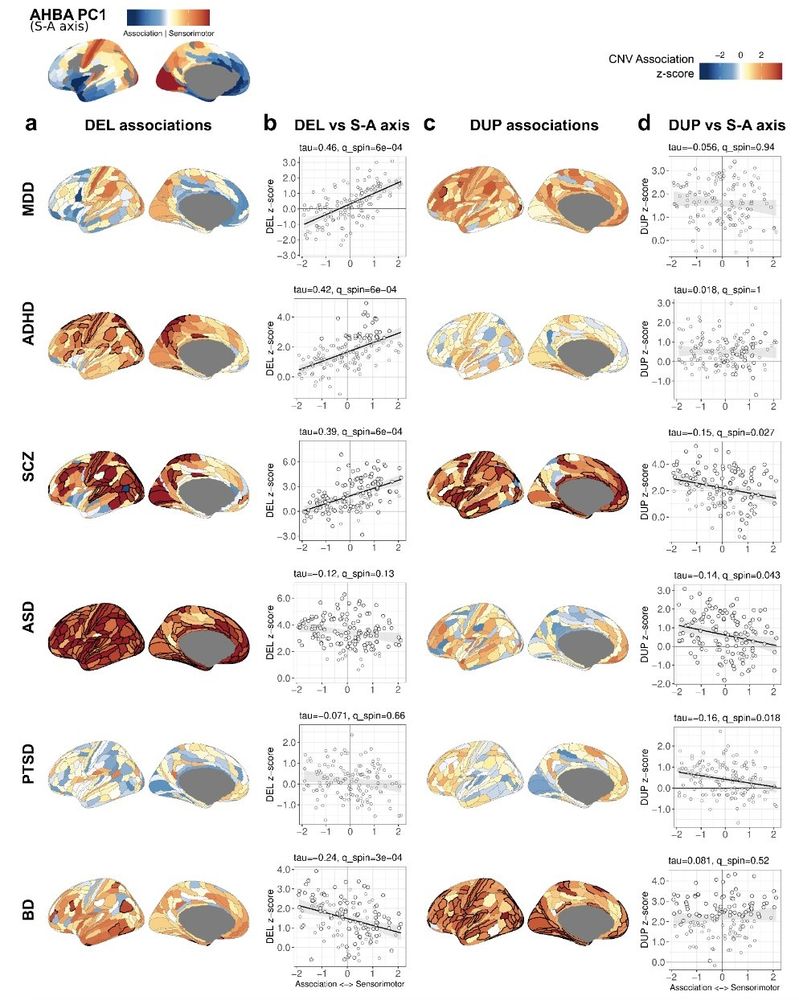
As we have learned, genes have dose-dependent effects on psychiatric traits. DOSAGE, it turns out, is a key element that helps unravel mechanisms of gene → pathway → cell type → brain region → diagnosis. Here we developed a framework to characterize cellular processes that mediate genetic effects.
PGC-CNV paper led by Bank and @sebatlab.bsky.social et al. using Gene Set Burden Analysis across 6 disorders.
"Psychiatric disorders converge on common pathways but diverge in cellular context, spatial distribution, and directionality of genetic effects"
www.medrxiv.org/content/10.1...
"Psychiatric disorders converge on common pathways but diverge in cellular context, spatial distribution, and directionality of genetic effects"
www.medrxiv.org/content/10.1...
July 16, 2025 at 1:56 AM
PGC-CNV paper led by Bank and @sebatlab.bsky.social et al. using Gene Set Burden Analysis across 6 disorders.
"Psychiatric disorders converge on common pathways but diverge in cellular context, spatial distribution, and directionality of genetic effects"
www.medrxiv.org/content/10.1...
"Psychiatric disorders converge on common pathways but diverge in cellular context, spatial distribution, and directionality of genetic effects"
www.medrxiv.org/content/10.1...
Reposted by Kuldeep Kumar
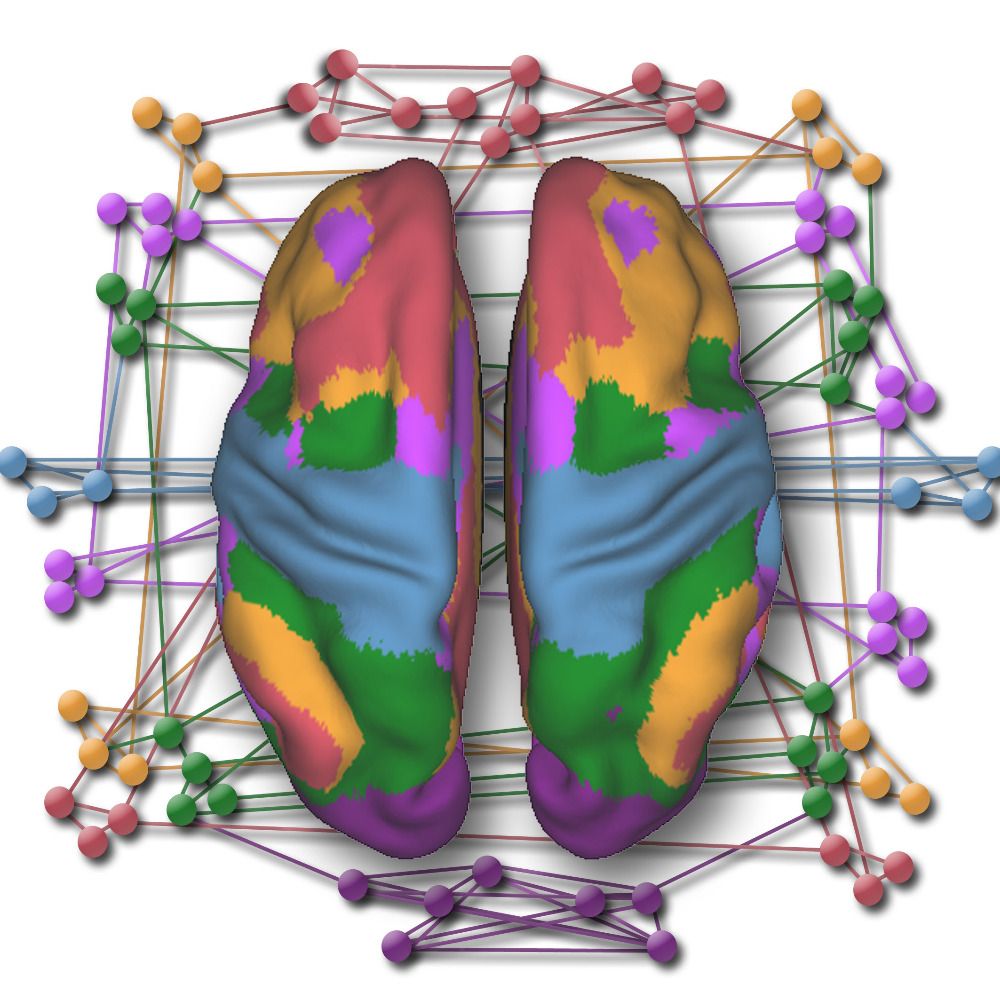
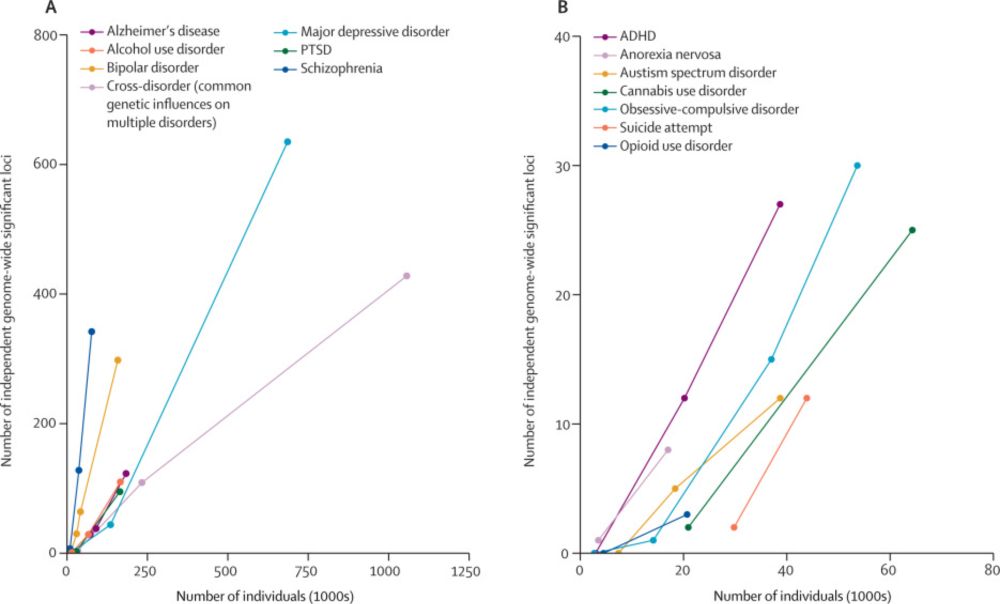
What's going on in psychiatric genetics? The @pgcgenetics.bsky.social have now published our latest progress review in @thelancetpsych.bsky.social, highlighting discovery, and laying out a map for moving forwards!
www.thelancet.com/journals/lan...
www.thelancet.com/journals/lan...
The Psychiatric Genomics Consortium: discoveries and directions
Research by the Psychiatric Genomics Consortium (PGC) has advanced the discovery of
common and rare genetic variations that contribute to the susceptibility to many psychiatric
disorders and neurodeve...
www.thelancet.com
June 27, 2025 at 10:52 AM
What's going on in psychiatric genetics? The @pgcgenetics.bsky.social have now published our latest progress review in @thelancetpsych.bsky.social, highlighting discovery, and laying out a map for moving forwards!
www.thelancet.com/journals/lan...
www.thelancet.com/journals/lan...
Reposted by Kuldeep Kumar

Heads-up for major new faculty search at KI — with great startup packages and a wide range of subject areas.

Save the date! On 25 June, Karolinska Institutet will be starting a major recruitment drive for 20 junior researchers with a focus on excellence and mobility news.ki.se/ki-to-recruit-junior-researchers-with-a-focus-on-excellence

KI to recruit junior researchers with a focus on excellence
On 25 June, Karolinska Institutet will be starting a major recruitment drive for 20 junior researchers with a focus on excellence and mobility. As one of Europe’s leading medical universities, KI offe...
news.ki.se
June 19, 2025 at 5:50 AM
Heads-up for major new faculty search at KI — with great startup packages and a wide range of subject areas.
Reposted by Kuldeep Kumar

A new combination technique enables DNA sequencing and high-resolution imaging in intact cells — offering new insights into progeria and aging. broad.io/expansion-in-situ @jbuenrostro.bsky.social
May 29, 2025 at 7:14 PM
A new combination technique enables DNA sequencing and high-resolution imaging in intact cells — offering new insights into progeria and aging. broad.io/expansion-in-situ @jbuenrostro.bsky.social
Reposted by Kuldeep Kumar
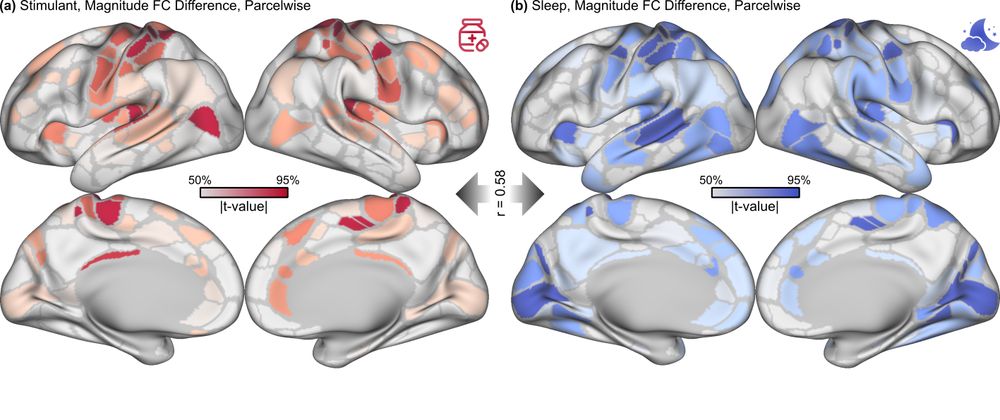
Stimulants rescue cognition and brain functional architecture if you didn’t sleep enough … short term: www.biorxiv.org/content/10.1... Is it possible that this is a true rescue, or is it just a temporary cover up and there will be a price to pay … maybe decades later? Asking for a friend.
May 22, 2025 at 11:45 PM
Stimulants rescue cognition and brain functional architecture if you didn’t sleep enough … short term: www.biorxiv.org/content/10.1... Is it possible that this is a true rescue, or is it just a temporary cover up and there will be a price to pay … maybe decades later? Asking for a friend.
Reposted by Kuldeep Kumar
My med school textbook says stimulants like Ritalin treat hyperactivity by “stimulating” the brain’s attention and cognitive control systems. We studied children taking stimulants in the ABCD Study, and the largest differences were actually in arousal and reward networks! Check out our preprint!
May 22, 2025 at 9:33 PM
My med school textbook says stimulants like Ritalin treat hyperactivity by “stimulating” the brain’s attention and cognitive control systems. We studied children taking stimulants in the ABCD Study, and the largest differences were actually in arousal and reward networks! Check out our preprint!
Reposted by Kuldeep Kumar

Cortical differences across psychiatric disorders and associated common and rare genetic variants https://www.medrxiv.org/content/10.1101/2025.04.16.25325971v1
April 20, 2025 at 5:12 AM
Cortical differences across psychiatric disorders and associated common and rare genetic variants https://www.medrxiv.org/content/10.1101/2025.04.16.25325971v1
Reposted by Kuldeep Kumar
Gene dosage architecture across complex traits https://www.medrxiv.org/content/10.1101/2025.02.25.25322833v1
February 27, 2025 at 5:40 AM
Gene dosage architecture across complex traits https://www.medrxiv.org/content/10.1101/2025.02.25.25322833v1
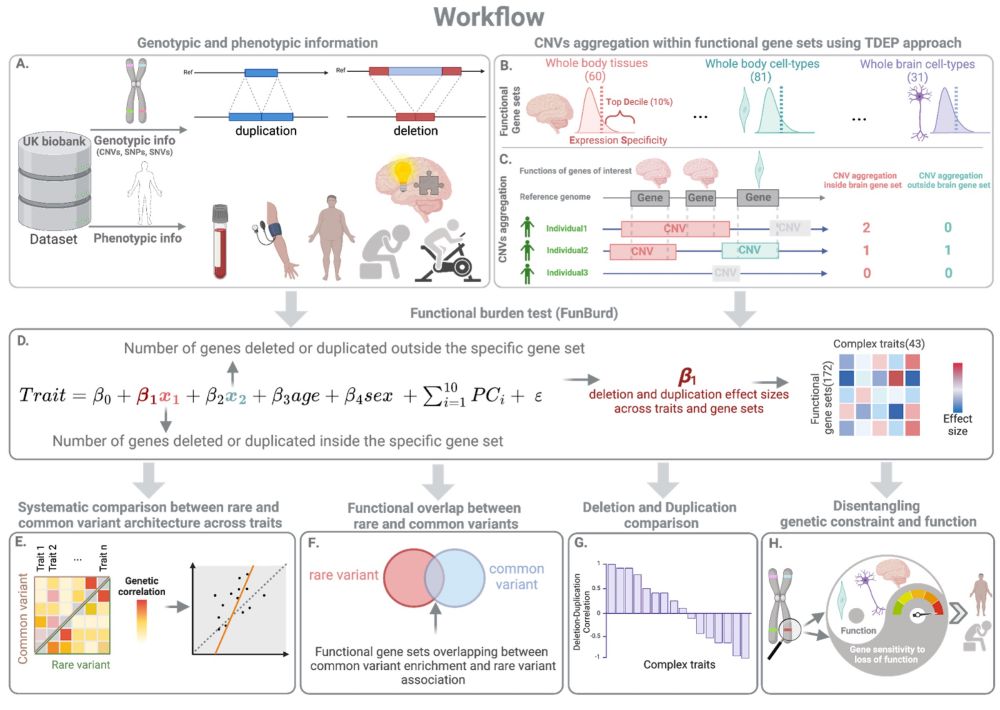
"Gene dosage architecture across complex traits".
Excited to share our work led by the excellent @KazemSayeh (joint co-author).
We will post a detailed 🧵 in the coming days. Please reach out if you have any questions.
www.medrxiv.org/content/10.1...
#CNVs #GeneDosage #UKBB
Excited to share our work led by the excellent @KazemSayeh (joint co-author).
We will post a detailed 🧵 in the coming days. Please reach out if you have any questions.
www.medrxiv.org/content/10.1...
#CNVs #GeneDosage #UKBB
February 27, 2025 at 1:46 PM
"Gene dosage architecture across complex traits".
Excited to share our work led by the excellent @KazemSayeh (joint co-author).
We will post a detailed 🧵 in the coming days. Please reach out if you have any questions.
www.medrxiv.org/content/10.1...
#CNVs #GeneDosage #UKBB
Excited to share our work led by the excellent @KazemSayeh (joint co-author).
We will post a detailed 🧵 in the coming days. Please reach out if you have any questions.
www.medrxiv.org/content/10.1...
#CNVs #GeneDosage #UKBB
Reposted by Kuldeep Kumar

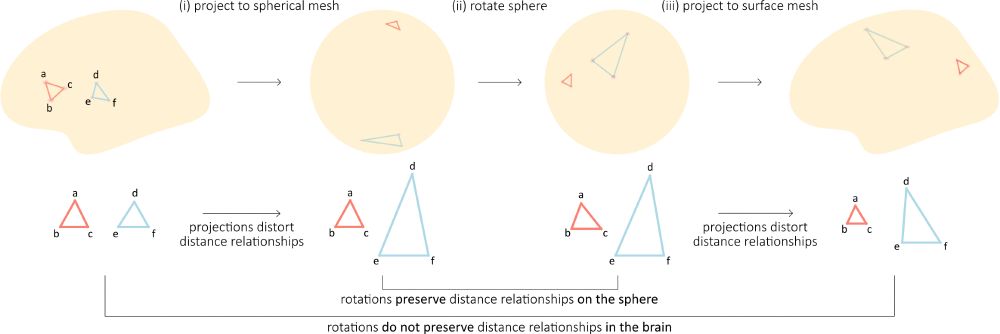
The effect of spherical projections on spin tests for brain maps | biorxiv.org/content/10.1...
Spin tests are the de facto null model for map-to-map comparisons in brain imaging. Why don't they perfectly control false positives? @vincebaz.bsky.social explores ⤵️
Spin tests are the de facto null model for map-to-map comparisons in brain imaging. Why don't they perfectly control false positives? @vincebaz.bsky.social explores ⤵️
December 20, 2024 at 2:39 PM
The effect of spherical projections on spin tests for brain maps | biorxiv.org/content/10.1...
Spin tests are the de facto null model for map-to-map comparisons in brain imaging. Why don't they perfectly control false positives? @vincebaz.bsky.social explores ⤵️
Spin tests are the de facto null model for map-to-map comparisons in brain imaging. Why don't they perfectly control false positives? @vincebaz.bsky.social explores ⤵️
Interested in how cortical alterations in neurodevelopmental & psychiatric disorders (ASD, ADHD, BD, SCZ,...) relate to those observed in rare genetic risk for these conditions.
Visit our poster tomorrow @acnporg.bsky.social
We show discordance between CT/SA, impact of medication, age of onset..
Visit our poster tomorrow @acnporg.bsky.social
We show discordance between CT/SA, impact of medication, age of onset..
December 11, 2024 at 4:58 AM
Interested in how cortical alterations in neurodevelopmental & psychiatric disorders (ASD, ADHD, BD, SCZ,...) relate to those observed in rare genetic risk for these conditions.
Visit our poster tomorrow @acnporg.bsky.social
We show discordance between CT/SA, impact of medication, age of onset..
Visit our poster tomorrow @acnporg.bsky.social
We show discordance between CT/SA, impact of medication, age of onset..
Reposted by Kuldeep Kumar

check out our new preprint led by Charles Zhou and supervised by Mengjie Chen and me doi.org/10.1101/2024... where we present scPrediXcan which integrates deep learning and single cell expression data into a powerful cell type specific TWAS framework

scPrediXcan integrates advances in deep learning and single-cell data into a powerful cell-type–specific transcriptome-wide association study framework
Transcriptome-wide association studies (TWAS) help identify disease causing genes, but often fail to pinpoint disease mechanisms at the cellular level because of the limited sample sizes and sparsity ...
doi.org
November 15, 2024 at 2:28 AM
check out our new preprint led by Charles Zhou and supervised by Mengjie Chen and me doi.org/10.1101/2024... where we present scPrediXcan which integrates deep learning and single cell expression data into a powerful cell type specific TWAS framework