



Chris Macpherson
@cmacpherson.bsky.social
Ph.D. in Climate Science.
Posts & opinions are my own.
Posts & opinions are my own.
Reposted by Chris Macpherson

Okay sharing one more loop, this one from @cyclonicwx.bsky.social zoomed in visible 1-min meso over Category 5 #Hurricane #Erin.
Thanks to the 500 meter resolution of GOES-19 channel 2, you can still see features like the stadium effect & mesovortices rotating around the tiny eye. 🌀 🤯
Thanks to the 500 meter resolution of GOES-19 channel 2, you can still see features like the stadium effect & mesovortices rotating around the tiny eye. 🌀 🤯
August 16, 2025 at 4:58 PM
Okay sharing one more loop, this one from @cyclonicwx.bsky.social zoomed in visible 1-min meso over Category 5 #Hurricane #Erin.
Thanks to the 500 meter resolution of GOES-19 channel 2, you can still see features like the stadium effect & mesovortices rotating around the tiny eye. 🌀 🤯
Thanks to the 500 meter resolution of GOES-19 channel 2, you can still see features like the stadium effect & mesovortices rotating around the tiny eye. 🌀 🤯
Reposted by Chris Macpherson


April 9, 2025 at 5:55 PM
Reposted by Chris Macpherson

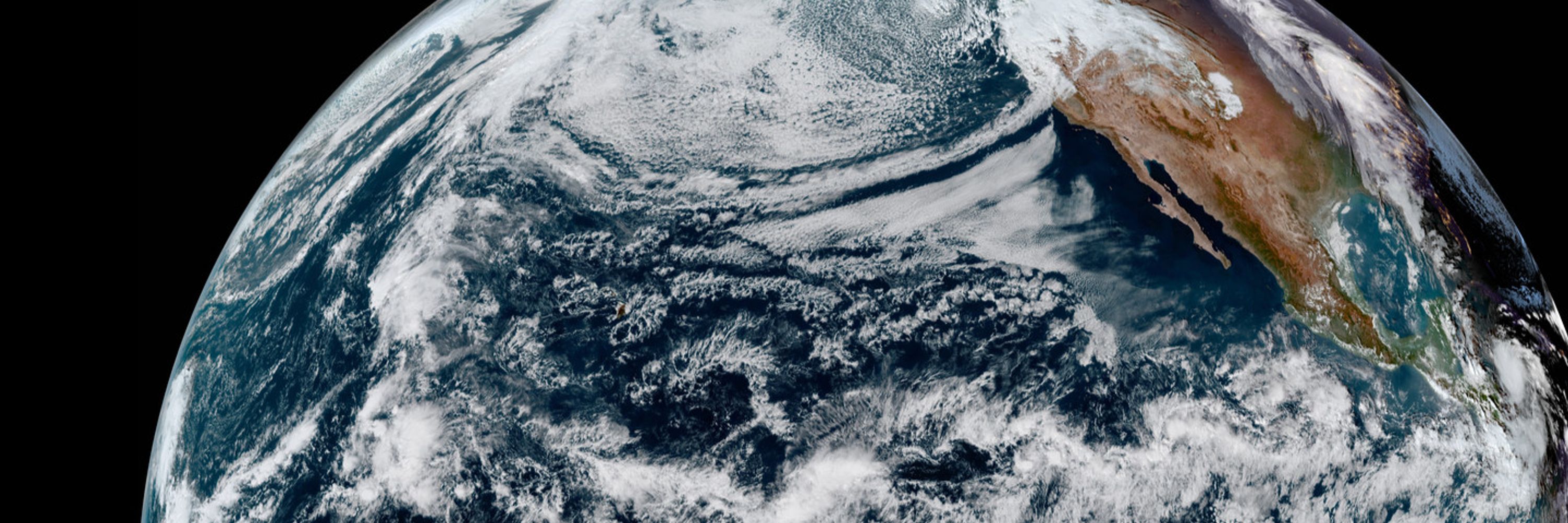
The planet Earth as seen from GOES-19’s first full day as GOES-East.
April 8, 2025 at 7:21 PM
The planet Earth as seen from GOES-19’s first full day as GOES-East.
Reposted by Chris Macpherson

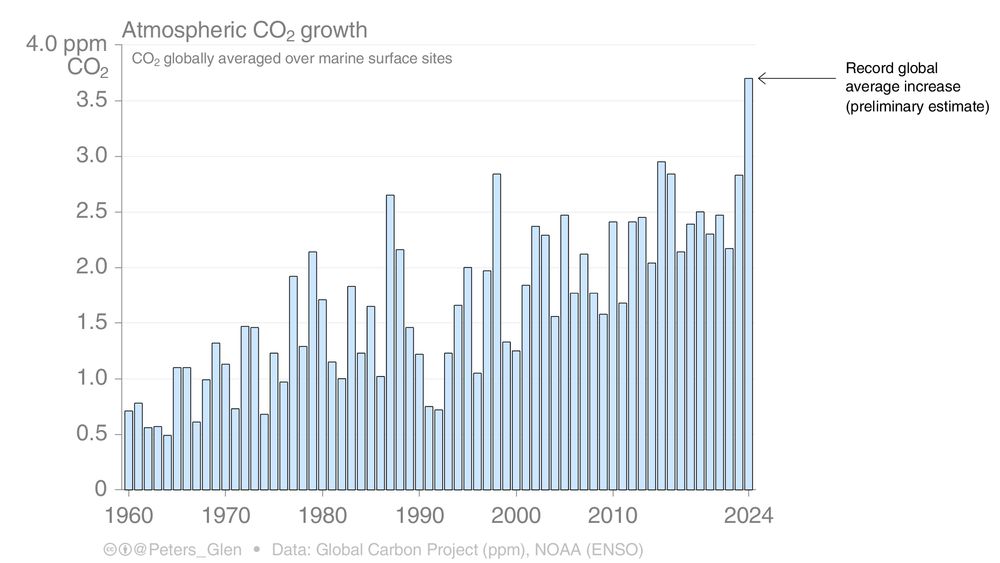
To be clear: this would mean the *increment* of the increase in 2024 is itself the largest on record (in addition the value being the highest on record, which unfortunately happens essentially every year in our rapid warming era). That's...not great (as Glen discusses downthread).

Preliminary data suggests that the global average increase in atmospheric CO2 concentration in 2024 will be a record.
Not just a little record, but 25% higher than the previous record.
(This is the global average, as opposed to Moana Loa)
gml.noaa.gov/ccgg/trends/...
1/
Not just a little record, but 25% higher than the previous record.
(This is the global average, as opposed to Moana Loa)
gml.noaa.gov/ccgg/trends/...
1/
March 19, 2025 at 2:45 PM
To be clear: this would mean the *increment* of the increase in 2024 is itself the largest on record (in addition the value being the highest on record, which unfortunately happens essentially every year in our rapid warming era). That's...not great (as Glen discusses downthread).
*sigh*

"Two months ahead of the usual annual peak of CO2 concentration in the atmosphere, parts per million in air exceeded 430. Crossing 430 ppm was an entirely predictable but sad milestone. The rise is mostly caused by fossil fuel usage." - Ralph Keeling, director of the Scripps Oceanography CO2 program
430.33 parts per million (ppm) CO2 in air 10-Mar-2025 keelingcurve.ucsd.edu
March 11, 2025 at 11:57 PM
*sigh*
Reposted by Chris Macpherson
Thinking of the many hard-working and skilled federal employees fired today from the NWS. Your contributions over the years have helped the NWS and its ability to fulfill its mission of protecting life & property. This is a loss for the NWS and for the nation.
February 28, 2025 at 1:30 AM
Thinking of the many hard-working and skilled federal employees fired today from the NWS. Your contributions over the years have helped the NWS and its ability to fulfill its mission of protecting life & property. This is a loss for the NWS and for the nation.
Reposted by Chris Macpherson

Zack is a top-tier climate scientist and data visualization wizard. This did not need to happen.
Last Tuesday, I was set to give a talk on 'climate change in the Northeast' at a retirement home but had to cancel due to hourly job threats.
After nearly two weeks of overwhelming uncertainty, today it happened. I was fired from my dream of working at NOAA. I'm so sorry to everyone also affected.
After nearly two weeks of overwhelming uncertainty, today it happened. I was fired from my dream of working at NOAA. I'm so sorry to everyone also affected.
February 27, 2025 at 10:56 PM
Zack is a top-tier climate scientist and data visualization wizard. This did not need to happen.
I can’t wait until these Santa Ana winds are over. Let’s get to the weekend and get some rain in SoCal.
January 23, 2025 at 4:43 PM
I can’t wait until these Santa Ana winds are over. Let’s get to the weekend and get some rain in SoCal.
Reposted by Chris Macpherson

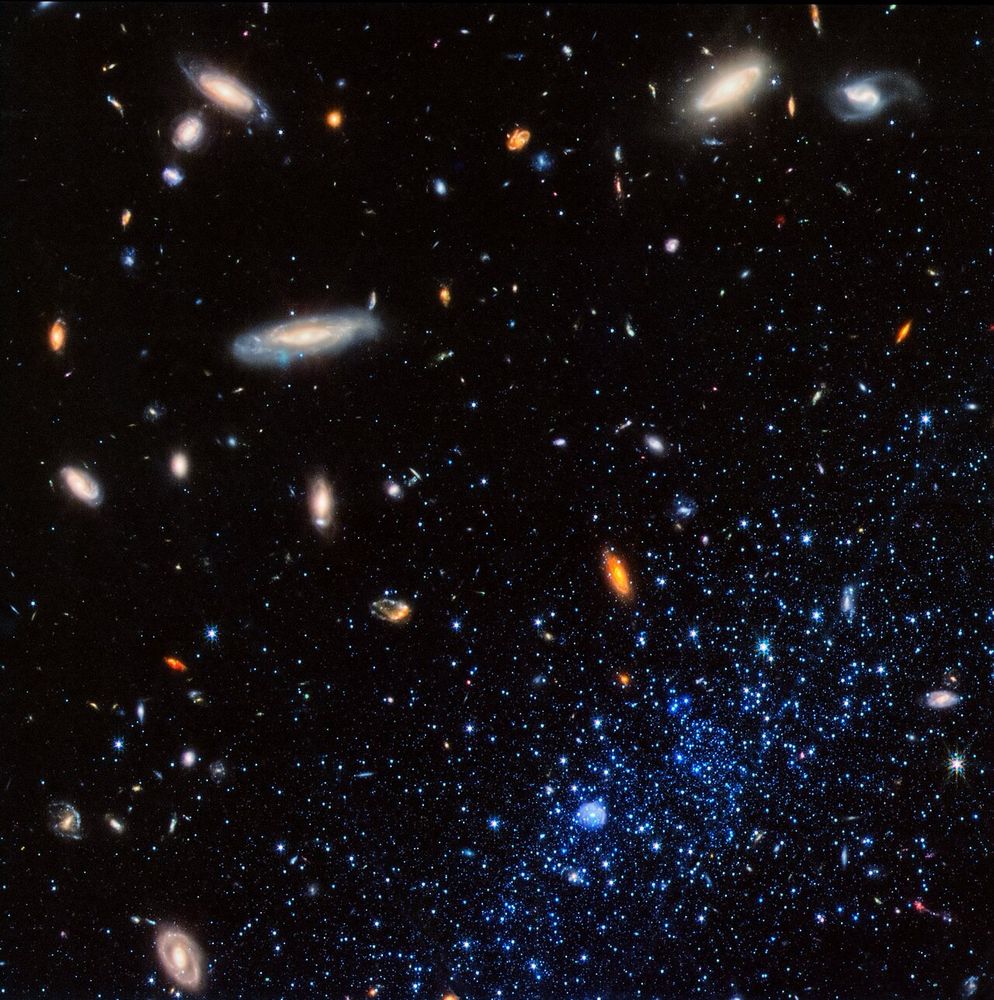
Oh come ON now. This new JWST image is just ASTOUNDING.
I feel like I’m falling looking into it, and that I would fall forever, and that I would enjoy it.
NASA, ESA, CSA, K. McQuinn (STScI), J. DePasquale (STScI)
I feel like I’m falling looking into it, and that I would fall forever, and that I would enjoy it.
NASA, ESA, CSA, K. McQuinn (STScI), J. DePasquale (STScI)
January 17, 2025 at 3:36 PM
Oh come ON now. This new JWST image is just ASTOUNDING.
I feel like I’m falling looking into it, and that I would fall forever, and that I would enjoy it.
NASA, ESA, CSA, K. McQuinn (STScI), J. DePasquale (STScI)
I feel like I’m falling looking into it, and that I would fall forever, and that I would enjoy it.
NASA, ESA, CSA, K. McQuinn (STScI), J. DePasquale (STScI)
Reposted by Chris Macpherson

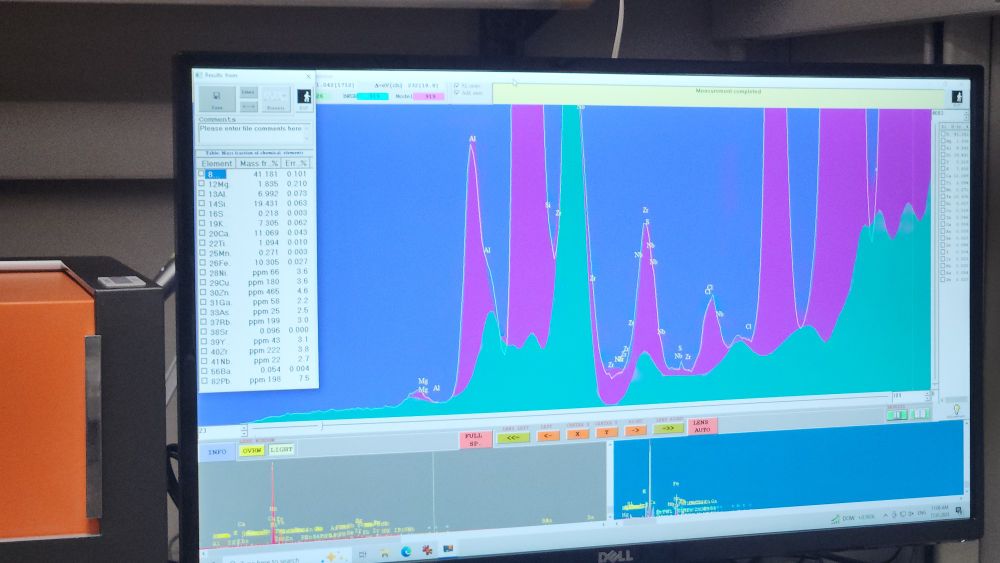
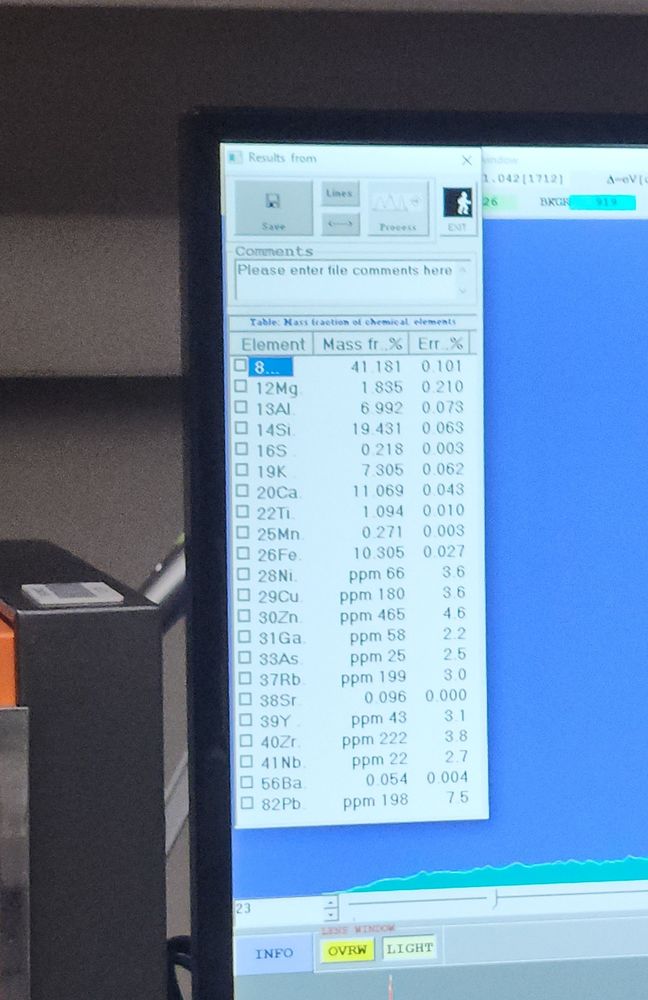
Just had a sample of the Eaton Fire ash that is in my driveway run on the department XRF. Is there titanium (new house paint)? Yup. Lead (old house paint)? You betcha. Heavy metals? Check. Treat that ash like it's toxic folks (because it is)
January 17, 2025 at 7:49 PM
Just had a sample of the Eaton Fire ash that is in my driveway run on the department XRF. Is there titanium (new house paint)? Yup. Lead (old house paint)? You betcha. Heavy metals? Check. Treat that ash like it's toxic folks (because it is)
UGH. "Our weather pattern for next week features a deep trough of low pressure covering most of the nation`s interior with high pressure over the Pacific. That puts SoCal in northerly offshore flow seemingly forever." forecast.weather.gov/product.php?...
National Weather Service
forecast.weather.gov
January 16, 2025 at 6:31 PM
UGH. "Our weather pattern for next week features a deep trough of low pressure covering most of the nation`s interior with high pressure over the Pacific. That puts SoCal in northerly offshore flow seemingly forever." forecast.weather.gov/product.php?...
It’s so dry here.

Both San Diego and downtown Los Angeles have gotten just 0.16" of rainfall since July 1. That's the lowest in 175 years of San Diego data, and tied for the lowest in 148 years of L.A. data. No rain whatesoever for the foreseeable future, and we're now at the height of the wet season.


January 16, 2025 at 4:59 PM
It’s so dry here.
Reposted by Chris Macpherson

physics of climate impacts 101:
- Stuff gets hot (worse heatwaves)
- Hot air holds more water vapor (heavier rainfall)
- Hot air is thirstier air (higher drought risk)
- Warm water is hurricane food (stronger storms)
- Hot water expands and hot ice melts (sea level rise)
- Stuff gets hot (worse heatwaves)
- Hot air holds more water vapor (heavier rainfall)
- Hot air is thirstier air (higher drought risk)
- Warm water is hurricane food (stronger storms)
- Hot water expands and hot ice melts (sea level rise)
January 14, 2025 at 9:48 PM
physics of climate impacts 101:
- Stuff gets hot (worse heatwaves)
- Hot air holds more water vapor (heavier rainfall)
- Hot air is thirstier air (higher drought risk)
- Warm water is hurricane food (stronger storms)
- Hot water expands and hot ice melts (sea level rise)
- Stuff gets hot (worse heatwaves)
- Hot air holds more water vapor (heavier rainfall)
- Hot air is thirstier air (higher drought risk)
- Warm water is hurricane food (stronger storms)
- Hot water expands and hot ice melts (sea level rise)
Reposted by Chris Macpherson

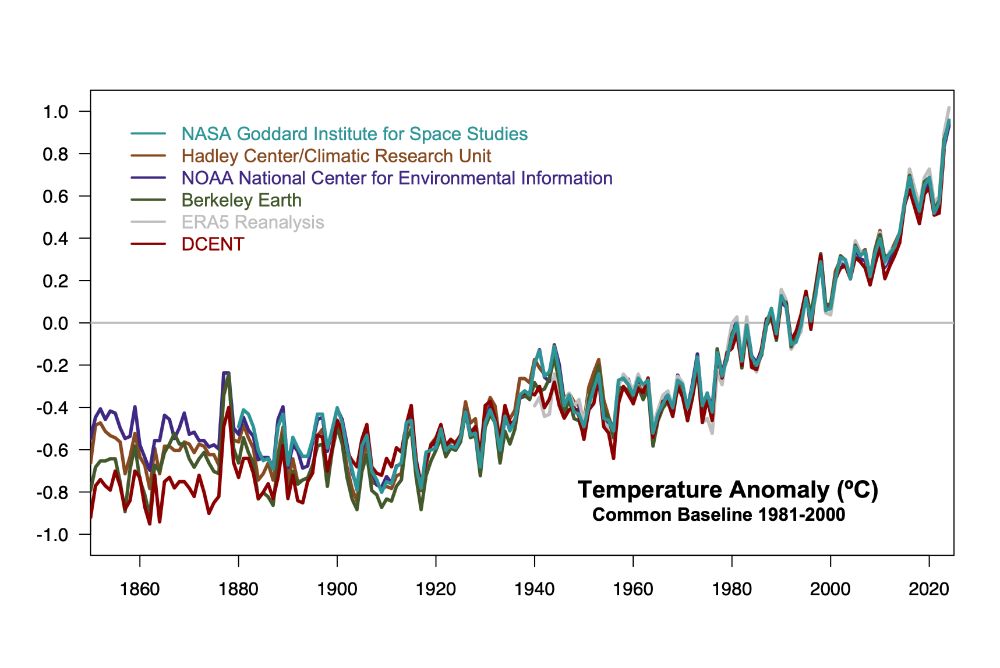
All surface temperature products for 2024 are now live.
All show 2024 is the warmest year (very clearly).
The estimates of the change since the pre-industrial (1850-1900) are more uncertain but range from 1.46 to 1.62ºC.
It is therefore *likely* this was the first year that exceeded 1.5ºC.
All show 2024 is the warmest year (very clearly).
The estimates of the change since the pre-industrial (1850-1900) are more uncertain but range from 1.46 to 1.62ºC.
It is therefore *likely* this was the first year that exceeded 1.5ºC.
January 10, 2025 at 4:10 PM
All surface temperature products for 2024 are now live.
All show 2024 is the warmest year (very clearly).
The estimates of the change since the pre-industrial (1850-1900) are more uncertain but range from 1.46 to 1.62ºC.
It is therefore *likely* this was the first year that exceeded 1.5ºC.
All show 2024 is the warmest year (very clearly).
The estimates of the change since the pre-industrial (1850-1900) are more uncertain but range from 1.46 to 1.62ºC.
It is therefore *likely* this was the first year that exceeded 1.5ºC.
Reposted by Chris Macpherson

Although first responders were successful in keeping the fire from JPL, over 150 JPLers have lost their homes. Here’s link to the Caltech/JPL disaster relief fund if you’re so inclined: caltech.imodules.com/controls/ema...
Thanks for your support of our JPL family.
Thanks for your support of our JPL family.

Satellite imagery captured by MAXAR showing the extent of the Eaton Fire in North Pasadena and Altadena.
caltech.imodules.com
January 10, 2025 at 6:43 PM
Although first responders were successful in keeping the fire from JPL, over 150 JPLers have lost their homes. Here’s link to the Caltech/JPL disaster relief fund if you’re so inclined: caltech.imodules.com/controls/ema...
Thanks for your support of our JPL family.
Thanks for your support of our JPL family.
😢
Smoke plumes billow from the flaming Palisades, Eaton, and Kenneth fires, filling the sky over Los Angeles today.
January 10, 2025 at 6:03 AM
😢
Reposted by Chris Macpherson
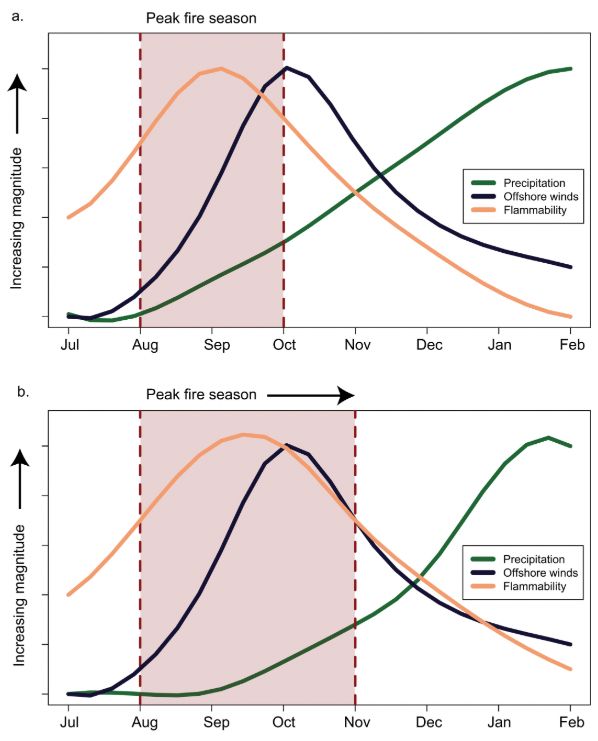
Here's a schematic I published in this 2021 piece to illustrate how even a modest delay in onset of rainy season in Southern California can dramatically amplify wildfire risk by lengthening seasonal overlap between dry vegetation and strong offshore winds during Oct-Jan. #CAfire
January 10, 2025 at 1:45 AM
Here's a schematic I published in this 2021 piece to illustrate how even a modest delay in onset of rainy season in Southern California can dramatically amplify wildfire risk by lengthening seasonal overlap between dry vegetation and strong offshore winds during Oct-Jan. #CAfire
Reposted by Chris Macpherson
Today is the date where the Contiguous U.S. has reached the midpoint of winter. Of course this is an average and varies quite a bit from west to east. 🥳

January 10, 2025 at 5:04 AM
Today is the date where the Contiguous U.S. has reached the midpoint of winter. Of course this is an average and varies quite a bit from west to east. 🥳
Reposted by Chris Macpherson

Every state in the contiguous U.S. is touched by drought now. Some entire states are in some degree of drought, including Florida.

December 12, 2024 at 2:34 PM
Every state in the contiguous U.S. is touched by drought now. Some entire states are in some degree of drought, including Florida.
Beautiful
Snow streaks can be seen across the Upper Midwest from yesterday's snow.
December 6, 2024 at 4:52 AM
Beautiful
Reposted by Chris Macpherson

As a reminder, land areas (where we live) are warming around twice as fast as the oceans. Subsequently, most of us are 'experiencing' temperatures rising faster than the global mean record.
Data from NASA GISTEMPv4: data.giss.nasa.gov/gistemp/ ⚒️🧪
Data from NASA GISTEMPv4: data.giss.nasa.gov/gistemp/ ⚒️🧪

December 5, 2024 at 12:50 AM
As a reminder, land areas (where we live) are warming around twice as fast as the oceans. Subsequently, most of us are 'experiencing' temperatures rising faster than the global mean record.
Data from NASA GISTEMPv4: data.giss.nasa.gov/gistemp/ ⚒️🧪
Data from NASA GISTEMPv4: data.giss.nasa.gov/gistemp/ ⚒️🧪
Landed in Salt Lake City for work - holy AQI.

December 5, 2024 at 12:50 AM
Landed in Salt Lake City for work - holy AQI.
Reposted by Chris Macpherson

This is from February of this year. And from what I’ve read it’s gotten worse since then. We’re in the purple. Sources below.


November 22, 2024 at 1:21 AM
This is from February of this year. And from what I’ve read it’s gotten worse since then. We’re in the purple. Sources below.
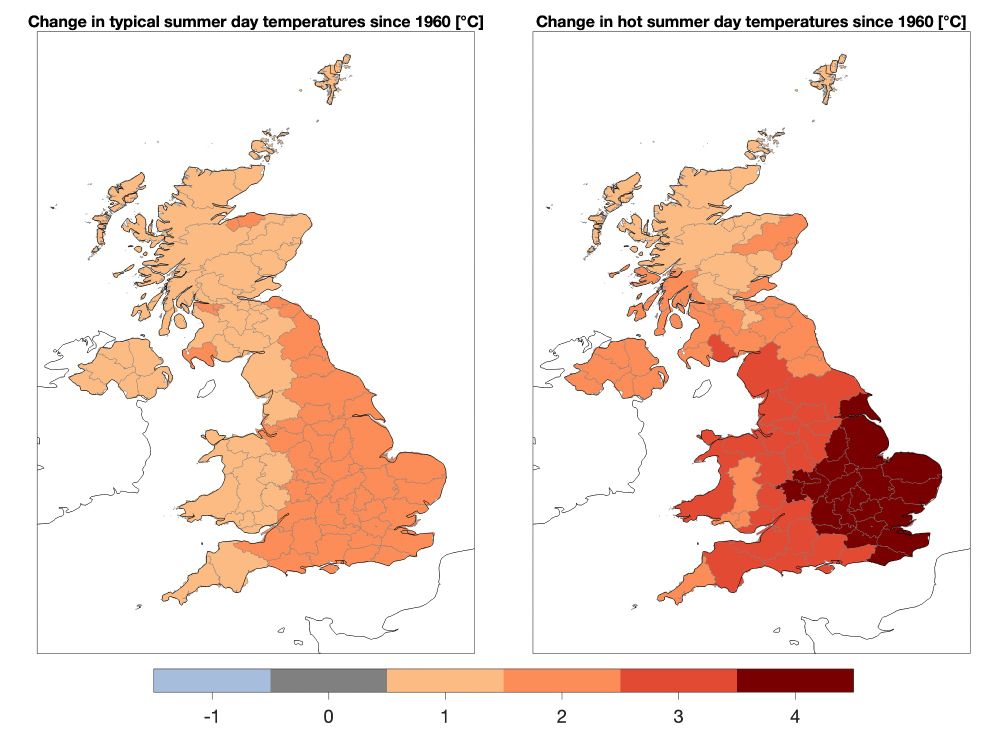
Really important to stress the non-linearity of the climate system.

Summer UK temperatures have warmed faster than global average temperature.
But the very hottest days have warmed 4x faster than the global average, especially in south-east England.
Global warming is not "just" 1°C or 2°C. The effects of climate change are non-linear, especially for extremes.
But the very hottest days have warmed 4x faster than the global average, especially in south-east England.
Global warming is not "just" 1°C or 2°C. The effects of climate change are non-linear, especially for extremes.
November 21, 2024 at 8:19 PM
Really important to stress the non-linearity of the climate system.