




Maria Sokolova
@arimiora.bsky.social
Lise Meitner Research Group Leader
@mpibiochem.bsky.social
Bacteriophages
@mpibiochem.bsky.social
Bacteriophages
Reposted by Maria Sokolova
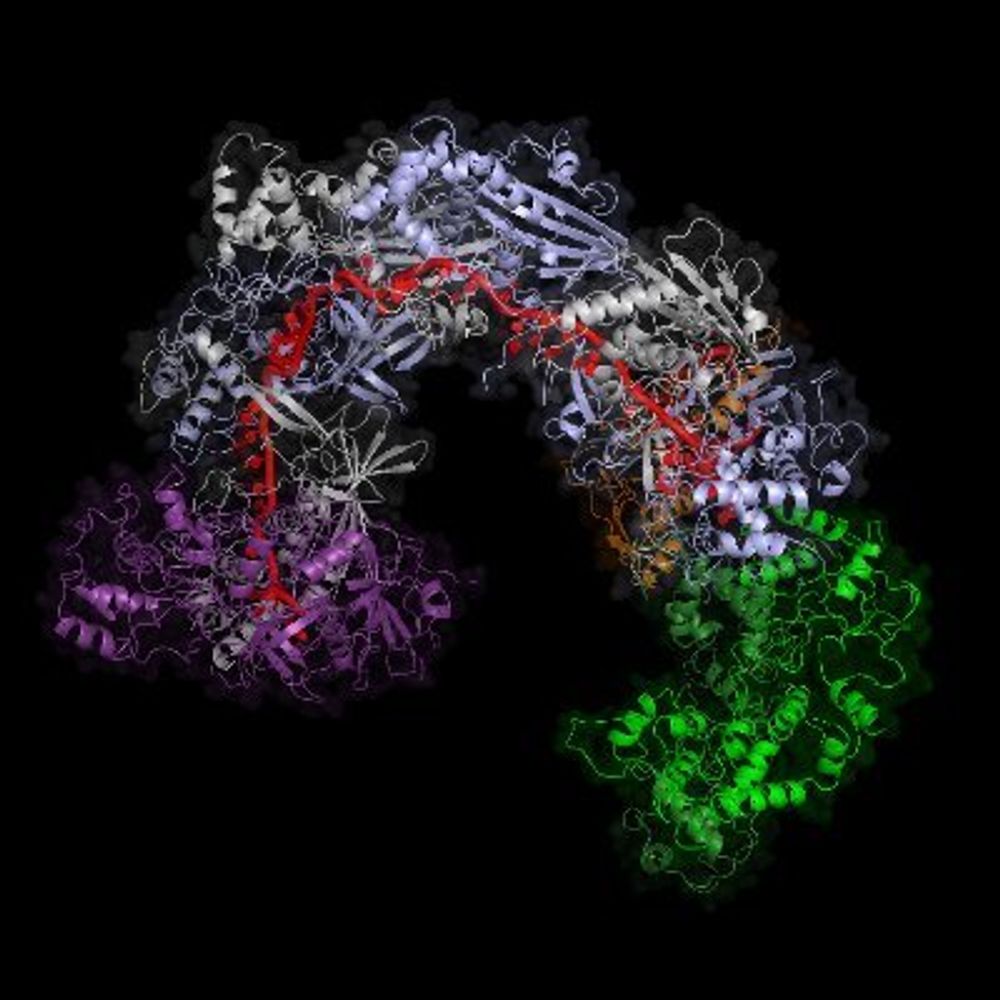
1/10 Genome maintenance by telomerase is a fundamental process in nearly all eukaryotes. But where does it come from?
Today, we report the discovery of telomerase homologs in a family of antiviral RTs, revealing an unexpected evolutionary origin in bacteria.
www.biorxiv.org/content/10.1...
Today, we report the discovery of telomerase homologs in a family of antiviral RTs, revealing an unexpected evolutionary origin in bacteria.
www.biorxiv.org/content/10.1...

Antiviral reverse transcriptases reveal the evolutionary origin of telomerase
Defense-associated reverse transcriptases (DRTs) employ diverse and distinctive mechanisms of cDNA synthesis to protect bacteria against viral infection. However, much of DRT family diversity remains ...
www.biorxiv.org
October 17, 2025 at 5:22 PM
1/10 Genome maintenance by telomerase is a fundamental process in nearly all eukaryotes. But where does it come from?
Today, we report the discovery of telomerase homologs in a family of antiviral RTs, revealing an unexpected evolutionary origin in bacteria.
www.biorxiv.org/content/10.1...
Today, we report the discovery of telomerase homologs in a family of antiviral RTs, revealing an unexpected evolutionary origin in bacteria.
www.biorxiv.org/content/10.1...
Reposted by Maria Sokolova
1/9 Metagenomics lets us read microbiomes in nature without cultivation, but writing (editing) them in their native context is still a major challenge.
Meet MetaEdit: a platform for pathway-scale metagenomic editing inside the gut microbiome. science.org/doi/10.1126/...
Meet MetaEdit: a platform for pathway-scale metagenomic editing inside the gut microbiome. science.org/doi/10.1126/...

Metagenomic editing of commensal bacteria in vivo using CRISPR-associated transposases
Although metagenomic sequencing has revealed a rich microbial biodiversity in the mammalian gut, methods to genetically alter specific species in the microbiome are highly limited. Here, we introduce ...
science.org
November 14, 2025 at 2:25 PM
1/9 Metagenomics lets us read microbiomes in nature without cultivation, but writing (editing) them in their native context is still a major challenge.
Meet MetaEdit: a platform for pathway-scale metagenomic editing inside the gut microbiome. science.org/doi/10.1126/...
Meet MetaEdit: a platform for pathway-scale metagenomic editing inside the gut microbiome. science.org/doi/10.1126/...
Reposted by Maria Sokolova
How do SMC complexes load onto DNA to get ready for loop extrusion?
@roisnehamelinf.bsky.social & co discovered that Wadjet, an SMC complex involved in bacterial DNA immunity, performs some impressive molecular gymnastics 🤸♂️🤸♂️🤸♂️.
Check out the new paper: www.cell.com/molecular-ce...
@roisnehamelinf.bsky.social & co discovered that Wadjet, an SMC complex involved in bacterial DNA immunity, performs some impressive molecular gymnastics 🤸♂️🤸♂️🤸♂️.
Check out the new paper: www.cell.com/molecular-ce...

October 9, 2025 at 2:43 PM
How do SMC complexes load onto DNA to get ready for loop extrusion?
@roisnehamelinf.bsky.social & co discovered that Wadjet, an SMC complex involved in bacterial DNA immunity, performs some impressive molecular gymnastics 🤸♂️🤸♂️🤸♂️.
Check out the new paper: www.cell.com/molecular-ce...
@roisnehamelinf.bsky.social & co discovered that Wadjet, an SMC complex involved in bacterial DNA immunity, performs some impressive molecular gymnastics 🤸♂️🤸♂️🤸♂️.
Check out the new paper: www.cell.com/molecular-ce...
Reposted by Maria Sokolova

NAD+ is a central molecule in bacterial immunity. An excellent and timely review by Hugo Vausset and Aude Bernheim

Many antiphage systems use NAD+, in many ways.
@hugovaysset.bsky.social reviewed them all!
Read to know more about all their molecular mechanisms, how phages counteract them, their distribution in bacteria and their conservation in eukaryotic immunity!
www.cell.com/molecular-ce...
@hugovaysset.bsky.social reviewed them all!
Read to know more about all their molecular mechanisms, how phages counteract them, their distribution in bacteria and their conservation in eukaryotic immunity!
www.cell.com/molecular-ce...

The multifaceted roles of NAD+ in bacterial immunity
In this review, Vaysset and Bernheim examine how nicotinamide adenine dinucleotide
(NAD+) is a key player in diverse and widespread bacterial antiphage defense systems
and phage counterdefense. The au...
www.cell.com
October 18, 2025 at 2:56 PM
NAD+ is a central molecule in bacterial immunity. An excellent and timely review by Hugo Vausset and Aude Bernheim
Reposted by Maria Sokolova
Been working on a really strange retron bacterial immune system, here's the preprint: www.biorxiv.org/content/10.1...
Type VI retrons are unlike any other. Phage infection triggers reverse transcription of a DNA fragment that activates translation of a toxin to kill the infected cell.
Type VI retrons are unlike any other. Phage infection triggers reverse transcription of a DNA fragment that activates translation of a toxin to kill the infected cell.

October 23, 2025 at 6:49 PM
Been working on a really strange retron bacterial immune system, here's the preprint: www.biorxiv.org/content/10.1...
Type VI retrons are unlike any other. Phage infection triggers reverse transcription of a DNA fragment that activates translation of a toxin to kill the infected cell.
Type VI retrons are unlike any other. Phage infection triggers reverse transcription of a DNA fragment that activates translation of a toxin to kill the infected cell.
Reposted by Maria Sokolova

New article alert: Bacterial TIR-based immune systems sense phage capsids to initiate defense
Out now in Nature Microbiology by Cameron G. Roberts, Chloe B. Fishman, Zhiying Zhang, Dalton V. Banh, Dinshaw J. Patel & Luciano A. Marraffini
#microsky
www.nature.com/articles/s41...
Out now in Nature Microbiology by Cameron G. Roberts, Chloe B. Fishman, Zhiying Zhang, Dalton V. Banh, Dinshaw J. Patel & Luciano A. Marraffini
#microsky
www.nature.com/articles/s41...

Bacterial TIR-based immune systems sense phage capsids to initiate defense - Nature Microbiology
After sensing capsids, the Thoeris antiphage defense system triggers a cascade that leads to NAD+ cleavage and cell arrest, which are dynamics that are mirrored in some mammalian immune pathways.
www.nature.com
October 24, 2025 at 5:23 PM
New article alert: Bacterial TIR-based immune systems sense phage capsids to initiate defense
Out now in Nature Microbiology by Cameron G. Roberts, Chloe B. Fishman, Zhiying Zhang, Dalton V. Banh, Dinshaw J. Patel & Luciano A. Marraffini
#microsky
www.nature.com/articles/s41...
Out now in Nature Microbiology by Cameron G. Roberts, Chloe B. Fishman, Zhiying Zhang, Dalton V. Banh, Dinshaw J. Patel & Luciano A. Marraffini
#microsky
www.nature.com/articles/s41...
Reposted by Maria Sokolova

A membrane-bound nuclease directly cleaves phage DNA during genome injection https://www.biorxiv.org/content/10.1101/2025.11.03.685801v1
November 3, 2025 at 4:16 PM
A membrane-bound nuclease directly cleaves phage DNA during genome injection https://www.biorxiv.org/content/10.1101/2025.11.03.685801v1
Reposted by Maria Sokolova
Bacteria can sense when a virus starts shredding their genome — by detecting methylated mononucleotides.
Here’s the story of how we discovered the Metis defense system 👇
www.biorxiv.org/content/10.1...
Here’s the story of how we discovered the Metis defense system 👇
www.biorxiv.org/content/10.1...

November 6, 2025 at 5:00 AM
Bacteria can sense when a virus starts shredding their genome — by detecting methylated mononucleotides.
Here’s the story of how we discovered the Metis defense system 👇
www.biorxiv.org/content/10.1...
Here’s the story of how we discovered the Metis defense system 👇
www.biorxiv.org/content/10.1...
Reposted by Maria Sokolova
Fascinating discovery - anti-phage defense protein is a proenzyme that is cleaved by partner protease after phage infection and all three! products of cleavage form active nuclease.

Our nuclease-protease story is out! We explored a fascinating case of coevolution and modularity in prokaryotic immune systems: www.science.org/doi/10.1126/...
Thanks to wonderful coauthors/collaborators/friends, the whole @doudna-lab.bsky.social and everyone at @innovativegenomics.bsky.social
Thanks to wonderful coauthors/collaborators/friends, the whole @doudna-lab.bsky.social and everyone at @innovativegenomics.bsky.social

Recurrent acquisition of nuclease-protease pairs in antiviral immunity
Antiviral immune systems diversify by integrating new genes into existing pathways, creating new mechanisms of viral resistance. We identified genes encoding a predicted nuclease paired with a trypsin...
www.science.org
November 14, 2025 at 7:51 AM
Fascinating discovery - anti-phage defense protein is a proenzyme that is cleaved by partner protease after phage infection and all three! products of cleavage form active nuclease.
Reposted by Maria Sokolova
Very happy to see this piece out in @plosbiology.org, on the bacterial immune systems and microbial communities. It was a great team effort with Rafael Custodio, @brockhurstlab.bsky.social , @brownlab.bsky.social, and Edze Westra! 🦠🧫 #phagesky #mevosky
journals.plos.org/plosbiology/...
journals.plos.org/plosbiology/...

Bacterial immune systems as causes and consequences of microbiome structure
Bacterial immune systems have evolved in response to diverse molecular "parasites", yet their ecological roles remain poorly understood. This Essay explores how interactions between mobile genetic ele...
journals.plos.org
November 19, 2025 at 6:35 PM
Very happy to see this piece out in @plosbiology.org, on the bacterial immune systems and microbial communities. It was a great team effort with Rafael Custodio, @brockhurstlab.bsky.social , @brownlab.bsky.social, and Edze Westra! 🦠🧫 #phagesky #mevosky
journals.plos.org/plosbiology/...
journals.plos.org/plosbiology/...
Reposted by Maria Sokolova

🚀New preprint from our lab!
I am very excited to finally share what has been the main focus of my PhD for the past almost 3 years! It is about viral dark matter and a powerful tool we built to shed light on it. 🧬💡
Continue reading (🧵)
I am very excited to finally share what has been the main focus of my PhD for the past almost 3 years! It is about viral dark matter and a powerful tool we built to shed light on it. 🧬💡
Continue reading (🧵)

November 20, 2025 at 6:52 PM
🚀New preprint from our lab!
I am very excited to finally share what has been the main focus of my PhD for the past almost 3 years! It is about viral dark matter and a powerful tool we built to shed light on it. 🧬💡
Continue reading (🧵)
I am very excited to finally share what has been the main focus of my PhD for the past almost 3 years! It is about viral dark matter and a powerful tool we built to shed light on it. 🧬💡
Continue reading (🧵)
Reposted by Maria Sokolova
Work I co-led with @jnoms.bsky.social is now online at
@cp-cellhostmicrobe.bsky.social ! We revealed a previously unrealized diversity of viral immune-evasion proteins that selectively destroy different cyclic nucleotide signals used in bacterial immunity.
www.sciencedirect.com/science/arti...
@cp-cellhostmicrobe.bsky.social ! We revealed a previously unrealized diversity of viral immune-evasion proteins that selectively destroy different cyclic nucleotide signals used in bacterial immunity.
www.sciencedirect.com/science/arti...

Divergent viral phosphodiesterases for immune signaling evasion
Cyclic dinucleotides (CDNs) and other short oligonucleotides play fundamental roles in immune system activation in organisms ranging from bacteria to …
www.sciencedirect.com
November 25, 2025 at 9:10 PM
Work I co-led with @jnoms.bsky.social is now online at
@cp-cellhostmicrobe.bsky.social ! We revealed a previously unrealized diversity of viral immune-evasion proteins that selectively destroy different cyclic nucleotide signals used in bacterial immunity.
www.sciencedirect.com/science/arti...
@cp-cellhostmicrobe.bsky.social ! We revealed a previously unrealized diversity of viral immune-evasion proteins that selectively destroy different cyclic nucleotide signals used in bacterial immunity.
www.sciencedirect.com/science/arti...
Reposted by Maria Sokolova
The mechanism of Lamassu, an abundant bacterial immune system, is now solved
Lamassu evolved from a DNA repair complex
Beautiful study from the Patel, Bernheim and Sternberg labs
Lamassu evolved from a DNA repair complex
Beautiful study from the Patel, Bernheim and Sternberg labs
🧬🛡️How are new immune mechanisms created?
We show how Lamassu antiphage system, originated from a DNA-repair complex and evolved into a compact and modular immune machine, wt Dinshaw Patel lab in @pnas.org.
👏 @matthieu-haudiquet.bsky.social, Arpita Chakravarti & all authors!
doi.org/10.1073/pnas...
We show how Lamassu antiphage system, originated from a DNA-repair complex and evolved into a compact and modular immune machine, wt Dinshaw Patel lab in @pnas.org.
👏 @matthieu-haudiquet.bsky.social, Arpita Chakravarti & all authors!
doi.org/10.1073/pnas...


November 27, 2025 at 7:08 PM
The mechanism of Lamassu, an abundant bacterial immune system, is now solved
Lamassu evolved from a DNA repair complex
Beautiful study from the Patel, Bernheim and Sternberg labs
Lamassu evolved from a DNA repair complex
Beautiful study from the Patel, Bernheim and Sternberg labs
Reposted by Maria Sokolova
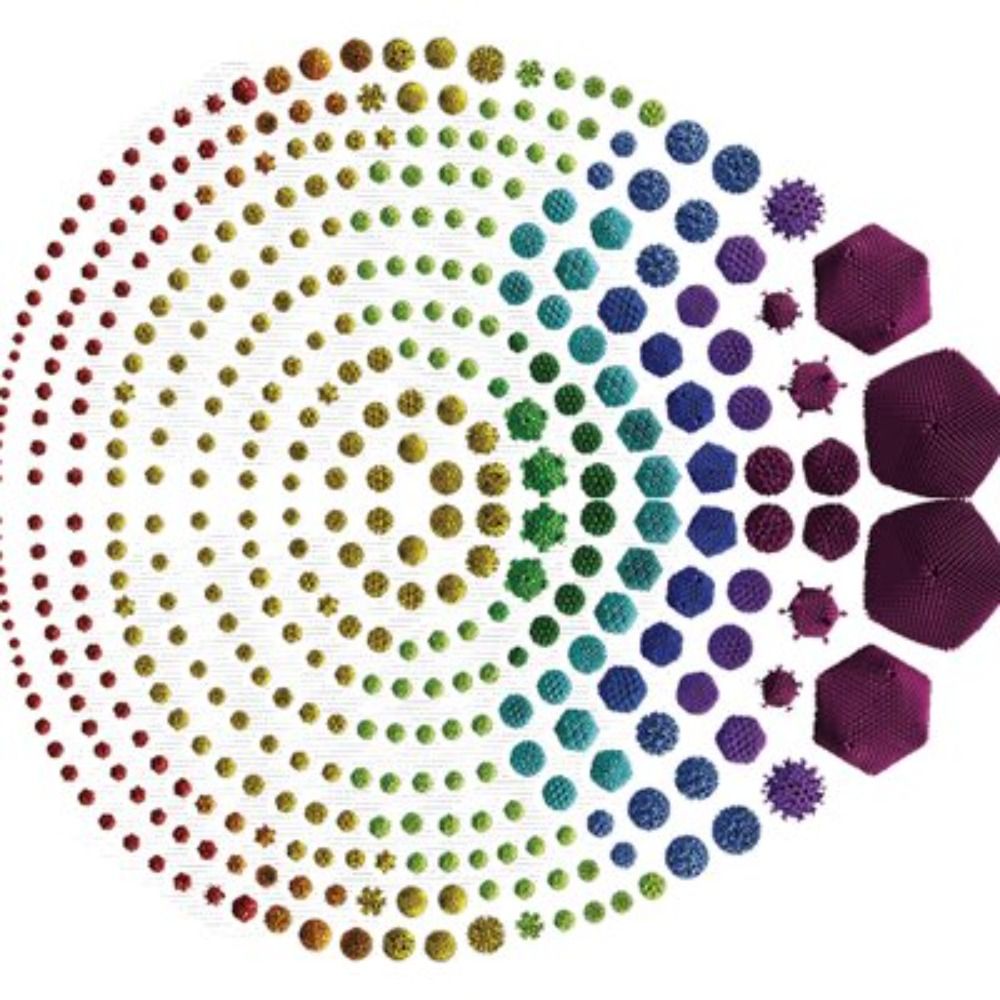
Check out our latest paper on mirusviruses, one of the most remarkable new groups of protist viruses - extremely diverse, carry lots of spliceosomal introns (including new homing introns) and are at the evolutionary crossroads between tailed phages and herpesviruses! www.nature.com/articles/s41...

Widespread and intron-rich mirusviruses are predicted to reproduce in nuclei of unicellular eukaryotes - Nature Microbiology
Environmental metagenomic explorations show that Mirusviricota lineages lack essential replication and transcription genes and contain spliceosomal introns, suggesting nuclear reproduction.
www.nature.com
November 28, 2025 at 4:43 PM
Check out our latest paper on mirusviruses, one of the most remarkable new groups of protist viruses - extremely diverse, carry lots of spliceosomal introns (including new homing introns) and are at the evolutionary crossroads between tailed phages and herpesviruses! www.nature.com/articles/s41...
Reposted by Maria Sokolova
Of the 10 defense systems originally discovered in Doron et al 2018, Kiwa was one of the last to be studied - until now
Kiwa is a membrane-embedded complex activated in phage attachments sites to degrade phage DNA
A nice study by the Nobrega lab
Kiwa is a membrane-embedded complex activated in phage attachments sites to degrade phage DNA
A nice study by the Nobrega lab

Thrilled to see our Kiwa story out today! A membrane-associated supercomplex that senses infection and blocks replication and transcription.
www.cell.com/cell/fulltex...
Huge congratulations to Yi and Zhiying for bringing it home, to Thomas for starting us off, and to all the collaborators.
www.cell.com/cell/fulltex...
Huge congratulations to Yi and Zhiying for bringing it home, to Thomas for starting us off, and to all the collaborators.
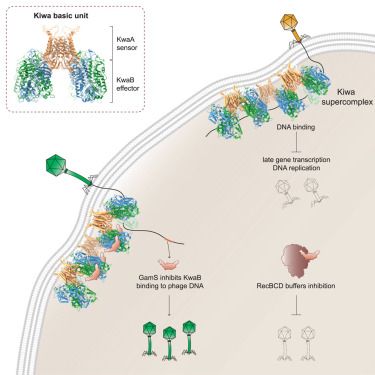
Kiwa is a membrane-embedded defense supercomplex activated at phage attachment sites
Zhang, Todeschini, and Wu et al. show that the bacterial defense system Kiwa senses
phage attachment at the membrane and assembles a transmembrane complex that halts
infection by blocking phage DNA re...
www.cell.com
July 29, 2025 at 6:53 AM
Of the 10 defense systems originally discovered in Doron et al 2018, Kiwa was one of the last to be studied - until now
Kiwa is a membrane-embedded complex activated in phage attachments sites to degrade phage DNA
A nice study by the Nobrega lab
Kiwa is a membrane-embedded complex activated in phage attachments sites to degrade phage DNA
A nice study by the Nobrega lab
Reposted by Maria Sokolova
Very interesting work from Ibarlosa and colleagues regarding functional amyloid forming proteins in prokaryotic immunity.
www.nature.com/articles/s41...
Check out our News & Views summary of the work as well!
rdcu.be/eBHxh
www.nature.com/articles/s41...
Check out our News & Views summary of the work as well!
rdcu.be/eBHxh

Amyloids in bacterial antiphage defence
Nature Microbiology - Bacterial prions form amyloids in response to phage infection and induce cell death to prevent viral replication, similar to the processes in fungi and across the tree of life.
rdcu.be
August 21, 2025 at 2:06 PM
Very interesting work from Ibarlosa and colleagues regarding functional amyloid forming proteins in prokaryotic immunity.
www.nature.com/articles/s41...
Check out our News & Views summary of the work as well!
rdcu.be/eBHxh
www.nature.com/articles/s41...
Check out our News & Views summary of the work as well!
rdcu.be/eBHxh
Reposted by Maria Sokolova

Another important contribution from Sorek and Blokesch labs.
This engineering strategy with synthetic inhibitors could yield more powerful phages than natural inhibitors, since the latter sometimes trigger other defense systems..
This engineering strategy with synthetic inhibitors could yield more powerful phages than natural inhibitors, since the latter sometimes trigger other defense systems..
Preprint: De-novo design of proteins that inhibit bacterial defenses
Our approach allows silencing defense systems of choice. We show how this approach enables programming of “untransformable” bacteria, and how it can enhance phage therapy applications
Congrats Jeremy Garb!
tinyurl.com/Syttt
🧵
Our approach allows silencing defense systems of choice. We show how this approach enables programming of “untransformable” bacteria, and how it can enhance phage therapy applications
Congrats Jeremy Garb!
tinyurl.com/Syttt
🧵

Synthetically designed anti-defense proteins overcome barriers to bacterial transformation and phage infection
Bacterial defense systems present considerable barriers to both phage infection and plasmid transformation. These systems target mobile genetic elements, limiting the efficacy of bacteriophage-based t...
www.biorxiv.org
September 4, 2025 at 7:01 AM
Another important contribution from Sorek and Blokesch labs.
This engineering strategy with synthetic inhibitors could yield more powerful phages than natural inhibitors, since the latter sometimes trigger other defense systems..
This engineering strategy with synthetic inhibitors could yield more powerful phages than natural inhibitors, since the latter sometimes trigger other defense systems..
Reposted by Maria Sokolova

Looking for a new approach to studying or eliminating phages? Check out our study introducing anti-phage ASOs (antisense oligos) out in @Nature today. nature.com/articles/s4158…

September 10, 2025 at 3:40 PM
Looking for a new approach to studying or eliminating phages? Check out our study introducing anti-phage ASOs (antisense oligos) out in @Nature today. nature.com/articles/s4158…
Reposted by Maria Sokolova
Phage "satellites" that produce capsids but have no genes to produce tails have puzzled scientists for a long time. These are abundant as prophages in bacteria, but it was unclear how they can infect without tails
Now, Penadés & co show that they hijack tails from other phages. Incredible!
Now, Penadés & co show that they hijack tails from other phages. Incredible!
Thrilled to share our two latest papers with the @tcostalab.bsky.social
lab! In the first, we uncover a new mechanism of satellite transfer: cf-PICIs hijack tails from diverse phages to spread across species.
@imperialcollegeldn.bsky.social
www.cell.com/cell/fulltex...
lab! In the first, we uncover a new mechanism of satellite transfer: cf-PICIs hijack tails from diverse phages to spread across species.
@imperialcollegeldn.bsky.social
www.cell.com/cell/fulltex...

Chimeric infective particles expand species boundaries in phage-inducible chromosomal island mobilization
Capsid-forming PICIs (cf-PICIs) produce their own capsids and exploit phage tails
from unrelated species to transfer their DNA across bacterial hosts. This tail piracy
enables broad dissemination and ...
www.cell.com
September 11, 2025 at 11:23 AM
Phage "satellites" that produce capsids but have no genes to produce tails have puzzled scientists for a long time. These are abundant as prophages in bacteria, but it was unclear how they can infect without tails
Now, Penadés & co show that they hijack tails from other phages. Incredible!
Now, Penadés & co show that they hijack tails from other phages. Incredible!
Reposted by Maria Sokolova
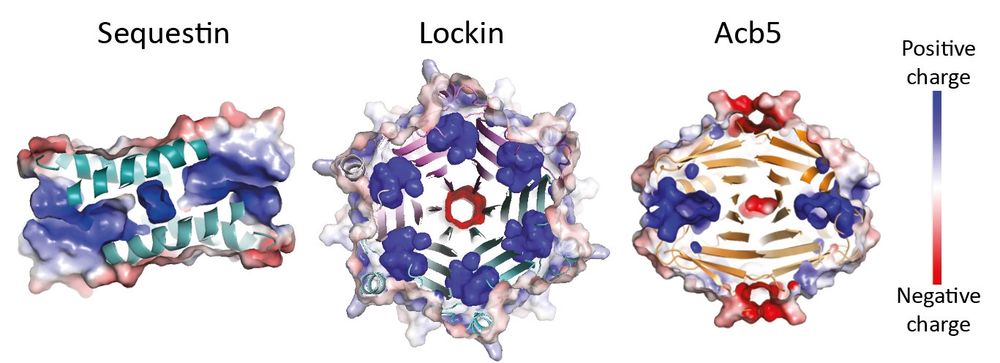
Preprint: “Structural modeling reveals viral proteins that manipulate host immune signaling”
Using AI-guided structural modeling, we find new families of viral proteins that sequester or cleave host immune signaling molecules
Congrats Nitzan Tal!
www.biorxiv.org/content/10.1...
Using AI-guided structural modeling, we find new families of viral proteins that sequester or cleave host immune signaling molecules
Congrats Nitzan Tal!
www.biorxiv.org/content/10.1...
July 14, 2025 at 7:36 AM
Preprint: “Structural modeling reveals viral proteins that manipulate host immune signaling”
Using AI-guided structural modeling, we find new families of viral proteins that sequester or cleave host immune signaling molecules
Congrats Nitzan Tal!
www.biorxiv.org/content/10.1...
Using AI-guided structural modeling, we find new families of viral proteins that sequester or cleave host immune signaling molecules
Congrats Nitzan Tal!
www.biorxiv.org/content/10.1...
Reposted by Maria Sokolova
📢Preprint out!
Excited to share my final work from the @soreklab.bsky.social!
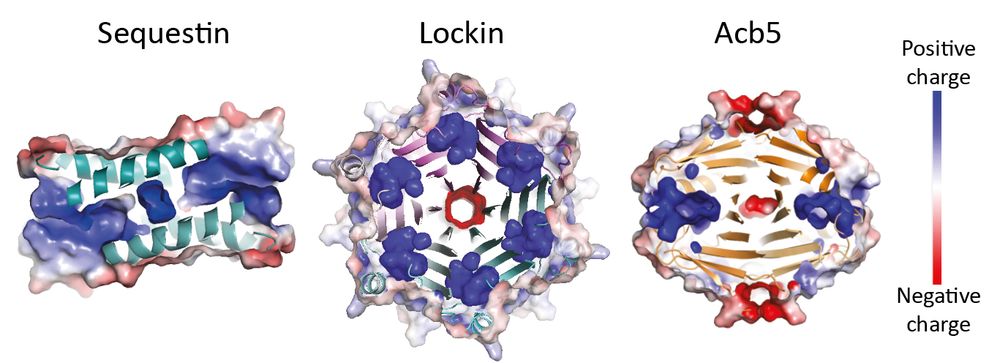
We mined phage dark matter using structural features shared by anti-defense proteins (viral tools that help phages bypass bacterial immunity) to guide discovery.
Found 3 new families targeting immune signaling!
Excited to share my final work from the @soreklab.bsky.social!
We mined phage dark matter using structural features shared by anti-defense proteins (viral tools that help phages bypass bacterial immunity) to guide discovery.
Found 3 new families targeting immune signaling!
July 13, 2025 at 7:49 AM
📢Preprint out!
Excited to share my final work from the @soreklab.bsky.social!
We mined phage dark matter using structural features shared by anti-defense proteins (viral tools that help phages bypass bacterial immunity) to guide discovery.
Found 3 new families targeting immune signaling!
Excited to share my final work from the @soreklab.bsky.social!
We mined phage dark matter using structural features shared by anti-defense proteins (viral tools that help phages bypass bacterial immunity) to guide discovery.
Found 3 new families targeting immune signaling!
Reposted by Maria Sokolova
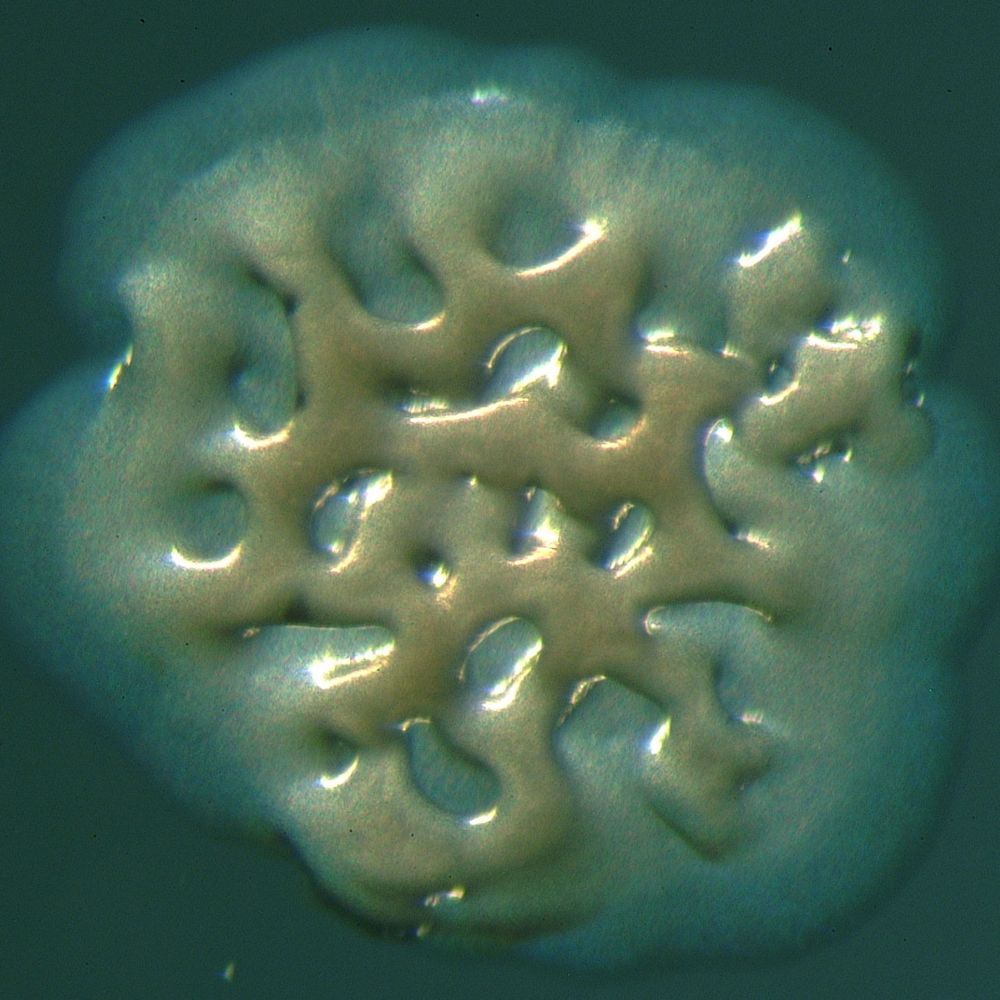
How phages trigger antiphage defence systems is a big unknown in the field. Looks great!
#mevosky
#mevosky

July 3, 2025 at 7:09 AM
How phages trigger antiphage defence systems is a big unknown in the field. Looks great!
#mevosky
#mevosky
Reposted by Maria Sokolova
Nuclease-NTPase systems use shared molecular features to controlbacterial anti-phage defense https://www.biorxiv.org/content/10.1101/2025.07.10.664194v1
July 11, 2025 at 3:18 AM
Nuclease-NTPase systems use shared molecular features to controlbacterial anti-phage defense https://www.biorxiv.org/content/10.1101/2025.07.10.664194v1
Reposted by Maria Sokolova

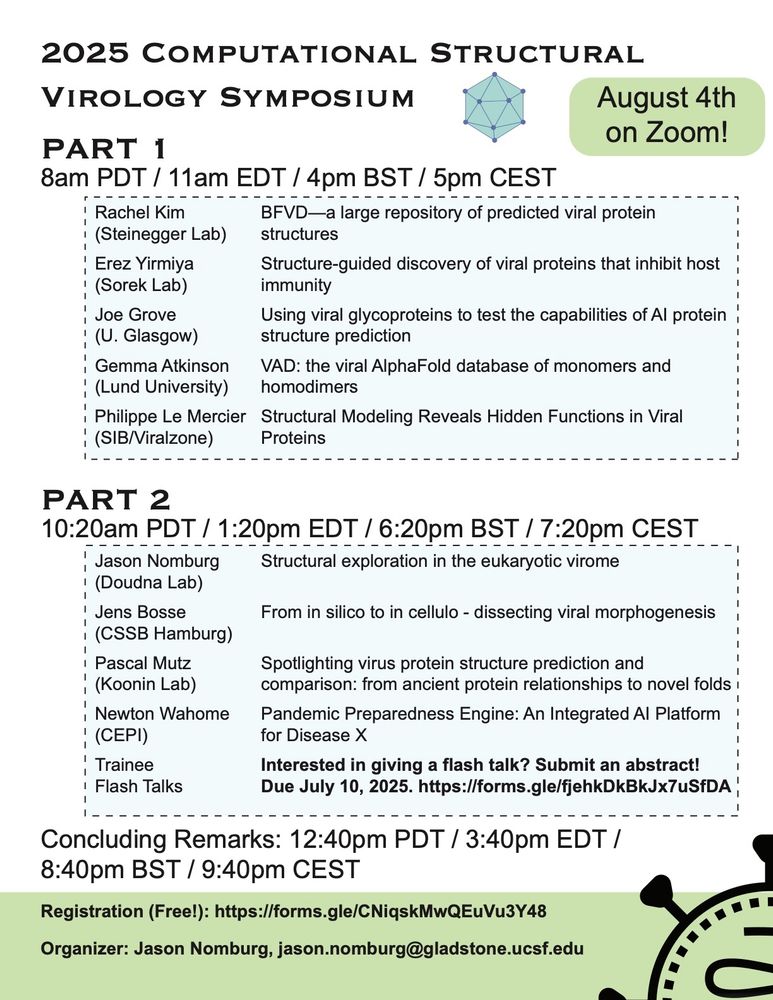
Hello everyone! I am pleased to share information on the first ever Computational Structural Virology Symposium, conducted August 4th on zoom and highlighting work in this emerging field. You can register for this event here: forms.gle/CNiqskMwQEuV.... Please re-post!
June 12, 2025 at 8:31 PM
Hello everyone! I am pleased to share information on the first ever Computational Structural Virology Symposium, conducted August 4th on zoom and highlighting work in this emerging field. You can register for this event here: forms.gle/CNiqskMwQEuV.... Please re-post!
Reposted by Maria Sokolova
We're thrilled to share the published version of our DRT9 story, online today @nature.com! Congratulations to all authors!
www.nature.com/articles/s41...
www.nature.com/articles/s41...
Hello BlueSky! Inaugural post here from the Sternberg Lab. We're excited to share our latest work, in which we teamed up with the @WiedenheftLab to study how DRT9 reverse transcriptases provide antiviral immunity. Here’s what we found: www.biorxiv.org/content/10.1...

Protein-primed DNA homopolymer synthesis by an antiviral reverse transcriptase
Bacteria defend themselves from viral predation using diverse immune systems, many of which sense and target foreign DNA for degradation. Defense-associated reverse transcriptase (DRT) systems provide...
www.biorxiv.org
May 28, 2025 at 9:06 PM
We're thrilled to share the published version of our DRT9 story, online today @nature.com! Congratulations to all authors!
www.nature.com/articles/s41...
www.nature.com/articles/s41...