




Franklin Nobrega
@fnobrega.bsky.social
Phage Biology, Bacterial defense systems, CRISPR-Cas, Microbial communities, Mucus interactions
http://www.fnobregalab.org
http://www.klebphacol.org
http://www.phage-collection.org
http://www.fnobregalab.org
http://www.klebphacol.org
http://www.phage-collection.org
Pinned
A methylome-derived m6-dAMP trigger assembles a PUA-Cal-HAD immune filament that depletes dNTPs to abort phage infection
Bacteria must distinguish phage attack from normal homeostatic processes, yet the danger signals that trigger many defence systems remain unknown. Here, we show that a PUA-Calcineurin-CE-HAD module from Escherichia coli ECOR28 confers broad anti-phage protection by binding Dam-methylated deoxyadenosine monophosphate (m6-dAMP) generated during phage-induced chromosome degradation. Ligand binding converts a preassembled PUA-Calcineurin-CE hexamer loaded with six HAD phosphatases into a polymerising filament. The filament acts as a high-flux dNTP sink through a two-enzyme cascade: HAD first dephosphorylates dATP to dADP, and Calcineurin-CE then converts dADP to dAMP. dNTP collapse halts phage replication and enforces abortive infection. Multiple mobile-element DNA mimic proteins block filament assembly, revealing a direct phage counter-defence. More broadly, our findings extend a conserved, cross-kingdom paradigm of immune filament assembly to nucleotide-depletion antiviral defence and suggest modified-nucleotide sensing by related PUA-Calcineurin-CE modules as a widespread, underappreciated bacterial strategy. ### Competing Interest Statement The authors have declared no competing interest. NIHR Southampton Biomedical Research Centre, https://ror.org/01qqpzg67, Postdoctoral Bridging Fellowship F.L.N. is supported by a Wessex Health Partners (WHP) and National Institute for Health and Care Research Wessex Experimental Medicine Network (NIHR WEMN), Seed fund National Institutes of Health, GM145888, U24 GM129539) Maloris Foundation Memorial Sloan Kettering Cancer Center, P30-CA008748 Simons Foundation, SF349247 New York State Assembly
www.biorxiv.org
Preprint out: We characterise PUA-Cal-HAD, a widespread bacterial antiphage defence family. An infection cue switches a preassembled complex into an immune filament that drains dNTPs via a coupled two-enzyme cascade, and phage DNA mimics can block filament assembly (anti-polymerisation).
Reposted by Franklin Nobrega

Bacterial defense via RES-mediated NAD+ depletion is countered by phage phosphatases | bioRxiv https://www.biorxiv.org/content/10.64898/2026.01.28.702374v1?rss=1

Bacterial defense via RES-mediated NAD+ depletion is countered by phage phosphatases
Many bacterial defense systems restrict phage infection by breaking the molecule NAD+ to its constituents, adenosine diphosphate ribose (ADPR) and nicotinamide (Nam). To counter NAD+ depletion-mediated defense, phages evolved NAD+ reconstitution pathway 1 (NARP1), which uses ADPR and Nam to rebuild NAD+. Here we report a bacterial defense system called aRES, involving RES-domain proteins that degrade NAD+ into Nam and ADPR-1″-phosphate (ADPR-1P). This molecule cannot serve as a substrate for NARP1, so that NAD+ depletion by aRES defends against phages even if they encode NARP1. We further discover that some phages evolved an extended NARP1 pathway capable of overcoming aRES defense. In these phages, the NARP1 operon also includes a specialized phosphatase, which dephosphorylates ADPR-1P to form ADPR, a substrate from which NARP1 then reconstitutes NAD+. Other phages encode inhibitors that directly bind aRES proteins and physically block their active sites. Our study describes new layers in the NAD+-centric arms race between bacteria and phages and highlights the centrality of the NAD+ pool in cellular battles between viruses and their hosts. ### Competing Interest Statement The authors have declared no competing interest. European Research Council, ERC-AdG GA 101018520 Israel Science Foundation, MAPATS grant 2720/22 Deutsche Forschungsgemeinschaft, SPP 2330, grant 464312965 Minerva Foundation with funding from the Federal German Ministry for Education and Research research grant from Magnus Konow in honor of his mother Olga Konow Rappaport Ministry of Aliyah and Immigrant Absorption, https://ror.org/05aycsg86 Clore Scholars Program
www.biorxiv.org
January 29, 2026 at 4:39 AM
Bacterial defense via RES-mediated NAD+ depletion is countered by phage phosphatases | bioRxiv https://www.biorxiv.org/content/10.64898/2026.01.28.702374v1?rss=1
Reposted by Franklin Nobrega
Friends, please help spread the word about our microbiology REU program at Montana State University.
www.montana.edu/mbi/reu/
Each student receives a stipend ($7000 for 10 wks). Travel compensation, room, and board are also provided.
Details in the attached pic--Feb 14 deadline
🧫🧪🦠#microsky
www.montana.edu/mbi/reu/
Each student receives a stipend ($7000 for 10 wks). Travel compensation, room, and board are also provided.
Details in the attached pic--Feb 14 deadline
🧫🧪🦠#microsky


January 28, 2026 at 7:46 PM
Friends, please help spread the word about our microbiology REU program at Montana State University.
www.montana.edu/mbi/reu/
Each student receives a stipend ($7000 for 10 wks). Travel compensation, room, and board are also provided.
Details in the attached pic--Feb 14 deadline
🧫🧪🦠#microsky
www.montana.edu/mbi/reu/
Each student receives a stipend ($7000 for 10 wks). Travel compensation, room, and board are also provided.
Details in the attached pic--Feb 14 deadline
🧫🧪🦠#microsky
Reposted by Franklin Nobrega

A prophage-encoded abortive infection protein preserves host and prophage spread www.nature.com/articles/s41...

A prophage-encoded abortive infection protein preserves host and prophage spread - Nature
A Gifsy-1 prophage–encoded higher eukaryotes and prokaryotes nucleotide-binding protein, HepS, senses Siphoviridae infection, activates abortive defence by cleaving host transfer RNAs, blocks rival ph...
www.nature.com
January 28, 2026 at 7:13 PM
A prophage-encoded abortive infection protein preserves host and prophage spread www.nature.com/articles/s41...
Reposted by Franklin Nobrega
Phage therapy offers a powerful tool against AMR infections—but only if we move from isolated cases to coordinated systems. The first initiative of the ASM Health Unit, led by Colleen Kraft and Dev Mittar, will tackle this. Delighted by this scientific leadership, join us!
asm.org/about-asm/as...
asm.org/about-asm/as...
Phage Therapy Coordination Network | ASM.org
ASM Health is unlocking bacteriophage therapies for antimicrobial resistance (AMR) through coordinated access and regulatory approvals.
asm.org
January 27, 2026 at 5:52 PM
Phage therapy offers a powerful tool against AMR infections—but only if we move from isolated cases to coordinated systems. The first initiative of the ASM Health Unit, led by Colleen Kraft and Dev Mittar, will tackle this. Delighted by this scientific leadership, join us!
asm.org/about-asm/as...
asm.org/about-asm/as...
Reposted by Franklin Nobrega

Another cool finding of nucleotides activating antiphage defense 👇🏽
5′-phosphorylated deoxydinucleotides arising during host genome degradation activate the doughnut shaped ApeA oligomer, to cleave host
tRNAs and abort infection
✂️🧬➡️🍩✨➡️✂️☠️🦠
www.biorxiv.org/content/10.6...
5′-phosphorylated deoxydinucleotides arising during host genome degradation activate the doughnut shaped ApeA oligomer, to cleave host
tRNAs and abort infection
✂️🧬➡️🍩✨➡️✂️☠️🦠
www.biorxiv.org/content/10.6...
www.biorxiv.org
January 27, 2026 at 1:13 PM
Another cool finding of nucleotides activating antiphage defense 👇🏽
5′-phosphorylated deoxydinucleotides arising during host genome degradation activate the doughnut shaped ApeA oligomer, to cleave host
tRNAs and abort infection
✂️🧬➡️🍩✨➡️✂️☠️🦠
www.biorxiv.org/content/10.6...
5′-phosphorylated deoxydinucleotides arising during host genome degradation activate the doughnut shaped ApeA oligomer, to cleave host
tRNAs and abort infection
✂️🧬➡️🍩✨➡️✂️☠️🦠
www.biorxiv.org/content/10.6...
Reposted by Franklin Nobrega

New paper out in @pnas.org, and it made the cover! 👁️
We represent plasmids as circles and mutations as dots, resembling an eye, because in this paper we literally 𝑤𝑎𝑡𝑐ℎ plasmids evolve.
‼️Check Paula’s 🧵 and the paper👇
𝗣𝗹𝗮𝘀𝗺𝗶𝗱 𝗺𝘂𝘁𝗮𝘁𝗶𝗼𝗻 𝗿𝗮𝘁𝗲𝘀 𝘀𝗰𝗮𝗹𝗲 𝘄𝗶𝘁𝗵 𝗰𝗼𝗽𝘆 𝗻𝘂𝗺𝗯𝗲𝗿
www.pnas.org/doi/10.1073/...
We represent plasmids as circles and mutations as dots, resembling an eye, because in this paper we literally 𝑤𝑎𝑡𝑐ℎ plasmids evolve.
‼️Check Paula’s 🧵 and the paper👇
𝗣𝗹𝗮𝘀𝗺𝗶𝗱 𝗺𝘂𝘁𝗮𝘁𝗶𝗼𝗻 𝗿𝗮𝘁𝗲𝘀 𝘀𝗰𝗮𝗹𝗲 𝘄𝗶𝘁𝗵 𝗰𝗼𝗽𝘆 𝗻𝘂𝗺𝗯𝗲𝗿
www.pnas.org/doi/10.1073/...

January 27, 2026 at 8:23 PM
New paper out in @pnas.org, and it made the cover! 👁️
We represent plasmids as circles and mutations as dots, resembling an eye, because in this paper we literally 𝑤𝑎𝑡𝑐ℎ plasmids evolve.
‼️Check Paula’s 🧵 and the paper👇
𝗣𝗹𝗮𝘀𝗺𝗶𝗱 𝗺𝘂𝘁𝗮𝘁𝗶𝗼𝗻 𝗿𝗮𝘁𝗲𝘀 𝘀𝗰𝗮𝗹𝗲 𝘄𝗶𝘁𝗵 𝗰𝗼𝗽𝘆 𝗻𝘂𝗺𝗯𝗲𝗿
www.pnas.org/doi/10.1073/...
We represent plasmids as circles and mutations as dots, resembling an eye, because in this paper we literally 𝑤𝑎𝑡𝑐ℎ plasmids evolve.
‼️Check Paula’s 🧵 and the paper👇
𝗣𝗹𝗮𝘀𝗺𝗶𝗱 𝗺𝘂𝘁𝗮𝘁𝗶𝗼𝗻 𝗿𝗮𝘁𝗲𝘀 𝘀𝗰𝗮𝗹𝗲 𝘄𝗶𝘁𝗵 𝗰𝗼𝗽𝘆 𝗻𝘂𝗺𝗯𝗲𝗿
www.pnas.org/doi/10.1073/...
Reposted by Franklin Nobrega
Looking for a tool to estimate abundances of aerobes versus anaerobes directly from metagenomes? Here you go: www.biorxiv.org/content/10.6...
www.biorxiv.org
January 26, 2026 at 10:05 PM
Looking for a tool to estimate abundances of aerobes versus anaerobes directly from metagenomes? Here you go: www.biorxiv.org/content/10.6...
Reposted by Franklin Nobrega
📣 Please spread: we’re hiring a Lab Manager! It is a critical position in our new lab. As our lab moves to Barcelona and joins the @crg.eu, we’re looking for a Lab Manager to help build the lab and set the lab atmosphere.
🔗 Apply here 👉 recruitment.crg.eu/content/jobs...
🔗 Apply here 👉 recruitment.crg.eu/content/jobs...

January 23, 2026 at 6:41 AM
📣 Please spread: we’re hiring a Lab Manager! It is a critical position in our new lab. As our lab moves to Barcelona and joins the @crg.eu, we’re looking for a Lab Manager to help build the lab and set the lab atmosphere.
🔗 Apply here 👉 recruitment.crg.eu/content/jobs...
🔗 Apply here 👉 recruitment.crg.eu/content/jobs...
Reposted by Franklin Nobrega

Hello world! I am excited to announce my lab is open at the University of Utah in the Department of Biochemistry. We are looking for scientists at all levels interested in studying host-virus interactions in both bacteria and animals. Come join us in beautiful Utah! (photo is 10 steps from lab)

January 22, 2026 at 10:06 PM
Hello world! I am excited to announce my lab is open at the University of Utah in the Department of Biochemistry. We are looking for scientists at all levels interested in studying host-virus interactions in both bacteria and animals. Come join us in beautiful Utah! (photo is 10 steps from lab)
Reposted by Franklin Nobrega
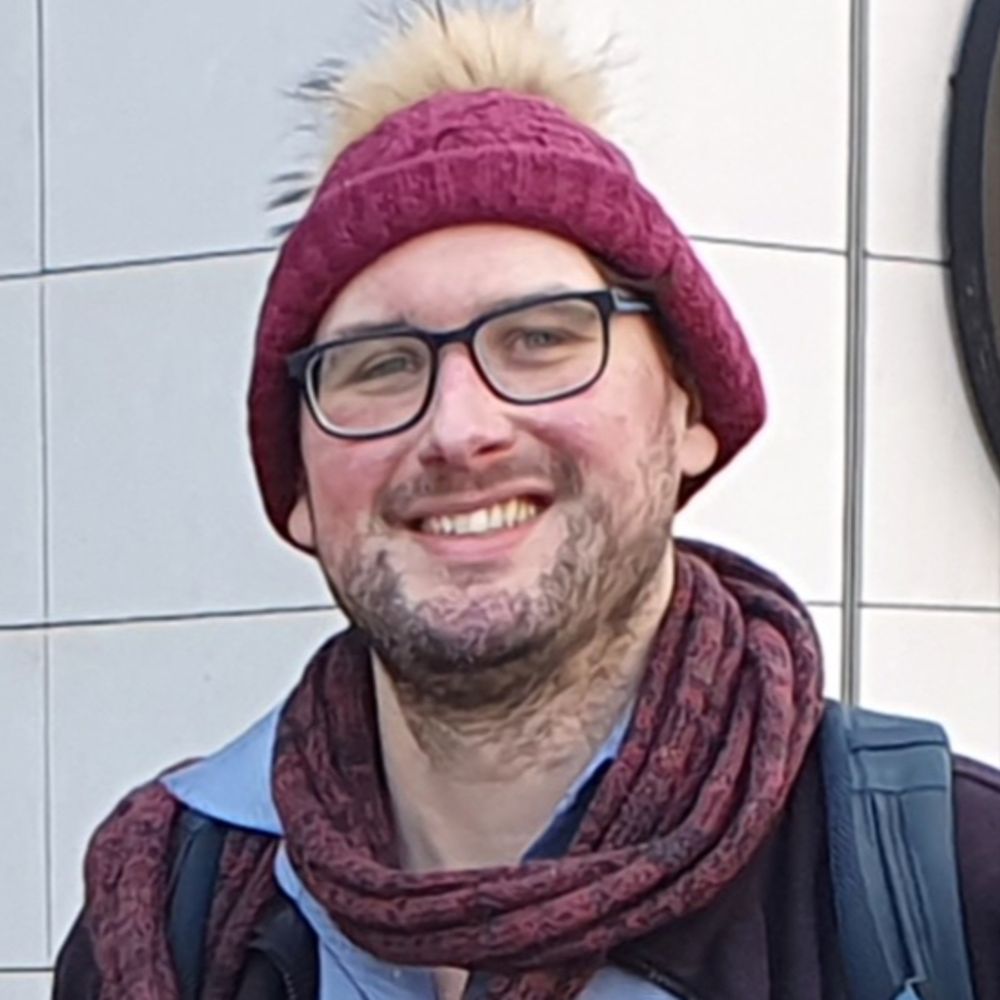
Our new paper on Insertion Sequences (IS) in #Klebsiella
- Lineages have vastly different IS loads and profiles
- An inverse relationship between IS load and metabolic capacity, in particular phosphorus use, consistent with early reductive evolution.
www.microbiologyresearch.org/content/jour...
- Lineages have vastly different IS loads and profiles
- An inverse relationship between IS load and metabolic capacity, in particular phosphorus use, consistent with early reductive evolution.
www.microbiologyresearch.org/content/jour...

Exploring the IS-capades of Klebsiella pneumoniae: insertion sequences drive metabolic loss in obscure sub-lineages
Introduction. Klebsiella pneumoniae is an opportunistic pathogen that causes a wide spectrum of infections within healthcare settings and the community. Four K. pneumoniae sub-lineages, defined using ...
www.microbiologyresearch.org
January 22, 2026 at 7:52 PM
Our new paper on Insertion Sequences (IS) in #Klebsiella
- Lineages have vastly different IS loads and profiles
- An inverse relationship between IS load and metabolic capacity, in particular phosphorus use, consistent with early reductive evolution.
www.microbiologyresearch.org/content/jour...
- Lineages have vastly different IS loads and profiles
- An inverse relationship between IS load and metabolic capacity, in particular phosphorus use, consistent with early reductive evolution.
www.microbiologyresearch.org/content/jour...
Reposted by Franklin Nobrega
📢 JOB OPPORTUNITY We are hiring a Research Technologist (Advanced Professional) to design, implement, support, analyze, and report on rigorous research in genetics, entomology, and host-microbe interactions. Please consider and share with others in need.
psu.wd1.myworkdayjobs.com/PSU_Staff/jo...
psu.wd1.myworkdayjobs.com/PSU_Staff/jo...

Research Technologist - Life Sciences Advance Professional - Bordenstein Lab
APPLICATION INSTRUCTIONS: CURRENT PENN STATE EMPLOYEE (faculty, staff, technical service, or student), please login to Workday to complete the internal application process. Please do not apply here, a...
psu.wd1.myworkdayjobs.com
January 17, 2026 at 11:01 PM
📢 JOB OPPORTUNITY We are hiring a Research Technologist (Advanced Professional) to design, implement, support, analyze, and report on rigorous research in genetics, entomology, and host-microbe interactions. Please consider and share with others in need.
psu.wd1.myworkdayjobs.com/PSU_Staff/jo...
psu.wd1.myworkdayjobs.com/PSU_Staff/jo...
Reposted by Franklin Nobrega

Our first lab paper is out.
Large-scale testing of antimicrobial lethality at single-cell resolution predicts mycobacterial infection outcomes.
From single cells to patients, across tuberculosis and M. abscessus.
👉 doi.org/10.1038/s415...
👇 Thread
Large-scale testing of antimicrobial lethality at single-cell resolution predicts mycobacterial infection outcomes.
From single cells to patients, across tuberculosis and M. abscessus.
👉 doi.org/10.1038/s415...
👇 Thread
Client Challenge
doi.org
January 12, 2026 at 7:26 AM
Our first lab paper is out.
Large-scale testing of antimicrobial lethality at single-cell resolution predicts mycobacterial infection outcomes.
From single cells to patients, across tuberculosis and M. abscessus.
👉 doi.org/10.1038/s415...
👇 Thread
Large-scale testing of antimicrobial lethality at single-cell resolution predicts mycobacterial infection outcomes.
From single cells to patients, across tuberculosis and M. abscessus.
👉 doi.org/10.1038/s415...
👇 Thread
Preprint out: We characterise PUA-Cal-HAD, a widespread bacterial antiphage defence family. An infection cue switches a preassembled complex into an immune filament that drains dNTPs via a coupled two-enzyme cascade, and phage DNA mimics can block filament assembly (anti-polymerisation).
A methylome-derived m6-dAMP trigger assembles a PUA-Cal-HAD immune filament that depletes dNTPs to abort phage infection
Bacteria must distinguish phage attack from normal homeostatic processes, yet the danger signals that trigger many defence systems remain unknown. Here, we show that a PUA-Calcineurin-CE-HAD module from Escherichia coli ECOR28 confers broad anti-phage protection by binding Dam-methylated deoxyadenosine monophosphate (m6-dAMP) generated during phage-induced chromosome degradation. Ligand binding converts a preassembled PUA-Calcineurin-CE hexamer loaded with six HAD phosphatases into a polymerising filament. The filament acts as a high-flux dNTP sink through a two-enzyme cascade: HAD first dephosphorylates dATP to dADP, and Calcineurin-CE then converts dADP to dAMP. dNTP collapse halts phage replication and enforces abortive infection. Multiple mobile-element DNA mimic proteins block filament assembly, revealing a direct phage counter-defence. More broadly, our findings extend a conserved, cross-kingdom paradigm of immune filament assembly to nucleotide-depletion antiviral defence and suggest modified-nucleotide sensing by related PUA-Calcineurin-CE modules as a widespread, underappreciated bacterial strategy. ### Competing Interest Statement The authors have declared no competing interest. NIHR Southampton Biomedical Research Centre, https://ror.org/01qqpzg67, Postdoctoral Bridging Fellowship F.L.N. is supported by a Wessex Health Partners (WHP) and National Institute for Health and Care Research Wessex Experimental Medicine Network (NIHR WEMN), Seed fund National Institutes of Health, GM145888, U24 GM129539) Maloris Foundation Memorial Sloan Kettering Cancer Center, P30-CA008748 Simons Foundation, SF349247 New York State Assembly
www.biorxiv.org
January 17, 2026 at 2:52 PM
Preprint out: We characterise PUA-Cal-HAD, a widespread bacterial antiphage defence family. An infection cue switches a preassembled complex into an immune filament that drains dNTPs via a coupled two-enzyme cascade, and phage DNA mimics can block filament assembly (anti-polymerisation).
Reposted by Franklin Nobrega

PhD studentship available: Join the phage frontline against AMR! 🧫 🔬
Funded by Wessex Medical Research × Rosetrees Trust.
With @fnobrega.bsky.social, Prof Saul Faust (NIHR Southampton), Dr Liz Sheridan (NHS Dorset).
Info & Apply → www.findaphd.com/phds/project...
Email me for informal enquiries
Funded by Wessex Medical Research × Rosetrees Trust.
With @fnobrega.bsky.social, Prof Saul Faust (NIHR Southampton), Dr Liz Sheridan (NHS Dorset).
Info & Apply → www.findaphd.com/phds/project...
Email me for informal enquiries

Next-generation phage therapeutics for combating antibiotic-resistant infections at University of Southampton on FindAPhD.com
PhD Project - Next-generation phage therapeutics for combating antibiotic-resistant infections at University of Southampton, listed on FindAPhD.com
www.findaphd.com
January 17, 2026 at 12:25 AM
PhD studentship available: Join the phage frontline against AMR! 🧫 🔬
Funded by Wessex Medical Research × Rosetrees Trust.
With @fnobrega.bsky.social, Prof Saul Faust (NIHR Southampton), Dr Liz Sheridan (NHS Dorset).
Info & Apply → www.findaphd.com/phds/project...
Email me for informal enquiries
Funded by Wessex Medical Research × Rosetrees Trust.
With @fnobrega.bsky.social, Prof Saul Faust (NIHR Southampton), Dr Liz Sheridan (NHS Dorset).
Info & Apply → www.findaphd.com/phds/project...
Email me for informal enquiries
Reposted by Franklin Nobrega
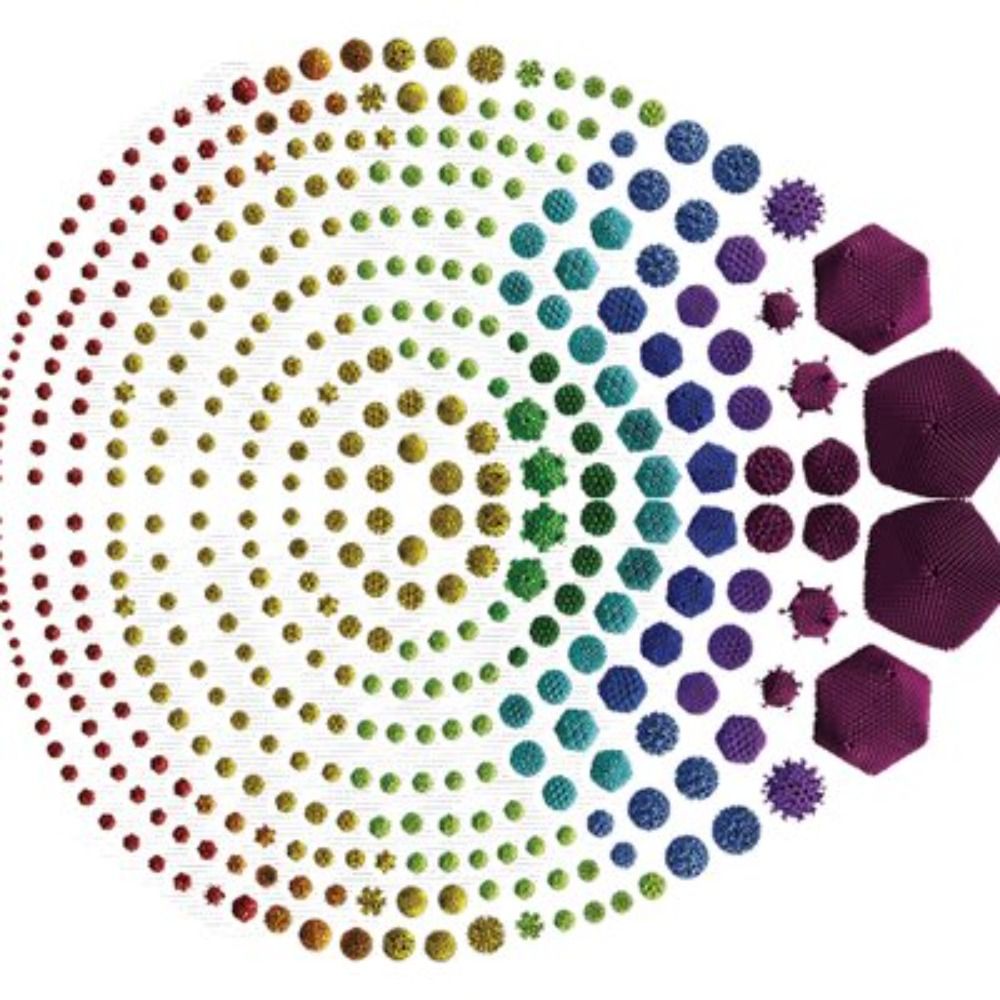
If you are interested in ssDNA viruses of bacteria, archaea or eukaryotes (yes, from all walks of life!), this is the conference for you - International Symposium on ssDNA Viruses (ISS3DV)! isdv2026.com
The deadline for the early bird registration is approaching...
The deadline for the early bird registration is approaching...

January 16, 2026 at 4:53 PM
If you are interested in ssDNA viruses of bacteria, archaea or eukaryotes (yes, from all walks of life!), this is the conference for you - International Symposium on ssDNA Viruses (ISS3DV)! isdv2026.com
The deadline for the early bird registration is approaching...
The deadline for the early bird registration is approaching...
Reposted by Franklin Nobrega

This is 😮
Structural insights into the assembly and evolution of a complex bacterial flagellar motor
#microsky
www.nature.com/articles/s41...
Structural insights into the assembly and evolution of a complex bacterial flagellar motor
#microsky
www.nature.com/articles/s41...

Structural insights into the assembly and evolution of a complex bacterial flagellar motor - Nature Microbiology
Structural, genetic, functional and biochemical analyses of the complex flagellar motor of Campylobacter jejuni reveal structural adaptations with an ancient origin also found more widely across bacte...
www.nature.com
January 16, 2026 at 6:22 AM
This is 😮
Structural insights into the assembly and evolution of a complex bacterial flagellar motor
#microsky
www.nature.com/articles/s41...
Structural insights into the assembly and evolution of a complex bacterial flagellar motor
#microsky
www.nature.com/articles/s41...
Reposted by Franklin Nobrega

We're excited to help launch the inaugural Gordon research conference on #microbiome editing, coming up in January in Pomona, CA! Learn more and register here: https://ow.ly/a6Am50X9XkE

October 27, 2025 at 3:05 PM
We're excited to help launch the inaugural Gordon research conference on #microbiome editing, coming up in January in Pomona, CA! Learn more and register here: https://ow.ly/a6Am50X9XkE
Reposted by Franklin Nobrega
Dominant contribution of Asgard archaea to eukaryogenesis www.nature.com/articles/s41...

January 14, 2026 at 6:23 PM
Dominant contribution of Asgard archaea to eukaryogenesis www.nature.com/articles/s41...
Reposted by Franklin Nobrega

We’re looking for a postdoc to join the Hendrickson lab!
The project will involve dissecting the molecular mechanisms of a fascinating mobile element in our honeybee biocontrol phages. Sound like something you would be interested in? Get in touch! Details:
jobs.canterbury.ac.nz/jobdetails/a...
The project will involve dissecting the molecular mechanisms of a fascinating mobile element in our honeybee biocontrol phages. Sound like something you would be interested in? Get in touch! Details:
jobs.canterbury.ac.nz/jobdetails/a...
Research Associate / Postdoctoral Fellow - Honeybee Bacteriophages and Advanced Biotechnology -
University of Canterbury | Te Whare Wānanga o Waitaha
jobs.canterbury.ac.nz
January 9, 2026 at 12:27 AM
We’re looking for a postdoc to join the Hendrickson lab!
The project will involve dissecting the molecular mechanisms of a fascinating mobile element in our honeybee biocontrol phages. Sound like something you would be interested in? Get in touch! Details:
jobs.canterbury.ac.nz/jobdetails/a...
The project will involve dissecting the molecular mechanisms of a fascinating mobile element in our honeybee biocontrol phages. Sound like something you would be interested in? Get in touch! Details:
jobs.canterbury.ac.nz/jobdetails/a...
Reposted by Franklin Nobrega

Bacteria chromosomes contain Genomic Islands that provide virulence, antibiotic resistance, MGE-defence,... They transfer between cells, but the mechanism of most remains elusive.
Here we explore the conjugative capacity of these mysterious Genomic Islands.
www.biorxiv.org/content/10.6...
Here we explore the conjugative capacity of these mysterious Genomic Islands.
www.biorxiv.org/content/10.6...
www.biorxiv.org
January 14, 2026 at 10:14 AM
Bacteria chromosomes contain Genomic Islands that provide virulence, antibiotic resistance, MGE-defence,... They transfer between cells, but the mechanism of most remains elusive.
Here we explore the conjugative capacity of these mysterious Genomic Islands.
www.biorxiv.org/content/10.6...
Here we explore the conjugative capacity of these mysterious Genomic Islands.
www.biorxiv.org/content/10.6...
Reposted by Franklin Nobrega

We’ve updated the EVEREST benchmark to include real-world viral evolution! www.biorxiv.org/content/10.1...
Co-led by Noor Youssef and me, along with co-authors Navami Jain, Aarushi Mehrotra, Sarrah Leung, Abigail Jackson, @deboramarks.bsky.social, and with @cepi.net @futurehousesf.bsky.social!
Co-led by Noor Youssef and me, along with co-authors Navami Jain, Aarushi Mehrotra, Sarrah Leung, Abigail Jackson, @deboramarks.bsky.social, and with @cepi.net @futurehousesf.bsky.social!
🚨New paper 🚨
Can protein language models help us fight viral outbreaks? Not yet. Here’s why 🧵👇
1/12
Can protein language models help us fight viral outbreaks? Not yet. Here’s why 🧵👇
1/12

January 13, 2026 at 7:06 PM
We’ve updated the EVEREST benchmark to include real-world viral evolution! www.biorxiv.org/content/10.1...
Co-led by Noor Youssef and me, along with co-authors Navami Jain, Aarushi Mehrotra, Sarrah Leung, Abigail Jackson, @deboramarks.bsky.social, and with @cepi.net @futurehousesf.bsky.social!
Co-led by Noor Youssef and me, along with co-authors Navami Jain, Aarushi Mehrotra, Sarrah Leung, Abigail Jackson, @deboramarks.bsky.social, and with @cepi.net @futurehousesf.bsky.social!
Reposted by Franklin Nobrega

Secret life of prophages: template-directed synthesis of DNA superstructures via prophage activation and rolling circle replication in bacterial biofilms
bioRxiv by Gabriel Antonio S. Minero et al
with @thethormannden.bsky.social, Rikke Louise Meyer
www.biorxiv.org/content/10.6...
bioRxiv by Gabriel Antonio S. Minero et al
with @thethormannden.bsky.social, Rikke Louise Meyer
www.biorxiv.org/content/10.6...

Secret life of prophages: template-directed synthesis of DNA superstructures via prophage activation and rolling circle replication in bacterial biofilms
Extracellular DNA (eDNA) plays crucial roles in biofilm formation and function, yet the role of bacteriophages (phages) in controlling eDNA synthesis, structure and activity remains obscure. Here, we ...
www.biorxiv.org
January 11, 2026 at 3:12 PM
Secret life of prophages: template-directed synthesis of DNA superstructures via prophage activation and rolling circle replication in bacterial biofilms
bioRxiv by Gabriel Antonio S. Minero et al
with @thethormannden.bsky.social, Rikke Louise Meyer
www.biorxiv.org/content/10.6...
bioRxiv by Gabriel Antonio S. Minero et al
with @thethormannden.bsky.social, Rikke Louise Meyer
www.biorxiv.org/content/10.6...
Reposted by Franklin Nobrega
the program will output multiple support measures for internal branches

December 6, 2025 at 12:07 AM
the program will output multiple support measures for internal branches
Reposted by Franklin Nobrega
Creating bacterial genomic diversity through large-scale reconfigurations reveals phenotype robustness to organizational genome change
doi.org/10.64898/202...
doi.org/10.64898/202...

January 8, 2026 at 7:36 AM
Creating bacterial genomic diversity through large-scale reconfigurations reveals phenotype robustness to organizational genome change
doi.org/10.64898/202...
doi.org/10.64898/202...
Reposted by Franklin Nobrega

How does E. coli age? According to this #mBio study, the the decisive factor driving growth decline in E. coli is not the presence of protein aggregates, but the fraction of the intracellular space they occupy. Learn more: asm.social/2KZ

January 7, 2026 at 5:38 PM
How does E. coli age? According to this #mBio study, the the decisive factor driving growth decline in E. coli is not the presence of protein aggregates, but the fraction of the intracellular space they occupy. Learn more: asm.social/2KZ