




Matthieu Chavent
@matthchavent.bsky.social
Multiscale molecular dynamics, biological membranes interactions, CNRS researcher, group leader at @cbitoulouse.bsky.social
Pinned
🔬 MD community call! 🧪
Join us for the “Learn • Connect • Innovate” Co-Designing Workshop Series, part of the @lumen-eu.bsky.social project to shape the future of open science tools, workflows, and collaboration across disciplines.
lumenproject.eu/learn-connec...
Join us for the “Learn • Connect • Innovate” Co-Designing Workshop Series, part of the @lumen-eu.bsky.social project to shape the future of open science tools, workflows, and collaboration across disciplines.
lumenproject.eu/learn-connec...
Reposted by Matthieu Chavent

Have you registered yet? Early bird registration and abstract submission are open until January 31.
mosbacher-kolloquium.org
mosbacher-kolloquium.org

January 5, 2026 at 3:14 PM
Have you registered yet? Early bird registration and abstract submission are open until January 31.
mosbacher-kolloquium.org
mosbacher-kolloquium.org
Reposted by Matthieu Chavent
Got meself a wee project which took up my whole evening, I think people call this kind of thing a "timeline cleanse"?

January 14, 2026 at 11:45 PM
Got meself a wee project which took up my whole evening, I think people call this kind of thing a "timeline cleanse"?
Reposted by Matthieu Chavent
📢 New preprint alert!
How do proteins enter mitochondria? We uncovered a surprising mechanism at the mitochondrial entry gate—using #NMR, in vivo single-particle tracking, yeast experiments, and MD simulations to crack the code.
www.biorxiv.org/content/10.6...
#StructuralBiology #Mitochondria
🧵 1/8
How do proteins enter mitochondria? We uncovered a surprising mechanism at the mitochondrial entry gate—using #NMR, in vivo single-particle tracking, yeast experiments, and MD simulations to crack the code.
www.biorxiv.org/content/10.6...
#StructuralBiology #Mitochondria
🧵 1/8

A dynamic displacement mechanism drives protein import into mitochondria
Most mitochondrial proteins are produced in the cytosol and imported through the translocase of the outer mitochondrial membrane (TOM) to reach their final destination. Although this protein entry gat...
www.biorxiv.org
January 14, 2026 at 7:16 PM
📢 New preprint alert!
How do proteins enter mitochondria? We uncovered a surprising mechanism at the mitochondrial entry gate—using #NMR, in vivo single-particle tracking, yeast experiments, and MD simulations to crack the code.
www.biorxiv.org/content/10.6...
#StructuralBiology #Mitochondria
🧵 1/8
How do proteins enter mitochondria? We uncovered a surprising mechanism at the mitochondrial entry gate—using #NMR, in vivo single-particle tracking, yeast experiments, and MD simulations to crack the code.
www.biorxiv.org/content/10.6...
#StructuralBiology #Mitochondria
🧵 1/8
Reposted by Matthieu Chavent

OpenBind is a new open science effort to dramatically increase the number of protein:ligand structures in the PDB, pairing this with high-quality affinity data to enable a new generation of predictive structure and affinity models for drug discovery. Check it out: openbind.ai
January 12, 2026 at 2:54 PM
OpenBind is a new open science effort to dramatically increase the number of protein:ligand structures in the PDB, pairing this with high-quality affinity data to enable a new generation of predictive structure and affinity models for drug discovery. Check it out: openbind.ai
Reposted by Matthieu Chavent

🧐”Study reveals how #tuberculosis exploits immune defenses to promote infection.”
🔗to study published in Science Immunology ⬇️
Mycobacterial α-glucans hijack dectin-1 to facilitate intracellular bacterial survival
www.science.org/doi/10.1126/...
🔗to study published in Science Immunology ⬇️
Mycobacterial α-glucans hijack dectin-1 to facilitate intracellular bacterial survival
www.science.org/doi/10.1126/...
January 11, 2026 at 3:49 PM
🧐”Study reveals how #tuberculosis exploits immune defenses to promote infection.”
🔗to study published in Science Immunology ⬇️
Mycobacterial α-glucans hijack dectin-1 to facilitate intracellular bacterial survival
www.science.org/doi/10.1126/...
🔗to study published in Science Immunology ⬇️
Mycobacterial α-glucans hijack dectin-1 to facilitate intracellular bacterial survival
www.science.org/doi/10.1126/...
Reposted by Matthieu Chavent
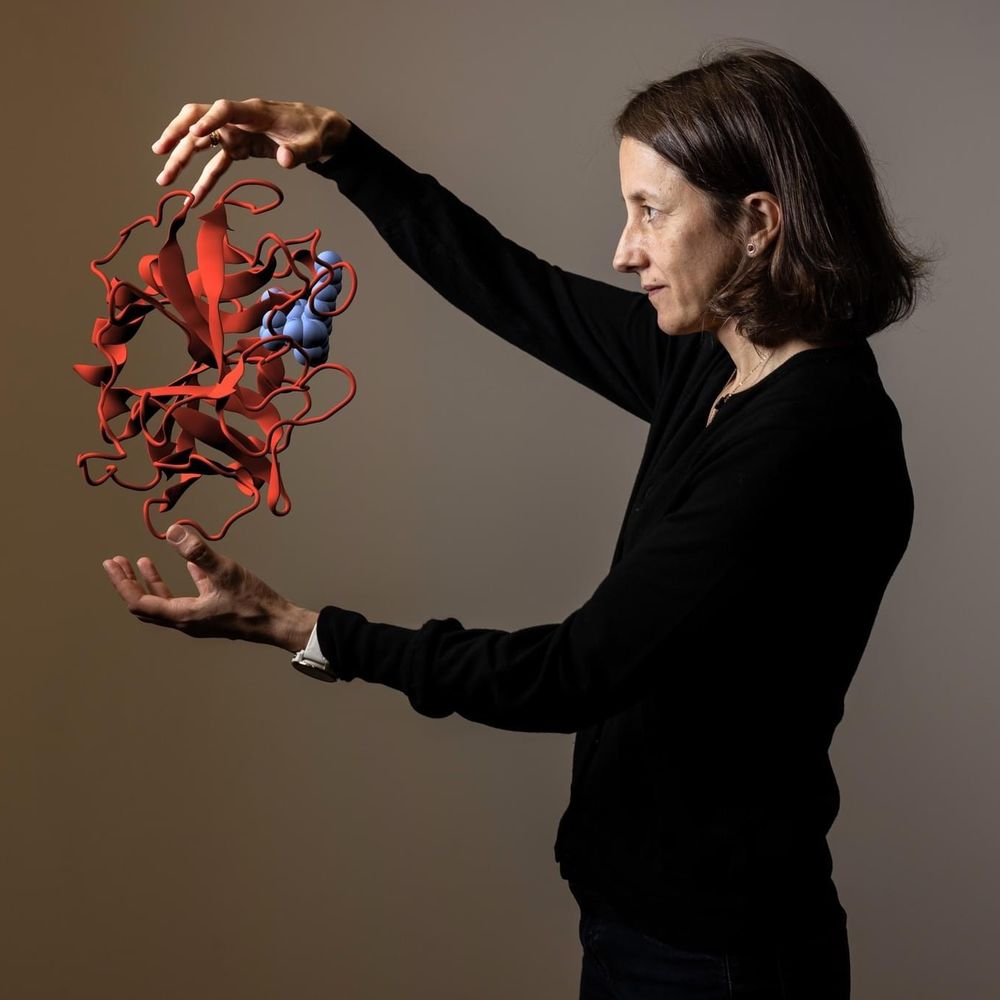
Experimental tour-de-force from Anne-Claude Gavin's lab: selectivity mapping of 39 lipid transfer proteins reveals ~500 new LTP-lipid pairs. Molecular modeling by @mahmoudmoqadam.bsky.social, @rezatalandahti.bsky.social & Florian Echelard. @cbubergen.bsky.social
www.nature.com/articles/s41...
www.nature.com/articles/s41...
Client Challenge
www.nature.com
January 9, 2026 at 8:02 AM
Experimental tour-de-force from Anne-Claude Gavin's lab: selectivity mapping of 39 lipid transfer proteins reveals ~500 new LTP-lipid pairs. Molecular modeling by @mahmoudmoqadam.bsky.social, @rezatalandahti.bsky.social & Florian Echelard. @cbubergen.bsky.social
www.nature.com/articles/s41...
www.nature.com/articles/s41...
Reposted by Matthieu Chavent

First article of 2026! Happy to have our first real foray into carbohydrates out in J Phys Chem B. Excellent work by PhD candidate Esmat Mohammadi.
pubs.acs.org/doi/full/10....
pubs.acs.org/doi/full/10....

Insights into the Electronic and Structural Properties of Cellulose and Amylose: A Comparative Force Field Study
Amylose and cellulose are important biopolymers with diverse applications in biotechnology and materials science. Understanding their structural, dynamic, and solvation properties at the molecular level is critical for harnessing their potential. This study investigates the electronic and structural properties of single-chain cellulose and single- and double-chain amylose in aqueous solution using molecular dynamics simulations with both nonpolarizable (CHARMM) and polarizable (Drude) force fields. CHARMM simulations show stable hydrogen bonding between amylose and water, higher glucose ring dipole moments, increased rigidity, adoption of chair conformations, and less variation in dihedral angles. In contrast, Drude simulations captured dynamic electronic polarization, enhanced conformational flexibility, and resulted in heterogeneous inter- and intramolecular hydrogen bonds. For cellulose, structural and solvation behaviors were largely similar between CHARMM and Drude. These findings highlight molecular interactions and solvation dynamics of amylose and cellulose, with potential relevance in materials science and biotechnology.
pubs.acs.org
January 6, 2026 at 8:14 PM
First article of 2026! Happy to have our first real foray into carbohydrates out in J Phys Chem B. Excellent work by PhD candidate Esmat Mohammadi.
pubs.acs.org/doi/full/10....
pubs.acs.org/doi/full/10....
Reposted by Matthieu Chavent

Sebinelli, Syska, Razmazma et al. @umontpellier.bsky.social show that the yeast protein Ist2, which localizes to ER–PM contact sites, possesses a #phospholipid scramblase activity in its ER-localized transmembrane domain that is important for several ER-related processes. rupress.org/jcb/article/...
January 5, 2026 at 8:45 PM
Sebinelli, Syska, Razmazma et al. @umontpellier.bsky.social show that the yeast protein Ist2, which localizes to ER–PM contact sites, possesses a #phospholipid scramblase activity in its ER-localized transmembrane domain that is important for several ER-related processes. rupress.org/jcb/article/...
Reposted by Matthieu Chavent
🚨Excellent editorial in ACS Central Sci 📣
Thank you @carolynbertozzi.bskyverified.social for your support and to @louisflwilson.bsky.social for spotting these mistakes + drafting an excellent manuscript
#CryoEM #StructuralBiology
#vidalized
ACS Central Science pubs.acs.org/doi/full/10....
Thank you @carolynbertozzi.bskyverified.social for your support and to @louisflwilson.bsky.social for spotting these mistakes + drafting an excellent manuscript
#CryoEM #StructuralBiology
#vidalized
ACS Central Science pubs.acs.org/doi/full/10....

Pitfalls in the Modeling of Maltoside Detergents in Protein Structures
This publication is Open Access under the license indicated.
Learn More
pubs.acs.org
January 5, 2026 at 1:40 PM
🚨Excellent editorial in ACS Central Sci 📣
Thank you @carolynbertozzi.bskyverified.social for your support and to @louisflwilson.bsky.social for spotting these mistakes + drafting an excellent manuscript
#CryoEM #StructuralBiology
#vidalized
ACS Central Science pubs.acs.org/doi/full/10....
Thank you @carolynbertozzi.bskyverified.social for your support and to @louisflwilson.bsky.social for spotting these mistakes + drafting an excellent manuscript
#CryoEM #StructuralBiology
#vidalized
ACS Central Science pubs.acs.org/doi/full/10....
Reposted by Matthieu Chavent
Happy new year! I've so enjoyed the end-of-year lists of people's favorite papers from 2025, so I made a list of 16 #lipidtime studies from 2025 that I found interesting. Here they are in no particular order (please add more if you would like!), and here's to much more exciting science in 2026! 🧪

January 5, 2026 at 2:48 PM
Happy new year! I've so enjoyed the end-of-year lists of people's favorite papers from 2025, so I made a list of 16 #lipidtime studies from 2025 that I found interesting. Here they are in no particular order (please add more if you would like!), and here's to much more exciting science in 2026! 🧪
Reposted by Matthieu Chavent

Happy New Year!
We began the year by reading this amazing Chemistry World article by @robinson-julia.bsky.social on how AI agents are democratising computational chemistry.
🔗 www.chemistryworld.com/news/ai-agen...
Image source: © Caroline Chapple, Courtesy of Chemistry World.
[1/5]
We began the year by reading this amazing Chemistry World article by @robinson-julia.bsky.social on how AI agents are democratising computational chemistry.
🔗 www.chemistryworld.com/news/ai-agen...
Image source: © Caroline Chapple, Courtesy of Chemistry World.
[1/5]

January 6, 2026 at 4:34 AM
Happy New Year!
We began the year by reading this amazing Chemistry World article by @robinson-julia.bsky.social on how AI agents are democratising computational chemistry.
🔗 www.chemistryworld.com/news/ai-agen...
Image source: © Caroline Chapple, Courtesy of Chemistry World.
[1/5]
We began the year by reading this amazing Chemistry World article by @robinson-julia.bsky.social on how AI agents are democratising computational chemistry.
🔗 www.chemistryworld.com/news/ai-agen...
Image source: © Caroline Chapple, Courtesy of Chemistry World.
[1/5]
Reposted by Matthieu Chavent
🚨 Want to know how we demonstrated the importance of sterol-rich membrane microdomains for M. marinum infection?
Check out our latest paper published in Science Advances 👇
www.science.org/doi/10.1126/...
✨ Big thanks to everyone, especially Cristina Boehm-Bosmani, @soldatilab.bsky.social ! ✨
Check out our latest paper published in Science Advances 👇
www.science.org/doi/10.1126/...
✨ Big thanks to everyone, especially Cristina Boehm-Bosmani, @soldatilab.bsky.social ! ✨

Membrane microdomains are crucial for Mycobacterium marinum EsxA-dependent membrane damage, escape to the cytosol, and infection
Sterol-rich microdomain accumulation at the MCV is crucial for Mm-induced damage and infection in D. discoideum and BV-2 cells.
www.science.org
January 4, 2026 at 10:54 AM
🚨 Want to know how we demonstrated the importance of sterol-rich membrane microdomains for M. marinum infection?
Check out our latest paper published in Science Advances 👇
www.science.org/doi/10.1126/...
✨ Big thanks to everyone, especially Cristina Boehm-Bosmani, @soldatilab.bsky.social ! ✨
Check out our latest paper published in Science Advances 👇
www.science.org/doi/10.1126/...
✨ Big thanks to everyone, especially Cristina Boehm-Bosmani, @soldatilab.bsky.social ! ✨
Reposted by Matthieu Chavent

I'm really excited to break up the holiday relaxation time with a new preprint that benchmarks AlphaFold3 (AF3)/“co-folding” methods with 2 new stringent performance tests.
Thread below - but first some links:
A longer take:
fraserlab.com/2025/12/29/k...
Preprint:
www.biorxiv.org/content/10.6...
Thread below - but first some links:
A longer take:
fraserlab.com/2025/12/29/k...
Preprint:
www.biorxiv.org/content/10.6...
Know when to co-fold'em
This is the official web page for the James Fraser Lab at UCSF.
fraserlab.com
December 29, 2025 at 10:25 PM
I'm really excited to break up the holiday relaxation time with a new preprint that benchmarks AlphaFold3 (AF3)/“co-folding” methods with 2 new stringent performance tests.
Thread below - but first some links:
A longer take:
fraserlab.com/2025/12/29/k...
Preprint:
www.biorxiv.org/content/10.6...
Thread below - but first some links:
A longer take:
fraserlab.com/2025/12/29/k...
Preprint:
www.biorxiv.org/content/10.6...
Reposted by Matthieu Chavent

🌟 New Tool Alert!
We present MemPrO – a toolkit for orienting and building membrane protein systems:
✅ Membrane protein orientation ✅ Mixed membrane building ✅ Double membranes & curvature ✅ Peptidoglycan cell wall support
🔗 github.com/pstansfeld/mempro 📖 pubs.acs.org/doi/10.1021/...
We present MemPrO – a toolkit for orienting and building membrane protein systems:
✅ Membrane protein orientation ✅ Mixed membrane building ✅ Double membranes & curvature ✅ Peptidoglycan cell wall support
🔗 github.com/pstansfeld/mempro 📖 pubs.acs.org/doi/10.1021/...

MemPrO: A Predictive Tool for Membrane Protein Orientation
Membrane proteins play a vital role in numerous cellular processes, including ion transport, intercellular communication, and antibiotic resistance. Ensuring their accurate orientation within lipid bi...
pubs.acs.org
December 25, 2025 at 10:03 PM
🌟 New Tool Alert!
We present MemPrO – a toolkit for orienting and building membrane protein systems:
✅ Membrane protein orientation ✅ Mixed membrane building ✅ Double membranes & curvature ✅ Peptidoglycan cell wall support
🔗 github.com/pstansfeld/mempro 📖 pubs.acs.org/doi/10.1021/...
We present MemPrO – a toolkit for orienting and building membrane protein systems:
✅ Membrane protein orientation ✅ Mixed membrane building ✅ Double membranes & curvature ✅ Peptidoglycan cell wall support
🔗 github.com/pstansfeld/mempro 📖 pubs.acs.org/doi/10.1021/...
Reposted by Matthieu Chavent
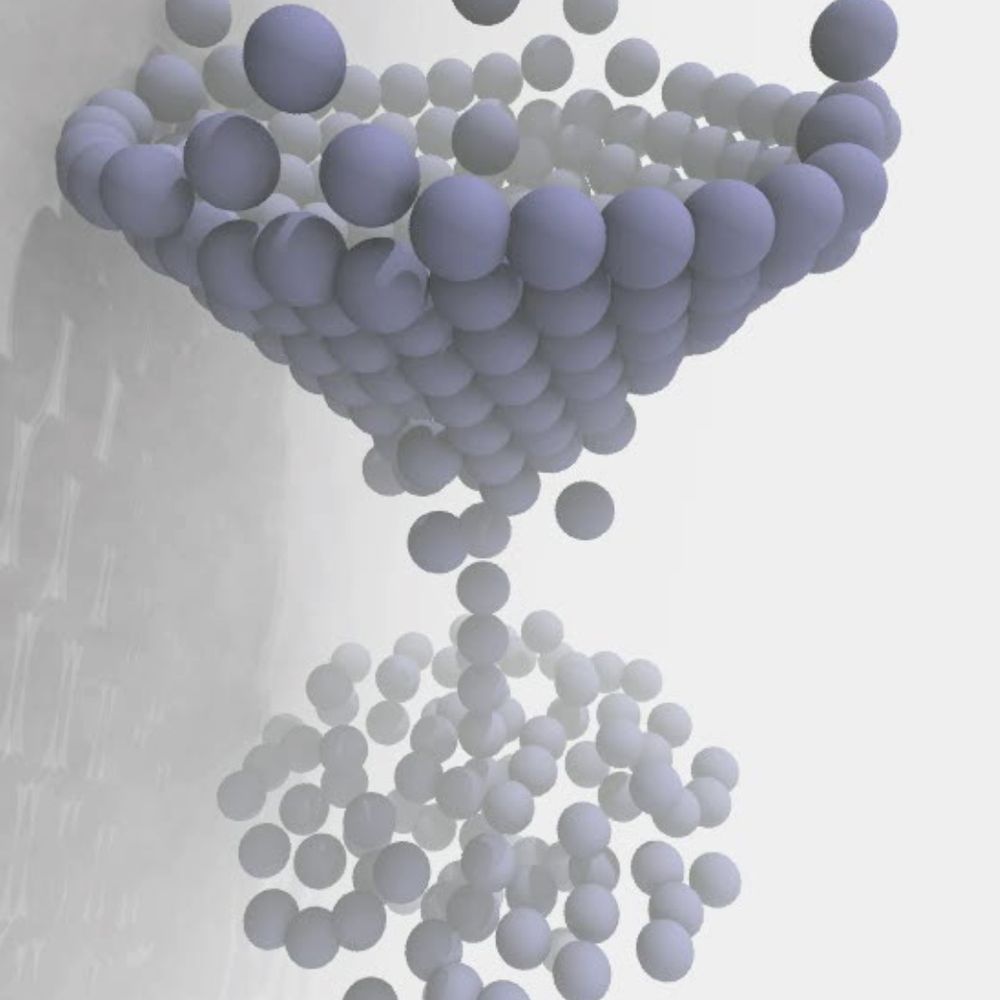
Opportunity: postdoctoral fellowships at the center for Quantitative Cell Biology (QCB), Univ. of Illinois, in close collaboration with our group. Your ticket to become an expert in whole-cell Martini simulations !
qcb.illinois.edu/postdoctoral...
qcb.illinois.edu/postdoctoral...
December 22, 2025 at 10:27 AM
Opportunity: postdoctoral fellowships at the center for Quantitative Cell Biology (QCB), Univ. of Illinois, in close collaboration with our group. Your ticket to become an expert in whole-cell Martini simulations !
qcb.illinois.edu/postdoctoral...
qcb.illinois.edu/postdoctoral...
Reposted by Matthieu Chavent
We’re excited to share our latest study that reshapes our understanding of Mycobacterium tuberculosis (Mtb) lipid composition, with major implications for drug discovery, immunity, and vaccine development.
www.nature.com/articles/s41...
A thread.
www.nature.com/articles/s41...
A thread.

Mycobacterium tuberculosis overcomes phosphate starvation by extensively remodelling its lipidome with phosphorus-free lipids - Nature Communications
Here, the authors show that Mycobacterium tuberculosis manipulates lipid metabolism to overcome host restriction, by remodelling its lipidome and utilising host lipids as an alternative phosphate sour...
www.nature.com
December 22, 2025 at 1:11 PM
We’re excited to share our latest study that reshapes our understanding of Mycobacterium tuberculosis (Mtb) lipid composition, with major implications for drug discovery, immunity, and vaccine development.
www.nature.com/articles/s41...
A thread.
www.nature.com/articles/s41...
A thread.
Reposted by Matthieu Chavent
Ten rules for a structural bioinformatic analysis
PLOS Comp Bio offers a roadmap for users to leverage the Protein Data Bank’s vast collection of protein structural models into reliable and valuable insights.
PLOS Comp Bio offers a roadmap for users to leverage the Protein Data Bank’s vast collection of protein structural models into reliable and valuable insights.
Ten rules for a structural bioinformatic analysis | PLOS Computational Biology
Author summary Here, we provide a roadmap for users to leverage the Protein Data Bank’s vast collection of protein structural models into reliable and valuable insights. It lays out 10 clear rules that help readers quality control their data, choose fair comparison sets, and judge model quality so results aren’t led astray by noise, bias, or overconfidence. The guide also shows how to connect structures to other databases. By highlighting best practices, such as utilizing re-refined models and being aware of common pitfalls, we guide users to leverage this rich data for enhanced biological insights. These guidelines will enable stronger, more reproducible structural analyses that accelerate drug discovery, illuminate disease mechanisms, and make open data broadly useful across the life sciences.
journals.plos.org
December 22, 2025 at 5:44 PM
Ten rules for a structural bioinformatic analysis
PLOS Comp Bio offers a roadmap for users to leverage the Protein Data Bank’s vast collection of protein structural models into reliable and valuable insights.
PLOS Comp Bio offers a roadmap for users to leverage the Protein Data Bank’s vast collection of protein structural models into reliable and valuable insights.
Our collective work with @tbereau.bsky.social and @pauloctsouza.bsky.social labs to automatically parametrize CG models of small molecules is now published in JCTC! Nice Christmas present for 1st author @szczukam.bsky.social and all the coauthors!
pubs.acs.org/doi/full/10....
pubs.acs.org/doi/full/10....

Fast Parametrization of Martini3 Models for Fragments and Small Molecules
Coarse-grained molecular dynamics simulations, such as those performed with the recently parametrized Martini 3 force field, simplify molecular models and enable the study of larger systems over longer time scales. With this new implementation, Martini 3 allows more bead types and sizes, becoming more amenable to studying dynamical phenomena involving small molecules such as protein–ligand interactions and membrane permeation. However, while solutions existed to automatically model small molecules using the previous iteration of the Martini force field, there is no simple way to generate such molecules for Martini 3 yet. Here, we introduce Auto-MartiniM3, an advanced and updated version of the Auto-Martini program designed to automate the coarse-graining of small molecules to be used with the Martini 3 force field. We validated our approach by modeling 81 simple molecules from the Martini Database and comparing their structural and thermodynamic properties with those obtained from models designed by Martini experts. Additionally, we assessed the behavior of Auto-MartiniM3-generated models by calculating solute translocation and free energy across lipid bilayers. We also evaluated more complex molecules such as caffeine by testing its binding to the adenosine A2A receptor. Finally, our results from deploying Auto-MartiniM3 on a large data set of molecular fragments demonstrate that this program can become a tool of choice for fast, high-throughput creation of coarse-grained models of small molecules, offering a good balance between automation and accuracy. Auto-MartiniM3 source code is freely available at https://github.com/Martini-Force-Field-Initiative/Automartini_M3.
pubs.acs.org
December 22, 2025 at 6:59 AM
Our collective work with @tbereau.bsky.social and @pauloctsouza.bsky.social labs to automatically parametrize CG models of small molecules is now published in JCTC! Nice Christmas present for 1st author @szczukam.bsky.social and all the coauthors!
pubs.acs.org/doi/full/10....
pubs.acs.org/doi/full/10....
Reposted by Matthieu Chavent
Final version is out! Our large-scale cryo-ET dataset 🔬 of Chlamydomonas reinhardtii 🦠 is now published in @cp-molcell.bsky.social
Huge collaborative effort! So glad to see the community already using it to develop new resources & tools.
Check it out here: shorturl.at/z4i4c
#CryoEM #CryoET
Huge collaborative effort! So glad to see the community already using it to develop new resources & tools.
Check it out here: shorturl.at/z4i4c
#CryoEM #CryoET

December 19, 2025 at 4:45 PM
Final version is out! Our large-scale cryo-ET dataset 🔬 of Chlamydomonas reinhardtii 🦠 is now published in @cp-molcell.bsky.social
Huge collaborative effort! So glad to see the community already using it to develop new resources & tools.
Check it out here: shorturl.at/z4i4c
#CryoEM #CryoET
Huge collaborative effort! So glad to see the community already using it to develop new resources & tools.
Check it out here: shorturl.at/z4i4c
#CryoEM #CryoET
Reposted by Matthieu Chavent

Organelles do NOT have a single uniform pH.
And if you think they must, because “protons diffuse fast,” this paper is for you.
A thread on why that assumption is wrong; and what we found instead. 🧵 1/n
And if you think they must, because “protons diffuse fast,” this paper is for you.
A thread on why that assumption is wrong; and what we found instead. 🧵 1/n

Organelles harbour pH gradients https://www.biorxiv.org/content/10.64898/2025.12.12.694065v1
December 17, 2025 at 12:46 AM
Organelles do NOT have a single uniform pH.
And if you think they must, because “protons diffuse fast,” this paper is for you.
A thread on why that assumption is wrong; and what we found instead. 🧵 1/n
And if you think they must, because “protons diffuse fast,” this paper is for you.
A thread on why that assumption is wrong; and what we found instead. 🧵 1/n
Reposted by Matthieu Chavent
Are you interested in integrative structural biology, but feel a bit lost?
Don't worry, we have you covered with our FEBS Advanced Course, Lost in Integration Vol. 2 — probing biomolecules with AI and experiments
probingbiomolecules2026.febsevents.org
network.febs.org/posts/integr...
Don't worry, we have you covered with our FEBS Advanced Course, Lost in Integration Vol. 2 — probing biomolecules with AI and experiments
probingbiomolecules2026.febsevents.org
network.febs.org/posts/integr...

December 18, 2025 at 7:27 PM
Are you interested in integrative structural biology, but feel a bit lost?
Don't worry, we have you covered with our FEBS Advanced Course, Lost in Integration Vol. 2 — probing biomolecules with AI and experiments
probingbiomolecules2026.febsevents.org
network.febs.org/posts/integr...
Don't worry, we have you covered with our FEBS Advanced Course, Lost in Integration Vol. 2 — probing biomolecules with AI and experiments
probingbiomolecules2026.febsevents.org
network.febs.org/posts/integr...
Reposted by Matthieu Chavent

Ups we did it again! Please mark your calender. EMBO Workshop “Lipid Code to Life”, taking place September 7–11, 2026, in Dresden, organized by Maria Fedorova, @lipid.bsky.social, Valerie O'Donnell, @holthuislab.bsky.social and @molcellbiophys-lab.bsky.social 🥳 Retweets = lipidlove

December 15, 2025 at 2:36 PM
Ups we did it again! Please mark your calender. EMBO Workshop “Lipid Code to Life”, taking place September 7–11, 2026, in Dresden, organized by Maria Fedorova, @lipid.bsky.social, Valerie O'Donnell, @holthuislab.bsky.social and @molcellbiophys-lab.bsky.social 🥳 Retweets = lipidlove
At BSI4, integrative structural biology conference, in a beautfiful place in Bordeaux, listening to @bonomimax.bsky.social latest work. Perfect way to finish the academic year!

December 16, 2025 at 10:12 AM
At BSI4, integrative structural biology conference, in a beautfiful place in Bordeaux, listening to @bonomimax.bsky.social latest work. Perfect way to finish the academic year!
Reposted by Matthieu Chavent
Our review on Integrative modelling of biomolecular dynamics 💃 is now live at COSB
We discuss approaches to integrate computational methods with time-dependent & time-resolved experiments to study protein dynamics
With @dariagusew.bsky.social & Carl G. Henning Hansen
doi.org/10.1016/j.sb...
We discuss approaches to integrate computational methods with time-dependent & time-resolved experiments to study protein dynamics
With @dariagusew.bsky.social & Carl G. Henning Hansen
doi.org/10.1016/j.sb...

December 9, 2025 at 10:13 PM
Our review on Integrative modelling of biomolecular dynamics 💃 is now live at COSB
We discuss approaches to integrate computational methods with time-dependent & time-resolved experiments to study protein dynamics
With @dariagusew.bsky.social & Carl G. Henning Hansen
doi.org/10.1016/j.sb...
We discuss approaches to integrate computational methods with time-dependent & time-resolved experiments to study protein dynamics
With @dariagusew.bsky.social & Carl G. Henning Hansen
doi.org/10.1016/j.sb...
Reposted by Matthieu Chavent
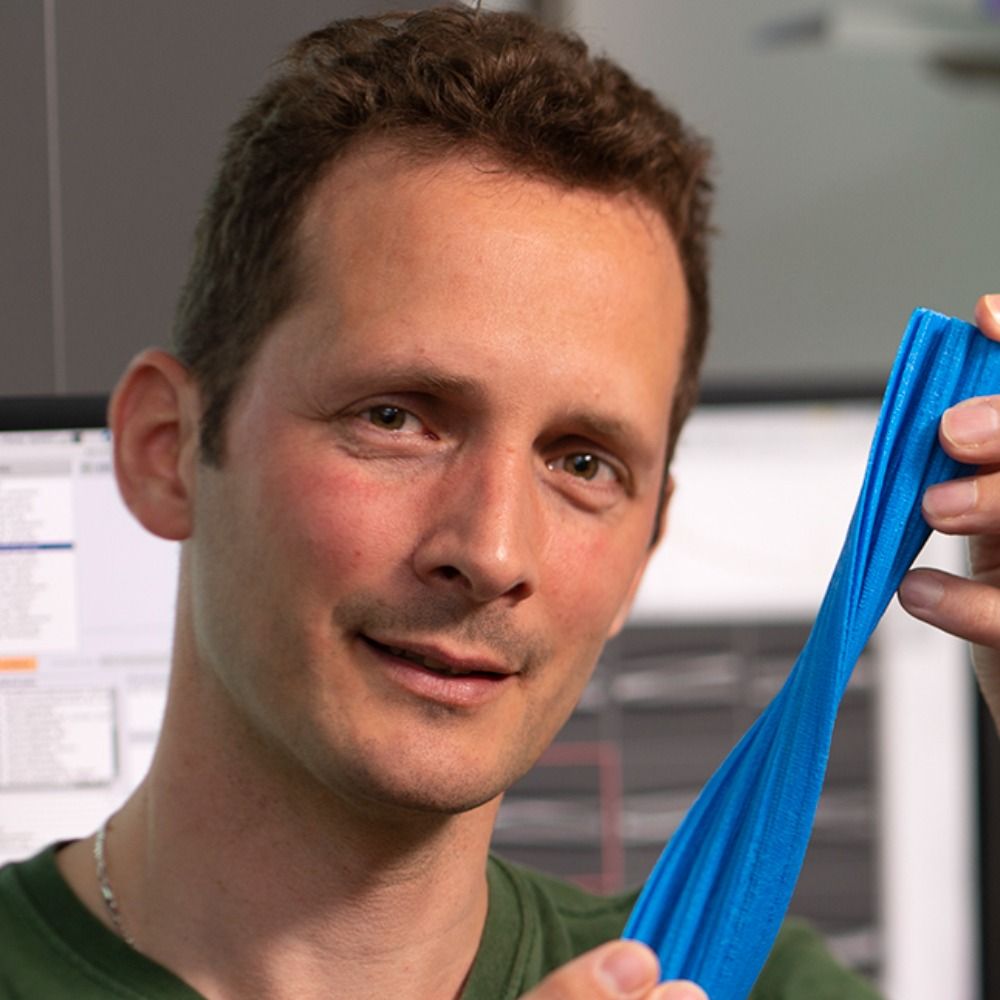
Star student & postdoc Kiarash Jamali is setting up his own group at the Ellison institute in Oxford. Join him for the most exciting machine learning research in structural biology and beyond!! 🤩 #ProudPI
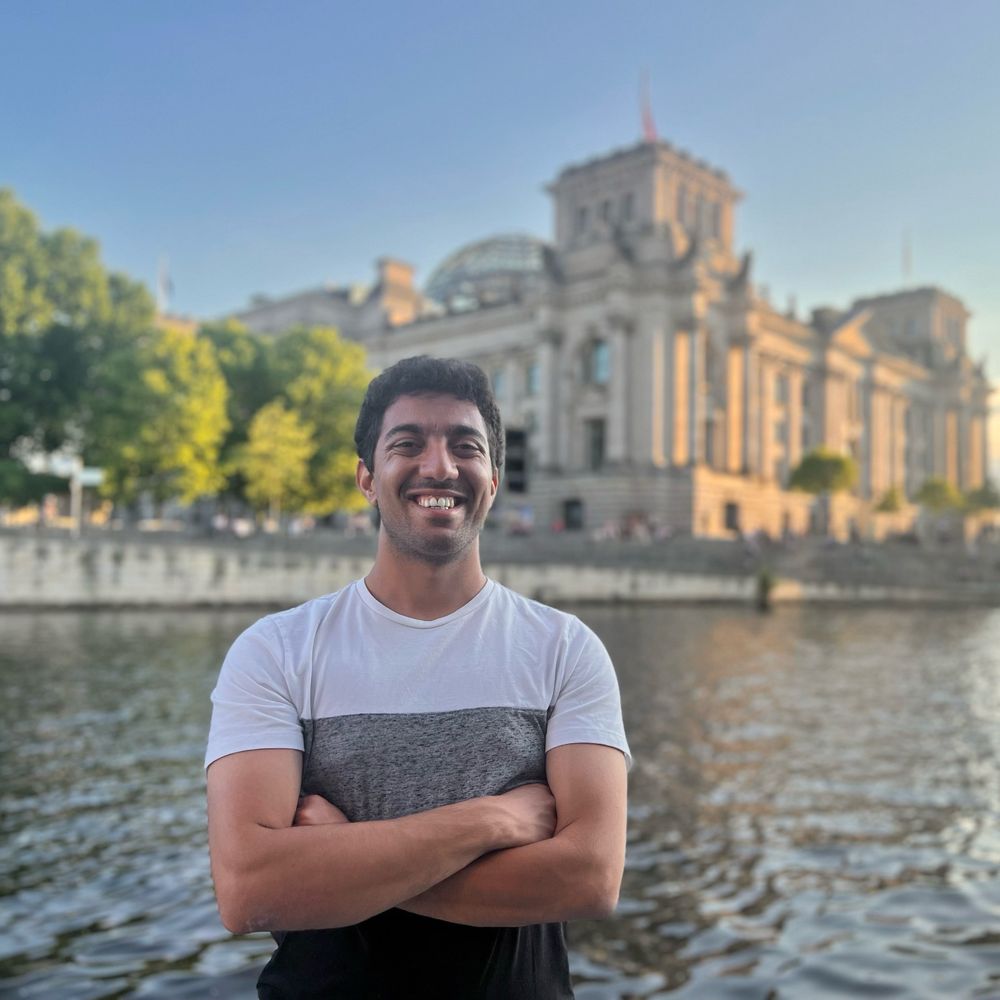
I’m excited to announce that I will be starting my research group on computational enzyme design at the Generative Biology Institute, Oxford, UK (@eitoxford.bsky.social)! PhD applications are open, deadline is Jan 8th (www.chem.ox.ac.uk/genbio-dtp). Email kiarash.jamali@eit.org with any questions!

GenBio DTP
Optional supporting text
www.chem.ox.ac.uk
December 9, 2025 at 7:55 PM
Star student & postdoc Kiarash Jamali is setting up his own group at the Ellison institute in Oxford. Join him for the most exciting machine learning research in structural biology and beyond!! 🤩 #ProudPI