



Julia Eckert
@juliaeckert.bsky.social
@dfg.de Walter Benjamin Fellow & Postdoctoral Researcher @yap-lab.bsky.social | Co-organizer @epimechfc.bsky.social | Mechanobiology - Cell & Tissue Mechanics - Soft Matter Physics - Image Analysis
👉 https://julia-eckert.github.io
👉 https://julia-eckert.github.io
Pinned
Julia Eckert
@juliaeckert.bsky.social
· Aug 15

Now published in @natcomms.nature.com! 🥳
👉 rdcu.be/eATn3
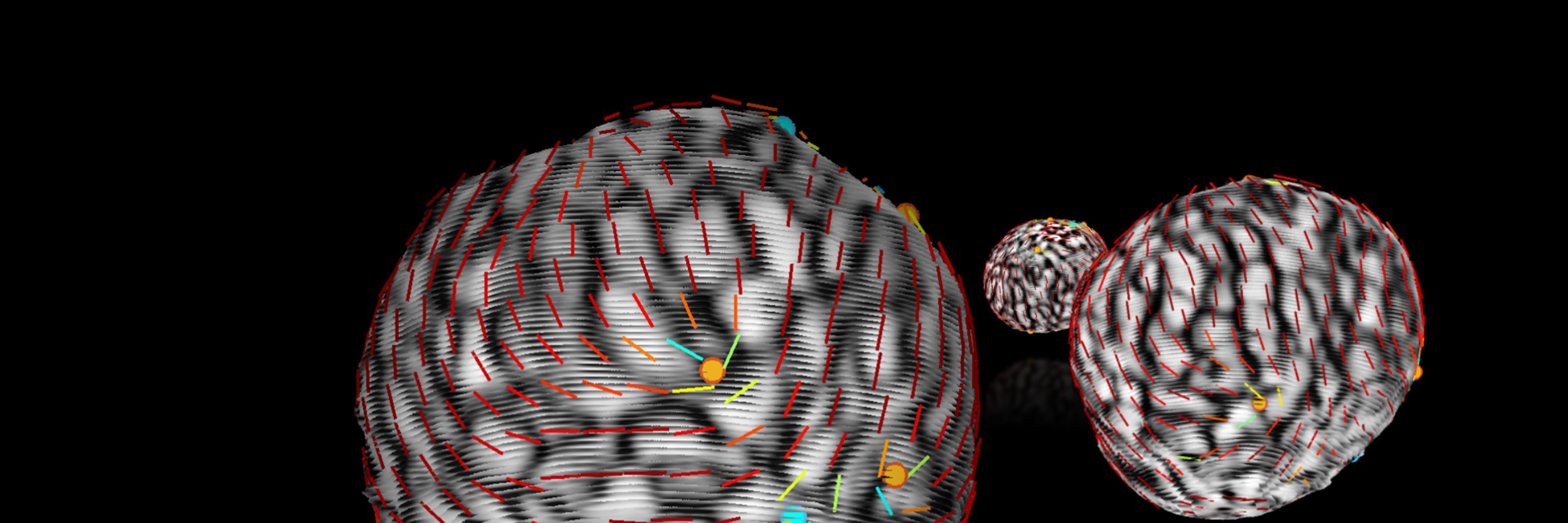
We developed image analysis tools to capture the nematic orientation field of 3D tissue surfaces. Tested on epithelial aggregates, zebrafish hearts, myoblasts on spheres & micro-vessels, we combined soft matter physics with exp. biology.
👉 rdcu.be/eATn3
We developed image analysis tools to capture the nematic orientation field of 3D tissue surfaces. Tested on epithelial aggregates, zebrafish hearts, myoblasts on spheres & micro-vessels, we combined soft matter physics with exp. biology.
Reposted by Julia Eckert

Excited to share our new review in @dev-journal.bsky.social on tissue phase transitions during development!
@karengrace12.bsky.social @nicolettapetridou.bsky.social
🔗 doi.org/10.1242/dev....
@karengrace12.bsky.social @nicolettapetridou.bsky.social
🔗 doi.org/10.1242/dev....

Tissue phase transitions in development: more than just mechanics
Summary: Tissue material phase transitions are classically thought to regulate tissue deformability. This Review emphasises their unexpected roles in directly influencing growth and patterning signall...
doi.org
February 19, 2026 at 1:31 PM
Excited to share our new review in @dev-journal.bsky.social on tissue phase transitions during development!
@karengrace12.bsky.social @nicolettapetridou.bsky.social
🔗 doi.org/10.1242/dev....
@karengrace12.bsky.social @nicolettapetridou.bsky.social
🔗 doi.org/10.1242/dev....
Reposted by Julia Eckert

New method paper out today on FLIM analysis with Flipper-TR.
We discuss fitting strategies, common pitfalls, and quantitative interpretation for measurements.
First corresponding/last authorship for me!
Free link:
authors.elsevier.com/a/1me2hHRzCb...
Thanks to @rouxlab.bsky.social and Tithi Mandal!
We discuss fitting strategies, common pitfalls, and quantitative interpretation for measurements.
First corresponding/last authorship for me!
Free link:
authors.elsevier.com/a/1me2hHRzCb...
Thanks to @rouxlab.bsky.social and Tithi Mandal!
Please wait whilst we redirect you
All content on this site: Copyright © 2026 Elsevier B.V., its licensors, and contributors. All rights are reserved, including those for text and data mining, AI training, and similar technologies. For all open access content, the relevant licensing terms apply.
authors.elsevier.com
February 18, 2026 at 9:56 PM
New method paper out today on FLIM analysis with Flipper-TR.
We discuss fitting strategies, common pitfalls, and quantitative interpretation for measurements.
First corresponding/last authorship for me!
Free link:
authors.elsevier.com/a/1me2hHRzCb...
Thanks to @rouxlab.bsky.social and Tithi Mandal!
We discuss fitting strategies, common pitfalls, and quantitative interpretation for measurements.
First corresponding/last authorship for me!
Free link:
authors.elsevier.com/a/1me2hHRzCb...
Thanks to @rouxlab.bsky.social and Tithi Mandal!
Reposted by Julia Eckert
New preprint @biorxiv-devbio.bsky.social by Harshath Amal and colleagues from our lab @uni-muenster.de shows how a BMP #morphogen gradient is translated into graded junctional permeability by tuning adhesion and actomyosin contractility in #Drosophila
See tinyurl.com/yhbwd9xh
@sfb1348.bsky.social
See tinyurl.com/yhbwd9xh
@sfb1348.bsky.social
February 18, 2026 at 8:43 AM
New preprint @biorxiv-devbio.bsky.social by Harshath Amal and colleagues from our lab @uni-muenster.de shows how a BMP #morphogen gradient is translated into graded junctional permeability by tuning adhesion and actomyosin contractility in #Drosophila
See tinyurl.com/yhbwd9xh
@sfb1348.bsky.social
See tinyurl.com/yhbwd9xh
@sfb1348.bsky.social
Reposted by Julia Eckert

📰 Check out our new paper published in Nature Protocols @natureportfolio.nature.com !!
Great work by Apeksha Shapeti and Janne de Jong, in which they explain everything you need to know to perform 3D traction force microscopy on multicellular systems!!
www.nature.com/articles/s41...
(1/3)
Great work by Apeksha Shapeti and Janne de Jong, in which they explain everything you need to know to perform 3D traction force microscopy on multicellular systems!!
www.nature.com/articles/s41...
(1/3)

Investigation of mechanical forces during multicellular early angiogenic sprouting by three-dimensional traction force microscopy in hydrogel matrices - Nature Protocols
Investigating mechanical forces during angiogenic sprouting by three-dimensional traction force microscopy (TFM) in hydrogel matrices, including steps to analyze and interpret cell–extracellular matri...
www.nature.com
February 17, 2026 at 9:41 AM
📰 Check out our new paper published in Nature Protocols @natureportfolio.nature.com !!
Great work by Apeksha Shapeti and Janne de Jong, in which they explain everything you need to know to perform 3D traction force microscopy on multicellular systems!!
www.nature.com/articles/s41...
(1/3)
Great work by Apeksha Shapeti and Janne de Jong, in which they explain everything you need to know to perform 3D traction force microscopy on multicellular systems!!
www.nature.com/articles/s41...
(1/3)
Reposted by Julia Eckert

Balasubramaniam, L., Jain, S., Dang, T., Lagoutte, E., Marc Mège, R., Chavrier, P., ... & Rossé, C. (2024). Different Biomechanical Cell Behaviors in an Epithelium Drive Collective Epithelial Cell Extrusion. Advanced Science, #EpithelialMechanics doi.org/10.1002/advs...

February 13, 2026 at 8:00 AM
Balasubramaniam, L., Jain, S., Dang, T., Lagoutte, E., Marc Mège, R., Chavrier, P., ... & Rossé, C. (2024). Different Biomechanical Cell Behaviors in an Epithelium Drive Collective Epithelial Cell Extrusion. Advanced Science, #EpithelialMechanics doi.org/10.1002/advs...
Reposted by Julia Eckert

Honored to see our work featured in a JCB Spotlight by Pacheco and @drericabiophd.bsky.social (@UCSF).
The piece discusses our study revealing distinct force-generating mechanisms in epithelial and mesenchymal collective migration
🔬🐸 Thank you for your careful review of our work!
hubs.la/Q042GFYY0
The piece discusses our study revealing distinct force-generating mechanisms in epithelial and mesenchymal collective migration
🔬🐸 Thank you for your careful review of our work!
hubs.la/Q042GFYY0

Pacheco & @drericabiophd.bsky.social discuss new study from @jorgediazfuentes.bsky.social & @mayorlab.bsky.social (rupress.org/jcb/article/...) which reveals the distinct force-generating mechanisms used by epithelial and mesenchymal cells during collective cell migration rupress.org/jcb/article/...

February 12, 2026 at 1:09 PM
Honored to see our work featured in a JCB Spotlight by Pacheco and @drericabiophd.bsky.social (@UCSF).
The piece discusses our study revealing distinct force-generating mechanisms in epithelial and mesenchymal collective migration
🔬🐸 Thank you for your careful review of our work!
hubs.la/Q042GFYY0
The piece discusses our study revealing distinct force-generating mechanisms in epithelial and mesenchymal collective migration
🔬🐸 Thank you for your careful review of our work!
hubs.la/Q042GFYY0
Reposted by Julia Eckert
Our take on a really interesting new study by the Franz lab at UCL, a version of epithelial polarity where you would not expect it! Read our Spotlight and the original paper!
Spotlight: Ball and Röper @pdncambridge.bsky.social discuss recent findings by Almasoud, Franz et al. (rupress.org/jcb/article/...) describing how apical–basal polarity regulates cell–cell adhesion in the #Drosophila fat body. rupress.org/jcb/article/...
#Adhesion #Cytoskeleton #Development
#Adhesion #Cytoskeleton #Development

February 11, 2026 at 5:54 PM
Our take on a really interesting new study by the Franz lab at UCL, a version of epithelial polarity where you would not expect it! Read our Spotlight and the original paper!
Reposted by Julia Eckert

Our latest with @torres-sanchez.bsky.social journals.biologists.com/dev/article-...
Breaking isn’t always a bad thing! Think of birth, seed release...
We highlight how living tissue not only tolerates fractures but actively fracture to grow, shape, reproduce, or adapt – across species and scales.
Breaking isn’t always a bad thing! Think of birth, seed release...
We highlight how living tissue not only tolerates fractures but actively fracture to grow, shape, reproduce, or adapt – across species and scales.

Break to build: fracture as a unifying morphogenetic strategy
Summary: This Review presents mechanical fracture as a unifying morphogenetic strategy and describes how developmental systems actively exploit mechanical fracture to drive morphogenesis, reproduction...
journals.biologists.com
February 11, 2026 at 2:03 AM
Our latest with @torres-sanchez.bsky.social journals.biologists.com/dev/article-...
Breaking isn’t always a bad thing! Think of birth, seed release...
We highlight how living tissue not only tolerates fractures but actively fracture to grow, shape, reproduce, or adapt – across species and scales.
Breaking isn’t always a bad thing! Think of birth, seed release...
We highlight how living tissue not only tolerates fractures but actively fracture to grow, shape, reproduce, or adapt – across species and scales.
Reposted by Julia Eckert

How do cells generate, sense & resist force?
MBoC highlights recent advances in mechanobiology in its Forces on and within Cells collection — spanning cytoskeletal dynamics, membrane mechanics, and beyond.
🔗 https://www.ascb.org/science-news/exploring-the-forces-that-shape-cells/
MBoC highlights recent advances in mechanobiology in its Forces on and within Cells collection — spanning cytoskeletal dynamics, membrane mechanics, and beyond.
🔗 https://www.ascb.org/science-news/exploring-the-forces-that-shape-cells/

Exploring the Forces That Shape Cells - ASCB
Cells are constantly pushing, pulling, and responding to the physical forces around them—and those forces play a critical role in shaping cell behavior, organization, and function. Molecular Biology of the Cell (MBoC), ASCB’s flagship journal, brings these dynamics into focus through its Forces on and within Cells collection. Spanning molecular mechanics, cytoskeletal dynamics, and force-driven…
www.ascb.org
February 9, 2026 at 1:20 PM
How do cells generate, sense & resist force?
MBoC highlights recent advances in mechanobiology in its Forces on and within Cells collection — spanning cytoskeletal dynamics, membrane mechanics, and beyond.
🔗 https://www.ascb.org/science-news/exploring-the-forces-that-shape-cells/
MBoC highlights recent advances in mechanobiology in its Forces on and within Cells collection — spanning cytoskeletal dynamics, membrane mechanics, and beyond.
🔗 https://www.ascb.org/science-news/exploring-the-forces-that-shape-cells/
Reposted by Julia Eckert
Excited to highlight a new preprint about mechanical contributions to tissue homeostasis, from the Manning group in collaboration with the amazing Carien Niessen and Sara Wickstrom @sarawickstrom.bsky.social labs, spearheaded by Dr. Somiealo Azote: www.biorxiv.org/content/10.6...

February 10, 2026 at 1:51 AM
Excited to highlight a new preprint about mechanical contributions to tissue homeostasis, from the Manning group in collaboration with the amazing Carien Niessen and Sara Wickstrom @sarawickstrom.bsky.social labs, spearheaded by Dr. Somiealo Azote: www.biorxiv.org/content/10.6...
Have you ever wondered what Flipper-TR is and how it works?
Check out this amazing overview by @juanmagararc.bsky.social 👇
Check out this amazing overview by @juanmagararc.bsky.social 👇
Hello epithelial mechanics fans!! I’m Juanma @juanmagararc.bsky.social 👋 I work on cell mechanics (see celldynamicslab.com) and use Flipper-TR FLIM to probe membrane biophysics in cells.
Join me on this tour about Flipper: what it measures, strengths, advice, cool case studies, and cute drawings!
Join me on this tour about Flipper: what it measures, strengths, advice, cool case studies, and cute drawings!

February 8, 2026 at 8:18 AM
Have you ever wondered what Flipper-TR is and how it works?
Check out this amazing overview by @juanmagararc.bsky.social 👇
Check out this amazing overview by @juanmagararc.bsky.social 👇
Reposted by Julia Eckert
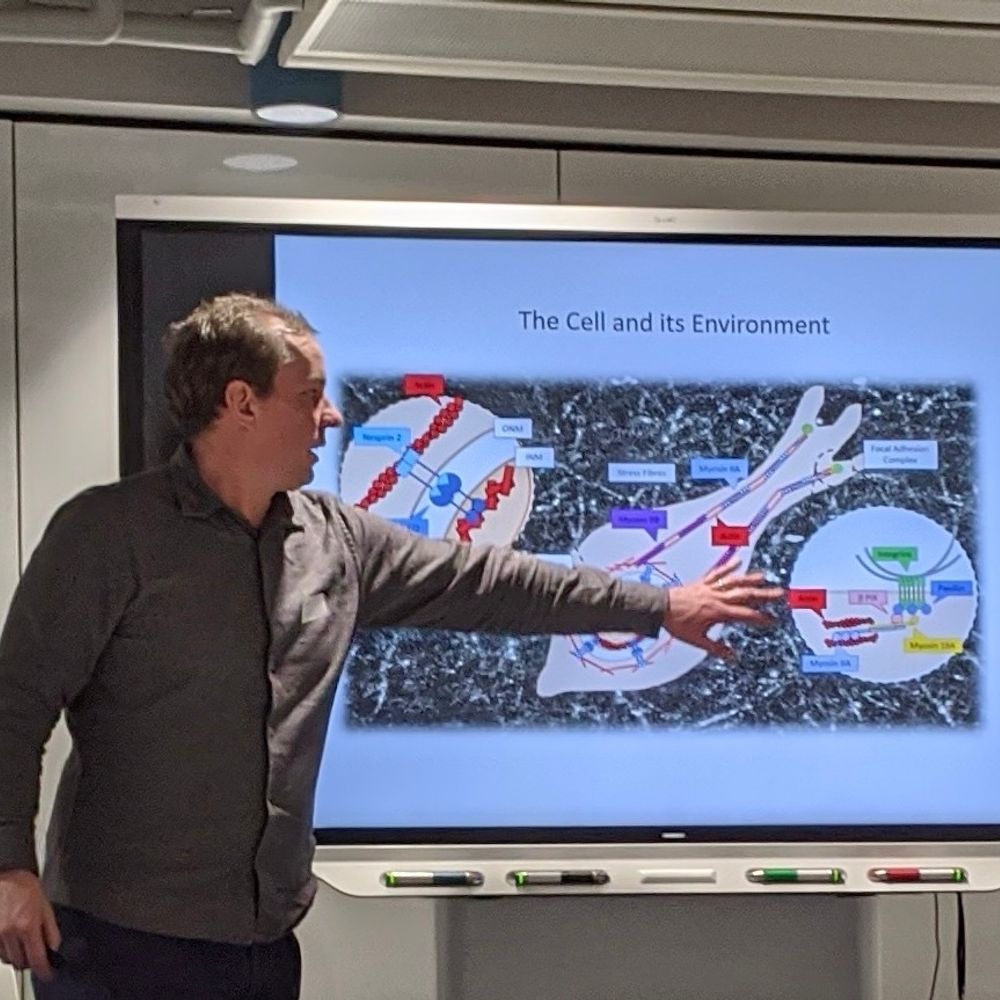
We’re excited to share our latest preprint! We identify SKT, a mechanosensitive adhesion protein that recruits mTORC2 to cell–matrix adhesions, linking metabolic demand to matrix stiffness. Disrupting this axis strongly inhibits PDAC tumor growth. shorturl.at/V0tpK

February 6, 2026 at 10:35 AM
We’re excited to share our latest preprint! We identify SKT, a mechanosensitive adhesion protein that recruits mTORC2 to cell–matrix adhesions, linking metabolic demand to matrix stiffness. Disrupting this axis strongly inhibits PDAC tumor growth. shorturl.at/V0tpK
Reposted by Julia Eckert

@mathildemathieu.bsky.social @ivaskalab.bsky.social New discovery from us! Leupaxin, a paxillin family member typically expressed in immune cells, negatively regulates durotaxis and mechanoresponsiveness in metastatic breast cancer cell variants and in cells cultured on soft ECM lnkd.in/diEk8DSR
LinkedIn
This link will take you to a page that’s not on LinkedIn
lnkd.in
February 5, 2026 at 9:33 AM
@mathildemathieu.bsky.social @ivaskalab.bsky.social New discovery from us! Leupaxin, a paxillin family member typically expressed in immune cells, negatively regulates durotaxis and mechanoresponsiveness in metastatic breast cancer cell variants and in cells cultured on soft ECM lnkd.in/diEk8DSR
Reposted by Julia Eckert
New paper alert!🤩Super proud that our story led by superstar postdocs @liujinghui.bsky.social and @nerlielisa.bsky.social is finally out! We found how electrical signals are key for promoting organ regenerative growth!!! A thread 🧵https://www.science.org/doi/10.1126/sciadv.aec0687

Injury-induced electrochemical coupling triggers organ growth
Organ repair and growth rely on coupling tissue-wide membrane depolarization with intracellular proliferative signaling.
www.science.org
February 5, 2026 at 9:33 AM
New paper alert!🤩Super proud that our story led by superstar postdocs @liujinghui.bsky.social and @nerlielisa.bsky.social is finally out! We found how electrical signals are key for promoting organ regenerative growth!!! A thread 🧵https://www.science.org/doi/10.1126/sciadv.aec0687
Reposted by Julia Eckert
Roffay, C., García-Arcos, J. M., Chapuis, P., López-Andarias, J., Schneider, F., ...., Roux, A., & Mercier, V. (2024). Tutorial: fluorescence lifetime microscopy of membrane mechanosensitive Flipper probes. Nature protocols, 19(12), 3457–3469. #EpithelialMechanicsReview
buff.ly/mTlcVwn
buff.ly/mTlcVwn

February 5, 2026 at 8:00 AM
Roffay, C., García-Arcos, J. M., Chapuis, P., López-Andarias, J., Schneider, F., ...., Roux, A., & Mercier, V. (2024). Tutorial: fluorescence lifetime microscopy of membrane mechanosensitive Flipper probes. Nature protocols, 19(12), 3457–3469. #EpithelialMechanicsReview
buff.ly/mTlcVwn
buff.ly/mTlcVwn
Reposted by Julia Eckert
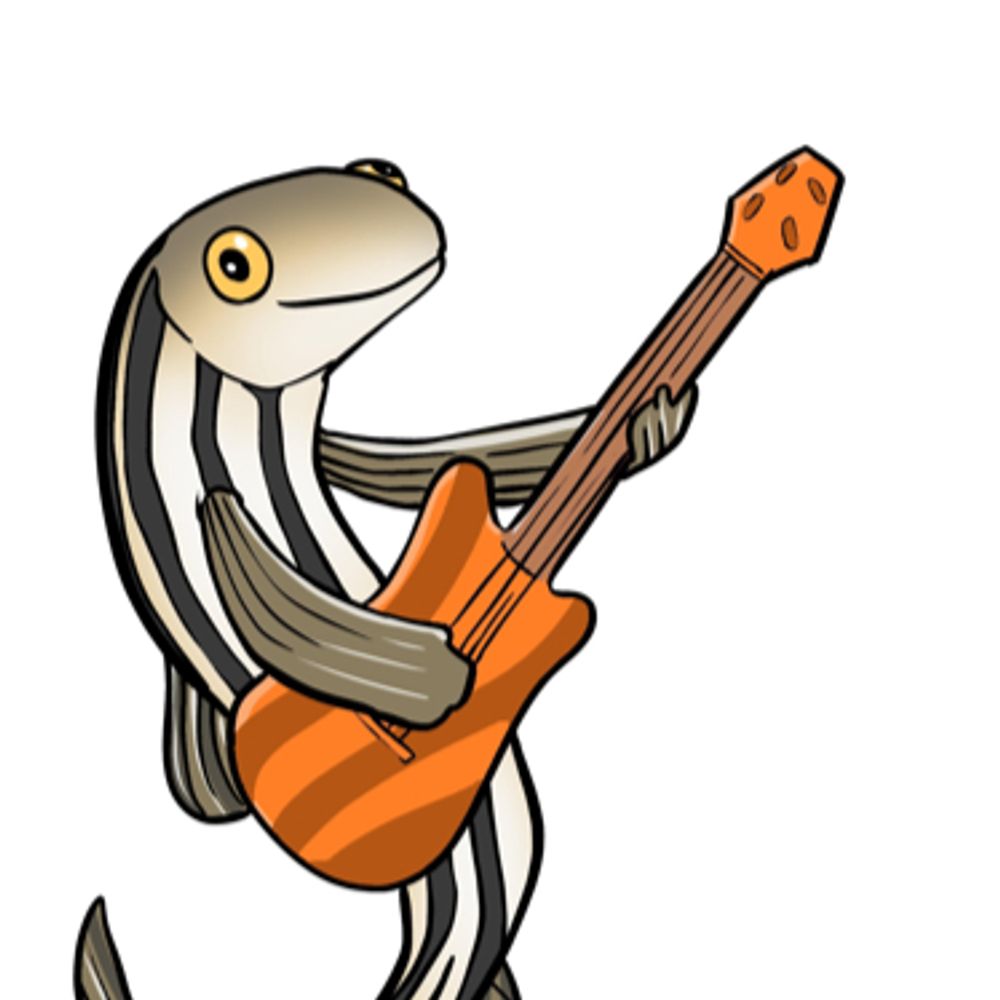
Dynamic actin waves in a zebrafish embryo. Credit to @aaandmoore.bsky.social & Dvir Gur. #ZebrafishZunday 🧪
February 1, 2026 at 8:18 AM
Dynamic actin waves in a zebrafish embryo. Credit to @aaandmoore.bsky.social & Dvir Gur. #ZebrafishZunday 🧪
Reposted by Julia Eckert
How do cells orchestrate themselves to achieve a directional movement as a group?
Hi, I’m @sayukihirano.bsky.social. In this thread, I’ll highlight key mechanisms of how cells communicate with each other to perform directional collective migration.
Hi, I’m @sayukihirano.bsky.social. In this thread, I’ll highlight key mechanisms of how cells communicate with each other to perform directional collective migration.
January 31, 2026 at 8:55 AM
How do cells orchestrate themselves to achieve a directional movement as a group?
Hi, I’m @sayukihirano.bsky.social. In this thread, I’ll highlight key mechanisms of how cells communicate with each other to perform directional collective migration.
Hi, I’m @sayukihirano.bsky.social. In this thread, I’ll highlight key mechanisms of how cells communicate with each other to perform directional collective migration.
Reposted by Julia Eckert
Alberto Dinelli, Ludovic Dumoulin, Karsten Kruse: Active topological strings in renewing nematopolar fluids https://arxiv.org/abs/2601.18307 https://arxiv.org/pdf/2601.18307 https://arxiv.org/html/2601.18307
January 27, 2026 at 6:43 AM
Alberto Dinelli, Ludovic Dumoulin, Karsten Kruse: Active topological strings in renewing nematopolar fluids https://arxiv.org/abs/2601.18307 https://arxiv.org/pdf/2601.18307 https://arxiv.org/html/2601.18307
Reposted by Julia Eckert
Shellard, A., & Mayor, R. (2021). Collective durotaxis along a self-generated stiffness gradient in vivo. Nature, 600(7890), 690–694. #EpithelialMechanics
buff.ly/IbpwWFS
buff.ly/IbpwWFS

January 28, 2026 at 8:01 AM
Shellard, A., & Mayor, R. (2021). Collective durotaxis along a self-generated stiffness gradient in vivo. Nature, 600(7890), 690–694. #EpithelialMechanics
buff.ly/IbpwWFS
buff.ly/IbpwWFS
Reposted by Julia Eckert
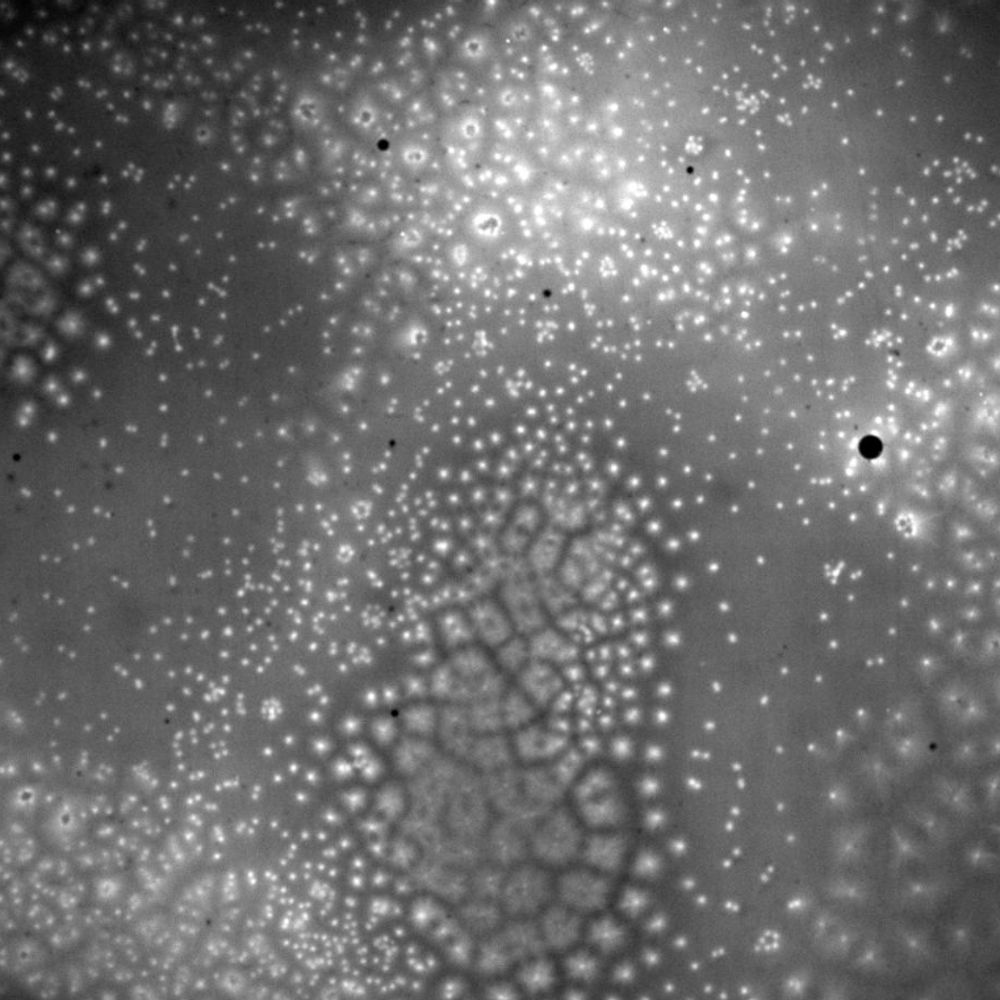
Really excited to share our new paper in @nature.com! We uncovered how a physical instability of the cytoplasm coupled with the cell cycle drives cytoplasmic partitioning in early embryos #zebrafish #drosophila. Read more in this🧵 www.nature.com/articles/s41... 🤩
@poldresden.bsky.social @mpi-cbg.de
@poldresden.bsky.social @mpi-cbg.de
January 28, 2026 at 4:10 PM
Really excited to share our new paper in @nature.com! We uncovered how a physical instability of the cytoplasm coupled with the cell cycle drives cytoplasmic partitioning in early embryos #zebrafish #drosophila. Read more in this🧵 www.nature.com/articles/s41... 🤩
@poldresden.bsky.social @mpi-cbg.de
@poldresden.bsky.social @mpi-cbg.de
Reposted by Julia Eckert
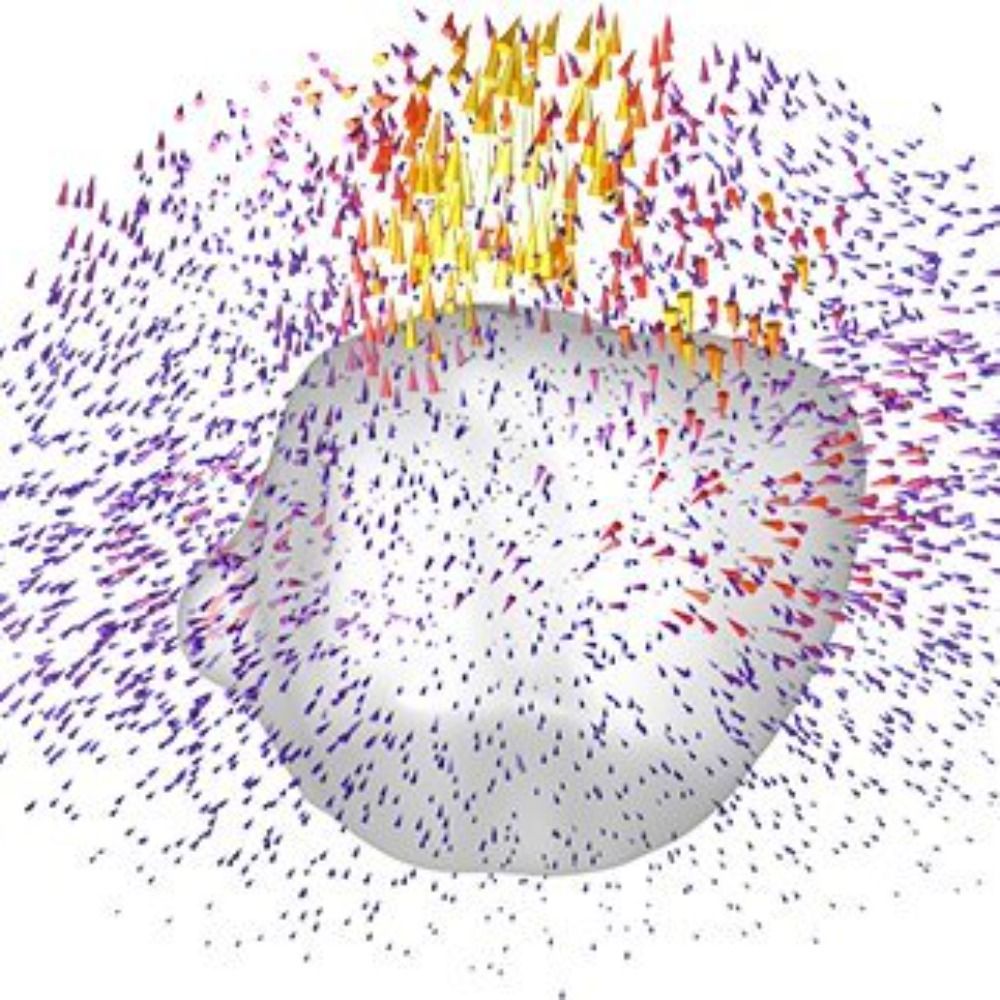
Published online today in Nature Physics - we show how multicellular spheroids round up and orbit, driving a deterministic transition to 3D matrix invasion at predictable locations.
Amazing work from @jiwon-kim.bsky.social, @htjeong.bsky.social and collaborators
www.nature.com/articles/s41...
Amazing work from @jiwon-kim.bsky.social, @htjeong.bsky.social and collaborators
www.nature.com/articles/s41...

January 26, 2026 at 9:09 PM
Published online today in Nature Physics - we show how multicellular spheroids round up and orbit, driving a deterministic transition to 3D matrix invasion at predictable locations.
Amazing work from @jiwon-kim.bsky.social, @htjeong.bsky.social and collaborators
www.nature.com/articles/s41...
Amazing work from @jiwon-kim.bsky.social, @htjeong.bsky.social and collaborators
www.nature.com/articles/s41...
Reposted by Julia Eckert
📝Check out our latest paper published in @commsbio.nature.com !!
Great work by Samet Aytekin and Laurens Kimps in this collaboration with @rochalab.bsky.social where they combined simultaneous FRET tension sensors and traction force microscopy!
👇🏽
www.nature.com/articles/s42...
Great work by Samet Aytekin and Laurens Kimps in this collaboration with @rochalab.bsky.social where they combined simultaneous FRET tension sensors and traction force microscopy!
👇🏽
www.nature.com/articles/s42...
Linking molecular tension and cellular tractions: a multiscale approach to focal adhesion mechanics - Communications Biology
Simultaneous mapping of tractions and molecular tension reveals how cells coordinate forces across scales, from whole-cell mechanics to polarized force transmission within individual focal adhesions.
www.nature.com
January 26, 2026 at 3:37 PM
📝Check out our latest paper published in @commsbio.nature.com !!
Great work by Samet Aytekin and Laurens Kimps in this collaboration with @rochalab.bsky.social where they combined simultaneous FRET tension sensors and traction force microscopy!
👇🏽
www.nature.com/articles/s42...
Great work by Samet Aytekin and Laurens Kimps in this collaboration with @rochalab.bsky.social where they combined simultaneous FRET tension sensors and traction force microscopy!
👇🏽
www.nature.com/articles/s42...
Reposted by Julia Eckert

Happy to highlight our collaborative work from our @ijmonod.bsky.social team with @destriano.bsky.social, B. Goyeau and M. Chabanon.
Cytoplasmic crowding acts as a porous medium that hinders macromolecular diffusivity.
Plus: a clever way to measure cell volume.
www.pnas.org/doi/10.1073/...
Cytoplasmic crowding acts as a porous medium that hinders macromolecular diffusivity.
Plus: a clever way to measure cell volume.
www.pnas.org/doi/10.1073/...

Cytoplasmic crowding acts as a porous medium reducing macromolecule diffusion | PNAS
Intracellular transport of macromolecules is crucial for the proper functioning of
most cellular processes. Although intracellular crowding is know...
www.pnas.org
January 26, 2026 at 9:42 AM
Happy to highlight our collaborative work from our @ijmonod.bsky.social team with @destriano.bsky.social, B. Goyeau and M. Chabanon.
Cytoplasmic crowding acts as a porous medium that hinders macromolecular diffusivity.
Plus: a clever way to measure cell volume.
www.pnas.org/doi/10.1073/...
Cytoplasmic crowding acts as a porous medium that hinders macromolecular diffusivity.
Plus: a clever way to measure cell volume.
www.pnas.org/doi/10.1073/...
Reposted by Julia Eckert

In @jcb.org, Diaz & @mayorlab.bsky.social show that epithelial & mesenchymal cells navigate chemical cues via fundamentally different force-generating mechanisms, offering new insight into how diverse cell types achieve collective movement during development and disease. rupress.org/jcb/article/...
January 21, 2026 at 5:00 PM
In @jcb.org, Diaz & @mayorlab.bsky.social show that epithelial & mesenchymal cells navigate chemical cues via fundamentally different force-generating mechanisms, offering new insight into how diverse cell types achieve collective movement during development and disease. rupress.org/jcb/article/...
Reposted by Julia Eckert
Mechanometabolism of cell adhesion: Vinculin regulates bioenergetics via RhoA-ROCK
rupress.org/jcb/article/...
rupress.org/jcb/article/...
January 21, 2026 at 12:14 PM
Mechanometabolism of cell adhesion: Vinculin regulates bioenergetics via RhoA-ROCK
rupress.org/jcb/article/...
rupress.org/jcb/article/...