



Chris Ashwood
@cashwood.proteaglyco.com
Director of Protea Glycosciences
Accelerating glycoscience research
Accelerating glycoscience research
Pinned
Chris Ashwood
@cashwood.proteaglyco.com
· Nov 21
Given the influx of people at bsky, thought I would formally introduce myself 👋
I'm Chris, an Australian glycoscientist who has studied the field for >10 years now (across both AU and US), starting (MRes and PhD) in the lab of Prof. Nicki Packer.
I believe LC-MS glyco still has a lot to discover.
I'm Chris, an Australian glycoscientist who has studied the field for >10 years now (across both AU and US), starting (MRes and PhD) in the lab of Prof. Nicki Packer.
I believe LC-MS glyco still has a lot to discover.
Reposted by Chris Ashwood

Applications are now open for @olgavitek.bsky.social 's May Intitute on computation and statistics for mass spectrometry and proteomics at @northeasternu.bsky.social !
--> computationalproteomics.khoury.northeastern.edu
--> computationalproteomics.khoury.northeastern.edu
May Institute – Computation and statistics for mass spectrometry and proteomics
computationalproteomics.khoury.northeastern.edu
January 20, 2026 at 11:26 PM
Applications are now open for @olgavitek.bsky.social 's May Intitute on computation and statistics for mass spectrometry and proteomics at @northeasternu.bsky.social !
--> computationalproteomics.khoury.northeastern.edu
--> computationalproteomics.khoury.northeastern.edu
Reposted by Chris Ashwood

very happy that the iq 2.0 paper is published.
Boosting the Speed and Accuracy of Protein Quantification Algorithms in Mass Spectrometry-Based Proteomics | Journal of Proteome Research pubs.acs.org/doi/10.1021/...
Boosting the Speed and Accuracy of Protein Quantification Algorithms in Mass Spectrometry-Based Proteomics | Journal of Proteome Research pubs.acs.org/doi/10.1021/...

Boosting the Speed and Accuracy of Protein Quantification Algorithms in Mass Spectrometry-Based Proteomics
Protein quantification is a crucial data processing step that combines quantitative values at the peptide or fragment level into protein levels in mass spectrometry-based proteomics. However, many of ...
pubs.acs.org
January 20, 2026 at 11:36 PM
very happy that the iq 2.0 paper is published.
Boosting the Speed and Accuracy of Protein Quantification Algorithms in Mass Spectrometry-Based Proteomics | Journal of Proteome Research pubs.acs.org/doi/10.1021/...
Boosting the Speed and Accuracy of Protein Quantification Algorithms in Mass Spectrometry-Based Proteomics | Journal of Proteome Research pubs.acs.org/doi/10.1021/...
With everything going on right now, I’m foreseeing a lower European contingent for ASMS.
I’ll still submit an abstract, but who knows what the state of the world will be in June.
I’ll still submit an abstract, but who knows what the state of the world will be in June.
January 19, 2026 at 10:36 AM
With everything going on right now, I’m foreseeing a lower European contingent for ASMS.
I’ll still submit an abstract, but who knows what the state of the world will be in June.
I’ll still submit an abstract, but who knows what the state of the world will be in June.
Got an Orbitrap-based mass spec that couldn’t do STORI/direct mass technology before (any aside from the UHMR and Tribrid Ascend)?
This is a cool open-source implementation that even works on an Orbitrap Elite! #teammassspec
This is a cool open-source implementation that even works on an Orbitrap Elite! #teammassspec

Introducing Theropod. A set of python and R tools that I’ve put together to do STORI analysis with an external digital oscilloscope. pubs.acs.org/doi/10.1021/...

Theropod: Software Tools to Analyze Externally Collected Selective Temporal Overview of Resonant Ions
Recent developments in charge detection mass spectrometry have allowed for the broad characterization of individual proteoforms and mixtures of proteoforms from individual ions collected in Orbitrap m...
pubs.acs.org
January 17, 2026 at 2:39 AM
Got an Orbitrap-based mass spec that couldn’t do STORI/direct mass technology before (any aside from the UHMR and Tribrid Ascend)?
This is a cool open-source implementation that even works on an Orbitrap Elite! #teammassspec
This is a cool open-source implementation that even works on an Orbitrap Elite! #teammassspec
Reposted by Chris Ashwood

Exciting news! Our open source mass spectrometer saw its first ions this week. Still a lot of work to do, but a full characterization and schematics should be available by #ASMS2026. Message me if you’d like more details.

January 16, 2026 at 10:31 PM
Exciting news! Our open source mass spectrometer saw its first ions this week. Still a lot of work to do, but a full characterization and schematics should be available by #ASMS2026. Message me if you’d like more details.
For all the problems people have with reviewers sometimes, it is quite heartwarming to have someone read your work and give feedback/corrections that reminds you of being back in a big research group.
January 16, 2026 at 11:29 AM
For all the problems people have with reviewers sometimes, it is quite heartwarming to have someone read your work and give feedback/corrections that reminds you of being back in a big research group.
Reposted by Chris Ashwood

Reposted by Chris Ashwood

#Glycans probably have more "copies/cell" than #proteins and changes in #glycosylation could potentially be remarkable biomarkers for diseases as well as targets for therapeutics. This post explores the abundance of glycans on the cell surface and it is worth a read to recognize these #biomolecules.
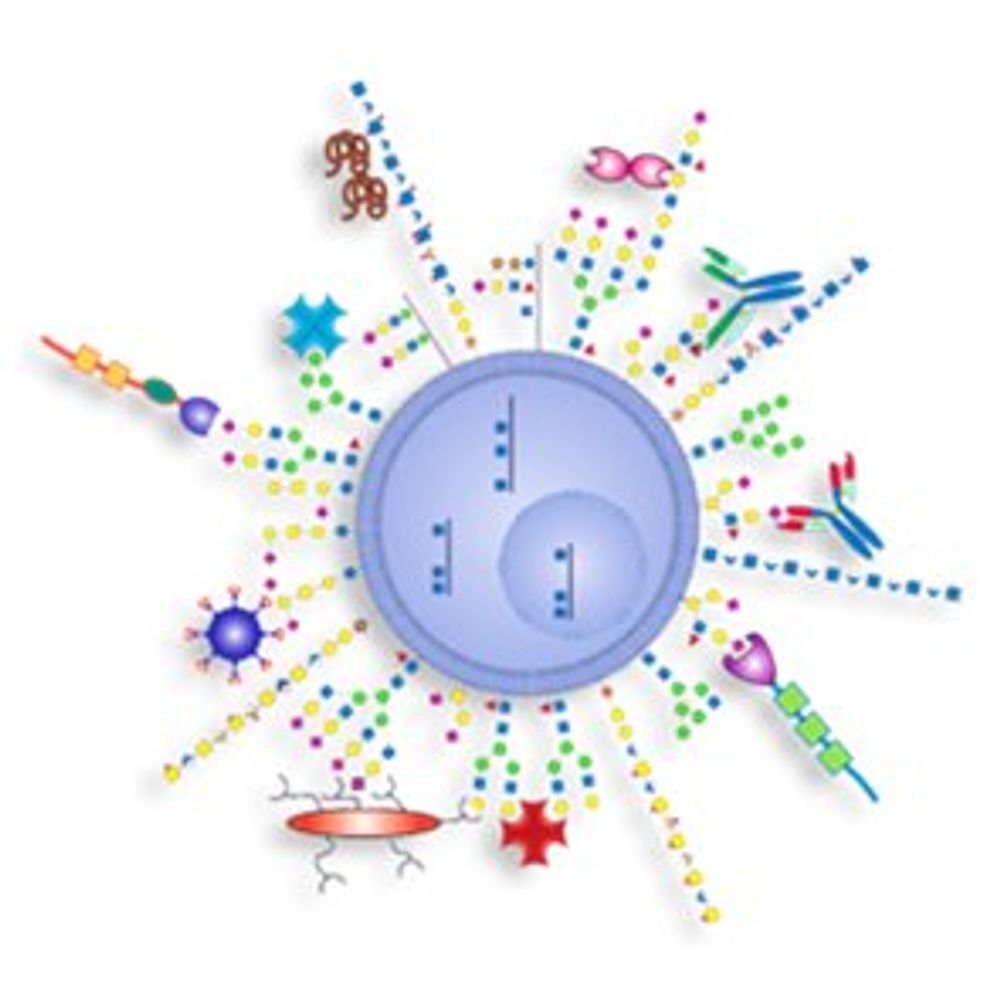
Have you ever wondered how many N-Glycans or #glycoproteins there are on cells?
The numbers are massive: calculations suggest about 20 to 200 million N-glycans per human cell!
Read the full blog post: research.bidmc.org/ncfg/blog/24...
#glycobiology #glycotime #cells #biology
The numbers are massive: calculations suggest about 20 to 200 million N-glycans per human cell!
Read the full blog post: research.bidmc.org/ncfg/blog/24...
#glycobiology #glycotime #cells #biology

January 15, 2026 at 3:52 PM
#Glycans probably have more "copies/cell" than #proteins and changes in #glycosylation could potentially be remarkable biomarkers for diseases as well as targets for therapeutics. This post explores the abundance of glycans on the cell surface and it is worth a read to recognize these #biomolecules.
Reposted by Chris Ashwood
"by the time the scientific community had developed an effective vaccine, bioRxiv/medRxiv had posted more than 20,000 COVID papers" 🤯
Brilliant retrospective by @richardsever.bsky.social on the origins, growth and resounding success of bioRxiv and medRxiv ⬇️
journals.asm.org/doi/10.1128/...
Brilliant retrospective by @richardsever.bsky.social on the origins, growth and resounding success of bioRxiv and medRxiv ⬇️
journals.asm.org/doi/10.1128/...

The Story behind the Science: Preprints of pandemic potential—how bioRxiv and medRxiv brought preprints to the life sciences | mBio
When we launched medRxiv in mid-2019, we never could have anticipated that just a
few months later, New York would be at the epicenter of a rapidly escalating global
pandemic, and we would be handling...
journals.asm.org
January 15, 2026 at 4:07 PM
"by the time the scientific community had developed an effective vaccine, bioRxiv/medRxiv had posted more than 20,000 COVID papers" 🤯
Brilliant retrospective by @richardsever.bsky.social on the origins, growth and resounding success of bioRxiv and medRxiv ⬇️
journals.asm.org/doi/10.1128/...
Brilliant retrospective by @richardsever.bsky.social on the origins, growth and resounding success of bioRxiv and medRxiv ⬇️
journals.asm.org/doi/10.1128/...
MagNet (@resynbio.bsky.social) still looks like an overall winner in this study. Good to see it reproduced across 3+ studies.
January 14, 2026 at 1:13 PM
MagNet (@resynbio.bsky.social) still looks like an overall winner in this study. Good to see it reproduced across 3+ studies.
Reposted by Chris Ashwood

Membrane proteins retain native architecture through native ESI and soft-landing www.biorxiv.org/cont...
---
#proteomics #prot-preprint
---
#proteomics #prot-preprint

January 14, 2026 at 11:40 AM
Membrane proteins retain native architecture through native ESI and soft-landing www.biorxiv.org/cont...
---
#proteomics #prot-preprint
---
#proteomics #prot-preprint
Reposted by Chris Ashwood

Only in Halobacterium salinarum: Sugar modifications unique to an archaeal N-linked glycan
#glycotime #CarbohydrateResearch
#glycotime #CarbohydrateResearch
Only in <em>Halobacterium salinarum</em>: Sugar modifications unique to an archaeal N-linked glycan
Only in Halobacterium salinarum: Sugar modifications unique to an archaeal N-linked glycan
www.sciencedirect.com
January 13, 2026 at 1:50 PM
Only in Halobacterium salinarum: Sugar modifications unique to an archaeal N-linked glycan
#glycotime #CarbohydrateResearch
#glycotime #CarbohydrateResearch
Reposted by Chris Ashwood

Better Inputs, Better Learning: A Peptide Embedding Tutorial for Proteomic Mass Spectrometry #JProteomeRes pubs.acs.org/doi/10.1021/...

Better Inputs, Better Learning: A Peptide Embedding Tutorial for Proteomic Mass Spectrometry
Mass spectrometry proteomics creates complex data representing the peptide/protein contents of biological samples. Various types of machine learning have been central to computational methods used to identify peptides from tandem mass spectra and numerous other aspects of the data analysis process. As deep learning has emerged as a powerful machine learning method for modeling and interpreting data, computational proteomics researchers have leveraged large publicly available data sets to train machine learning models to predict peptide fragmentation spectra and liquid chromatography retention time. Resources like proteomicsML offer extensive demonstrative tutorials for these learning tasks and are closing the gap between the proteomics and machine learning communities. However, in these and other educational materials on deep learning, the critical step of preparing data for learning is frequently omitted. Prior to learning, peptide strings must be converted into a numeric format─an embedding. There are many different peptide embeddings, and some vastly outperform others. Yet the process for creating an embedding, and also the rationale for choosing a specific embedding, is rarely discussed in our proteomics literature. In this technical note, we introduce four Google Colab notebooks to teach peptide embeddings. The series walks users through five different peptide-embedding strategies─ from simplistic single-number encodings to state-of-the-art pretrained embeddings─ through both code examples and narrative descriptions. The final notebook compares the five embeddings in a head-to-head benchmark. By making these notebooks free, we hope to lower the barrier for researchers who want to bring modern deep learning into their proteomics workflows.
pubs.acs.org
January 13, 2026 at 8:18 PM
Better Inputs, Better Learning: A Peptide Embedding Tutorial for Proteomic Mass Spectrometry #JProteomeRes pubs.acs.org/doi/10.1021/...
Reposted by Chris Ashwood

Now open: DDLS Postdoctoral Fellowship Call 2026
22 funded postdoc projects in data-driven life science, with academic and industry tracks
Call details:
www.scilifelab.se/data-driven/...
Matchmaking platform:
www.scilifelab.se/data-driven/...
#postdoc #DDLS #SciLifeLab #researchjobs
22 funded postdoc projects in data-driven life science, with academic and industry tracks
Call details:
www.scilifelab.se/data-driven/...
Matchmaking platform:
www.scilifelab.se/data-driven/...
#postdoc #DDLS #SciLifeLab #researchjobs

DDLS Research School Postdoc call 2026
Call for Academic and Industrial Postdoctoral Fellowships in Data-Driven Life Science 2026 Generic Description of the DDLS Postdoc Program The SciLifeLab and Wallenberg National Program for Data-Drive...
www.scilifelab.se
January 13, 2026 at 8:51 AM
Now open: DDLS Postdoctoral Fellowship Call 2026
22 funded postdoc projects in data-driven life science, with academic and industry tracks
Call details:
www.scilifelab.se/data-driven/...
Matchmaking platform:
www.scilifelab.se/data-driven/...
#postdoc #DDLS #SciLifeLab #researchjobs
22 funded postdoc projects in data-driven life science, with academic and industry tracks
Call details:
www.scilifelab.se/data-driven/...
Matchmaking platform:
www.scilifelab.se/data-driven/...
#postdoc #DDLS #SciLifeLab #researchjobs
Reposted by Chris Ashwood
Isolation and structural elucidation of immunomodulatory oligosaccharides from Trillium tschonoskii
#glycotime #GlycoconjugateJournal
#glycotime #GlycoconjugateJournal

Isolation and structural elucidation of immunomodulatory oligosaccharides from Trillium tschonoskii
Six oligosaccharides with the degree of polymerization (DP) 2 to 7 were isolated from the active fraction of Trillium tschonoskii using a high-temperature
link.springer.com
January 12, 2026 at 3:45 PM
Isolation and structural elucidation of immunomodulatory oligosaccharides from Trillium tschonoskii
#glycotime #GlycoconjugateJournal
#glycotime #GlycoconjugateJournal
Reposted by Chris Ashwood
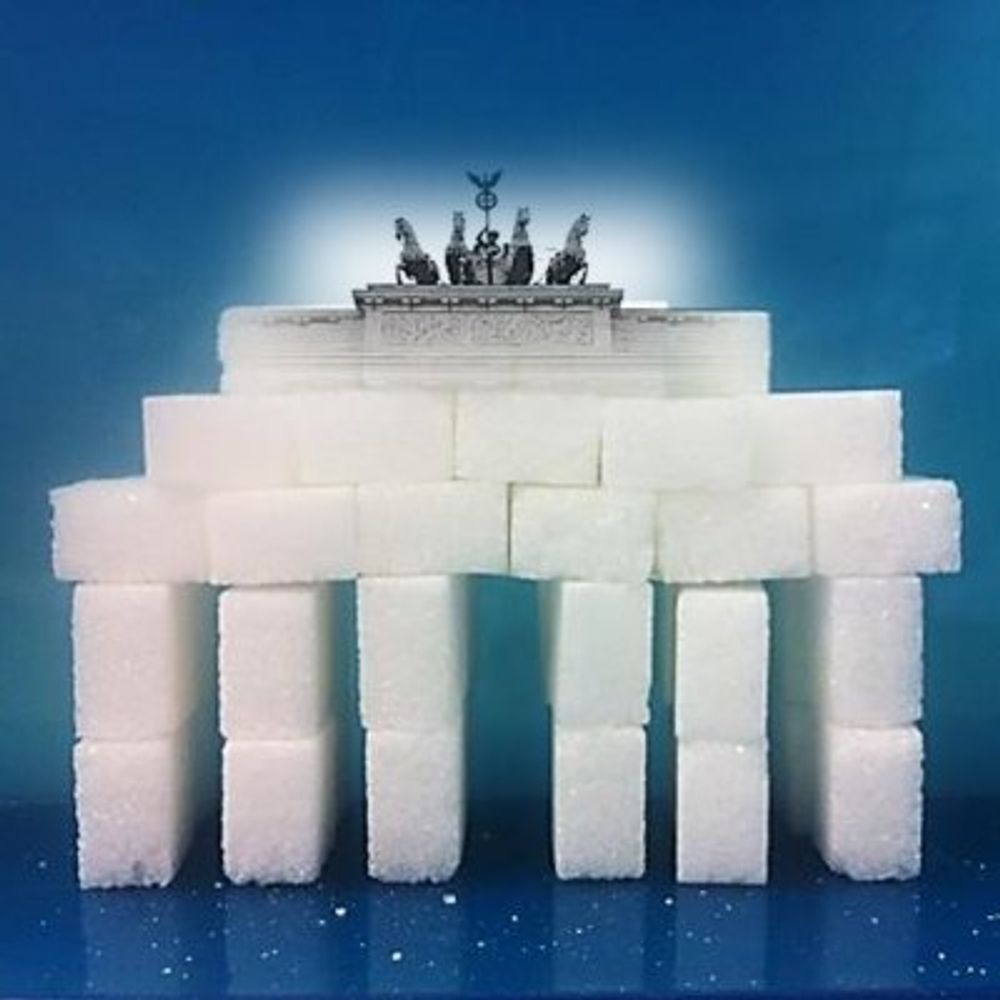
Well done Dominik!
Leveraging Mirror-Image Glycans in #CarbohydrateMaterials out today in @orgbiomolchem.rsc.org !
@rsc.org, @mpici.bsky.social
pubs.rsc.org/en/content/a...
Leveraging Mirror-Image Glycans in #CarbohydrateMaterials out today in @orgbiomolchem.rsc.org !
@rsc.org, @mpici.bsky.social
pubs.rsc.org/en/content/a...
Leveraging Mirror-Image Glycans in Carbohydrate Materials
Chirality has become a fundamental design principle to craft peptide materials. In contrast, the systematic exploitation of chirality to build glycan materials remains largely unexplored, despite the ...
pubs.rsc.org
January 12, 2026 at 9:11 AM
Well done Dominik!
Leveraging Mirror-Image Glycans in #CarbohydrateMaterials out today in @orgbiomolchem.rsc.org !
@rsc.org, @mpici.bsky.social
pubs.rsc.org/en/content/a...
Leveraging Mirror-Image Glycans in #CarbohydrateMaterials out today in @orgbiomolchem.rsc.org !
@rsc.org, @mpici.bsky.social
pubs.rsc.org/en/content/a...
Surprised this made it through peer review by slightly changing the formula of an 11 year old paper.
"Adnan et al. introduced fragment ion (m/z 138 + m/z 168) to (m/z 126 + m/z 144) RA ratios"
"we proposed a new diagnostic clue to distinguish...the RA ratio of fragment ions at m/z 126.055 and 138"
"Adnan et al. introduced fragment ion (m/z 138 + m/z 168) to (m/z 126 + m/z 144) RA ratios"
"we proposed a new diagnostic clue to distinguish...the RA ratio of fragment ions at m/z 126.055 and 138"
Higher-Energy Collisional Dissociation Mass Spectrometry Fragmentation Enables Distinguishing O-GlcNAc from Tn Antigen in Cancer Cells #JASMS pubs.acs.org/doi/10.1021/...

Higher-Energy Collisional Dissociation Mass Spectrometry Fragmentation Enables Distinguishing O-GlcNAc from Tn Antigen in Cancer Cells
Protein glycosylation plays essential roles in various biological processes, and thus determining the glycan structure present on the protein is essential to comprehensively understand these events. However, distinguishing saccharide stereoisomers is challenging, especially when their structures are very similar and their molecular weight and potential glycosylation sites are identical. One representative example is O-linked β-N-acetylglucosamine (O-GlcNAc) and O-linked α-N-acetylgalactosamine (Tn antigen). Traditional biochemistry approaches used in separating O-GlcNAc- and Tn antigen-modified peptides mainly include chemical derivatizations, lectins, and antibodies. However, subsequent mass spectrometry (MS) analysis is still required if one aims to determine the exact glycosylation site. Herein, a straightforward approach using the ratio of relative abundance (RA) of two fragment ions (RA126.055/RA138.055) in higher-energy collisional dissociation (HCD) MS without relying on the traditional biochemistry technique is reported to discriminate between O-GlcNAc and Tn antigen. This ratio was verified by synthetic glycopeptides and proteomic analysis in HeLa cells, where 10 proteins were found to be O-GlcNAcylation and 4 proteins were found to be Tn antigen-modified. Overall, this method can be extensively employed in liquid chromatography–mass spectrometry (LC-MS)-based proteomic studies and thus is of importance in biological and biomedical research.
pubs.acs.org
January 10, 2026 at 1:34 PM
Surprised this made it through peer review by slightly changing the formula of an 11 year old paper.
"Adnan et al. introduced fragment ion (m/z 138 + m/z 168) to (m/z 126 + m/z 144) RA ratios"
"we proposed a new diagnostic clue to distinguish...the RA ratio of fragment ions at m/z 126.055 and 138"
"Adnan et al. introduced fragment ion (m/z 138 + m/z 168) to (m/z 126 + m/z 144) RA ratios"
"we proposed a new diagnostic clue to distinguish...the RA ratio of fragment ions at m/z 126.055 and 138"
Reposted by Chris Ashwood
(ChemRxiv) Native Charge Detection Mass Spectrometry of Kilobase-Scale Messenger RNAs: Charge detection mass spectrometry (CDMS) enables direct measurement of mass and charge for individual ions and overcomes fundamental limitations of conventional electrospray mass… (RSS) #chemrxiv #MassSpecRSS

Native Charge Detection Mass Spectrometry of Kilobase-Scale Messenger RNAs
Charge detection mass spectrometry (CDMS) enables direct measurement of mass and charge for individual ions and overcomes fundamental limitations of conventional electrospray mass spectrometry for large, heterogeneous biomolecules. Messenger RNAs (mRNAs) represent a particularly challenging analytical target, as transcripts often span thousands of nucleotides, exhibit substantial heterogeneity, and form higher-order oligomers that are difficult to assess using existing workflows. Here, we optimize and evaluate native CDMS for intact analysis of long mRNAs and conduct systematic comparison of positive and negative analysis polarities. Using a panel of commercially available mRNAs ranging from approximately 1,000 to 4,500 nucleotides, we demonstrate that native CDMS enables direct, and accurate mass measurement of intact mRNAs alongside various process-related impurities (truncations, dimers etc.). Collisional activation improves mass accuracy by reducing adduct heterogeneity while preserving the ability to resolve impurity populations. Across all constructs, CDMS provides quantitative access to charge distributions that scale with transcript length and respond predictably to activation, denaturation, and polarity, offering insight into ion charging behavior and charge accommodation for large RNAs. Negative polarity measurements generally access higher charge states than positive polarity, particularly for the largest transcripts, improving sensitivity and relative size discrimination, while intact mass accuracy remains comparable between polarities when appropriate ion transmission strategies are employed. Together, these results establish native CDMS as a versatile and information-rich platform for intact mRNA characterization, providing simultaneous access to mass, charge, and impurity information that complements existing analytical methods and supports emerging needs in RNA biotherapeutic development.
dlvr.it
January 10, 2026 at 9:02 AM
(ChemRxiv) Native Charge Detection Mass Spectrometry of Kilobase-Scale Messenger RNAs: Charge detection mass spectrometry (CDMS) enables direct measurement of mass and charge for individual ions and overcomes fundamental limitations of conventional electrospray mass… (RSS) #chemrxiv #MassSpecRSS
The @bakerlabms.bsky.social had a pretty fun post on LinkedIn, describing their 2026 sneak peek.
Thought I'd give it a try:
💻+⏱️+(🦠/🐟)=🧁⚡♦️
How about yours?
Thought I'd give it a try:
💻+⏱️+(🦠/🐟)=🧁⚡♦️
How about yours?

January 9, 2026 at 12:18 PM
The @bakerlabms.bsky.social had a pretty fun post on LinkedIn, describing their 2026 sneak peek.
Thought I'd give it a try:
💻+⏱️+(🦠/🐟)=🧁⚡♦️
How about yours?
Thought I'd give it a try:
💻+⏱️+(🦠/🐟)=🧁⚡♦️
How about yours?
Reposted by Chris Ashwood

Nominations for the #EarlyCareerResearchers (ECR) Committee of the Consortium for Top-Down Proteomics for the 2026-2028 term are open. We encourage nominations of motivated early-career researchers (including self-nominations) who are passionate about advancing top-down proteomics. #teammassspec

Nomination for the Early Career Researchers (ECR) Committee (term: 2026-2028) of the Consortium for Top-Down Proteomics
Open to: academia, industry, and government
Criteria: (1) PhD scientist, (2) Within 10 years of graduation, (3) Actively involved in the field of intact protein analysis by mass spectrometry (broadly ...
docs.google.com
January 9, 2026 at 10:16 AM
Nominations for the #EarlyCareerResearchers (ECR) Committee of the Consortium for Top-Down Proteomics for the 2026-2028 term are open. We encourage nominations of motivated early-career researchers (including self-nominations) who are passionate about advancing top-down proteomics. #teammassspec
Reposted by Chris Ashwood
Younger colleague Johannes Stadlmann held his habilitation lecture yesterday - on the subject of his glycoproteomics software.

January 9, 2026 at 7:42 AM
Younger colleague Johannes Stadlmann held his habilitation lecture yesterday - on the subject of his glycoproteomics software.
Reposted by Chris Ashwood

On this week’s #THEProteomicsShow Ben @proteomicsnews.bsky.social and I sat down with Dr. Jeff Gordon who will be giving the plenary at the upcoming #USHUPO2026 meeting. Find it wherever you find fine podcasts, or here anchor.fm/theproteomic...

January 8, 2026 at 7:16 PM
On this week’s #THEProteomicsShow Ben @proteomicsnews.bsky.social and I sat down with Dr. Jeff Gordon who will be giving the plenary at the upcoming #USHUPO2026 meeting. Find it wherever you find fine podcasts, or here anchor.fm/theproteomic...
A new year, new patents for 2026/2027 MS
Thermo/Waters -> Multi-channel (in parallel) IMS pre- and post- separation (similar approach to Bruker)
Bruker -> New sample introduction for MALDI (Flex upgrade incoming 2026?)
Sciex -> Peptide negative EAD (Should be on the 9600)
Mobilion -> Iterative IMS
Thermo/Waters -> Multi-channel (in parallel) IMS pre- and post- separation (similar approach to Bruker)
Bruker -> New sample introduction for MALDI (Flex upgrade incoming 2026?)
Sciex -> Peptide negative EAD (Should be on the 9600)
Mobilion -> Iterative IMS


January 7, 2026 at 11:46 AM
A new year, new patents for 2026/2027 MS
Thermo/Waters -> Multi-channel (in parallel) IMS pre- and post- separation (similar approach to Bruker)
Bruker -> New sample introduction for MALDI (Flex upgrade incoming 2026?)
Sciex -> Peptide negative EAD (Should be on the 9600)
Mobilion -> Iterative IMS
Thermo/Waters -> Multi-channel (in parallel) IMS pre- and post- separation (similar approach to Bruker)
Bruker -> New sample introduction for MALDI (Flex upgrade incoming 2026?)
Sciex -> Peptide negative EAD (Should be on the 9600)
Mobilion -> Iterative IMS
Reposted by Chris Ashwood

I have a paper on Biorxiv:
www.biorxiv.org/content/10.6...
My first preprint!
An instrument capablity comparison for #proteomics for #biomanufacturing. Working towards the economical appliction of #omics technologies to industrial life science.
www.biorxiv.org/content/10.6...
My first preprint!
An instrument capablity comparison for #proteomics for #biomanufacturing. Working towards the economical appliction of #omics technologies to industrial life science.

From Discovery to Process Control: Positioning DIA Proteomics in Biomanufacturing Pipelines
Gaining control of existing biomanufacturing chassis organisms, such as Escherichia coli K12 , and novel isolates, such as the salt tolerant Halomonas bluephagenesis sp TD01 studied here may be facili...
www.biorxiv.org
January 7, 2026 at 10:51 AM
I have a paper on Biorxiv:
www.biorxiv.org/content/10.6...
My first preprint!
An instrument capablity comparison for #proteomics for #biomanufacturing. Working towards the economical appliction of #omics technologies to industrial life science.
www.biorxiv.org/content/10.6...
My first preprint!
An instrument capablity comparison for #proteomics for #biomanufacturing. Working towards the economical appliction of #omics technologies to industrial life science.
Referring to academic journals:
"No longer could people rely on the content, because the cost of creating fake material was so low, and the benefits so high. Now an academic could possibly publish half a dozen articles in a year, mostly because they could submit a hundred and hope a few got through"
"No longer could people rely on the content, because the cost of creating fake material was so low, and the benefits so high. Now an academic could possibly publish half a dozen articles in a year, mostly because they could submit a hundred and hope a few got through"
In Memoriam: The Academic Journal doi.org/10.48550/arX...
In Memorium: The Academic Journal
We reflect on the life and influence of the academic journal, charting their history and contributions, discussing how their influence changed society, and examining how in death they will be mourned ...
doi.org
January 6, 2026 at 11:34 PM
Referring to academic journals:
"No longer could people rely on the content, because the cost of creating fake material was so low, and the benefits so high. Now an academic could possibly publish half a dozen articles in a year, mostly because they could submit a hundred and hope a few got through"
"No longer could people rely on the content, because the cost of creating fake material was so low, and the benefits so high. Now an academic could possibly publish half a dozen articles in a year, mostly because they could submit a hundred and hope a few got through"