Martin Ehbrecht
banner
martinehbrecht.bsky.social
Martin Ehbrecht
@martinehbrecht.bsky.social

Forest ecology, forest dynamics, forest management. Temperate and tropical.

Environmental science 64%
Geography 16%

Reposted by Martin Ehbrecht

Central Europe has seen unprecedented forest disturbances recently, but how are forests recovering? We surveyed disturbance hotspots in 10 countries 3-5 years after disturbance, finding ample tree regeneration and no signs of forest loss (median 4750 stems/ha), but... 1/2 doi.org/10.1111/gcb....
New paper by @albavianasoto.bsky.social and @corneliussenf.bsky.social on forest reburns in southern Europe, published in Glob. Ecol. and Biogeography🌲🔥
Highlight: 30.1% of burned forest area experiencing multiple fire events since 1985.
onlinelibrary.wiley.com/doi/10.1111/...

Reposted by Martin Ehbrecht

📖Published!

Biodiversity enhances the positive effect of structural diversity on forest productivity and indirectly boosts productivity through structural diversity🌍

However, environmental stressors weaken the positive impact of structural diversity🐘

🔎 buff.ly/Uooe1rC
A study in Nature Ecology & Evolution shows the long-term changes in tree species diversity across tropical forests in the Andes and Amazon. go.nature.com/45FPc1M 🌍 🧪
Can tropical rainforests 🌴🌎🇪🇨 regain their structural complexity in 40 years? Yes! Shown by @martinehbrecht.bsky.social et al. in their new article in @journalofecology.bsky.social

www.reassembly.de/news/recover...

Reposted by Martin Ehbrecht

🌳🌴The various regions of the tropics differ in terms of the overall diversity of #tree species, but the relationship between environmental variables and local tree species richness is very similar across the different continents. #rainforest #biodiversity #forests
Analogous Environments Across the Tropics Have Similar Levels of Tree Species Αlpha Diversity
Abstract. Different regions of the tropics vary in overall tree species diversity, with the tropical Americas exhibiting strikingly higher regional tree sp
academic.oup.com
Fast-growing trees are set to dominate the #forests of the #future — but at a cost🌳
Our Nature Plants (@natplants.nature.com) study shows a global shift toward "sprinter" tree species, while slow-growing, functionally critical #trees face elevated #extinction risk. www.nature.com/articles/s41...
Global functional shifts in trees driven by alien naturalization and native extinction - Nature Plants
This study finds that native tree extinctions and alien naturalizations are pushing forests towards fast-growing, resource-demanding species. This global shift could affect carbon storage and ecosyste...
www.nature.com
Tree diversity is changing in the Amazon and Andes.

Belen Fadrique leads our analysis in @natecoevo.nature.com w/ 400 plots + 40 years of RAINFOR records.
www.nature.com/articles/s41...

Hot, drier, more fragmented forests are losing species. Many in the Andes + western Amazon are gaining them.
Massive update to the Global Wood Density Database out today @newphyt.bsky.social led by the brilliant Fabian Fischer. What an amazing community resource!
🧪🍁🌐

nph.onlinelibrary.wiley.com/doi/10.1111/...

Reposted by Martin Ehbrecht

Interestingly, this vegetation structure fits the ecological requirements of European forest plants - see our study Temperate forest plants are associated with heterogeneous semi-open canopy conditions shaped by large herbivores www.nature.com/articles/s41... 🌸🌿🐎
Client Challenge
www.nature.com
Our best estimate of Europe's "forest" structure prior to the #megafauna #extinctions: Temperate Europe had high local #vegetation heterogeneity, on average 17% open vegetation, 21% closed #forest & 63% light #woodland ➡️https://www.sciencedirect.com/science/article/pii/S2950475925000061 #TIBS2026
New paper - and final PhD chapter of @lisa-mandl.bsky.social - published in Agricultural and Forest Meteorology. Using Landsat recovery and meteorological data, we show that thermal limitations constrain post-disturbance recovery success across forests of the European Alps: doi.org/10.1016/j.ag...
In C Europe, there is a push to align forest management more closely with natural processes, but is this "closer-to-nature" management able to sustain biodiversity and ecosystem services? Great synthesis led by @anastritih.bsky.social with input from many leading experts! doi.org/10.1007/s407...
Der Klimawandel lässt Bäume früher austreiben, doch Hitze und Trockenheit bremsen das Wachstum. Besonders betroffen: Fichten, Weisstannen und Buchen. 🌳☀️https://www.wsl.ch/de/news/waelder-unter-klimastress-warum-baeume-trotz-fruehstart-weniger-wachsen #Klimawandel #Trockenstress

Reposted by Martin Ehbrecht

Worldwide, larger trees suffer most following extreme drought, which likewise seems to apply to European beech in response to the exceptional 2018/19 drought, see here: doi.org/10.1016/j.fo.... Great work by @jsrieder.bsky.social as part of her DFG-funded PhD project BEECHDECLINE.
Redirecting
doi.org
Published!📖

This study shows that choosing the most effective restoration strategy for tropical forests at scale depends equally if not more on economic and logistical than ecological constraints.

Read more:https://buff.ly/MTipuln

Reposted by Martin Ehbrecht

Happy to share that our paper is out in @jappliedecology.bsky.social 😄

Experimentally increasing structural heterogeneity in forest landscapes (deadwood + canopy gaps) boosts taxonomic, functional, and phylogenetic diversity of hoverflies 🪰🌳

besjournals.onlinelibrary.wiley.com/doi/10.1111/...
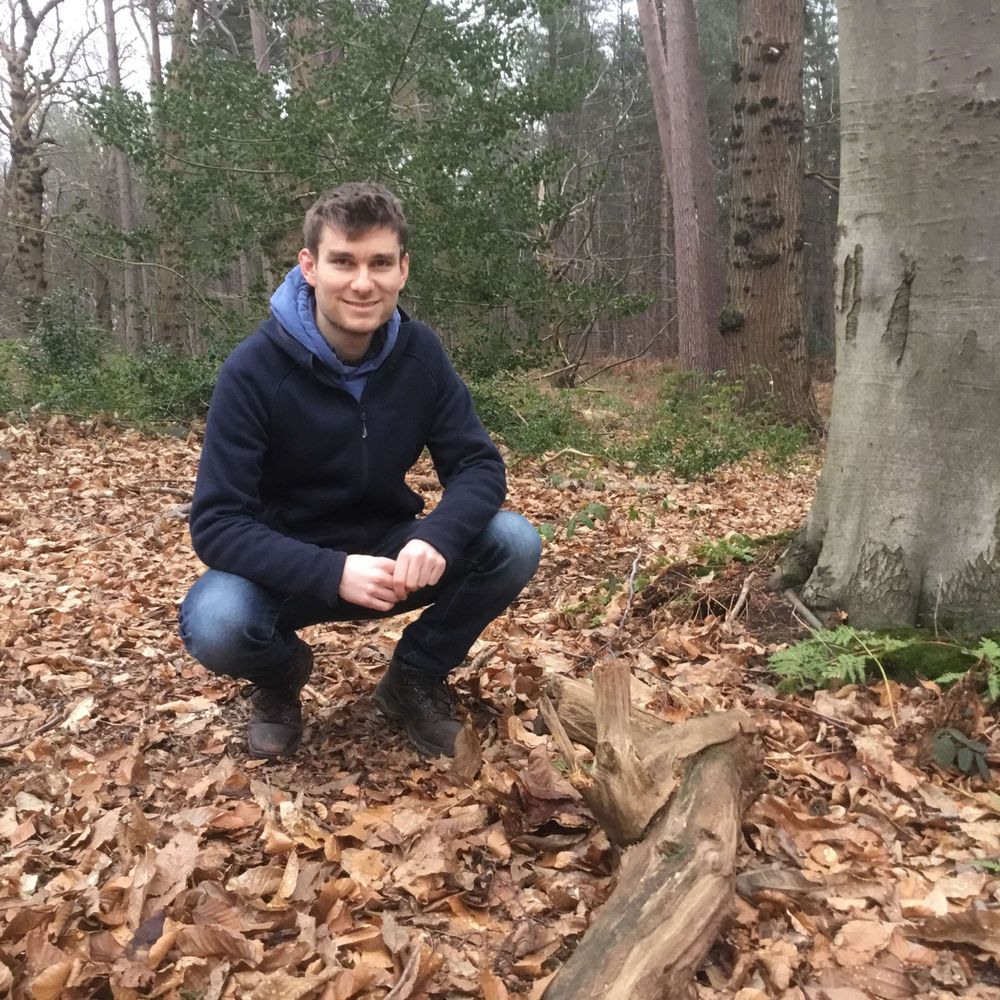
Experimental enhancement of structural heterogeneity in forest landscapes promotes multidimensional hoverfly diversity
Our results provide the first experimental evidence that enhancing structural heterogeneity at the landscape scale can restore multidimensional hoverfly diversity in temperate forests. They underscor...
besjournals.onlinelibrary.wiley.com
🚨New paper!🚨 Models predict trees like beech will migrate north as climate warms, but rarely consider tree reproduction. Jessie shows these “refuges” are exactly where climate warming will disrupt seed production the most. They may not be such great climate refuges after all.
doi.org/10.1111/ele....
1/28 New preprint up, which I think is the best theoretical idea I've ever had. We asked a simple question: what are the costs of investment into non-reproductive somatic cells? Turns out these costs decrease with the *logarithm* of organism size!

www.biorxiv.org/content/10.6...
The fitness costs of reproductive specialization scale inversely with organismal size
The evolution of reproductive specialization represents a fundamental innovation in multicellular life, yet the conditions favoring its evolution remain poorly understood. Here, we develop a populatio...
www.biorxiv.org
Fascinating new paper by @andrewabraham.bsky.social on how salt starvation shapes the abundance of large animals in Africa - the thread below explains the science … 🌐
Earth's largest land animals are limited by salt.

Sodium availability constrains the density and distribution of elephants, giraffes and rhinos across Africa, and offers a new explanation for the so-called 'missing megaherbivores'.

www.nature.com/articles/s41...
Free access: rdcu.be/eTPY2
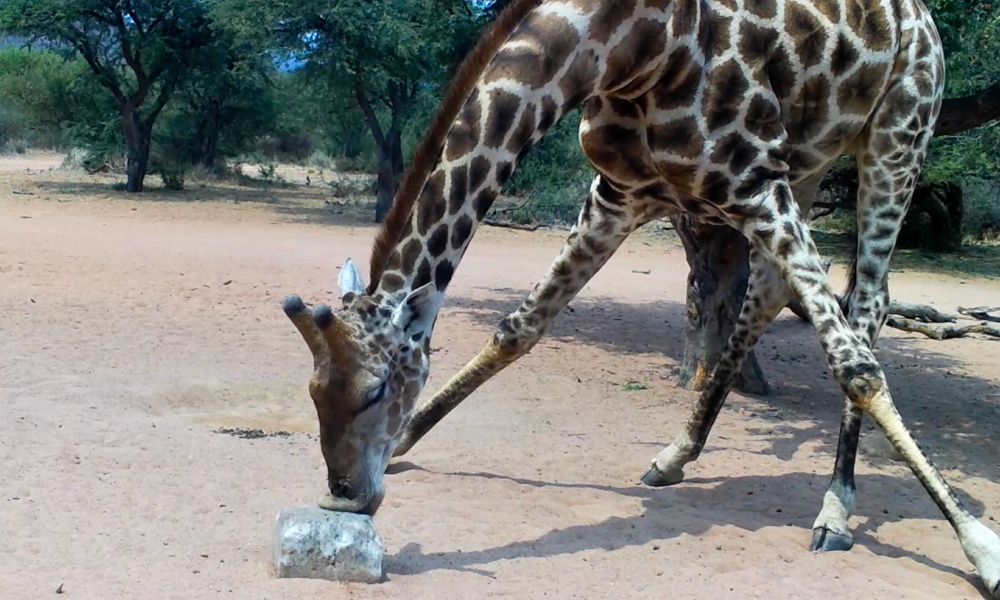
Earth's largest land animals are limited by salt.

Sodium availability constrains the density and distribution of elephants, giraffes and rhinos across Africa, and offers a new explanation for the so-called 'missing megaherbivores'.

www.nature.com/articles/s41...
Free access: rdcu.be/eTPY2
Global analysis shows that atmospheric dryness explains geographical patterns of tree canopy height and is projected to become more important in the coming decades:
www.nature.com/articles/s41...
Global dependency of canopy height on vapour pressure deficit and its projections under climate change - Nature Ecology & Evolution
Rising atmospheric aridity may be an important driver of tree growth. Here the authors present analyse the global relationship between tree canopy height and vapour pressure deficit, and its potential...
www.nature.com
Published!📖

Forest structural and functional diversity can attenuate forest productivity losses after harvesting and fires. In undisturbed forests, dominance boosts productivity via selection effects, but not after harvesting🌳🌲🌍

Read here:https://buff.ly/Gw5Hq6X

Seed dispersal by 🦜🦇 underpins rainforest recovery. We want to understand more about its timing + traits driving recovery through obs, exp + genomic data. Ready to join the @reassemblynet.bsky.social team working in Ecuadorian Chocó? Pls apply to our 4-yr PhD position @sgn.one: tinyurl.com/2pkryc99
🌍 African #savanna science is heavily skewed: 46% of studies come from just 2% of #ProtectedAreas. Using the new ADSPA geodatabase, this work identifies five #bioclimatic groups and reveals major research gaps across underrepresented savannas. 🐘

🔗 doi.org/10.1111/ddi....
Limitations of p50 as a measure of seed longevity in comparative studies and the way forward

New in #AppsPlantSci by Klepka, Carta, Hay & @annabucharova.bsky.social

bsapubs.onlinelibrary.wiley.com/doi/full/10.... #botany #plantscience #seedviability #seedbank #genebank #plantconservation